
Avoiding Coercion and Pressure

Ethical nonmonogamy or ENM is about honest communication, enthusiastic consent, and relationships that adapt to real human needs. This guide is your friendly, no nonsense playbook for spotting coercion, setting healthy boundaries, and keeping all parties respected and believed. If you want a sturdy framework for negotiating with care and humor, you are in the right place. We break down terms, share practical scripts, and walk through realistic scenarios so you can handle pressure without losing your sense of self.
Quick Links to Useful Sections
- What does ethical nonmonogamy mean in real life
- Coercion versus influence in ENM
- Spotting coercion in ENM: common patterns and red flags
- Direct coercion
- Guilt and obligation tactics
- Ultimatums and time pressure
- Social and peer pressure
- Gaslighting and denial
- Boundary erosion through improvisational coercion
- Foundations for healthy ENM: enthusiastic and ongoing consent
- Boundaries that actually work in ENM
- Practical boundary examples you can customize
- Communication frameworks that reduce coercion risk
- Use clear I statements
- Differentiate requests from demands
- Ask for slow negotiation in stages
- Practice nonviolent communication
- Scripts you can use in real life
- Scenario A: Boundaries are challenged during a date with a new partner
- Scenario B: A partner gives you a hard deadline to commit
- Scenario C: Guilt trips showing up as “you owe me”
- Scenario D: Community pressure and social blame games
- Handling jealousy and insecurity without coercion
- What to do when coercion happens
- Renegotiation and updating agreements
- Self care and community support
- Practical tools you can start using today
- Glossary of useful terms and acronyms
- Real life scenarios: applying the rules in the wild
- Scenario 1: New partner introduction with a hard boundary on time
- Scenario 2: A partner tries to raise the stakes with a threat
- Scenario 3: The community whispers and social pressure
- Scenario 4: Gaslighting disguised as care
- Building a healthier ENM practice from the ground up
- Putting it into practice today
- Checklist: quick reference for avoiding coercion in ENM
What does ethical nonmonogamy mean in real life
Ethical nonmonogamy is a relationship approach where two or more people consent to intimate or romantic connections outside the primary relationship. This does not mean chaos. It means deliberate choices, ongoing consent, and clear agreements about how feelings, time, and resources are shared. A lot of the confusion around ENM comes from people assuming it is about unlimited freedom or about using others as a substitute for emotional work. The truth is quite the opposite. ENM is about freedom with responsibility. It recognizes that attraction can be fleeting, that emotions can be complicated, and that consent should be explicit and revisited often.
Key terms you will hear a lot in ENM and what they mean in plain language
- Ethical nonmonogamy A framework in which multiple intimate relationships occur with informed consent from everyone involved.
- Enm Short for ethical nonmonogamy often used in casual conversation. We will spell it out as ENM to keep things clear.
- Consensual nonmonogamy A phrase that emphasizes consent as the foundation of every connection that sits outside of a monogamous setup.
- Boundaries Personal limits about what you will or will not accept in terms of time, emotional investment, or sexual activity.
- Negotiation A conversation where all parties discuss desires, limits, and expectations to reach a mutual agreement.
- Consent A clear, voluntary, ongoing yes to any sexual or romantic activity. Consent can be withdrawn at any time.
- Affirmative consent A positive yes instead of a silent or assumed agreement. It is explicit and enthusiastic.
- Jealousy A natural emotion that can arise in ENM just as it can in any relationship. The key is how you handle it with care and communication.
With ENM we are not chasing perfection. We are chasing practices that protect autonomy, reduce harm, and keep relationships honest. If coercion sneaks in even a little, the entire system weakens. So this guide is about making coercion invisible by replacing it with clear communication, mutual respect, and tools you can actually use in daily life.
Coercion versus influence in ENM
Coercion happens when one person uses pressure, fear, or manipulation to push another person into an action they do not truly want. Influence is different. Influence is about sharing thoughts, offering alternatives, and inviting someone to consider a choice while honoring their autonomy. The line can blur in the heat of the moment. The trick is to learn the signs of coercion and have a plan to move back to consent and collaboration.
Common coercive dynamics you may encounter in ENM include guilt trips, ultimatums, social pressure, or promises of loss if you do not comply. You might also face subtle forms like manipulation through flattery or expectation, making you feel bad for saying no or for needing time to think. We call these out not to shame anyone but to empower you to spot them early and respond in a way that protects your boundaries and your relationships.
The freedom of an open relationship sounds incredible, but the logistics can feel like holding a grenade. That spinning "what if" anxiety isn't paranoia, it’s your survival instinct warning you that your bond is exposed. "Just seeing what happens" is the fastest way to turn a fantasy into a breakup.
The Essential Guide replaces chaos with discipline. We give you the blueprints, jealousy protocols, and repair scripts needed to explore the edge without falling off. Don't guess. Secure your foundation first.

The world of non-monogamy is a maze of confusing labels. Trying to be "Polyamorous" when your heart actually needs "Swinging" isn't just a vocabulary error; it’s a recipe for misery.
You can't build a stable home on a foundation that doesn't fit your psychology. This tool analyzes your emotional bandwidth and jealousy triggers to design the exact structure you need. Stop trying to squeeze into a box that doesn't fit. Build a relationship that actually feels like home.

Opening up feels exciting, but if you aren't reading from the same script, you're writing a tragedy. The disconnect between "I want freedom" and "I want safety" is where hearts break. This isn't just a quiz; it’s a synchronization engine.
We identify the silent gaps in your desires—from sleepover rules to emotional bandwidth, before they become unbridgeable chasms. Don't wait until the damage is done to find out you were never on the same page. Align your compasses now.
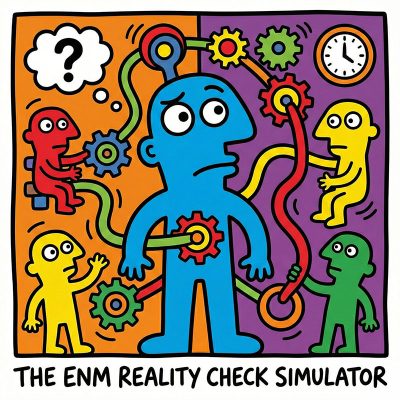
Theory is sexy. Reality is messy. You agreed you could date others, but how does your stomach drop when he takes her to your anniversary spot? Or when she comes home smelling like someone else?
This simulator drags your abstract rules into the harsh light of day. We force you to confront the visceral, gut-wrenching scenarios that actually destroy relationships, before they happen. Test your nervous system in the simulator so you don't crash the car in real life.
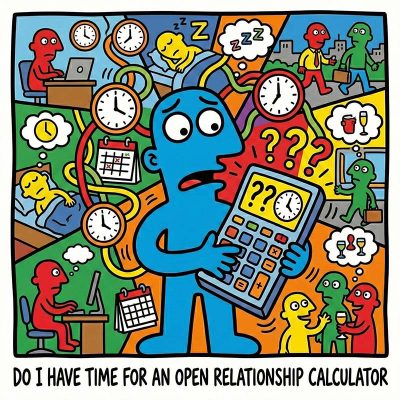
The fantasy is endless romance. The reality? It’s a logistical nightmare. Dating isn't just sex; it’s a second job of swiping, spending, and emotional processing that drains your sanity. Underestimating the "admin" of non-monogamy is the fastest way to turn your relationship into a burnout factory where resentment thrives.
This calculator forces you to confront the brutal math of your time, energy, and wallet. Can you actually afford this lifestyle, or are you just signing up for exhaustion?
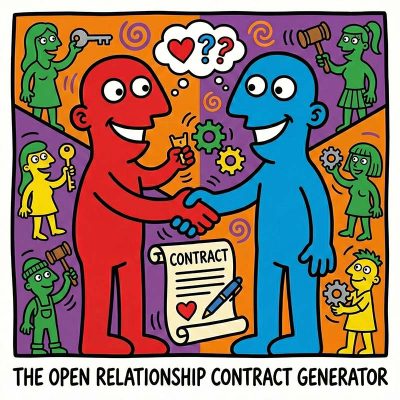
"I thought we agreed" is the sentence that destroys relationships & marriages. Relying on verbal promises when emotions run high is a gamble you cannot afford to lose. Your memory isn't just faulty; it's a liability. Ambiguity is the oxygen that jealousy breathes, turning "freedom" into a minefield of "did I mess up?"
This generator transforms vague permissions into a concrete, signed reality. Stop arguing about what you thought was said and lean on what is written. Secure your boundaries in ink, not hope.
Spotting coercion in ENM: common patterns and red flags
Direct coercion
This is when someone explicitly demands a certain action and uses pressure or consequences to get you to comply. Examples include sentence structures like “If you don’t do this, then…” or “You have to agree or I am stopping X.” Direct coercion feels like a power grab and is usually a bad signal for consent quality.
Guilt and obligation tactics
Guilt layering is a frequent tactic. A partner may imply that your boundaries are a betrayal, that you owe them due to past sacrifices, or that you will ruin the relationship if you don’t comply. This kind of messaging uses emotion as a lever rather than a shared decision process.
Ultimatums and time pressure
Pressure to decide quickly can trap you into a decision you are not ready to make. It often comes with scarcity language such as “there are only a few weeks left,” or “everyone else is already doing this.” A healthy ENM approach never hinges on rushed decisions that bypass thoughtful consent.
Social and peer pressure
Friends or community expectations can loom large in ENM spaces where people are trying to fit in or avoid stigma. This is a soft form of coercion where you feel you must perform a certain way to be accepted, even if your internal truth says otherwise.
Gaslighting and denial
Gaslighting makes you doubt your perception of reality. If someone denies your feelings, minimizes your boundaries, or claimed you overreacted when you voiced a concern, you are in a coercive dynamic. Trust your own experience and seek validation from supportive people.
Boundary erosion through improvisational coercion
This is the slow drip effect. Boundaries are nudged, then redefined, often without explicit agreement. It can feel like a dance you cannot win because the rules keep changing under your feet. Boundaries should stay stable unless all parties renegotiate openly.
Foundations for healthy ENM: enthusiastic and ongoing consent
Consent in ENM is not a one time checkbox. It is a living, breathing process that happens at every stage of a relationship. Enthusiastic consent means a clear and positive yes that can be withdrawn at any moment. Ongoing consent means that even after an agreement is made, people continue to check in and confirm they are still comfortable as feelings, situations, and dynamics evolve.
Key principles to anchor consent in ENM
- Clarity matters Be specific about what is being agreed to and what is not on any given occasion.
- Time matters Give yourself time to think and reflect. Do not feel forced to decide in a single sitting.
- Autonomy matters Each person has the right to say no or to pause negotiations without fear of losing the relationship.
- Respect matters No one should be shamed for setting boundaries or withdrawing consent.
- Documentation helps When comfortable, write down agreements so you can revisit them later and ensure alignment.
Enforceability in ENM is not about legal power but about personal responsibility. If someone is always trying to override your no, that is not a healthy dynamic, and you deserve to address it or step away if needed. The aim is to create a culture where people feel safe to express their true feelings without retaliation or shame.
Boundaries that actually work in ENM
Boundaries are the guardrails that keep you safe. They define what is allowed, what is not, and how you will recover if something feels off. Boundaries in ENM can be about time, intimate acts, safety practices, or emotional availability. They are not about control over other people. They are about protecting your own energy and ensuring everyone's needs are treated with respect.
Practical boundary examples you can customize
- Time boundary: I need at least two evenings per week that are reserved for my partner and me and for self care. I am not comfortable with late night meetups that stretch past 10 PM on weekdays.
- Emotional boundary: I want to have check ins after I have spent time with someone new to process any feelings that come up. I do not want to hide emotions or pretend everything is fine if I feel unsettled.
- Sexual boundary: I am not comfortable with sexual activity without explicit consent in the moment. If you want to engage with someone else you must discuss it with me first and ensure consent is mutual and enthusiastic.
- disclosure boundary: I would like partner information shared with me about potential risks or concerns related to a new partner before we take any steps toward meeting them.
- Communication boundary: If any person involved feels overwhelmed, we pause all new dynamics for at least 48 hours to reassess and renegotiate.
Boundaries need to be revisited as relationships evolve. What feels right in the first few months may shift as trust deepens or as life circumstances change. The goal is not to rigidly cling to a script but to keep the lines of communication open so you can adjust together without fear of punishment or rejection.
Communication frameworks that reduce coercion risk
Use clear I statements
When you express needs try I statements. They center your experience without accusing others. For example: I feel uneasy when plans change at the last minute because I rely on predictability for my emotional energy. I would prefer we confirm plans at least 24 hours in advance.
Differentiate requests from demands
A request invites a response; a demand expects compliance. If you hear yourself or your partner moving toward demand language try reframing as a question or a proposal. For instance: Would you be open to talking about this later today or is now a bad time for you?
Ask for slow negotiation in stages
Break big decisions into smaller steps with checkpoints. You can say: Let us discuss the next step tonight, and we will revisit the larger decision after we both process our feelings. This reduces the pressure to decide in one sitting and keeps consent visible and deliberate.
Practice nonviolent communication
This approach focuses on observing without judgment, expressing feelings, identifying needs, and making concrete requests. It is practical and accessible even in tense moments.
Example flow
- Observation: When you suggested we see someone new this weekend
- Feeling: I felt anxious
- Need: because I need time to process new dynamics
- Request: Can we pause the plan and revisit it after a pause, maybe tomorrow?
Scripts you can use in real life
Scenario A: Boundaries are challenged during a date with a new partner
Response you can adapt: I value openness and honesty and I want to support you exploring connections. Right now I feel a bit overwhelmed by the pace. I would like to slow down and revisit this next week after we both have time to think. If you feel strongly about moving ahead, we can discuss it and I am happy to participate if it stays within the boundaries we have set together.
Scenario B: A partner gives you a hard deadline to commit
Response you can adapt: I understand you want clarity, and I want to give you a thoughtful answer. I cannot commit on a timeline I do not feel certain about. Let us set a 72 hour window to reflect and we will revisit the discussion with fresh energy. You deserve a clear decision and I deserve space to think.
Scenario C: Guilt trips showing up as “you owe me”
Response you can adapt: It sounds like you feel I have let you down. I still need to protect my own boundaries and I am not comfortable being pressured to change them. I want to support you but not at the expense of my own well being. Let us schedule time to talk again after we each process our feelings.
Scenario D: Community pressure and social blame games
Response you can adapt: I appreciate that the group cares about our happiness, but I need to follow what is right for me. I will make decisions that align with my values and boundaries. If others want to discuss it, I am open to hearing their perspectives but I will not be influenced by fear of judgment.
The freedom of an open relationship sounds incredible, but the logistics can feel like holding a grenade. That spinning "what if" anxiety isn't paranoia, it’s your survival instinct warning you that your bond is exposed. "Just seeing what happens" is the fastest way to turn a fantasy into a breakup.
The Essential Guide replaces chaos with discipline. We give you the blueprints, jealousy protocols, and repair scripts needed to explore the edge without falling off. Don't guess. Secure your foundation first.
The world of non-monogamy is a maze of confusing labels. Trying to be "Polyamorous" when your heart actually needs "Swinging" isn't just a vocabulary error; it’s a recipe for misery.
You can't build a stable home on a foundation that doesn't fit your psychology. This tool analyzes your emotional bandwidth and jealousy triggers to design the exact structure you need. Stop trying to squeeze into a box that doesn't fit. Build a relationship that actually feels like home.
Opening up feels exciting, but if you aren't reading from the same script, you're writing a tragedy. The disconnect between "I want freedom" and "I want safety" is where hearts break. This isn't just a quiz; it’s a synchronization engine.
We identify the silent gaps in your desires—from sleepover rules to emotional bandwidth, before they become unbridgeable chasms. Don't wait until the damage is done to find out you were never on the same page. Align your compasses now.
Theory is sexy. Reality is messy. You agreed you could date others, but how does your stomach drop when he takes her to your anniversary spot? Or when she comes home smelling like someone else?
This simulator drags your abstract rules into the harsh light of day. We force you to confront the visceral, gut-wrenching scenarios that actually destroy relationships, before they happen. Test your nervous system in the simulator so you don't crash the car in real life.
The fantasy is endless romance. The reality? It’s a logistical nightmare. Dating isn't just sex; it’s a second job of swiping, spending, and emotional processing that drains your sanity. Underestimating the "admin" of non-monogamy is the fastest way to turn your relationship into a burnout factory where resentment thrives.
This calculator forces you to confront the brutal math of your time, energy, and wallet. Can you actually afford this lifestyle, or are you just signing up for exhaustion?
"I thought we agreed" is the sentence that destroys relationships & marriages. Relying on verbal promises when emotions run high is a gamble you cannot afford to lose. Your memory isn't just faulty; it's a liability. Ambiguity is the oxygen that jealousy breathes, turning "freedom" into a minefield of "did I mess up?"
This generator transforms vague permissions into a concrete, signed reality. Stop arguing about what you thought was said and lean on what is written. Secure your boundaries in ink, not hope.
Handling jealousy and insecurity without coercion
Jealousy is a natural signal that something matters to you. It is not a license to control someone else. A healthy ENM approach treats jealousy as information. It signals a boundary that needs attention or a need that should be fulfilled. Rather than pressuring a partner to stay within a certain dynamic to fix jealousy, you work on emotional processing, co supported by transparent communication and, if needed, a renegotiation of terms to ensure both sides feel valued and safe.
- Share feelings without blame: I feel anxious when plans change suddenly because I worry about our connection. I would like us to discuss expectations for last minute changes so we can stay connected.
- Identify needs behind the feeling: I need reassurance that our relationship remains a priority while you explore connections with others.
- Move to action: Let us schedule a weekly check in focused on our relationship, and we will revisit any changes during that time.
Normalizing the conversation around jealousy helps everyone involved feel heard and valued. The aim is not to eliminate jealousy but to manage it with grace and empathy while honoring consent and boundaries.
What to do when coercion happens
If you notice coercion creeping into a dynamic, address it early. You deserve to be in control of your own choices and to have your boundaries respected. Steps you can take include:
- Pause and breathe. Do not make a decision under pressure. Sleep on it if necessary.
- Name the behavior clearly: I feel pressured when we discuss this in a way that implies a consequence for saying no.
- Restate your boundary or need: I am not willing to participate in X at this time. I would like us to renegotiate with more time and mutual consent.
- Seek a mediator if needed: A trusted friend or a poly confident partner can help keep the conversation grounded and fair for all parties involved.
- Assess the relationship health: If coercive patterns persist, you may need to pause or rethink the relationship structure to protect your well being.
Coercion is a signal that something in the dynamic needs adjustment. It is not a personal failing. The goal is to reestablish a consent focused environment where all people can show up as their true selves without fear of manipulation or retaliation.
Renegotiation and updating agreements
People change and so do their needs. ENM agreements should be living documents. When a boundary shifts or a nuance emerges, renegotiate in a calm, structured way. Use a dedicated renegotiation session with clear aim statements, time frames for reflection, and explicit consent on any new terms.
Tips for successful renegotiation
- Set a specific time for renegotiation to avoid endless debates.
- Keep discussions focused on needs, not on blame or past mistakes.
- Document changes so everyone is aligned and has a reference point.
- Confirm consent clearly after each proposed change before moving forward.
Self care and community support
Healthy ENM requires attention to your own emotional energy. Prioritize self care strategies that keep you grounded and resilient. Some ideas include journaling about your boundaries, talking with a therapist who understands nonmonogamy, joining a community group where you can practice safe and respectful communication, or simply carving out quiet time to decompress after intense conversations.
Community support matters because ENM is a social practice as well as a personal one. You deserve spaces where your voice is heard, where you can ask for feedback, and where you can rehearse difficult conversations without fear of shaming or ridicule.
Practical tools you can start using today
- Consent calendar A quick weekly check in to mark what you and your partners are comfortable with currently and whether any changes should be considered.
- Boundaries worksheet A fillable form that helps you articulate what is okay and what is not in various contexts (dates, events, sexual activity, emotional closeness).
- Communication scripts Ready to adapt phrases for a variety of scenarios to reduce friction and hesitation in real time.
- Decompression routines Short practices after a difficult conversation to reset and prevent resentments from heating up.
Glossary of useful terms and acronyms
- ENM Short for ethical nonmonogamy, a framework that values consent and transparency when multiple intimate connections are involved.
- CNM Short for consensual nonmonogamy, similar to ENM but sometimes used in different community circles.
- Enthusiastic consent A positive and explicit agreement given freely by all parties before any activity proceeds.
- Ongoing consent Consent that can be reaffirmed, paused, or withdrawn at any time during a relationship or encounter.
- Boundaries Personal limits that guide what you will and will not tolerate in terms of time, energy, and intimacy.
- renegotiation Reassessing and updating agreements as feelings or circumstances change.
Real life scenarios: applying the rules in the wild
Scenario 1: New partner introduction with a hard boundary on time
Alex has a boundary that new partners must wait at least three weeks before meeting their long-term partner. When Maya suggests meeting someone new this weekend, Alex calmly states the boundary and uses an I statement. This helps Maya understand that the schedule is not personal and allows time to reflect rather than feel rejected. They agree to revisit the topic after the weekend with a plan that respects Alexs boundary while also allowing Maya to preserve trust with her own new connection.
Scenario 2: A partner tries to raise the stakes with a threat
In this scenario, a partner implies that if you do not approve a fourth connection, you are risking the entire relationship. The response focuses on boundary reinforcement and safety. You can say I understand you are feeling unsettled, but I will not be pressured into a decision about our relationship. We need to pause this negotiation and revisit it with a neutral mediator or after a cooling off period. If the pressure continues, you may need to consider stepping back from the relationship until a healthier dynamic can be rebuilt.
Scenario 3: The community whispers and social pressure
When friends begin suggesting what counts as a real ENM experience, you can respond with clear boundaries and a shared framework. For example, We value the input of our community, but our agreements are ours to hold. We are not going to join in a dynamic that violates our boundaries simply to avoid being seen as not living up to a label or standard.
Scenario 4: Gaslighting disguised as care
A partner asks you to accept something that makes you uncomfortable and then denies your discomfort. You can respond with a precise observation and a demand for discussion: I am noticing that we are pushing this further than I feel comfortable. I would like to pause the conversation and revisit it when we can all be present and respectful. If needed, we will bring in a neutral friend to help calibrate expectations.
Building a healthier ENM practice from the ground up
The core of ethical nonmonogamy is consent equity. Every person involved deserves the same respect and space to express needs. When we actively practice consent, we protect autonomy, preserve trust, and create relationships that can weather jealousy, insecurity, and change without coercion.
To stay on track, remember these guardrails
- Always start with explicit consent before any new activity or relationship.
- Make time for regular check ins to evaluate how everyone feels about ongoing agreements.
- Respect everyones boundaries even if they differ from your own preferences.
- Be honest about what you want and need without shaming others for their choices.
- Seek support from trusted friends or professionals if coercive patterns show up consistently.
Putting it into practice today
If you take one thing away from this guide, let it be this: consent is not a one time moment it is a living practice. The healthier your ENM ecosystem the more resilient your relationships become. Start with a simple boundary and a clear communication script. Invite feedback, offer reassurance, and schedule a weekly or bi weekly conversation focused on consent and boundaries. Your future self will thank you for the work you put in today.
Checklist: quick reference for avoiding coercion in ENM
- Have you asked for explicit consent for any new activity or relationship today?
- Are boundaries clearly stated and respected by all parties?
- Is there a mechanism for ongoing negotiation and renegotiation without fear of punishment?
- Is there a safe space for all parties to express concerns without shaming or retaliation?
- Do you have a plan to address coercion if it arises including possible mediation or a cooling off period?
- Are you prioritizing autonomy and consent over pressure, guilt, or fear tactics?
By keeping these practices front and center you can cultivate ENM relationships that feel free and fair for everyone involved. You deserve relationships built on honest consent and mutual care rather than fear or manipulation. The real win in ENM is knowing that you can choose who you are authentically and that those choices are supported by people who respect your independence and your humanity.
The freedom of an open relationship sounds incredible, but the logistics can feel like holding a grenade. That spinning "what if" anxiety isn't paranoia, it’s your survival instinct warning you that your bond is exposed. "Just seeing what happens" is the fastest way to turn a fantasy into a breakup.
The Essential Guide replaces chaos with discipline. We give you the blueprints, jealousy protocols, and repair scripts needed to explore the edge without falling off. Don't guess. Secure your foundation first.
The world of non-monogamy is a maze of confusing labels. Trying to be "Polyamorous" when your heart actually needs "Swinging" isn't just a vocabulary error; it’s a recipe for misery.
You can't build a stable home on a foundation that doesn't fit your psychology. This tool analyzes your emotional bandwidth and jealousy triggers to design the exact structure you need. Stop trying to squeeze into a box that doesn't fit. Build a relationship that actually feels like home.
Opening up feels exciting, but if you aren't reading from the same script, you're writing a tragedy. The disconnect between "I want freedom" and "I want safety" is where hearts break. This isn't just a quiz; it’s a synchronization engine.
We identify the silent gaps in your desires—from sleepover rules to emotional bandwidth, before they become unbridgeable chasms. Don't wait until the damage is done to find out you were never on the same page. Align your compasses now.
Theory is sexy. Reality is messy. You agreed you could date others, but how does your stomach drop when he takes her to your anniversary spot? Or when she comes home smelling like someone else?
This simulator drags your abstract rules into the harsh light of day. We force you to confront the visceral, gut-wrenching scenarios that actually destroy relationships, before they happen. Test your nervous system in the simulator so you don't crash the car in real life.
The fantasy is endless romance. The reality? It’s a logistical nightmare. Dating isn't just sex; it’s a second job of swiping, spending, and emotional processing that drains your sanity. Underestimating the "admin" of non-monogamy is the fastest way to turn your relationship into a burnout factory where resentment thrives.
This calculator forces you to confront the brutal math of your time, energy, and wallet. Can you actually afford this lifestyle, or are you just signing up for exhaustion?
"I thought we agreed" is the sentence that destroys relationships & marriages. Relying on verbal promises when emotions run high is a gamble you cannot afford to lose. Your memory isn't just faulty; it's a liability. Ambiguity is the oxygen that jealousy breathes, turning "freedom" into a minefield of "did I mess up?"
This generator transforms vague permissions into a concrete, signed reality. Stop arguing about what you thought was said and lean on what is written. Secure your boundaries in ink, not hope.
