
Boundaries Versus Rules in Practice


If you are navigating ethical non monogamy or ENM for short you know the juggling act can feel like a high wire routine with a windy audience. Boundaries and rules are the safety nets and the guard rails all at once. The problem is many people mix them up and end up with agreements that feel like they are personal jail or loose free form vibes that misbehave when the heat rises. This guide is here to help you sort the two out and to show practical ways to build agreements that actually work in the wild world of ENM.
Quick Links to Useful Sections
- What is ENM ethical non monogamy the plain language version
- Key terms you will see in this guide
- Boundaries versus rules in ENM what is the real difference
- How to tell boundaries from rules in real life ENM scenarios
- Practical steps to build boundaries and rules that actually stick
- Templates and examples you can adapt for ENM boundaries and rules
- Boundary examples
- Rule examples
- How to phrase a boundary with clarity
- How to craft a rule that feels fair
- Common ENM mistakes with boundaries and rules and how to avoid them
- Handling jealousy and emotional safety within ENM boundaries
- Self reflection earlier in the process why your boundaries matter
- When to renegotiate boundaries and rules
- Practical communication tips for ENM boundaries and rules
- One more reminder about ethics and ENM
- Do's and don'ts a quick pocket guide
- Frequently asked questions
What you will get here is a clear explanation of terms a practical process for crafting boundaries and rules that fit your life a set of real world examples and a set of templates you can adapt. We will break down hard boundaries soft boundaries inclusive boundaries and the difference between personal limits and external expectations. If you are new to ethical non monogamy or you are trying to tighten up a long running dynamic this page aims to be a reliable compass not a rigid map. We will keep it human and hopeful with practical steps you can use right away.
What is ENM ethical non monogamy the plain language version
Ethical non monogamy is a relationship approach where partners agree that dating loving or having sex with other people is allowed rather than forbidden. The key word is agreed. ENM is not chaos it is consent based and communication heavy by design. People choose ENM for many reasons including attraction curiosity love growth or simply because life feels richer when shared with multiple people. The exact structure varies from couple to couple and often shifts over time. The important part is that all involved know what is allowed what is not allowed and why. The conversations that lead to those agreements matter more than the actual rules themselves because they reflect values honesty and respect for one another.
Key terms you will see in this guide
- Boundaries Personal limits about what you are comfortable with what you will accept and what you will not tolerate. Boundaries describe your own needs and are not about controlling other people.
- Rules External expectations set by the relationship or the partner that determine what is allowed what is not allowed and what happens if a boundary or expectation is crossed. Rules are about behavior outside your own head.
- Agreements The negotiated understandings that cover both boundaries and rules used to guide behavior within the ENM dynamic. Agreements are the living document that evolves as people grow and life changes.
- Hard boundary A non negotiable limit that you will not cross under any circumstances. Breaking a hard boundary has clear consequences as agreed in your relationship norms.
- Soft boundary A limit that is flexible depending on context and discussion. Soft boundaries leave room for negotiation and adjustment.
- Consent An enthusiastic informed agreement to participate in a given activity or scenario. Consent is ongoing and can be withdrawn at any time.
- Compersion The feeling of joy when a partner experiences happiness with another person. Also a helpful term for cultivating emotional balance within ENM.
- Boundary drift When a boundary shifts over time often due to experience or changes in the relationship or life circumstances.
- Negotiation The process of discussing needs desires and concerns to reach a mutual understanding that respects everyone involved.
- Check in A scheduled moment to review how things are going and adjust agreements if needed.
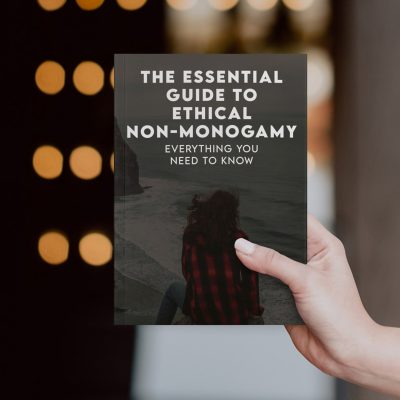
The freedom of an open relationship sounds incredible, but the logistics can feel like holding a grenade. That spinning "what if" anxiety isn't paranoia, it’s your survival instinct warning you that your bond is exposed. "Just seeing what happens" is the fastest way to turn a fantasy into a breakup.
The Essential Guide replaces chaos with discipline. We give you the blueprints, jealousy protocols, and repair scripts needed to explore the edge without falling off. Don't guess. Secure your foundation first.

The world of non-monogamy is a maze of confusing labels. Trying to be "Polyamorous" when your heart actually needs "Swinging" isn't just a vocabulary error; it’s a recipe for misery.
You can't build a stable home on a foundation that doesn't fit your psychology. This tool analyzes your emotional bandwidth and jealousy triggers to design the exact structure you need. Stop trying to squeeze into a box that doesn't fit. Build a relationship that actually feels like home.

Opening up feels exciting, but if you aren't reading from the same script, you're writing a tragedy. The disconnect between "I want freedom" and "I want safety" is where hearts break. This isn't just a quiz; it’s a synchronization engine.
We identify the silent gaps in your desires—from sleepover rules to emotional bandwidth, before they become unbridgeable chasms. Don't wait until the damage is done to find out you were never on the same page. Align your compasses now.
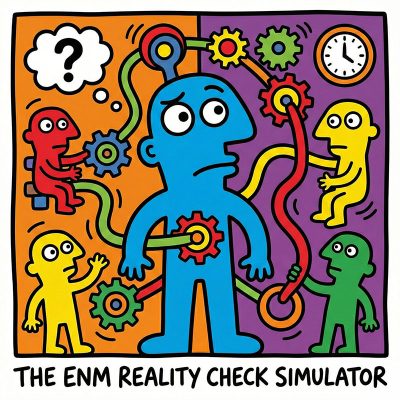
Theory is sexy. Reality is messy. You agreed you could date others, but how does your stomach drop when he takes her to your anniversary spot? Or when she comes home smelling like someone else?
This simulator drags your abstract rules into the harsh light of day. We force you to confront the visceral, gut-wrenching scenarios that actually destroy relationships, before they happen. Test your nervous system in the simulator so you don't crash the car in real life.
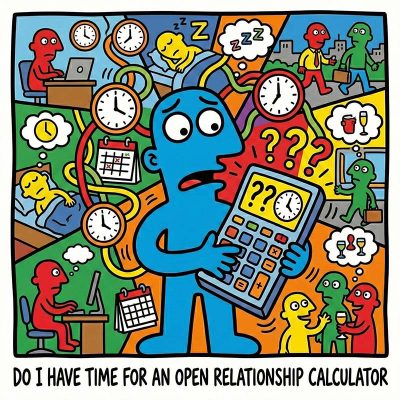
The fantasy is endless romance. The reality? It’s a logistical nightmare. Dating isn't just sex; it’s a second job of swiping, spending, and emotional processing that drains your sanity. Underestimating the "admin" of non-monogamy is the fastest way to turn your relationship into a burnout factory where resentment thrives.
This calculator forces you to confront the brutal math of your time, energy, and wallet. Can you actually afford this lifestyle, or are you just signing up for exhaustion?
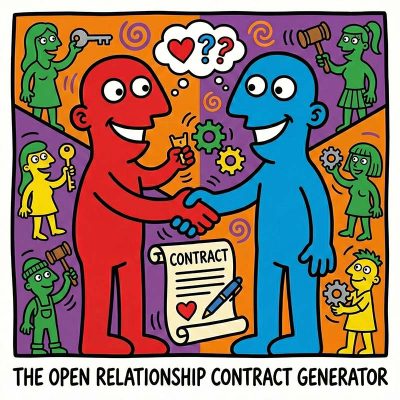
"I thought we agreed" is the sentence that destroys relationships & marriages. Relying on verbal promises when emotions run high is a gamble you cannot afford to lose. Your memory isn't just faulty; it's a liability. Ambiguity is the oxygen that jealousy breathes, turning "freedom" into a minefield of "did I mess up?"
This generator transforms vague permissions into a concrete, signed reality. Stop arguing about what you thought was said and lean on what is written. Secure your boundaries in ink, not hope.
Boundaries versus rules in ENM what is the real difference
Think of boundaries as your personal compass. Boundaries tell you what you are willing to accept and what you will not endure. They are closely tied to your own values emotions and sense of safety. Boundaries protect your well being and they belong to you alone. Boundaries can be about sex dating time energy emotional exposure or any aspect of your life that you need to protect.
Rules on the other hand are like the playbook you set for the relationship or for a partner. Rules describe what others are allowed or not allowed to do. They explain how decisions are made who you can date what kind of activities are permitted the location for dates or how you communicate after a date. Rules exist to create predictability and reduce risk for everyone involved. The key is that they are not your personal internal limit they are external expectations that others must follow.
When these two work well together you get agreements that feel fair and sustainable. When they do not mesh you can end up with resentment awkward silences or a sense of being policed rather than supported. The goal is to design boundaries and rules that fit your life not to force you into someone else idea of how your life should look.
How to tell boundaries from rules in real life ENM scenarios
Scenario A A couple agrees that kissing another person is allowed but they need emotional time after the experience. The boundary here might read I am comfortable with you dating and kissing other people but I need time to process and you will not demand emotional closeness immediately after a date without checking in first. This is a personal limit that protects the feelings of the partner who needs time to regulate their emotions. It is not a rule about what the other person must do it is a boundary that protects the person’s emotional energy.
Scenario B A partner wants to avoid physical intimacy with people who have a history of hurting them. A possible boundary could be I am not comfortable with sexual play with partners who have previously hurt me or who have caused a safety concern in the past. This boundary is about personal safety and triggers. A rule would be the community guideline that everyone must disclose past relationship hurts before any intimate encounter which is a policy imposed on others. The boundary keeps the inside space safe for the individual while a rule tries to govern the behavior of others.
Scenario C A couple agrees on STI testing every eight weeks before any new sexual partner is involved. This can be framed as a boundary you hold about your own health or as a rule that applies to the group. If both partners agree this is a shared rule that helps protect both people. The nuance is that you may adjust the frequency if life circumstances change or if medical guidance evolves. The boundary remains your personal commitment and the rule is the operational policy that keeps everyone on the same page.
Scenario D A person wants to date someone who is in a monogamous relationship but this is not something they personally want. A boundary might be for the person to say I do not want to pursue dating someone who is in a primary relationship because I value emotional safety and transparency. A rule might say no dating someone who has a primary partner without the explicit consent of the partner. The boundary is personal and the rule is relational and needs consent from another party.
These scenarios show how boundaries and rules can operate at the same time. Boundaries describe what you personally need to stay safe and comfortable. Rules describe how the rest of the relationship or the group will operate around those needs. The healthiest ENM structures use both tools in tandem with clear communication and ongoing check ins.
Practical steps to build boundaries and rules that actually stick
Step one is to slow the pace and name what matters. Before you write anything down ask yourself these questions. What do I feel in my body when I think about this situation? What personal triggers or past experiences shape my response? What are the top three things I cannot compromise on and what are the things I would be willing to negotiate on?
Step two is to write down your boundaries as you honestly feel them not as what you think your partner or society expects. Boundaries are personal statements that begin with I. For example I need emotional space after a date or I require transparent communication after a date. Using I statements keeps the boundary about your experience not about controlling another person.
Step three is to translate those boundaries into talks with your partner or partners. This is where the negotiation happens. You explain why this boundary matters to you and invite them to share their boundaries as well. The aim is to reach a shared understanding that respects both people. You may not get a perfect match on every point and that is okay. The goal is practical harmony not perfection.
Step four is to define the related rules. You can think of rules as the concrete actions the relationship agrees to take or not take. For example a rule might be If you see someone you must text your partner to acknowledge and check in within two hours. Or a rule could be There will be no overnight stays unless both partners approve after a date. Rules are about behavior outside your head and help minimize miscommunication.
Step five is to choose the language you will use for enforcement. Decide in advance what happens when a boundary is crossed or a rule is not followed as agreed. The consequences should be proportional to the issue and agreed by all involved. Common consequences include a reset conversation a temporary pause on dating a specific person or a more formal renegotiation. The goal is remediation not punishment.
Step six is to set up regular check ins. Check ins are scheduled conversations to review how things are going. They are a chance to adjust boundaries rules and agreements as life evolves. A good rhythm might be every four to six weeks or after a major life event such as a new partner introduction or a relocation. The cadence should feel sustainable not punitive.
Step seven is to document. Put the written boundaries and rules somewhere visible for all involved. This might be a shared document a private notebook or a couple style contract. The point is not to trap but to remind and align. You can update the document as needed and share the revised version with all relevant people.
Templates and examples you can adapt for ENM boundaries and rules
Use these as starting points. Replace the brackets with your own details. Keep them flexible and remember that the aim is to reflect your truth and your partner needs not to create a rigid script that breeds resentment.
Boundary examples
- I need emotional processing time after a date before we talk about details with our friends or family.
- I require honest transparent communication at all times about new partners and time commitments.
- I will not participate in any sexual activity with someone who is not fully comfortable with our relationship being open.
- I require STI testing at regular intervals and updated disclosure of results before starting a new sexual relationship with someone outside our couple.
- I will not drop from a social event or party without letting you know if I am stepping away for a break or a moment to reset.
Rule examples
- If a date becomes emotional or complicated we will pause the activity and check in with each other within forty eight hours.
- Only partners who have been discussed and approved by all involved may join a date night plan.
- All dates must be planned in advance with a shared calendar to avoid double booking and confusion.
- We will not discuss intimate details about a date in public spaces or around children.
- Any boundary crossing must be addressed within a dedicated check in within seventy two hours.
How to phrase a boundary with clarity
- Keep it short and specific reduce ambiguity and avoid blaming language.
- Frame it around your needs for example I need quiet time after a date to decompress unless both of us agree to stay connected right away.
- Include a brief rationale that helps the other person understand why this matters to you. For example decompressing helps me regulate my nervous system which makes me a better partner.
How to craft a rule that feels fair
- Make the rule action oriented not character focused for example The rule is we will text within two hours after a date rather than You always forget to text me.
- Tie the rule to a measurable behavior so you can assess whether it is working. For example If you fail to text within two hours we will schedule a brief debrief there after to avoid resentment.
- Consider time based rules such as how often you will meet new partners what is the safe duration between encounters and how you handle overlap with existing relationships.
Common ENM mistakes with boundaries and rules and how to avoid them
One common mistake is treating boundaries as a way to control others. Boundaries are about your own needs and safety not about policing someone else. Another pitfall is making hard rules without room for nuance. The more flexible your agreements the better they will adapt when life changes. A third mistake is failing to revisit. Boundaries drift and needs evolve. Schedule regular check ins and be prepared to renegotiate with kindness and curiosity.
A related trap is assuming that more rules mean more safety. In reality too many rules create fatigue and secrecy. The best ENM structures use a balance of boundaries that are personal and rules that are clear but not restrictive. The aim is to reduce risk while maximizing honesty and trust not to micromanage every moment.
Handling jealousy and emotional safety within ENM boundaries
Jealousy is a normal part of ENM life and it can signal where a boundary or an agreement is not meeting a need. The practical approach is to acknowledge the feeling identify the boundary that is involved and check in with your partner about a path forward. Some people find it helpful to schedule more frequent check ins during periods of high jealousy while others prefer adjustment to the rules themselves. The key is not to deny the feeling but to respond to it with care and communication. Compersion can be a useful mindset but it is not always required or possible in every moment. Give yourself permission to feel what you feel and to ask for what you need without shaming yourself or your partner.
Self reflection earlier in the process why your boundaries matter
Boundaries are a form of self care that also respects others. By naming what you need you are more likely to choose partners and experiences that match your values. Boundaries serve as road signs your partner can read and honor. They also reduce the risk of misunderstandings and help everyone know how to navigate a situation before it triggers a meltdown right on the date. Remember the aim is not to win an argument it is to maintain safety trust and connection while respecting everyone involved.
When to renegotiate boundaries and rules
Life happens change is constant and relationships grow. You should revisit boundaries and rules in a few common life moments. After a new partner enters the dynamic or a partner leaves or you experience a major life transition such as a relocation a new child in the family or an illness. You might also revisit boundaries after a conflict or if you notice repeated boundary drift. The renegotiation process is a conversation about what is working what is missing and what needs to change. Approach renegotiation with curiosity and a willingness to experiment rather than defend your current stance. You can set a target date for a formal renegotiation or use a trial period to test the new arrangement.
Practical communication tips for ENM boundaries and rules
- Lead with feeling not accusation. Share how a boundary protects you rather than blaming the other person for their actions.
- Be precise about behavior not intent. Focus on observable actions and concrete outcomes.
- Use a shared vocabulary. Agree on terms like what counts as a date what constitutes emotional energy and what level of physical interaction is permitted.
- Document and reference. Have a living document you can refer to during check in meetings to stay aligned.
- Practice compassionate boundaries. You are not attacking the other person you are stating your need and you are inviting them to participate in a safe arrangement.
One more reminder about ethics and ENM
Ethical non monogamy runs on consent trust and honest communication. Boundaries and rules are tools not weapons. When you use them to protect your own well being and to ensure your partners are not risking their safety or emotional health you are practicing a form of care that is often missing in chaotic non monogamy or in closed monogamy. The right boundaries and rules make it possible to explore multiple connections while staying anchored to mutual respect and transparent communication.
Do's and don'ts a quick pocket guide
- Do name your needs clearly and early in the relationship or dynamic.
- Do separate personal boundaries from the boundaries of the group or couple dynamic.
- Do check in regularly and treat renegotiation as a normal part of relationship maintenance.
- Do not weaponize boundaries as a means to punish a partner for living their life.
- Do not rely on a single agreement as the entire safety net for the arrangement; safety is ongoing dialogue and adaptation.
- Do not confuse compromise with erasing fundamental needs your well being comes first.
Frequently asked questions
What is the difference between boundaries and rules in ENM
Boundaries are personal limits describing what you are comfortable with and what you cannot tolerate. Rules are external guidelines describing what others may or may not do and what happens if a boundary is crossed. Boundaries belong to you while rules belong to the relationship or the community dynamic.
How do I know if a boundary is healthy
A healthy boundary is clear specific and achievable and it protects your safety emotional well being or core values. It should feel firm yet reasonable and it should be something you are willing to communicate openly with your partner. If a boundary feels punitive or impossible to honor it may need refining.
What should I do if a boundary is crossed
First acknowledge the breach and the impact on you. Then discuss with your partner what happened and what needs to change whether that means adjusting the boundary softening a rule or adding a new check in. Decide on a concrete next step and follow up to make sure it is working.
Is it okay to have hard boundaries
Yes hard boundaries are valid and important. They are non negotiable and they protect core safety values. If a boundary is hard it should be communicated clearly and the consequence of crossing it should be agreed in advance.
How often should we renegotiate boundaries
There is no fixed rule but most healthy ENM dynamics benefit from scheduled check ins every four to six weeks and after any major life change. You should also renegotiate after any boundary drift or repeated breaches to reestablish safety and trust.
Are boundaries the same across all partners
Not necessarily. Some boundaries are universal within the dynamic such as a need for honesty while others might be specific to a particular partner or encounter. The key is that all boundaries reflect each person needs and the overall agreements are mutually understood and respected.
Should I write down my boundaries
Writing boundaries helps with clarity and accountability. A shared document can be a helpful reference during check ins and a memory aid during busy moments. You can keep your personal boundaries in a private space and share the ones that involve others with your partners as appropriate.
What if a partner wants more rigid rules than I am comfortable with
That is a negotiation signal. You can respond with curiosity and propose alternatives. You might say I understand you want clear guidelines here is a version that protects both of us while allowing flexibility. If you cannot reach a compromise you may need to pause the ENM arrangement or reassess compatibility.
Can I use compersion to help with boundaries
Compersion is the feeling of happiness for your partner when they enjoy life with someone else. It can help reduce jealousy and soften boundary tensions but it is not mandatory. It is a skill to cultivate and it takes time patience and practice in real life scenarios.
What if I forget to check in or break a rule
That happens. Treat it as data not a verdict. Acknowledge what happened and discuss how to fix it. You might add a new reminder or adjust the rule to make it more achievable. The key is to move forward with honesty and accountability rather than shame.
The freedom of an open relationship sounds incredible, but the logistics can feel like holding a grenade. That spinning "what if" anxiety isn't paranoia, it’s your survival instinct warning you that your bond is exposed. "Just seeing what happens" is the fastest way to turn a fantasy into a breakup.
The Essential Guide replaces chaos with discipline. We give you the blueprints, jealousy protocols, and repair scripts needed to explore the edge without falling off. Don't guess. Secure your foundation first.
The world of non-monogamy is a maze of confusing labels. Trying to be "Polyamorous" when your heart actually needs "Swinging" isn't just a vocabulary error; it’s a recipe for misery.
You can't build a stable home on a foundation that doesn't fit your psychology. This tool analyzes your emotional bandwidth and jealousy triggers to design the exact structure you need. Stop trying to squeeze into a box that doesn't fit. Build a relationship that actually feels like home.
Opening up feels exciting, but if you aren't reading from the same script, you're writing a tragedy. The disconnect between "I want freedom" and "I want safety" is where hearts break. This isn't just a quiz; it’s a synchronization engine.
We identify the silent gaps in your desires—from sleepover rules to emotional bandwidth, before they become unbridgeable chasms. Don't wait until the damage is done to find out you were never on the same page. Align your compasses now.
Theory is sexy. Reality is messy. You agreed you could date others, but how does your stomach drop when he takes her to your anniversary spot? Or when she comes home smelling like someone else?
This simulator drags your abstract rules into the harsh light of day. We force you to confront the visceral, gut-wrenching scenarios that actually destroy relationships, before they happen. Test your nervous system in the simulator so you don't crash the car in real life.
The fantasy is endless romance. The reality? It’s a logistical nightmare. Dating isn't just sex; it’s a second job of swiping, spending, and emotional processing that drains your sanity. Underestimating the "admin" of non-monogamy is the fastest way to turn your relationship into a burnout factory where resentment thrives.
This calculator forces you to confront the brutal math of your time, energy, and wallet. Can you actually afford this lifestyle, or are you just signing up for exhaustion?
"I thought we agreed" is the sentence that destroys relationships & marriages. Relying on verbal promises when emotions run high is a gamble you cannot afford to lose. Your memory isn't just faulty; it's a liability. Ambiguity is the oxygen that jealousy breathes, turning "freedom" into a minefield of "did I mess up?"
This generator transforms vague permissions into a concrete, signed reality. Stop arguing about what you thought was said and lean on what is written. Secure your boundaries in ink, not hope.
