
Common Myths About Ethical Non Monogamy

Ethical non monogamy better known as ENM is a relationship approach that many people misunderstand. ENM is not a free pass for chaos or sex with no rules. It is a framework built on consent open communication and negotiated boundaries. In this guide we break down the most common myths about ENM and explain what is really going on in practice. We will use plain language and real world scenarios so you can decide what fits your life if anything at all.
Quick Links to Useful Sections
- What ENM actually means
- Myth 1 brain dump: ENM is just cheating in disguise
- Why this myth persists
- Myth 2 ENM is a cure for all relationship problems
- Myth 3 ENM means unlimited sex with no consequences
- Myth 4 ENM is only about sex
- Myth 5 Jealousy means ENM will not work for us
- Myth 6 ENM means you will date everyone else and never commit
- Myth 7 ENM is only for younger people or certain cultures
- Myth 8 ENM requires radical transparency about every thought
- Myth 9 ENM means chaos or a lack of stability
- Myth 10 ENM implies a person is not monogamy capable
- Myth 11 ENM does not work with families or parenting
- Myth 12 ENM means you must be straight or cisgender
- Myth busting in real life practical approaches
- Talking about ENM with partners family and friends
- Glossary of useful terms and acronyms
- Frequently asked questions
Before we dive in here are a few quick terms you should know. ENM stands for ethical non monogamy. This is a umbrella term for relationship styles that involve romantic or sexual connections with more than one partner with the knowledge and consent of everyone involved. Polyamory is a form of ENM that emphasizes multiple loving relationships with more than one partner. Swinging is usually about sexual activity with others outside a primary couple often without deep emotional involvement. Open relationships is a broad term that can include dating or sexual encounters outside the primary partnership with varying levels of emotional attachment. It is perfectly normal if these terms feel confusing at first. We will explain them as we go so you can follow along without needing a degree in relationship science.
What ENM actually means
ENM is a approach to relationships that centers on consent transparency and communication. People choose ENM for many reasons. Some want more emotional support and companionship others seek sexual variety or opportunities to connect with people who share niche interests. The common thread is clear consent and ongoing negotiation. Ethical non monogamy is not about breaking rules alone it is about setting up a system where everyone involved understands what is allowed what is not and how to handle tough emotions like jealousy or insecurity when they arise.
Understanding ENM requires distinguishing a few terms. We will explain them with simple definitions so you know what people mean when they say they practice ENM.
- Ethical In this context ethical means agreements are made openly with all partners and everyone agrees to those agreements from the start.
- Non monogamy Non monogamy is the idea that romantic or sexual relationships can happen outside of a single primary partnership.
- Consent Consent is a clear yes given freely and with full information about what is being agreed to.
- Compersion A feeling of joy one can experience when a partner feels happiness with someone else. It is a positive emotion that can grow with practice.
- Jealousy A natural feeling that can appear in any relationship style especially when boundaries are tested or expectations are unclear.
Myth 1 brain dump: ENM is just cheating in disguise
One of the loudest myths is that ENM is just cheating with better PR. The truth is ENM is not cheating when everyone involved knows about the connections and has agreed to the arrangement. Cheating happens when one person lies or hides information about a relationship or activity. ENM happens when there is open conversation and informed consent about what is going to happen and how it will be handled. The big difference is consent. In ENM consent is ongoing and renegotiated as life changes. In cheating consent is absent or ignored and trust is damaged as a result.
To see the difference imagine a couple that has an agreed rule that dating outside the relationship is allowed only after both people have discussed it and set boundaries. If one partner follows that rule and the other pretends it does not exist that is cheating. If both partners talk through a new connection and adjust the boundaries accordingly that is ENM in action.
Why this myth persists
Cultural narratives often frame non monogamous behavior as a betrayal rather than a negotiated choice. Media stories sometimes show ENM as reckless or sensational. In real life many ENM setups begin with a long conversation about values trust and safety. The better you communicate the easier it is to distinguish ENM from cheating in the eyes of all involved.
The freedom of an open relationship sounds incredible, but the logistics can feel like holding a grenade. That spinning "what if" anxiety isn't paranoia, it’s your survival instinct warning you that your bond is exposed. "Just seeing what happens" is the fastest way to turn a fantasy into a breakup.
The Essential Guide replaces chaos with discipline. We give you the blueprints, jealousy protocols, and repair scripts needed to explore the edge without falling off. Don't guess. Secure your foundation first.
The world of non-monogamy is a maze of confusing labels. Trying to be "Polyamorous" when your heart actually needs "Swinging" isn't just a vocabulary error; it’s a recipe for misery.
You can't build a stable home on a foundation that doesn't fit your psychology. This tool analyzes your emotional bandwidth and jealousy triggers to design the exact structure you need. Stop trying to squeeze into a box that doesn't fit. Build a relationship that actually feels like home.
Opening up feels exciting, but if you aren't reading from the same script, you're writing a tragedy. The disconnect between "I want freedom" and "I want safety" is where hearts break. This isn't just a quiz; it’s a synchronization engine.
We identify the silent gaps in your desires—from sleepover rules to emotional bandwidth, before they become unbridgeable chasms. Don't wait until the damage is done to find out you were never on the same page. Align your compasses now.
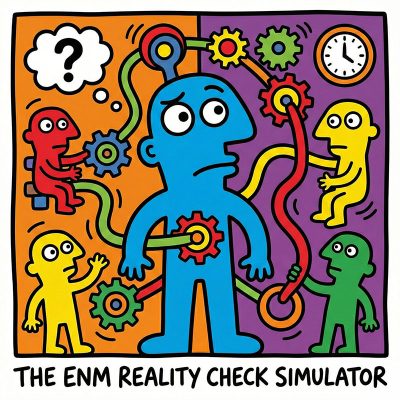
Theory is sexy. Reality is messy. You agreed you could date others, but how does your stomach drop when he takes her to your anniversary spot? Or when she comes home smelling like someone else?
This simulator drags your abstract rules into the harsh light of day. We force you to confront the visceral, gut-wrenching scenarios that actually destroy relationships, before they happen. Test your nervous system in the simulator so you don't crash the car in real life.
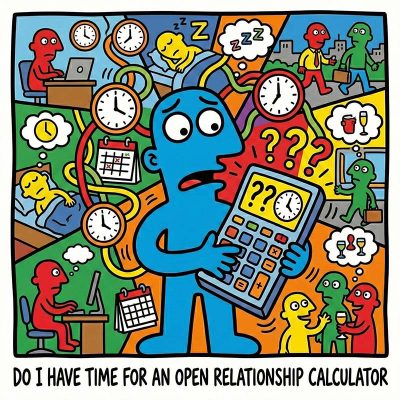
The fantasy is endless romance. The reality? It’s a logistical nightmare. Dating isn't just sex; it’s a second job of swiping, spending, and emotional processing that drains your sanity. Underestimating the "admin" of non-monogamy is the fastest way to turn your relationship into a burnout factory where resentment thrives.
This calculator forces you to confront the brutal math of your time, energy, and wallet. Can you actually afford this lifestyle, or are you just signing up for exhaustion?
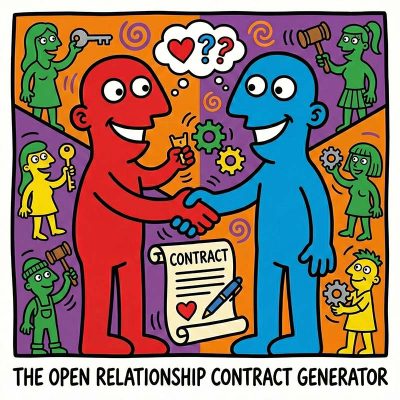
"I thought we agreed" is the sentence that destroys relationships & marriages. Relying on verbal promises when emotions run high is a gamble you cannot afford to lose. Your memory isn't just faulty; it's a liability. Ambiguity is the oxygen that jealousy breathes, turning "freedom" into a minefield of "did I mess up?"
This generator transforms vague permissions into a concrete, signed reality. Stop arguing about what you thought was said and lean on what is written. Secure your boundaries in ink, not hope.
Myth 2 ENM is a cure for all relationship problems
Some people try ENM as a patch for issues in a monogamous relationship. They hope ENM will magically fix loneliness or resentment. The reality is ENM is not a magic bullet. It is a different structure with its own set of challenges. If a couple is struggling with trust or communication ENM does not automatically solve those problems. It can even amplify issues if there is not a solid foundation of respect and clear boundaries. The healthiest ENM relationships use ENM to enhance connection not to avoid dealing with hard emotions or unresolved conflicts.
That said many couples find ENM helpful when both partners are curious and committed to improving communication. They learn to negotiate time boundaries privacy needs and emotional support. The key is intention not novelty. If you are hoping ENM will fix a relationship bring those hopes into the room with your partner and talk them through with honesty and patience.
Myth 3 ENM means unlimited sex with no consequences
Another common misconception is that ENM is all about unlimited sex with no rules. The truth is most ENM arrangements operate through defined boundaries. Boundaries are the rules that govern how people connect with others outside the core relationship. They can cover topics like how much information is shared how often partners see other people where and when sexual activity takes place and what kinds of activities are on the table. ENM clients often develop safety practices around sex including regular STI testing and honest discussion of sexual health histories. Consent remains the backbone of all activities in ENM and it is not a license to do anything and everything.
Boundaries are not prison walls either. They are living agreements that can change if all parties consent to change. The key is ongoing dialogue and mutual respect. When boundaries are revisited with care they can become a powerful tool to protect everyone involved while allowing meaningful connections to grow.
Myth 4 ENM is only about sex
Many people think ENM is all about sexual variety. In practice ENM is often about emotional connection as well as sexual connection. People may form long lasting relationships with more than one partner or they may maintain primarily emotional bonds while engaging in dating or sexual experiences with others. Some ENM relationships focus on companionship shared parenting co starting a business or pursuing shared life goals. Sex may be a part of ENM but it is not the sole purpose nor the only meaningful aspect of ENM relationships. The emphasis is on honesty trust and mutual fulfillment rather than a list of sexual encounters.
While sex is a component for some ENM arrangements it is not a requirement for everyone involved. ENM is flexible and varies from couple to couple and even from person to person within a single emotional network. The bottom line is ENM is not a one size fits all approach. It is a toolbox of options that people bring to their relationships based on consent and desire.
Myth 5 Jealousy means ENM will not work for us
Jealousy is a human emotion that shows up in all kinds of relationships monogamous or not. The claim that ENM automatically eliminates jealousy is simply not true. Jealousy can appear in ENM just as it can appear in monogamy. What changes is how you handle it. ENM communities person often develop practices for dealing with jealousy through communication tools emotional validation and time management. They may use techniques like reflective listening shared calendars or agreed check ins to keep everyone feeling seen and secure. The goal is not to banish jealousy but to respond to it in a healthy way that preserves trust.
Some people experience a reduction in jealousy after engaging in ENM because they gain more information about what their partners do how much they are present in their life and how much attention they receive. For others jealousy remains a challenging feeling that requires patience time and professional guidance if needed. The key is to approach jealousy as a signal rather than a threat and to address it with care rather than avoidance.
Myth 6 ENM means you will date everyone else and never commit
A common storytelling twist is that ENM equals a free for all where people chase endless dates. Real world ENM setups often involve boundaries around how much emotional energy can be allocated to non primary relationships. Some people choose to remain emotionally faithful within multiple connections while others prefer to maintain a wider casual network with limited emotional depth. ENM is not about a rapid rotation of partners. It is about making intentional choices that fit your values and life circumstances. The idea that you must be dating all the time is a stereotype that does not hold for many ENM people.
The freedom of an open relationship sounds incredible, but the logistics can feel like holding a grenade. That spinning "what if" anxiety isn't paranoia, it’s your survival instinct warning you that your bond is exposed. "Just seeing what happens" is the fastest way to turn a fantasy into a breakup.
The Essential Guide replaces chaos with discipline. We give you the blueprints, jealousy protocols, and repair scripts needed to explore the edge without falling off. Don't guess. Secure your foundation first.
The world of non-monogamy is a maze of confusing labels. Trying to be "Polyamorous" when your heart actually needs "Swinging" isn't just a vocabulary error; it’s a recipe for misery.
You can't build a stable home on a foundation that doesn't fit your psychology. This tool analyzes your emotional bandwidth and jealousy triggers to design the exact structure you need. Stop trying to squeeze into a box that doesn't fit. Build a relationship that actually feels like home.
Opening up feels exciting, but if you aren't reading from the same script, you're writing a tragedy. The disconnect between "I want freedom" and "I want safety" is where hearts break. This isn't just a quiz; it’s a synchronization engine.
We identify the silent gaps in your desires—from sleepover rules to emotional bandwidth, before they become unbridgeable chasms. Don't wait until the damage is done to find out you were never on the same page. Align your compasses now.
Theory is sexy. Reality is messy. You agreed you could date others, but how does your stomach drop when he takes her to your anniversary spot? Or when she comes home smelling like someone else?
This simulator drags your abstract rules into the harsh light of day. We force you to confront the visceral, gut-wrenching scenarios that actually destroy relationships, before they happen. Test your nervous system in the simulator so you don't crash the car in real life.
The fantasy is endless romance. The reality? It’s a logistical nightmare. Dating isn't just sex; it’s a second job of swiping, spending, and emotional processing that drains your sanity. Underestimating the "admin" of non-monogamy is the fastest way to turn your relationship into a burnout factory where resentment thrives.
This calculator forces you to confront the brutal math of your time, energy, and wallet. Can you actually afford this lifestyle, or are you just signing up for exhaustion?
"I thought we agreed" is the sentence that destroys relationships & marriages. Relying on verbal promises when emotions run high is a gamble you cannot afford to lose. Your memory isn't just faulty; it's a liability. Ambiguity is the oxygen that jealousy breathes, turning "freedom" into a minefield of "did I mess up?"
This generator transforms vague permissions into a concrete, signed reality. Stop arguing about what you thought was said and lean on what is written. Secure your boundaries in ink, not hope.
Myth 7 ENM is only for younger people or certain cultures
ENM is not a trend reserved for a particular age group or cultural background. People of many ages and backgrounds explore ENM for a variety of reasons. What matters most is consent open communication and the willingness to renegotiate boundaries as life changes. Some older couples explore ENM as a way to expand their social networks or reconnect after a long term relationship. Younger people may be drawn to ENM for curiosity or to match a evolving view of relationships in a modern world. The common thread is that ENM can work for many different life stages when approached with care and respect for all involved.
Myth 8 ENM requires radical transparency about every thought
Transparency is valued in ENM but it does not mean you must reveal every single thought to every partner at every moment. What is important is honest communication about feelings needs desires and boundaries. You do not need to disclose private fantasies that do not involve others or that would harm someone else without consent. The practice of ethical non monogamy emphasizes consent and respect rather than exhaustive mental disclosure. It is possible to maintain privacy in areas that do not impact the safety or well being of others during the relationship dynamic.
Myth 9 ENM means chaos or a lack of stability
Some people imagine ENM as a chaotic lifestyle with no structure. In reality ENM works best when there is clear governance by agreed upon boundaries routines and communication rituals. Successful ENM relationships often include scheduled time for partners to check in share updates plan dates and address issues before they grow legs. Stability in ENM comes from predictable processes not from rigid control. You can have steady routines that provide security while still allowing flexibility for new connections.
Myth 10 ENM implies a person is not monogamy capable
Believing that someone who practices ENM cannot commit to monogamy is simply false. People can hold a preference for a single primary relationship yet still explore meaningful connections with others within defined boundaries. In many cases ENM is chosen by people who want to stay connected to a primary partner while also nurturing other friendships or romantic ties. It is not about moral superiority or weakness it is about personal preference and mutual consent. If a person decides to pursue ENM that does not mean they lack the ability to stay faithful it means they have chosen a different framework for love and connection.
Myth 11 ENM does not work with families or parenting
Families and parenting can exist within ENM just like they can in monogamy. The key lies in open communication with all stakeholders and clear boundaries that protect children and shared values. Some families decide to keep certain details private from ex partners or extended family while others share more information through age appropriate conversations. The core principle is to prioritize safety and emotional well being of children and to discuss parenting plans openly with all adults involved. ENM does not automatically unsettle a family life it can enrich it when handled with care and respect.
Myth 12 ENM means you must be straight or cisgender
ENM is inclusive across sexual orientations and gender identities. People who identify as straight gay lesbian bisexual pansexual asexual and many other identities practice ENM. The common thread is consent honest communication and mutual respect not a specific sexual orientation. ENM frameworks can be adapted to different identities and relationship goals in ways that feel authentic and ethical for everyone involved.
Myth busting in real life practical approaches
Let us ground these myths with some practical steps you can take if ENM is on your radar. These steps are useful whether you are exploring ENM as a couple a triad or a wider network. They also apply to people who are curious about ENM but not sure where to start.
- Start with curiosity not judgment Decide what you want to know about ENM and why it appeals or does not appeal to you. Approach discussions with curiosity and a willingness to listen more than you speak.
- Educate yourself with reliable sources Read books articles and guides from trusted voices in the ENM community. Learn terms and concepts so you can join conversations with confidence.
- Differentiate your feelings from positions When jealousy or fear arises identify the emotion and separate it from a statement about a partner. This makes conversations less accusatory and more constructive.
- Practice small conversations Begin with simple questions like What would make you feel safe if we explored ENM together? or What boundaries would make this better for you? Build up to more complex topics as trust grows.
- Have a written consent plan Agree on how you will handle new connections what information you will share and how you will revisit decisions if life changes. Put these as a living document that you revisit regularly.
- Establish safety practices Keep up to date on sexual health testing share results when appropriate and discuss how you will maintain safety while dating or connecting with others.
- Seek external support if needed If you find jealousy or communication difficult consider talking to a therapist who has experience with non monogamous dynamics. A professional can offer tools that fit your life without judgment.
Talking about ENM with partners family and friends
If you are curious or exploring ENM talking about it with your partner is a must. Start from a place of respect and honesty. Do not assume a response. Give space for questions and be prepared for emotions some of which may be uncomfortable. When talking with family or friends aim to be concise and practical. People who love you want to understand what you want and how you plan to stay safe and kind to everyone involved.
Begin with the basics describe your reasons for interest and then outline the boundaries and safety measures you plan to follow. Reassure loved ones that you value the relationship you have with them even as you explore something new. If conversations become heated or tense take a break and revisit them when every party has had time to reflect.
Glossary of useful terms and acronyms
- ENM Ethical non monogamy a relationship style that embraces multiple connections with the consent of all involved.
- Ethical The practice of obtaining informed consent and playing by agreed rules rather than hidden actions.
- Non monogamy A approach to relationships that includes more than one romantic or sexual partner.
- Consent A clear enthusiastic agreement given freely by all parties involved.
- Primary partner The person who holds a central place in a couple or network and often shares responsibilities like living together dating or parenting.
- Boundary A rule or expectation that helps keep relationships safe and respectful.
- Jealousy A natural feeling that can arise when a partner forms a connection with someone else. It is a signal to pause reflect and discuss rather than a reason to end things.
- Compersion The positive feeling of happiness for a partner s joy with someone else.
- Polyamory A form of ENM that emphasizes love and connections with multiple partners over time.
- Swinging A form of ENM commonly focused on sexual activity with others often while sharing a primary partner with limited emotional involvement.
- Open relationship A relationship that permits dating or sexual activity outside the primary relationship array with varying levels of emotional attachment.
- Communication ritual A regular practice that helps partners share feelings needs and boundaries in a constructive way.
- Sexual health Practices and testing that protect partners from sexually transmitted infections and other health risks.
Frequently asked questions
The freedom of an open relationship sounds incredible, but the logistics can feel like holding a grenade. That spinning "what if" anxiety isn't paranoia, it’s your survival instinct warning you that your bond is exposed. "Just seeing what happens" is the fastest way to turn a fantasy into a breakup.
The Essential Guide replaces chaos with discipline. We give you the blueprints, jealousy protocols, and repair scripts needed to explore the edge without falling off. Don't guess. Secure your foundation first.
The world of non-monogamy is a maze of confusing labels. Trying to be "Polyamorous" when your heart actually needs "Swinging" isn't just a vocabulary error; it’s a recipe for misery.
You can't build a stable home on a foundation that doesn't fit your psychology. This tool analyzes your emotional bandwidth and jealousy triggers to design the exact structure you need. Stop trying to squeeze into a box that doesn't fit. Build a relationship that actually feels like home.
Opening up feels exciting, but if you aren't reading from the same script, you're writing a tragedy. The disconnect between "I want freedom" and "I want safety" is where hearts break. This isn't just a quiz; it’s a synchronization engine.
We identify the silent gaps in your desires—from sleepover rules to emotional bandwidth, before they become unbridgeable chasms. Don't wait until the damage is done to find out you were never on the same page. Align your compasses now.
Theory is sexy. Reality is messy. You agreed you could date others, but how does your stomach drop when he takes her to your anniversary spot? Or when she comes home smelling like someone else?
This simulator drags your abstract rules into the harsh light of day. We force you to confront the visceral, gut-wrenching scenarios that actually destroy relationships, before they happen. Test your nervous system in the simulator so you don't crash the car in real life.
The fantasy is endless romance. The reality? It’s a logistical nightmare. Dating isn't just sex; it’s a second job of swiping, spending, and emotional processing that drains your sanity. Underestimating the "admin" of non-monogamy is the fastest way to turn your relationship into a burnout factory where resentment thrives.
This calculator forces you to confront the brutal math of your time, energy, and wallet. Can you actually afford this lifestyle, or are you just signing up for exhaustion?
"I thought we agreed" is the sentence that destroys relationships & marriages. Relying on verbal promises when emotions run high is a gamble you cannot afford to lose. Your memory isn't just faulty; it's a liability. Ambiguity is the oxygen that jealousy breathes, turning "freedom" into a minefield of "did I mess up?"
This generator transforms vague permissions into a concrete, signed reality. Stop arguing about what you thought was said and lean on what is written. Secure your boundaries in ink, not hope.
