
Consent as the Foundation of Non Monogamous Relationships

Welcome to a straight talking, no fluff guide about consent in the world of ethical non monogamy. If you thought consent was just a box to tick or a one time check in the early days of a relationship you are not alone. The reality is that in ENM short for Ethical Non Monogamy consent is a living, breathing practice. It sits at the center of how we build trust, navigate complexity and stay connected with honesty. This article breaks down the ideas, terms and practical tools you can use to make consent the foundation of all your non monogamous adventures. We will explain terms as we go so you can walk away with clarity and confidence instead of buzz words and confusion.
Quick Links to Useful Sections
- What is ENM and why consent matters
- Core concepts you need to know
- Enm defined
- Consenting actors
- Enthusiastic consent versus silent consent
- Ongoing consent
- Consent and safety
- Boundaries versus agreements in ENM
- Why both matter
- How to have consent focused conversations
- Practical steps to establish consent as a habit
- Negotiating consent in different ENM configurations
- One primary partner with multiple secondary partners
- Triads and polycules with evolving roles
- Dating someone new while in a CNM network
- Common myths about consent in ENM and the truths
- Ethical considerations and power dynamics
- Handling coercion avoidance
- Safer sex and health as a consent practice
- Practical tools to support consent in ENM
- Real world scenarios you can learn from
- Scenario A you want to date someone new
- Scenario B jealousy surfaces after a new partner joins
- Scenario C health concerns require a pause
- Scenario D a new partner asks for exclusive time
- Glossary of useful terms and acronyms
- Frequently asked questions
- Putting consent into practice in The Monogamy Experiment style
What is ENM and why consent matters
ENM stands for Ethical Non Monogamy a relationship style where people choose to have romantic or sexual connections with more than one person with the knowledge and consent of everyone involved. ENM is not a free for all it is a conscious choice to approach love and attraction with openness and respect. Consent is the agreement to engage in any activity whether that is dating, kissing, flirting, sex or emotional intimacy. In ENM consent is not a single moment it is an ongoing process that travels with every new person and every shift in the dynamic. In other words consent is the floor not the ceiling. It is the baseline that keeps the party ethical and enjoyable for everyone involved.
Consent in ENM is about clarity communication and care. It means asking for what you want listening to what others want and being prepared to hear No as a complete answer. It also means creating space for Yes and for the many gracias and maybe s that come up as relationships evolve. The goal is to build a culture where people feel safe to express themselves even when what they want is different from what someone else wants. When consent exists as a continuous practice it reduces guesswork and lowers the risk of hurt feelings because people know where they stand and how to proceed with care.
Core concepts you need to know
Enm defined
Ethical Non Monogamy is a framework that prioritizes honesty respect and consent. It recognizes that love and attraction can be plural and that good agreements can be created to support multiple intimate connections while protecting everyone involved. ENM does not mean chaos it means deliberate process and ongoing negotiation that reflects the needs and boundaries of all partners.
Consenting actors
In ENM everyone involved should have a voice. Consent is best when all parties have equal opportunity to express their desires concerns and limits. This includes primary partners secondary partners and any new people joining the network. The principle is not about who is in charge it is about ensuring everyone has agency and their boundaries are respected.
Enthusiastic consent versus silent consent
Enthusiastic consent means a clear and affirmative yes not a quiet or hesitant agreement. It is better to hear a confident yes than to assume. Silent consent is not a reliable signal in ENM because people can be polite shy or scared to voice their wishes. Enthusiastic consent is a practical habit that strengthens trust and keeps the relationship dynamic healthy.
Ongoing consent
Consent is not a one and done moment it is a living agreement that can shift as feelings evolve. Someone might say yes to a new dating partner today and later decide they would prefer not to participate in certain activities with that person. Ongoing consent means you check in regularly set new boundaries when needed and respect every change of mind with grace.
Consent and safety
Consent is closely tied to safety in ENM. Safety includes physical safety emotional well being and sexual health. Clear consent conversations help manage risk and ensure that safety choices are shared and agreed upon. Safer sex practices STI testing and honest discussions about what activities you are comfortable with are all part of responsible ENM.
The freedom of an open relationship sounds incredible, but the logistics can feel like holding a grenade. That spinning "what if" anxiety isn't paranoia, it’s your survival instinct warning you that your bond is exposed. "Just seeing what happens" is the fastest way to turn a fantasy into a breakup.
The Essential Guide replaces chaos with discipline. We give you the blueprints, jealousy protocols, and repair scripts needed to explore the edge without falling off. Don't guess. Secure your foundation first.
The world of non-monogamy is a maze of confusing labels. Trying to be "Polyamorous" when your heart actually needs "Swinging" isn't just a vocabulary error; it’s a recipe for misery.
You can't build a stable home on a foundation that doesn't fit your psychology. This tool analyzes your emotional bandwidth and jealousy triggers to design the exact structure you need. Stop trying to squeeze into a box that doesn't fit. Build a relationship that actually feels like home.
Opening up feels exciting, but if you aren't reading from the same script, you're writing a tragedy. The disconnect between "I want freedom" and "I want safety" is where hearts break. This isn't just a quiz; it’s a synchronization engine.
We identify the silent gaps in your desires—from sleepover rules to emotional bandwidth, before they become unbridgeable chasms. Don't wait until the damage is done to find out you were never on the same page. Align your compasses now.
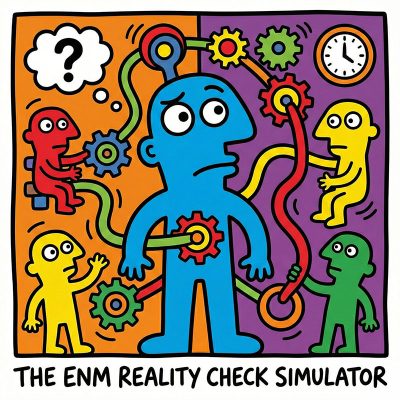
Theory is sexy. Reality is messy. You agreed you could date others, but how does your stomach drop when he takes her to your anniversary spot? Or when she comes home smelling like someone else?
This simulator drags your abstract rules into the harsh light of day. We force you to confront the visceral, gut-wrenching scenarios that actually destroy relationships, before they happen. Test your nervous system in the simulator so you don't crash the car in real life.
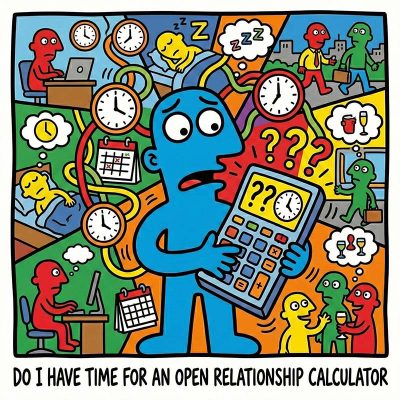
The fantasy is endless romance. The reality? It’s a logistical nightmare. Dating isn't just sex; it’s a second job of swiping, spending, and emotional processing that drains your sanity. Underestimating the "admin" of non-monogamy is the fastest way to turn your relationship into a burnout factory where resentment thrives.
This calculator forces you to confront the brutal math of your time, energy, and wallet. Can you actually afford this lifestyle, or are you just signing up for exhaustion?
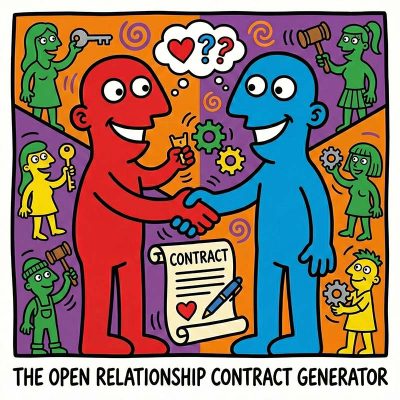
"I thought we agreed" is the sentence that destroys relationships & marriages. Relying on verbal promises when emotions run high is a gamble you cannot afford to lose. Your memory isn't just faulty; it's a liability. Ambiguity is the oxygen that jealousy breathes, turning "freedom" into a minefield of "did I mess up?"
This generator transforms vague permissions into a concrete, signed reality. Stop arguing about what you thought was said and lean on what is written. Secure your boundaries in ink, not hope.
Boundaries versus agreements in ENM
In ENM you will hear about boundaries and agreements. Boundaries are personal lines that you set for yourself sometimes with the help of others. They describe what you are not willing to do what makes you uncomfortable and what you need to feel safe. Agreements are explicit negotiated understandings with other people in your network. They spell out who is involved what activities are allowed where and when. A boundary might be I am not comfortable with a partner seeing someone on weeknights. An agreement might be Our couple allows a new partner to date us both but requires weekly check ins and STI testing every three months. Boundaries are inner and personal agreements are outward facing and shared. Both are essential for a healthy ENM setup.
Why both matter
Boundaries protect your inner self and your emotional energy. Agreements structure the outward relationships making sure everyone has a fair chance to participate and understand the rules. The best ENM cultures treat boundaries as living and flexible while agreements are treated as living documents that change as the relationship grows. The combination supports a fair and resilient network of connections rather than a fragile set of rigid rules.
How to have consent focused conversations
Consent conversations are not lectures they are collaborative dialogues. Here is a practical method you can use in real life to keep conversations clear and kind.
- Set a real time to talk Schedule a dedicated time when you and your partner(s) can talk without interruptions. This is not a text thread that drags on for days. Face to face or video chat works best for emotional nuance.
- Lead with your needs Start with what you want and why it matters to you. Use I statements to own your feelings and avoid making the other person feel blamed.
- Ask open ended questions Questions like What are you hoping for in this dynamic or How would this decision affect you help keep the conversation collaborative rather than combative.
- Invite clarifying questions Encourage questions from the other person and answer honestly. Clarification reduces assumptions which are the root of most miscommunications.
- Summarize and document End with a summary of what was agreed and or what needs more discussion. If possible write it down in a shared space so everyone can refer back to it later.
- Normalize pauses It is okay to take a break during a conversation especially if emotions run high. Pausing shows you respect the process and are committed to a thoughtful outcome.
Practical steps to establish consent as a habit
Practicing consent is a daily discipline not a one off event. Here are ways to weave consent into the fabric of your ENM life.
- Create a consent ritual A simple habit such as a weekly check in with your primary partner or a monthly review with your wider network can keep consent front and center. Rituals create predictable safety and trust.
- Use explicit language Do not rely on vibes or vague signals. Spell out what you want what you do not want and what changes you are willing to consider. Clarity reduces confusion and pain.
- Document agreements A shared document a private app or a notebook kept by the group can serve as a reference point for every participant. Documentation is not a cage it is a map you can revisit.
- Check in about timing The right thing yesterday may not be right today. Regular timing checks make space for people to change their minds safely.
- Practice compassionate confrontation When a boundary is crossed address it quickly with care. Focus on impact not intent and invite dialogue to repair trust.
Negotiating consent in different ENM configurations
ENM networks come in many shapes from simple two person models with a single secondary partner to multi partner polycules. The consent work scales with the complexity of the dynamic. Here are some practical ideas for common configurations.
One primary partner with multiple secondary partners
In this setup the primary partner may want more influence over the shared structure. The key is to ensure all partners feel seen and that limits are respected. Create a weekly trio check in where everyone can voices needs and adjust agreements as necessary. The primary can hold gentle responsibility for maintaining overall harmony but each secondary should always have an equal capacity to express consent or concerns.
Triads and polycules with evolving roles
In a triad or polycule the dynamic can shift when new connections form. Maintain a living document that outlines who is involved what activities are permitted and what the ground rules are for new additions. Schedule regular group conversations to revisit agreements and address jealousy or discomfort proactively rather than letting it fester.
Dating someone new while in a CNM network
Introducing a new partner is a high stakes consent moment. Start early with transparent disclosures that cover time commitments finances expectations and sexual health practices. Encourage the new partner to meet existing partners and to participate in a consent oriented culture from day one. Keep the door open for all current partners to share their feelings and concerns as the relationship with the new person develops.
Common myths about consent in ENM and the truths
Misconceptions can derail healthy ENM. Let us debunk some common myths here so you can approach consent with clarity.
Myth 1: Consent is a one time event and you can move on once you have it. Truth: Consent is ongoing and can be renegotiated at any time. It is a living agreement that changes as needs evolve.
Myth 2: You can get consent from a person but not from the relationship. Truth: Consent is about all activities and all people involved. The relationship level consent supports the specific activities you are pursuing together.
Myth 3: If someone smiles and nods during a conversation they are consenting. Truth: A smile can be polite but not a clear yes. Seek explicit affirmative signals before proceeding with any intimate or emotional activity.
Myth 4: Jealousy means the arrangement is bad or unethical. Truth: Jealousy is a signal that deserves attention. It is an invitation to discuss what the person needs and how the dynamic can be adjusted to reduce pain and increase security.
Myth 5: If it feels complicated I must stop exploring ENM. Truth: Complexity is normal in ENM. With good consent practices you can navigate complexity with more skill and more compassion for all involved.
Ethical considerations and power dynamics
Power dynamics show up in subtle ways in every relationship. In ENM it is essential to remain mindful of how privilege age income gender or sexuality might influence who gets listened to more often who gets invited to more conversations and who can move at a different pace. The ethical path is to deliberately center those who are most at risk of being overlooked and to create processes that enable equal participation. Regularly invite feedback from all parties and welcome uncomfortable feedback as a gift that helps you grow.
Handling coercion avoidance
Coercion is not always intentional sometimes people rationalize pressure as passion or commitment. The antidote is clear explicit consent and a culture that rewards speaking up. If anyone feels pressured to say yes it is a red flag and you should pause the activity or step back while you reassess the situation. Coercion undermines trust and destroys safety which is the opposite of what ENM should be about.
Safer sex and health as a consent practice
Health considerations are central to responsible ENM. Clear conversations about sexual health testing boundaries for sexual activities and use of protection should be part of every meaningful consent conversation. Here are practical steps you can take.
- Test regularly Agree on a testing schedule and share results with all involved partners. Transparency about health status reduces anxiety and builds trust.
- Use protection Have a shared understanding of what protections will be used for different activities and make sure everyone consents to those practices.
- Disclose exposure honestly If you have been exposed or feel unwell communicate quickly and clearly and pause activities if needed.
- Respect boundaries around intimate acts Respect any partner who prefers no certain acts or who wants to avoid certain types of contact even within a broader ENM framework.
Practical tools to support consent in ENM
Tools can keep consent visible even when life gets busy. Here are some practical options you can adapt to fit your rhythm and comfort level.
- Check in templates Short structured prompts you can reuse in messages or in person focusing on emotions needs boundaries and changes.
- Boundaries and agreements document A living document that outlines you and your partners comfort levels for dating activities communication expectations and health practices.
- Consent rituals A weekly or monthly routine that includes a quick circle check where everyone can share feelings and any new boundaries or agreements that need updating.
- Emotion log A private or shared journal where partners can note feelings jealousy excitement or insecurity. This supports open conversations rather than letting emotions fester.
Real world scenarios you can learn from
Seeing consent in action can make the concepts feel tangible. Here are some realistic scenarios showing how consent can guide decisions in ENM without turning relationships into complicated mazes.
Scenario A you want to date someone new
You discover a potential new partner who sparks interest. You invite your primary partner to a conversation about how a new person could fit into your life. You discuss time allocation emotional availability and how you will handle boundaries around intimate activities. You both practice active listening and agree to a probationary period during which you will check in weekly. The new partner is invited to meet everyone gradually and to participate in consent conversations from day one. The result is a plan that feels fair respectful and adaptable rather than tense and uncertain.
Scenario B jealousy surfaces after a new partner joins
Jealousy is a sign that something is not aligned rather than a failure of the relationship. You hold a calm check in to name what is triggering the emotion and to clarify what is missing. People may realize they need more one on one time with a partner or more transparency about scheduling. You agree to increase weekly check ins and adjust the comfort levels around certain activities. The end goal is a clearer map that reduces fear and increases confidence in the relationship network.
Scenario C health concerns require a pause
One partner discovers a potential STI exposure. The group agrees to pause sexual activities with new partners and to schedule immediate testing for everyone involved. You also implement stricter safety practices and extend the health conversation to include risk management for the next month. After health clearances you revisit the plan and resume under updated consent terms. The outcome is a prioritized commitment to safety that respects the well being of all parties.
Scenario D a new partner asks for exclusive time
An external partner proposes exclusive time with one member of the network. The group discusses what exclusive time would mean for the rest of the network. They explore whether exclusivity is a temporary trial and how it would impact scheduling and emotional energy. They decide to pursue a limited exclusive arrangement with clear limits and a defined review date. Everyone has a chance to voice concerns and all agreements are documented. This approach keeps the door open for future changes without pressure or coercion.
Glossary of useful terms and acronyms
- ENM Ethical Non Monogamy a framework that prioritizes consent honesty and respect in multiple relationships.
- CNM Consensual Non Monogamy another common term used interchangeably with ENM.
- Consent A clear voluntary agreement to engage in a specific activity with another person at that moment or in a given context.
- Boundary A personal limit that guides what you are willing or not willing to experience in a relationship or interaction.
- Agreement A negotiated understanding with one or more partners about activities and expectations including safety or health practices.
- Boundaries versus agreements Boundaries are about personal limits; agreements describe shared rules for group interactions.
- Ongoing consent Consent that is revisited and reaffirmed regularly as feelings and circumstances change.
- Jealousy An emotional response that signals a need for more security or clarity in the relationship dynamics.
- Compersion A feeling of joy from a partner s happiness with someone else a term used by some in ENM communities.
- Safer sex Practices and agreements aimed at reducing the risk of sexually transmitted infections when engaging in sexual activity with multiple partners.
- Health disclosure Open sharing of health information to ensure informed consent and safety for all involved.
Frequently asked questions
What is ethical non monogamy ENM
ENM means choosing to form romantic or sexual connections with more than one person with the knowledge and consent of everyone involved. It is guided by honesty respect and ongoing communication rather than secrecy or deceit.
How is consent different in ENM compared to monogamous relationships
In ENM consent is continuous and not tied to a single partner. It involves explicit agreements with multiple people and frequent check ins to ensure everyone remains comfortable with the evolving dynamics.
What if I want to try something new with a partner but my partner says no
Respect the boundary. If a partner says no it means your partner does not consent to that activity with you or in that context. You can pause explore alternatives or renegotiate at a later time if all parties consent to revisiting the topic.
How do I bring up consent without sounding clinical
Lead with care and curiosity. Use simple language focus on your feelings and ask questions that invite a dialogue rather than a verdict. The goal is connection not performance in a conversation.
How often should we revisit our agreements
Regular check ins are recommended typically every few weeks to months depending on the pace of your relationships. If life changes such as a new partner or a major event occur schedule a dedicated discussion to reassess.
What should I do if someone withdraws consent
Respect the withdrawal immediately. Pause the activity and discuss what changes need to be made to accommodate the new boundary. Reassurance and a plan to move forward respectfully are key to maintaining trust.
Is it necessary to document consent agreements
Documentation is not mandatory but it can be extremely helpful in keeping everyone aligned. A shared document or a simple note can prevent miscommunications and serve as a reminder during busy times.
How do we handle health disclosures and safer sex in ENM
Open conversations about health testing protection and boundaries create a safer network. Agree on testing schedules share results with all involved and apply protective practices consistently across all activities.
Can consent be changed after it is given
Yes consent can be changed at any time. The core value is ongoing respect for each person s current boundaries and comfort levels. If any partner changes their mind the new stance should be honored immediately.
Putting consent into practice in The Monogamy Experiment style
Here is a practical wrap up you can take into your own life. We approach ENM with clear honest language and a sense of humor because relationships should feel alive not stiff. The goal is to build a world where consent is obvious and effortless so people can focus on connection and fun instead of confusion and fear.
Remember these key points as you move forward:
- Consent is ongoing and evolving and never finished.
- Boundaries protect your inner space while agreements protect the outer space of your group dynamic.
- Communication is a muscle that improves with practice and patience.
- Health safety and respect are non negotiables and must be woven into every conversation.
- Jealousy is a signal not a verdict. Listen to it and adjust rather than suppress it.
By making consent the foundation you create space for authentic connection in ENM while reducing risk and increasing the potential for joy. The Monogamy Experiment is here to remind you that great relationships start with clear communication and a willingness to learn and grow together. Consent is not a prison wall it is a doorway into deeper trust and shared adventure. So talk often ask kindly listen deeply and keep refining your agreements as your lives unfold.
The freedom of an open relationship sounds incredible, but the logistics can feel like holding a grenade. That spinning "what if" anxiety isn't paranoia, it’s your survival instinct warning you that your bond is exposed. "Just seeing what happens" is the fastest way to turn a fantasy into a breakup.
The Essential Guide replaces chaos with discipline. We give you the blueprints, jealousy protocols, and repair scripts needed to explore the edge without falling off. Don't guess. Secure your foundation first.
The world of non-monogamy is a maze of confusing labels. Trying to be "Polyamorous" when your heart actually needs "Swinging" isn't just a vocabulary error; it’s a recipe for misery.
You can't build a stable home on a foundation that doesn't fit your psychology. This tool analyzes your emotional bandwidth and jealousy triggers to design the exact structure you need. Stop trying to squeeze into a box that doesn't fit. Build a relationship that actually feels like home.
Opening up feels exciting, but if you aren't reading from the same script, you're writing a tragedy. The disconnect between "I want freedom" and "I want safety" is where hearts break. This isn't just a quiz; it’s a synchronization engine.
We identify the silent gaps in your desires—from sleepover rules to emotional bandwidth, before they become unbridgeable chasms. Don't wait until the damage is done to find out you were never on the same page. Align your compasses now.
Theory is sexy. Reality is messy. You agreed you could date others, but how does your stomach drop when he takes her to your anniversary spot? Or when she comes home smelling like someone else?
This simulator drags your abstract rules into the harsh light of day. We force you to confront the visceral, gut-wrenching scenarios that actually destroy relationships, before they happen. Test your nervous system in the simulator so you don't crash the car in real life.
The fantasy is endless romance. The reality? It’s a logistical nightmare. Dating isn't just sex; it’s a second job of swiping, spending, and emotional processing that drains your sanity. Underestimating the "admin" of non-monogamy is the fastest way to turn your relationship into a burnout factory where resentment thrives.
This calculator forces you to confront the brutal math of your time, energy, and wallet. Can you actually afford this lifestyle, or are you just signing up for exhaustion?
"I thought we agreed" is the sentence that destroys relationships & marriages. Relying on verbal promises when emotions run high is a gamble you cannot afford to lose. Your memory isn't just faulty; it's a liability. Ambiguity is the oxygen that jealousy breathes, turning "freedom" into a minefield of "did I mess up?"
This generator transforms vague permissions into a concrete, signed reality. Stop arguing about what you thought was said and lean on what is written. Secure your boundaries in ink, not hope.
