
Deciding Who to Tell and When


Ethical nonmonogamy or ENM is a dynamic where people choose to pursue romantic or sexual connections with more than one partner with everyone’s consent and clear agreements. The big question for many ENM households is not just who to tell but when to tell and how to tell in a way that respects everyone involved. This guide walks you through practical strategies, real life scenarios, and conversation scripts that you can adapt to your unique setup. We will break down terms as we go so you can speak confidently no matter who you are telling.
Quick Links to Useful Sections
- What ENM means in everyday life
- The central question: who to tell and when
- The three guiding questions
- A practical framework for deciding who to tell first
- Step 2: expand to the core circle who shares life or decision making
- Step 3: consider telling casual or peripheral connections with care
- Timing strategies for telling new partners about existing ENM dynamics
- Early disclosure before intimacy
- Disclosure after a few dates
- When NRE is in play
- Practical scripts you can adapt
- Template A: Primary partner to start the conversation
- Template B: New date or potential partner about ENM
- Template C: Communicating with a friend who asks about your dating life
- Template D: Addressing a difficult reaction
- Conversations that invite trust rather than defensiveness
- Managing privacy and boundaries in social spaces
- Health and safety disclosures in ENM
- What to do if someone is not comfortable with ENM
- Practical tips for telling parents, family or colleagues
- Handling potential fallout with grace
- Is miscommunication the real obstacle here
- Checklist for practical disclosure progress
- What if the strategy changes your relationship status
- Glossary of useful terms and acronyms
- Frequently asked questions
What ENM means in everyday life
First a quick map of the terrain. ENM stands for ethical nonmonogamy. This is a framework rather than a single rule set. In ENM you choose to seek connections with more than one partner with the consent of all involved. There are many flavors of ENM including polyamory where multiple romantic relationships may be ongoing, swinging which often centers on sexual experiences with others while maintaining a primary relationship, and open relationships which allow dating or sexual encounters outside a primary bond. No one is required to follow the same rules as another couple or person. The key ingredients are consent, honesty and ongoing communication.
Let us unpack a few terms you will see in this guide so you feel confident when you read or speak about ENM with others.
- ENM Ethical nonmonogamy. A broad term that covers many relationship styles where more than one romantic or sexual connection is pursued with consent.
- Primary partner The person who is for many people the main focus of time, energy or housing arrangements. This term is about practical dynamics rather than superiority and can look different in every household.
- Secondary partner A partner who is important but not the main focus of daily life. In ENM this can be fluid and change over time.
- Meta Short for metamate. A person who is a partner of your partner. The meta is part of your partner circle but not necessarily part of your own romantic life.
- New relationship energy Often abbreviated as NRE. The intense feelings that show up when a new relationship begins. It can color perception and decision making so recalibration is important.
- Disclosure The act of sharing information about your relationships or activities with a partner in a respectful and timely way.
- Consent A clear, voluntary agreement given without pressure. In ENM consent is ongoing and can be revisited as relationships grow or shift.
- Safe sex and STI STI stands for sexually transmitted infection. Safe sex means taking steps to lower risk and protect health for all involved.
- Boundaries Agreements that define what is okay and what is not. Boundaries are personal and dynamic and should be discussed openly.
- Jealousy A common emotion that can show up in ENM. It is a signal to slow down, reassess agreements, or seek support rather than a reason to end a relationship.
The central question: who to tell and when
In ENM the decision about disclosure is not one size fits all. It is a process of dialogue and negotiation with care for the feelings and safety of everyone involved. The how and when of disclosure will depend on your relationships, your community, your personal values and your goals for your connections. The goal is to maintain trust while protecting privacy where needed. Below are guiding questions you can use to map your approach.
The three guiding questions
- What is the impact on health and safety and what needs to be shared for informed consent?
- Who benefits from the information and who could be harmed by not sharing it?
- What is the right timing to share so that the information can be absorbed and discussed rather than reacted to emotionally?
Let us translate these questions into practical steps you can take in real life. You will see patterns that work for many ENM households and you can tailor them to your own situation.
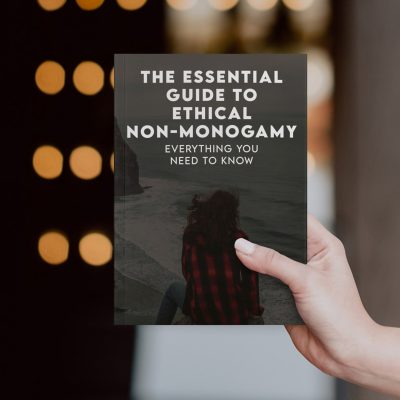
The freedom of an open relationship sounds incredible, but the logistics can feel like holding a grenade. That spinning "what if" anxiety isn't paranoia, it’s your survival instinct warning you that your bond is exposed. "Just seeing what happens" is the fastest way to turn a fantasy into a breakup.
The Essential Guide replaces chaos with discipline. We give you the blueprints, jealousy protocols, and repair scripts needed to explore the edge without falling off. Don't guess. Secure your foundation first.
The world of non-monogamy is a maze of confusing labels. Trying to be "Polyamorous" when your heart actually needs "Swinging" isn't just a vocabulary error; it’s a recipe for misery.
You can't build a stable home on a foundation that doesn't fit your psychology. This tool analyzes your emotional bandwidth and jealousy triggers to design the exact structure you need. Stop trying to squeeze into a box that doesn't fit. Build a relationship that actually feels like home.
Opening up feels exciting, but if you aren't reading from the same script, you're writing a tragedy. The disconnect between "I want freedom" and "I want safety" is where hearts break. This isn't just a quiz; it’s a synchronization engine.
We identify the silent gaps in your desires—from sleepover rules to emotional bandwidth, before they become unbridgeable chasms. Don't wait until the damage is done to find out you were never on the same page. Align your compasses now.
Theory is sexy. Reality is messy. You agreed you could date others, but how does your stomach drop when he takes her to your anniversary spot? Or when she comes home smelling like someone else?
This simulator drags your abstract rules into the harsh light of day. We force you to confront the visceral, gut-wrenching scenarios that actually destroy relationships, before they happen. Test your nervous system in the simulator so you don't crash the car in real life.
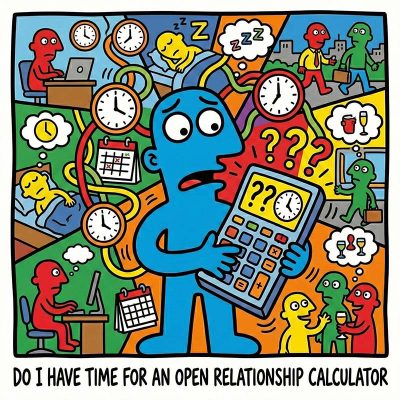
The fantasy is endless romance. The reality? It’s a logistical nightmare. Dating isn't just sex; it’s a second job of swiping, spending, and emotional processing that drains your sanity. Underestimating the "admin" of non-monogamy is the fastest way to turn your relationship into a burnout factory where resentment thrives.
This calculator forces you to confront the brutal math of your time, energy, and wallet. Can you actually afford this lifestyle, or are you just signing up for exhaustion?
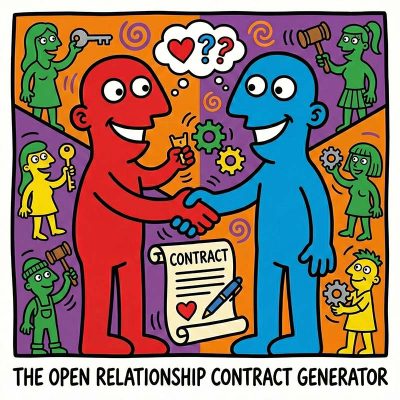
"I thought we agreed" is the sentence that destroys relationships & marriages. Relying on verbal promises when emotions run high is a gamble you cannot afford to lose. Your memory isn't just faulty; it's a liability. Ambiguity is the oxygen that jealousy breathes, turning "freedom" into a minefield of "did I mess up?"
This generator transforms vague permissions into a concrete, signed reality. Stop arguing about what you thought was said and lean on what is written. Secure your boundaries in ink, not hope.
A practical framework for deciding who to tell first
Think about disclosure as a layered conversation. You can usually move from inner circle to outer circle. Here is a simple framework that many ENM folks find helpful.
In most ENM arrangements your primary partner or partners are central to your life. Start with direct, honest conversation about the ENM concerns and what this means for your shared life. This is not just a talk about sex. It is a communication about values, boundaries, time, energy, risk and emotional weather. In this step you do not need to reveal every detail about every encounter. You do need to share your intentions, consent expectations and the ground rules you want to explore together. This step sets a baseline that makes disclosure to others possible in the future.
Step 2: expand to the core circle who shares life or decision making
This layer includes partners who are actively involved in your life in meaningful ways. In polyamory terms these people might be other key partners or close friends who function as a kind of chosen family in your network. The aim is to approach these people with honesty while offering space for questions and concerns. The approach here is to explain why ENM is working for you, how decisions are made as a group and what safety boundaries you want to maintain. Respect the pace and be prepared to answer questions about time management, finances, childcare and emotional energy.
Step 3: consider telling casual or peripheral connections with care
People you know socially but do not rely on for major life decisions can be informed in several different ways. Some couples choose to be open about their ENM in social circles to reduce rumor and drama. Others prefer to keep casual dating relationships out of their extended network to protect privacy. The key is to avoid over sharing to the point where you invite gossip or create pressure on people who are not ready to engage with ENM as a lifestyle. You can still practice transparent consent with short, clear boundaries for these relationships while maintaining privacy about deeper personal details.
Timing strategies for telling new partners about existing ENM dynamics
Timing matters. The point of disclosure is to enable trust and informed consent before intimacy or significant emotional involvement. Here are Jane and Raj style timing strategies that work across many ENM setups.
Early disclosure before intimacy
For most ENM situations early disclosure is the safest path. If a date is turning into something more serious, share your ENM status early in the process. The goal is not to trigger a break up but to ensure clarity. A simple direct statement such as I am exploring ENM and I want to be clear about my relationships with other people from the start can be enough. You can offer to answer questions and provide resources so the other person can decide if this is a path they want to explore with you.
Disclosure after a few dates
If you already feel a good connection, you can share a concise update before things get serious. Explain your values and the fact that you are currently open to multiple connections with full consent of everyone involved. Invite questions and indicate you are happy to discuss how you manage time and privacy. This is often a good moment to discuss what you both want from the relationship and how you would handle potential conflicts should they arise.
When NRE is in play
New Relationship Energy can cloud judgment. If you are in deep NRE you might temporarily overestimate your capacity to meet all needs. Take a pause and check in with your own emotional state and with your primary partner or partners. A calm and honest update about where you are in the moment can save a lot of future pain. Let the other person know you want to slow down and revisit boundaries together. You can say something like I am feeling a strong connection and I want to slow things down so we can think together about boundaries that respect everyone involved.
Practical scripts you can adapt
Scripts are a practical way to reduce anxiety and keep conversations on track. Here are several templates you can customize for your voice and situation. Remember to own your feelings with I statements and invite questions rather than demanding agreement.
Template A: Primary partner to start the conversation
Hi [Partner Name] I have been thinking a lot about how we want our relationship to grow. I want to be open with you because you are my most important person and I value your trust. I am exploring ethical nonmonogamy and I want to make sure we are aligned about boundaries, safety and communication. I would love to hear your thoughts and I am ready to answer any questions you have. I propose we set a time to discuss how we want to manage time with other people and what we both need from this arrangement.
Template B: New date or potential partner about ENM
Hey [Name] I want to be upfront about where I am in my life. I practice ethical nonmonogamy which means I have other relationships with consent from everyone involved. If that feels important to you we can talk about boundaries and expectations. If it doesn t feel right I respect that and I am happy to be friends. Either way I think honesty is best so we can decide how to move forward together.
Template C: Communicating with a friend who asks about your dating life
Thank you for asking. I am currently exploring ethical nonmonogamy which means I have or may develop relationships with more than one person with clear consent. I am careful to protect privacy and I will share what is appropriate for our friendship. If you want to know more about what this looks like for me I am happy to talk in a general sense rather than share intimate details.
Template D: Addressing a difficult reaction
I hear that this is new information and it might feel surprising. I want you to know that consent and respect are always important to me and I want to understand how you feel. If you prefer we can slow down or pause and revisit this conversation later. I value you and I want to keep moving forward in a way that works for both of us.
Conversations that invite trust rather than defensiveness
Communication in ENM requires care. You are inviting someone to enter your world not to ignore their concerns. Here are some conversation practices that tend to reduce defensiveness and promote understanding.
- Use I statements to own your feelings and avoid blaming language.
- Be specific about boundaries and what you will and will not do.
- Offer to share resources such as reputable articles or a book that explains ENM in a balanced way.
- Invite questions and give thoughtful answers without pressure.
- Agree on a check in point to revisit the conversation after some time has passed.
Managing privacy and boundaries in social spaces
In ENM you may need to decide what to share in social circles, family groups or work related environments. Privacy matters in order to protect relationships that are not directly involved in the romantic web. A practical approach is to assume that not everyone needs every detail. You can share a short explanation that respects others while keeping your own life honest. For example you can say I am in a situation where I have several meaningful relationships and I am navigating them with consent and care. If someone asks for more details you can politely say that you keep private aspects of your personal life private while still respecting everyone involved.
The freedom of an open relationship sounds incredible, but the logistics can feel like holding a grenade. That spinning "what if" anxiety isn't paranoia, it’s your survival instinct warning you that your bond is exposed. "Just seeing what happens" is the fastest way to turn a fantasy into a breakup.
The Essential Guide replaces chaos with discipline. We give you the blueprints, jealousy protocols, and repair scripts needed to explore the edge without falling off. Don't guess. Secure your foundation first.
The world of non-monogamy is a maze of confusing labels. Trying to be "Polyamorous" when your heart actually needs "Swinging" isn't just a vocabulary error; it’s a recipe for misery.
You can't build a stable home on a foundation that doesn't fit your psychology. This tool analyzes your emotional bandwidth and jealousy triggers to design the exact structure you need. Stop trying to squeeze into a box that doesn't fit. Build a relationship that actually feels like home.
Opening up feels exciting, but if you aren't reading from the same script, you're writing a tragedy. The disconnect between "I want freedom" and "I want safety" is where hearts break. This isn't just a quiz; it’s a synchronization engine.
We identify the silent gaps in your desires—from sleepover rules to emotional bandwidth, before they become unbridgeable chasms. Don't wait until the damage is done to find out you were never on the same page. Align your compasses now.
Theory is sexy. Reality is messy. You agreed you could date others, but how does your stomach drop when he takes her to your anniversary spot? Or when she comes home smelling like someone else?
This simulator drags your abstract rules into the harsh light of day. We force you to confront the visceral, gut-wrenching scenarios that actually destroy relationships, before they happen. Test your nervous system in the simulator so you don't crash the car in real life.
The fantasy is endless romance. The reality? It’s a logistical nightmare. Dating isn't just sex; it’s a second job of swiping, spending, and emotional processing that drains your sanity. Underestimating the "admin" of non-monogamy is the fastest way to turn your relationship into a burnout factory where resentment thrives.
This calculator forces you to confront the brutal math of your time, energy, and wallet. Can you actually afford this lifestyle, or are you just signing up for exhaustion?
"I thought we agreed" is the sentence that destroys relationships & marriages. Relying on verbal promises when emotions run high is a gamble you cannot afford to lose. Your memory isn't just faulty; it's a liability. Ambiguity is the oxygen that jealousy breathes, turning "freedom" into a minefield of "did I mess up?"
This generator transforms vague permissions into a concrete, signed reality. Stop arguing about what you thought was said and lean on what is written. Secure your boundaries in ink, not hope.
Health and safety disclosures in ENM
Discussing sexual health is part of responsible ENM. This section is about practical safety practices and clear communication to protect all partners involved. Some common ground rules include regular STI testing, transparent status updates with partners you are actively seeing, the use of barrier protection such as condoms when appropriate, and discussing past exposures or triggers that could cause harm. You should also be prepared to discuss how you will handle potential exposures and what steps you will take if health concerns arise. These conversations may be uncomfortable at first but they are essential for maintaining trust and respect across the network.
What to do if someone is not comfortable with ENM
Discomfort is a normal reaction to a new or changing dynamic. If a partner or potential partner is not comfortable with ENM you have several options. You can explore boundaries that allow you to maintain the relationship while reducing risk. You can pause or adjust the ENM pace to give the other person space to decide. You can also choose to end the ENM arrangement if it conflicts with core needs or boundaries. In all cases be compassionate and honest about your own boundaries and your desire to avoid harm.
Practical tips for telling parents, family or colleagues
Disclosure to family members or colleagues adds another layer of complexity. You may want to consider privacy, safety, and professional boundaries. Here are some practical tips that can help you navigate these conversations with care.
- Assess risk and decide how much you want to share with people outside your inner circle.
- Choose a private setting where you can talk openly and avoid public embarrassment or unwanted attention.
- Be prepared for questions and give calm, clear answers. You do not need to give every detail to someone who does not need to know.
- Offer resources such as articles or support groups for people who want to learn more about ENM.
- Respect their process. Some people need time to think before they respond.
Handling potential fallout with grace
No disclosure plan is perfect and you might encounter misunderstandings, jealousy or even rejection. The goal is to stay centered, keep communication open and protect the well being of everyone involved. If a conflict arises consider taking a break on a sensitive topic, seeking mediation with a trusted friend or therapist who understands ENM dynamics, and returning to the conversation with a calmer frame of mind. You can also revisit the baseline agreements you set in Step 1 and adjust them. When people feel seen and heard even rough conversations can lead to stronger trust in the long run.
Is miscommunication the real obstacle here
Miscommunication is the most common reason conversations about ENM become strained. The remedy is to slow down and pack conversations with clarity. Do not assume you know how someone feels. Ask them to reflect back what they heard and summarize their understanding. This practice reduces misinterpretation and helps you adjust your message in real time. It also builds a culture of consent that honors everyone involved.
Checklist for practical disclosure progress
- Identify your inner circle and the people who influence your day to day life the most.
- Clarify your own boundaries and the rules you want to live by in ENM.
- Prepare short, direct disclosures that you can share in a calm moment.
- Ask for consent to share more details and respect a person s right to say no or to pause the conversation.
- Agree to a follow up conversation at a specific time if needed.
What if the strategy changes your relationship status
Disclosing ENM can shift relationship dynamics. Your primary relationships may become more collaborative or they may reassess their boundaries. That is okay. The most important thing is to keep lines of communication open and to follow through with the agreements you make. It can take time for all parties to adjust to a new normal. Patience and ongoing dialogue can lead to more stable and satisfying connections for everyone involved.
Glossary of useful terms and acronyms
- ENM Ethical nonmonogamy the practice of having multiple consensual relationships or intimate connections.
- Polyamory A relationship style that involves having multiple romantic relationships with the knowledge and consent of everyone involved.
- Swinging Romantic or sexual encounters with others that occur within or outside a primary relationship, often in social or party settings.
- Open relationship A relationship in which partners agree that dating or sexual encounters with others are allowed under set boundaries.
- Primary partner The partner who is central to life plans and daily routines.
- Secondary partner A partner who is meaningful but not the main daily focus.
- Meta The partner of a partner involved in the ENM network.
- NRE New relationship energy the intense excitement that appears at the start of a new relationship.
- Disclosure Sharing information about relationships and activities with partners in a planned and respectful way.
- Consent A voluntary and ongoing agreement that can be revised at any time as circumstances change.
- Boundaries The rules and limits that define what is acceptable within a relationship.
- Whose responsibility The idea that the person initiating ENM is responsible for communicating clearly to all involved while respecting others boundaries and comfort levels.
- Stigma Negative judgment or discrimination attached to non conventional relationship choices. In ENM the aim is to reduce stigma through empathy and education.
Frequently asked questions
How do I begin a conversation about ENM with my partner if I am nervous
Start by naming your feelings and your core value for honesty. A simple line you can use is Hello I want to talk about something important to me and I want you to feel safe asking questions. I am exploring ethical nonmonogamy and I want to discuss how we can handle this with care for both of us.
What if my partner is not comfortable with ENM
Respect their feelings and explore whether compromises are possible. Some couples adapt their boundaries or pace. Others decide to pause or end the ENM exploration. The key is to maintain respect and avoid pressuring someone into a choice they do not want to make.
How soon should I tell a new date about ENM
If possible share this information before intimacy begins. Clear upfront disclosure prevents misaligned expectations and reduces drama later. If you want to wait a little, be sure it is for a thoughtful reason and communicate when you think a good moment has arrived for a calm conversation.
Can I tell a casual date after a single date
Yes if you think it is appropriate. You can keep it brief and offer to discuss more in future conversations. You can say I am dating other people and I want to be open about that in case it affects what we decide to do together. I respect your level of comfort and your need to decide how you want to proceed.
How do I handle jealousy in ENM
Jealousy signals are important. Slow down and revisit boundaries. Talk about what triggered the feeling and what reassurances would help. You can propose a temporary pause on a new relationship or a recalibration of time and energy as a constructive response rather than letting jealousy derail the whole network.
Should I tell my family and coworkers about ENM
That is a personal choice. Many people protect privacy in professional settings but share with selected family members who are close and compassionate. If you decide to disclose in a family context or at work, prepare a short and respectful statement and consider the potential consequences before sharing.
Is there a best practice for disclosing to the meta
As a general rule approach with respect and curiosity. Acknowledge the meta s place in your partner s life and welcome their questions. You can offer to arrange a time to discuss boundaries and pace so that everyone feels safe and supported.
How do I tell a new partner about existing ENM relationships
Lead with your intent for open communication and consent. You can say I want to be fully transparent about my other relationships and I would like to discuss how we navigate this together. Provide space for questions and be patient as they process the information.
What if I forget to tell someone or we skip a step
Apologize, acknowledge the impact, and reestablish the conversation with a clear plan. Missing a step should not be treated as a failure but as a chance to reset and recommit to the agreements you set together.
Are there common mistakes to avoid in ENM disclosure
Common mistakes include sharing too little information, rushing conversations, pressuring someone to agree, or discussing others in a way that makes someone feel unsafe. The best approach is steady, honest, and compassionate communication with consent at the center.
The freedom of an open relationship sounds incredible, but the logistics can feel like holding a grenade. That spinning "what if" anxiety isn't paranoia, it’s your survival instinct warning you that your bond is exposed. "Just seeing what happens" is the fastest way to turn a fantasy into a breakup.
The Essential Guide replaces chaos with discipline. We give you the blueprints, jealousy protocols, and repair scripts needed to explore the edge without falling off. Don't guess. Secure your foundation first.
The world of non-monogamy is a maze of confusing labels. Trying to be "Polyamorous" when your heart actually needs "Swinging" isn't just a vocabulary error; it’s a recipe for misery.
You can't build a stable home on a foundation that doesn't fit your psychology. This tool analyzes your emotional bandwidth and jealousy triggers to design the exact structure you need. Stop trying to squeeze into a box that doesn't fit. Build a relationship that actually feels like home.
Opening up feels exciting, but if you aren't reading from the same script, you're writing a tragedy. The disconnect between "I want freedom" and "I want safety" is where hearts break. This isn't just a quiz; it’s a synchronization engine.
We identify the silent gaps in your desires—from sleepover rules to emotional bandwidth, before they become unbridgeable chasms. Don't wait until the damage is done to find out you were never on the same page. Align your compasses now.
Theory is sexy. Reality is messy. You agreed you could date others, but how does your stomach drop when he takes her to your anniversary spot? Or when she comes home smelling like someone else?
This simulator drags your abstract rules into the harsh light of day. We force you to confront the visceral, gut-wrenching scenarios that actually destroy relationships, before they happen. Test your nervous system in the simulator so you don't crash the car in real life.
The fantasy is endless romance. The reality? It’s a logistical nightmare. Dating isn't just sex; it’s a second job of swiping, spending, and emotional processing that drains your sanity. Underestimating the "admin" of non-monogamy is the fastest way to turn your relationship into a burnout factory where resentment thrives.
This calculator forces you to confront the brutal math of your time, energy, and wallet. Can you actually afford this lifestyle, or are you just signing up for exhaustion?
"I thought we agreed" is the sentence that destroys relationships & marriages. Relying on verbal promises when emotions run high is a gamble you cannot afford to lose. Your memory isn't just faulty; it's a liability. Ambiguity is the oxygen that jealousy breathes, turning "freedom" into a minefield of "did I mess up?"
This generator transforms vague permissions into a concrete, signed reality. Stop arguing about what you thought was said and lean on what is written. Secure your boundaries in ink, not hope.
