
Hierarchical Versus Non Hierarchical Models

Welcome to a clear, practical look at two very different ways people structure romantic and intimate connections in the world of ethical nonmonogamy ENM for short. ENM stands for ethical nonmonogamy a choice to explore more than one loving or sexual relationship with everyone’s consent and honest communication. In ENM the way you structure relationships can feel almost like choosing a layout for a city block you build with your partners. Some people prefer a ladder system with a clear order of priority other people prefer a flat map where every relationship has equal footing. Both models can work when they are built on good communication trust and consent. We are going to break down what hierarchical and non hierarchical models mean how they feel in real life and what you can do to decide which approach fits you best. Consider this your practical field guide written in a casual no nonsense voice that respects all the nuance and emotion that comes with ethical nonmonogamy.
Quick Links to Useful Sections
- Understanding ethical nonmonogamy and why models matter
- What is a hierarchical model in ethical nonmonogamy
- Key features of hierarchical models
- Advantages and challenges of hierarchical models
- What is a non hierarchical model in ethical nonmonogamy
- Key features of non hierarchical models
- Advantages and challenges of non hierarchical models
- Core concepts you should know in ENM modeling
- Realistic scenarios to help you visualize both models in action
- Scenario 1 a primary relationship with multiple partners in a hierarchical model
- Scenario 2 a non hierarchical approach with flat relationships
- Scenario 3 solo poly with a focus on personal autonomy
- Scenario 4 navigating jealousy across models
- How to decide which model fits you best
- Practical tips for building healthy ENM dynamics
- Start with a shared consent framework
- Define the agreements clearly
- Work on communication skills
- Track emotional energy and time honestly
- Red flags to watch for
- Practical tools and rituals to support ENM models
- Common mistakes and guardrails
- Governing ethics for ENM models
- Frequently asked questions
Understanding ethical nonmonogamy and why models matter
Before we dive into the two models lets set a foundation. ENM is about consent open communication respect and ongoing negotiation. It is not about letting chaos reign or hurting people in the name of freedom. A model is a structure a framework that helps you manage time energy and emotional work across multiple relationships. The model you choose shapes how you plan your calendar how you set expectations and how you handle conflict. It also influences how much emotional security you feel and how you handle jealousy and fear. When we talk about hierarchical versus non hierarchical models we are describing two different approaches to the same core ideas. You can think of it like choosing a seating arrangement for a dinner party. The seating plan can create harmony or friction depending on how you set it up and how you handle change over time.
What is a hierarchical model in ethical nonmonogamy
A hierarchical model is a structure that places relationships on a defined order of priority. Usually there is a primary partnership or partnerships that takes precedence in planning time energy and decision making. Secondary relationships exist but they do not drive major life decisions in the same way as the primary. Some people also use tertiary relationships in a similar way that adds another layer to the hierarchy. The core idea is clear separation of roles with an explicit or implicit ranking. If there is a conflict between a primary partner and a secondary partner the plan is to honor the primary first and coordinate with everyone involved. This is not about putting people on a ladder to be stepped on. It is about creating a predictable framework that helps people juggle multiple connections while protecting the most important bond for the person or people who hold that role.
Key features of hierarchical models
- Clear primary partner or partners who receive priority in time and emotional energy
- Secondary and sometimes tertiary connections that exist but are not the main focus of life decisions
- Structured scheduling decisions often guided by the primary relationships
- Explicit agreements around boundaries time and access to resources such as emotional labor and money
- Potential for greater predictability which can reduce jealousy for some people
Advantages and challenges of hierarchical models
- Advantages
- Higher level of predictability especially around major life decisions
- Clear message about what is most important to you and your partners
- Can feel stabilizing for people who need defined roles
- Challenges
- Risk of resentment if the primary dynamic becomes unbalanced
- Secondary partners may feel less valued or invisible during key moments
- Ambiguity around when a new relationship becomes a primary one can cause friction

The freedom of an open relationship sounds incredible, but the logistics can feel like holding a grenade. That spinning "what if" anxiety isn't paranoia, it’s your survival instinct warning you that your bond is exposed. "Just seeing what happens" is the fastest way to turn a fantasy into a breakup.
The Essential Guide replaces chaos with discipline. We give you the blueprints, jealousy protocols, and repair scripts needed to explore the edge without falling off. Don't guess. Secure your foundation first.
The world of non-monogamy is a maze of confusing labels. Trying to be "Polyamorous" when your heart actually needs "Swinging" isn't just a vocabulary error; it’s a recipe for misery.
You can't build a stable home on a foundation that doesn't fit your psychology. This tool analyzes your emotional bandwidth and jealousy triggers to design the exact structure you need. Stop trying to squeeze into a box that doesn't fit. Build a relationship that actually feels like home.
Opening up feels exciting, but if you aren't reading from the same script, you're writing a tragedy. The disconnect between "I want freedom" and "I want safety" is where hearts break. This isn't just a quiz; it’s a synchronization engine.
We identify the silent gaps in your desires—from sleepover rules to emotional bandwidth, before they become unbridgeable chasms. Don't wait until the damage is done to find out you were never on the same page. Align your compasses now.
Theory is sexy. Reality is messy. You agreed you could date others, but how does your stomach drop when he takes her to your anniversary spot? Or when she comes home smelling like someone else?
This simulator drags your abstract rules into the harsh light of day. We force you to confront the visceral, gut-wrenching scenarios that actually destroy relationships, before they happen. Test your nervous system in the simulator so you don't crash the car in real life.
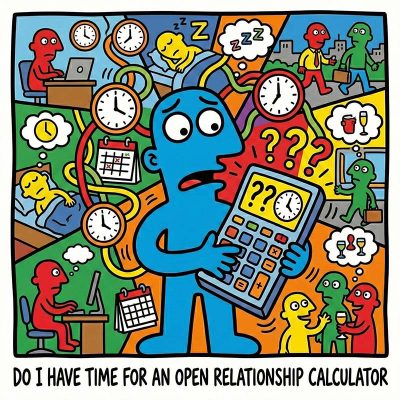
The fantasy is endless romance. The reality? It’s a logistical nightmare. Dating isn't just sex; it’s a second job of swiping, spending, and emotional processing that drains your sanity. Underestimating the "admin" of non-monogamy is the fastest way to turn your relationship into a burnout factory where resentment thrives.
This calculator forces you to confront the brutal math of your time, energy, and wallet. Can you actually afford this lifestyle, or are you just signing up for exhaustion?
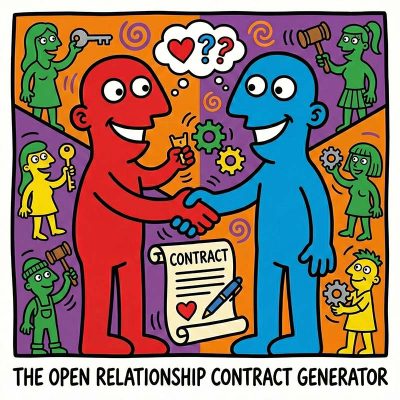
"I thought we agreed" is the sentence that destroys relationships & marriages. Relying on verbal promises when emotions run high is a gamble you cannot afford to lose. Your memory isn't just faulty; it's a liability. Ambiguity is the oxygen that jealousy breathes, turning "freedom" into a minefield of "did I mess up?"
This generator transforms vague permissions into a concrete, signed reality. Stop arguing about what you thought was said and lean on what is written. Secure your boundaries in ink, not hope.
What is a non hierarchical model in ethical nonmonogamy
Non hierarchical models reject the ladder entirely. Relationship anarchy is the best known term often used for this approach. In a non hierarchical setup there is no formal primary partner ranking and each relationship is treated as its own entity. The main idea is that love is not a limited resource and that agreements are negotiated from a place of equality rather than protection of a single central bond. In practice this can look like flexible scheduling open discussions about how much time is needed with each partner and a shared belief that new relationships do not automatically disrupt existing ones.
Key features of non hierarchical models
- Every relationship is negotiated on its own terms
- Time and emotional energy are allocated based on ongoing conversations rather than a pre set order
- No assumed priority among partners
- Strong emphasis on consent honesty direct communication and flexibility
Advantages and challenges of non hierarchical models
- Advantages
- Greater flexibility and potential for deeper equality across relationships
- Less pressure to defend a primary bond and more space for individual growth
- Often fosters a culture of honest negotiation and ongoing check ins
- Challenges
- Potential for ambiguity around commitments can feel unsettled
- Time management becomes a continuous negotiation rather than a fixed plan
- Some people may struggle without a clear hierarchy and feel uncertain about expectations
Core concepts you should know in ENM modeling
Whether you lean hierarchical or non hierarchical there are common terms that come up in ENM discussions. Here is a quick glossary to keep you on the same page and avoid confusion.
- ENM Ethical nonmonogamy a practice of having multiple consensual relationships with clear communication and agreements.
- Primary The partner or partners who are given priority in scheduling major life decisions and emotional energy in a hierarchical model.
- Secondary Partners in a hierarchy who have significant importance but not the same level of priority as primary partners.
- Tertiary A term used by some people to describe third tier relationships in a hierarchy often with less emotional energy and time compared to primaries and secondaries.
- Relationship anarchy A non hierarchical approach that treats each relationship as unique and negotiates terms absence of a preset ladder.
- Ground rules The explicit agreements about what is allowed and what is not in a given relationship.
- Check ins Regular conversations about how everyone feels what is working and what could be improved.
- Boundaries Boundaries are limits that people set to protect their wellbeing. They can be time based emotional or physical and they may change over time.
- Jealousy management The process of recognizing jealousy naming it and using strategies to cope and grow from the experience.
- Compersion Feeling happiness when a partner experiences joy with someone else a kind of opposite of jealousy.
- Negotiation The process of discussing needs desires and limits to reach agreements that work for everyone involved.
Realistic scenarios to help you visualize both models in action
Real life examples make concepts stick. Here are several scenarios that illustrate how hierarchical and non hierarchical models can play out in daily dating and relationship management. These stories are common and we will break down the dynamics step by step.
Scenario 1 a primary relationship with multiple partners in a hierarchical model
Ava and Leo are in a long term relationship with a clear primary bond. Ava also has a secondary relationship with Mia and a casual connection with Noah. The couple uses a weekly planning session to decide who will spend time together and to coordinate events such as holidays. When Ava has a big work project the couple agrees that Leo and Mia will spend more time together to respect the primary bond. If Ava feels overwhelmed she has a candid conversation with Leo and Mia to adjust plans. The key here is communication respect and a shared understanding that Ava’s relationship with Leo remains the anchor while other connections fill in around that anchor.
Scenario 2 a non hierarchical approach with flat relationships
Sam and Kai practice relationship anarchy. Every relationship is treated as equal with room to grow or shrink. Sam has two partners and a casual date on weekends. They hold a monthly group check in to discuss time boundaries what feels fair and any changes in expectations. There is no listed primary partner and all commitments are negotiated. When a new person enters the picture Sam invites them into the ongoing conversations to ensure everyone is heard. This model thrives on transparency and flexible scheduling rather than fixed codes of priority.
Scenario 3 solo poly with a focus on personal autonomy
Juno identifies as solo poly meaning they maintain multiple relationships but do not seek to place partners into a traditional primary or secondary structure. Juno prioritizes autonomy strong personal routines and clear boundaries around how much time they dedicate to each partner. Their agreements include regular check ins with all partners and a rule that no one can assume they have exclusive access to Juno’s time or affection. This setup values personal growth and individual freedom while still allowing meaningful connections.
Scenario 4 navigating jealousy across models
Jealousy shows up in every dynamic. In a hierarchical model jealousy can feel amplified when a primary partner spends time with a secondary. The strategy is to use open communications preemptive planning and boundaries that respect both the primary and the secondary. In a non hierarchical model jealousy is addressed through ongoing dialogues about needs time and emotional labor. Both models can work if you treat jealousy as information not a threat and you practice compassionate communication.
How to decide which model fits you best
Choosing between hierarchical and non hierarchical models is not about right or wrong it is about fit. Here is a simple decision framework you can use to start the conversation with your partners or to test a model on a trial basis.
- Assess your needs for stability and predictability. If you value a strong anchor day to day a hierarchical model may feel safer.
- Evaluate your comfort with ambiguity. If you prefer flexible arrangements and equality across relationships non hierarchical models may be your ally.
- Consider your capacity for ongoing negotiation. ENM requires continued honest conversations. If you dread constant renegotiation a hierarchy or a lighter version of it might work better.
- Discuss jealousy and emotional labor. If you worry about being left out or overwhelmed a plan that clearly allocates energy can help and so can choosing a model that suits your tolerance for emotional complexity.
- Test and reflect. Try a structured period with a documented agreement then review and adjust. The goal is sustainable honest connections not perfect solutions.
Practical tips for building healthy ENM dynamics
No two ENM boards are exactly alike. Here are practical steps to help you design a model that feels fair and real for you and your partners.
Start with a shared consent framework
Consent in ENM is ongoing not a one time check. Agree on how you will discuss new partners how you will handle conflicts and how monetary emotional and time resources will be shared. Make sure everyone understands not just the rules but the reasons behind them. When people see the why they are more likely to honor the agreements even when feelings shift.
Define the agreements clearly
Whether you lean hierarchical or non hierarchical write down concrete agreements. Include roles if you decide to use them. Outline how time will be allocated how decisions will be made what happens when someone changes their mind and how you will handle emergencies or life changes. Clarity prevents miscommunication and keeps relationships healthy.
Work on communication skills
Practice non violent communication using a simple pattern. Name the feeling state the need and the request. For example I feel overwhelmed when my calendar fills up without a heads up I need more notice before plans change. Would you be willing to give me a two day heads up for changes in plans? When you speak in this way you are more likely to be heard and to hear others without blame or shaming.
Track emotional energy and time honestly
Keep a shared calendar or a simple log that tracks how you spend your time with each partner. This helps maintain balance one thing to beware of is the creeping effect where one relationship silently consumes more time and energy than agreed. The log does not punish it simply reveals patterns so you can course correct.
Red flags to watch for
- Consistent secrecy or partial disclosure about significant relationships or plans
- Persistent feeling of imbalance or unfairness without attempts to address it
- Disparagement or belittling of a partner due to their relationship choices
- Coercion controlling or emotional manipulation in the name of freedom
- A shift toward withholding affection or time as punishment
Practical tools and rituals to support ENM models
Rituals and tools make it easier to live inside a model day after day. Here are some practical options you can adopt or adapt.
- Regular check ins. Schedule a recurring time for each pair to talk about how things are going. Keep the check in short but meaningful.
- Open doors policy. Decide how you handle the home base of your life including where information is shared and who needs to know what about the relationship dynamics.
- transparent calendars. Use a shared calendar to mark key dates and partner time to avoid double booking or miscommunications.
- cameos and meta conversations. Short talks about the overall dynamic can be as important as conversations about a specific relationship. These overviews keep the bigger picture in view.
- gratitude practice. End check ins with positive notes about what you appreciate in each relationship. It helps keep the emotional climate positive even when growth is uncomfortable.
Common mistakes and guardrails
Here are some mistakes that trap people in experiments that do not serve them well and how to fix them fast.
- Mistake no 1 trying to apply one model to everyone. ENM is not a template that fits all. It is a set of tools you customize for your life and the life of your partners.
- Mistake no 2 assuming time itself is infinite. Time is finite and precious. Build a schedule that protects your core bonds while allowing space for new connections.
- Mistake no 3 assuming honesty is enough. You also need skillful communication and ongoing consent. People can be honest but hurtful if they lack language or empathy. Invest in both.
- Mistake no 4 letting jealousy become a weapon. Name the emotion explore its roots and work on a plan that reduces its power rather than worsening the feeling.
Governing ethics for ENM models
Ethics in ENM is about consent transparency and respect. Both hierarchical and non hierarchical models rely on the same core ethic. Everyone in the network must know what is happening what is expected and what to do if something goes wrong. The moment you hide a relationship or misrepresent a boundary you undermine trust not just in one connection but in the entire network. Always treat partners as autonomous adults with the right to consent or decline and with the responsibility to communicate honestly even when the truth is uncomfortable.
Frequently asked questions
Because this topic comes up a lot in ENM communities here are answers to common questions that come up in conversations among friends couples and people exploring ethically nonmonogamous lifestyles. If you have a question that isnt listed here send us a note and we will consider adding it in a future update.
The freedom of an open relationship sounds incredible, but the logistics can feel like holding a grenade. That spinning "what if" anxiety isn't paranoia, it’s your survival instinct warning you that your bond is exposed. "Just seeing what happens" is the fastest way to turn a fantasy into a breakup.
The Essential Guide replaces chaos with discipline. We give you the blueprints, jealousy protocols, and repair scripts needed to explore the edge without falling off. Don't guess. Secure your foundation first.
The world of non-monogamy is a maze of confusing labels. Trying to be "Polyamorous" when your heart actually needs "Swinging" isn't just a vocabulary error; it’s a recipe for misery.
You can't build a stable home on a foundation that doesn't fit your psychology. This tool analyzes your emotional bandwidth and jealousy triggers to design the exact structure you need. Stop trying to squeeze into a box that doesn't fit. Build a relationship that actually feels like home.
Opening up feels exciting, but if you aren't reading from the same script, you're writing a tragedy. The disconnect between "I want freedom" and "I want safety" is where hearts break. This isn't just a quiz; it’s a synchronization engine.
We identify the silent gaps in your desires—from sleepover rules to emotional bandwidth, before they become unbridgeable chasms. Don't wait until the damage is done to find out you were never on the same page. Align your compasses now.
Theory is sexy. Reality is messy. You agreed you could date others, but how does your stomach drop when he takes her to your anniversary spot? Or when she comes home smelling like someone else?
This simulator drags your abstract rules into the harsh light of day. We force you to confront the visceral, gut-wrenching scenarios that actually destroy relationships, before they happen. Test your nervous system in the simulator so you don't crash the car in real life.
The fantasy is endless romance. The reality? It’s a logistical nightmare. Dating isn't just sex; it’s a second job of swiping, spending, and emotional processing that drains your sanity. Underestimating the "admin" of non-monogamy is the fastest way to turn your relationship into a burnout factory where resentment thrives.
This calculator forces you to confront the brutal math of your time, energy, and wallet. Can you actually afford this lifestyle, or are you just signing up for exhaustion?
"I thought we agreed" is the sentence that destroys relationships & marriages. Relying on verbal promises when emotions run high is a gamble you cannot afford to lose. Your memory isn't just faulty; it's a liability. Ambiguity is the oxygen that jealousy breathes, turning "freedom" into a minefield of "did I mess up?"
This generator transforms vague permissions into a concrete, signed reality. Stop arguing about what you thought was said and lean on what is written. Secure your boundaries in ink, not hope.
