
Honesty Versus Oversharing

Ethical non monogamy ENM is a world where honesty and boundaries walk side by side like a pair of go to dance partners. The aim is to be open about desires, needs and experiences while protecting privacy and emotional safety. This deep dive breaks down how to be truly honest without tipping into oversharing. We cover practical guidance, common pitfalls, and real life dialogue you can steal and tweak for your own dynamic. If you want relationships built on trust and clarity this guide is for you. And yes we will explain terms and acronyms so everyone is on the same page quickly.
Quick Links to Useful Sections
- What honesty means in ethical non monogamy
- What oversharing looks like in ENM
- Honesty versus oversharing in ENM explained side by side
- Why this matters in ENM
- The boundaries the check ins and the gatekeeping you need
- Terms and acronyms you should know
- Practical guidelines for honest communication in ENM
- Real world scenarios with honest and careful communication
- Scenario A: A new partner is entering your circle
- Scenario B: A partner believes you are hiding something
- Scenario C: You have a difficult moment after a date
- Scenario D: You want to vent about a relationship dynamic to a close friend
- Scenario E: A partner requests more transparency about schedules and time spent with others
- Scenario F: Handling a miscommunication in a group network
- The importance of privacy and consent in sharing details
- Tools to help you stay honest without oversharing
- Common mistakes to avoid
- Glossary of useful terms and acronyms
- Frequently asked questions
What honesty means in ethical non monogamy
Honesty in ENM is about sharing information that affects your relationships, consent and safety. It is not about broadcasting every thought every moment. It is about transparency that respects the agreements you have with partners. Honesty means:
- Being truthful about feelings and experiences that have the potential to impact a partner or the relationship.
- Sharing information that is necessary for informed consent and mutual safety.
- Keeping promises you make about what you will disclose and when you will disclose it.
- Communicating in a way that is clear and non punitive even when the truth is uncomfortable.
In ENM good honesty supports trust and reduces jealousy by removing the fog. When everyone knows where you stand there is less guessing. The goal is to create a climate where partners feel seen heard and respected. Honesty also means owning mistakes and apologizing when you slip up. It is about ongoing accountability rather than one time confession events.
What oversharing looks like in ENM
Oversharing is a mis step where personal information is shared beyond what is necessary or appropriate for the situation. It can be tempting to vent or to seek validation but oversharing carries real risks. It can blur boundaries and erode trust if people hear details they do not want or need. Oversharing often involves:
- Detailing intimate moments about a partner to friends colleagues or family without consent.
- Broadcasting insecurities that involve a partner or their other relationships in public or semi public spaces.
- Revealing private disagreements that have not been resolved or negotiated for public consumption.
- Sharing information that could harm someone’s reputation or privacy even when it feels cathartic to do so.
Oversharing can feel momentarily relieving but it often creates second order consequences such as awkward conversations damaged trust or the end of a relationship. The aim in ENM is to protect emotional safety while staying honest about what matters to all people involved.
The freedom of an open relationship sounds incredible, but the logistics can feel like holding a grenade. That spinning "what if" anxiety isn't paranoia, it’s your survival instinct warning you that your bond is exposed. "Just seeing what happens" is the fastest way to turn a fantasy into a breakup.
The Essential Guide replaces chaos with discipline. We give you the blueprints, jealousy protocols, and repair scripts needed to explore the edge without falling off. Don't guess. Secure your foundation first.
The world of non-monogamy is a maze of confusing labels. Trying to be "Polyamorous" when your heart actually needs "Swinging" isn't just a vocabulary error; it’s a recipe for misery.
You can't build a stable home on a foundation that doesn't fit your psychology. This tool analyzes your emotional bandwidth and jealousy triggers to design the exact structure you need. Stop trying to squeeze into a box that doesn't fit. Build a relationship that actually feels like home.
Opening up feels exciting, but if you aren't reading from the same script, you're writing a tragedy. The disconnect between "I want freedom" and "I want safety" is where hearts break. This isn't just a quiz; it’s a synchronization engine.
We identify the silent gaps in your desires—from sleepover rules to emotional bandwidth, before they become unbridgeable chasms. Don't wait until the damage is done to find out you were never on the same page. Align your compasses now.
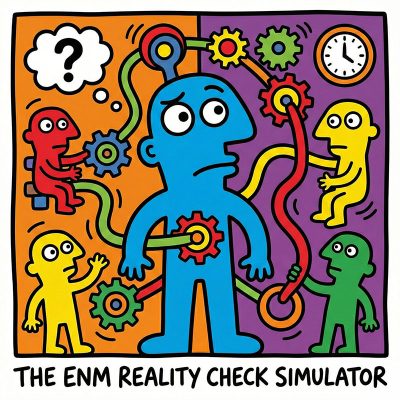
Theory is sexy. Reality is messy. You agreed you could date others, but how does your stomach drop when he takes her to your anniversary spot? Or when she comes home smelling like someone else?
This simulator drags your abstract rules into the harsh light of day. We force you to confront the visceral, gut-wrenching scenarios that actually destroy relationships, before they happen. Test your nervous system in the simulator so you don't crash the car in real life.
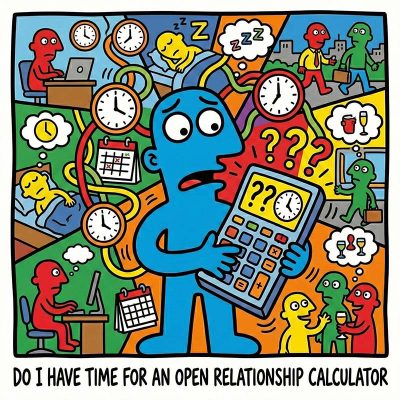
The fantasy is endless romance. The reality? It’s a logistical nightmare. Dating isn't just sex; it’s a second job of swiping, spending, and emotional processing that drains your sanity. Underestimating the "admin" of non-monogamy is the fastest way to turn your relationship into a burnout factory where resentment thrives.
This calculator forces you to confront the brutal math of your time, energy, and wallet. Can you actually afford this lifestyle, or are you just signing up for exhaustion?
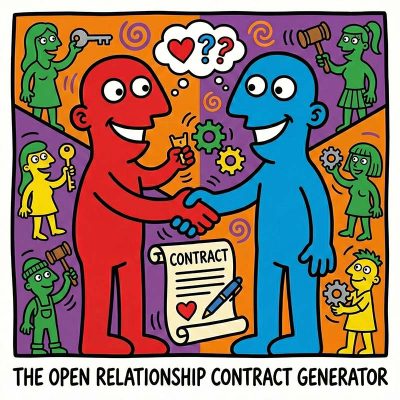
"I thought we agreed" is the sentence that destroys relationships & marriages. Relying on verbal promises when emotions run high is a gamble you cannot afford to lose. Your memory isn't just faulty; it's a liability. Ambiguity is the oxygen that jealousy breathes, turning "freedom" into a minefield of "did I mess up?"
This generator transforms vague permissions into a concrete, signed reality. Stop arguing about what you thought was said and lean on what is written. Secure your boundaries in ink, not hope.
Honesty versus oversharing in ENM explained side by side
Honesty and oversharing sit on a spectrum. The trick is to stay on the honest side of the line while maintaining privacy boundaries. Here is a quick contrast to help you spot the difference in everyday moments.
- Honesty keeps the conversation focused on what is necessary for consent safety and respect. Oversharing drifts into personal gossip or defensive venting that does not serve the relationship.
- Honesty respects boundaries about what is shared with whom. Oversharing ignores those boundaries and pulls others into private matters.
- Honesty is timely sharing that aligns with negotiated agreements. Oversharing happens too soon too often or without planning.
When you are unsure ask three quick questions before sharing anything sensitive. Does this affect consent or safety? Does this information help a partner understand my boundaries or needs? Is this information necessary for the person I am sharing with to support me or to support our arrangement? If the answer to any question is no doubt about it you may want to pause and revisit the topic later with a more focused ask.
Why this matters in ENM
Honesty without oversharing fuels trust which is the currency of ENM. Clear lines of communication help partners feel secure even when passions or attractions shift. They also create a framework for responsibly managing risk including emotional risk and physical risk. When people feel heard and trusted mistakes can be owned without shame and that leads to healthier longer lasting connections.
On the flip side oversharing can trigger jealousy escalate insecurities and complicate communication. It may also violate privacy boundaries which is a form of disrespect even if your intention was good. Oversharing can derail negotiations and make it harder to sustain an ethical approach to multiple relationships. That is why mastering the balance between honesty and discretion is essential for anyone practicing ENM.
The boundaries the check ins and the gatekeeping you need
In ENM there are three practical ideas that keep honesty healthy without tipping into oversharing. These are not commandments but helpful guidelines that you can tailor to your relationship structure.
- Need to know principle
- Negotiated transparency levels
- Safe listener and safe response guidelines
Need to know principle means only sharing information with someone if they need it to make informed decisions about the relationship or to ensure safety. For example a partner may need to know about a sexual encounter with another person that could affect boundaries or risk management whereas a casual detail about mood swings without context may not be necessary for another partner to know.
Negotiated transparency levels are agreements about what kind of information is shared with which people and when. Some ENM couples agree that certain topics are shared with all partners others with only a primary partner and some with no one outside the immediate circle at all. The key is to have these levels written into your agreements so there is no guesswork during a moment of vulnerability or heat.
Safe listener and safe response guidelines set expectations about how you respond when a partner shares something difficult. A safe listener offers space without judgment and avoids policing or shaming. A safe response validates feelings even if the information is uncomfortable. Both sides deserve to feel heard and respected when a conversation gets heavy.
Terms and acronyms you should know
To keep this guide practical we will explain common ENM terms and acronyms as we go. If you are new to ENM you will want to know these to keep conversations clear and avoid miscommunication.
- ENM Ethical non monogamy a way of relating that involves honesty consent and accountability across multiple romantic or sexual relationships.
- CNM Consensual non monogamy another common way to describe ENM emphasizing consent as a core principle.
- Compersion The positive feeling you experience when a partner finds joy in someone else's happiness including their time with another partner.
- Jealousy management Techniques and practices used to cope with feelings of envy or insecurity that can arise in ENM.
- Privacy maturity The ability to protect personal and partner privacy while staying honest about information that matters.
- Need to know basis A practical rule that information shared should be information necessary for someone to support the relationship or ensure safety.
- Gatekeeping Conscious control over what information is shared and with whom to protect privacy and emotional safety.
- Safe disclosure Sharing in a way that respects boundaries and reduces potential harm.
Practical guidelines for honest communication in ENM
These steps are designed to give you tangible ways to stay honest without oversharing. They work whether you are in a couple who are exploring ENM or in a larger poly network with several partners.
- Define what needs to be shared before any new activity or change in the relationship. This keeps expectations aligned from the start.
- Choose the right time for sharing. If someone is overwhelmed or stressed it may not be the best moment to introduce a difficult topic.
- Keep language precise and respectful. Focus on actions and impact rather than attacks or blame.
- Use a check in cadence. A quick weekly or bi weekly check in can prevent a lot of miscommunications from piling up.
- Self reflect before sharing. Ask yourself what outcome you want and whether sharing will help achieve that outcome.
- Limit the amount of detail to what is necessary for safety and clarity. We do not owe anyone every private thought exactly as it happened.
- Ask for consent to share. Literally ask your partner if they are comfortable with you sharing a specific detail with another person or group.
- Offer context not excuses. If a mistake happened explain the context and what you will do differently next time rather than just explaining away your behavior.
- Prepare for different responses. People may react with curiosity confusion or strong emotions. Give them space to process while staying present and non defensive.
Real world scenarios with honest and careful communication
Scenario A: A new partner is entering your circle
You are excited about a new connection but want to avoid dumping every thought on the partner you already have. A good approach is to share enough to establish consent and safety while preserving privacy. For example you might say I am seeing someone new who is exploring a similar range of fantasies. We are in the early stage of getting to know each other and no intimate details beyond safety and boundaries have been discussed yet. If this new person becomes more involved we will revisit what needs to be shared with you. This keeps communication transparent without oversharing private details.
Scenario B: A partner believes you are hiding something
In this moment you want to validate feelings and re establish trust. A careful response would be I hear that you feel left out or suspicious. Here is what I can share at this point and here is what I still want to keep private for now. I will keep you updated as our arrangement evolves and if anything changes I will come back to you with specifics that matter for safety and consent. This makes space for the partner to feel heard while preserving necessary boundaries.
Scenario C: You have a difficult moment after a date
You may feel insecure and want to talk through it. A helpful approach is to share feelings not details. Say I felt a surge of jealousy after the date and I want to talk about what happened and why it triggered me. Then invite your partner to respond and collaborate on a plan to prevent similar triggers in the future. This frames the conversation around growth and mutual care rather than blame.
Scenario D: You want to vent about a relationship dynamic to a close friend
Venting is not the same as honest sharing with a partner. A good rule is to vent to someone who is not part of your ENM circle or to keep it in a private journal. If you do share with a friend make it clear that this is a personal feeling not a factual recounting of events. This helps you process without dragging others into your dynamic.
Scenario E: A partner requests more transparency about schedules and time spent with others
Schedule based honesty can help reduce anxiety. Share your calendar or a simple summary that shows where you will be and who you will see while maintaining privacy around sensitive details. For example I will be meeting a partner on Wednesday from 6 to 8 PM at an agreed safe location. If plans change I will let you know as soon as I can. This gives your core partners predictable information without exposing every private moment.
Scenario F: Handling a miscommunication in a group network
Group dynamics require careful gatekeeping. If a miscommunication happens admit it is your fault the mis communication occurred identify what was shared and what should have been. Then apologize and revise your disclosure rules for future conversations so the same issue does not recur. This demonstrates accountability and helps restore trust quickly.
The importance of privacy and consent in sharing details
Privacy is not a punishment it is a form of respect. In ENM many people want to protect intimate details to avoid harming others or to preserve the relationships that matter most. Consent means asking before sharing and honoring the answer even if it is not what you hoped. This principle keeps your network safe and reduces the risk of harm or unwanted exposure. If someone says no to a disclosure regarding their experiences you accept that decision and adjust your communications accordingly.
Tools to help you stay honest without oversharing
These practical tools can be used by individuals couples and groups to keep conversations productive and respectful.
- Disclosure checklists
- Pre negotiation templates for what information is shared with whom
- Journaling to process feelings before you speak
- Direct communication scripts that stay on topic
- Consent prompts before sharing personal details with others
- Regular relationship reviews to recalibrate what information matters
Use these tools as you would use a map when you are navigating unfamiliar territory. They help you stay oriented and avoid unnecessary detours into oversharing.
Common mistakes to avoid
- Sharing information to seek validation rather than to inform or protect
- Using a partner as a sounding board for every insecurity rather than addressing it with the person involved
- Sharing with people who do not need to know and who cannot provide support or accountability
- Assuming others want every detail or that everyone shares the same boundaries
- Withholding information that affects safety or consent even if you fear a reaction
If you catch yourself slipping into one of these patterns pause breathe and revisit your purpose for sharing. Remember that honesty exists to support trust and care not to create drama or embarrassment for others.
Glossary of useful terms and acronyms
- Ethical non monogamy ENM A relationship style that values honesty consent and accountability across multiple intimate connections.
- Consensual non monogamy CNM The same concept expressed with a focus on consent among all involved.
- Compersion The positive feeling you get when your partner experiences joy with someone else.
- Jealousy management Techniques used to cope with feelings of insecurity or fear in ENM context.
- Need to know basis The guideline that information shared should be necessary for safety or informed consent.
- Gatekeeping Deliberate control over what information is shared and with whom to protect privacy and relationships.
- Safe disclosure Sharing in a way that respects boundaries and reduces potential harm.
- Privacy maturity The ability to protect personal information and partner privacy while staying honest about what matters.
Frequently asked questions
How do I know what to share in ENM
Ask yourself if the information affects consent safety or the ability for someone to support you or your relationship. If the answer is yes share it with the appropriate people. If not hold it until you have a clear reason to disclose.
How can I avoid oversharing while staying honest
Use the need to know guideline and negotiate transparency levels with each partner. Before sharing pause ask what outcome you want and whether the disclosure helps achieve that outcome. If the extra detail does not add value keep it private.
What is the difference between disclosure and privacy
Disclosure is sharing information that matters for safety consent or trust. Privacy is protecting intimate details that do not need to be shared. Balancing disclosure and privacy is a core ENM skill.
How do I handle jealousy from sharing information
Acknowledge the feeling and use it as a signal to re examine boundaries and needs. Communicate openly about what triggers you and how your partner can support you. Consider a brief cooling off period if emotions run high and revisit later.
Should I share everything with all partners
No. Not everything belongs in every conversation. Some information is important for certain relationships or safety but not for others. Negotiate and document what belongs where so everyone knows the expectations.
How do I approach a partner about boundaries around sharing details
Start with a collaborative tone. Explain why certain boundaries matter to you and invite feedback. Use specific examples and propose a practical rule set like who needs to know what and when to share.
Can oversharing cause lasting damage
Yes it can damage trust and safety if private information leaks or if people feel exposed without consent. The damage can be long lasting especially if it involves reputational harm or violated boundaries. Repair is possible with accountability time and consistent respectful behavior.
Is it okay to vent about ENM to a trusted friend
Venting in a healthy way is natural but keep it to a trusted person who will not repeat sensitive details. Frame the venting as processing rather than a report about someone else. If possible keep the venting to general feelings and avoid naming names or specifics that can harm others.
The freedom of an open relationship sounds incredible, but the logistics can feel like holding a grenade. That spinning "what if" anxiety isn't paranoia, it’s your survival instinct warning you that your bond is exposed. "Just seeing what happens" is the fastest way to turn a fantasy into a breakup.
The Essential Guide replaces chaos with discipline. We give you the blueprints, jealousy protocols, and repair scripts needed to explore the edge without falling off. Don't guess. Secure your foundation first.
The world of non-monogamy is a maze of confusing labels. Trying to be "Polyamorous" when your heart actually needs "Swinging" isn't just a vocabulary error; it’s a recipe for misery.
You can't build a stable home on a foundation that doesn't fit your psychology. This tool analyzes your emotional bandwidth and jealousy triggers to design the exact structure you need. Stop trying to squeeze into a box that doesn't fit. Build a relationship that actually feels like home.
Opening up feels exciting, but if you aren't reading from the same script, you're writing a tragedy. The disconnect between "I want freedom" and "I want safety" is where hearts break. This isn't just a quiz; it’s a synchronization engine.
We identify the silent gaps in your desires—from sleepover rules to emotional bandwidth, before they become unbridgeable chasms. Don't wait until the damage is done to find out you were never on the same page. Align your compasses now.
Theory is sexy. Reality is messy. You agreed you could date others, but how does your stomach drop when he takes her to your anniversary spot? Or when she comes home smelling like someone else?
This simulator drags your abstract rules into the harsh light of day. We force you to confront the visceral, gut-wrenching scenarios that actually destroy relationships, before they happen. Test your nervous system in the simulator so you don't crash the car in real life.
The fantasy is endless romance. The reality? It’s a logistical nightmare. Dating isn't just sex; it’s a second job of swiping, spending, and emotional processing that drains your sanity. Underestimating the "admin" of non-monogamy is the fastest way to turn your relationship into a burnout factory where resentment thrives.
This calculator forces you to confront the brutal math of your time, energy, and wallet. Can you actually afford this lifestyle, or are you just signing up for exhaustion?
"I thought we agreed" is the sentence that destroys relationships & marriages. Relying on verbal promises when emotions run high is a gamble you cannot afford to lose. Your memory isn't just faulty; it's a liability. Ambiguity is the oxygen that jealousy breathes, turning "freedom" into a minefield of "did I mess up?"
This generator transforms vague permissions into a concrete, signed reality. Stop arguing about what you thought was said and lean on what is written. Secure your boundaries in ink, not hope.
