
How Relationships Change Over Time

If you are curious about ethical non monogamy ENM or you are already in one of these setups you know that relationships are live things. They grow shift and adapt in response to life events feelings and the people involved. The goal of this guide is to give you a straightforward map to what tends to happen over time in ENM structures so you can ride the waves with honesty humor and practical tools. We will explain common terms and acronyms so nothing feels like a mystery and we will share real world scenarios that show how change can be handled with care not drama.
Quick Links to Useful Sections
- What ENM means and why it matters for change over time
- Key terms you will want to know
- Why relationships in ENM change as time passes
- The common life stages of ENM relationships
- Stage 1: Opening up and getting clear about the vibe
- Stage 2: Establishing and refining agreements
- Stage 3: Building a polycule or extended network
- Stage 4: Negotiating change after major life events
- Stage 5: Stabilization and possible expansion or consolidation
- Stage 6: Reassessment and potential changes or dissolution
- How to talk about change without causing drama
- Practical tools to support change over time
- Common challenges and how to handle them when time changes things
- Realistic scenarios you might recognize
- Scenario A: A committed couple expands with a new partner
- Scenario B: Metamours involved in a polycule
- Scenario C: A life event prompts renegotiation
- Scenario D: Dealing with jealousy in a crowded network
- Common myths about change in ENM and what the truth looks like
- Practical tips for sustaining healthy change in ENM over time
- Glossary of useful terms and acronyms
- Practical checklist for navigating change in ENM
- What to do next if you are exploring ENM or navigating change
- Frequently asked questions
What ENM means and why it matters for change over time
ENM stands for ethical non monogamy. In plain language that means relationships that involve more than two people with the knowledge consent and ongoing agreement of everyone involved. The ethical part is important because it centres honesty transparency respect and communication. ENM does not mean chaos it means choices that are made with care and consent. When you look at how relationships change over time in ENM you see patterns that show up again and again across different setups. Understanding these patterns helps you navigate change without losing the things you value most.
Key terms you will want to know
Ethical non monogamy comes with its own vocabulary. Here are the terms you will likely encounter and why they matter when relationships shift over time.
- ENM Ethical non monogamy. Relationships where more than two people have consenting romantic or sexual connections.
- CNM Consensual non monogamy. A broader term that covers ENM and other non monogamy styles that are consent based.
- NRE New relationship energy. The excitement buzz and rush that often accompanies a new connection. NRE can color decisions and timing.
- CNM partners People who are part of the same non monogamous arrangement and who may also have their own connections with others.
- Metamour A person who is connected to one partner but is not in a romantic or sexual relationship with you. Metamours are part of the same wider relationship network.
- Polycule A term used to describe the interconnected network of partners in a polyamorous or ENM setup.
- Negotiation The process of discussing who does what when where and under what boundaries. Ongoing negotiation is a core practice in ENM.
- Boundaries Lines agreed on by everyone involved about what is comfortable and safe for each person and for the group as a whole.
- Compersion The feeling of happiness when a partner experiences joy with someone else. The opposite of jealousy in many people s eyes.
The freedom of an open relationship sounds incredible, but the logistics can feel like holding a grenade. That spinning "what if" anxiety isn't paranoia, it’s your survival instinct warning you that your bond is exposed. "Just seeing what happens" is the fastest way to turn a fantasy into a breakup.
The Essential Guide replaces chaos with discipline. We give you the blueprints, jealousy protocols, and repair scripts needed to explore the edge without falling off. Don't guess. Secure your foundation first.
The world of non-monogamy is a maze of confusing labels. Trying to be "Polyamorous" when your heart actually needs "Swinging" isn't just a vocabulary error; it’s a recipe for misery.
You can't build a stable home on a foundation that doesn't fit your psychology. This tool analyzes your emotional bandwidth and jealousy triggers to design the exact structure you need. Stop trying to squeeze into a box that doesn't fit. Build a relationship that actually feels like home.
Opening up feels exciting, but if you aren't reading from the same script, you're writing a tragedy. The disconnect between "I want freedom" and "I want safety" is where hearts break. This isn't just a quiz; it’s a synchronization engine.
We identify the silent gaps in your desires—from sleepover rules to emotional bandwidth, before they become unbridgeable chasms. Don't wait until the damage is done to find out you were never on the same page. Align your compasses now.
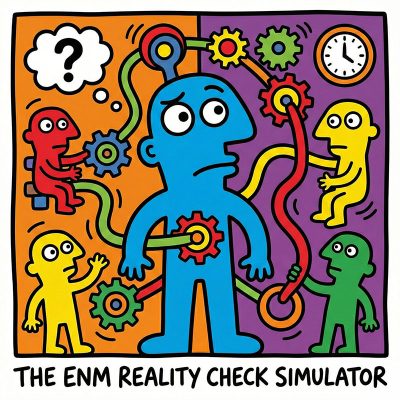
Theory is sexy. Reality is messy. You agreed you could date others, but how does your stomach drop when he takes her to your anniversary spot? Or when she comes home smelling like someone else?
This simulator drags your abstract rules into the harsh light of day. We force you to confront the visceral, gut-wrenching scenarios that actually destroy relationships, before they happen. Test your nervous system in the simulator so you don't crash the car in real life.
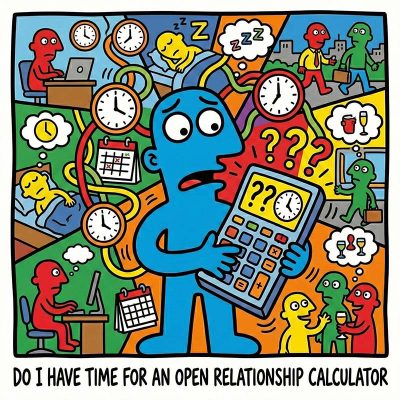
The fantasy is endless romance. The reality? It’s a logistical nightmare. Dating isn't just sex; it’s a second job of swiping, spending, and emotional processing that drains your sanity. Underestimating the "admin" of non-monogamy is the fastest way to turn your relationship into a burnout factory where resentment thrives.
This calculator forces you to confront the brutal math of your time, energy, and wallet. Can you actually afford this lifestyle, or are you just signing up for exhaustion?
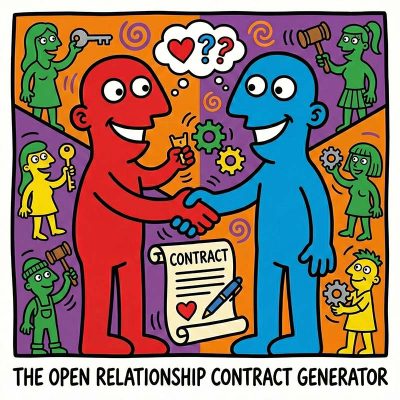
"I thought we agreed" is the sentence that destroys relationships & marriages. Relying on verbal promises when emotions run high is a gamble you cannot afford to lose. Your memory isn't just faulty; it's a liability. Ambiguity is the oxygen that jealousy breathes, turning "freedom" into a minefield of "did I mess up?"
This generator transforms vague permissions into a concrete, signed reality. Stop arguing about what you thought was said and lean on what is written. Secure your boundaries in ink, not hope.
Why relationships in ENM change as time passes
- Life events Career shifts relocation birth relocation illness parenting and aging all push energy time and priorities in new directions.
- Growing edges As people learn more about themselves their needs and preferences evolve. This can lead to renegotiation of agreements and boundaries.
- Shifting dynamics NRE fades NRE can reappear in new forms with new people leading to changes in attention and emotional investment.
- Resource management Time emotional bandwidth and energy are finite. When one couple adds a partner or a new connection everyone recalibrates how they spend those resources.
- Group dynamics In a polycule metamours often form their own micro cultures. The health of these micro communities can influence the whole network.
- Communication patterns The more you practice honest conversations the better you get at spotting trouble early and catching it before it grows.
The common life stages of ENM relationships
When you map ENM life cycles you can predict some changes and plan for them. Here are typical stages you may encounter. Notice that not every ENM arrangement travels through every stage in the same order and some stages may repeat.
Stage 1: Opening up and getting clear about the vibe
This stage is about adding one or more connections while staying connected to existing relationships. The vibe is generally exploratory. People test how much time energy and transparency feel right. The agreements are often flexible but they are there to protect everyone involved and to reduce miscommunication.
Stage 2: Establishing and refining agreements
As new connections form the group often revisits the rules. This means clarifying who has access to information who spends time with whom and what counts as a soft boundary versus a hard boundary. People discover where their comfort zones are and begin to adapt them in light of new experiences.
Stage 3: Building a polycule or extended network
More connections can lead to a wider network. Metamours meet mingle and form their own relationships or friendships. The network becomes a living ecosystem where care and communication keep the system balanced rather than weighted toward one person or couple.
Stage 4: Negotiating change after major life events
Life changes such as a new job a move in together a child or a health issue require renegotiation. The core aim is to preserve safety and affection while acknowledging new limits or desires.
Stage 5: Stabilization and possible expansion or consolidation
In some setups the network stabilizes with clear roles and routines. In others people decide to add new connections or sometimes to slow down or pause to preserve harmony. Stability looks different in every group and that is okay as long as everyone agrees.
Stage 6: Reassessment and potential changes or dissolution
Even in healthy ENM spaces there are times when people reassess what they want and need. Agreements may be dissolved or reimagined. The important piece is to handle this with care and clear communication rather than with blame or neglect.
How to talk about change without causing drama
Communication is the engine that keeps ENM moving smoothly through change. Here are practical tactics that help you talk about change in constructive ways.
- Regular check ins Schedule short cadence conversations about how things are going. A simple 20 minute weekly or bi weekly talk can prevent small issues from turning into big ones.
- Frame conversations around needs Use language that identifies needs rather than accusations. For example say I am feeling overwhelmed with time this week rather than You never spend time with me.
- Use a renegotiation framework When changes are needed agree on a process for renegotiation. What is the decision making protocol who does what and by when.
- Document agreements A shared document or a note in a private space helps people remember what was agreed especially after emotional conversations.
- Practice compassionate curiosity Ask questions not to trap someone but to understand their experience. What does this want feel like for you what would help you feel safer.
Practical tools to support change over time
Below are tools that people in ENM use to navigate changes with less friction and more clarity. Feel free to adapt these to your own style and setup.
- Shared calendar A calendar that marks important dates time blocks for different partners and events. This helps prevent overbooking and supports fair distribution of time.
- Boundaries document A living document that captures what is okay what is not okay and what happens when boundaries are tested. It should be revisited regularly.
- Communication rituals A small ritual like a weekly cup of tea where everyone shares one win and one challenge for the week can keep the emotional terrain healthy.
- Metamour introductions Opening opportunities for metamours to meet can reduce anxiety and create a sense of community within the polycule.
- Jealousy management plan A plan that includes steps to pause breathe reflect and respond rather than react when jealousy flares up.
Common challenges and how to handle them when time changes things
Jealousy is not a sign of failure in ENM it is a signal that something needs attention. Time tends to magnify or soften jealousy depending on how it is handled. Here are some frequent challenges and practical responses.
- Time scarcity When work kids or health take more energy it can feel like there is less room for other relationships. Address this early with a renegotiation of schedules or priorities rather than letting resentments build.
- Boundary creep People may push the edges of an agreement especially when a new partner brings a different energy. Revisit boundaries calmly and document adjustments.
- Imbalance of energy If one relationship receives a lot more time and attention feel okay about shifting focus temporarily but keep people informed and appreciated.
- Communication outages If texts go unanswered or meetings get cancelled more than once set a new routine that works for everyone so no one feels devalued.
- New relationship energy fades The spark can ebb and that is normal. Reconnect with shared values and consider new kinds of intimacy that fit current needs.
Realistic scenarios you might recognize
Scenario A: A committed couple expands with a new partner
Alex and Blair have been together for six years. They decide to explore ENM and bring in a new partner named Casey. The first few weeks are full of curiosity and excitement. Then schedule conflicts appear Casey has a demanding job and Casey s time clashes with Alex s and Blair s routines. They create a weekly check in where they discuss time with Casey and time with each other. They also agree on a clear boundary around privacy and transparency with updates about Casey s life. After the initial adjustments everyone feels heard and the trio builds routines that work for all three people. The key here is open negotiation and consistent communication.
Scenario B: Metamours involved in a polycule
Tia and Jun are together and decide to bring in a partner named Kai. Kai is also involved with their mutual partner Sam who is connected to Tia and Jun through relationships but not directly with Kai. The metamour network can feel unstable at first because different needs emerge. They host a metamour meet and set a process for introductions and boundaries around information sharing. Over time the metamours build a respectful dynamic one that supports each member s wellbeing and reduces the sense of outsiders looking in. Having a clear plan helps the network adapt as feelings shift with time.
Scenario C: A life event prompts renegotiation
Two partners in a polycule decide to start a family planning pregnancy. The change requires rethinking housing time if one partner moves to a different job the schedule for shared activities and the level of privacy each person needs. They approach this as a renegotiation rather than a cancellation of commitments. They pause to reframe expectations and then draft a revised agreement that accommodates the new life stage. The result is a deeper level of trust and a network that feels stable despite big changes.
Scenario D: Dealing with jealousy in a crowded network
In a larger ENM network jealousy creeps in when a new connection begins to take more of a partner s attention than previously. Instead of letting it fester the involved partners hold a dedicated conversation about emotional needs and time allocation. They agree on a transparent plan to share information about new connections gradually and to ensure everyone feels seen and valued. Jealousy reduces as people feel respected and included in the process.
Common myths about change in ENM and what the truth looks like
- Myth ENM means constant drama and chaos. Truth ENM is a relationship choice that works best with ongoing communication and consent. Drama tends to appear when people avoid tough conversations not because ENM is inherently chaotic.
- Myth If it changes then it failed. Truth Change is a natural part of any long term relationship. ENM setups often use renegotiation to keep things healthy.
- Myth You can only love one person at a time. Truth People can have multiple emotional connections at once. The challenge is balancing love time energy and attention across connections.
- Myth Boundaries are walls that lock you in. Truth Boundaries are guidelines that keep people safe and comfortable. They can be adjusted as needs shift.
Practical tips for sustaining healthy change in ENM over time
- Lead with consent Always ensure all involved consent to new changes and understand the stakes. Consent is ongoing not a one time checkbox.
- Normalize renegotiation Expect to renegotiate as life changes. Treat renegotiation as a normal process rather than a crisis.
- Practice transparent communication Share feelings needs and boundaries clearly and with empathy. Clarity reduces misinterpretations and hurt feelings.
- Focus on shared values Revisit the core values you share as a unit. When tension rises reconnect with those values to guide decisions.
- Cultivate emotional literacy Develop skills like naming feelings describing needs and asking for what you want. These tools pay off across all relationships.
Glossary of useful terms and acronyms
- ENM Ethical non monogamy. Relationships that involve more than two people with consent from everyone involved.
- CNM Consensual non monogamy. A broad term that covers ENM and similar non monogamy styles that rely on consent.
- NRE New relationship energy. The intense excitement that accompanies a new connection which can influence decisions.
- Metamour A person who is connected to one of your partners but with whom you do not have a romantic or sexual relationship.
- Polycule The network of people connected through polyamorous or ENM relationships.
- Compersion Feeling happy for a partner when they experience love or joy with someone else.
- Renegotiation A formal or informal re discussion of agreements to fit changed circumstances.
- Time box A planned period allocated to a particular relationship or activity to help manage competing priorities.
- Boundary creep When boundaries begin to expand beyond what was agreed without a conversation about it.
- Consent culture A practice where ongoing consent is asked and given by all parties as situations evolve.
Practical checklist for navigating change in ENM
- Have a regular check in with all partners about how things are going.
- Keep a shared document where agreements are captured and updated as needed.
- Set aside time for individual relationships as well as group time to maintain balance.
- Discuss emergencies and health matters in a dedicated space so everyone knows how to respond.
- Pay attention to emotional signals like anxiety or withdrawal and intervene early rather than letting them build up.
What to do next if you are exploring ENM or navigating change
Start with honesty and practical steps. If you are new to ENM consider taking a slow approach focusing on one new connection at a time. Build a solid foundation of communication and shared values before expanding. If you are already in an ENM setup bring your current agreements to a renegotiation discussion and invite all affected partners to participate. Remember that change is not failure it is a natural part of relationships especially when you are growing together in a multi person dynamic.
Frequently asked questions
How does NRE affect decisions in ENM relationships
NRE can heighten excitement and perceived novelty which can influence decisions. It helps to acknowledge NRE openly and set time for reflection before making big changes. Ground decisions in agreed boundaries and long term goals rather than impulse.
What happens when a partner wants to slow down or pause a connection
Respect the pace that works for everyone. Pause or slow down if needed without shaming. Use renegotiation to adjust time allocation boundaries or expectations while maintaining respect and care for all involved.
How do I handle jealousy in ENM over time
Jealousy is a signal not a verdict. Name the feeling describe what would help and discuss practical steps like more transparency more space or more time together. Consider compersion building exercises and celebrate the joy of your partner s connections without losing your own sense of safety.
Should boundaries be written down
Yes. A written document helps prevent miscommunication. It should be periodically reviewed and updated as needs shift. A living document invites ongoing dialog rather than a one time checklist.
Is it okay to discuss non important details with metamours
Respect everyone s boundaries. In many ENM networks metamours do share some information and prefer to keep some matters private. Start with consent asking whether it is okay to discuss or share certain information and respect decisions.
How can I ensure time is distributed fairly
Use a shared calendar and establish a time budget. Review it monthly or quarterly to make sure no one is consistently shortchanged. Fairness grows with transparency and deliberate planning.
How do I know if ENM is right for me long term
Take it slow and check in with yourself regularly. A good sign is that you feel safe respected and cared for across the network and that your core relationship needs are still being met. If you feel consistently depleted or unheard it may be time to pause and reassess.
The freedom of an open relationship sounds incredible, but the logistics can feel like holding a grenade. That spinning "what if" anxiety isn't paranoia, it’s your survival instinct warning you that your bond is exposed. "Just seeing what happens" is the fastest way to turn a fantasy into a breakup.
The Essential Guide replaces chaos with discipline. We give you the blueprints, jealousy protocols, and repair scripts needed to explore the edge without falling off. Don't guess. Secure your foundation first.
The world of non-monogamy is a maze of confusing labels. Trying to be "Polyamorous" when your heart actually needs "Swinging" isn't just a vocabulary error; it’s a recipe for misery.
You can't build a stable home on a foundation that doesn't fit your psychology. This tool analyzes your emotional bandwidth and jealousy triggers to design the exact structure you need. Stop trying to squeeze into a box that doesn't fit. Build a relationship that actually feels like home.
Opening up feels exciting, but if you aren't reading from the same script, you're writing a tragedy. The disconnect between "I want freedom" and "I want safety" is where hearts break. This isn't just a quiz; it’s a synchronization engine.
We identify the silent gaps in your desires—from sleepover rules to emotional bandwidth, before they become unbridgeable chasms. Don't wait until the damage is done to find out you were never on the same page. Align your compasses now.
Theory is sexy. Reality is messy. You agreed you could date others, but how does your stomach drop when he takes her to your anniversary spot? Or when she comes home smelling like someone else?
This simulator drags your abstract rules into the harsh light of day. We force you to confront the visceral, gut-wrenching scenarios that actually destroy relationships, before they happen. Test your nervous system in the simulator so you don't crash the car in real life.
The fantasy is endless romance. The reality? It’s a logistical nightmare. Dating isn't just sex; it’s a second job of swiping, spending, and emotional processing that drains your sanity. Underestimating the "admin" of non-monogamy is the fastest way to turn your relationship into a burnout factory where resentment thrives.
This calculator forces you to confront the brutal math of your time, energy, and wallet. Can you actually afford this lifestyle, or are you just signing up for exhaustion?
"I thought we agreed" is the sentence that destroys relationships & marriages. Relying on verbal promises when emotions run high is a gamble you cannot afford to lose. Your memory isn't just faulty; it's a liability. Ambiguity is the oxygen that jealousy breathes, turning "freedom" into a minefield of "did I mess up?"
This generator transforms vague permissions into a concrete, signed reality. Stop arguing about what you thought was said and lean on what is written. Secure your boundaries in ink, not hope.
