
How to Choose a Structure That Fits


Welcome to a practical, no fluff guide for smart humans exploring ethical non monogamy or ENM. ENM stands for ethical non monogamy a relationship approach where all partners consent to more than one romantic or intimate connection. Think of it as a toolbox rather than a single blueprint. The goal is to find a structure that matches your values your energy and your life. This article breaks down the main structure options talks through how to negotiate them and gives you a step by step plan to try and refine what works for you and your crew. We keep things straight forward and yes we crack a few jokes because relationships can be heavy enough without glossing over the funny bits.
Quick Links to Useful Sections
- What ENM means and why structure matters
- Small steps first you are not signing a lifetime contract with your first draft
- Structure options in ENM
- 1. Solo poly dynamics
- 2. Open relationships with paired primarys
- 3. The open triangle keep it simple with a triad
- 4. Polyamorous networks a.k.a. polycules
- 5. Group marriage or closed circle living
- 6. Hierarchical versus non hierarchical models
- How to decide what fits your life
- Communication tools that help any ENM structure
- Boundaries and agreements what to consider
- Realistic scenarios and how structure helps
- Health and safety in ENM structures
- Navigating jealousy and emotional management
- Practical tips for implementing a new ENM structure
- Common mistakes and how to avoid them
- Glossary of useful terms and acronyms
- Frequently asked questions
What ENM means and why structure matters
Ethical non monogamy is about consent communication and respect. It is not about chaos or cheap thrills it is about designing a system that respects everyone involved. The structure you choose is the blueprint for how your relationships will relate to one another. A good structure can reduce jealousy improve clarity and make space for growth. A poor structure can breed confusion hurt feelings and miscommunication. The aim is to pick a structure that fits your life your energy levels and your boundaries while leaving room to adapt as things shift.
Key terms you might hear in ENM conversations include:
- ENM Ethical non monogamy a broad term for relationships that involve more than two committed partners with consent and transparency.
- CNM Consensual non monogamy another common label used interchangeably with ENM in many communities.
- Monogamy The traditional model where two people exclusively commit to each other romantically and sexually.
- Polyamory A form of ENM where people have multiple loving relationships at once rather than just casual dating.
- Metamour A partner of your partner a fellow lover in the same network who you may or may not date you may or may not be close with.
- Triad A three person structure where all are emotionally involved with each other though configurations vary widely.
- Non hierarchical A structure where all partners are equal in importance rather than assigning a primary or secondary status.
- Hierarchical A structure that ranks relationships often with a primary couple and secondary partners though many people move away from strict hierarchies.
- Boundary A limit agreed upon by all parties regarding what is acceptable or off limits in the relationship.
- Agreement Written or verbal statements that describe how partners will interact what is expected and how conflicts will be resolved.
Small steps first you are not signing a lifetime contract with your first draft
Choosing a structure is not about picking a final destination it is about finding a starting point that feels workable. The most important thing to know is that you can change your structure as you grow. Be ready to iterate. A structure that works for a few months may need tweaks as you date new people or as your work and family life change. Start with a conversation that treats structure as a living project not a vow carved in stone.
Here is a simple four step approach you can use right away:
- Inventory your energy and time Be realistic about how much time you can devote to relationships and how you want to share that time across partners.
- Clarify your values Are you seeking novelty stability companionship freedom or deep emotional connection with multiple people?
- List potential structures Create options from most traditional to most open and creative such as a fixed core couple with one or more partners a fully non hierarchical poly network or a solo poly setup.
- Test and refine Try a structure with clear boundaries for a set period and schedule a review to decide what to change.

The freedom of an open relationship sounds incredible, but the logistics can feel like holding a grenade. That spinning "what if" anxiety isn't paranoia, it’s your survival instinct warning you that your bond is exposed. "Just seeing what happens" is the fastest way to turn a fantasy into a breakup.
The Essential Guide replaces chaos with discipline. We give you the blueprints, jealousy protocols, and repair scripts needed to explore the edge without falling off. Don't guess. Secure your foundation first.
The world of non-monogamy is a maze of confusing labels. Trying to be "Polyamorous" when your heart actually needs "Swinging" isn't just a vocabulary error; it’s a recipe for misery.
You can't build a stable home on a foundation that doesn't fit your psychology. This tool analyzes your emotional bandwidth and jealousy triggers to design the exact structure you need. Stop trying to squeeze into a box that doesn't fit. Build a relationship that actually feels like home.
Opening up feels exciting, but if you aren't reading from the same script, you're writing a tragedy. The disconnect between "I want freedom" and "I want safety" is where hearts break. This isn't just a quiz; it’s a synchronization engine.
We identify the silent gaps in your desires—from sleepover rules to emotional bandwidth, before they become unbridgeable chasms. Don't wait until the damage is done to find out you were never on the same page. Align your compasses now.
Theory is sexy. Reality is messy. You agreed you could date others, but how does your stomach drop when he takes her to your anniversary spot? Or when she comes home smelling like someone else?
This simulator drags your abstract rules into the harsh light of day. We force you to confront the visceral, gut-wrenching scenarios that actually destroy relationships, before they happen. Test your nervous system in the simulator so you don't crash the car in real life.
The fantasy is endless romance. The reality? It’s a logistical nightmare. Dating isn't just sex; it’s a second job of swiping, spending, and emotional processing that drains your sanity. Underestimating the "admin" of non-monogamy is the fastest way to turn your relationship into a burnout factory where resentment thrives.
This calculator forces you to confront the brutal math of your time, energy, and wallet. Can you actually afford this lifestyle, or are you just signing up for exhaustion?
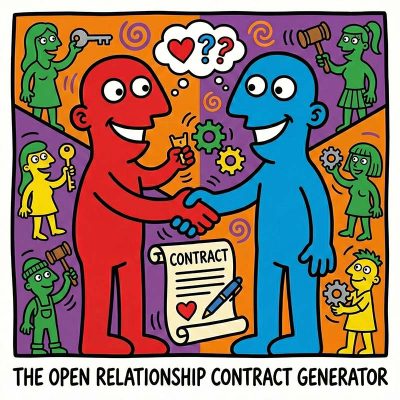
"I thought we agreed" is the sentence that destroys relationships & marriages. Relying on verbal promises when emotions run high is a gamble you cannot afford to lose. Your memory isn't just faulty; it's a liability. Ambiguity is the oxygen that jealousy breathes, turning "freedom" into a minefield of "did I mess up?"
This generator transforms vague permissions into a concrete, signed reality. Stop arguing about what you thought was said and lean on what is written. Secure your boundaries in ink, not hope.
Structure options in ENM
Here we cover the common structures you might encounter or decide to try. We will explain what each looks like in practice how it tends to function what kinds of people it tends to suit and what the common pitfalls are. Remember there is no one size fits all. The most stable structures are those that reflect honest conversations and ongoing consent rather than a perfect diagram drawn once and never revisited.
1. Solo poly dynamics
In a solo poly arrangement there is no expectation of a primary partner you focus on your own growth and maintain autonomy while having intimate connections with others. People in solo poly often prioritize personal time freedom and direct communication. You might date multiple people at various intensities and you may or may not pursue long term commitments with any of them. The key is explicit consent and a flexible schedule that accommodates everyone involved.
Who it fits best
- People who value independence and personal growth
- Individuals who are exploring their own preferences without wanting to anchor themselves to a single life partner
- People who want to minimize power dynamics where one relationship holds more authority than others
Negotiation tips
- Be explicit about how much time you need to yourself each week
- Agree on communication norms including response times and check ins
- Set boundaries around co habitation and living arrangements if applicable
Common challenges
- Managing expectations around closeness and commitment
- Maintaining emotional transparency without losing your sense of self
- Navigating jealousy with multiple partners who might be at different life stages
2. Open relationships with paired primarys
In this structure two people form a primary bond and both allow relationships with others. Some people keep the primarys as the central emotional anchors while other partners are more casual or ongoing depending on agreements. The dynamics can be very flexible with a broad range of rules about time sharing communication and emotional boundaries.
Who it fits best
- Couples who want to grow together while inviting others into their orbit
- People who want a stable base while still enjoying novelty
- Partners who value routine but not rigidity
Negotiation tips
- Define what constitutes an upgrade in a relationship and what does not
- Agree on how you will handle metamour relationships and any potential conflicts
- Plan regular joint check ins with both partners present when possible
Common challenges
- Time management both for couple time and with other partners
- Clear boundaries around emotional needs and sexual activity
- Managing jealousy and insecurity without shutting down communication
3. The open triangle keep it simple with a triad
A triad involves three people who all have some level of emotional or sexual connection with one another. Triads can be closed meaning the three of you together form a committed unit or they can be flexible with a mix of dating patterns. Communication must be precise and inclusive with everyone involved in major decisions.
Who it fits best
- People who want a strong sense of companionship and a shared life
- Partners who enjoy deeply interconnected relationships
- Individuals who thrive on mutual support and shared experiences
Negotiation tips
- Agree on what changes require group discussion versus individual conversations
- Establish how you will handle time with other partners if one partner dates outside the triad
- Document agreed boundaries to reduce miscommunication
Common challenges
- Complicated emotions especially if one person wants to recalibrate the dynamics
- Ensuring all three voices are heard equally
- Potential for social or familial pressure due to the relationship shape
4. Polyamorous networks a.k.a. polycules
In a polycule you have multiple relationships that may or may not be directly connected to each other with metamours forming a network. The structure emphasizes honesty consistency and organizational communication. There is often less emphasis on a single central figure and more focus on the health of the network as a whole.
Who it fits best
- People who enjoy social dynamics and building a community around relationships
- Individuals who want to grow their network gradually and sustainably
- Partners who prefer flexible roles within a larger ecosystem
Negotiation tips
- Use shared calendars or weekly updates to align schedules
- Develop a clear metamour policy regarding privacy and boundaries
- Agree on how you will handle dating outside the core network
Common challenges
- Coordination fatigue as the network expands
- Maintaining a sense of belonging for everyone including newer members
- Navigating rumors and social pressure within communities
5. Group marriage or closed circle living
Some ENM communities explore a group marriage or a close knit group living arrangement where multiple people share a stronger level of commitment and sometimes a household. This can look like a long term living arrangement with layered romantic connections integrated into daily life. It requires high levels of communication discipline and practical logistics.
Who it fits best
- People seeking a high level of companionship shared responsibilities and mutual support
- Couples or networks ready to integrate finances child care or living space
- Individuals who want a stable life mesh with romance and friendship
Negotiation tips
- Draft a living arrangement plan including chores finances and personal space
- Address legal considerations around parenting housing and insurance
- Create a conflict resolution path that all members buy into
Common challenges
- Legal and financial complexity
- Difficulty maintaining individual autonomy within a group dynamic
- Risk of power imbalances or house center stage issues
6. Hierarchical versus non hierarchical models
Hierarchical models create layers with a stronger bond often described as primary partnership while non hierarchical models treat all relationships as equal. Some people enjoy the clarity of a hierarchy while others prefer flat networks where each relationship holds its own importance. The choice often aligns with personality preferences and life circumstances.
Key considerations
- How do you define priority if multiple partners face time conflicts
- What happens if a primary partner wants to slow down or stop dating others
- How do metamours experience fairness and respect when there is a hierarchy
How to decide what fits your life
Choosing a structure is a personal process that should honor your own boundaries and what you want from life. Here is a practical decision framework you can use to move from debate to design.
Step 1 look inward first
- Ask yourself how much emotional energy you have for each relationship and how you want to split that energy across the network
- Identify your non negotiables such as time nights out or family commitments
- Consider your future plans like children career moves or long distance considerations
Step 2 bring your partner(s) into the room
- Schedule a calm conversation with all involved
- Share your values and listen carefully to what others value
- Draft a shared couple of possible structures and then extend to the wider network
Step 3 experiment with a clear trial period
- Set a timeframe for trying the structure for example 90 days
- Define what success looks like during the trial including how you will measure it
- Agree in advance on how you will pause or adjust the arrangement
Step 4 review and adjust
- Hold a formal review at the end of the trial or at agreed milestones
- Document what worked what did not and what you learned
- Decide on next steps including potential changes or continued path
Communication tools that help any ENM structure
Strong communication is the backbone of any ENM structure. The aim is to promote safety honesty and clarity. Here are some practical tools and methods you can adopt regardless of the structure you choose.
Non violent communication NVC
- Describe your observation without judgment
- Express your feelings honestly
- Share your needs and request specific actions
Interest based negotiation
- Focus on underlying interests not positions
- Brainstorm multiple options that could satisfy core needs
- Use joint problem solving rather than win lose debates
Radical candor
- Be direct but kind
- Offer feedback that helps the other person grow
- Encourage honest dialogue even when it is uncomfortable
Boundaries and agreements what to consider
Agreements are the living documents that guide behavior in ENM. They should be clear concrete and revisited regularly. Boundaries are personal red lines that may not be crossed agreed upon by all. When writing agreements consider these categories:
- Time and energy boundaries how many dates per week who spends nights together
- Sexual health boundaries what protection is used what testing schedule is expected
- Emotional boundaries how often you want to check in how you handle conflict
- Communication boundaries how you share information how you talk about metamours with others
- Privacy boundaries what is shared publicly and what stays private
No go rules and no go zones
- Avoid secret agreements or silent compromises
- Do not let fear dictate your boundaries monogamy or polyamory is not a crisis plan
- Avoid giving up personal autonomy in the name of relationship stability
Realistic scenarios and how structure helps
Let us look at three common life shaped situations. Each is designed to show how a structure can steer decisions and reduce friction. You will notice practical steps you can adapt to your own life.
Scenario A the busy professional who loves to travel
Structure recommended a flexible non hierarchical network with a strong set of communication routines and a quarterly planning session. The traveler keeps a shared calendar with key dates and sets expectations with partners about availability. This keeps everyone in the loop and reduces anxiety about abandoned connections during travel. It also helps partners plan their own time and relationships around travel windows.
Scenario B the new couple with a current partner open to more connections
A paired primary with additional relationships structure can offer a stable base while allowing for new connections. Start with a clear definition of what each new relationship will entail for emotional energy time and intimacy. Create a trial period for new partners and schedule regular check ins to adjust arrangements as needed.
Scenario C the networked polycule with metamours who want more day to day closeness
A polycule with group level agreements can work well. Introduce a metamour policy clarify how much information is shared each partner's comfort level with social events and how to handle conflicts. Build in social rituals like quarterly network gatherings to strengthen trust and ensure everyone feels included.
Health and safety in ENM structures
Health and safety matter just as much in ENM as in monogamy. The structure you choose should incorporate practical health practices. Create a shared health plan with testing schedules discuss STI prevention and consent for sexual activities with new partners and establish a safe words or signals to pause activities when needed. Regular STI testing and transparent communication about sexual health reduce risk and build trust across the network.
Navigating jealousy and emotional management
Jealousy is not a failure it is a signal. The better you are at recognizing what triggers jealousy the easier you can address it. Use open discussions with clear emotional language practice compassion and develop strategies to reframe jealous feelings into opportunities for connection or boundary clarity. Regularly check in about emotional temperature and discuss experiences that cause discomfort without blaming others. This proactive approach reduces drama and builds resilience inside the structure.
Practical tips for implementing a new ENM structure
- Document agreements in a shared, accessible format so everyone can review and update them
- Schedule consistent check ins with a simple agenda focus on what is working what needs adjustment
- Develop metamour etiquette that respects everyone’s privacy and comfort level
- Set up a trial period with explicit success criteria
- Plan for life events such as travel changes long distance dating or family commitments
Common mistakes and how to avoid them
- Assuming a structure will work without ongoing negotiation
- Focusing only on sex while ignoring emotional needs and time management
- Rushing into a complex structure without a clear trial plan
- Letting jealousy accumulate without addressing it head on
- Ignoring the practicalities like housing finances or legal considerations in group living
Glossary of useful terms and acronyms
- ENM Ethical non monogamy a broad term for relationships that involve more than two committed partners with consent and transparency.
- CNM Consensual non monogamy another common label used interchangeably with ENM in many communities.
- Monogamy The traditional model where two people exclusively commit to each other romantically and sexually.
- Polyamory A form of ENM where people have multiple loving relationships at once rather than just casual dating.
- Metamour A partner of your partner a fellow lover in the same network who you may or may not date you may or may not be close with.
- Triad A three person structure where all are emotionally involved with each other though configurations vary widely.
- Non hierarchical A structure where all partners are equal in importance rather than assigning a primary or secondary status.
- Hierarchical A structure that ranks relationships often with a primary couple and secondary partners though many people move away from strict hierarchies.
- Boundary A limit agreed upon by all parties regarding what is acceptable or off limits in the relationship.
- Agreement A written or verbal statement describing how partners will interact what is expected and how conflicts will be resolved.
Frequently asked questions
What is ENM and how is it different from polyamory
ENM stands for ethical non monogamy and it describes any relationship approach that allows more than two people to be involved with consent. Polyamory is a form of ENM where there is often a belief in multiple loving relationships with an emphasis on emotional connections between all partners. ENM is a broader umbrella and polyamory is one of the approaches under that umbrella.
How do I start a conversation about structure with my partner
Begin with a calm moment discuss why you want more than one relationship. Share your values and needs and invite your partner to do the same. Propose starting with one or two potential structures and set a trial period with clear goals. Keep the tone collaborative not confrontational.
What if we disagree on boundaries
Disagreements happen and that is normal. Return to your core values and reconnect with consent. Consider a mediator a friend you trust or a professional therapist who has experience with ENM. Revisit the boundaries and adjust them to a middle ground that respects all parties.
How long should a trial period last
Most trials run anywhere from 60 to 120 days depending on complexity and life velocity. Use milestones during the trial to assess how things are working and whether you want to continue modify or end the arrangement.
Is it okay to have different levels of closeness with different partners
Yes that is common. The aim is transparency and consent. You can have strong emotional connections with some partners and more casual connections with others while maintaining respect and clear boundaries across the network.
How do we handle metamours who do not get along
Open honest conversations and a metamour policy can help. Define what level of interaction is acceptable and what topics are off limits. Plan social occasions with courtesy and respect for all involved.
Can a structure change over time
Absolutely. ENM structures are designed to be revisited. As life changes you may adjust time allocation boundaries or even re rank relationships. The goal is ongoing consent and mutual comfort.
The freedom of an open relationship sounds incredible, but the logistics can feel like holding a grenade. That spinning "what if" anxiety isn't paranoia, it’s your survival instinct warning you that your bond is exposed. "Just seeing what happens" is the fastest way to turn a fantasy into a breakup.
The Essential Guide replaces chaos with discipline. We give you the blueprints, jealousy protocols, and repair scripts needed to explore the edge without falling off. Don't guess. Secure your foundation first.
The world of non-monogamy is a maze of confusing labels. Trying to be "Polyamorous" when your heart actually needs "Swinging" isn't just a vocabulary error; it’s a recipe for misery.
You can't build a stable home on a foundation that doesn't fit your psychology. This tool analyzes your emotional bandwidth and jealousy triggers to design the exact structure you need. Stop trying to squeeze into a box that doesn't fit. Build a relationship that actually feels like home.
Opening up feels exciting, but if you aren't reading from the same script, you're writing a tragedy. The disconnect between "I want freedom" and "I want safety" is where hearts break. This isn't just a quiz; it’s a synchronization engine.
We identify the silent gaps in your desires—from sleepover rules to emotional bandwidth, before they become unbridgeable chasms. Don't wait until the damage is done to find out you were never on the same page. Align your compasses now.
Theory is sexy. Reality is messy. You agreed you could date others, but how does your stomach drop when he takes her to your anniversary spot? Or when she comes home smelling like someone else?
This simulator drags your abstract rules into the harsh light of day. We force you to confront the visceral, gut-wrenching scenarios that actually destroy relationships, before they happen. Test your nervous system in the simulator so you don't crash the car in real life.
The fantasy is endless romance. The reality? It’s a logistical nightmare. Dating isn't just sex; it’s a second job of swiping, spending, and emotional processing that drains your sanity. Underestimating the "admin" of non-monogamy is the fastest way to turn your relationship into a burnout factory where resentment thrives.
This calculator forces you to confront the brutal math of your time, energy, and wallet. Can you actually afford this lifestyle, or are you just signing up for exhaustion?
"I thought we agreed" is the sentence that destroys relationships & marriages. Relying on verbal promises when emotions run high is a gamble you cannot afford to lose. Your memory isn't just faulty; it's a liability. Ambiguity is the oxygen that jealousy breathes, turning "freedom" into a minefield of "did I mess up?"
This generator transforms vague permissions into a concrete, signed reality. Stop arguing about what you thought was said and lean on what is written. Secure your boundaries in ink, not hope.
