
Integrating New Partners Ethically


Ethical non monogamy ENM is a journey not a destination. When you invite a new partner into a living arrangement there is a lot to manage. You want honesty transparency and fairness for everyone involved. This guide is designed to be practical down to earth and a little punchy. We explain terms highlight common pitfalls and offer real world scripts you can adapt. If you are curious about how to bring in someone new without burning bridges or getting your nerves fried this is for you.
Quick Links to Useful Sections
- What ENM means and why ethics matter
- Core ethics for integrating a new partner
- Practical steps to ethically integrate a new partner
- Step 1. Do a personal check in before the conversation
- Step 2. Clarify your motivations and potential risks
- Step 3. Prepare for a collaborative negotiation
- Step 4. Set clear boundaries and agreements
- Step 5. Include the new partner in the process when appropriate
- Step 6. Create a gradual integration plan
- Step 7. Establish ongoing communication protocols
- Step 8. Practice compassionate jealousy management
- Step 9. Regularly renegotiate as the dynamic evolves
- Step 10. Decide how to handle potential disruptions
- Conversation templates you can steal and adapt
- Template A The initial check in with your current partner
- Template B Setting boundaries with a potential new partner
- Template C Discussing NRE and maintaining balance
- Template D Handling a boundary crossing
- Realistic scenarios and how to handle them
- Must nots when integrating new partners
- Tools to help you stay organized and ethical
- Glossary of commonly used terms and acronyms
- Practical tips for steady ethical integration
- Realistic expectations for long term ENM growth
- Frequently asked questions
- Wrapping it up without a formal conclusion
What ENM means and why ethics matter
ENM stands for ethical non monogamy. It means choosing to have romantic or sexual relationships with more than one person with the knowledge and consent of all involved. ENM is not about chaos it is about deliberate choices about time boundaries emotional transparency and clear agreements. We are not here to prove a point we are here to help you build relationships that feel good for all parties over time.
It is useful to understand related terms so you can have precise conversations. Polyamory is a form of ENM where people have multiple loving relationships. An open relationship is a relationship structure where romantic or sexual activity outside the primary relationship is allowed under agreed rules. A primary partner is often the person who has house sharing or life planning arrangements with you. A secondary partner is someone who is important but may not share all the same routines or responsibilities. There are many different models and there is no one right path for every couple or triad. The key is that everyone involved agrees to the same version of what is happening and what it is not happening.
New Relationship Energy also known as NRE is the excited spark that comes with a new relationship. NRE is natural and it can affect judgment. The friendly fix is to acknowledge it talk about it and make space for time to adjust the dynamic as it evolves. Another concept you may hear is compersion the feeling of joy when your partner connects with someone else. Compersion can feel weird at first but for many people it becomes a powerful sign that your relationship is flexible strong and growing.
Core ethics for integrating a new partner
Ethics are not a punch list they are a daily practice. When you bring in a new partner you want consent clarity and ongoing communication. Here are the core ethical commitments you will want to hold onto.
- Consent is ongoing Consent is not a one time checkbox. People can change their minds. Check in regularly about boundaries expectations and comfort levels with the evolving dynamic.
- Transparency rules the day Share information that affects everyone. This does not mean sharing every detail of private moments but do share the big things that shape the relationship such as scheduling negotiations and changes to agreements.
- Time and energy fairness Relationships need time. Make sure there is balanced access to time energy and attention for all involved. If someone feels overwhelmed address it quickly.
- Respect and consent around sexual health Discuss safe sex practice testing and boundaries around sexual activity. Keep up to date with health screenings and share relevant results when everyone agrees.
- Mutual respect for boundaries Boundaries exist to protect everyone. Honor boundaries even when they feel inconvenient personal or hard to enforce. If boundaries need adjustment you renegotiate together.
- Honest communication Speak plainly and listen carefully. Do not assume motives or intentions. Give space for questions and clarifications without judgment.
- Emotional responsibility Own your feelings and avoid blaming others when you are feeling jealous or overwhelmed. Learn to express emotions without shaming anyone else involved.
- Deal with jealousy head on Jealousy is common in ENM. Name it validate it and address it with practical steps rather than pretending it does not exist.
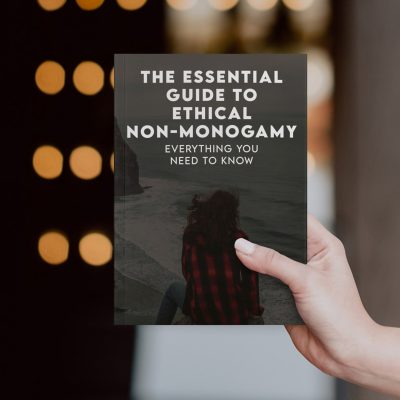
The freedom of an open relationship sounds incredible, but the logistics can feel like holding a grenade. That spinning "what if" anxiety isn't paranoia, it’s your survival instinct warning you that your bond is exposed. "Just seeing what happens" is the fastest way to turn a fantasy into a breakup.
The Essential Guide replaces chaos with discipline. We give you the blueprints, jealousy protocols, and repair scripts needed to explore the edge without falling off. Don't guess. Secure your foundation first.
The world of non-monogamy is a maze of confusing labels. Trying to be "Polyamorous" when your heart actually needs "Swinging" isn't just a vocabulary error; it’s a recipe for misery.
You can't build a stable home on a foundation that doesn't fit your psychology. This tool analyzes your emotional bandwidth and jealousy triggers to design the exact structure you need. Stop trying to squeeze into a box that doesn't fit. Build a relationship that actually feels like home.

Opening up feels exciting, but if you aren't reading from the same script, you're writing a tragedy. The disconnect between "I want freedom" and "I want safety" is where hearts break. This isn't just a quiz; it’s a synchronization engine.
We identify the silent gaps in your desires—from sleepover rules to emotional bandwidth, before they become unbridgeable chasms. Don't wait until the damage is done to find out you were never on the same page. Align your compasses now.
Theory is sexy. Reality is messy. You agreed you could date others, but how does your stomach drop when he takes her to your anniversary spot? Or when she comes home smelling like someone else?
This simulator drags your abstract rules into the harsh light of day. We force you to confront the visceral, gut-wrenching scenarios that actually destroy relationships, before they happen. Test your nervous system in the simulator so you don't crash the car in real life.
The fantasy is endless romance. The reality? It’s a logistical nightmare. Dating isn't just sex; it’s a second job of swiping, spending, and emotional processing that drains your sanity. Underestimating the "admin" of non-monogamy is the fastest way to turn your relationship into a burnout factory where resentment thrives.
This calculator forces you to confront the brutal math of your time, energy, and wallet. Can you actually afford this lifestyle, or are you just signing up for exhaustion?
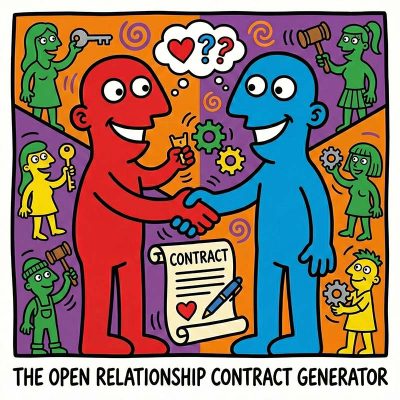
"I thought we agreed" is the sentence that destroys relationships & marriages. Relying on verbal promises when emotions run high is a gamble you cannot afford to lose. Your memory isn't just faulty; it's a liability. Ambiguity is the oxygen that jealousy breathes, turning "freedom" into a minefield of "did I mess up?"
This generator transforms vague permissions into a concrete, signed reality. Stop arguing about what you thought was said and lean on what is written. Secure your boundaries in ink, not hope.
Practical steps to ethically integrate a new partner
Below is a practical workflow you can adapt. It is designed to reduce friction and keep everyone in the loop. You can jump to the sections that match your current situation but start with a plan before you bring someone new into a shared life space.
Step 1. Do a personal check in before the conversation
Ask yourself honest questions about your own needs and limits. What are you hoping for from this new connection? What would make you feel secure and respected if the new partner becomes part of your primary relationship or living situation? Are you prepared to manage the emotional complexity that may come with additional relationships?
Step 2. Clarify your motivations and potential risks
Be clear about why this is appealing to you and your partner. Is it about companionship exploration shared growth or sexual energy? Are there potential risks to your current relationship such as time commitments or emotional safety? A quick risk assessment written down can help your team stay grounded during conversations.
Step 3. Prepare for a collaborative negotiation
Invite your partner or partners into the process. The goal is to negotiate agreements as a team not to impose a decision from one person. Decide together what structures you want around dating outside the relationship what forms of transparency you will practice and what check in cadence you will use.
Step 4. Set clear boundaries and agreements
Boundaries are about safety respect and alignment. They can cover practical issues such as where you meet how you communicate how often you check in and what is off limits. You may also want to set agreements about how your household or living situation will operate including privacy within the couple group and how decisions are made when conflicts arise.
Step 5. Include the new partner in the process when appropriate
If all parties consent you may invite the new partner to participate in the initial planning or introduction. Some people prefer to keep the first meet simple and gradually expand the relationship. Respect the pace of everyone involved and be ready to slow down if needed.
Step 6. Create a gradual integration plan
Plan a gentle ramp up rather than a big jump. Start with low risk interactions such as group events public social activities or companionship focused time. If comfort levels rise you can add more intimate or private time. The key is to avoid overwhelming any one person with sudden change.
Step 7. Establish ongoing communication protocols
Agree on how you will handle check ins what you will share with whom and how you will address concerns. A simple structure you can adopt is weekly check ins including what is working what is not and what might need tweaking.
Step 8. Practice compassionate jealousy management
Jealousy is a signal not a verdict. It points to a need for more security more information or more time with a partner. When jealousy arises pause breathe and name the feeling then discuss concrete steps to address the root cause rather than blaming the other person.
Step 9. Regularly renegotiate as the dynamic evolves
Expect changes over time. New partners may shift priorities or life circumstances. Build in a natural renegotiation point on a timeline that feels fair. Treat renegotiation as maintenance rather than a crisis drill.
Step 10. Decide how to handle potential disruptions
Plan for disagreements outside the relationship and decide in advance how you will resolve them. Who will mediate? What processes will you use for making tough decisions? Having a plan helps keep the relationship stable when stress rises.
Conversation templates you can steal and adapt
Clear scripts help take the heat out of early talks. Use these as starting points and tailor them to your voices.
Template A The initial check in with your current partner
Hey I want to talk about something honestly and respectfully. I value what we have and I want to explore a possibility with care. I am curious about bringing another person into our dynamic under clear agreed rules. I want to hear how you feel and what you need. Can we talk about it now or would another time work better for you?
Template B Setting boundaries with a potential new partner
Hi I am glad we are meeting. I want to be upfront about our current agreements. We have a basic structure that includes clear boundaries regarding time energy and intimacy. I would like to understand what you are comfortable with and I am happy to answer questions you may have about our structure. Is there anything you want to know first?
Template C Discussing NRE and maintaining balance
Being new to this situation I want to acknowledge that NRE is real and it can color perceptions. My intention is to stay grounded and communicate openly as this relationship builds. If you see me getting unusually excited about something please remind me to pause and check in with everyone involved.
Template D Handling a boundary crossing
If a boundary was crossed I want to address it with care. It is not about blame it is about healing and adjusting. Let us talk through what happened what the impact was and what practical steps we can take to prevent a recurrence. I believe we can work this out together.
Realistic scenarios and how to handle them
Scenario one a new partner arrives and you feel a surge of excitement and a twinge of fear. The smart move is to slow down and set a short term plan. Agree on a limited amount of time together each week and schedule a check in in two weeks. The goal is to test the waters while protecting the emotional space of your existing relationship.
Scenario two jealousy rears up in your primary relationship. Name the emotion and the trigger. Use a specific plan such as a one sentence reassurance followed by a practical step like scheduling a date with your partner or arranging a shared activity with the new partner to reduce insecurity. If jealousy becomes persistent it is a signal to pause and renegotiate boundaries.
Scenario three different energy levels among partners. Some people want more time with the new partner while others want more space. A fair approach is to rotate scheduling so that all voices are heard and no one feels excluded. This is not a winner take all situation it is a team effort to keep the relationship healthy for everyone involved.
Scenario four you get competing life demands and one partner feels left out. Revisit your agreements with timelines that reflect real life. It might be time to add a weekend shared activity or to share calendar access so everyone can see how time is allocated. The point is transparency reduces miscommunications and reduces hurt feelings.
Must nots when integrating new partners
- Do not pretend everything is fine to avoid conflict. If something feels off talk about it and address the issue.
- Avoid pressuring a partner to accept someone new. Coercion kills trust and often ends badly.
- Do not rush to sexual intimacy without explicit consent and clear comfort from all parties involved.
- Avoid keeping secrets about time commitments or sexual boundaries. Secrets erode trust and they will surface eventually.
- Do not compare partners or create a hierarchy that makes someone feel less valued.
Tools to help you stay organized and ethical
Two practical tools can help you stay on track as you integrate a new partner. Use them as a baseline and adapt to your group style.
- Agreement document A living document listing all agreed boundaries what you are comfortable with and what you are not comfortable with. Update it as needed and revisit it on a regular schedule.
- Shared communication calendar A calendar where all partners can see upcoming events meetings and important dates. This reduces scheduling conflicts and keeps expectations clear.
Glossary of commonly used terms and acronyms
- ENM Ethical non monogamy the umbrella term for relationships that involve more than two people with consent from all.
- NRE New relationship energy the excitement and intensity that accompanies a fresh connection.
- CNM Consensual non monogamy a broader term similar to ENM referring to nondismonogamous relationships based on consent.
- Compersion The experience of feeling joy when your partner experiences happiness with someone else.
- Open relationship A relationship structure that allows romantic or sexual connections outside the primary couple with agreed rules.
- Primary partner The person who occupies the main place in your life plans housing finances and long term goals.
- Secondary partner A partner who is important but does not occupy the same central role as a primary partner.
- Triad A relationship configuration involving three adults who all know and consent to the shared dynamic.
- Vee A relationship structure in which one person is connected to two others who are not connected to each other.
Practical tips for steady ethical integration
- Keep processes simple and scalable. Start with a plan that feels manageable and build from there as trust grows.
- Talk with kindness. Words matter and a respectful tone helps keep agreements intact even when feelings run high.
- Remember to celebrate wins. Acknowledging successful moments reinforces positive patterns and trust.
- Be ready to pause if someone is overwhelmed. A pause does not mean failure it means care for the people involved.
- Don t try to control outcomes. You can influence the process but you cannot dictate how others feel.
Realistic expectations for long term ENM growth
Ethical non monogamy is not a fast track to perfect harmony. It is a learning journey built on practice patience and persistent communication. Expect subtle shifts over months and years rather than dramatic overnight changes. Your goal is sustainable growth where every person involved feels valued safe and heard. When you build your practices around consent honesty and care you create a framework that can support a thriving multi partner life.
Frequently asked questions
Below are some common questions people have when they start integrating a new partner into ENM arrangements. If you have a question that isn t answered here you can adapt one of the templates above or ask us for a tailored script.
How do I know if my current relationship can handle an outside partner?
Start with a serious check in about needs expectations and boundaries. If you both feel secure confident that you can maintain communication and protect the emotional safety of the existing relationship you are on the right path. If there is persistent doubt it may be wise to pause and reassess before inviting a new partner.
What is a fair way to handle scheduling time with multiple partners?
A fair approach is to use a shared calendar and to respect agreed limits around how much time is allocated to each partner. Regular check ins help you adjust as life changes. The goal is balance not perfection.
How can I manage jealousy without hurting anyone involved?
Jealousy is a signal you can respond to with curiosity not attack. Name the feeling and its source then discuss practical steps such as more time together with your partner or more transparent communication about activities with the new partner. You can also implement a cooling off period during which you each process your emotions before you act.
What if my partner wants more involvement than I am comfortable with?
Honest communication is essential in this case. You can renegotiate boundaries with a compassionate approach. If you feel unsafe or overwhelmed you can pause the expansion or adjust the level of involvement until everyone feels ready again.
Should we tell our kids or family about ENM arrangements?
Family dynamics vary widely. Some couples choose not to share personal relationship details with children or extended family. Others feel that openness in age appropriate ways is best. Decide together what level of disclosure aligns with your values and what will protect the well being of all involved.
How early should we involve a new partner in family or household decisions?
Involvement depends on risk and impact. Start with private conversations involving the core members then consider broader sharing when trust has formed and practical implications have been mapped and agreed upon. The pace should feel comfortable for everyone in your household.
Is it okay to end the arrangement if it stops feeling right for me?
Yes. Ethical non monogamy relies on consent honesty and ongoing review. If the arrangement no longer serves you or the others you can renegotiate or gracefully end the dynamic. Leaving room for safe transitions protects all relationships involved.
What kind of documentation helps keep things clear?
A living agreement document a shared schedule and a simple note about boundaries are all helpful. You can store these in a shared note app a folder in the cloud or a physical binder. The important part is that everyone can access the current version and know where to find it.
Wrapping it up without a formal conclusion
Ethical integration of new partners in ENM is about choosing courage daily. It is about showing up with honesty listening with care and adapting with compassion. The process will teach you more about yourself your partner and your community than any rigid plan ever could. With practical scripts clear boundaries and a commitment to mutual well being you can create a living dynamic that grows stronger with time.
The freedom of an open relationship sounds incredible, but the logistics can feel like holding a grenade. That spinning "what if" anxiety isn't paranoia, it’s your survival instinct warning you that your bond is exposed. "Just seeing what happens" is the fastest way to turn a fantasy into a breakup.
The Essential Guide replaces chaos with discipline. We give you the blueprints, jealousy protocols, and repair scripts needed to explore the edge without falling off. Don't guess. Secure your foundation first.
The world of non-monogamy is a maze of confusing labels. Trying to be "Polyamorous" when your heart actually needs "Swinging" isn't just a vocabulary error; it’s a recipe for misery.
You can't build a stable home on a foundation that doesn't fit your psychology. This tool analyzes your emotional bandwidth and jealousy triggers to design the exact structure you need. Stop trying to squeeze into a box that doesn't fit. Build a relationship that actually feels like home.
Opening up feels exciting, but if you aren't reading from the same script, you're writing a tragedy. The disconnect between "I want freedom" and "I want safety" is where hearts break. This isn't just a quiz; it’s a synchronization engine.
We identify the silent gaps in your desires—from sleepover rules to emotional bandwidth, before they become unbridgeable chasms. Don't wait until the damage is done to find out you were never on the same page. Align your compasses now.
Theory is sexy. Reality is messy. You agreed you could date others, but how does your stomach drop when he takes her to your anniversary spot? Or when she comes home smelling like someone else?
This simulator drags your abstract rules into the harsh light of day. We force you to confront the visceral, gut-wrenching scenarios that actually destroy relationships, before they happen. Test your nervous system in the simulator so you don't crash the car in real life.
The fantasy is endless romance. The reality? It’s a logistical nightmare. Dating isn't just sex; it’s a second job of swiping, spending, and emotional processing that drains your sanity. Underestimating the "admin" of non-monogamy is the fastest way to turn your relationship into a burnout factory where resentment thrives.
This calculator forces you to confront the brutal math of your time, energy, and wallet. Can you actually afford this lifestyle, or are you just signing up for exhaustion?
"I thought we agreed" is the sentence that destroys relationships & marriages. Relying on verbal promises when emotions run high is a gamble you cannot afford to lose. Your memory isn't just faulty; it's a liability. Ambiguity is the oxygen that jealousy breathes, turning "freedom" into a minefield of "did I mess up?"
This generator transforms vague permissions into a concrete, signed reality. Stop arguing about what you thought was said and lean on what is written. Secure your boundaries in ink, not hope.
