
Jealousy as a Skill Building Opportunity


Jealousy is a familiar visitor for people exploring Ethical Non Monogamy or ENM. The vibe can swing between sharp discomfort and curiosity about what it might be teaching you. This article is a down to earth guide that treats jealousy as a signal and as a chance to grow. We will break down terms, offer practical steps, share realistic conversations and give you the tools to use jealousy as a skill building opportunity rather than a problem to hide away.
Quick Links to Useful Sections
- What is Ethical Non Monogamy
- Understanding jealousy in ENM
- Jealousy versus insecurity versus fear
- Why jealousy can be a gift
- Framing jealousy as a skill building opportunity
- Emotional regulation first and foremost
- Practice ideas
- Communication strategies that count
- Nonviolent Communication style
- Direct honest talks with clear requests
- Active listening
- Boundaries and negotiated agreements
- Compersion as a cultivated mindset
- Cognitive reframing and journaling
- Realistic scenarios and practice prompts
- Scenario one a new partner interaction
- Scenario two two partners share time with a new partner
- Scenario three uncertainty about relationship priority
- Scenario four setting boundaries after a tough moment
- Must no s and common pitfalls to avoid
- Practical tools that help in daily life
- Terminology and acronyms explained
- Realistic myths about jealousy in ENM
- Checklist for getting started with jealousy as a skill
- Putting it into a simple plan of action
- Week one find the signal and tune in
- Week two refine the conversation
- Week three test and adjust boundaries
- Week four celebrate and expand compersion
- Frequently asked questions
- Glossary of useful terms and acronyms
- Meta description
What is Ethical Non Monogamy
Ethical Non Monogamy is a broad umbrella for relationship styles that allow more than two people to be emotionally or physically involved with consent and clear agreements. ENM emphasizes honesty, communication and ongoing negotiation. It is not about reckless risk taking or drama for its own sake. It is about choosing relationships in ways that feel true and good to the people involved while respecting everyone s boundaries and limits.
Key terms you may hear include ENM itself which stands for Ethical Non Monogamy and polyamory which describes people who have multiple loving relationships concurrently. You may encounter words like compersion which means feeling joy for a partner s happiness with someone else. You might also see terms like primary and secondary which describe how people arrange time and responsibilities in relationships though these labels can be fluid and are often renegotiated over time.
Understanding jealousy in ENM
Jealousy in ENM is not a sign that you have failed or that the arrangement is doomed. It is a signal that you feel a gap between your needs and the situation as it stands. It can reveal a fear of loss a worry about being less valued or a concern about safety or fairness. The good news is jealousy can be studied and practiced away from panic and blame. It can become a powerful compass that points you toward deeper connection and stronger boundaries.
Jealousy versus insecurity versus fear
Jealousy is a relationship oriented emotion that arises when you perceive a threat to something you value such as your place in a relationship your time or your emotional safety. Insecurity is a broader sense of not feeling good enough or fearing you will be rejected. Fear is often about concrete risks such as losing access to a partner or being left out. All three feelings can show up together or separately. The practice is to notice what you feel name it and decide on a constructive next step.
Why jealousy can be a gift
When we approach jealousy as a signal we unlock growth. You might discover gaps in communication you might realize that your boundaries are unclear or you might see a need for more emotional regulation. Jealousy can push you to articulate your needs more clearly and to listen more deeply to your partner s needs as well. By treating jealousy as information you can respond with intention rather than react from hurt or fear.

The freedom of an open relationship sounds incredible, but the logistics can feel like holding a grenade. That spinning "what if" anxiety isn't paranoia, it’s your survival instinct warning you that your bond is exposed. "Just seeing what happens" is the fastest way to turn a fantasy into a breakup.
The Essential Guide replaces chaos with discipline. We give you the blueprints, jealousy protocols, and repair scripts needed to explore the edge without falling off. Don't guess. Secure your foundation first.

The world of non-monogamy is a maze of confusing labels. Trying to be "Polyamorous" when your heart actually needs "Swinging" isn't just a vocabulary error; it’s a recipe for misery.
You can't build a stable home on a foundation that doesn't fit your psychology. This tool analyzes your emotional bandwidth and jealousy triggers to design the exact structure you need. Stop trying to squeeze into a box that doesn't fit. Build a relationship that actually feels like home.

Opening up feels exciting, but if you aren't reading from the same script, you're writing a tragedy. The disconnect between "I want freedom" and "I want safety" is where hearts break. This isn't just a quiz; it’s a synchronization engine.
We identify the silent gaps in your desires—from sleepover rules to emotional bandwidth, before they become unbridgeable chasms. Don't wait until the damage is done to find out you were never on the same page. Align your compasses now.

Theory is sexy. Reality is messy. You agreed you could date others, but how does your stomach drop when he takes her to your anniversary spot? Or when she comes home smelling like someone else?
This simulator drags your abstract rules into the harsh light of day. We force you to confront the visceral, gut-wrenching scenarios that actually destroy relationships, before they happen. Test your nervous system in the simulator so you don't crash the car in real life.

The fantasy is endless romance. The reality? It’s a logistical nightmare. Dating isn't just sex; it’s a second job of swiping, spending, and emotional processing that drains your sanity. Underestimating the "admin" of non-monogamy is the fastest way to turn your relationship into a burnout factory where resentment thrives.
This calculator forces you to confront the brutal math of your time, energy, and wallet. Can you actually afford this lifestyle, or are you just signing up for exhaustion?
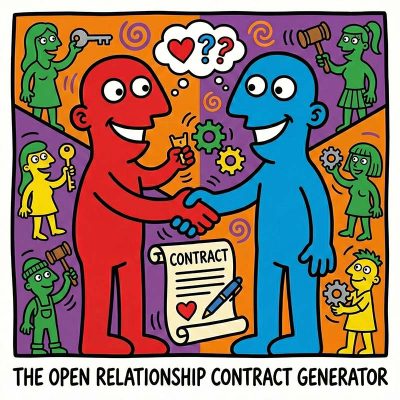
"I thought we agreed" is the sentence that destroys relationships & marriages. Relying on verbal promises when emotions run high is a gamble you cannot afford to lose. Your memory isn't just faulty; it's a liability. Ambiguity is the oxygen that jealousy breathes, turning "freedom" into a minefield of "did I mess up?"
This generator transforms vague permissions into a concrete, signed reality. Stop arguing about what you thought was said and lean on what is written. Secure your boundaries in ink, not hope.
Framing jealousy as a skill building opportunity
The shift from stubborn fear to practical growth starts with a simple frame. See jealousy as an invitation to practice four core skills that improve all kinds of relationships. The four skills are emotional regulation communication boundary work and cultivating positive relation with compersion the ability to feel joy for your partner when they are with someone else.
Each skill will be explored in depth with practical steps and real world examples. You will find activities to try with your partner or partners and exercises you can do alone to build confidence and clarity.
Emotional regulation first and foremost
Strong emotions can hijack your brain. The first goal is to regain your balance so you can think clearly and act in ways that support the relationship. Here are practical steps to regulate your emotions when jealousy shows up.
- Name the emotion A simple label helps. Say out loud I feel jealousy or I feel left out. Naming it reduces its power.
- Take a pause When possible stop and breathe. Slow inhale through the nose count to four and exhale through the mouth count to six. Repeat a few times until you feel steadier.
- Ground yourself Touch a surface count five things you can see hear and feel. This helps bring your attention to the present moment rather than spiraling into worst case scenarios.
- Move a little A short walk or a quick stretch can shift nervous energy and reset your mood.
- Turn inward with curiosity Ask yourself what need is not being met or what belief about your value is being challenged. This reframes jealousy as information rather than judgment.
Practice ideas
Try a one minute ritual when you notice jealousy rising. Name the feeling say what need is at stake and identify one small action you can take in the next twenty four hours to address it.
Communication strategies that count
Communication is the bridge between jealousy and growth. The aim is clear direct talk that honors your own feelings and respects your partner s needs. We will cover three practical methods you can use today.
Nonviolent Communication style
Nonviolent Communication focuses on four steps that keep the dialogue constructive. Start with expressing a concrete observation without evaluating or blaming. Then say how you feel and what you need that relates to the observation. Finally make a clear request that moves things forward and leave room for a yes or a no.
Example in practice
- Observation I notice you are spending evenings with someone else this week.
- Feeling I feel anxious and a little left out.
- Need I want reassurance that our relationship remains strong and that my needs for closeness are met.
- Request Would you be open to a longer check in next week so we can reconnect and talk about how we both feel about the schedule?
Direct honest talks with clear requests
Be specific about what would help you feel better. A vague request like I just want us to talk more is less likely to produce change than a concrete ask such as Could we schedule a dedicated thirty minute weekly check in to talk about how we both feel and what we want moving forward.
Active listening
Listening well is as important as speaking well. Repeat back what you heard to confirm understanding. Ask clarifying questions and reflect the emotional undertone without immediately fixing everything. This creates safety and shows that you value your partner s perspective.
Boundaries and negotiated agreements
Boundaries define the space where you and your partners can feel safe and supported. They are not rules to punish but guidelines to protect needs and maintain trust. When jealousy arises boundaries may need adjustment or renegotiation.
- Be explicit State exactly what feels comfortable and what does not. The more precise the boundary the easier it is to follow.
- Make them flexible Boundaries are not rigid rites of passage. They can be revisited as feelings evolve and as relationships grow.
- Link boundaries to needs Tie each boundary to a need such as feeling valued secured or respected. This keeps the boundary meaningful rather than punitive.
- Include renegotiation windows Build in times to discuss how boundaries are working and how they should shift over time.
Compersion as a cultivated mindset
Compersion is a term you may hear in ENM circles. It means feeling happy for a partner s joy even when that joy involves someone else. It is a skill that grows with practice not a lucky break. Here are ways to cultivate compersion.
- Celebrate wins aloud When your partner shares a positive experience with another person reflect and express genuine congratulations.
- Ask questions with curiosity Instead of assuming you understand the situation ask questions that help you see the other person and the dynamic from a fresh angle.
- Use sparks of gratitude Keep a journal of things you appreciate about your partner and about the relationship you share. Gratitude builds a positive frame rather than a protective one.
The freedom of an open relationship sounds incredible, but the logistics can feel like holding a grenade. That spinning "what if" anxiety isn't paranoia, it’s your survival instinct warning you that your bond is exposed. "Just seeing what happens" is the fastest way to turn a fantasy into a breakup.
The Essential Guide replaces chaos with discipline. We give you the blueprints, jealousy protocols, and repair scripts needed to explore the edge without falling off. Don't guess. Secure your foundation first.
The world of non-monogamy is a maze of confusing labels. Trying to be "Polyamorous" when your heart actually needs "Swinging" isn't just a vocabulary error; it’s a recipe for misery.
You can't build a stable home on a foundation that doesn't fit your psychology. This tool analyzes your emotional bandwidth and jealousy triggers to design the exact structure you need. Stop trying to squeeze into a box that doesn't fit. Build a relationship that actually feels like home.
Opening up feels exciting, but if you aren't reading from the same script, you're writing a tragedy. The disconnect between "I want freedom" and "I want safety" is where hearts break. This isn't just a quiz; it’s a synchronization engine.
We identify the silent gaps in your desires—from sleepover rules to emotional bandwidth, before they become unbridgeable chasms. Don't wait until the damage is done to find out you were never on the same page. Align your compasses now.
Theory is sexy. Reality is messy. You agreed you could date others, but how does your stomach drop when he takes her to your anniversary spot? Or when she comes home smelling like someone else?
This simulator drags your abstract rules into the harsh light of day. We force you to confront the visceral, gut-wrenching scenarios that actually destroy relationships, before they happen. Test your nervous system in the simulator so you don't crash the car in real life.
The fantasy is endless romance. The reality? It’s a logistical nightmare. Dating isn't just sex; it’s a second job of swiping, spending, and emotional processing that drains your sanity. Underestimating the "admin" of non-monogamy is the fastest way to turn your relationship into a burnout factory where resentment thrives.
This calculator forces you to confront the brutal math of your time, energy, and wallet. Can you actually afford this lifestyle, or are you just signing up for exhaustion?
"I thought we agreed" is the sentence that destroys relationships & marriages. Relying on verbal promises when emotions run high is a gamble you cannot afford to lose. Your memory isn't just faulty; it's a liability. Ambiguity is the oxygen that jealousy breathes, turning "freedom" into a minefield of "did I mess up?"
This generator transforms vague permissions into a concrete, signed reality. Stop arguing about what you thought was said and lean on what is written. Secure your boundaries in ink, not hope.
Cognitive reframing and journaling
The mind loves stories and the stories we tell ourselves about jealousy can trap us or liberate us. Cognitive reframing is a technique to shift perspective from threat to possibility. Journaling helps make the process concrete and trackable.
- Question every thought When a jealous thought arises ask Is this thought a fact or a story I am telling myself? What evidence supports or contradicts this thought?
- Switch the lens Reframe a threat into a practice opportunity. Instead of I am being replaced consider I have the chance to grow closer through honest conversation.
- Track progress Keep a simple log of triggers what happened how you felt what you did next and what you learned. This builds a map for future situations.
Realistic scenarios and practice prompts
Practice helps more than theory. Here are some plausible situations you might face in an ENM setup and scripts you can adapt. The goal is to practice speaking clearly listening deeply and making choices that align with your values.
Scenario one a new partner interaction
You notice your partner is texting a new person frequently and your jealousy rises. Your first step is to pause breathe and name the feeling. Then you ask for a time to talk and propose a specific plan for the next few days.
Conversation outline
- Observation I am noticing a lot of messages with your new partner this week.
- Feeling I feel a bit unsettled and anxious.
- Need I want to feel connected and secure in our relationship even as you explore a new relationship.
- Request Could we set a short check in for the next two days to discuss where we are and how we both feel about this?
Scenario two two partners share time with a new partner
In this scenario jealousy might arise from a fear of being secondary in the eyes of your partner. The response is to ask for reassurance and to negotiate shared time in a way that respects all involved.
Dialogue example
- Partner A I want to be honest I feel left out when you spend long evenings with your new partner without me.
- You I hear you and I want you to feel included. Let us agree that on certain evenings we all check in together and we will share some time one on one as well.
- Partner B That sounds fair. I want us all to have a sense of belonging and I am glad we are talking about it.
Scenario three uncertainty about relationship priority
Jealousy may pop up if you worry that you move down the list of priorities. A direct honest talk can restore balance and clarity about what is expected from each person.
- Observation I am worried that I am not a top priority for you anymore.
- Feeling I feel vulnerable and a little lonely.
- Need I want to know that our connection remains strong and that my needs for closeness are addressed.
- Request Could we schedule more explicit time together and could we also talk about how we both plan our time with other partners?
Scenario four setting boundaries after a tough moment
Sometimes a boundary is breached or misunderstood. A calm boundary re establishment can save a relationship from drifting apart.
- Observation Last week I felt hurt when you told a joke about a private moment we shared. It made me question my safety in sharing honestly with you.
- Feeling I feel exposed and worried about trust.
- Need I want to feel safe and respected as we share these pieces of information with others.
- Request I would like us to agree that private moments stay private and that humor about them stays within boundaries we both endorse.
Must no s and common pitfalls to avoid
- Do not shame or blame your partner for feeling drawn to someone else. Curiosity and care often work better than accusation.
- Avoid using jealousy as a weapon. It is not a tool for control and manipulation. It is a signal that invites growth.
- Avoid leaking blame into external conversations about your partner s other relationships. Focus on your own voice and your own needs instead of rehashing past conflicts.
- Don not skip self care. Jealousy can be exhausting and it is okay to take time for yourself to recharge and regain balance.
- Avoid turning every difference into a fight. Not every discrepancy deserves a long confrontation. Sometimes a small adjustment over time is enough.
Practical tools that help in daily life
Here is a short set of practical tools you can adopt right away to transform jealousy into productive growth. The goal is to create sustainable practices that keep you connected to yourself and to your partners.
- Jealousy diary Write down triggers emotions what you did in the moment and what helped you in the end. Look for patterns and growth opportunities over time.
- Regular check ins Schedule consistent conversations about how everyone feels about the arrangement. These do not have to be long or heavy just a steady rhythm.
- Boundary worksheet List boundaries with a short note about why each boundary matters and how you will honor it in real life.
- Pause and reflect ritual Use a simple routine when jealousy arrives to prevent rash actions. A brief pause then a plan can change the outcome entirely.
- Compersion practice Make a habit of naming the parts you genuinely celebrate about your partner s experiences with others and express those feelings.
Terminology and acronyms explained
- ENM Short for Ethical Non Monogamy a relationship approach that welcomes more than two people while emphasizing consent openness and clear agreements.
- Polyamory A form of ENM where a person has intimate relationships with more than one partner at the same time with the knowledge and consent of everyone involved.
- Compersion The feeling of joy or happiness when a partner experiences love or pleasure with someone else.
- Primary A partner who holds a central place in the relationship structure often linked to decision making or time management though roles can shift with renegotiation.
- Secondary A partner who sits outside the primary tier and may have different levels of time and emotional investment.
- Negotiation The process of discussing and agreeing on boundaries rules and expectations within the relationship or relationships.
- Boundaries Explicit lines that protect emotional safety and personal needs. Boundaries are personal and should be revisited as realities change.
Realistic myths about jealousy in ENM
- Myth I cannot feel jealousy in ENM. Truth jealousy is natural but it does not have to rule your actions. You can learn to respond with care and clarity.
- Myth Jealousy means you are not compatible with ENM. Reality compatibility depends on how you handle jealousy and how you communicate your needs. It is not the final verdict on a lifestyle.
- Myth You must never feel jealousy again. Reality is that jealousy will show up occasionally. The goal is to manage it so it does not derail the relationship.
- Myth You need to remove all risk. You cannot eliminate every risk in life or love. You can reduce risks by planning check ins and clear boundaries.
Checklist for getting started with jealousy as a skill
- Define your needs and values before a tense moment arises. This makes it easier to speak from a place of clarity.
- Choose a time for a family or partner check in when energy is calmer and the day is not crowded with obligations.
- Practice naming emotions and referring to specific events rather than vague judgments about personality or character.
- Work on a concrete boundary or a specific negotiation point in every conversation to show progress rather than looping in circles.
- Celebrate small wins. Acknowledge the moment when you both feel heard and respected even if the situation is not fully resolved yet.
Putting it into a simple plan of action
If you want to start today here is a straightforward plan you can adapt to your needs. This is a practical four week framework designed to build skills and strengthen your ENM foundation.
Week one find the signal and tune in
During this week identify what triggers jealousy and practice a quick pause when you notice it. Begin a jealousy diary naming the trigger what emotion shows up and what need is involved. Share a single insight with your partner and ask for one small adjustment that would help you feel safer and more seen.
Week two refine the conversation
Work on clear compassionate communication. Use one recent trigger to practice nonviolent communication or a direct honest talk. The focus is on expressing your needs and inviting your partner to respond without defensiveness. Schedule a check in to review progress and refine boundaries based on how you feel and what actually works.
Week three test and adjust boundaries
Take a boundary you have discussed and test it in daily life. If it feels awkward or unfair adjust it with your partner. Build in a renegotiation time to reassess the boundary and confirm that it still serves both people equally.
Week four celebrate and expand compersion
Turn up the compersion practice. When your partner shares a positive experience with someone else take a moment appreciate their happiness and imagine how that moment could strengthen your relationship as well. End the month with a joint reflection on growth and plan the next cycle of check ins and boundary reviews.
Frequently asked questions
How can jealousy be turned into a growth opportunity in ENM
Jealousy signals a gap between needs and reality. By naming the feeling detailing the need and taking a concrete action you move from reaction to intentional growth. Over time you can build skills in communication emotional regulation and boundary setting that improve all of your relationships.
What is compersion and how do I cultivate it
Compersion is the positive feeling of happiness for your partner when they are with someone else. You cultivate it by practicing gratitude paying attention to your own feelings and celebrating your partner s joy as a shared win rather than a threat.
How do I tell a partner I feel jealous without blaming them
Use a framing that centers your experience. For example say I feel anxious when I see you spending a lot of time with a new partner and I would love to talk about how we can make room for closeness between us. Avoid accusations and focus on your needs and solutions.
Is jealousy a sign that ENM will not work for us
Not necessarily. It can be a sign that you need better alignment on boundaries communication or both. Many couples use jealousy as a cue to renegotiate and deepen trust. If you consistently feel overwhelmed consider talking with a therapist who understands ENM dynamics.
What if my partner does not share the same appetite for connection
That happens in ENM and it is a real boundary to discuss. A practical approach is to redesign the arrangement so both partners feel valued and safe. This might mean adjusting the pace of involvement or clarifying expectations around time and emotional support.
Can jealousy be eliminated completely in ENM
Elimination is unlikely and unnecessary. The aim is not to erase emotion but to manage it so you can communicate openly and maintain trust. With practice jealousy often becomes less intense and easier to navigate.
When should I seek external help
If jealousy leads to persistent anxiety that interferes with daily life or if communication repeatedly breaks down consider seeking a therapist who specializes in ENM or polyamory friendly counseling. External support can provide perspective and practical tools.
Glossary of useful terms and acronyms
- ENM Ethical Non Monogamy a relationship approach that welcomes more than two people with consent and clear agreements.
- Polyamory The practice of having intimate relationships with more than one partner at the same time with the consent of everyone involved.
- Compersion Joy felt for a partner s happiness with someone else.
- Boundaries Personal rules that protect emotional safety and respect for needs within the relationship.
- Negotiation The process of discussing and agreeing on practices boundaries and expectations.
- Check in A planned conversation where people share how they are feeling and what they need as the relationship evolves.
- Emotional regulation Techniques used to manage intense emotions in a healthy way.
Meta description
Turn jealousy into a growth engine. Practical ENM strategies clear terms and real world scenarios to build skills not fear.
The freedom of an open relationship sounds incredible, but the logistics can feel like holding a grenade. That spinning "what if" anxiety isn't paranoia, it’s your survival instinct warning you that your bond is exposed. "Just seeing what happens" is the fastest way to turn a fantasy into a breakup.
The Essential Guide replaces chaos with discipline. We give you the blueprints, jealousy protocols, and repair scripts needed to explore the edge without falling off. Don't guess. Secure your foundation first.
The world of non-monogamy is a maze of confusing labels. Trying to be "Polyamorous" when your heart actually needs "Swinging" isn't just a vocabulary error; it’s a recipe for misery.
You can't build a stable home on a foundation that doesn't fit your psychology. This tool analyzes your emotional bandwidth and jealousy triggers to design the exact structure you need. Stop trying to squeeze into a box that doesn't fit. Build a relationship that actually feels like home.
Opening up feels exciting, but if you aren't reading from the same script, you're writing a tragedy. The disconnect between "I want freedom" and "I want safety" is where hearts break. This isn't just a quiz; it’s a synchronization engine.
We identify the silent gaps in your desires—from sleepover rules to emotional bandwidth, before they become unbridgeable chasms. Don't wait until the damage is done to find out you were never on the same page. Align your compasses now.
Theory is sexy. Reality is messy. You agreed you could date others, but how does your stomach drop when he takes her to your anniversary spot? Or when she comes home smelling like someone else?
This simulator drags your abstract rules into the harsh light of day. We force you to confront the visceral, gut-wrenching scenarios that actually destroy relationships, before they happen. Test your nervous system in the simulator so you don't crash the car in real life.
The fantasy is endless romance. The reality? It’s a logistical nightmare. Dating isn't just sex; it’s a second job of swiping, spending, and emotional processing that drains your sanity. Underestimating the "admin" of non-monogamy is the fastest way to turn your relationship into a burnout factory where resentment thrives.
This calculator forces you to confront the brutal math of your time, energy, and wallet. Can you actually afford this lifestyle, or are you just signing up for exhaustion?
"I thought we agreed" is the sentence that destroys relationships & marriages. Relying on verbal promises when emotions run high is a gamble you cannot afford to lose. Your memory isn't just faulty; it's a liability. Ambiguity is the oxygen that jealousy breathes, turning "freedom" into a minefield of "did I mess up?"
This generator transforms vague permissions into a concrete, signed reality. Stop arguing about what you thought was said and lean on what is written. Secure your boundaries in ink, not hope.
