
Managing Insecurity and Comparison


If you are exploring ethically non monogamous dynamics you have probably bumped into the moment when your inner narrator starts a loud monologue about insecurity and comparison. ENM short for ethically non monogamous is a relationship style where partners pursue multiple meaningful connections with consent and honesty. In theory it sounds liberating in practice it can trigger a whole set of feelings that feel personal even when they are not about you at all. This guide digs into how insecurity shows up in ENM dynamics and how you can manage it without losing your groove or the trust that makes ENM work.
Quick Links to Useful Sections
- What ENM means and why insecurities pop up
- Key terms you should know
- Common insecurities that show up in ENM dynamics
- Fear of replacement
- Feeling left out or unseen
- Comparison traps
- Performance anxiety
- Boundary creep and confusion
- Why comparisons happen in ENM and what to do about them
- Realistic scenarios and how to handle them with clarity
- Scenario one a new partner arrives in the scene
- Scenario two comparing to a past relationship
- Scenario three jealousy flare during a group event
- Scenario four routine changes in scheduling
- Strategies to manage insecurity and reduce harmful comparison
- Practical tools you can use today
- Communication scripts you can copy and tailor
- Boundaries and agreements checklist
- Self care and mental models that help
- When to seek help and how to approach therapy or coaching
- Long term growth and renegotiation steps
- Glossary of common terms and acronyms used in ENM
- Frequently asked questions
What ENM means and why insecurities pop up
ENM stands for ethically non monogamous. That term describes a way of relating where honesty communication and consent guide how relationships are formed and maintained. People choose ENM for many reasons including curiosity risk taking personal growth and the belief that love can be expansive not limited by social scripts. It is not a free pass to neglect boundaries or to ignore feelings. A strong ENM practice centers on consent respect and ongoing renegotiation when life shifts.
Insecurity in ENM usually shows up as fear jealousy or worry that a partner will prefer someone else. It can feel personal even when it is not about you at your core it is an emotional signal telling you something is unsettled. Insecurity is not a failure or a sign of weakness. It is a natural human response that often speaks to needs that are not being met or to ancient patterns that want updating. The good news is that insecurity can be managed learned from and even used as a guide to deepen trust and closeness in a healthy ENM frame.
Key terms you should know
- Ethically non monogamous ENM a relationship style where honesty consent and respect guide multiple connections.
- Primary partner in many ENM setups this is the partner who holds a central place in life though not everyone uses the same labeling.
- Secondary partner a partner who is important but not the central focus in daily life.
- Compersion the feeling of joy when your partner experiences happiness or fulfillment with someone else. This is the opposite of jealousy in many ways.
- Jealousy a natural feeling that can signal a boundary or need that deserves attention.
- Transparency and consent open replies about emotions actions and decision making that respect all people involved.
- Boundaries agreed limits about what is acceptable within a relationship and how information is shared or not shared.
- Rupture a breakdown in trust or communication that requires repair and renegotiation.
Common insecurities that show up in ENM dynamics
Insecurity can be loud but its root is usually simple. Below are common patterns and what they tend to mean. Recognize them as messages from your nervous system rather than declarations about your worth. With practice you can respond rather than react.
Fear of replacement
This is the worry that a partner will invest time energy or affection in someone else to the point where you feel neglected. It often shows up as clingy checking on plans or a nagging voice that says you are not enough. The not enough voice is not about you as a person it is about the belief that you have to earn a place in a life that is already busy and full of affection. Address this by confirming your own value and negotiating how time and energy will be shared with care.
Feeling left out or unseen
In ENM you may find your partner has meaningful interactions you are not part of. You could feel excluded from scenes events or conversations that matter to them. The remedy is not to disappear into the background. The fix is to cultivate visibility through scheduled check ins clear invitations to participate and honest sharing about what you need to feel connected.
Comparison traps
Social media and the stories of others can turn your brain into a comparison machine. You may compare sexual experiences emotional intimacy or life milestones. The problem with comparison is not the facts themselves but how you use them to judge your own worth. Your metric becomes shaped by scarce thinking which tells you that someone else has it better than you. The antidote is to create your own measuring sticks rooted in your values and to practice gratitude for what is going well in your own life.
Performance anxiety
This is the worry that you must perform as a perfect partner every time you are asked to show up. It may manifest as over preparation or fear of saying the wrong thing. In reality a sustainable ENM dynamic rests on honest imperfect conversations. A simple approach is to name what you are capable of offering and to renegotiate when your capacity shifts.
Boundary creep and confusion
When limits are tested or when agreements are not clear enough you can feel uncertain that someone might step outside the agreed zone. Boundaries evolve as people change. The work is to keep agreements visible and to revisit them at planned times so everyone stays aligned without blame and without drama.

The freedom of an open relationship sounds incredible, but the logistics can feel like holding a grenade. That spinning "what if" anxiety isn't paranoia, it’s your survival instinct warning you that your bond is exposed. "Just seeing what happens" is the fastest way to turn a fantasy into a breakup.
The Essential Guide replaces chaos with discipline. We give you the blueprints, jealousy protocols, and repair scripts needed to explore the edge without falling off. Don't guess. Secure your foundation first.

The world of non-monogamy is a maze of confusing labels. Trying to be "Polyamorous" when your heart actually needs "Swinging" isn't just a vocabulary error; it’s a recipe for misery.
You can't build a stable home on a foundation that doesn't fit your psychology. This tool analyzes your emotional bandwidth and jealousy triggers to design the exact structure you need. Stop trying to squeeze into a box that doesn't fit. Build a relationship that actually feels like home.

Opening up feels exciting, but if you aren't reading from the same script, you're writing a tragedy. The disconnect between "I want freedom" and "I want safety" is where hearts break. This isn't just a quiz; it’s a synchronization engine.
We identify the silent gaps in your desires—from sleepover rules to emotional bandwidth, before they become unbridgeable chasms. Don't wait until the damage is done to find out you were never on the same page. Align your compasses now.
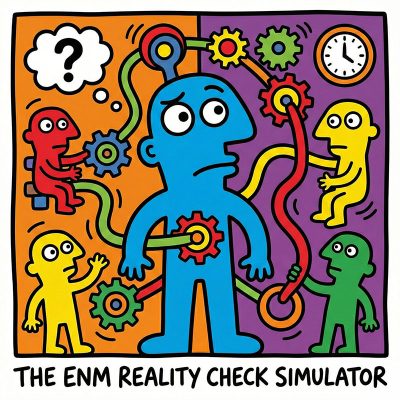
Theory is sexy. Reality is messy. You agreed you could date others, but how does your stomach drop when he takes her to your anniversary spot? Or when she comes home smelling like someone else?
This simulator drags your abstract rules into the harsh light of day. We force you to confront the visceral, gut-wrenching scenarios that actually destroy relationships, before they happen. Test your nervous system in the simulator so you don't crash the car in real life.
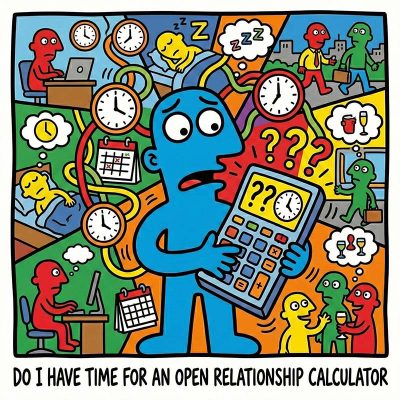
The fantasy is endless romance. The reality? It’s a logistical nightmare. Dating isn't just sex; it’s a second job of swiping, spending, and emotional processing that drains your sanity. Underestimating the "admin" of non-monogamy is the fastest way to turn your relationship into a burnout factory where resentment thrives.
This calculator forces you to confront the brutal math of your time, energy, and wallet. Can you actually afford this lifestyle, or are you just signing up for exhaustion?
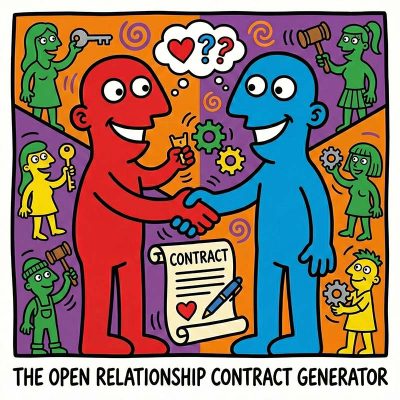
"I thought we agreed" is the sentence that destroys relationships & marriages. Relying on verbal promises when emotions run high is a gamble you cannot afford to lose. Your memory isn't just faulty; it's a liability. Ambiguity is the oxygen that jealousy breathes, turning "freedom" into a minefield of "did I mess up?"
This generator transforms vague permissions into a concrete, signed reality. Stop arguing about what you thought was said and lean on what is written. Secure your boundaries in ink, not hope.
Why comparisons happen in ENM and what to do about them
Comparisons emerge from a mix of biology culture and past experiences. Our brains are trained to notice differences and to seek safety in familiarity. In ENM it is easy to see differences across partners and to interpret them as a signal about your own desirability or value. The good news is you can reframe comparisons as information you can use to guide conversations rather than as verdicts about your worth. A few practical ideas that help you shift from comparison to healthy curiosity:
- Focus on your values and what matters in the moment rather than the tally of experiences or milestones.
- Translate observed differences into questions to ask your partners and yourself rather than reactions aimed at blaming someone else.
- Practice emotional first aid by naming what you feel and choosing a constructive response instead of an impulsive one.
- Use a fair frame for evaluation that respects everyone involved including yourself.
Realistic scenarios and how to handle them with clarity
Scenario one a new partner arrives in the scene
Your partner starts spending a lot of time with a new person and you notice a shift in attention. You may feel a sting or a worry that you are losing the connection. Begin with a calm check in. Use a simple language frame that describes your experience without assigning blame. For example you could say I have noticed more planning around certain activities and I feel a bit left out when I am not included. I want us to find a way to keep our routines while also welcoming this new relationship. Then invite a concrete suggestion from your partner such as scheduling a weekly date or setting aside some joint time the two of you share. This approach keeps the door open for connection while acknowledging your feelings as valid.
Scenario two comparing to a past relationship
When you compare your current situation to a past relationship your brain might run a script that says this was better or easier back then. Name the comparison and switch to a constructive question. For example I am noticing a memory from a past relationship that makes this moment feel less than. What is happening now that would help us feel secure and connected today? This question invites your partner to participate in strengthening trust rather than defending against a threat. In ENM the goal is not to erase memory it is to keep the present moment healthy and inclusive.
Scenario three jealousy flare during a group event
Group events can intensify insecurity because multiple people are present and there is more potential for subtle dynamics. If you feel a flare begin with a pause and a breath and then a quick check in with your partner. A practical bridge is I feel uneasy right now and I would like to step away for a moment or would you be open to a short check in after the event. Making a plan for how to handle similar situations in the future reduces the chance of a rupture and keeps you in a collaborative stance instead of a defensive posture.
Scenario four routine changes in scheduling
Sometimes life changes and a partner has less time available. Insecurity can show up as fear that you are being deprioritized. Address this with a direct and kind conversation about the new reality. You could say We are adjusting how we spend our time and I want to make sure we still have meaningful moments together. Let us map out a weekly or monthly plan that works for both of us and then revisit it in a month. A proactive planning conversation helps you stay connected even when schedules shift.
Strategies to manage insecurity and reduce harmful comparison
- Name and own your feelings Start by labeling what you feel without judgment. For example I feel anxious and a bit hurt when I hear about another date. Naming makes it easier to address rather than to fuel a rumination loop.
- Create a simple emotional budget Decide how much emotional energy you can safely allocate to conversations about insecurity and how much you need for your own practice and rest. Then honor that budget and renegotiate when needed.
- Practice transparent communication Share what you need to feel secure and invite the same from your partner. The aim is to create a constant flow of honest feedback rather than silent tension that builds up.
- Develop a personal validation routine Build a short ritual that reminds you of your worth and your unique contributions to the relationship network. This could be journaling a list of your strengths or a short gratitude ritual focused on your inner life.
- Invest in quality time with each partner Plan both one on one time and shared experiences with multiple partners. Consistent, meaningful moments create a stable anchor that reduces impulsive reactions to insecurities.
- Build compersion muscles Compersion is the ability to feel happiness for a partner when they find someone meaningful. It is an active practice and it is learned through small moments of celebration and shared joy rather than a sudden feeling of mastery.
- Set clear boundaries and renegotiate as life shifts Boundaries are not set in stone. They need regular updates as relationships grow. Keep notices of boundary changes in a shared place so everyone can see them and refer back to them when needed.
- Use scripts for tough talks Having ready made conversation templates reduces anxiety. A simple script could be I feel insecure when these events occur. I would like us to try this approach to help me feel connected and safe. What do you think about that idea.
- Choose not to compare your chapter to someone else’s chapter Each story has its own twists turns and endings. Concentrate on your own path and on how you want to grow with the people you care about.
- Ask for help when you need it If insecurity becomes overpowering and blocks your daily life consider talking with a therapist who understands ENM dynamics or a trusted friend who is supportive and nonjudgmental.
Practical tools you can use today
Below are ready to use tools that fit into a busy life. Adapt them to your unique constellation and the way you and your partners like to talk and spend time together.
Communication scripts you can copy and tailor
These are simple starting points that respect consent and openness. Use them as a base and adjust to fit your voice and your relationships.
- Opening a conversation about insecurity I want to talk with you about something vulnerable. I am feeling insecure and I would like your help to understand and to find a path forward together.
- Expressing a need I need a bit more time with you this week and perhaps a specific activity that we both enjoy. Does that work for you
- Addressing a boundary shift I realize our schedules are changing. Could we map out a new routine that keeps us connected while still honoring other relationships
- Discussing compersion I want to try a small exercise this week to celebrate the connections you are building with others. Can we share one moment each day where we lift each other up
Boundaries and agreements checklist
- Who is involved in this agreement
- How time and energy are shared
- What information is shared and what stays private
- What kind of emotional support is available from whom
- How the agreements will be updated and when
Self care and mental models that help
- Practice mindful breathing for a few minutes on tough days
- Keep a gratitude list focused on what you enjoy in your life beyond the romantic sphere
- Engage in activities that reinforce your sense of identity outside your relationships
- Schedule regular check ins with trusted friends who understand ENM
When to seek help and how to approach therapy or coaching
If insecurity or comparison begin to erode your daily functioning or if you experience persistent distress that does not subside with conversations with partners you may benefit from professional support. Look for therapists or coaches who understand ethical non monogamy and who can help you with communication tools cognitive reframing and boundary setting. The goal of therapy in this context is not to seal the edges of your network but to help you navigate feelings and maintain healthy connections that honor everyone involved.
Long term growth and renegotiation steps
Relationships change and many ENM networks adapt with time. Plan for growth by scheduling check ins every two to three months to review what is working what has changed and what you want to try next. Use these renegotiation moments to rebuild trust and to celebrate progress rather than to assign fault. The aim is to keep the environment honest and supportive and to ensure that each person feels seen heard and valued.
Glossary of common terms and acronyms used in ENM
- ENM ethically non monogamous a relationship approach that openly allows more than one intimate connection with consent.
- Compersion feeling happiness when your partner experiences happiness with another person.
- Jealousy an emotional response to a perceived threat to a valued relationship involving insecurity or fear of loss.
- Boundary a limit agreed on by all involved about what is acceptable and what is not.
- Rupture repair the process of repairing trust after a conflict or breach in boundaries.
- Transparency open communication about feelings plans and actions that affect the relationship network.
- Primary partner the partner who holds a central place in the care or structure of the relationship for many people.
- Secondary partner a partner who has a meaningful place but not the central role.
Frequently asked questions
What is the best way to start a conversation about insecurity
Lead with your experience and avoid accusation. Say I am feeling insecure and I want to talk about a way we can strengthen our connection. Ask for their perspective and aim to agree on a small next step together.
How do I stop comparing myself to others in the ENM circle
Develop a personal metric that reflects your values and what truly matters to you. Practice gratitude for what you bring to your relationships and schedule focus time with people who reinforce your sense of worth rather than depleting it.
What if I feel overwhelmed and want to step back from ENM for a while
It is okay to pause. Have an honest conversation about shifting the pace or stepping back while you work on your feelings. You can renegotiate the terms with care and ensure that everyone involved understands the temporary nature of the pause.
Is compersion realistic for everyone
Compersion is a skill that grows with practice but it may not occur for everyone in every moment. It is a joyful stance you can cultivate by recognizing your partner happiness and by celebrating their growth even when you are not a direct participant in that moment.
How do I maintain trust when schedules are chaotic
Keep a simple shared calendar or a mutual plan that both of you add to. Schedule regular moments for check ins and for your personal time. Consistency beats intensity and tiny steady steps prevent ruptures from building up.
The freedom of an open relationship sounds incredible, but the logistics can feel like holding a grenade. That spinning "what if" anxiety isn't paranoia, it’s your survival instinct warning you that your bond is exposed. "Just seeing what happens" is the fastest way to turn a fantasy into a breakup.
The Essential Guide replaces chaos with discipline. We give you the blueprints, jealousy protocols, and repair scripts needed to explore the edge without falling off. Don't guess. Secure your foundation first.
The world of non-monogamy is a maze of confusing labels. Trying to be "Polyamorous" when your heart actually needs "Swinging" isn't just a vocabulary error; it’s a recipe for misery.
You can't build a stable home on a foundation that doesn't fit your psychology. This tool analyzes your emotional bandwidth and jealousy triggers to design the exact structure you need. Stop trying to squeeze into a box that doesn't fit. Build a relationship that actually feels like home.
Opening up feels exciting, but if you aren't reading from the same script, you're writing a tragedy. The disconnect between "I want freedom" and "I want safety" is where hearts break. This isn't just a quiz; it’s a synchronization engine.
We identify the silent gaps in your desires—from sleepover rules to emotional bandwidth, before they become unbridgeable chasms. Don't wait until the damage is done to find out you were never on the same page. Align your compasses now.
Theory is sexy. Reality is messy. You agreed you could date others, but how does your stomach drop when he takes her to your anniversary spot? Or when she comes home smelling like someone else?
This simulator drags your abstract rules into the harsh light of day. We force you to confront the visceral, gut-wrenching scenarios that actually destroy relationships, before they happen. Test your nervous system in the simulator so you don't crash the car in real life.
The fantasy is endless romance. The reality? It’s a logistical nightmare. Dating isn't just sex; it’s a second job of swiping, spending, and emotional processing that drains your sanity. Underestimating the "admin" of non-monogamy is the fastest way to turn your relationship into a burnout factory where resentment thrives.
This calculator forces you to confront the brutal math of your time, energy, and wallet. Can you actually afford this lifestyle, or are you just signing up for exhaustion?
"I thought we agreed" is the sentence that destroys relationships & marriages. Relying on verbal promises when emotions run high is a gamble you cannot afford to lose. Your memory isn't just faulty; it's a liability. Ambiguity is the oxygen that jealousy breathes, turning "freedom" into a minefield of "did I mess up?"
This generator transforms vague permissions into a concrete, signed reality. Stop arguing about what you thought was said and lean on what is written. Secure your boundaries in ink, not hope.
