
Monogamish Relationships


Monogamish relationships are not a buzzword or a trend they are a way to blend commitment with freedom. If you are curious about what it means to mix a strong bond with occasional outside connections this guide is for you. We will break down terms share realistic examples and give you practical tips you can use today. Think of this as your friendly lab notebook for ethical non monogamy or ENM which is the umbrella term used for relationship styles that involve more than one romantic or sexual partner with everyone's consent.
Quick Links to Useful Sections
- What monogamish means in ENM
- How monogamish differs from other relationship styles
- Core principles you should adopt
- Common structures you might see under monogamish
- Practical boundaries to consider
- Jealousy and emotion management
- Communication frameworks that work
- How to start a boundary renegotiation
- A routine check in
- Reassurance dialogue for jealousy
- Safety and health
- Realistic scenarios and conversations
- Scenario one A couple negotiates a new connection
- Scenario two A partner struggles with time management
- Scenario three Jealousy arises after an outside connection
- Tools and resources for monogamish success
- Common pitfalls to avoid
- Glossary of useful terms and acronyms
- Frequently asked questions
What monogamish means in ENM
Monogamish is a term that describes a relationship style where the core bond is monogamous but the partners allow for consensual non monogamy in certain situations. In practice this often means a couple or duo who mostly date each other but agree to explore sexual or romantic experiences with others under clearly negotiated boundaries. It is not an invitation to cheat it is a conscious agreement about what is allowed who is allowed and under what conditions. The origin of the term is frequently attributed to the writer and sex advice columnist Dan Savage who used the phrase to describe couples who stay monogamous in daily life but have consensual experiences with others from time to time. In modern use the term has evolved and many people prefer to describe their own arrangements with more precise language. The important thing is that monogamish places emphasis on consent open communication and a shared sense of ethical responsibility.
How monogamish differs from other relationship styles
Understanding the differences helps you decide if monogamish is the right path for you. Here is a quick map that shows how monogamish fits among ENM options.
- Monogamy means a single romantic relationship at a time with exclusive sexual access. Monogamish keeps the core relationship exclusive most of the time but allows room for outside experiences within agreed boundaries.
- Polyamory means maintaining more than one romantic relationship with the knowledge and consent of everyone involved. Monogamish can be a form of polyamory when outside connections are emotionally involved but often keeps emotional focus on the primary partner while still exploring other connections sexually.
- Open relationships typically emphasize sexual openness with fewer constraints on emotional closeness. Monogamish tends to privilege a primary bond while keeping doors open for sexual experiences with others under negotiated rules.
- Solo poly describes a stance where a person does not seek a primary partner and instead maintains multiple relationships on their own terms. Monogamish is usually anchored around a primary couple while solo poly mode is more about personal autonomy.

The freedom of an open relationship sounds incredible, but the logistics can feel like holding a grenade. That spinning "what if" anxiety isn't paranoia, it’s your survival instinct warning you that your bond is exposed. "Just seeing what happens" is the fastest way to turn a fantasy into a breakup.
The Essential Guide replaces chaos with discipline. We give you the blueprints, jealousy protocols, and repair scripts needed to explore the edge without falling off. Don't guess. Secure your foundation first.

The world of non-monogamy is a maze of confusing labels. Trying to be "Polyamorous" when your heart actually needs "Swinging" isn't just a vocabulary error; it’s a recipe for misery.
You can't build a stable home on a foundation that doesn't fit your psychology. This tool analyzes your emotional bandwidth and jealousy triggers to design the exact structure you need. Stop trying to squeeze into a box that doesn't fit. Build a relationship that actually feels like home.

Opening up feels exciting, but if you aren't reading from the same script, you're writing a tragedy. The disconnect between "I want freedom" and "I want safety" is where hearts break. This isn't just a quiz; it’s a synchronization engine.
We identify the silent gaps in your desires—from sleepover rules to emotional bandwidth, before they become unbridgeable chasms. Don't wait until the damage is done to find out you were never on the same page. Align your compasses now.

Theory is sexy. Reality is messy. You agreed you could date others, but how does your stomach drop when he takes her to your anniversary spot? Or when she comes home smelling like someone else?
This simulator drags your abstract rules into the harsh light of day. We force you to confront the visceral, gut-wrenching scenarios that actually destroy relationships, before they happen. Test your nervous system in the simulator so you don't crash the car in real life.

The fantasy is endless romance. The reality? It’s a logistical nightmare. Dating isn't just sex; it’s a second job of swiping, spending, and emotional processing that drains your sanity. Underestimating the "admin" of non-monogamy is the fastest way to turn your relationship into a burnout factory where resentment thrives.
This calculator forces you to confront the brutal math of your time, energy, and wallet. Can you actually afford this lifestyle, or are you just signing up for exhaustion?
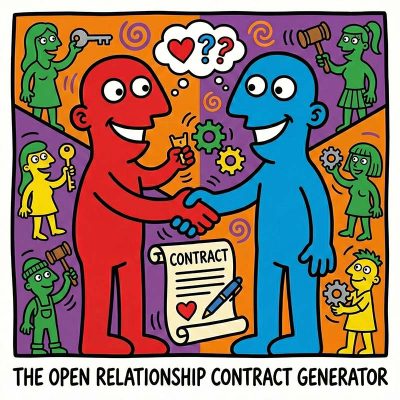
"I thought we agreed" is the sentence that destroys relationships & marriages. Relying on verbal promises when emotions run high is a gamble you cannot afford to lose. Your memory isn't just faulty; it's a liability. Ambiguity is the oxygen that jealousy breathes, turning "freedom" into a minefield of "did I mess up?"
This generator transforms vague permissions into a concrete, signed reality. Stop arguing about what you thought was said and lean on what is written. Secure your boundaries in ink, not hope.
Core principles you should adopt
When you enter a monogamish arrangement you are not surrendering control you are handing yourself a set of practical guides. Here are the principles that will help you build a healthy dynamic.
- Clear enthusiastic consent Every step outside the primary bond requires explicit agreement from all involved parties. Consent is ongoing and can be withdrawn at any time.
- Open and regular communication Frequent conversations about feelings boundaries and changes in circumstances prevent misunderstandings from turning into drama.
- Explicit boundaries It helps to carve out what is allowed and what is off limits. Boundaries can cover timing location emotional closeness and which activities are on the table.
- Honesty and transparency The baseline is honesty about who you are seeing what you are feeling and how you are adapting to the arrangement.
- Emotional check ins Make space for discussing emotions even when the talk is uncomfortable. Acknowledging jealousy or insecurity early keeps conflicts from growing.
- Health and safety first Regular STI testing safe sex practices and clear rules about sexual health protect everyone involved.
- Respect and care for all involved Treat every person with dignity and avoid using others as a tool to fix problems with your primary relationship.
Common structures you might see under monogamish
Monogamish can look different from couple to couple. Here are some common patterns to illustrate the range of possibilities.
- Primary couple with occasional outside experiences The typical setup where the couple has agreed to allow sexual or flirty encounters with others but maintains daily life and commitment between themselves.
- One primary partner with a rotating secondary A partner keeps a primary relationship while exploring other connections that can shift over time.
- Long term triad with clear boundaries Three adults who share a mutual bond while balancing emotional and practical needs among all involved.
- Open casual dynamics alongside a closed core The primary bond remains strong and monogamous while there are occasional open arrangements with non emotional involvement.
Practical boundaries to consider
Boundaries are the scaffolding of a monogamish relationship. They are not walls to trap you they are guard rails that keep everyone safe and comfortable. Boundaries can and should be renegotiated as life changes.
- Emotional boundaries Decide if there is room for emotional connections with others or if emotional closeness must always be reserved for the main partner. Clarify expectations around desire for dates romantic outings or deep conversations with others.
- Time boundaries Establish how much time with other people is reasonable and how often you will check in about schedule changes. Time boundaries help prevent neglect of the primary relationship.
- Activity boundaries Define which activities are allowed with others such as dating events casual sex or overnight stays and which are off limits.
- Privacy boundaries Decide what information about outside relationships should stay private and what can be shared with the other partner or with close friends.
- Location boundaries Choose where outside interactions can take place whether online digital spaces count and whether certain venues are off limits.
- Safety boundaries Agree on safer sex practices barrier methods testing schedules and how to handle potential exposure concerns.
Jealousy and emotion management
Jealousy is a signal not a bad emotion. When you feel jealousy you are telling yourself something about your needs not being met or about a boundary being stretched. The goal is not to eliminate jealousy but to understand it and respond in a constructive way.
- Name the feeling Label what you feel in the moment once you recognize it. A name helps you communicate clearly.
- Share specific needs Focus the conversation on what would help you feel more secure rather than listing accusations.
- Practice compersion Compersion is a word that means feeling happiness for your partner when they experience joy with someone else. It is a muscle you can develop over time.
- Schedule regular tune ups Check in with your partner about how the arrangement is working and what might need to shift.
- Use a cooling off period If emotions run high decide to pause a discussion and revisit after a short break.
Communication frameworks that work
Good communication is the backbone of a healthy monogamish dynamic. Here are practical frameworks and sample scripts you can adapt to your own situation.
How to start a boundary renegotiation
Hey I want to talk about how things are going with the arrangements we have in place. I have been feeling a bit overwhelmed lately and I want to make sure both of us feel supported. Can we go over our boundaries together and adjust as needed?
A routine check in
Once every two weeks we sit down with a calm pace. We each share what is working well what is harder and what we would like to change. We agree on two concrete adjustments and plan a date to revisit if needed.
Reassurance dialogue for jealousy
I want to be honest with you I am feeling a pinch of worry about X. I know you care about me and I appreciate that. It would help me if we could do Y or talk about Z so I can feel more secure.
Safety and health
Health is a shared responsibility in any ENM arrangement. Here is how to keep everyone safe and healthy while keeping things practical and respectful.
- Regular STI testing Agree on a testing cadence and ensure everyone shares test results with partners who need to know.
- Safer sex practices Consistent condom use and barrier methods where appropriate reduce risk. Discuss which activities require protection and how to handle lubricant choices and other safety measures.
- Open disclosure of health changes If you test positive or have any health concerns you inform your partners promptly and discuss next steps together.
- Clear rules about pregnancy and birth control Have a plan for contraception and pregnancy decisions that aligns with all involved parties.
Realistic scenarios and conversations
Seeing is believing so here are some common situations and realistic dialogue that can help you practice how to handle them.
Scenario one A couple negotiates a new connection
Alex and Jamie are a core couple in a monogamish arrangement. They have a regular check in every two weeks and a standing rule about emotional closeness. Alex is interested in meeting someone for a casual dating scenario. In the conversation they use a calm tone and focus on two main questions What is allowed under this new arrangement and how will we guard our daily life together. They decide that casual dating with clear boundaries about emotional involvement is acceptable and they agree to a two week review to see how it feels. This approach prevents an impulse decision from causing friction and sets a path for honest evaluation.
Scenario two A partner struggles with time management
Sam is feeling stretched thin between work parenting and dating outside the primary relationship. Sam brings this up during a calm moment emphasizing the need to protect family routines. The conversation leads to a revised schedule more predictable date nights with a shared calendar and a commitment to reduce last minute changes. The key here is to protect the primary relationship while still supporting outside connections with intention rather than impulse.
Scenario three Jealousy arises after an outside connection
Priya notices that her partner has grown closer to someone else emotionally which triggers jealousy. Priya shares her feeling using I statements I am feeling unsettled right now because of the emotional closeness you have with X. Priya and their partner discuss how to preserve emotional safety including a possible pause on emotional intimacy with the outside partner or a renegotiation of boundaries around how much time is spent together. By naming the emotion and asking for specific changes the couple finds a solution that respects both partners.
Tools and resources for monogamish success
These practical tools help you stay organized and focused so you can enjoy a healthy ENM dynamic without chaos or confusion.
- Shared boundaries document A living document that outlines what is allowed who is involved and under what conditions. Everyone can contribute and revisit it during check ins.
- Communication calendar A simple calendar to track date nights important conversations and check in dates so nothing falls through the cracks.
- Health and safety tracker A private record of STI testing dates results and next steps that keeps everyone informed and protected.
- Support network A trusted friend or therapist who understands ENM can provide guidance when tension runs high or you simply need a perspective outside the relationship.
Common pitfalls to avoid
Every relationship style has its traps and monogamish is no exception. Being aware of them helps you sidestep trouble before it grows.
- Hidden arrangements Secret off the record hookups erode trust and undermine consent. Everything should be discussed openly with all involved.
- Disparaging non primary partners Treat everyone with respect. Even if you do not have deep emotional ties with someone else they deserve courtesy and clear boundaries.
- Unclear boundaries When rules are vague the door opens for misinterpretation and conflict. Be specific and revisit as life changes.
- Overlooking personal needs Your needs matter too. A healthy monogamish arrangement works for all parties not just the primary couple.
Glossary of useful terms and acronyms
- ENM Ethical Non Monogamy a family of relationship styles that permit more than one romantic or sexual partner with consent from everyone involved.
- Monogamish A relationship style in which the core bond is monogamous but outside experiences are allowed under negotiated rules.
- Primary partner The partner who holds the central place in the relationship and often bears the biggest share of emotional or logistical responsibilities.
- Secondary partner A partner who participates in the relationship but is not the main focus of daily life or commitments.
- Triad A three person relationship that involves emotional and sexual connections among all members.
- Compersion Feeling joy when your partner experiences happiness with someone else.
- Jealousy An emotion that signals insecurity or boundary concerns and can be managed with grace and honest dialogue.
- Negotiation The process by which all parties discuss desires limits and boundaries to reach a shared understanding.
- Safe sex Practices designed to reduce the risk of sexually transmitted infections and unwanted pregnancies.
- Safer sex A proactive approach using barrier methods and other precautions tailored to the activities involved.
- Disclosure Communicating openly about relationships and sexual activities with all involved partners.
Frequently asked questions
Here are some common questions people have when they start exploring monogamish arrangements within ENM. If your question is not covered here you can ask us for more information.
- What makes a relationship monogamish It is a relationship where the core bond remains monogamous while outside connections are allowed under negotiated boundaries and with consent from everyone involved.
- Is monogamish the same as polyamory No they are related but not identical. Monogamish centers on a primary couple with conditional outside experiences. Polyamory generally involves multiple emotional bonds with consent and awareness among all involved.
- How do you start a monogamish conversation Choose a calm moment and share your feelings using I statements. Frame the talk around your needs and invite your partner to share theirs.
- What if jealousy feels overwhelming Acknowledge the emotion and pause to discuss it. Consider renegotiating boundaries or creating a cooling off period before continuing.
- How often should we check in Many couples find a regular cadence monthly or biweekly works well. It depends on how dynamic your arrangement is and how comfortable you are with change.
- Are there safety issues unique to monogamish The main concerns involve sexual health and emotional well being. Regular testing communication and clear consent reduce risk and create a safer space for everyone.
- Can monogamish work long term Yes many couples maintain healthy fulfilling relationships over years through discipline compassion and ongoing renegotiation of boundaries as life evolves.
The freedom of an open relationship sounds incredible, but the logistics can feel like holding a grenade. That spinning "what if" anxiety isn't paranoia, it’s your survival instinct warning you that your bond is exposed. "Just seeing what happens" is the fastest way to turn a fantasy into a breakup.
The Essential Guide replaces chaos with discipline. We give you the blueprints, jealousy protocols, and repair scripts needed to explore the edge without falling off. Don't guess. Secure your foundation first.
The world of non-monogamy is a maze of confusing labels. Trying to be "Polyamorous" when your heart actually needs "Swinging" isn't just a vocabulary error; it’s a recipe for misery.
You can't build a stable home on a foundation that doesn't fit your psychology. This tool analyzes your emotional bandwidth and jealousy triggers to design the exact structure you need. Stop trying to squeeze into a box that doesn't fit. Build a relationship that actually feels like home.
Opening up feels exciting, but if you aren't reading from the same script, you're writing a tragedy. The disconnect between "I want freedom" and "I want safety" is where hearts break. This isn't just a quiz; it’s a synchronization engine.
We identify the silent gaps in your desires—from sleepover rules to emotional bandwidth, before they become unbridgeable chasms. Don't wait until the damage is done to find out you were never on the same page. Align your compasses now.
Theory is sexy. Reality is messy. You agreed you could date others, but how does your stomach drop when he takes her to your anniversary spot? Or when she comes home smelling like someone else?
This simulator drags your abstract rules into the harsh light of day. We force you to confront the visceral, gut-wrenching scenarios that actually destroy relationships, before they happen. Test your nervous system in the simulator so you don't crash the car in real life.
The fantasy is endless romance. The reality? It’s a logistical nightmare. Dating isn't just sex; it’s a second job of swiping, spending, and emotional processing that drains your sanity. Underestimating the "admin" of non-monogamy is the fastest way to turn your relationship into a burnout factory where resentment thrives.
This calculator forces you to confront the brutal math of your time, energy, and wallet. Can you actually afford this lifestyle, or are you just signing up for exhaustion?
"I thought we agreed" is the sentence that destroys relationships & marriages. Relying on verbal promises when emotions run high is a gamble you cannot afford to lose. Your memory isn't just faulty; it's a liability. Ambiguity is the oxygen that jealousy breathes, turning "freedom" into a minefield of "did I mess up?"
This generator transforms vague permissions into a concrete, signed reality. Stop arguing about what you thought was said and lean on what is written. Secure your boundaries in ink, not hope.
