
Navigating Judgment From Monogamous Culture


Being in an ethical non monogamy dynamic can feel like walking a tightrope while folks in the audience shout a mix of praise and questions. The world around us often frames monogamy as the default script and anything else as a problem to fix. This guide is a practical map for navigating that spectrum of judgment with honesty, boundaries, and plenty of laughter along the way. If you want a clear path to stand firm in your relationships while staying kind to others and yourself, you are in the right place. Consider this your playbook for living out ENM with confidence even when the crowd does not fully understand what you are doing.
Quick Links to Useful Sections
- What ENM means and why it matters
- Why monogamous culture tends to judge ENM
- Common forms of judgment you may encounter
- Real life scenarios and how judgment can show up
- Scenario one A family dinner turns into a debate about ENM
- Scenario two A colleague makes a joke about your dating life
- Scenario three A parent asks about your future plans
- Scenario four A friend expresses concern about safety and health
- How to respond effectively to judgment
- Boundaries and disclosure decisions in ENM
- Compersion jealousy and emotional work in ENM
- Self care and community support
- Practical steps to navigating judgment in everyday life
- How to talk to kids and family about ENM
- Myths about ENM debunked
- Building a resilient personal narrative
- Glossary of key terms and acronyms
- Practical resources and next steps
- Frequently asked questions
What ENM means and why it matters
ENM stands for ethical non monogamy. It is a relationship philosophy where all adults involved consent to more than one romantic or intimate connection. The core idea is consent plus transparency. ENM is not a single blueprint. It includes a wide range of setups from polyamory where multiple loving partnerships exist to swinging where couples engage in sexual experiences with others to relationship anarchy where relationships are defined by autonomy rather than social labels. The common thread is clear communication, negotiated boundaries, and mutual respect.
Many people mistake ENM for chaos or for a lack of commitment. In truth, ENM requires more intentional structure than the average monogamous script. You should think of it as a system that allows honesty to fuel trust rather than letting secrecy corrode it. To make ENM work you build agreements that fit your needs as a couple or a group. Those agreements can evolve as life changes. The essential piece is consent and ongoing dialogue.
Key terms you may hear in ENM conversations include consent honesty communication boundaries safety and compersion. We will cover these terms in detail so you can spot the meaning and apply them in real life.
Terms you might see
- Ethical non monogamy ENM An umbrella term for relationship styles that involve consensual non monogamy with an emphasis on honesty and openness.
- Polyamory A form of ENM where people have multiple loving relationships simultaneously with consent and communication among all involved.
- Swinging A form of ENM focused more on sexual experiences with others rather than forming ongoing romantic bonds.
- Relationship anarchy A flexible approach that rejects traditional labels in favor of personal agreements between people.
- Compersion The feeling of joy when a partner experiences happiness with another person rather than jealousy.u00A0
- Jealousy A natural emotion that can arise in ENM and is addressed through skills like communication boundary setting and negotiation.
- Boundaries Rules or guidelines created by people in a relationship to protect emotional energy time and safety.
- Disclosure The act of sharing information about one s relationship style or current agreements with others who matter to you.
Why monogamous culture tends to judge ENM
First there is social pressure. People rely on familiar norms to feel safe and to speed up their own decisions about how to behave. When you choose ENM you disrupt that safety net a bit which can trigger defensive reactions in others. Next there is the fear factor. Some folks worry that ENM means a spouse or partner is not loyal or that the foundation of the relationship is weak. In reality the opposite can be true when handled well. ENM demands ongoing conversations about needs values and boundaries which can strengthen a relationship as much as any traditional script.
Understanding where judgment comes from helps you respond with calm. It does not erase the sting when it happens but it can turn a charged moment into a chance to educate and reaffirm your values.
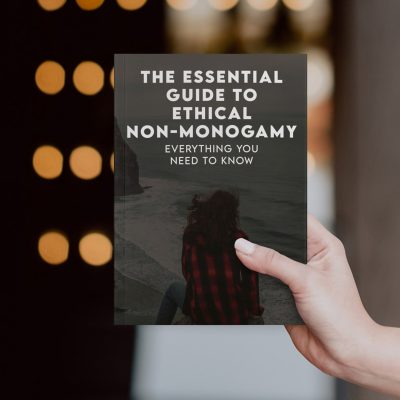
The freedom of an open relationship sounds incredible, but the logistics can feel like holding a grenade. That spinning "what if" anxiety isn't paranoia, it’s your survival instinct warning you that your bond is exposed. "Just seeing what happens" is the fastest way to turn a fantasy into a breakup.
The Essential Guide replaces chaos with discipline. We give you the blueprints, jealousy protocols, and repair scripts needed to explore the edge without falling off. Don't guess. Secure your foundation first.
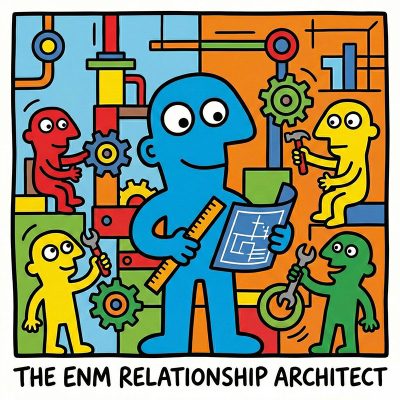
The world of non-monogamy is a maze of confusing labels. Trying to be "Polyamorous" when your heart actually needs "Swinging" isn't just a vocabulary error; it’s a recipe for misery.
You can't build a stable home on a foundation that doesn't fit your psychology. This tool analyzes your emotional bandwidth and jealousy triggers to design the exact structure you need. Stop trying to squeeze into a box that doesn't fit. Build a relationship that actually feels like home.
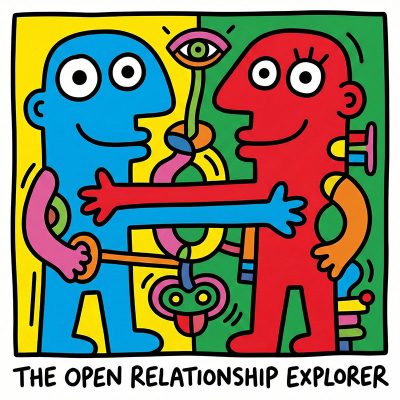
Opening up feels exciting, but if you aren't reading from the same script, you're writing a tragedy. The disconnect between "I want freedom" and "I want safety" is where hearts break. This isn't just a quiz; it’s a synchronization engine.
We identify the silent gaps in your desires—from sleepover rules to emotional bandwidth, before they become unbridgeable chasms. Don't wait until the damage is done to find out you were never on the same page. Align your compasses now.
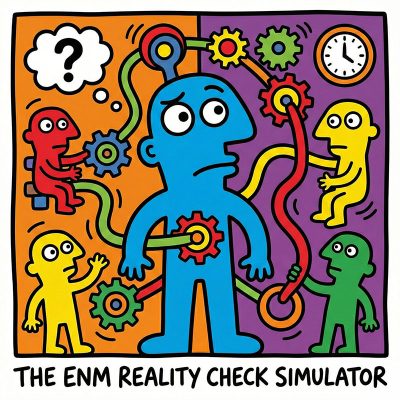
Theory is sexy. Reality is messy. You agreed you could date others, but how does your stomach drop when he takes her to your anniversary spot? Or when she comes home smelling like someone else?
This simulator drags your abstract rules into the harsh light of day. We force you to confront the visceral, gut-wrenching scenarios that actually destroy relationships, before they happen. Test your nervous system in the simulator so you don't crash the car in real life.
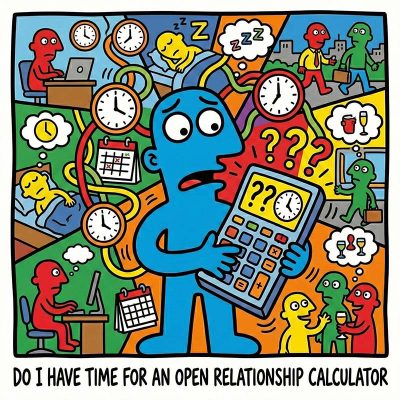
The fantasy is endless romance. The reality? It’s a logistical nightmare. Dating isn't just sex; it’s a second job of swiping, spending, and emotional processing that drains your sanity. Underestimating the "admin" of non-monogamy is the fastest way to turn your relationship into a burnout factory where resentment thrives.
This calculator forces you to confront the brutal math of your time, energy, and wallet. Can you actually afford this lifestyle, or are you just signing up for exhaustion?
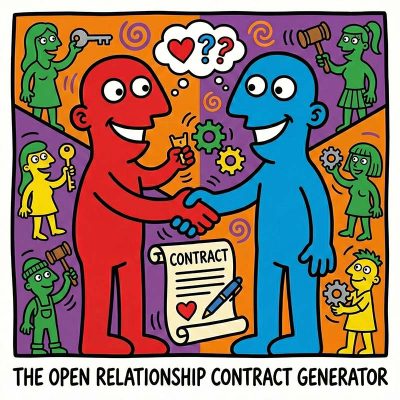
"I thought we agreed" is the sentence that destroys relationships & marriages. Relying on verbal promises when emotions run high is a gamble you cannot afford to lose. Your memory isn't just faulty; it's a liability. Ambiguity is the oxygen that jealousy breathes, turning "freedom" into a minefield of "did I mess up?"
This generator transforms vague permissions into a concrete, signed reality. Stop arguing about what you thought was said and lean on what is written. Secure your boundaries in ink, not hope.
Common forms of judgment you may encounter
Judgment can show up in many ways. Seeing the patterns helps you prepare a calm and practical response rather than a heated argument that drains you. Here are some common forms:
- Assuming you are unhappy or broken because you do not fit the monogamy mold
- Labeling ENM as a phase or a problem to be fixed
- Equating ENM with carelessness or lack of ethics
- Questioning your parenting or ability to maintain stable relationships
- Using scare tactics such as warnings about diseases or emotional damage
- Gaslighting or minimizing your experiences by telling you that your feelings are not valid
- Shaming comments that imply you are selfish or narcissistic
Not every judgment is hostile. Some people speak from curiosity asking thoughtful questions. The goal of this guide is to help you identify intent and respond in a way that preserves your energy while educating when possible.
Real life scenarios and how judgment can show up
Stories provide a practical map for what you may encounter. Here are some realistic scenes and how you might handle them without losing your cool or your course.
Scenario one A family dinner turns into a debate about ENM
Your aunt asks a pointed question about your relationship style while you are trying to enjoy a roast and a laugh. She expresses concern that ENM is a sign of commitment problems. You reply with a calm map of how your agreements work what safeguards you have in place and how your partner supports you. You acknowledge her concern then pivot to a shared moment like a favorite memory so the conversation stays human and warm. If the convo drifts into judgment you reframe by saying I hear your concern. Here is how we handle it and we can revisit this later when everyone is rested.
Scenario two A colleague makes a joke about your dating life
At a team lunch a colleague cracks a joke about you being involved with several people. You can respond with humor that softens the moment then set a boundary. For example I get that joke but this is a personal topic for me. If you want to understand it I am happy to share when we are not at work. Setting a boundary in a respectful way lets you preserve professional relations and your personal truth.
Scenario three A parent asks about your future plans
A parent wants you to settle down with one person and start a family now. You can acknowledge their good intentions and then explain your current priorities and what a future that feels right to you could look like. The key is to avoid a debate and to steer toward shared values like safety and kindness rather than right or wrong. You might say I see a future where we build in steps that feel secure to everyone involved and I would like your support as these steps unfold.
Scenario four A friend expresses concern about safety and health
Health and safety are legitimate concerns in ENM. You can respond with practical information about safer sex practices about STI testing schedules and about communication with all partners. Share your approach and invite questions while offering resources from credible sources. If the friend remains skeptical you can offer to connect them with someone who can explain ENM more fully pending their interest.
How to respond effectively to judgment
Healthy responses combine clarity with empathy. You want to protect your space while inviting curiosity. Here is a step by step approach you can customize for your situation.
- Pause and breathe before replying. A calm start reduces the chance of defensiveness surfacing in you or the other person.
- Acknowledge the other person s feelings even if you disagree. A simple I hear you can go a long way.
- State your core value once in a clear sentence. For example Our priority is honesty and consent in all our relationships.
- Offer a concrete example of how your agreements work in practice. This makes your position tangible rather than theoretical.
- Set a boundary if needed. You can say I would rather not discuss this right now but we can talk later.
- Suggest a follow up or a resource for learning. Books podcasts or groups can help deepen understanding over time.
Boundaries and disclosure decisions in ENM
Boundaries are the compass that keeps relationships healthy. In ENM boundaries can cover many areas including time management communication methods risk management and privacy. You might have boundaries around how much to share with family colleagues or friends. Some people choose to disclose more widely while others keep a more private circle. Both approaches are valid and changing a boundary is fine as life shifts.
When you decide to disclose or not disclosure consider these questions
- Who are the critical relationships that need to know for safety and honesty
- Will disclosure help or harm your current relationships
- What is your goal in sharing this information
- What boundaries do you want to preserve if the conversation turns tense
Disclosures can be staged gradually. For example you might start with a trusted friend then extend to family when you feel safe and prepared. You can also opt to keep certain details private and only share the essentials about your agreements and values. The important factor is consent and control over your own narrative.
Compersion jealousy and emotional work in ENM
Jealousy is a natural human emotion and it can appear in ENM just as it can in any relationship. The difference in ENM is that the emotional work is openly acknowledged and addressed. Compersion is the positive counterpart to jealousy a feeling of joy when your partner experiences happiness with someone else. ENM communities often cultivate compersion as a deliberate practice which can make emotional weather more predictable and less painful.
Strategies to manage jealousy include naming the feeling identifying its source then negotiating changes in agreements or boundaries. Some people find it helpful to track triggers in a journal or to talk things through with a trusted partner. Therapy or counseling can also provide a space to process emotions and strengthen communication skills.
The freedom of an open relationship sounds incredible, but the logistics can feel like holding a grenade. That spinning "what if" anxiety isn't paranoia, it’s your survival instinct warning you that your bond is exposed. "Just seeing what happens" is the fastest way to turn a fantasy into a breakup.
The Essential Guide replaces chaos with discipline. We give you the blueprints, jealousy protocols, and repair scripts needed to explore the edge without falling off. Don't guess. Secure your foundation first.
The world of non-monogamy is a maze of confusing labels. Trying to be "Polyamorous" when your heart actually needs "Swinging" isn't just a vocabulary error; it’s a recipe for misery.
You can't build a stable home on a foundation that doesn't fit your psychology. This tool analyzes your emotional bandwidth and jealousy triggers to design the exact structure you need. Stop trying to squeeze into a box that doesn't fit. Build a relationship that actually feels like home.
Opening up feels exciting, but if you aren't reading from the same script, you're writing a tragedy. The disconnect between "I want freedom" and "I want safety" is where hearts break. This isn't just a quiz; it’s a synchronization engine.
We identify the silent gaps in your desires—from sleepover rules to emotional bandwidth, before they become unbridgeable chasms. Don't wait until the damage is done to find out you were never on the same page. Align your compasses now.
Theory is sexy. Reality is messy. You agreed you could date others, but how does your stomach drop when he takes her to your anniversary spot? Or when she comes home smelling like someone else?
This simulator drags your abstract rules into the harsh light of day. We force you to confront the visceral, gut-wrenching scenarios that actually destroy relationships, before they happen. Test your nervous system in the simulator so you don't crash the car in real life.
The fantasy is endless romance. The reality? It’s a logistical nightmare. Dating isn't just sex; it’s a second job of swiping, spending, and emotional processing that drains your sanity. Underestimating the "admin" of non-monogamy is the fastest way to turn your relationship into a burnout factory where resentment thrives.
This calculator forces you to confront the brutal math of your time, energy, and wallet. Can you actually afford this lifestyle, or are you just signing up for exhaustion?
"I thought we agreed" is the sentence that destroys relationships & marriages. Relying on verbal promises when emotions run high is a gamble you cannot afford to lose. Your memory isn't just faulty; it's a liability. Ambiguity is the oxygen that jealousy breathes, turning "freedom" into a minefield of "did I mess up?"
This generator transforms vague permissions into a concrete, signed reality. Stop arguing about what you thought was said and lean on what is written. Secure your boundaries in ink, not hope.
Self care and community support
Living in ENM can require extra emotional energy and resilience. Building a support system is not a luxury it is a necessity. Look for safety minded communities that respect consent and privacy. That might include online forums moderated groups in person meet ups or therapy circles that specifically address ENM or polyamory. A few practical self care ideas include
- Regular check ins with your partners about how you are feeling
- Therapy or coaching with a professional who has experience with multiple relationship structures
- Boundaries that protect your time and mental energy
- Journaling to track what triggers you and what soothes you
- Creative outlets and physical activity to release stress
- Controlled exposure by gradually sharing your reality with trusted people rather than making sudden disclosures
Community can be a powerful buffer against judgment. When you hear people using stereotypes or fear based language you can counter with informed conversation and clear boundaries. The goal is to build a network that values consent and open communication as a core practice not just a theoretical idea.
Practical steps to navigating judgment in everyday life
Below are practical steps you can apply right away. Use them as a toolkit you can pull from depending on the situation you face. The steps are designed to respect your time and energy while also offering a path to educate others when appropriate.
- Prepare a simple elevator explanation. A few sentences that describe ENM in everyday terms so you can respond quickly when asked.
- Develop a short boundary script. A one liner that sets safe limits for a conversation before it becomes personal or judgmental.
- Choose your battles. Decide when a topic deserves a longer discussion and when it is better saved for a private moment with a close ally or partner.
- Use perspective statements. Acknowledge the other person s feelings and then repeat your value based answer to keep the conversation respectful.
- Offer resources. Suggest a book article or trusted podcast that can teach rather than argue.
In many gatherings you will find that timing matters. A long dialogue at a family event may not be the right setting. You can choose to postpone with a simple I appreciate your concern I will think about this and we can revisit later. That keeps relationships intact while giving you space to breathe and regroup.
How to talk to kids and family about ENM
Talking with children about ENM requires extra care and honesty. You want to protect their sense of security while removing mystery and fear. Use age appropriate language and emphasize values such as honesty kindness and safety. If a family member raises concerns about children s well being focus on routines stability and the presence of caring adults in the child s life rather than the relationship structure itself. You can also explain that different families have different setups and that what matters most is that people treat others with respect.
Tips for family conversations include choosing a calm moment avoiding crowds or high tension environments and using simple language to describe boundaries and plans. You may also want to prepare a short reading or analogy that helps children understand consent and respect for others boundaries. The goal is to help kids feel safe and loved regardless of how families are organized.
Myths about ENM debunked
ENM is surrounded by myths that persist because stereotypes are popular and simple to repeat. Here are a few common myths and straightforward truths to counter them.
- Myth You cannot be faithful in ENM
- Truth Faithfulness in ENM comes from consent and honesty not one monogamous label
- Myth ENM means you do not love your partner as much
- Truth Love in ENM can be deep and lasting while agreements evolve over time
- Myth ENM leads to chaos
- Truth ENM requires better communication and clear boundaries which often reduces chaos rather than increases it
- Myth ENM is selfish
- Truth ENM centers on care honesty and mutual respect and many people find it more ethical and transparent than rushed monogamy decisions
Building a resilient personal narrative
Your personal narrative is your anchor when judgment lands. It is a living document that can change as you and your relationships grow. A strong narrative answers questions such as what you want from relationships how you decide on boundaries how you handle conflict and what values you share with your partners. A few tips to build and refine your narrative include
- Write a short personal mission about why ENM makes sense for you
- Practice explaining ENM in simple language you can use in casual conversations
- Record a few lines about how you handle safety and consent so you can share them when asked
- Update your narrative as life evolves and as your agreements change
Glossary of key terms and acronyms
- ENM Ethical non monogamy a broad label for relationship styles that involve consensual non monogamy and open conversations about needs and boundaries.
- Ethical non monogamy concept A general approach that places consent honesty and respect at the center of multiple relationships.
- Polyamory A form of ENM where people maintain multiple loving relationships with the knowledge and consent of everyone involved.
- Swinging ENM that often focuses on sexual experiences with others rather than ongoing romances.
- Relationship anarchy An approach that rejects traditional relationship labels and builds agreements case by case.
- Compersion A feeling of joy when a partner experiences happiness with someone else.
- Jealousy An emotion that arises in all dating contexts and can be managed through communication and boundaries.
- Disclosure Sharing information about your relationship style with people who are part of your life or who should know for safety or ethical reasons.
- Boundaries Agreed lines that protect emotional safety and energy.
- Consent An ongoing and enthusiastic agreement to participate in any activity with others.
Practical resources and next steps
If you want to deepen your understanding or connect with like minded people who are exploring ENM with care you have many options. Look for books that focus on ethical non monogamy introspection and communication. Seek therapists or counselors who have experience with non traditional relationship structures. Join online communities that emphasize consent respect and thoughtful negotiation. The most important next step is to take small consistent actions that reinforce your boundaries and your values while remaining open to learning and growth.
Remember the aim is to create spaces where everyone involved can grow thrive and feel safe. Judgment will still happen from time to time. When it does you have a proven set of tools to respond with clarity compassion and boundaries that protect your relationships and your peace of mind.
Frequently asked questions
What is ENM exactly
ENM stands for ethical non monogamy a broad umbrella for relationship styles that involve consensual non monogamy with open communication about needs desires and boundaries.
Is ENM just about sex
No ENM covers romantic and sexual connections with multiple people. Some ENM relationships focus more on emotional connection others on sexual experiences and many do a mix of both depending on agreements.
How do I explain ENM to someone who has little knowledge
Offer a simple explanation that focuses on consent communication and boundaries. For example We choose to explore connections with more than one person but we do so with consent honesty and clear agreements that protect everyone involved.
How do I respond when someone judges me for ENM
Pause breathe and acknowledge their feelings then share your value straight and firm. You can say I appreciate your concern this is a careful choice we have made together with mutual consent and we are committed to ongoing open communication.
What if I am not sure ENM is right for me
That is okay. You can take time to explore introspective questions and consider therapy or peer support. You do not have to commit to anything during a single conversation. It is absolutely fine to move at your own pace.
How can I stay safe while exploring ENM
Prioritize safer sex practices regular STI testing honest disclosure with partners and transparent boundaries. Clear communication about expectations and consent remains essential for safety emotionally and physically.
What should I do if family disapproves
Identify boundaries you want to protect and decide how much information to share or not share. You can respond with calm assertiveness and offer to discuss the topic later when emotions have cooled. If needed you can limit or pause contact while you reassess the relationship for your own well being.
How do I handle workplace judgment
Keep personal relationship details private in professional settings focus on your work and your professional boundaries. If a colleague engages in disrespectful behavior you can address it directly and calmly or involve HR if the behavior continues.
Can ENM work for people who want to have kids
Many ENM families raise children successfully. The key components include stable routines reliable parenting partners clear communication about boundaries and a shared commitment to the child s well being. In many cases children benefit from exposure to diverse relationship models that emphasize consent and respect.
The freedom of an open relationship sounds incredible, but the logistics can feel like holding a grenade. That spinning "what if" anxiety isn't paranoia, it’s your survival instinct warning you that your bond is exposed. "Just seeing what happens" is the fastest way to turn a fantasy into a breakup.
The Essential Guide replaces chaos with discipline. We give you the blueprints, jealousy protocols, and repair scripts needed to explore the edge without falling off. Don't guess. Secure your foundation first.
The world of non-monogamy is a maze of confusing labels. Trying to be "Polyamorous" when your heart actually needs "Swinging" isn't just a vocabulary error; it’s a recipe for misery.
You can't build a stable home on a foundation that doesn't fit your psychology. This tool analyzes your emotional bandwidth and jealousy triggers to design the exact structure you need. Stop trying to squeeze into a box that doesn't fit. Build a relationship that actually feels like home.
Opening up feels exciting, but if you aren't reading from the same script, you're writing a tragedy. The disconnect between "I want freedom" and "I want safety" is where hearts break. This isn't just a quiz; it’s a synchronization engine.
We identify the silent gaps in your desires—from sleepover rules to emotional bandwidth, before they become unbridgeable chasms. Don't wait until the damage is done to find out you were never on the same page. Align your compasses now.
Theory is sexy. Reality is messy. You agreed you could date others, but how does your stomach drop when he takes her to your anniversary spot? Or when she comes home smelling like someone else?
This simulator drags your abstract rules into the harsh light of day. We force you to confront the visceral, gut-wrenching scenarios that actually destroy relationships, before they happen. Test your nervous system in the simulator so you don't crash the car in real life.
The fantasy is endless romance. The reality? It’s a logistical nightmare. Dating isn't just sex; it’s a second job of swiping, spending, and emotional processing that drains your sanity. Underestimating the "admin" of non-monogamy is the fastest way to turn your relationship into a burnout factory where resentment thrives.
This calculator forces you to confront the brutal math of your time, energy, and wallet. Can you actually afford this lifestyle, or are you just signing up for exhaustion?
"I thought we agreed" is the sentence that destroys relationships & marriages. Relying on verbal promises when emotions run high is a gamble you cannot afford to lose. Your memory isn't just faulty; it's a liability. Ambiguity is the oxygen that jealousy breathes, turning "freedom" into a minefield of "did I mess up?"
This generator transforms vague permissions into a concrete, signed reality. Stop arguing about what you thought was said and lean on what is written. Secure your boundaries in ink, not hope.
