
Navigating Mismatched Desires


Welcome to a no excuses playbook for mismatched desires in ENM structure. If you are here you want to keep the vibe honest and the relationship alive while feelings shift and needs evolve. We are talking about ethical non monogamy and the reality that people in these setups do not always want the same things at the same time. The Monogamy Experiment is not here to pretend it is easy. We are here to break it down in plain words with practical steps, terms explained and real world examples. Let us dive into how to navigate mismatched desires without turning a good connection into a confusing mess.
Quick Links to Useful Sections
- What is ENM and what does mismatched desires look like
- Why mismatches are common and not a deal breaker
- Terms and acronyms you should know
- Common mismatches you might encounter
- Must no s when dealing with mismatches
- How to start the conversation about mismatched desires
- Prepare with clarity
- Choose the right moment
- Lead with care and curiosity
- Invite their perspective
- Agree on a first step
- The negotiation toolkit for ENM mismatches
- A practical structure for renegotiation
- Realistic scenarios and how they could unfold
- Scenario A
- Scenario B
- Scenario C
- Dealing with jealousy and insecurity
- Self care while navigating mismatches
- How to explain ENM and mismatches to friends or family
- Building durable agreements that last
- Glossary of useful terms and acronyms
- Practical templates and phrases you can use
- Delivery tips for tough talks
- Realistic expectations in ENM mismatches
- What if one person wants to end ENM
- How to know when to pause or pivot
- Putting it all together
- Checklists and quick reference
What is ENM and what does mismatched desires look like
ENM stands for ethical non monogamy. It is a flexible approach to relationships where more than one romantic or sexual connection can exist with the full knowledge and consent of everyone involved. Unlike traditional monogamy ENM invites openness about needs and boundaries. Mismatched desires happen when one or more people want different levels of connection frequency methods of exploration or relationship structures. This is not a failure it is a signal that needs honest addressing. The goal is to align on what works for all involved while preserving care and respect for each person s boundaries.
Common signs of mismatched desires include a partner wanting more time with other people while another partner desires more time together at home. It can show up as one person seeking frequent new connections while the other values deep one on one intimacy. It might be about different levels of risk comfort experimentation with a specific dynamic or even about time management across multiple partners. The key is to identify the mismatch early and approach it with curiosity rather than blame.
Why mismatches are common and not a deal breaker
Desire is not a fixed dial. It shifts with life stages stress levels energy and personal growth. In ENM this drift can be more visible because the relationship map includes more moving parts. Mismatches are natural and not a failure. They are a signal to pause and renegotiate. They offer a chance to practice better communication to test new agreements and to strengthen trust. When handled well mismatches can lead to greater intimacy understanding and resilience for everyone involved.
Think of mismatches as a weather system rather than a wall. Weather moves you adjust your plans you find a new rhythm and you keep going. In ENM the rhythm is built through ongoing dialogue written agreements and clear expectations. The result can be a relationship that adapts rather than one that breaks under pressure.
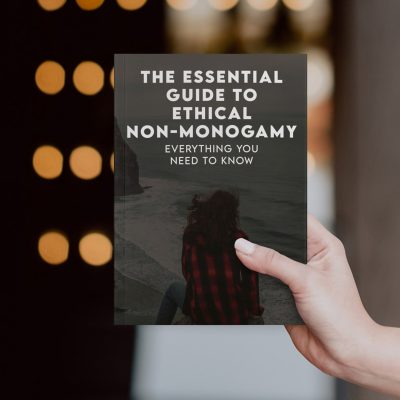
The freedom of an open relationship sounds incredible, but the logistics can feel like holding a grenade. That spinning "what if" anxiety isn't paranoia, it’s your survival instinct warning you that your bond is exposed. "Just seeing what happens" is the fastest way to turn a fantasy into a breakup.
The Essential Guide replaces chaos with discipline. We give you the blueprints, jealousy protocols, and repair scripts needed to explore the edge without falling off. Don't guess. Secure your foundation first.
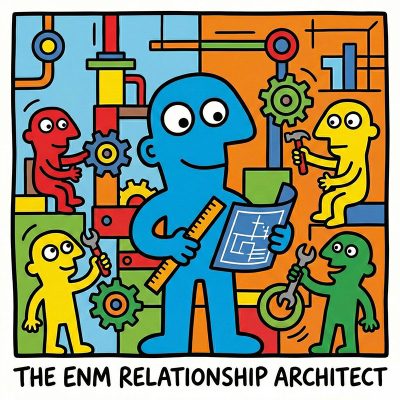
The world of non-monogamy is a maze of confusing labels. Trying to be "Polyamorous" when your heart actually needs "Swinging" isn't just a vocabulary error; it’s a recipe for misery.
You can't build a stable home on a foundation that doesn't fit your psychology. This tool analyzes your emotional bandwidth and jealousy triggers to design the exact structure you need. Stop trying to squeeze into a box that doesn't fit. Build a relationship that actually feels like home.
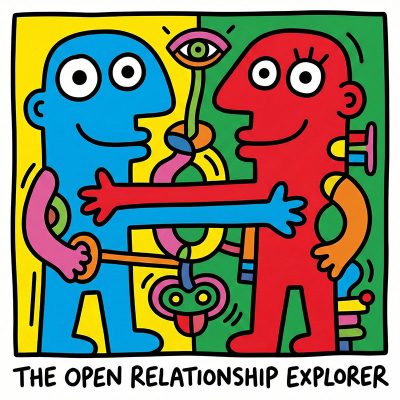
Opening up feels exciting, but if you aren't reading from the same script, you're writing a tragedy. The disconnect between "I want freedom" and "I want safety" is where hearts break. This isn't just a quiz; it’s a synchronization engine.
We identify the silent gaps in your desires—from sleepover rules to emotional bandwidth, before they become unbridgeable chasms. Don't wait until the damage is done to find out you were never on the same page. Align your compasses now.
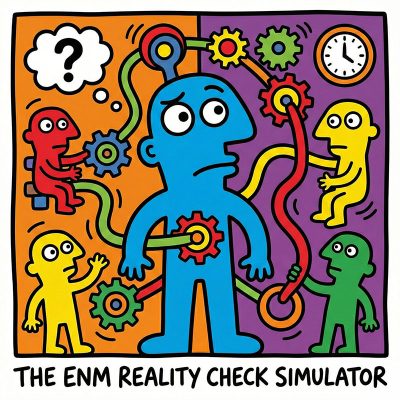
Theory is sexy. Reality is messy. You agreed you could date others, but how does your stomach drop when he takes her to your anniversary spot? Or when she comes home smelling like someone else?
This simulator drags your abstract rules into the harsh light of day. We force you to confront the visceral, gut-wrenching scenarios that actually destroy relationships, before they happen. Test your nervous system in the simulator so you don't crash the car in real life.
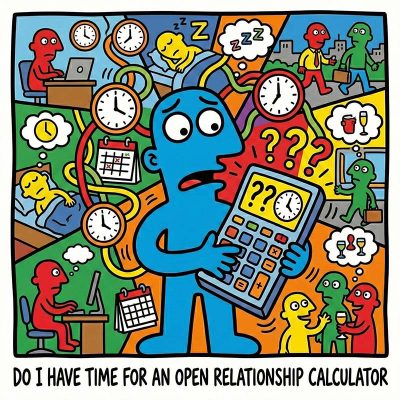
The fantasy is endless romance. The reality? It’s a logistical nightmare. Dating isn't just sex; it’s a second job of swiping, spending, and emotional processing that drains your sanity. Underestimating the "admin" of non-monogamy is the fastest way to turn your relationship into a burnout factory where resentment thrives.
This calculator forces you to confront the brutal math of your time, energy, and wallet. Can you actually afford this lifestyle, or are you just signing up for exhaustion?
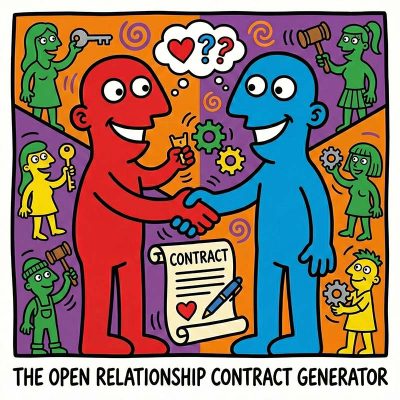
"I thought we agreed" is the sentence that destroys relationships & marriages. Relying on verbal promises when emotions run high is a gamble you cannot afford to lose. Your memory isn't just faulty; it's a liability. Ambiguity is the oxygen that jealousy breathes, turning "freedom" into a minefield of "did I mess up?"
This generator transforms vague permissions into a concrete, signed reality. Stop arguing about what you thought was said and lean on what is written. Secure your boundaries in ink, not hope.
Terms and acronyms you should know
Ethical non monogamy is full of terms. If you are new to the scene or want a quick refresher here is a quick glossary to keep you aligned. We will keep definitions practical and readable so you can explain them to partners or friends who are curious.
- ENM Ethical non monogamy a relationship style that openly allows more than one romantic or sexual connection with consent from all involved.
- NRE New relationship energy the excitement enthusiasm and newness you feel when a new relationship begins.
- LTR Long term relationship a primary or central relationship in a multi partner setup.
- Compersion Feeling happiness for a partner s joy even if you are not the source of that joy.
- Boundaries Personal limits you set to protect your well being and comfort level in any arrangement.
- Agreements Specific understandings you commit to with your partners about what is allowed what is not and how you will behave.
- Setup The chosen structure for how relationships are organized, such as hierarchical or non hierarchical models.
- Kitchen table polyamory A term describing a dynamic where all partners meet and interact in everyday life rather than keeping everyone separate.
- Monogamish A setup that leans toward monogamy but allows limited non monogamy under agreed conditions.
Common mismatches you might encounter
While every relationship is unique there are several frequent themes that show up in mismatches. Recognizing these can help you name the issue and start talking about it before emotions run hot.
- Time and energy mismatch One person wants more time with others and more social connectivity while another needs more alone time or fewer dates.
- Emotional energy mismatch Some people crave emotional transparency and regular check ins while others prefer more space between conversations and updates.
- Sexual desire mismatch Different levels of sexual interest or different kinks and boundaries around sexual exploration can create tension.
- Jealousy management mismatch People vary in how they handle jealousy and what reassurance or boundaries reduce insecurity.
- Relationship structure mismatch One person might want a visible primary arrangement while another prefers more fluid connections without a single anchor.
Must no s when dealing with mismatches
Here is a practical list of do no s that can save you from common traps. Use this as a quick reference when conversations heat up or when you feel pulled into old patterns.
- Do not blame or shame Labeling a partner as selfish or a trait often escalates conflict. Focus on specific behaviors and needs instead.
- Do not assume intent People act from their current needs not from a personal attack on you. Check in and ask clarifying questions rather than guessing motives.
- Do not hide from the issue Avoid avoiding the topic until it becomes a bigger problem. Bring it up with care and timing.
- Do not weaponize disclosure Threatening to end the relationship or to reveal private details as leverage damages trust. Use ethical negotiation instead.
- Do not ignore safety and consent Ensure all activities are consensual and respectful of boundaries even when desire runs high.
- Do not rush to a final decision Desires evolve and solutions may take time to settle. Allow space for trial periods and gradual changes.
How to start the conversation about mismatched desires
Conversations about mismatches can feel risky. The goal is to create a safe container where honesty can thrive. Here is a simple approach that tends to land well even when emotions run hot.
Prepare with clarity
Before bringing this up decide what you want from the discussion. Do you want to pause exploring with others or adjust the frequency of dates? Do you want more reassurance or more autonomy? Write down three to five goals you hope to achieve by the end of the talk. This clarity will help you stay grounded.
Choose the right moment
Pick a time when you are not immediately stressed by other life events. A relaxed environment helps. Avoid times when you and your partner are hungry tired or rushing to a commitment.
Lead with care and curiosity
Open with your love and appreciation for the relationship. Then name the feeling you want to discuss without assigning blame. For example you might say I have noticed that I feel jealous when we are talking about new dates I want to understand why and figure out a path forward together.
Invite their perspective
Ask open questions that invite information rather than defensiveness. Questions like What would make this feel safer for you What needs are you hoping this arrangement will meet for you right now are more productive than Are you trying to replace me.
Agree on a first step
End the conversation with a concrete next step. This could be a check in at the end of the week a trial period with specific boundaries or a pause on certain activities while you renegotiate. The important part is to commit to action and to set a time to revisit the topic.
The negotiation toolkit for ENM mismatches
Negotiation in ENM is about finding a workable middle ground while honoring core values. Here are tools to help you craft durable agreements without erasing needs.
- Boundaries versus agreements Boundaries are personal limits while agreements are functional understandings that involve others in the dynamic. Both are essential.
- Check in cadences Regularly scheduled conversations about how things are going keep mismatches from growing into bigger problems. A weekly or bi weekly check in works for many groups.
- Trial periods When you test a new arrangement give it a defined duration and a clear way to measure success or failure.
- Documented understandings Write down the agreements you reach so everyone knows what is expected. This reduces misinterpretation and helps when memories fade.
- Escalation path Decide who will be involved if the plan needs adjustment. This could be a trusted friend or a mediator but ensure privacy is respected.
The freedom of an open relationship sounds incredible, but the logistics can feel like holding a grenade. That spinning "what if" anxiety isn't paranoia, it’s your survival instinct warning you that your bond is exposed. "Just seeing what happens" is the fastest way to turn a fantasy into a breakup.
The Essential Guide replaces chaos with discipline. We give you the blueprints, jealousy protocols, and repair scripts needed to explore the edge without falling off. Don't guess. Secure your foundation first.
The world of non-monogamy is a maze of confusing labels. Trying to be "Polyamorous" when your heart actually needs "Swinging" isn't just a vocabulary error; it’s a recipe for misery.
You can't build a stable home on a foundation that doesn't fit your psychology. This tool analyzes your emotional bandwidth and jealousy triggers to design the exact structure you need. Stop trying to squeeze into a box that doesn't fit. Build a relationship that actually feels like home.
Opening up feels exciting, but if you aren't reading from the same script, you're writing a tragedy. The disconnect between "I want freedom" and "I want safety" is where hearts break. This isn't just a quiz; it’s a synchronization engine.
We identify the silent gaps in your desires—from sleepover rules to emotional bandwidth, before they become unbridgeable chasms. Don't wait until the damage is done to find out you were never on the same page. Align your compasses now.
Theory is sexy. Reality is messy. You agreed you could date others, but how does your stomach drop when he takes her to your anniversary spot? Or when she comes home smelling like someone else?
This simulator drags your abstract rules into the harsh light of day. We force you to confront the visceral, gut-wrenching scenarios that actually destroy relationships, before they happen. Test your nervous system in the simulator so you don't crash the car in real life.
The fantasy is endless romance. The reality? It’s a logistical nightmare. Dating isn't just sex; it’s a second job of swiping, spending, and emotional processing that drains your sanity. Underestimating the "admin" of non-monogamy is the fastest way to turn your relationship into a burnout factory where resentment thrives.
This calculator forces you to confront the brutal math of your time, energy, and wallet. Can you actually afford this lifestyle, or are you just signing up for exhaustion?
"I thought we agreed" is the sentence that destroys relationships & marriages. Relying on verbal promises when emotions run high is a gamble you cannot afford to lose. Your memory isn't just faulty; it's a liability. Ambiguity is the oxygen that jealousy breathes, turning "freedom" into a minefield of "did I mess up?"
This generator transforms vague permissions into a concrete, signed reality. Stop arguing about what you thought was said and lean on what is written. Secure your boundaries in ink, not hope.
A practical structure for renegotiation
Use this structure to guide a renegotiation when desires shift or when a mismatch grows. It keeps conversations anchored in respect and forward motion.
- State the current reality Share what has changed and how you feel about it. Use specific examples rather than general statements.
- Describe the impact Explain how the mismatch affects you emotionally and practically. Be honest about fear or insecurity without blaming your partner.
- Explore needs Identify what you still want from the relationship and what you may be willing to compromise on.
- Offer options Present two or three alternatives with pros and cons. Avoid black and white choices.
- Choose a path together Pick one option or a blended approach and agree on a test period with clear milestones.
- Set a review plan Decide when you will revisit the agreement and what metrics will indicate success or failure.
Realistic scenarios and how they could unfold
Getting a feel for how mismatches play out in real life helps you plan. Here are a few fictional but plausible situations along with constructive responses. We keep the tone practical and rooted in respect for everyone involved.
Scenario A
Liam and Ava have an ENM setup with Liam wanting more time for new connections and Ava craving more one on one time together. They agree on a weekly date night for Ava and a monthly date with someone Liam is exploring. They also install a mandatory check in every two weeks to address feelings that might have changed since the last talk. The check in focuses on needs and energy rather than accusations. After two months they adjust the schedule to add a few flexible days so Liam can arrange spontaneous connections without feeling like he is breaking a rule. Both feel seen and the relationship remains close and affectionate.
Scenario B
Nova has a primary relationship with Kay and a secondary arrangement with Quinn. Nova feels that her desire for a partner who is emotionally available is shifting and Kay has started to notice more jealousy flare when Nova spends weekends with Quinn. They decide to experiment with a time limited window where Nova sees Quinn one time per week and both partners work on a more transparent calendar so Kay knows when Nova is with others. They also create a space for Kay to express discomfort without it becoming accusations. Over three months the trio learns to navigate emotional boundaries more smoothly and Kay reports feeling more secure overall.
Scenario C
Sam wants to explore a kink dynamic with a new partner but realizes their primary partner is not comfortable with kink play at this stage. They negotiate a compromise where Sam explores solo play and educational exploration alone while keeping open dialogue with their partner about what might feel safe in the future. They also schedule a monthly review to reassess boundaries and the possibility of introducing kink play with a trusted partner in a controlled setting. The approach respects everyone s pace and maintains warmth in the relationship.
Dealing with jealousy and insecurity
Jealousy is not a sign that something is wrong with you or your relationship. It is a signal that a need is not being met or that there is uncertainty about boundaries. The best response is to address the root cause rather than suppress the feeling.
- Acknowledge the feeling Name the emotion without judging yourself for feeling it.
- Identify the trigger Is it time spent with someone else is the issue or is there a fear of losing closeness with your partner.
- Ask for what you need You may require more reassurance more routine check ins or more explicit boundaries around certain activities.
- Practice self compassion Remind yourself that wanting to protect a valued connection is normal and that you can negotiate while staying respectful.
- Co regulate Do a shared activity with your partner such as a walk a meal together or a mindfulness exercise to reinforce closeness.
Self care while navigating mismatches
Care for yourself is essential in ENM where the emotional landscape can shift quickly. Here are practical self care strategies that help you stay grounded and compassionate.
- Develop your own support network Maintain friendships or activities that give you energy outside the relationship.
- Journal outcomes not blame Track what you learned what helped and what you need next time. Focus on your growth rather than dwelling on hurt.
- Create personal rituals A bedtime routine a weekend ritual or a solo hobby can replenish your emotional battery.
- Set personal boundaries Know what is a hard limit for you and communicate it clearly to your partners.
- Practice slow breathing and grounding Short grounding exercises can help you reset when tension rises.
How to explain ENM and mismatches to friends or family
Not everyone will understand ENM right away. When you choose to share keep it simple and practical. Explain that ENM means transparent agreements about more than one person and that respect and consent are the foundation. Share how you navigate mismatches as a team and how you check in regularly so everyone feels heard. If the conversation feels risky you can offer to provide resources or answer questions later rather than in the moment.
Building durable agreements that last
Strong agreements in ENM are flexible yet clear. Here is a framework you can adapt to your own setup. Use it to craft a durable plan that respects every person involved.
- Clarify core values Respect consent honesty communication and safety should underpin every agreement.
- Define who is involved Specify all partners who must agree to the arrangement and what each person is comfortable with.
- Set boundaries that protect well being Include what activities are allowed what spaces are restricted and how information will be shared among partners.
- Establish check in points Create a cadence for reviewing the agreement and adjusting when needed.
- Make room for evolution Allow for changes as people grow and circumstances shift while staying connected to core values.
Glossary of useful terms and acronyms
- ENM Ethical non monogamy a relationship approach that welcomes multiple connections with consent.
- NRE New relationship energy the spark and excitement that come with a new connection.
- Compersion Feeling happiness for a partner s joy over someone else rather than feeling envy.
- Boundaries Personal lines that keep you safe and comfortable in the relationship.
- Agreements Concrete understandings about what is allowed what is not and how decisions are made.
- Hierarchy A model where a primary relationship has priority over other connections or where all relationships are considered equal without a central leader.
- Non hierarchical A model where all relationships are treated as equal and there is no single primary partner.
- Kitchen table polyamory A term describing a setup where all partners can interact openly in daily life rather than keeping everyone separate.
- Monogamish A form of monogamy with allowances for certain non monogamous experiences under agreed rules.
Practical templates and phrases you can use
Sometimes a simple script can make a tricky conversation much easier. Here are ready to adapt phrases and templates that respect everyone involved while making your needs clear. Feel free to adjust tone to fit your voice and your relationships.
- Opening the conversation I want to talk about how we are doing with ENM and if our desires feel aligned right now. I love our relationship and I want to make sure we both feel supported.
- Expressing a mismatch I have noticed that my interest in seeing other people is different from what you want. I want to understand your perspective and find a path that feels fair for us both.
- Proposing a path forward Could we try a two month trial where we adjust both our schedules and check in weekly about how we feel so we can decide what changes are needed?
- Setting a boundary I would like us to pause exploring new people for a while while we work through this. If we decide to resume later we will revisit this boundary first.
- Requesting reassurance It would mean a lot to me if we could share a quick check in about how we feel at the end of each week even if nothing big happened.
Delivery tips for tough talks
Words matter but timing and tone matter just as much. Here are quick reminders to keep your discussions productive rather than punitive.
- Use I statements Focus on your feelings and needs rather than accusing the other person.
- Pause when needed If conversations get tense take a short pause to breathe and reset. Return when you feel calmer.
- Offer practical next steps Pair your feelings with concrete moves you can both agree on such as a trial period or a specific check in time.
- Respect the pace of others Some people want to move quickly and others need more time. Honor the pace of your partners as you negotiate.
- Avoid ultimatums They often escalate tension and close doors instead of opening options.
Realistic expectations in ENM mismatches
Expect progress not perfection. You will likely need a few cycles of talking testing adjusting and re talking. Desires evolve and so can the agreements that support them. When you approach mismatches as ongoing work you remove the pressure to have one perfect plan in place forever. You gain flexibility and resilience together.
What if one person wants to end ENM
Ending ENM is not a personal attack on anyone. People change. If one person feels the need to withdraw from non monogamous arrangements there are respectful ways to handle it. Have a calm conversation about what that means for the other person and how you will preserve care and boundaries during the transition. Look for a mutual space that protects everyone s dignity. If needed consider a mediator or therapist who understands ENM dynamics to help with the transition while keeping compassion at the center.
How to know when to pause or pivot
Sometimes the healthiest move is to press pause or pivot the structure rather than force a resolution. Signs that a pause or pivot might be good include chronic jealousy that does not lessen with time or repeated breaches of agreed boundaries. If you find yourself repeatedly renegotiating the same point without resolution a temporary pause can give everyone space to reflect. A pivot might mean changing to a different model such as a more fluid arrangement a kitchen table approach or a shift toward more monogamy with occasional non monogamous experiences rather than full ENM. The aim is to protect wellbeing and to keep relationships moving forward in a direction that feels right for everyone involved.
Putting it all together
Navigating mismatched desires in ENM is about honesty kindness and practical action. It requires that you stay clear about your own needs while staying attentive to the needs of others. It means building durable agreements that are robust yet flexible enough to adapt as people and circumstances change. It means recognizing jealousy and insecurity as messages that can guide you toward better communication not as signals that the relationship is failing. And it means approaching every discussion with respect for consent and for the autonomy of every person involved.
If you are part of a network of partners the same principles apply across the board. Record keeping helps maintain clarity. Regular check ins help keep momentum. And above all your willingness to evolve your agreements keeps the relationship healthy. The Monogamy Experiment stands with you as you experiment honestly and with care across multiple connections.
Checklists and quick reference
- Identify what is mismatched clearly and with specific examples
- Decide on the goal for the next talk and ensure all voices are heard
- Choose a time and place that feels safe for everyone
- Agree on a trial period with clear metrics for success
- Schedule a follow up to review progress and adjust as needed
- Document the agreements and share with all involved
The freedom of an open relationship sounds incredible, but the logistics can feel like holding a grenade. That spinning "what if" anxiety isn't paranoia, it’s your survival instinct warning you that your bond is exposed. "Just seeing what happens" is the fastest way to turn a fantasy into a breakup.
The Essential Guide replaces chaos with discipline. We give you the blueprints, jealousy protocols, and repair scripts needed to explore the edge without falling off. Don't guess. Secure your foundation first.
The world of non-monogamy is a maze of confusing labels. Trying to be "Polyamorous" when your heart actually needs "Swinging" isn't just a vocabulary error; it’s a recipe for misery.
You can't build a stable home on a foundation that doesn't fit your psychology. This tool analyzes your emotional bandwidth and jealousy triggers to design the exact structure you need. Stop trying to squeeze into a box that doesn't fit. Build a relationship that actually feels like home.
Opening up feels exciting, but if you aren't reading from the same script, you're writing a tragedy. The disconnect between "I want freedom" and "I want safety" is where hearts break. This isn't just a quiz; it’s a synchronization engine.
We identify the silent gaps in your desires—from sleepover rules to emotional bandwidth, before they become unbridgeable chasms. Don't wait until the damage is done to find out you were never on the same page. Align your compasses now.
Theory is sexy. Reality is messy. You agreed you could date others, but how does your stomach drop when he takes her to your anniversary spot? Or when she comes home smelling like someone else?
This simulator drags your abstract rules into the harsh light of day. We force you to confront the visceral, gut-wrenching scenarios that actually destroy relationships, before they happen. Test your nervous system in the simulator so you don't crash the car in real life.
The fantasy is endless romance. The reality? It’s a logistical nightmare. Dating isn't just sex; it’s a second job of swiping, spending, and emotional processing that drains your sanity. Underestimating the "admin" of non-monogamy is the fastest way to turn your relationship into a burnout factory where resentment thrives.
This calculator forces you to confront the brutal math of your time, energy, and wallet. Can you actually afford this lifestyle, or are you just signing up for exhaustion?
"I thought we agreed" is the sentence that destroys relationships & marriages. Relying on verbal promises when emotions run high is a gamble you cannot afford to lose. Your memory isn't just faulty; it's a liability. Ambiguity is the oxygen that jealousy breathes, turning "freedom" into a minefield of "did I mess up?"
This generator transforms vague permissions into a concrete, signed reality. Stop arguing about what you thought was said and lean on what is written. Secure your boundaries in ink, not hope.
