
Open Relationships Explained

Welcome to a practical no nonsense guide about open relationships and the wider world of ethical non monogamy or ENM for short. Think of this like a friendly workshop led by someone who calls out the myths but still respects the real stories people live. We are going to unpack what ENM means what an open relationship looks like in practice and how people navigate desire boundaries and communication without losing themselves in the process. This is not about chasing perfection it is about understanding what works for you and your partner or partners with honesty humor and a fair amount of patience.
Quick Links to Useful Sections
- What does open relationships really mean
- Key terms and acronyms in ENM you should know
- Ethical Non Monogamy abbreviated ENM
- Open relationship explained
- New Relationship Energy NRE
- Compersion
- Boundaries and agreements
- What open relationships look like in practice
- Hierarchical versus non hierarchical structures
- Solo poly and independent connections
- Triads and polycules
- Practical guidelines for building open relationships that last
- Clear introductory conversations
- Explicit boundaries that you really enforce
- Explicit agreements about safety and health
- Managing time and attention
- Handling jealousy with grace
- Compersion as a practice
- Common myths about open relationships debunked
- Real world scenarios you might recognize
- Communication strategies that actually work
- Safety first in ENM practices
- Starting your ENM journey the practical steps
- What misconceptions about ENM can undermine your plan
- Realistic expectations and how to keep them grounded
- A practical glossary you can bookmark
- Frequently asked questions
What does open relationships really mean
Open relationships are a form of ethical non monogamy. That means all involved people choose to have a relationship style that includes connections with more than one person with consent from everyone involved. An open relationship is not a free for all. It is a deliberate arrangement based on honesty communication and respect. This is not about proving who can date more or who has more freedom. It is about recognizing that love and attraction can be distributed in healthy ways without harming the people involved.
Terms you might see
- ENM Ethical Non Monogamy a broad term for relationship styles that involve more than two people with consent and openness.
- Open relationship A relationship in which partners allow romantic or sexual connections outside of the primary pair or existing couple.
- CNM Consensual Non Monogamy an umbrella term that covers any non monogamous arrangement agreed to by all parties.
- NRE New Relationship Energy the rush and excitement that comes with a new connection often felt early in a relationship.
- Compersion The feeling of joy when your partner experiences happiness with another person sometimes called the opposite of jealousy.
- Jealousy management The practical work of noticing jealousy early naming it and choosing a compassionate response.
- Boundaries The lines and limits that define what is acceptable and what is not in the relationship network.
- Agreements Explicit statements about how connections outside the primary relationship will happen who will be involved and what safety expectations exist.
- Primary secondary dynamics A common structure where one or two people have a primary relationship and others join in with varying levels of access and priority.
- Solo poly A style where individuals pursue multiple connections while not forming a conventional couple or where they do not position themselves as a couple with a single primary.
- Relationship anarchy A philosophy that rejects fixed hierarchies in favor of negotiated freedom and respect between all participants.
Key terms and acronyms in ENM you should know
Understanding ENM starts with knowing the language. Here are common terms explained in plain English so you can spot them in conversations or guides without needing a glossary every time.
Ethical Non Monogamy abbreviated ENM
Ethical Non Monogamy means choosing relationship styles that welcome multiple emotional or sexual connections with consent. The ethical part is important because it signals that the process includes honesty consent and respect for everyone involved. ENM is not about hurting others or pretending everything is fine while breaking trust. It is about making thoughtful decisions together and adjusting as life changes.
Open relationship explained
An open relationship is when partners agree that dating or having sexual relationships with other people is allowed. The key is that the agreement is explicit and aware. It is not a surprise sting operation where someone sneaks out in the night. Openness is built on clear communication and ongoing consent.
New Relationship Energy NRE
New Relationship Energy describes the excitement a person feels when they start seeing someone new. It can feel electric and even distracting. NRE is normal but it can influence decisions so it helps to pause check in with all involved and keep awareness of where your actions are coming from.
Compersion
Compersion is the ability to feel happiness for a lover when they experience joy with someone else. It is the opposite of jealousy and it is a muscle you can build through practice and genuine care for your partner's happiness.
Boundaries and agreements
Boundaries are lines you draw around what you will and will not do. Agreements are the explicit statements you and your partners commit to. Together they reduce risk and increase clarity. They can cover safety time management emotional check ins and privacy levels.
The freedom of an open relationship sounds incredible, but the logistics can feel like holding a grenade. That spinning "what if" anxiety isn't paranoia, it’s your survival instinct warning you that your bond is exposed. "Just seeing what happens" is the fastest way to turn a fantasy into a breakup.
The Essential Guide replaces chaos with discipline. We give you the blueprints, jealousy protocols, and repair scripts needed to explore the edge without falling off. Don't guess. Secure your foundation first.
The world of non-monogamy is a maze of confusing labels. Trying to be "Polyamorous" when your heart actually needs "Swinging" isn't just a vocabulary error; it’s a recipe for misery.
You can't build a stable home on a foundation that doesn't fit your psychology. This tool analyzes your emotional bandwidth and jealousy triggers to design the exact structure you need. Stop trying to squeeze into a box that doesn't fit. Build a relationship that actually feels like home.
Opening up feels exciting, but if you aren't reading from the same script, you're writing a tragedy. The disconnect between "I want freedom" and "I want safety" is where hearts break. This isn't just a quiz; it’s a synchronization engine.
We identify the silent gaps in your desires—from sleepover rules to emotional bandwidth, before they become unbridgeable chasms. Don't wait until the damage is done to find out you were never on the same page. Align your compasses now.
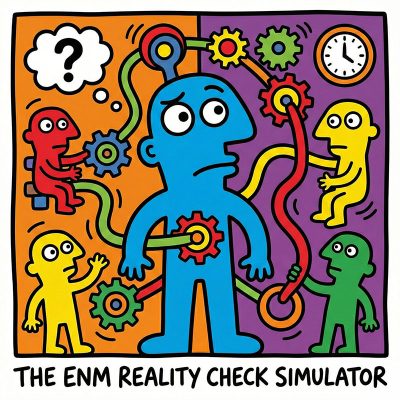
Theory is sexy. Reality is messy. You agreed you could date others, but how does your stomach drop when he takes her to your anniversary spot? Or when she comes home smelling like someone else?
This simulator drags your abstract rules into the harsh light of day. We force you to confront the visceral, gut-wrenching scenarios that actually destroy relationships, before they happen. Test your nervous system in the simulator so you don't crash the car in real life.
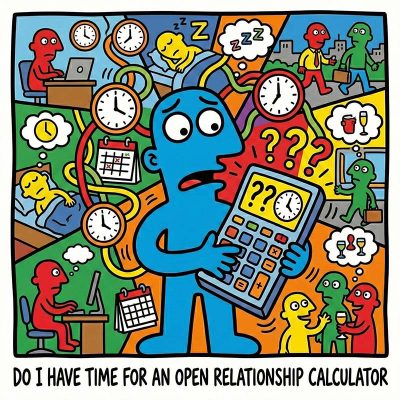
The fantasy is endless romance. The reality? It’s a logistical nightmare. Dating isn't just sex; it’s a second job of swiping, spending, and emotional processing that drains your sanity. Underestimating the "admin" of non-monogamy is the fastest way to turn your relationship into a burnout factory where resentment thrives.
This calculator forces you to confront the brutal math of your time, energy, and wallet. Can you actually afford this lifestyle, or are you just signing up for exhaustion?
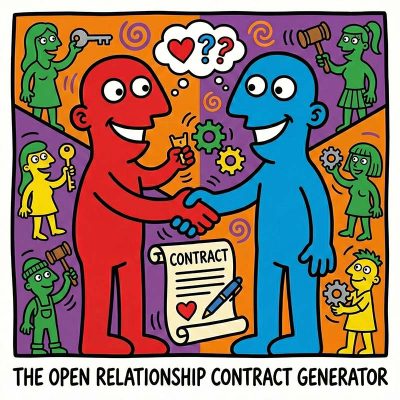
"I thought we agreed" is the sentence that destroys relationships & marriages. Relying on verbal promises when emotions run high is a gamble you cannot afford to lose. Your memory isn't just faulty; it's a liability. Ambiguity is the oxygen that jealousy breathes, turning "freedom" into a minefield of "did I mess up?"
This generator transforms vague permissions into a concrete, signed reality. Stop arguing about what you thought was said and lean on what is written. Secure your boundaries in ink, not hope.
What open relationships look like in practice
Every open relationship is unique. The common thread is communication and consent but the structure can vary a lot. Here are a few familiar patterns to illustrate how ENM might work in real life.
Hierarchical versus non hierarchical structures
In a hierarchical setup there is a primary couple and other partners with secondary status. The primary pair leads decisions about major life choices and sets the tone for upholding the relationship. In a non hierarchical or relationship anarchist approach there is no fixed ranking. Options are negotiated case by case based on consent and respect for everyone involved.
Solo poly and independent connections
Solo poly means a person treats their romantic life as a network rather than a single partnership. They focus on meaningful connections without making a traditional couple the sole center of their life. This can offer a sense of freedom and shared responsibility that some find incredibly appealing.
Triads and polycules
A triad or polycule is a connected group of three or more people who have romantic or sexual relationships with one another as appropriate to their boundaries. Triads can be fixed or flexible and they often require careful coordination and empathy to keep the relationships healthy.
Practical guidelines for building open relationships that last
Open relationships work best when a few practical habits are in place. Here is a toolkit you can start using today.
Clear introductory conversations
Start with a calm open tone. Explain what you want what you fear what excites you and what you can compromise on. Invite questions and welcome concerns. The goal is to reach a shared understanding rather than to win a point.
Explicit boundaries that you really enforce
Boundaries are not about policing others they are about guiding your own behavior and protecting emotional safety. Examples include how often you will date outside the primary relationship how you will communicate about new connections and what kind of information you are comfortable sharing and with whom.
Explicit agreements about safety and health
Agree on condom use STI testing frequency and disclosure norms. If you engage in sexual activity with multiple partners you may want to consider regular testing and open discussion about results. This helps minimize risk and builds trust.
Managing time and attention
Time is a finite resource especially when you have a busy life. Create a simple schedule or a shared calendar that accounts for date nights time with each partner and blocks for solo activities. The goal is to prevent neglect and misaligned expectations rather than to micromanage every moment.
Handling jealousy with grace
Jealousy is a normal response. The good news is you can learn to manage it. Name the feeling identify the trigger and choose a response that aligns with your values. This might include a pause for a check in a conversation with your partner a boundary update or a personal practice such as journaling or mindfulness.
Compersion as a practice
Compersion grows through genuine care for your partner’s happiness. Celebrate their connections listen to their stories and acknowledge how these experiences enrich the bond you share even if they do not involve you directly.
Common myths about open relationships debunked
- Open relationships are about unlimited sex In reality many ENM arrangements emphasize emotional connection as well as physical intimacy and they require ongoing consent and boundaries.
- Jealousy means the relationship is broken Jealousy is a signal to pause reflect and adjust not a sign that the entire structure is failing.
- ENM is only for young people ENM can work at any stage of life and with any life situation including parenting busy careers and long term commitments.
- Non monogamy is inherently unstable Stability comes from clear communication trusted agreements and mutual respect not from monogamy itself.
- Open relationships require perfect communication No relationship is perfectly smooth. The goal is honest communication more often than not and a willingness to repair when needed.
Real world scenarios you might recognize
Scenario one A couple decides to explore dating outside their relationship after ten years together. They start with one casual date per month and agree to share basic updates in a weekly check in. They set a boundary about not dating colleagues and decide to pause if either partner feels overwhelmed. Both commit to prioritizing trust and respect above all else and to revisit the agreements after three months.
Scenario two A solo poly person has two ongoing connections and meets someone new who complicates the existing balance. They communicate openly with each partner about time and energy and adjust their schedule to ensure no one feels neglected. They negotiate who meets the new partners and what information is shared publicly and privately. The result is a growing network where everyone maintains autonomy and mutual care.
Scenario three A triad regroups after a period of intense NRE. They realize one member has started to want more time with a new partner while the others wish to preserve their own patterns. They hold a dedicated meeting to reassess boundaries and explore options such as rotating date nights and opening a channel for private conversations between partners. The key is staying honest and not letting fear drive decisions.
Communication strategies that actually work
Communication is the backbone of any ENM arrangement. Here are practical strategies that keep conversations productive not painful.
- Use the right time for important talks Avoid bringing up heavy topics during busy mornings or when people are tired. Choose a calm moment when you can listen as well as speak.
- Piece your thoughts together Write a short note before a serious discussion so you can stay focused and avoid rambling.
- Own your feelings Use language that describes your experience rather than blaming others. Say I feel instead of you did this or you made me feel.
- Practice active listening Reflect back what you hear ask clarifying questions and show that you are trying to understand the other person s perspective.
- Keep a weekly check in Build a routine where everyone shares what is going well what is hard and what needs adjustment.
Safety first in ENM practices
Safety in ENM is about physical health emotional well being and data privacy. Here are the essentials you should know and implement from day one.
- Health safety Use barrier methods when appropriate and discuss sexual health screening and results openly with all partners.
- Emotional safety Build a culture of non judgement where feelings are acknowledged and addressed. Create agreed pause points if conflicts escalate.
- Privacy and discretion Respect each other s privacy as a default unless someone gives explicit consent to share information with others.
- Consent as a living process Consent is ongoing and can be withdrawn at any time. Revisit consent during major life changes and at regular intervals.
Starting your ENM journey the practical steps
If you are new to ENM or open relationships here is a straightforward path you can follow to start with confidence.
- Clarify what you want Are you curious about dating other people or seeking a more equal multi person relationship? Be honest about your goals.
- Talk with your partner Have a dedicated conversation about boundaries preferences and fears. Make it a collaborative process not a debate.
- Draft the first set of agreements Put your boundaries and expectations in writing and review them together. It is easier to revise a document than to renegotiate after a hurtful event.
- Establish a dating plan Decide how you will meet new people where you will meet and what information you will share publicly and privately.
- Try a trial period Set a finite time to test your agreements and then come back to adjust. A three month review works for many people.
- Invest in communication practice Regular check ins and honest conversations become easier with time. Treat these as priority tasks rather than chores.
- Prioritize self care Open relationships can bring up intense emotions. Make sure you take care of your own needs and boundaries too.
What misconceptions about ENM can undermine your plan
Common misunderstandings can derail good intentions. Here are a few to recognize and avoid.
- ENM is a shortcut to more sex For many people sex is part of the puzzle but the core of ENM is about connection communication and consent not just numbers.
- You must be emotionally fearless Open relationships require emotional labor not a lack of feeling. If you feel fear or sadness that is normal and addressable with support and practice.
- All ENM people want casual flings ENM includes serious relationships with multiple people as well as casual connections. It depends on the person and what has been negotiated.
- ENM is incompatible with monogamy forever Some people explore ENM for a period and then settle into a more monogamous dynamic or vice versa. Life changes and so do relationship styles.
Realistic expectations and how to keep them grounded
Open relationships work best when expectations are grounded in reality. Here are some guardrails to help you stay grounded as you navigate new territory.
- Expect some discomfort We all face moments of insecurity. Name the feeling and discuss ways to feel secure together.
- Expect changes People change life circumstances shift priorities. Agreements should be revisited regularly to reflect reality.
- Expect growth When you design space for honest communication you often discover new needs and opportunities for connection.
- Expect clarity If something feels unclear or unfair take time to pause and renegotiate rather than pretending everything is fine.
A practical glossary you can bookmark
We will keep this concise but useful. If a term turns up in a conversation you can refer back here and know what it means without feeling left out.
Frequently asked questions
The freedom of an open relationship sounds incredible, but the logistics can feel like holding a grenade. That spinning "what if" anxiety isn't paranoia, it’s your survival instinct warning you that your bond is exposed. "Just seeing what happens" is the fastest way to turn a fantasy into a breakup.
The Essential Guide replaces chaos with discipline. We give you the blueprints, jealousy protocols, and repair scripts needed to explore the edge without falling off. Don't guess. Secure your foundation first.
The world of non-monogamy is a maze of confusing labels. Trying to be "Polyamorous" when your heart actually needs "Swinging" isn't just a vocabulary error; it’s a recipe for misery.
You can't build a stable home on a foundation that doesn't fit your psychology. This tool analyzes your emotional bandwidth and jealousy triggers to design the exact structure you need. Stop trying to squeeze into a box that doesn't fit. Build a relationship that actually feels like home.
Opening up feels exciting, but if you aren't reading from the same script, you're writing a tragedy. The disconnect between "I want freedom" and "I want safety" is where hearts break. This isn't just a quiz; it’s a synchronization engine.
We identify the silent gaps in your desires—from sleepover rules to emotional bandwidth, before they become unbridgeable chasms. Don't wait until the damage is done to find out you were never on the same page. Align your compasses now.
Theory is sexy. Reality is messy. You agreed you could date others, but how does your stomach drop when he takes her to your anniversary spot? Or when she comes home smelling like someone else?
This simulator drags your abstract rules into the harsh light of day. We force you to confront the visceral, gut-wrenching scenarios that actually destroy relationships, before they happen. Test your nervous system in the simulator so you don't crash the car in real life.
The fantasy is endless romance. The reality? It’s a logistical nightmare. Dating isn't just sex; it’s a second job of swiping, spending, and emotional processing that drains your sanity. Underestimating the "admin" of non-monogamy is the fastest way to turn your relationship into a burnout factory where resentment thrives.
This calculator forces you to confront the brutal math of your time, energy, and wallet. Can you actually afford this lifestyle, or are you just signing up for exhaustion?
"I thought we agreed" is the sentence that destroys relationships & marriages. Relying on verbal promises when emotions run high is a gamble you cannot afford to lose. Your memory isn't just faulty; it's a liability. Ambiguity is the oxygen that jealousy breathes, turning "freedom" into a minefield of "did I mess up?"
This generator transforms vague permissions into a concrete, signed reality. Stop arguing about what you thought was said and lean on what is written. Secure your boundaries in ink, not hope.
