
Parallel Versus Kitchen Table Dynamics

Welcome to a down to earth look at two popular ENM dynamics. ENM stands for ethical non monogamy and it is all about consent communication and honest agreements rather than default ownership. If you are new to this world or you want to fine tune a current setup this guide is for you. We will break down what parallel and kitchen table dynamics mean why people choose one over the other and how to navigate common bumps without drama gaslights or guesswork. Think of this as the practical playbook your friends wish they had when they first started exploring non monogamy. And yes we will explain every term so you know exactly what is being discussed in every conversation.
Quick Links to Useful Sections
- What is ethical non monogamy ENM
- What is parallel dynamics
- What is kitchen table dynamics
- Key differences at a glance
- Why people choose each dynamic
- Reasons to choose parallel dynamics
- Reasons to choose kitchen table dynamics
- Common myths and must no dos
- negotiating boundaries and consent
- realistic scenarios and sample conversations
- Scenario 1 The new partner with parallel boundaries
- Scenario 2 Transitioning to a kitchen table style
- practical tips for making either dynamic work
- how to talk about these dynamics with new partners
- common pitfalls and how to avoid them
- glossary of useful terms and acronyms
- final practical blueprint to get started
- checklist before you move forward
- Frequently asked questions
- closing note
What is ethical non monogamy ENM
Ethical non monogamy is an umbrella term for relationship styles that involve more than two people with consent and openness at the center. ENM rejects the idea that being in a non monogamous setup means you do not have boundaries or you do not communicate. ENM is about transparency consent and ongoing negotiation. Within ENM there are many sub dynamics and two of the most common patterns are parallel dynamics and kitchen table dynamics. Let us break those down in plain language while keeping it real and practical.
What is parallel dynamics
Parallel dynamics describe a setup where partners explore relationships with other people but keep those relationships distinct and separate. In a parallel dynamic you might have a partner dating someone else but the two relationships stay largely independent. There is minimal overlap between the people involved and there may be limited or no direct interaction between your partner and your partner's other partners. The aim is to preserve autonomy for each connection while maintaining honesty and consent about shared resources time and emotional energy. Parallel dynamics can feel simpler for some people because you avoid the complexity of group settings or the stress of managing a large interlinked web of relationships.
The freedom of an open relationship sounds incredible, but the logistics can feel like holding a grenade. That spinning "what if" anxiety isn't paranoia, it’s your survival instinct warning you that your bond is exposed. "Just seeing what happens" is the fastest way to turn a fantasy into a breakup.
The Essential Guide replaces chaos with discipline. We give you the blueprints, jealousy protocols, and repair scripts needed to explore the edge without falling off. Don't guess. Secure your foundation first.
The world of non-monogamy is a maze of confusing labels. Trying to be "Polyamorous" when your heart actually needs "Swinging" isn't just a vocabulary error; it’s a recipe for misery.
You can't build a stable home on a foundation that doesn't fit your psychology. This tool analyzes your emotional bandwidth and jealousy triggers to design the exact structure you need. Stop trying to squeeze into a box that doesn't fit. Build a relationship that actually feels like home.
Opening up feels exciting, but if you aren't reading from the same script, you're writing a tragedy. The disconnect between "I want freedom" and "I want safety" is where hearts break. This isn't just a quiz; it’s a synchronization engine.
We identify the silent gaps in your desires—from sleepover rules to emotional bandwidth, before they become unbridgeable chasms. Don't wait until the damage is done to find out you were never on the same page. Align your compasses now.
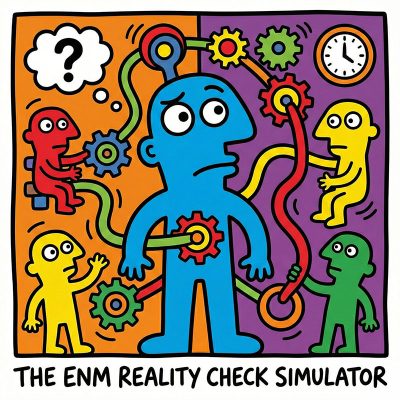
Theory is sexy. Reality is messy. You agreed you could date others, but how does your stomach drop when he takes her to your anniversary spot? Or when she comes home smelling like someone else?
This simulator drags your abstract rules into the harsh light of day. We force you to confront the visceral, gut-wrenching scenarios that actually destroy relationships, before they happen. Test your nervous system in the simulator so you don't crash the car in real life.
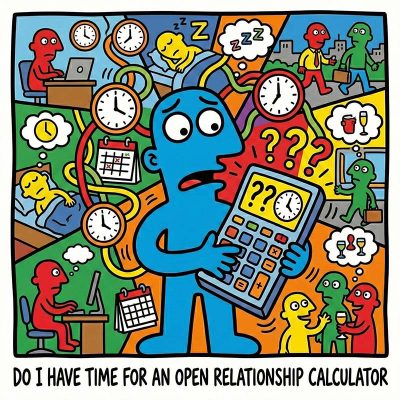
The fantasy is endless romance. The reality? It’s a logistical nightmare. Dating isn't just sex; it’s a second job of swiping, spending, and emotional processing that drains your sanity. Underestimating the "admin" of non-monogamy is the fastest way to turn your relationship into a burnout factory where resentment thrives.
This calculator forces you to confront the brutal math of your time, energy, and wallet. Can you actually afford this lifestyle, or are you just signing up for exhaustion?
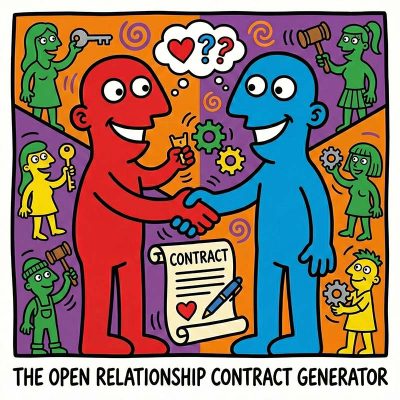
"I thought we agreed" is the sentence that destroys relationships & marriages. Relying on verbal promises when emotions run high is a gamble you cannot afford to lose. Your memory isn't just faulty; it's a liability. Ambiguity is the oxygen that jealousy breathes, turning "freedom" into a minefield of "did I mess up?"
This generator transforms vague permissions into a concrete, signed reality. Stop arguing about what you thought was said and lean on what is written. Secure your boundaries in ink, not hope.
What is kitchen table dynamics
Kitchen table dynamics refer to a style where all partners in the poly network know each other and can sit together at a kitchen table so to speak. The term comes from the idea that partners and potential partners can mingle socialize and interact in a common space. In kitchen table polyamory the relationships are integrated and many people share time calendars social events and even meet the family of someone involved. The vibe here is openness collaboration and a sense of belonging within a larger polycule. The phrase kitchen table is not about a literal table every time but about a culture of visibility and mutual respect among a group of connected people.
Key differences at a glance
Understanding the practical differences can save you a lot of stress. Here are the core contrasts to help you decide what feels right for your life and priorities.
Parallel keeps relationships separate while kitchen table invites interconnections and shared moments. In parallel you may spread time between partners with clear boundaries. In kitchen table dynamics energy is shared across a group and scheduling can become a complex dance. Parallel can feel lighter for some because there is less group dynamic pressure. Kitchen table can bring extra emotional labor but also more support and sense of community. In parallel conflicts may arise in private with the person involved rather than in front of a wider circle. In kitchen table conflicts can involve multiple people and require careful mediation and communication.
Why people choose each dynamic
People pick parallel or kitchen table dynamics for a mix of personal temperament life goals and relationship history. Here are some common reasons why each pattern tends to appeal.
Reasons to choose parallel dynamics
- You want to protect emotional bandwidth for each relationship and keep boundaries clean.
- You value space to grow with a new partner without inviting extra voices into every decision.
- You or your partner have past experiences with jealousy and want a low pressure structure to build trust gradually.
- Your work schedule or living situation makes coordinating multiple people challenging and you prefer simpler logistics.
Reasons to choose kitchen table dynamics
- You like the idea of a shared social circle and a sense of belonging within a polyamorous community.
- You want to normalize dating multiple people by making interactions routine and visible rather than secretive.
- You find value in collective problem solving and appreciate the support system that can come from a connected group.
- You enjoy planning group activities and creating memories that involve more than two people at a time.
Common myths and must no dos
Let us bust some myths and spell out must do nots so you don’t slip into avoidable trouble. Honest conversations beat assumptions every time.
- Myth You can hide jealousy and it will evaporate.
Reality Jealousy usually speaks through feelings that want to be seen. Name it and address it early. - Myth You will only feel good about other people if you are the most secure person ever.
Reality Building secure attachment takes work and time. Expect fluctuations and have check ins. - Myth If you are in a kitchen table dynamic you should be social with all partners at all times.
Reality Mutual consent and comfort matter. It is okay to set boundaries about social time and privacy. - Myth Parallel means no emotional connection is possible.
Reality Parallel can still include deep emotional bonds with different rhythms and boundaries. - Must do Have explicit conversations about time energy finances and boundaries. You are building agreements not guessing your way through life.
negotiating boundaries and consent
Boundaries and consent are the foundation of any ENM arrangement. The goal is to create agreements that protect everyone involved and to revisit them when life changes. Here are practical steps to set boundaries and gain ongoing consent in either dynamic.
- Early conversation Have a sit down talk before anything starts and set a time to revisit the topic regularly.
- Be precise Define what counts as a date a relationship a platonic interaction and a one night stand. The more precise you are the clearer the expectations.
- Document agreements Keep a simple written note of boundaries and time frames so there is less room for misinterpretation.
- Consent is ongoing Consent is not a one time checkbox. Check in with your partner and with new partners as relationships evolve.
- Respect confidentiality People’s privacy matters. Decide what information stays private and what can be shared.
The freedom of an open relationship sounds incredible, but the logistics can feel like holding a grenade. That spinning "what if" anxiety isn't paranoia, it’s your survival instinct warning you that your bond is exposed. "Just seeing what happens" is the fastest way to turn a fantasy into a breakup.
The Essential Guide replaces chaos with discipline. We give you the blueprints, jealousy protocols, and repair scripts needed to explore the edge without falling off. Don't guess. Secure your foundation first.
The world of non-monogamy is a maze of confusing labels. Trying to be "Polyamorous" when your heart actually needs "Swinging" isn't just a vocabulary error; it’s a recipe for misery.
You can't build a stable home on a foundation that doesn't fit your psychology. This tool analyzes your emotional bandwidth and jealousy triggers to design the exact structure you need. Stop trying to squeeze into a box that doesn't fit. Build a relationship that actually feels like home.
Opening up feels exciting, but if you aren't reading from the same script, you're writing a tragedy. The disconnect between "I want freedom" and "I want safety" is where hearts break. This isn't just a quiz; it’s a synchronization engine.
We identify the silent gaps in your desires—from sleepover rules to emotional bandwidth, before they become unbridgeable chasms. Don't wait until the damage is done to find out you were never on the same page. Align your compasses now.
Theory is sexy. Reality is messy. You agreed you could date others, but how does your stomach drop when he takes her to your anniversary spot? Or when she comes home smelling like someone else?
This simulator drags your abstract rules into the harsh light of day. We force you to confront the visceral, gut-wrenching scenarios that actually destroy relationships, before they happen. Test your nervous system in the simulator so you don't crash the car in real life.
The fantasy is endless romance. The reality? It’s a logistical nightmare. Dating isn't just sex; it’s a second job of swiping, spending, and emotional processing that drains your sanity. Underestimating the "admin" of non-monogamy is the fastest way to turn your relationship into a burnout factory where resentment thrives.
This calculator forces you to confront the brutal math of your time, energy, and wallet. Can you actually afford this lifestyle, or are you just signing up for exhaustion?
"I thought we agreed" is the sentence that destroys relationships & marriages. Relying on verbal promises when emotions run high is a gamble you cannot afford to lose. Your memory isn't just faulty; it's a liability. Ambiguity is the oxygen that jealousy breathes, turning "freedom" into a minefield of "did I mess up?"
This generator transforms vague permissions into a concrete, signed reality. Stop arguing about what you thought was said and lean on what is written. Secure your boundaries in ink, not hope.
realistic scenarios and sample conversations
Real life scenarios help take theory into practice. Here are two common situations with dialogue you can adapt to your own life. These examples are crafted to feel natural while staying practical and respectful.
Scenario 1 The new partner with parallel boundaries
All three people have agreed to a parallel layout. The existing couple Dana and Mia has started dating a new partner Kai. The group has a shared check in once a month but keeps date nights separate from Kai when needed. They want to ensure Kai feels welcome but not overwhelmed with crossover. Here is a short example of a conversation they might have before moving forward.
Dana I want to be sure we are all aligned about shared expectations with Kai. We will keep our dating separate. We will not schedule double dates with Kai without checking in first. Are you comfortable with that?
Mia Yes I am comfortable with that as long as we maintain honesty about our time usage. If something feels off we will talk about it.
Kai I appreciate being included in the check ins and I am happy to keep things at a pace that feels good for everyone. I do not want to be dragged into private disagreements. Let us keep communication open and direct.
Scenario 2 Transitioning to a kitchen table style
Alex and Sam are in a non monogamous relationship and want to invite a partner Luna to join more social events and group activities which would shift the dynamic toward kitchen table style. They discuss ground rules and what Luna is comfortable with. They outline the boundaries and the steps to introduce Luna to their broader group.
Alex We enjoy spending time with Luna and we would like to invite her to more social events with our circle. How do you feel about mixing friend time with dating time?
Sam I want to be sure Luna is comfortable with the idea and that we do not overwhelm her with too much information at once. Let us plan a few smaller group hangouts first and gauge how the energy feels. We will all be honest about our feelings as we go.
Luna I am excited to get to know your friends. I want clear boundaries and a predictable pattern for our time. I would like to understand how you handle conflicts and how you communicate when something feels off.
practical tips for making either dynamic work
Here are practical tactics that work in real life for both parallel and kitchen table styles. Use these to reduce friction and create a more enjoyable experience for everyone involved.
- Calendar and time management Use shared calendars at least for big events and milestones. Schedule regular check ins to catch issues early.
- Communication rituals Create a routine such as a weekly text with a simple question about well being and a monthly deep dive conversation for boundaries.
- Social environment planning Decide how social events will be structured and who will attend. For kitchen table dynamics set expectations about group meetups and private time with each partner.
- Risk management Practice safer sex and regular STI testing. Keep health as a shared priority within the group.
- Conflict resolution Agree on a process for handling disagreements. Use a neutral mediator when needed and take a break if tensions rise.
- Privacy respect Decide what information stays private and what is shared. Cancel gossip and respect each person’s boundaries.
how to talk about these dynamics with new partners
New partners come with their own history and comfort levels. Be clear about your style and invite questions. A simple approach often works well.
- Start with your values and why ENM works for you. Share what you want to get out of the arrangement and what you hope to avoid.
- Explain your current dynamic briefly and what level of integration you are open to. If you are in a parallel phase explain that it does not mean you are against group dynamics forever.
- Ask about the other person s dating goals and boundaries. Listen for red flags and topics that require renegotiation later.
- Offer a gradual path. Propose a few low risk interactions such as co viewing a movie or attending a casual social event before moving into more integrated activities.
common pitfalls and how to avoid them
Every relationship has friction points. Here are frequent traps and how to sidestep them with practical strategies.
- Assumptions about time Do not assume that your partner s time is unlimited or that another partner will be flexible. Check in and renegotiate as needed.
- Hidden agendas Keep conversations open and transparent. If you feel pressure to hide a conflict that is a red flag.
- Public vs private information Decide what is appropriate to share with the entire group and what should stay private. Keeping secrets slowly corrodes trust.
- One sided energy drain Watch for signs that one person is carrying most of the emotional load. Share responsibilities like planning dates and handling communications.
glossary of useful terms and acronyms
- ENM Ethical Non Monogamy. A broad term for relationship styles that involve honesty and consent when more than two people are involved.
- PARALLEL DYNAMICS A setup where each relationship runs its own course with minimal intersection with other relationships.
- KITCHEN TABLE DYNAMICS A setup where partners know each other and interact together in social spaces and sometimes more formal settings.
- POLYAMORY The practice of having intimate relationships with more than one partner with knowledge and consent of everyone involved.
- POLYULE A term sometimes used to describe the extended network of partners connected through shared relationships.
- POLYCULE A playful variation used by some groups to describe the full set of partners and their connections.
- PRIMARY SECONDARY A common labeling system for relationship hierarchy with a primary partner or partners and one or more secondary partners. Some people reject hierarchy and prefer non hierarchical labels.
- META The partner of your partner. The term is short for metamore and is used in poly communities to describe the person who is connected to your partner in another relationship.
- COMPERSION Feeling joy when your partner experiences happiness with someone else. The opposite of jealousy in this context is often called compersion.
- JEALOUSY A natural feeling that can arise when you perceive a threat to a valued relationship. The key is to acknowledge and address it openly rather than suppress it.
- BOUNDARIES Boundaries are agreements about what you will and will not do in a relationship. Boundaries protect everyone involved and help maintain trust and safety.
- SAFER SEX PRACTICES Methods and routines to reduce the risk of sexually transmitted infections including condoms regular testing and open communication about sexual activity with partners.
- STI Sexually transmitted infection. Regular testing and honest disclosure are part of responsible ENM practice.
- CONSENT An ongoing agreement given freely by all parties prior to engaging in activities. Consent can be withdrawn at any time and must be respected.
- TRANSPARENCY A cornerstone of ENM. It means being honest about your feelings boundaries and who you are seeing when you are seeing them.
final practical blueprint to get started
Ready to dip your toe in or shift an existing setup toward more clarity. Here is a simple practical blueprint you can follow. Take your time work with your partner or partners and tune the steps to your life.
- Define your why Why are you exploring ENM and what do you hope to gain? Write a short sentence that captures your core motivation.
- Choose a starting dynamic Decide if you want to begin with parallel or kitchen table style or try a hybrid approach as a test run.
- Set a time window Agree to a two to three month trial period with a scheduled check in at the end to discuss next steps.
- Create a boundary map List what is acceptable and what is off limits. Include time boundaries privacy and social boundaries.
- Practice honest communication Build a habit of checking in about feelings expectations and changes. Honesty saves relationships from unnecessary pain.
- Build a support network Consider seeking advice from trusted friends or a professional counselor who understands ENM dynamics.
checklist before you move forward
- Have you discussed core values and long term goals with all involved parties?
- Do you have a clear agreement about time boundaries and how you will handle scheduling conflicts?
- Have you talked about safer sex strategies and STI testing plans?
- Is there a plan for managing jealousy including a process for addressing it when it arises?
- Is there a plan for how to approach family or friends if questions come up about your ENM lifestyle?
Frequently asked questions
Below are quick answers to common questions people ask when exploring parallel and kitchen table dynamics. If you want more depth you will find deeper explanations throughout this guide.
What is ENM exactly
ENM stands for ethical non monogamy. It describes relationship styles that involve more than two people with the consent and agreement of everyone involved. It centers communication consent and boundaries rather than secrecy or competition.
What is the difference between parallel and kitchen table dynamics
Parallel dynamics keep relationships distinct with limited overlap. Kitchen table dynamics integrate relationships allowing partners to meet and interact with each other creating a shared social network. The choice depends on personal temperament goals and comfort with group dynamics.
How do I know which dynamic is right for me
Start with your comfort level with closeness how you manage jealousy and your schedule. If you prefer clear separations parallel might suit you better. If you want a sense of community and you enjoy group planning kitchen table might be the better fit.
How important is communication in ENM
Communication is everything. Regular honest conversations about feelings boundaries scheduling and changes in life are essential for ENM success. The only way to build trust and safety is through ongoing conversation not through silence.
Can you switch from parallel to kitchen table later
Yes you can. As feelings evolve and life changes it is common to adjust the dynamic. The key is to discuss the shift openly with all involved and renegotiate boundaries and expectations accordingly.
Is compersion real and how can I foster it
Compersion is feeling happy when your partner finds joy with someone else. It can be cultivated by celebrating your partner s connections and by building a sense of security through communication and shared experiences. It does not have to happen overnight but patience and practice help.
What about family and friends who might not understand ENM
Many people choose to keep their ENM life private from certain circles while being open with those who ask in a respectful manner. Decide in advance what information you are comfortable sharing and with whom and create boundaries about how you talk about your relationships in social settings.
closing note
Parallel and kitchen table dynamics are two well used but not exclusive strategies within ethical non monogamy. Neither one is inherently better than the other. The best choice depends on you your life and your relationships. The goal is not to force yourself into a label but to choose a structure that allows everyone involved to thrive with honesty respect and kindness. If you are curious the best next step is to have conversations with your partner or partners and start with a small experiment. You will learn a great deal about your needs resilience and what truly supports your happiness. And yes wherever you go we are here to help you map the terrain with clarity humor and real world guidance.
The freedom of an open relationship sounds incredible, but the logistics can feel like holding a grenade. That spinning "what if" anxiety isn't paranoia, it’s your survival instinct warning you that your bond is exposed. "Just seeing what happens" is the fastest way to turn a fantasy into a breakup.
The Essential Guide replaces chaos with discipline. We give you the blueprints, jealousy protocols, and repair scripts needed to explore the edge without falling off. Don't guess. Secure your foundation first.
The world of non-monogamy is a maze of confusing labels. Trying to be "Polyamorous" when your heart actually needs "Swinging" isn't just a vocabulary error; it’s a recipe for misery.
You can't build a stable home on a foundation that doesn't fit your psychology. This tool analyzes your emotional bandwidth and jealousy triggers to design the exact structure you need. Stop trying to squeeze into a box that doesn't fit. Build a relationship that actually feels like home.
Opening up feels exciting, but if you aren't reading from the same script, you're writing a tragedy. The disconnect between "I want freedom" and "I want safety" is where hearts break. This isn't just a quiz; it’s a synchronization engine.
We identify the silent gaps in your desires—from sleepover rules to emotional bandwidth, before they become unbridgeable chasms. Don't wait until the damage is done to find out you were never on the same page. Align your compasses now.
Theory is sexy. Reality is messy. You agreed you could date others, but how does your stomach drop when he takes her to your anniversary spot? Or when she comes home smelling like someone else?
This simulator drags your abstract rules into the harsh light of day. We force you to confront the visceral, gut-wrenching scenarios that actually destroy relationships, before they happen. Test your nervous system in the simulator so you don't crash the car in real life.
The fantasy is endless romance. The reality? It’s a logistical nightmare. Dating isn't just sex; it’s a second job of swiping, spending, and emotional processing that drains your sanity. Underestimating the "admin" of non-monogamy is the fastest way to turn your relationship into a burnout factory where resentment thrives.
This calculator forces you to confront the brutal math of your time, energy, and wallet. Can you actually afford this lifestyle, or are you just signing up for exhaustion?
"I thought we agreed" is the sentence that destroys relationships & marriages. Relying on verbal promises when emotions run high is a gamble you cannot afford to lose. Your memory isn't just faulty; it's a liability. Ambiguity is the oxygen that jealousy breathes, turning "freedom" into a minefield of "did I mess up?"
This generator transforms vague permissions into a concrete, signed reality. Stop arguing about what you thought was said and lean on what is written. Secure your boundaries in ink, not hope.
