
Processing Shame and Social Conditioning


Let us get real for a moment. People are not born into a blank slate when it comes to how they feel about love, affection, and who gets to be involved with whom. Social conditioning shapes our beliefs long before we ever question them. In ethical non monogamy ENM the conditioning you grew up with and the judgments you hear from friends and family can feel like a heavy coat you never asked for. The good news is you can take that coat off piece by piece. You can learn to name the shame to understand where it comes from and build a healthier relationship with yourself and with your partners. This guide speaks plainly and honestly about ENM dynamics and the emotional work involved in processing shame and social conditioning. We want to be your friendly experiment partner who tells it like it is and helps you find better paths without judgment.
Quick Links to Useful Sections
- What is social conditioning and why shame shows up in ENM
- Key terms explained so you can follow along
- Ethical Non Monogamy ENM
- Monogamy
- Polamory
- Swinging
- Relationship anarchy
- Jealousy
- Compersion
- Consent
- Boundaries
- Negotiation
- Primary and non primary
- Solo poly
- How shame and conditioning show up in ENM daily life
- A realistic body of scenarios to anchor your understanding
- Scenario one the date that triggers a wave of jealousy
- Scenario two hearing a family member judge ENM choices
- Scenario three internal conflict when you hear a story that sounds like moral panic
- Scenario four big life changes that shift relationship dynamics
- Practical strategies to process shame and social conditioning
- 1. Name the shame in concrete terms
- 2. Separate beliefs from facts
- 3. Build a personal values map
- 4. Practice cognitive reframing
- 5. Create a shame diary
- 6. Learn the language of consent and boundaries
- 7. Practice transparent communication with your partners
- 8. Seek out supportive communities
- 9. Access professional support when needed
- 10. Practice compersion and celebrate small wins
- Tools you can use in daily life
- Addressing stigma with friends and family
- Glossary of useful terms and acronyms
- Realistic expectations for personal growth in ENM
- Putting it into daily practice
- Are you ready to shift from shame to informed confidence
- Frequently asked questions
What is social conditioning and why shame shows up in ENM
Social conditioning is the set of beliefs and expectations that society teaches you about how relationships should look. In many cultures the default story is that two people are meant to be monogamous and that anything outside that is risky or wrong. Shame is the emotional response that often follows when you step outside those expectations. In ethical non monogamy ENM you are choosing a path that may clash with long standing norms. That clash can trigger guilt, embarrassment, and fear even when you know in your heart that your choices are ethical and honest.
Shame in this context is not a sentence it is a signal. It tells you that a belief might be outdated or misaligned with your actual values. Shame can be felt as a gnawing worry when a friend questions your dating life or when a family member makes a joking comment that hurts. The feeling is a normal part of growth but it can become a problem if it stops you from communicating clearly or living in a way that respects yourself and your partners.
Key terms explained so you can follow along
Ethical Non Monogamy ENM
Ethical non monogamy is a broad umbrella term for relationship styles that involve more than two people with the knowledge and consent of everyone involved. ENM emphasizes consent communication and ongoing negotiation. The key idea is that all parties have the agency to set their own boundaries and to opt in or out as needed.
Monogamy
Monogamy is the standard relationship model where two people form a romantic and sexual partnership exclusively. Ethical non monogamy exists in contrast to this model and respects individual freedom to choose multiple partnerships if all involved agree.
Polamory
Polamory is a form of ENM where people have emotional and intimate connections with more than one partner. It is not a requirement to love all partners equally it is about honest emotional honesty and consent.
Swinging
Swinging typically involves partnered individuals pursuing sexual experiences with others but without creating deep emotional bonds. It is one branch of ENM but not the only form that exists.
Relationship anarchy
Relationship anarchy is a philosophy within ENM that emphasizes autonomy for each relationship. There are no predetermined rules about hierarchy and a person can choose different levels of connection with each partner based on personal values and consent.
Jealousy
Jealousy is an emotional response that arises when you feel a threat to a valued relationship. In ENM jealousy is common but manageable with open communication and clear boundaries.
Compersion
Compersion is the feeling of joy when your partner experiences happiness with someone else. It is the opposite of jealousy and a goal many ENM practitioners strive toward.
Consent
Consent is an ongoing agreement between all parties about what is allowed and what is not. In ENM consent is a living process that requires regular check ins and updates as feelings shift.
Boundaries
Boundaries are the lines you draw about what is acceptable for you in terms of time, emotional investment, and sexual activities. Boundaries are personal and can be renegotiated over time.
Negotiation
Negotiation is the back and forth discussion that helps partners align on expectations and scripts for how a dynamic will operate. It is not a one time event it is an ongoing practice.
Primary and non primary
These terms describe how partners categorize relational priorities. A primary partner may have more formal commitments while other partners may have secondary or non primary status. The labeling is not inherently better or worse it is a way to describe structure for practical purposes.
Solo poly
Solo poly refers to a style where a person pursues multiple intimate connections while maintaining independence and a strong sense of self outside any single relationship.
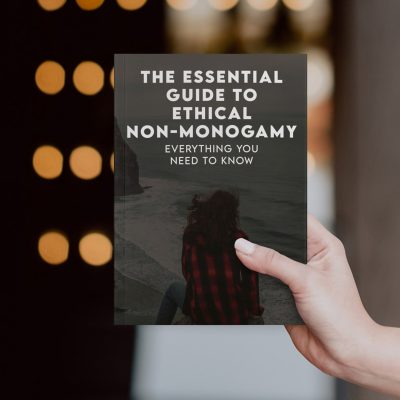
The freedom of an open relationship sounds incredible, but the logistics can feel like holding a grenade. That spinning "what if" anxiety isn't paranoia, it’s your survival instinct warning you that your bond is exposed. "Just seeing what happens" is the fastest way to turn a fantasy into a breakup.
The Essential Guide replaces chaos with discipline. We give you the blueprints, jealousy protocols, and repair scripts needed to explore the edge without falling off. Don't guess. Secure your foundation first.

The world of non-monogamy is a maze of confusing labels. Trying to be "Polyamorous" when your heart actually needs "Swinging" isn't just a vocabulary error; it’s a recipe for misery.
You can't build a stable home on a foundation that doesn't fit your psychology. This tool analyzes your emotional bandwidth and jealousy triggers to design the exact structure you need. Stop trying to squeeze into a box that doesn't fit. Build a relationship that actually feels like home.

Opening up feels exciting, but if you aren't reading from the same script, you're writing a tragedy. The disconnect between "I want freedom" and "I want safety" is where hearts break. This isn't just a quiz; it’s a synchronization engine.
We identify the silent gaps in your desires—from sleepover rules to emotional bandwidth, before they become unbridgeable chasms. Don't wait until the damage is done to find out you were never on the same page. Align your compasses now.
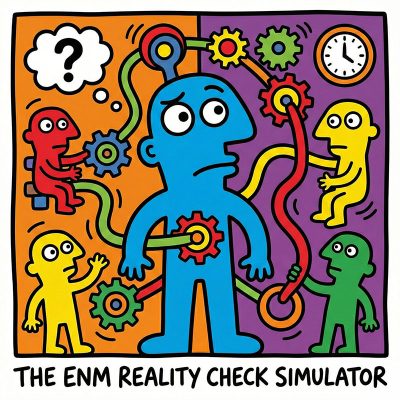
Theory is sexy. Reality is messy. You agreed you could date others, but how does your stomach drop when he takes her to your anniversary spot? Or when she comes home smelling like someone else?
This simulator drags your abstract rules into the harsh light of day. We force you to confront the visceral, gut-wrenching scenarios that actually destroy relationships, before they happen. Test your nervous system in the simulator so you don't crash the car in real life.

The fantasy is endless romance. The reality? It’s a logistical nightmare. Dating isn't just sex; it’s a second job of swiping, spending, and emotional processing that drains your sanity. Underestimating the "admin" of non-monogamy is the fastest way to turn your relationship into a burnout factory where resentment thrives.
This calculator forces you to confront the brutal math of your time, energy, and wallet. Can you actually afford this lifestyle, or are you just signing up for exhaustion?
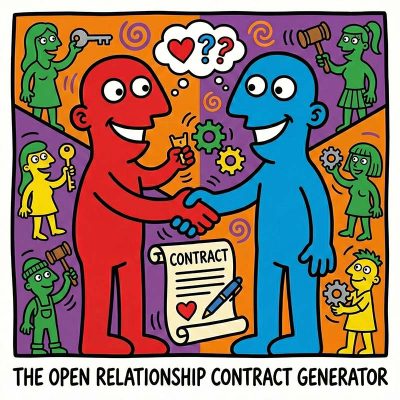
"I thought we agreed" is the sentence that destroys relationships & marriages. Relying on verbal promises when emotions run high is a gamble you cannot afford to lose. Your memory isn't just faulty; it's a liability. Ambiguity is the oxygen that jealousy breathes, turning "freedom" into a minefield of "did I mess up?"
This generator transforms vague permissions into a concrete, signed reality. Stop arguing about what you thought was said and lean on what is written. Secure your boundaries in ink, not hope.
How shame and conditioning show up in ENM daily life
Shame can appear as a whisper when you hear a friend call your choices reckless or irresponsible. It can appear as a knot in your stomach when a family member asks if you are “really sure about what you want.” It can surface as self doubt when you compare your boundaries to those of others and feel you are not meeting some perfect standard. In ENM the fear of judgment can lead to hiding aspects of your life or avoiding conversations that would actually strengthen your connections. The good news is you can reframe those moments and use them as fuel for growth rather than evidence of failure.
Another common thread is moral licensing where you feel you must prove your choices are ethical to the outside world or to yourself. That mindset can trap you in a cycle of over explaining or defending behaviors that should feel natural and consensual. The aim is not to sanitize every moment but to cultivate transparent honest communication about what you want what you need and what you are willing to offer in your relationships.
A realistic body of scenarios to anchor your understanding
Scenario one the date that triggers a wave of jealousy
You have a date lined up with someone new and your partner has also started seeing someone. You notice a surge of jealousy and a belief that you are not enough. Instead of letting that voice dictate your actions you pause breathe and name the cue. Acknowledge that jealousy is a signal you care about the relationship and want to protect your own well being. Sit with the feeling for a moment then switch to a factual check in with yourself about what boundary might need adjusting or what reassurance you need from your partner. This approach helps you avoid spiraling into shame and instead moves toward constructive communication.
Scenario two hearing a family member judge ENM choices
At a family gathering a relative makes a flippant comment about how you are living your life. A natural reaction is to feel exposed or judged. In this moment you can respond with a short clear boundary that reflects your values without escalating the moment. You might say I hear you have concerns I am happy to talk about it with you later but right now I am here to enjoy the time with family. If the person continues you can calmly disengage and return to courtesy. External judgment can sting but it does not have to derail your day or your relationships.
Scenario three internal conflict when you hear a story that sounds like moral panic
Maybe a coworker tells a sensational tale about someone who practices ENM in a way that feels reckless. Your first instinct could be to retreat into shame or dismiss everything about ENM. Instead try a fact based response. Acknowledge that there are many ways to practice ENM and that consent communication and safety are core priorities in healthy situations. This is also a chance to educate the people around you by sharing a simple framework for how ethical non monogamy works in real life.
Scenario four big life changes that shift relationship dynamics
Moving in with a partner changing jobs or starting a family can shift the way you approach ENM. It is normal to feel unsettled as priorities change. The antidote is a proactive renegotiation session with all involved. Revisit boundaries talk through safety concerns and align expectations for time together and time apart. This is not a one time talk it is an ongoing process that respects everyone s evolving needs.
Practical strategies to process shame and social conditioning
1. Name the shame in concrete terms
Write down the exact words that pop into your head when you feel shamed. For example I should be monogamous because that is what good people do. By naming it you take away its stealth power and you can begin to challenge it with another voice that reflects your values.
2. Separate beliefs from facts
Shaming often blends beliefs with facts. Ask yourself what is actually true about your situation. What has your partner communicated what do you want and what is your shared plan moving forward. Grounding in facts reduces the emotional charge of the moment.
3. Build a personal values map
List values you want to guide your life such as honesty respect autonomy and curiosity. Then map how ENM fits with those values. This exercise helps you see that ENM can be aligned with your core beliefs rather than being a confrontation with them.
4. Practice cognitive reframing
When you hear a critic voice try reframing the thought into a more compassionate or curious version. Instead of thinking I must defend my choices think I wonder what this person is afraid of and how I can respond with clarity.
5. Create a shame diary
Keep a simple journal where you note every time shame shows up and what triggered it. Include how you responded and what you could do differently next time. This practice makes you sharper and more compassionate with yourself over time.
6. Learn the language of consent and boundaries
Know the exact terms you use with partners and friends. Having precise language reduces miscommunication and makes it easier to explain complex dynamics without leaving room for misinterpretation.
7. Practice transparent communication with your partners
Schedule regular check ins where you talk about feelings fears needs and boundaries. Make space for each partner to speak and practice reflecting back what you heard before offering your own point. Clear listening builds trust and reduces the power of shame to derail conversations.
8. Seek out supportive communities
Find peers who practice ENM in healthy constructive ways. Supportive communities provide models for healthy boundary setting and practical tips for dealing with social stigma. You do not have to go through this alone.
9. Access professional support when needed
Sex therapists and therapists who specialize in non traditional relationships can provide strategies tailored to your situation. They can help you unpack internalized stigma and develop skills for maintaining ethical non monogamy while preserving your mental health.
10. Practice compersion and celebrate small wins
Compersion is the joy you feel when your partner experiences happiness with someone else. It is not easy but it is a powerful antidote to shame. Celebrate each step toward compersion even when it feels awkward or delayed. Small wins compound over time.
Tools you can use in daily life
- Shame audit A quick daily check in to notice shame cues and record how you handle them.
- Boundary tracker A simple log of what boundaries are working and where renegotiation is needed.
- Communication scripts Short ready to say lines for common conversations that tend to provoke shame or defensiveness.
- Grounding techniques Breathing exercises and quick mindfulness practices to center yourself before conversations.
- Relationship review A monthly look back at how ENM is serving your values and your well being.
Addressing stigma with friends and family
When you decide to share parts of your ENM life with others it is important to set expectations. Start with what you want them to know and be prepared for questions. You can offer a simple summary such as we are non monogamous by choice and we prioritize consent communication and safety. If someone pushes back show empathy acknowledge their perspective and maintain your boundaries. You are allowed to protect your mental health and your relationship by limiting or ending conversations that feel harmful or disrespectful.
Glossary of useful terms and acronyms
- ENM Ethical non monogamy a term for relationship styles that involve more than two people with the consent of everyone involved.
- Monogamy A relationship structure where two people form an exclusive partnership.
- Polyamory A form of ENM where there are multiple emotional or romantic relationships with the knowledge and consent of all involved.
- Swinging A form of ENM focused on sexual experiences with others while maintaining primary relationships in many cases.
- Relationship anarchy A philosophy that rejects fixed hierarchies and emphasizes autonomy and consent across all relationships.
- Jealousy An emotional response to perceived threats in a relationship often spurred by social conditioning.
- Compersion Joy from seeing a partner experience happiness with someone else.
- Consent Ongoing agreement about what is allowed in a relationship ensuring all parties have a voice.
- Boundaries Personal limits that guide what you will and will not tolerate in a relationship.
- Negotiation The process of discussing and aligning expectations and agreements among partners.
- Primary partner A term used to describe a partner that carries a higher level of commitment or shared life integration.
- Non primary A partner who does not hold primary status but is nonetheless an important part of your life.
- Solo poly A style of ENM where a person maintains independence and forms multiple relationships while not relying on a single base.
Realistic expectations for personal growth in ENM
Processing shame and social conditioning is a journey not a quick fix. You may experience setbacks and moments of doubt. The goal is progress not perfection. Celebrate the small steps you take toward clearer communication more authentic boundaries and a more resilient sense of self. When you look back after six months you may see a person who has learned to hold space for multiple relationships while still honoring personal values and mental health. You will recognize that ethical non monogamy is not a reaction to past hurts but a conscious choice that brings its own challenges and rewards.
Putting it into daily practice
To turn theory into daily life start with a simple weekly habit. Pick one area to focus on such as improving a boundary or practicing a compassion focused response to a critics comment. Use your shame diary to track what happened what thought patterns appeared and what you learned. Share your progress with a trusted partner or friend and invite feedback. Over time these small actions compound into a more confident approach to ENM that aligns with your values and your well being.
Are you ready to shift from shame to informed confidence
Shame is not a fixed destination. It is a signpost that tells you where growth is needed. Social conditioning is a backdrop you can rewrite through practice honest talk and compassionate self care. Ethical non monogamy offers a framework in which consent communication and ongoing renegotiation help you shape relationships that fit who you are today. If you approach this work with curiosity and kindness you will uncover a much deeper sense of freedom and connection with the people you care about.
Frequently asked questions
How does social conditioning impact ENM relationships?
Social conditioning creates expectations about how relationships should look which can trigger shame when ENM plans differ. Understanding these cues and communicating about them helps you navigate the tension without denying your needs or those of your partners.
What is compersion and how can I cultivate it
Compersion is the feeling of happiness for a partner s joy even when it involves someone else. It takes practice to cultivate. Start with small moments celebrate boundaries being honored and shared successes in your own life and your partners lives.
What should I do when jealousy spikes
Pause breathe check in with yourself and name the trigger. Then have a direct calm conversation with your partner about what you need whether that is more information more reassurance or renegotiation of boundaries.
How can therapy help with ENM related shame
A therapist with experience in non traditional relationships can help you unpack internalized norms identify unhelpful scripts and develop healthier coping strategies. They offer a neutral space to explore complex feelings and design a personalized plan for growth.
Is it possible to educate friends and family about ENM without causing a scene
Yes. Start with concise explanations focus on consent and safety and offer to answer questions respectfully. If conversations become hostile or unproductive you can step back and choose when and how to revisit the topic.
What is the difference between shame and guilt in ENM
Shame is about who you are as a person while guilt is about specific actions. In ENM it is common to feel both. Work to separate the feeling that you are a bad person from the belief that a particular action or choice may have hurt someone and discuss repair if needed.
How long does it typically take to reduce ENM related stigma
There is no fixed timeline. It depends on the depth of conditioning and the level of support you have. With consistent practice transparent communication and supportive communities most people notice meaningful changes within months not days.
Should I tell my entire circle about our ENM arrangement
This is a personal decision. Many people choose to share with trusted friends and family and to keep certain details private. Decide what you are comfortable with and what is necessary for your safety and well being.
The freedom of an open relationship sounds incredible, but the logistics can feel like holding a grenade. That spinning "what if" anxiety isn't paranoia, it’s your survival instinct warning you that your bond is exposed. "Just seeing what happens" is the fastest way to turn a fantasy into a breakup.
The Essential Guide replaces chaos with discipline. We give you the blueprints, jealousy protocols, and repair scripts needed to explore the edge without falling off. Don't guess. Secure your foundation first.
The world of non-monogamy is a maze of confusing labels. Trying to be "Polyamorous" when your heart actually needs "Swinging" isn't just a vocabulary error; it’s a recipe for misery.
You can't build a stable home on a foundation that doesn't fit your psychology. This tool analyzes your emotional bandwidth and jealousy triggers to design the exact structure you need. Stop trying to squeeze into a box that doesn't fit. Build a relationship that actually feels like home.
Opening up feels exciting, but if you aren't reading from the same script, you're writing a tragedy. The disconnect between "I want freedom" and "I want safety" is where hearts break. This isn't just a quiz; it’s a synchronization engine.
We identify the silent gaps in your desires—from sleepover rules to emotional bandwidth, before they become unbridgeable chasms. Don't wait until the damage is done to find out you were never on the same page. Align your compasses now.
Theory is sexy. Reality is messy. You agreed you could date others, but how does your stomach drop when he takes her to your anniversary spot? Or when she comes home smelling like someone else?
This simulator drags your abstract rules into the harsh light of day. We force you to confront the visceral, gut-wrenching scenarios that actually destroy relationships, before they happen. Test your nervous system in the simulator so you don't crash the car in real life.
The fantasy is endless romance. The reality? It’s a logistical nightmare. Dating isn't just sex; it’s a second job of swiping, spending, and emotional processing that drains your sanity. Underestimating the "admin" of non-monogamy is the fastest way to turn your relationship into a burnout factory where resentment thrives.
This calculator forces you to confront the brutal math of your time, energy, and wallet. Can you actually afford this lifestyle, or are you just signing up for exhaustion?
"I thought we agreed" is the sentence that destroys relationships & marriages. Relying on verbal promises when emotions run high is a gamble you cannot afford to lose. Your memory isn't just faulty; it's a liability. Ambiguity is the oxygen that jealousy breathes, turning "freedom" into a minefield of "did I mess up?"
This generator transforms vague permissions into a concrete, signed reality. Stop arguing about what you thought was said and lean on what is written. Secure your boundaries in ink, not hope.
