
Social and Community Considerations

If you are exploring ethical non monogamy ENM you are not alone. The modern relationship landscape is bigger and more varied than a single couple dozen years ago. ENM stands for ethical non monogamy a style of relationship that embraces more than one romantic or sexual connection with the knowledge and consent of everyone involved. In this guide we will walk through how to navigate social circles families workplaces and communities with honesty respect and a touch of humor. This article explains terms and acronyms so you will know what people mean in real world conversations. It is a practical down to earth guide to thriving while staying respectful and kind.
Quick Links to Useful Sections
- Understanding ENM and community terms
- What ENM stands for and why it matters
- Key terms you will hear a lot
- Social boundaries and communication
- Why communication is your strongest tool
- Disclosure decisions who to tell and when
- Disclosing to family and close friends
- Disclosing at work and on professional networks
- Building a shared social calendar
- Jealousy and compersion in practice
- The jealousy ladder a practical tool
- Compersion as a practice not a myth
- Handling conflict gracefully
- Consent culture in ENM communities
- Ongoing consent a daily practice
- Renegotiation and boundary updates
- Respect and consent in dating events
- Community etiquette and norms
- Group events and social settings
- Language and anti stigma norms
- Handling boundaries in social media
- Unicorn hunting and ethical considerations
- What unicorn hunting means
- Ethical concerns and healthier paths
- Dating apps and safety in ENM
- Profiles that respect honesty and consent
- Safety tips for ENM dating
- Workplace and professional boundaries
- Discretion versus openness
- Handling coworker relationships with care
- Community resources and safety nets
- Local meetups and online communities
- Boundaries with metamours and broader social circles
- Practical tips for building healthy ENM networks
- Scenario based guidance for real world situations
- Scenario 1 a coworker overlap
- Scenario 2 family dinner with a metamour
- Scenario 3 a large ENM event or party
- Glossary of useful terms and acronyms
- Frequently asked questions
Understanding ENM and community terms
What ENM stands for and why it matters
ENM means ethical non monogamy. That phrase describes a philosophy and practice where multiple romantic or sexual relationships exist with consent and honesty. The word ethical highlights a commitment to fairness communication and consent rather than secrecy. Non monogamy means more than one intimate relationship at the same time. It is not about hurting people or breaking trust. It is about building a network of honest agreements and checking in frequently to ensure everyone is comfortable and informed.
Key terms you will hear a lot
Here is a quick glossary of terms with plain explanations so you can keep up in conversations without a translator. We explain acronyms and explain the roles people talk about in ENM networks.
- Ethical non monogamy ENM A relationship approach that allows more than one romantic or sexual connection with explicit consent and open communication.
- Monogamy A relationship style where two people choose to be romantically and sexually exclusive with each other.
- Polygon naming Ways to describe groups such as triads for three partners or quads for four partners. These labels help people talk about arrangements clearly.
- Metamour A term for a partner of your partner who is not your own partner. In ENM discussions metamour relationships matter for harmony.
- Primary partner A term used to describe someone who is considered central in a relationship. The exact meaning varies by couple and conversation.
- Secondary partner A partner who does not hold the same level of daily practical priority as a primary partner. Always talk about what this means in your circle.
- Compersion The feeling of joy when your partner experiences happiness with someone else. It is the opposite of jealousy in many cases and a goal for some ENM circles.
- Jealousy A natural feeling that can show up in ENM. The goal is to acknowledge it talk about it and respond in a way that respects everyone involved.
- Renegotiation The process of updating agreements as life changes. ENM agreements are not set and forget. They adapt as needs shift.
- Boundaries Personal limits set to protect comfort and safety. Boundaries are not walls they are guardrails that keep honesty alive.
- Consent A clear yes given freely at the moment or a decision to pause and revisit. In ENM consent is ongoing and can be renegotiated at any time.
- Disclosure The act of sharing information about your relationships with relevant people. Disclosure is about honesty and respect for everyone who might be affected.
Social boundaries and communication
Why communication is your strongest tool
In ENM relationships the social world expands. You will talk to partners metamours friends family coworkers and perhaps a facilitator for dating events. Clear honest communication reduces misunderstandings and creates a shared sense of safety. Good communication is consistent steady and kind even when the topic is hard. You want conversations that invite questions not defensiveness.
Disclosure decisions who to tell and when
Not every detail of your private life needs to be broadcast. The approach to disclosure depends on context and potential impact. A practical rule is to share enough to maintain trust and avoid harmful surprises. People like to feel included but they also deserve to have their own space to process information. You can share the basics early and offer to answer questions as relationships evolve.
Disclosing to family and close friends
Family and close friends can be curious or concerned. Start with a simple statement that respects their feelings and your privacy. For example you might say our relationship structure is evolving and we are focusing on honesty and respect. Some families will be supportive while others will prefer not to engage. You cannot control everyone but you can control how you present information and how you respond when questions come up.
Disclosing at work and on professional networks
Work environments value privacy and professionalism. You may choose to be discreet about relationship structures in professional spaces. If certain information affects work or safety it may be appropriate to share with a trusted HR person or manager in a careful way. The goal is to protect your safety and to maintain a professional environment. Boundaries with colleagues are essential and you should not assume consent for sharing details with coworkers just because someone is a friend outside of work.
Building a shared social calendar
In ENM life with more than one partner often means coordinating time. A shared calendar can help reduce scheduling conflicts. Establish norms for how to handle overlaps with metamours and be transparent about plans that affect others. If someone feels left out talk through the feeling and adjust plans if possible. The point is not to punish but to maintain fairness and warmth in your network.
The freedom of an open relationship sounds incredible, but the logistics can feel like holding a grenade. That spinning "what if" anxiety isn't paranoia, it’s your survival instinct warning you that your bond is exposed. "Just seeing what happens" is the fastest way to turn a fantasy into a breakup.
The Essential Guide replaces chaos with discipline. We give you the blueprints, jealousy protocols, and repair scripts needed to explore the edge without falling off. Don't guess. Secure your foundation first.
The world of non-monogamy is a maze of confusing labels. Trying to be "Polyamorous" when your heart actually needs "Swinging" isn't just a vocabulary error; it’s a recipe for misery.
You can't build a stable home on a foundation that doesn't fit your psychology. This tool analyzes your emotional bandwidth and jealousy triggers to design the exact structure you need. Stop trying to squeeze into a box that doesn't fit. Build a relationship that actually feels like home.
Opening up feels exciting, but if you aren't reading from the same script, you're writing a tragedy. The disconnect between "I want freedom" and "I want safety" is where hearts break. This isn't just a quiz; it’s a synchronization engine.
We identify the silent gaps in your desires—from sleepover rules to emotional bandwidth, before they become unbridgeable chasms. Don't wait until the damage is done to find out you were never on the same page. Align your compasses now.
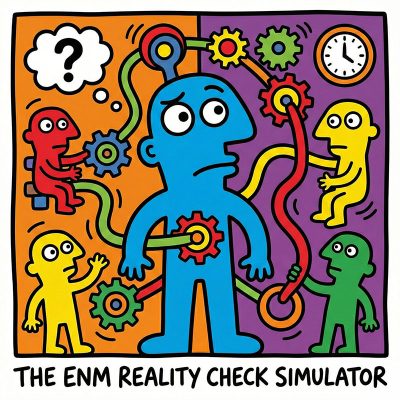
Theory is sexy. Reality is messy. You agreed you could date others, but how does your stomach drop when he takes her to your anniversary spot? Or when she comes home smelling like someone else?
This simulator drags your abstract rules into the harsh light of day. We force you to confront the visceral, gut-wrenching scenarios that actually destroy relationships, before they happen. Test your nervous system in the simulator so you don't crash the car in real life.
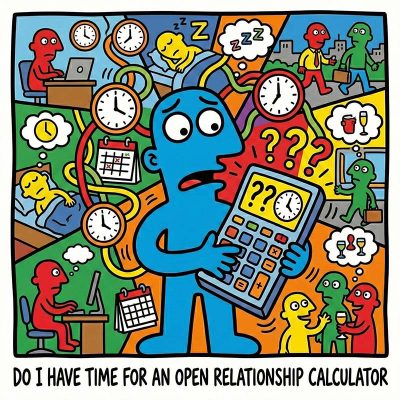
The fantasy is endless romance. The reality? It’s a logistical nightmare. Dating isn't just sex; it’s a second job of swiping, spending, and emotional processing that drains your sanity. Underestimating the "admin" of non-monogamy is the fastest way to turn your relationship into a burnout factory where resentment thrives.
This calculator forces you to confront the brutal math of your time, energy, and wallet. Can you actually afford this lifestyle, or are you just signing up for exhaustion?
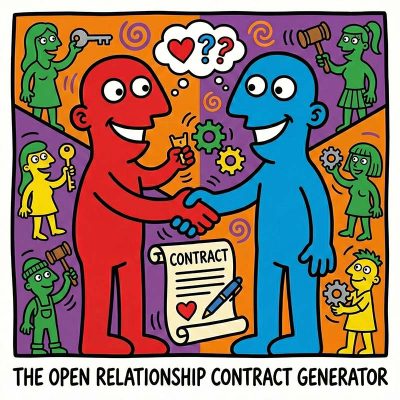
"I thought we agreed" is the sentence that destroys relationships & marriages. Relying on verbal promises when emotions run high is a gamble you cannot afford to lose. Your memory isn't just faulty; it's a liability. Ambiguity is the oxygen that jealousy breathes, turning "freedom" into a minefield of "did I mess up?"
This generator transforms vague permissions into a concrete, signed reality. Stop arguing about what you thought was said and lean on what is written. Secure your boundaries in ink, not hope.
Jealousy and compersion in practice
The jealousy ladder a practical tool
Think of jealousy as a signal not a verdict. A simple ladder approach helps you process. Step one notice the feeling. Step two name the trigger without blaming. Step three ask for what you need and step four decide a way forward together. This method keeps the conversation constructive and prevents quick escalation.
Compersion as a practice not a myth
Compersion is the curious capacity to feel happiness for your partner when they are with someone else. It relies on trust and secure attachment. If compersion feels hard at first give yourself time and look for small moments where you truly celebrate your partner. It takes work but it is a beautiful skill that can deepen all your relationships.
Handling conflict gracefully
Conflict in ENM is not a sign of failure it is a sign that people care. Approach conflicts with a goal of understanding not winning. Use language that names emotions avoid accusation and propose concrete next steps. When in doubt take a pause so the next conversation lands with less heat.
Consent culture in ENM communities
Ongoing consent a daily practice
Consent is not a one time checkbox it is an ongoing conversation. You will renegotiate boundaries as life changes. If a partner wants new boundaries or a different level of involvement the answer should be respectful and timely. Do not pressure you should listen and respond with care.
Renegotiation and boundary updates
People change and so do needs. Schedule check ins talk about new desires and update the agreements. You do not want to hold someone to an old plan when their feelings have shifted. Make changes in writing and share with involved parties so everyone remains aligned and comfortable.
Respect and consent in dating events
Dating events can be a space to meet new people while honoring existing relationships. If you bring a date to a group event discuss expectations with your partners and with the organizers. Be clear about how much you will disclose and respect the comfort of others at the event.
Community etiquette and norms
Group events and social settings
Group settings require shared rules of engagement. Be inclusive and avoid pressure. If someone seems overwhelmed offer space and check in later. Respect for metamours is essential. Keep conversations respectful and avoid personal gossip that can harm someone else in your circle.
Language and anti stigma norms
Use language that is inclusive and accurate. If you do not know a term ask what it means. Stigma thrives on misunderstanding so the simplest antidote is curiosity and patience. When you model respectful language you help others feel safe enough to ask questions too.
Handling boundaries in social media
Social platforms are part of modern life. Some ENM people feel comfortable sharing details publicly while others prefer privacy. Have a clear understanding with your network about what is shared and who sees what. Think about safety and mental health when you post about relationships and be mindful of the impact on your partners and metamours.
Unicorn hunting and ethical considerations
What unicorn hunting means
Unicorn hunting is the practice of seeking a third partner who will fit perfectly into an existing couple. This term is loaded with history and sometimes harm because it can imply that one partner should be used to complete the other. Not every ENM network pursues this approach and many prefer more flexible open or polyamorous arrangements that do not hinge on a single perfect third.
Ethical concerns and healthier paths
The ethical critique of unicorn hunting focuses on consent fairness and pressure. It can create an environment where a third person is expected to fulfill a specific role rather than be a whole person with their own needs. A healthier approach is to embrace flexible dating options where all people involved have a voice and can renegotiate as feelings evolve. Consider a wide net approach to meeting people and be open to evolving configurations rather than chasing a mythical perfect fit.
Dating apps and safety in ENM
Profiles that respect honesty and consent
Your dating profiles should reflect your values clarity and respect. State your relationship structure and what you are seeking without pressuring others. Include your boundaries up front and invite questions. Honest profiles save time and prevent painful miscommunications later.
Safety tips for ENM dating
Share your plans with someone you trust. Meet new people in public spaces first and take your own safety seriously. Use separate calendars for different partners to avoid overlaps that create stress. Trust your instincts if something feels off take a step back and reassess. You deserve to be safe while you explore connections.
Workplace and professional boundaries
Discretion versus openness
The workplace is a professional space and not a dating venue. Many people in ENM networks choose to keep personal relationship structures private at work. If a workplace relationship involves bosses or direct reports it is essential to know local laws and company policies. When in doubt talk to a trusted HR person and follow policy while safeguarding privacy and safety.
Handling coworker relationships with care
If you do end up in a relationship with a coworker or former coworker be mindful of how it looks to others and how it might affect team dynamics. Transparent but discreet communication with your partners and with appropriate professional channels helps prevent conflicts. If a situation becomes uncomfortable step back and seek guidance from a trusted mentor or HR contact.
Community resources and safety nets
Local meetups and online communities
Many cities host ENM meetups in community centers cafes or parks. If you are new to ENM these gatherings can offer a low pressure space to listen learn and gradually join conversations. Online communities can provide ongoing support and a way to ask questions anonymously if that helps you build confidence before attending in person.
Boundaries with metamours and broader social circles
Metamours are partners of your partners. The way you relate to metamours shapes the atmosphere of your network. Some people prefer to keep a friendly distance while others enjoy strong positive relationships. The most important rule is to respect consent and comfort levels. Do not force closeness or create friction by gossip or private comments about someone who does not want to participate.
Practical tips for building healthy ENM networks
- Practice honest check ins Regularly ask how everyone is feeling and welcome changes in boundaries or needs.
- Document agreements When boundaries shift write down the new terms and share them with all involved parties so there is no ambiguity.
- Develop a consent first mindset Always seek consent for new activities even if you have done them before. Ongoing consent matters more than past consent.
- Seek consent without pressure You should be able to change your mind at any time and others should respect that choice without judgment or coercion.
- Foster a supportive community Support helps relationships grow. A network that cheers for partners and accepts failure with accountability is a strong one.
- Protect mental health ENM can trigger a lot of emotions. Be kind to yourself and seek professional guidance if you need it. There is no shame in asking for help.
Scenario based guidance for real world situations
Scenario 1 a coworker overlap
Two partners in an ENM network share a workplace or attend the same office. The risk is a conflict of interest or workplace gossip. Approach this by keeping work conversations professional and clearly separating personal life from professional life. Agree with all involved on what details are appropriate to share in work spaces. If you find a situation becoming stressful consider a change in schedule or social boundaries to protect the workplace environment.
Scenario 2 family dinner with a metamour
During a family dinner you may realize a metamour is present or you might worry about how relatives will react. Prioritize respect and set a simple plan with all partners about how to handle questions. If questions arise keep responses brief and ready to offer to continue the discussion later in a private setting. Creating comfortable rules helps reduce tension among relatives and in your own circle.
Scenario 3 a large ENM event or party
Parties can be celebration and pressure all at once. Talk ahead about where you will mingle which topics to avoid and how to handle introductions. Appoint a calm ally as a point person in case emotions run high. Remember that consent and comfort come first at all times and there is no obligation to participate in every interaction if you feel overwhelmed.
Glossary of useful terms and acronyms
- ENM Ethical non monogamy the umbrella term for relationship styles that involve multiple partners with consent and honesty.
- Metamour The partner of your partner who is not your partner.
- Primary partner The partner who holds a central role in a given relationship or household depending on the mutual agreement.
- Secondary partner A partner who is significant but not central to the household structure.
- Triad A three person relationship arrangement where all three partners are involved with each other in some form.
- Quad A four person arrangement typically involving connected relationships among all members.
- Compersion A positive feeling when a partner experiences happiness with someone else.
- Jealousy A natural emotion that can arise when relationships change. The goal is to acknowledge and navigate it with care.
- Consent The agreed permission to engage in an activity. Consent is ongoing and can be renegotiated at any time.
- Disclosure Sharing information about relationships with relevant people in a thoughtful and respectful way.
- Renegotiation Updating agreements as life changes and needs shift.
- Boundary A personal limit that guides how you engage with others in relationships.
- Safety planning Steps taken to protect physical and emotional safety in social or intimate encounters.
Frequently asked questions
How do I bring up ENM with someone I care about
Lead with care and clarity. Explain what ENM means to you and invite questions. Do not pressure the other person. Offer time and space to think and be ready to discuss their concerns when they are ready.
What if a partner wants new boundaries after I have already agreed to something
That is a normal part of renegotiation. Listen to their reasons without interrupting. Acknowledge their feelings and discuss what can be changed and how quickly. Written notes improve clarity and reduce misunderstandings.
How transparent should I be with friends and family
Transparency is helpful but not mandatory. Share enough to build trust and avoid dangerous assumptions. It is okay to keep private feelings or personal details out of family gossip while staying honest about what affects others directly.
How can I support a partner who feels jealous
Offer space to express the emotion and listen without judgment. Validate their feelings and avoid telling them to simply feel better. Ask what would help and consider small practical changes like co planning time with partners or adjusting boundaries to provide reassurance.
Is it okay to set a timeline for renegotiation
Yes a timeline can help especially during transitions such as moving in together or changing work schedules. Use the timeline as a flexible guide and be prepared to adjust as feelings shift. The goal is clarity not rigidity.
What should I do if a metamour seems uncomfortable with me
Respect their feelings and give them space. Communicate with your partner about how to proceed without forcing interactions. If discomfort persists consider a meeting with a mediator or a trusted third party who can help facilitate respectful dialogue.
Can ENM work in a traditional community or small town
Yes with patience and clear boundaries. People may not be used to ENM but a careful approach to disclosure and much respect can make it workable. The key is consent honesty and kindness to everyone involved including yourself.
The freedom of an open relationship sounds incredible, but the logistics can feel like holding a grenade. That spinning "what if" anxiety isn't paranoia, it’s your survival instinct warning you that your bond is exposed. "Just seeing what happens" is the fastest way to turn a fantasy into a breakup.
The Essential Guide replaces chaos with discipline. We give you the blueprints, jealousy protocols, and repair scripts needed to explore the edge without falling off. Don't guess. Secure your foundation first.
The world of non-monogamy is a maze of confusing labels. Trying to be "Polyamorous" when your heart actually needs "Swinging" isn't just a vocabulary error; it’s a recipe for misery.
You can't build a stable home on a foundation that doesn't fit your psychology. This tool analyzes your emotional bandwidth and jealousy triggers to design the exact structure you need. Stop trying to squeeze into a box that doesn't fit. Build a relationship that actually feels like home.
Opening up feels exciting, but if you aren't reading from the same script, you're writing a tragedy. The disconnect between "I want freedom" and "I want safety" is where hearts break. This isn't just a quiz; it’s a synchronization engine.
We identify the silent gaps in your desires—from sleepover rules to emotional bandwidth, before they become unbridgeable chasms. Don't wait until the damage is done to find out you were never on the same page. Align your compasses now.
Theory is sexy. Reality is messy. You agreed you could date others, but how does your stomach drop when he takes her to your anniversary spot? Or when she comes home smelling like someone else?
This simulator drags your abstract rules into the harsh light of day. We force you to confront the visceral, gut-wrenching scenarios that actually destroy relationships, before they happen. Test your nervous system in the simulator so you don't crash the car in real life.
The fantasy is endless romance. The reality? It’s a logistical nightmare. Dating isn't just sex; it’s a second job of swiping, spending, and emotional processing that drains your sanity. Underestimating the "admin" of non-monogamy is the fastest way to turn your relationship into a burnout factory where resentment thrives.
This calculator forces you to confront the brutal math of your time, energy, and wallet. Can you actually afford this lifestyle, or are you just signing up for exhaustion?
"I thought we agreed" is the sentence that destroys relationships & marriages. Relying on verbal promises when emotions run high is a gamble you cannot afford to lose. Your memory isn't just faulty; it's a liability. Ambiguity is the oxygen that jealousy breathes, turning "freedom" into a minefield of "did I mess up?"
This generator transforms vague permissions into a concrete, signed reality. Stop arguing about what you thought was said and lean on what is written. Secure your boundaries in ink, not hope.
