
Supporting Partners Through Health Scares


Health scares are hard enough when you are monogamous. In ethical non monogamy ENM the stakes can feel bigger because you are managing multiple relationships. This guide is our down to earth playbook for navigating those moments with honesty care and a little humor when you need it. We break down terms and acronyms explain how to communicate with respect and care and give you practical steps you can apply whether your dynamic includes a single partner or a larger polycule. Think of this as your experimental friend who tells it like it is and helps you keep everyone supported without losing your mind in the process.
Quick Links to Useful Sections
- What this guide covers
- Key ENM terms you will hear and what they mean
- The first 24 hours after a health scare in an ENM context
- Designing a shared care plan that fits a polycule
- Communication strategies in health scare scenarios
- Balancing needs across a polycule
- Privacy versus transparency in ENM health care
- Practical daily care and emotional support tactics
- Mental health and emotional labor in ENM health scares
- When to seek professional help and how to find it
- Realistic scenarios and how to respond
- Scenario one: A partner receives a new serious diagnosis
- Scenario two: A treatment plan creates shifts in availability
- Scenario three:Hospital admission requires urgent care
- Scenario four: Managing privacy with friends and colleagues
- Scripts and templates you can adapt
- Self care for partners who are caretaking
- Maintaining relationships in the months after a health scare
- Glossary of useful ENM terms and acronyms
- Checklist before stepping into action
- Real world resources and additional reading
- Summary of steps you can take today
- Frequently asked questions
What this guide covers
In ENM the way you respond to health scares is not just about one relationship it can involve several people each with their own needs boundaries and schedules. This guide covers the basics of authentic communication setting boundaries coordinating with multiple partners creating a shared care plan protecting privacy while staying transparent enough to keep everyone informed and practicing self care to keep you from burning out. We include real world scenarios practical steps checklists and tips you can adapt to your specific polycule.
Key ENM terms you will hear and what they mean
Ethical non monogamy ENM is a broad umbrella that includes many relationship styles. Here is a quick glossary of terms and acronyms you will encounter along the way. We explain them in plain language so you can focus on what actually matters in the moment.
- ENM Ethical non monogamy. A relationship style where all involved people consent to more than one romantic or sexual relationship at the same time.
- Polyamory A form of ENM where people have intimate emotional connections with more than one partner.
- Open relationship A relationship where partners agree that outside dating or sex is allowed under certain boundaries.
- Polycule A network of interconnected relationships often visualized as a web of partners and their partners.
- Primary partner A partner who has a central position in the arrangements typically tied to major decisions and time commitments.
- Secondary partner A partner who matters and has a significant role but is not in the primary tier for every decision.
- Compersion The feeling of joy when your partner experiences happiness with someone else often described as the opposite of jealousy.
- Jealousy An emotional response to a perceived threat to a valued relationship or boundary.
- Boundaries Clear rules you set for what is okay and not okay in your relationships.
- Agreements The explicit understandings you and your partners agree to follow in everyday life and in specific situations.
- Care plan A plan that describes how everyone involved will support a partner who is dealing with a health scare.
- Transparency Openness about what is happening with health and what steps you are taking, while still respecting privacy where needed.

The freedom of an open relationship sounds incredible, but the logistics can feel like holding a grenade. That spinning "what if" anxiety isn't paranoia, it’s your survival instinct warning you that your bond is exposed. "Just seeing what happens" is the fastest way to turn a fantasy into a breakup.
The Essential Guide replaces chaos with discipline. We give you the blueprints, jealousy protocols, and repair scripts needed to explore the edge without falling off. Don't guess. Secure your foundation first.

The world of non-monogamy is a maze of confusing labels. Trying to be "Polyamorous" when your heart actually needs "Swinging" isn't just a vocabulary error; it’s a recipe for misery.
You can't build a stable home on a foundation that doesn't fit your psychology. This tool analyzes your emotional bandwidth and jealousy triggers to design the exact structure you need. Stop trying to squeeze into a box that doesn't fit. Build a relationship that actually feels like home.

Opening up feels exciting, but if you aren't reading from the same script, you're writing a tragedy. The disconnect between "I want freedom" and "I want safety" is where hearts break. This isn't just a quiz; it’s a synchronization engine.
We identify the silent gaps in your desires—from sleepover rules to emotional bandwidth, before they become unbridgeable chasms. Don't wait until the damage is done to find out you were never on the same page. Align your compasses now.
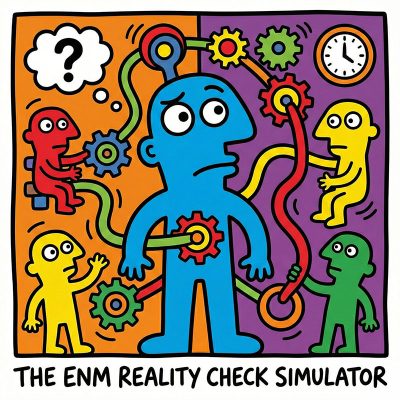
Theory is sexy. Reality is messy. You agreed you could date others, but how does your stomach drop when he takes her to your anniversary spot? Or when she comes home smelling like someone else?
This simulator drags your abstract rules into the harsh light of day. We force you to confront the visceral, gut-wrenching scenarios that actually destroy relationships, before they happen. Test your nervous system in the simulator so you don't crash the car in real life.
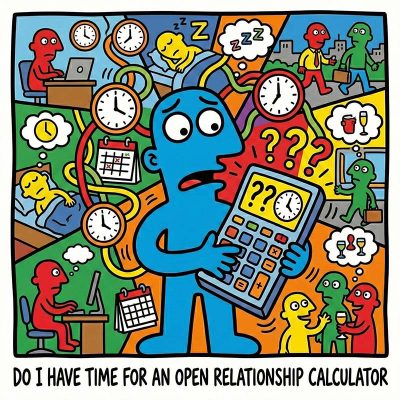
The fantasy is endless romance. The reality? It’s a logistical nightmare. Dating isn't just sex; it’s a second job of swiping, spending, and emotional processing that drains your sanity. Underestimating the "admin" of non-monogamy is the fastest way to turn your relationship into a burnout factory where resentment thrives.
This calculator forces you to confront the brutal math of your time, energy, and wallet. Can you actually afford this lifestyle, or are you just signing up for exhaustion?
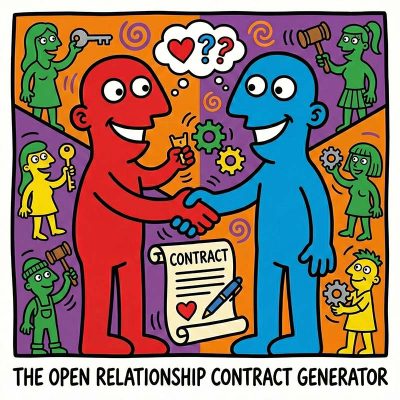
"I thought we agreed" is the sentence that destroys relationships & marriages. Relying on verbal promises when emotions run high is a gamble you cannot afford to lose. Your memory isn't just faulty; it's a liability. Ambiguity is the oxygen that jealousy breathes, turning "freedom" into a minefield of "did I mess up?"
This generator transforms vague permissions into a concrete, signed reality. Stop arguing about what you thought was said and lean on what is written. Secure your boundaries in ink, not hope.
The first 24 hours after a health scare in an ENM context
When a health scare hits the moment your brain wants to shut down you need a fast clear framework to begin with. Here is a practical sequence you can adapt to your own network.
- Pause and breathe One breath at a time. Ground yourself so you can respond instead of reacting. It will help you show up calmer for your partners.
- Identify who needs to know Make a quick list of the people you need to inform immediately. In ENM this can include your primary partner and other partners depending on the level of involvement they have in daily life or care tasks.
- Confirm the situation Gather the essential facts from the person affected or the medical professional if possible. Keep the information focused on what matters now not on every detail at once.
- Designate a point person In a polycule it helps to have one person who coordinates the information flow and care tasks. If that is you great if not appoint someone you all trust.
- Set boundaries for information sharing Decide what needs to be shared with which partners and what can stay private for the moment while still ensuring safety and respect.
Designing a shared care plan that fits a polycule
A care plan is not a one size fits all tool. It is a living document that can evolve as the health situation changes. The goal is to reduce uncertainty for everyone and to prevent caregiver burnout while making sure the person closest to the health issue receives the appropriate support. Here is how to craft a plan that works across different relationship shapes.
- Define who will participate Decide which partners will be involved in different tasks such as medical appointments household duties and emotional support. You can assign different roles depending on availability and capacity.
- Clarify needs and boundaries Have an open conversation about what each person can offer emotionally physically and financially. Discuss what is not possible so you avoid over promising.
- Set a flexible schedule Health issues can require multiple visits treatments and rest. Build a calendar that reflects the reality of medical appointments and rest days while preserving personal time for everyone involved.
- Agree on communication norms Decide how you will share updates who will be informed and how often updates will be provided. Respect privacy where needed but keep a mechanism for critical information to reach everyone who matters.
- Plan care tasks in layers The inner layer is the person facing the health challenge. The middle layer involves partners who help with practical tasks such as meals rides and child care. The outer layer includes friends colleagues or other support networks you might tap if the situation requires it.
- Draft a consent and privacy protocol Determine what information can be shared with extended social circles and what should stay within the inner group. This reduces the risk of accidental leaks and protects everyone's dignity.
- Establish a triage approach for emergencies Create a simple plan for who makes decisions in a crisis who should be contacted first and what thresholds trigger emergency care or escalation.
Communication strategies in health scare scenarios
If there is one skill to sharpen in ENM during health scares it is communication. Clear compassionate talk can spare a lot of pain and misinterpretation. Here are practical conversation strategies you can use with partners and with the medical team.
- Lead with the person at the center The person facing the health event should be comfortable leading conversations about their care as much as possible while others offer support.
- Frame conversations around needs Use language that describes what would help rather than what is not allowed. For example say I need someone to accompany me to the appointment rather than stop doing this or that.
- Practice active listening Reflect back what you hear and name feelings you sense. This builds trust and reduces the chance of misreading intent.
- Acknowledge jealousy and compersion It is common to feel a mix of emotions. Acknowledge all feelings without judgment and discuss how to move forward in a way that respects everyone.
- Use check in points Schedule quick check ins to see how everyone is coping. Regular micro conversations prevent backlog and resentment from building up.
Balancing needs across a polycule
In ENM your network is not a single couple it is a web of relationships. A health scare can cause shifts in energy time and attention. The aim is to avoid letting any single person burn out while ensuring the person who is ill receives the right level of care and attention.
- Keep the core circle informed The partners who share the most time with the person in need should be among the first to know and to provide support. This does not mean others are excluded it means it is practical to prioritize the most involved relationships at the right moment.
- Respect capacity and availability Not everyone can drop everything to be at every appointment. Acknowledge this reality and plan alternatives such as later visits or virtual check ins.
- Share responsibilities fairly Rotate tasks to prevent fatigue. If one person has a heavy week another may take on lighter duties or cover a few days.
- Maintain boundaries Boundaries are not prison walls they are guides that protect every person’s wellbeing. Revisit boundaries if the situation evolves and everyone agrees to reassess.
Privacy versus transparency in ENM health care
Privacy is essential in any relationship. In ENM you also want to respect the right of partners to be informed enough to be supportive and safe. Finding the balance is a skill and it often requires explicit agreements tailored to your crew.
- Define what information is shared Decide which medical details are essential for other partners to know and which details belong to the individual involved.
- Communicate consent for sharing The person who is ill should authorize what information can be shared and with whom whenever possible. If consent is not clear you can default to a cautious approach and escalate only what is necessary for safety.
- Protect sensitive information Even in a supportive network some information is sensitive including test results and personal fears. Treat it with care and only share on a need to know basis.
- Document the decisions Keep a simple record of what was shared who agreed to share and any opt outs. This prevents misunderstandings later.
The freedom of an open relationship sounds incredible, but the logistics can feel like holding a grenade. That spinning "what if" anxiety isn't paranoia, it’s your survival instinct warning you that your bond is exposed. "Just seeing what happens" is the fastest way to turn a fantasy into a breakup.
The Essential Guide replaces chaos with discipline. We give you the blueprints, jealousy protocols, and repair scripts needed to explore the edge without falling off. Don't guess. Secure your foundation first.
The world of non-monogamy is a maze of confusing labels. Trying to be "Polyamorous" when your heart actually needs "Swinging" isn't just a vocabulary error; it’s a recipe for misery.
You can't build a stable home on a foundation that doesn't fit your psychology. This tool analyzes your emotional bandwidth and jealousy triggers to design the exact structure you need. Stop trying to squeeze into a box that doesn't fit. Build a relationship that actually feels like home.
Opening up feels exciting, but if you aren't reading from the same script, you're writing a tragedy. The disconnect between "I want freedom" and "I want safety" is where hearts break. This isn't just a quiz; it’s a synchronization engine.
We identify the silent gaps in your desires—from sleepover rules to emotional bandwidth, before they become unbridgeable chasms. Don't wait until the damage is done to find out you were never on the same page. Align your compasses now.
Theory is sexy. Reality is messy. You agreed you could date others, but how does your stomach drop when he takes her to your anniversary spot? Or when she comes home smelling like someone else?
This simulator drags your abstract rules into the harsh light of day. We force you to confront the visceral, gut-wrenching scenarios that actually destroy relationships, before they happen. Test your nervous system in the simulator so you don't crash the car in real life.
The fantasy is endless romance. The reality? It’s a logistical nightmare. Dating isn't just sex; it’s a second job of swiping, spending, and emotional processing that drains your sanity. Underestimating the "admin" of non-monogamy is the fastest way to turn your relationship into a burnout factory where resentment thrives.
This calculator forces you to confront the brutal math of your time, energy, and wallet. Can you actually afford this lifestyle, or are you just signing up for exhaustion?
"I thought we agreed" is the sentence that destroys relationships & marriages. Relying on verbal promises when emotions run high is a gamble you cannot afford to lose. Your memory isn't just faulty; it's a liability. Ambiguity is the oxygen that jealousy breathes, turning "freedom" into a minefield of "did I mess up?"
This generator transforms vague permissions into a concrete, signed reality. Stop arguing about what you thought was said and lean on what is written. Secure your boundaries in ink, not hope.
Practical daily care and emotional support tactics
Every health scare will require a different mix of practical help and emotional support. Here are tactics you can adapt to your situation to keep everyday life functional while the health issue is being addressed.
- Food and meals Coordinate simple meals or meal trains especially when fatigue is high. Don t overcomplicate it just nourishing options that feel doable.
- Transportation and clinic visits Organize rides to appointments and help with logistics including parking or transit. Fatigue increases while dealing with medical systems so reduce friction wherever you can.
- Household tasks Divide chores in a way that matches energy levels. A sick partner may not be able to handle heavy cleaning or cooking at first so others help step in.
- Child care and pet care If there are children or pets you will want to arrange practical support. Don t assume a sick partner wants to take on caregiving tasks themselves during treatment periods.
- Communication bursts Short text check ins or voice updates keep everyone on the same page without requiring long conversations during stressful times.
- Self care for caregivers The people providing care also need rest and space. Quick breaks a hot bath a walk or a chat with a friend can recharge you so you can show up better for others.
Mental health and emotional labor in ENM health scares
Health scares are emotionally heavy even for experienced ENM networks. The emotional labor often falls on the people who are most engaged with the person in the health crisis. Here is how to acknowledge and manage that labor without burning out.
- Name the emotional load Call out when you feel overwhelmed worried or depleted. Verbal acknowledgement helps others adjust roles and pace.
- Practical coping strategies Practice grounding breathing quick meditations or a brief walk to reset during high stress moments.
- Seek professional support Don t hesitate to bring in a therapist who is comfortable with ENM dynamics or a couples therapist who can address polyamorous relationships.
- Allow space for negative feelings Jealousy fear or anger are normal emotions. Allow them to be expressed without shaming anyone involved. This is part of the healing process.
When to seek professional help and how to find it
Medical teams and mental health professionals can help a lot but finding the right kind of support for ENM relationships can feel tricky. Here are tips to help you locate resources that respect your dynamics.
- Ask for ENM aware clinicians Look for therapists or counselors who have experience with ethical non monogamy or polyamory. They won t judge your relationship structure they will focus on your wellbeing.
- Utilize support groups Some communities offer support groups for polyamorous families or partners in care. These spaces can provide practical tips and emotional reassurance.
- Engage medical social workers Social workers can help coordinate care logistics connect you with resources and navigate hospital systems especially during emergencies.
- Don t delay urgent care If there is a medical emergency seek professional help immediately. Your network can organize support around hospital visits and at home care after stabilization.
Realistic scenarios and how to respond
Let us walk through a few common health scare scenarios in ENM and offer practical response templates you can adapt. Use these as starting points and customize to fit your polycule and the person involved.
Scenario one: A partner receives a new serious diagnosis
In this scenario the partner facing the diagnosis leads the conversation about the condition and its implications. The rest of the network offers support without overstepping the patient’s autonomy. A practical response center focuses on listening first and then outlining concrete steps such as attending appointments together reducing energy demands and coordinating care tasks.
Scenario two: A treatment plan creates shifts in availability
Treatments such as chemotherapy or intensive planned therapies can drain energy and time. The care plan should reflect who can accompany the patient to appointments who can assist with meals and daily tasks and how to maintain emotional connection across the network while the patient rests.
Scenario three:Hospital admission requires urgent care
When hospitalization occurs you may need to coordinate multiple partners to be present at different times. One person might act as the lead liaison with medical staff while others manage at home tasks and provide emotional support to the patient through calls visits and messages. The goal is to prevent feelings of abandonment or pressure one person might feel under extreme circumstances.
Scenario four: Managing privacy with friends and colleagues
You may need to share information with people outside your core group such as friends or workplace colleagues. Agree before you share and decide what level of detail is appropriate. You can describe the health scare in general terms focusing on how people can show up to help rather than providing intimate medical specifics unless given explicit consent.
Scripts and templates you can adapt
Having a set of ready to use lines helps you move through tough moments with grace. Here are a few adaptable scripts that respect multiple partners and keep emphasis on care and consent.
- To introduce a health scare to a partner who is not involved in daily care Hey I want to keep you in the loop about what is happening with [Name]. They have been diagnosed with [condition] and they are planning [the treatment]. We are coordinating support across the network and I will let you know if there is a specific task you can help with when it comes up.
- To a partner who is stepping in to help with tasks I appreciate you taking time to help with meals this week. If you need a break just tell me and we will adjust the plan. Your support makes a real difference for [Name].
- To the person facing the health scare I am here for you and I want to respect your autonomy. What would help you most today and this week? I will listen without trying to fix everything right away. We will figure this out together.
- To the wider group about privacy and consent We are navigating privacy plus transparency with care. If there is information you want me to share with the group let me know your boundaries and I will honor them.
Self care for partners who are caretaking
Care work can be exhausting and it often goes unseen. Here are practical practices to protect your wellbeing while supporting others.
- Schedule rest Block out time for sleep and quiet. Do not skip basic self care even when you want to push through.
- Set boundaries with energy limits If you are near the edge of burnout speak up and adjust the plan before you crash.
- Ask for help Reach out to friends family or a therapist for your own support. It is not selfish to take care of yourself it is essential to staying effective for others.
- Keep a personal journal Writing down worries can reduce mental load and provide a place to release tension before sleep.
Maintaining relationships in the months after a health scare
Recovery and ongoing care can take a long time. You will want to maintain strong connections while also recognizing that energy levels differ from week to week. The most important things are ongoing consent clear communication and a flexible plan that respects each person s needs.
- Check in regularly Short conversations about how each person is doing and what they need go a long way toward maintaining trust.
- Celebrate small wins Acknowledge improvements share milestones and enjoy small victories together.
- Review and revise agreements As health status evolves we should routinely revisit boundaries and expectations to ensure they still fit reality.
- Preserve space for romance and friendship A health scare can change dynamics but it does not erase affection. Find moments for connection that feel safe and mutually enjoyable.
Glossary of useful ENM terms and acronyms
- ENM Ethical non monogamy a relationship approach where multiple romantic or sexual connections are consented to by all involved.
- Polyamory A form of ENM involving multiple intimate emotional connections.
- Polycule A network of interconnected relationships often visualized as a web.
- Primary partner The partner who has a central place in the arrangement often guiding major decisions.
- Secondary partner A partner who is part of the network but not the primary decision maker for all situations.
- Compersion The feeling of happiness when a partner experiences joy with someone else.
- Jealousy A natural emotion that can arise in ENM when boundaries or attention feel threatened.
- Boundaries The explicit lines that define what is acceptable and what is not.
- Agreements The agreed rules that guide how the network operates day to day.
- Care plan A structured approach to supporting someone through a health scare including tasks and roles.
- Privacy The right to keep certain information private even within a close network.
Checklist before stepping into action
- Clarify who needs to know what and when
- Assign a point person to coordinate the care plan
- Draft an initial care plan with roles and tasks
- Agree on how you will share updates and maintain privacy
- Schedule check in conversations for ongoing weeks
- Prepare practical supports such as meals rides and rest breaks
- Identify mental health supports for everyone including caregivers
- Keep a simple record of decisions and consent
Health scares test every relationship our transparency and our willingness to show up for each other. In ENM the focus is on consent respect and care for all involved while still honoring the person at the center of the situation. You do not have to pretend to handle it alone you do not have to exhaust yourself trying to carry every burden and you do not have to abandon your own needs to protect someone else. There is a way to support with kindness structure and nerve enough to navigate the hardest days with honesty and humanity. Treat this as an ongoing conversation an evolving plan and a shared commitment to care for each other in a way that respects every person s autonomy and dignity.
Real world resources and additional reading
Every ENM network is different and a little learning goes a long way. Look for resources that speak to ethical non monogamy relationships and medical care within that context. You can find community led groups online local meetups and therapists or coaches who specialize in polyamory friendly approaches. Practical books and articles on negotiation communication and caregiving within non traditional families can also help you expand your toolkit. The goal is to keep growing your shared language and your shared sense of safety across the network.
Summary of steps you can take today
- Draft a quick care plan with a primary contact and a list of tasks
- Open a calm conversation with all involved partners about boundaries and consent
- Arrange practical supports such as meals rides and rest days for the coming weeks
- Identify a mental health resource for caregivers and for the person facing the health scare
- Set up regular check in times and keep notes of decisions and updates
Supporting partners through health scares in ethical non monogamy is about care clarity and collaboration. By focusing on communication and practical planning you can help your polycule weather the challenge with less stress more resilience and stronger trust. The aim is to create a network that can adapt to changing medical realities while protecting everyone s wellbeing and preserving the relationships that matter most.
Frequently asked questions
The freedom of an open relationship sounds incredible, but the logistics can feel like holding a grenade. That spinning "what if" anxiety isn't paranoia, it’s your survival instinct warning you that your bond is exposed. "Just seeing what happens" is the fastest way to turn a fantasy into a breakup.
The Essential Guide replaces chaos with discipline. We give you the blueprints, jealousy protocols, and repair scripts needed to explore the edge without falling off. Don't guess. Secure your foundation first.
The world of non-monogamy is a maze of confusing labels. Trying to be "Polyamorous" when your heart actually needs "Swinging" isn't just a vocabulary error; it’s a recipe for misery.
You can't build a stable home on a foundation that doesn't fit your psychology. This tool analyzes your emotional bandwidth and jealousy triggers to design the exact structure you need. Stop trying to squeeze into a box that doesn't fit. Build a relationship that actually feels like home.
Opening up feels exciting, but if you aren't reading from the same script, you're writing a tragedy. The disconnect between "I want freedom" and "I want safety" is where hearts break. This isn't just a quiz; it’s a synchronization engine.
We identify the silent gaps in your desires—from sleepover rules to emotional bandwidth, before they become unbridgeable chasms. Don't wait until the damage is done to find out you were never on the same page. Align your compasses now.
Theory is sexy. Reality is messy. You agreed you could date others, but how does your stomach drop when he takes her to your anniversary spot? Or when she comes home smelling like someone else?
This simulator drags your abstract rules into the harsh light of day. We force you to confront the visceral, gut-wrenching scenarios that actually destroy relationships, before they happen. Test your nervous system in the simulator so you don't crash the car in real life.
The fantasy is endless romance. The reality? It’s a logistical nightmare. Dating isn't just sex; it’s a second job of swiping, spending, and emotional processing that drains your sanity. Underestimating the "admin" of non-monogamy is the fastest way to turn your relationship into a burnout factory where resentment thrives.
This calculator forces you to confront the brutal math of your time, energy, and wallet. Can you actually afford this lifestyle, or are you just signing up for exhaustion?
"I thought we agreed" is the sentence that destroys relationships & marriages. Relying on verbal promises when emotions run high is a gamble you cannot afford to lose. Your memory isn't just faulty; it's a liability. Ambiguity is the oxygen that jealousy breathes, turning "freedom" into a minefield of "did I mess up?"
This generator transforms vague permissions into a concrete, signed reality. Stop arguing about what you thought was said and lean on what is written. Secure your boundaries in ink, not hope.
