
Swinging as a Social and Sexual Practice


Welcome to a frank, down to earth look at swinging as an ethical non monogamy dynamic. If you are curious or already exploring this path you are in the right place. We will break down terms, lay out practical steps, share real world scenarios and give you tools to navigate this with clarity and care. Think of this as a conversation with a friend who tells it like it is and then helps you actually apply it. No fluff just useful information you can use.
Quick Links to Useful Sections
- What swinging is and how it sits in ethical non monogamy
- Key terms and acronyms you should know
- Foundations of ethics, consent and safety
- How swinging typically works in real life
- Communication strategies that work in swinging
- Negotiating boundaries and consent
- Jealousy management and compersion as a practice
- Relationship dynamics and negotiation in swinging
- Real world scenarios and scripts you can use
- Scenario 1 the first date with another couple
- Scenario 2 a solo partner exploring with a couple
- Scenario 3 dealing with an unexpected emotional response
- Tips for beginners who are curious about swinging
- Stigma, myths and how to respond
- Practical safety and privacy considerations
- Glossary of useful terms and acronyms
- Frequently asked questions
What swinging is and how it sits in ethical non monogamy
Swinging is a form of ethical non monogamy where committed couples choose to engage in sexual activities with other consenting adults. The emphasis is often on social and physical experiences that occur in controlled environments or with negotiated rules. In swinging the core ideas are consent, communication and mutual agreement about boundaries. The goal is not to replace your relationship but to explore it in a way that can add novelty and connection if both partners are on the same page.
It is helpful to understand the landscape of ENM as a whole. ENM stands for ethical non monogamy which is a broad umbrella term. Under that umbrella you will find swinging as well as other dynamics like polyamory and relationship anarchy. The common thread is that all parties involved consent to more than one intimate or sexual relationship. In practice swinging tends to involve couples who want to share experiences with other couples or with single partners in a social setting. It is possible for individuals to swing as singles but most commonly you will see couples exploring together.
Key terms and acronyms you should know
- ENM Ethical non monogamy a movement or philosophy that embraces consensual non monogamous relationships.
- CNM Consensual non monogamy another common acronym for the same idea as ENM.
- Swinging A form of ENM where committed couples or partners engage in sexual activities with others in a consensual manner.
- Soft swap A boundary style in swinging where partners may kiss or engage in light sensual contact but do not have intercourse with other partners.
- Full swap A boundary where partners may have sexual intercourse with others outside the primary relationship, typically with agreed limits and safety measures.
- Compersion A positive feeling of joy when a partner experiences happiness with someone else. It is the opposite of jealousy and a valued skill in ENM communities.
- Jealousy trigger A situation or feeling that can spark jealousy and requires mindful communication and coping strategies.
- Boundary A limit or rule that partners set to protect their emotional and physical safety within the dynamic.
- Consent Clear, informed, voluntary agreement given by all parties involved before any activity occurs.
- Safe sex Practices designed to reduce the risk of sexually transmitted infections and unwanted pregnancies.
I
When you read swinging resources you will often see a spectrum. At one end there are strictly social or dating oriented experiences. At the other end you find more intimate sexual experiences with multiple partners. The most important thing to remember is that swinging thrives on explicit consent, ongoing communication and agreed boundaries. If anything feels uncertain or risky the best move is to pause and check in with your partner or partners before proceeding.

The freedom of an open relationship sounds incredible, but the logistics can feel like holding a grenade. That spinning "what if" anxiety isn't paranoia, it’s your survival instinct warning you that your bond is exposed. "Just seeing what happens" is the fastest way to turn a fantasy into a breakup.
The Essential Guide replaces chaos with discipline. We give you the blueprints, jealousy protocols, and repair scripts needed to explore the edge without falling off. Don't guess. Secure your foundation first.

The world of non-monogamy is a maze of confusing labels. Trying to be "Polyamorous" when your heart actually needs "Swinging" isn't just a vocabulary error; it’s a recipe for misery.
You can't build a stable home on a foundation that doesn't fit your psychology. This tool analyzes your emotional bandwidth and jealousy triggers to design the exact structure you need. Stop trying to squeeze into a box that doesn't fit. Build a relationship that actually feels like home.

Opening up feels exciting, but if you aren't reading from the same script, you're writing a tragedy. The disconnect between "I want freedom" and "I want safety" is where hearts break. This isn't just a quiz; it’s a synchronization engine.
We identify the silent gaps in your desires—from sleepover rules to emotional bandwidth, before they become unbridgeable chasms. Don't wait until the damage is done to find out you were never on the same page. Align your compasses now.

Theory is sexy. Reality is messy. You agreed you could date others, but how does your stomach drop when he takes her to your anniversary spot? Or when she comes home smelling like someone else?
This simulator drags your abstract rules into the harsh light of day. We force you to confront the visceral, gut-wrenching scenarios that actually destroy relationships, before they happen. Test your nervous system in the simulator so you don't crash the car in real life.

The fantasy is endless romance. The reality? It’s a logistical nightmare. Dating isn't just sex; it’s a second job of swiping, spending, and emotional processing that drains your sanity. Underestimating the "admin" of non-monogamy is the fastest way to turn your relationship into a burnout factory where resentment thrives.
This calculator forces you to confront the brutal math of your time, energy, and wallet. Can you actually afford this lifestyle, or are you just signing up for exhaustion?
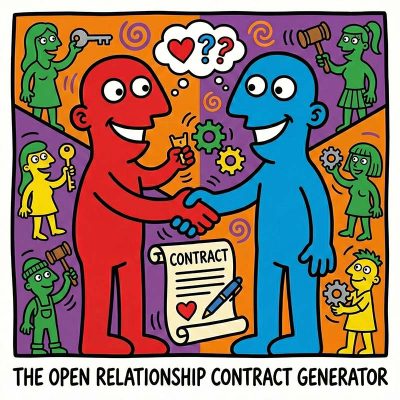
"I thought we agreed" is the sentence that destroys relationships & marriages. Relying on verbal promises when emotions run high is a gamble you cannot afford to lose. Your memory isn't just faulty; it's a liability. Ambiguity is the oxygen that jealousy breathes, turning "freedom" into a minefield of "did I mess up?"
This generator transforms vague permissions into a concrete, signed reality. Stop arguing about what you thought was said and lean on what is written. Secure your boundaries in ink, not hope.
Foundations of ethics, consent and safety
Ethics in swinging come from the idea that all participants should be fully aware and willing to participate. A good practice is to discuss what consent looks like in your relationship. It is not a one time check in. It is an ongoing process that can evolve as people grow. Safety is about physical health and emotional safety. This means taking steps to prevent sexually transmitted infections using barrier methods when appropriate and having honest conversations about STI status and testing. It also means paying attention to emotional boundaries and how your partner feels throughout the process.
Here is a practical framework you can adopt:
- Purpose and alignment Confirm that you and your partner share the same goals for swinging. Are you exploring for novelty, connection, or relationship strengthening? Aligning on purpose reduces friction later.
- Ongoing consent Treat consent as a living agreement. Check in before and after encounters and be prepared to pause if someone changes their mind.
- Boundaries and negotiables Define what is off limits and what is allowed. Document boundaries to prevent miscommunication.
- Ethics of respect Respect every person involved. If a boundary is crossed acknowledge it, make apologies if needed, and repair trust.
- Communication cadence Decide how often you will discuss the dynamic. Weekly debriefs or after action reviews can be very helpful for some couples.
- Risk management Use protection consistently when sexual activity occurs. Discuss testing schedules and consider open communication about symptoms or exposures.
How swinging typically works in real life
In practice swinging often happens in social settings designed for adults. Some people join explicit swinger clubs or private parties while others prefer to host gatherings at a home. The environment can range from playful and casual to a more intimate and romantic vibe. The structure is usually built around consent, boundaries, and safety just like any serious relationship dynamic. It is common to have a pre event discussion or a planning session with your partner to decide what you want to experience and what your limits are for that particular occasion.
Think about the typical flow you might encounter:
- Pre event talk A conversation about desires, boundaries and a check in on each partner's current mood. This sets the stage for a positive experience.
- Social warm up Casual conversation with others to build comfort and see if there is mutual interest. This is a time to test chemistry and cultivate a sense of safety.
- Negotiated interaction If there is mutual interest the couples discuss what level of interaction is appropriate. Soft swap may be approved or full swap may be chosen depending on the couple.
- Participation and observation Some couples may choose to observe first or to join in small ways. You can always pause or withdraw at any time.
- Post encounter debrief A check in after the experience helps you process emotions, celebrate what went well and adjust boundaries if needed.
While the outline above describes a common path this is not the only way swinging occurs. Some people prefer online connections that lead to in person meetings while others favor exclusively body to body experiences with clear consent and negotiated rules. The key is that all participants are comfortable and that you pause if you feel uneasy.
Communication strategies that work in swinging
Communication is the backbone of any ethical non monogamy practice and swinging is no exception. Good communication reduces risk, builds trust and allows you to enjoy experiences with confidence. Here are practical strategies you can apply right away:
- Use a pre swing script Create a short pre swing conversation that covers what you want to explore what your boundaries are and what would make you feel uneasy. A simple script helps you keep the conversation efficient and respectful.
- Direct and kind language Speak honestly without judgment. Lead with how you feel rather than accusing others. For example I feel excited about meeting new people and I want to ensure we both feel comfortable would you be open to exploring this together can be more effective than you never let me down.
- Active listening Pay attention to your partner and to others involved. Reflect back what you hear to confirm understanding and show that you value their perspective.
- Check ins during encounters A quick pause to confirm comfort levels can prevent missteps. A simple Are you comfortable with how this is going helps sustain a positive energy flow.
- Post encounter communication After an experience share what you enjoyed what you would do differently next time and what you learned about yourselves as a couple.
Negotiating boundaries and consent
Your boundaries are your personal guarantee that swinging stays safe and enjoyable for both partners. Boundaries can be broad or specific. They can cover emotional safety sexual acts contact with specific body parts or interaction with certain types of people. Boundaries should be clear and revisited regularly. It is okay to adjust boundaries as you gain experience or as life changes. The time to adjust is before you cross a line you regret.
Common boundary categories include:
- Scope What kinds of activities are allowed or off limits such as kissing touching intercourse etc.
- Participants Whether you are open to meeting single people other couples or a specific couple you know.
- Locations Where interactions can take place for example at a club a private party or a home setting.
- Duration and timing How long you are comfortable with a session and what time of day is acceptable.
- Emotional monitoring Agreements about how you will manage feelings like jealousy or attachment and when to pause.
Consent is the active agreement given by all parties involved. It should be enthusiastic and ongoing. If at any moment someone feels uncertain or changes their mind the activity should stop. Consent is reversible. Revisit consent regularly and be prepared to pause if needed.
Jealousy management and compersion as a practice
Jealousy is a natural emotion that can arise in swinging. The goal is to reduce it through preparation and mindful coping. A common reframing is to practice compersion which means feeling happy for your partner when they experience joy with someone else. Compersion does not come naturally to everyone and that is okay. The more you practice honest communication the more compersion can become a real experience.
Practical jealousy management steps include:
- Acknowledgement Name the feeling without judgment. For example I am feeling a little jealous right now and that is okay.
- Root cause Identify the underlying reason such as fear of loss or fear of inadequacy. Naming the root cause makes it easier to address.
- Reassurance Share needs with your partner about what would help you feel secure. It might be more updates after a date or a specific boundary adjustment.
- Time and space Give yourself time to process emotions. It is okay to take a break from the scene and regroup.
- Boundary adjustment If jealousy recurs consider small changes that restore balance while preserving the dynamic you want.
- Celebration Recognize the positive aspects such as increased intimacy gratitude for honesty and opportunities to grow as a couple.
Relationship dynamics and negotiation in swinging
Swinging often involves two people who are deeply connected and who want to share experiences with others. The dynamic can be solo or involve other dyads. People form different styles of relationships within swinging. Some couples prefer to explore with stay connected in a non controlling way while others adopt a more integrated approach to building friendships and deeper connections with others. The common thread across all successful approaches is clear communication and mutual respect for each person involved.
Below are several typical models you may encounter in swinging communities:
- Couple centered Both partners engage with others as a team. They discuss possibilities and proceed with joint consent. This model tends to emphasize the emotional safety of the couple unit.
- Single preferred One partner may be more open to meeting others while the other remains primarily with the couple. This model requires extra attention to ensure both partners feel valued and included.
- Group oriented The group experiences including more than two couples or multiple partners. Structure and boundaries become more complex but can offer rich social energy if navigated well.
Negotiation in swinging is not a one time activity. It is ongoing and adaptive. If life circumstances shift such as new work hours or changes in family responsibilities you may adjust your dynamics accordingly. The best outcomes come from staying aligned and maintaining trust through regular conversations.
Real world scenarios and scripts you can use
Here are some realistic conversations you may encounter or want to practice. Use them as a starting point and adapt to your voice and situation. The goal is to be precise and compassionate while protecting the emotional safety of everyone involved.
Scenario 1 the first date with another couple
Couple A and Couple B have agreed to meet for drinks at a social event. The lead couple discusses boundaries before meeting. They confirm they are open to soft swap with a focus on social interaction and light playful affection rather than intercourse. During the conversation they sense both sets of partners share a similar vibe. They decide to take things slowly and plan a short check in every thirty minutes. After a couple of conversations they enjoy a friendly kiss and a heartfelt chat about comfort levels. They end the night with a plan to reunion later in the week while reinforcing that they should pause if anyone feels uncertain.
Scenario 2 a solo partner exploring with a couple
In this scenario one partner is exploring with another couple while the other partner remains within the boundaries of the primary relationship. The solo partner and the couple agree on a clear boundary about condom use and the types of interactions that are acceptable. They establish a check in plan and the solo partner shares a post encounter debrief. After the experience the original partner expresses gratitude for the honest communication and they discuss any adjustments to boundaries that could enhance comfort for the next encounter.
Scenario 3 dealing with an unexpected emotional response
During a meetup one partner notices a tinge of jealousy. They pause the activity and take a private moment to breathe and identify the feeling. They regroup with their partner and explain what they are feeling and what would help. The other partner reassures them and they adjust the boundaries for the rest of the evening. The experience becomes a learning moment and they commit to more frequent check ins in the future while maintaining the positive energy of the dynamic.
Tips for beginners who are curious about swinging
- Start with self work Understand your own boundaries and motivations before inviting someone else into your space. Be honest about what you want and what you can handle emotionally.
- Choose a comfortable environment If you are new consider a social event at a lounge or club where the energy is supportive and there are many people in similar stages of exploration.
- Practice clear consent Confirm consent for each step each time you engage a new person or couple. If you are unsure pause and discuss again.
- Keep health in focus Use protection where appropriate and talk openly about STI testing and next steps if there is possible exposure. Regular testing and transparency build trust.
- Document boundaries Write down the non negotiables and negotiables. Share this with your partner so you both know what to expect.
- Be prepared to pause If you or your partner feel overwhelmed or uncomfortable slow down or stop. It is better to end a night with a positive memory than to force yourself into a boundary busting situation.
Stigma, myths and how to respond
Swinging and ethical non monogamy are often misunderstood. Common myths include the idea that swinging means there is something wrong with the primary relationship or that all ENM dynamics end badly. The truth is that many couples report higher levels of honesty trust and intimacy when they approach ENM with care and intention. It is not a cure for relationship problems and it is not a license to be reckless. With good communication and robust boundaries swinging can be a healthy and enriching experience for many couples and individuals.
A practical response to common questions might look like this:
- Myth: Swinging means you do not love your partner. Reality: For many it is a choice to explore and celebrate the love they already share. It can deepen trust when navigated well.
- Myth: It always leads to jealousy or hurt. Reality: Jealousy can be managed with honest conversations and steady boundary work. Compersion can grow with practice.
- Myth: It is about casual sex with no emotions involved. Reality: Emotions come up in any intimate scenario. The goal is to manage them with clear communication and mutual respect.
Practical safety and privacy considerations
Safety is not a single action but a set of habits that protect you and others. Some practical ideas include:
- Health first Use protection when required. Have open conversations about STI testing and safety practices. Consider regular health checks for all involved parties.
- Privacy respect Be mindful of other people’s privacy. Do not disclose personal information beyond what is agreed. Respect boundaries around what can be shared publicly.
- Social media awareness Avoid posting intimate details or identifiable information about others without explicit consent. If in doubt pause and revisit consent.
- Safe spaces Choose environments that are welcoming and respectful. If a space feels unsafe it is okay to leave and regroup elsewhere.
Glossary of useful terms and acronyms
- ENM Ethical non monogamy a term used to describe relationships that involve consensual non monogamy.
- CNM Consensual non monogamy another widely used term with the same meaning as ENM.
- Swinging A form of ENM in which committed couples engage in sexual activities with others in a consensual framework.
- Soft swap A boundary style where partners allow light contact such as kissing but not intercourse with others.
- Full swap A boundary that allows sexual intercourse with others outside the primary relationship.
- Compersion A feeling of joy or pleasure when a partner experiences happiness with someone else.
- Jealousy An emotional response that can arise when a partner has experiences with others; it is a signal that a boundary or needs may require attention.
- Consent Informed and voluntary agreement to participate in specific activities.
- Safe sex Practices including barrier methods that reduce the risk of STI transmission and unintended pregnancy.
- Boundaries Limits set by partners to protect emotional and physical safety within the dynamic.
- Negotiate The process of discussing and agreeing on boundaries and rules before engaging with others.
Frequently asked questions
What is swinging and how does it differ from polyamory
Swinging focuses on couples engaging with others in a social or sexual context often with a focus on shared experiences. Polyamory typically involves emotional connections with multiple partners with ongoing relationships that may include romantic love and deep emotional bonds. There can be overlap but the key distinction is the emphasis on relationship structures and emotional commitments.
How do I bring up swinging with my partner
Choose a calm moment and speak with honesty and care. Share your curiosity and explain why you think it could be positive for your relationship. Invite your partner to share their thoughts and listen without interruption. Agree to take some time to think and decide together what kind of exploration would feel good for both of you.
What if my partner is not interested
Respect their stance. Pressuring a partner can cause damage. You can propose exploring other aspects of ENM that align with both of your comfort levels or consider taking a break to revisit the conversation later. It is possible for couples to find a path that suits both people even if swinging is not the right fit for everyone.
How do we handle jealousy or insecurity
Address jealousy with open communication and regular check ins. Normalizing the conversation helps. Work on building compersion by sharing positive experiences and focusing on the strengths of your primary relationship. Practice patience as emotions evolve over time.
What about safety and health
Agree on condom use and barrier methods when required. Schedule regular STI testing for all participants and share results as appropriate. Discuss boundaries around privacy for health information and never engage in activities without consent.
How long should we start with before evaluating progress
Many couples start with a trial period of a few weeks to a few months. Plan a formal check in at a set interval to discuss feelings and outcomes. Use this time to refine boundaries and adjust expectations as needed.
Can swinging be integrated into a long term relationship
Yes it can. The key is to stay aligned on goals and maintain open honest communication. Regularly revisit your boundaries and check in on emotional health. A long term approach often yields the most satisfying and sustainable outcomes when grounded in trust.
Is swinging always sexual
No. Swinging can involve social interaction and sensual exploration that may or may not include sexual activity. The important thing is that all activities are consensual and aligned with all participants boundaries and comfort levels.
The freedom of an open relationship sounds incredible, but the logistics can feel like holding a grenade. That spinning "what if" anxiety isn't paranoia, it’s your survival instinct warning you that your bond is exposed. "Just seeing what happens" is the fastest way to turn a fantasy into a breakup.
The Essential Guide replaces chaos with discipline. We give you the blueprints, jealousy protocols, and repair scripts needed to explore the edge without falling off. Don't guess. Secure your foundation first.
The world of non-monogamy is a maze of confusing labels. Trying to be "Polyamorous" when your heart actually needs "Swinging" isn't just a vocabulary error; it’s a recipe for misery.
You can't build a stable home on a foundation that doesn't fit your psychology. This tool analyzes your emotional bandwidth and jealousy triggers to design the exact structure you need. Stop trying to squeeze into a box that doesn't fit. Build a relationship that actually feels like home.
Opening up feels exciting, but if you aren't reading from the same script, you're writing a tragedy. The disconnect between "I want freedom" and "I want safety" is where hearts break. This isn't just a quiz; it’s a synchronization engine.
We identify the silent gaps in your desires—from sleepover rules to emotional bandwidth, before they become unbridgeable chasms. Don't wait until the damage is done to find out you were never on the same page. Align your compasses now.
Theory is sexy. Reality is messy. You agreed you could date others, but how does your stomach drop when he takes her to your anniversary spot? Or when she comes home smelling like someone else?
This simulator drags your abstract rules into the harsh light of day. We force you to confront the visceral, gut-wrenching scenarios that actually destroy relationships, before they happen. Test your nervous system in the simulator so you don't crash the car in real life.
The fantasy is endless romance. The reality? It’s a logistical nightmare. Dating isn't just sex; it’s a second job of swiping, spending, and emotional processing that drains your sanity. Underestimating the "admin" of non-monogamy is the fastest way to turn your relationship into a burnout factory where resentment thrives.
This calculator forces you to confront the brutal math of your time, energy, and wallet. Can you actually afford this lifestyle, or are you just signing up for exhaustion?
"I thought we agreed" is the sentence that destroys relationships & marriages. Relying on verbal promises when emotions run high is a gamble you cannot afford to lose. Your memory isn't just faulty; it's a liability. Ambiguity is the oxygen that jealousy breathes, turning "freedom" into a minefield of "did I mess up?"
This generator transforms vague permissions into a concrete, signed reality. Stop arguing about what you thought was said and lean on what is written. Secure your boundaries in ink, not hope.
