
Time Management With Multiple Partners


Let us get real for a moment. Juggling more than one connection sounds exciting in theory until your calendar starts looking like a pizza box with extra slices you forgot to eat. Welcome to time management in ethical non monogamy ENM where you learn to balance affection, honesty, and your own sanity without turning love into a stressful project. This guide breaks down practical strategies with a healthy dose of humor because relationships deserve laughter as much as they deserve respect.
Quick Links to Useful Sections
- Understanding the terrain of time in ENM
- Common ENM terms you might hear
- Three core principles for time management in ENM
- Practical strategies you can put into action today
- 1. Time budgeting for ENM
- 2. Calendar blocking and time boxing
- 3. Shared calendars with clear boundaries
- 4. The weekly planning ritual
- 5. Handling jealousy and NRE in time planning
- 6. Communication rituals that save time
- 7. Dealing with travel and long distance dynamics
- 8. Handling emergencies and unexpected changes
- Examples and scenarios you can learn from
- Scenario 1: A triad with a shared calendar
- Scenario 2: Solo poly with long distance partners
- Scenario 3: A primary relationship with a non primary partner who travels
- Templates you can fill out and adapt
- Template A: Weekly ENM time plan
- Template B: Negotiation prompt for a new scheduling decision
- Template C: Emergency time adjustment plan
- Keeping your network healthy and fair
- Common mistakes and how to fix them
- Putting it all together
- Glossary of useful terms and acronyms
What we are talking about here is not simply dating more people. It is about creating a system that respects boundaries, consent, and the lived reality of everyone involved. ENM stands for ethical non monogamy. It means that partners consent to dating and forming emotional or sexual connections with more than one person. It emphasizes openness, communication, and shared responsibility for emotional safety. We will walk through clear terms, real world scenarios, and concrete tools you can use to keep your life in balance while you explore multiple connections.
In this guide you will find plain language explanations for terms and acronyms you might encounter. You will discover structures and rituals that help keep your schedule from taking over your life. You will see how to negotiate priorities without hurting feelings. And you will get ready to approach time planning with confidence and a sense of humor. Think of this page as a practical playbook rather than a dry handbook. We aim to be entertaining while being helpful and trustworthy.
Understanding the terrain of time in ENM
Time management in ENM is not about squeezing as many dates as possible into a week. It is about ensuring there is enough space for meaningful connections, personal well being, and the everyday responsibilities that keep life from dissolving into a blur. This means designing calendars that reflect reality rather than fantasies. It means negotiating with care and arranging supports that make it easier to show up as the best version of yourself in each relationship.
Common ENM terms you might hear
- ENM Ethical Non Monogamy. A framework where multiple romantic or sexual relationships are pursued with the knowledge and consent of all involved.
- NRE New Relationship Energy. A surge of excitement and novelty that can affect how you allocate time and attention.
- Compersion The feeling of joy when your partner is happy with someone else. Think of it as positive empathy for others happiness.
- Primary The partner who is considered the main relationship in terms of time, finances, or living arrangements. Not universal though as many use flexible or nuanced definitions.
- Secondary A non primary relationship that shares some time and energy but typically less than a primary connection.
- Solo poly A form of polyamory where an individual prioritizes independence and avoids merging life too tightly with any one partner.
- Relationship anarchy A philosophy that rejects hierarchical labels in favor of consent based, flexible networks of relationships.
- Meta The other partner or partners in your partner's life. People who are part of the same relational ecosystem.
Three core principles for time management in ENM
These are the guardrails that keep your schedule honest and kind. Use them as your baseline when you are negotiating calendars with partners or when you feel pulled in too many directions.
- Consent and transparency Everything should be discussed openly. When people know what to expect they can plan and feel secure.
- Boundaries that are revisitable Boundaries are not rigid cages. They can be adjusted as relationships grow and life changes.
- Quality over quantity It is better to have fewer high quality interactions that feel meaningful than many hurried or distracted moments.

The freedom of an open relationship sounds incredible, but the logistics can feel like holding a grenade. That spinning "what if" anxiety isn't paranoia, it’s your survival instinct warning you that your bond is exposed. "Just seeing what happens" is the fastest way to turn a fantasy into a breakup.
The Essential Guide replaces chaos with discipline. We give you the blueprints, jealousy protocols, and repair scripts needed to explore the edge without falling off. Don't guess. Secure your foundation first.

The world of non-monogamy is a maze of confusing labels. Trying to be "Polyamorous" when your heart actually needs "Swinging" isn't just a vocabulary error; it’s a recipe for misery.
You can't build a stable home on a foundation that doesn't fit your psychology. This tool analyzes your emotional bandwidth and jealousy triggers to design the exact structure you need. Stop trying to squeeze into a box that doesn't fit. Build a relationship that actually feels like home.

Opening up feels exciting, but if you aren't reading from the same script, you're writing a tragedy. The disconnect between "I want freedom" and "I want safety" is where hearts break. This isn't just a quiz; it’s a synchronization engine.
We identify the silent gaps in your desires—from sleepover rules to emotional bandwidth, before they become unbridgeable chasms. Don't wait until the damage is done to find out you were never on the same page. Align your compasses now.

Theory is sexy. Reality is messy. You agreed you could date others, but how does your stomach drop when he takes her to your anniversary spot? Or when she comes home smelling like someone else?
This simulator drags your abstract rules into the harsh light of day. We force you to confront the visceral, gut-wrenching scenarios that actually destroy relationships, before they happen. Test your nervous system in the simulator so you don't crash the car in real life.

The fantasy is endless romance. The reality? It’s a logistical nightmare. Dating isn't just sex; it’s a second job of swiping, spending, and emotional processing that drains your sanity. Underestimating the "admin" of non-monogamy is the fastest way to turn your relationship into a burnout factory where resentment thrives.
This calculator forces you to confront the brutal math of your time, energy, and wallet. Can you actually afford this lifestyle, or are you just signing up for exhaustion?
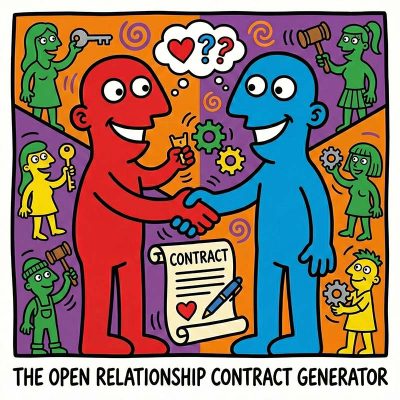
"I thought we agreed" is the sentence that destroys relationships & marriages. Relying on verbal promises when emotions run high is a gamble you cannot afford to lose. Your memory isn't just faulty; it's a liability. Ambiguity is the oxygen that jealousy breathes, turning "freedom" into a minefield of "did I mess up?"
This generator transforms vague permissions into a concrete, signed reality. Stop arguing about what you thought was said and lean on what is written. Secure your boundaries in ink, not hope.
Practical strategies you can put into action today
Below you will find concrete methods that help you manage time without sacrificing warmth or honesty. Each strategy is described with a short explanation and practical steps you can apply in real life.
1. Time budgeting for ENM
A time budget works like a financial budget but for moments and feelings. You allocate a certain amount of time per week for each partner and for yourself. The key is to keep these allocations flexible while also holding space for changes like a busy week at work or a special event. Here is how to set it up.
- Start with a baseline. Decide how many hours you feel comfortable dedicating to each relationship in a typical week. This could be two date nights plus some one on one time or a mix of texts and calls and occasional visits.
- Include personal time. Do not forget to reserve blocks for rest, exercise, hobbies, and alone time. A healthy life supports healthy relationships.
- Build a buffer. Life happens. Include a small cushion of flexible time that can be moved if a partner needs extra attention one week and reallocated later.
This approach helps you avoid the trap of overbooking or under investing in a relationship. It makes time visible rather than invisible. You can adjust the budget as needed but the practice of allocating time remains the anchor.
2. Calendar blocking and time boxing
Calendar blocking turns your calendar into a tool rather than a vague reminder. Time boxing creates dedicated windows for specific activities. Here is how to use these techniques well.
- Block recurring slots for date nights with each partner. For example, Monday is date night with Partner A while Thursday is reserved for Partner B. Keep blocks consistent so your partners know what to expect.
- Time box other interactions. If you share a partner you can set aside a 30 minute catch up after work for quick messages or calls. If you have a long drive to visit someone you can use the drive time as a quiet transition period to focus on your thoughts and feelings.
- Guard arrival and transition times. Give yourself a five to ten minute buffer between blocks so you can reset and avoid feeling rushed.
When you use calendar blocking you transform your week from a jumbled array of tasks into a plan you can see. It reduces the cognitive load of constantly deciding what to do next and helps you honor commitments to multiple people without feeling overwhelmed.
3. Shared calendars with clear boundaries
Collaboration with your partners around schedules can be empowering. A shared calendar is a practical way to keep everyone informed. Here is how to do it with care.
- Agree on what gets shared. You may want to share only events that involve more than yourself or all personal time blocks may be private. Decide what is comfortable for everyone involved.
- Use color coding. Assign a color for each partner and a color for personal time. This makes conflicts easy to spot at a glance.
- Record important notes. In the calendar entry include a note with any relevant details such as location, transportation options or special requests. Keep these notes concise but informative.
- Respect privacy. If a partner asks for private blocks you can still keep your own schedule intact without exposing sensitive information to others. Balance is essential.
Shared calendars are a powerful tool but they must be used with trust. They work best when every person involved agrees to how they will be used and what information will be visible to whom.
4. The weekly planning ritual
A weekly planning ritual creates rhythm and predictability. It helps you review what happened in the previous week and adjust for the next one. Here is a simple structure you can adopt.
- Set aside a predictable time each week for planning. A Sunday evening or a Wednesday afternoon can work well depending on your schedule.
- Review commitments. Look at all upcoming events with partners and assess if any adjustments are needed. Consider travel, work demands, and personal energy levels.
- Forecast potential friction. If you anticipate conflicts you can address them early by communicating with partners calmly and clearly.
- Refine the plan. Make small adjustments to time budgets and blocks. The goal is a plan you can actually follow without feeling overwhelmed.
Following a weekly planning ritual reduces surprise and helps you stay in control. It is the practical backbone of mindful ENM time management.
5. Handling jealousy and NRE in time planning
NRE can steal time and energy if not handled well. Here is how to manage it without punishing yourself or your partners.
- Name the energy. If you notice you are feeling swept away by NRE, acknowledge it and adjust the schedule so you have space for other relationships as well as yourself.
- Share your feelings early. Open communication about your needs and concerns reduces the risk of misunderstandings that can escalate into drama.
- Set a temporary lull. It is reasonable to take a short pause on adding a new relationship or increasing time with a partner when you need a stabilizing period.
- Remember compersion. Practice celebrating your partner happiness as a shared victory rather than a personal loss. It strengthens the entire network.
Managing jealousy and NRE is not about pretending these feelings do not exist. It is about acknowledging them and choosing how to respond in a way that honors all people involved.
6. Communication rituals that save time
Clear communication saves hours of confusion. Here are quick rituals that help you keep conversations productive without becoming a chronic meeting machine.
- Daily check ins. A brief message to confirm availability helps avoid miscommunications and shows you care about the other person’s time.
- Weekly relationship status updates. A short conversation about what is working and what needs adjustment helps prevent buildup of tension.
- Pre agreed decision points. When a calendar clash appears, know in advance how decisions will be made. Will you consult all partners or will a designated person decide?
- Respectful tone. Even when you disagree keep the tone respectful and focused on solutions rather than blame.
These rituals support efficient plans without sacrificing warmth. They turn complex schedules into navigable conversations.
7. Dealing with travel and long distance dynamics
Travel and distance complicate time management but they are not insurmountable. Here is how to manage expectations when people are not physically close.
- Adjust time budgets during travel. If a partner is away for work or a trip you can temporarily reallocate time to other relationships or to personal time.
- Plan for asynchronous connection. Texts, voice messages, and well timed calls can maintain closeness when you cannot be together in person.
- Coordinate arrival and departure windows. If you are driving to see someone or meeting them in another city, ensure you allow sufficient travel margin so you can be present and relaxed upon arrival.
- Guard against reshaping life around long distance dynamics. Keep a sense of your own routine and goals so you do not lose yourself in the process.
With careful planning, long distance components can become manageable parts of a healthy ENM network rather than overwhelming obstacles.
8. Handling emergencies and unexpected changes
Life happens. Being prepared makes stress less overwhelming when a weather event, a health issue or a last minute work demand changes the plan.
- Have a flexible core plan. Create a baseline schedule that allows for adjustments without breaking the whole system.
- Build in spare capacity. The time budget should accommodate occasional extra needs without blowing the plan apart.
- Communicate quickly and calmly. Let partners know what is happening and what the plan is going forward.
- Offer practical alternatives. If a date must be canceled think of a few options to reschedule or replace the experience in a way that still respects everyone involved.
Emergencies are part of life. The goal is not to avoid them but to handle them with grace and efficiency so relationships stay strong.
Examples and scenarios you can learn from
Real life examples help translate theory into practice. Here are three scenarios that illustrate how time management can work in different ENM setups. Each scenario is followed by a practical adaptation you could apply in your own life.
Scenario 1: A triad with a shared calendar
A triad includes three adults who all know one another and have agreed to share time with each other as appropriate. They use a shared calendar with color codes for each relationship. They meet weekly to review the time budget and adjust for upcoming events. They sometimes have group outings that feel special and inclusive. They also protect personal time on days when someone needs extra rest or focus for personal projects. In this setup there is a strong emphasis on communication and consent about scheduling. It works because the calendar is transparent and everyone has a voice in planning.
Scenario 2: Solo poly with long distance partners
In this arrangement one person maintains connections with several partners who live in different cities. They use a flexible weekly plan that centers around the needs and schedules of each partner. Travel planning is planned well in advance. They avoid creating a sense of obligation by maintaining clear boundaries and offering honest updates when life changes. The emphasis here is on respecting distances and ensuring that time spent with each partner feels meaningful rather than rushed.
Scenario 3: A primary relationship with a non primary partner who travels
In this scenario a couple maintains a strong primary relationship while a partner who travels regularly joins the network. They negotiate a plan that guarantees essential relationship maintenance for the primary relationship while also creating meaningful experiences with the traveling partner whenever possible. They build a rotating schedule that accommodates travel windows, work commitments, and personal energy levels. This approach helps keep the dynamic balanced and reduces the risk of resentment or miscommunication.
Templates you can fill out and adapt
Templates are best used as starting points. Personalize these to fit your own needs and the specifics of your ENM network. They are designed to be simple and practical so you can use them right away.
Template A: Weekly ENM time plan
Weekly ENM time plan for [Your Name] and partners [Partner A, Partner B, Partner C]. Core commitments: work, sleep, self care. Time budget per partner: [hours per week]. Date night blocks: [days and times]. Personal maintenance blocks: [hours]. Travel and logistics: [notes]. Buffer and flexibility: [notes].
Template B: Negotiation prompt for a new scheduling decision
When considering adjusting time allocations for a new partner or changing an existing arrangement, answer these prompts. What is the request and why now How will the change impact each partner What are the benefits and risks How will we measure success Over what period will the change be evaluated How will we communicate updates to all involved
Template C: Emergency time adjustment plan
In an emergency week we will do the following First priority Ensure safety and health for all partners Second priority Maintain essential relationship time with [Partner A] Third priority Use flexible blocks to accommodate additional needs We will review and adjust once the situation stabilizes
Keeping your network healthy and fair
Healthy ENM time management requires ongoing care and vigilance. Here are some reminders that help you stay aligned with the values of consent, respect, and mutual care.
- Always keep communication open. If a boundary needs adjusting talk about it early rather than letting it drift into frustration.
- Be honest about your energy and your needs. It is okay to say you are not feeling up to a planned event and propose a change.
- Aim for reciprocity and fairness. Time spent with others is not a zero sum game. Strive to distribute attention in a way that feels balanced and fair to all involved.
- Respect privacy and autonomy. While transparency is important, do not pressure people to share more than they want to.
- Practice self care. A rested and emotionally balanced you makes you a better partner for everyone in your ENM network.
Common mistakes and how to fix them
Even the best plans can stumble. Here are frequent traps and straightforward fixes you can implement to keep the system running smoothly.
- Overloading the week If you find you are constantly rushing and exhausted, dial back the number of blocks and increase buffers. It is a signal to slow down not a failure.
- Ignoring personal needs When you skip self care and alone time you burn out fast. Protect a block of time for yourself every week and treat it as non negotiable.
- Inconsistent communication When updates feel sporadic people feel uncertain. Establish a reliable cadence for check ins and updates even if nothing dramatic is happening.
- One size fits all planning Each relationship has different rhythms. Tailor time allocations so they reflect the nature of each connection rather than applying a single blueprint to everyone.
- Relying on memory If you assume everything will be remembered you risk miscommunication. Use calendars, reminders, and written notes to anchor plans.
Putting it all together
Time management in ENM is a living practice. It evolves with the relationships in your life and with the ebb and flow of daily reality. The most important ingredients are open dialogue, practical calendars, and a willingness to adjust without drama. When you combine clear expectations with flexible plans and a good sense of humor you create a space where multiple relationships can thrive without trampling your well being or your happiness. You do not have to choose between connection and self care. You can have both by building a thoughtful, responsive schedule that respects every person involved and respects you too.
Glossary of useful terms and acronyms
- ENM Ethical Non Monogamy a framework that supports multiple relationships with consent and honesty.
- NRE New Relationship Energy a surge of excitement when a new relationship begins.
- Compersion Feeling happiness for your partner when they experience joy with someone else.
- Primary The relationship considered central for time or living arrangements in some setups.
- Secondary A relationship that receives time and energy but usually not as much as the primary relationship.
- Solo poly A form of polyamory where independence is prioritized in important life aspects.
- Relationship anarchy The idea that relationships should be unhierarchized and based on consent and personal agreements rather than labels.
- Meta The other partners in the same network who are connected to your partner.
- Time budget A planned allocation of time for each relationship and for personal maintenance.
- Time boxing Assigning fixed time blocks for specific activities to increase focus and reduce drift.
The freedom of an open relationship sounds incredible, but the logistics can feel like holding a grenade. That spinning "what if" anxiety isn't paranoia, it’s your survival instinct warning you that your bond is exposed. "Just seeing what happens" is the fastest way to turn a fantasy into a breakup.
The Essential Guide replaces chaos with discipline. We give you the blueprints, jealousy protocols, and repair scripts needed to explore the edge without falling off. Don't guess. Secure your foundation first.
The world of non-monogamy is a maze of confusing labels. Trying to be "Polyamorous" when your heart actually needs "Swinging" isn't just a vocabulary error; it’s a recipe for misery.
You can't build a stable home on a foundation that doesn't fit your psychology. This tool analyzes your emotional bandwidth and jealousy triggers to design the exact structure you need. Stop trying to squeeze into a box that doesn't fit. Build a relationship that actually feels like home.
Opening up feels exciting, but if you aren't reading from the same script, you're writing a tragedy. The disconnect between "I want freedom" and "I want safety" is where hearts break. This isn't just a quiz; it’s a synchronization engine.
We identify the silent gaps in your desires—from sleepover rules to emotional bandwidth, before they become unbridgeable chasms. Don't wait until the damage is done to find out you were never on the same page. Align your compasses now.
Theory is sexy. Reality is messy. You agreed you could date others, but how does your stomach drop when he takes her to your anniversary spot? Or when she comes home smelling like someone else?
This simulator drags your abstract rules into the harsh light of day. We force you to confront the visceral, gut-wrenching scenarios that actually destroy relationships, before they happen. Test your nervous system in the simulator so you don't crash the car in real life.
The fantasy is endless romance. The reality? It’s a logistical nightmare. Dating isn't just sex; it’s a second job of swiping, spending, and emotional processing that drains your sanity. Underestimating the "admin" of non-monogamy is the fastest way to turn your relationship into a burnout factory where resentment thrives.
This calculator forces you to confront the brutal math of your time, energy, and wallet. Can you actually afford this lifestyle, or are you just signing up for exhaustion?
"I thought we agreed" is the sentence that destroys relationships & marriages. Relying on verbal promises when emotions run high is a gamble you cannot afford to lose. Your memory isn't just faulty; it's a liability. Ambiguity is the oxygen that jealousy breathes, turning "freedom" into a minefield of "did I mess up?"
This generator transforms vague permissions into a concrete, signed reality. Stop arguing about what you thought was said and lean on what is written. Secure your boundaries in ink, not hope.
