
Types and Relationship Structures

Welcome to a deep dive into the world of ethical non monogamy known as ENM. If you have ever wondered how people manage multiple intimate connections without losing their minds or their values this is the guide you want to read. At The Monogamy Experiment we look at relationships like experiments with real people in real life. We keep things practical compassionate and a little playful because love should be curious not compliant with a boring script.
Quick Links to Useful Sections
- What ethical non monogamy means and why structure matters
- Core concepts you should know
- Common ENM relationship structures
- Open relationships
- Polyamory
- Relationship Anarchy
- Swinging
- Solo polyamory
- Hierarchical polyamory
- Kitchen table polyamory
- Parallel versus serial or dicey poly
- Triads and quads and small constellations
- Terminology and acronyms you may hear
- Practical guidance for choosing a structure that fits you
- Realistic scenarios and how to handle them
- Scenario one a new partner after a long term relationship
- Scenario two jealousy erupts during a new dating phase
- Scenario three logistical conflicts because life is busy
- Scenario four introducing a new partner to a close circle
- Handling challenges and common pitfalls
- Want a quick glossary of core terms
- Common myths about ENM debunked
- Practical steps to start your ENM journey today
- FAQs about types and relationship structures
- Closing note from The Monogamy Experiment
Our goal here is to explain the different relationship structures you might encounter in ENM the terms you will hear and how real life dynamics actually play out. We will break down the jargon provide practical tips and share realistic examples. Think of this as a friendly field guide written in plain language with a few jokes to keep you grounded.
What ethical non monogamy means and why structure matters
Ethical non monogamy is a broad umbrella that covers any relationship configuration where people consent to more than one romantic or sexual connection at the same time. The core idea is clear communication explicit consent and ongoing negotiation. Structure matters because it shapes expectations creates default rules and guides how you allocate time energy and emotional bandwidth. The right structure for you is the one that matches your needs values and life situation while leaving room for growth and adjustment over time.
In ENM there are two guiding ideas you should carry with you from the start. First consent is not a one off event it is an ongoing practice. The people involved should be able to say yes or no at any moment with agency and without fear of retaliation. Second honesty is your best policy. When you hide a relationship or pretend it does not exist you sabotage trust and that leads to more pain than even the most awkward conversation ever could. With those two ideas in place you can explore a wide range of structures with confidence.
Core concepts you should know
Before we go deep into specific structures there are a few ideas that show up in almost every ENM dynamic. Understanding these will help you spot what you want and what you do not want in a given arrangement.
- Consent and ongoing negotiation ENM is built on clear open dialogue. Agreements are not set in stone and they evolve as people grow.
- Boundaries and agreements Boundaries describe what feels safe or off limits. Agreements are the concrete rules a group agrees to follow such as how often you will see a partner or where you will spend holidays.
- Communication frameworks Tools like non violent communication active listening and check ins help keep conversations productive during stressful moments.
- Transparency and honesty People in ENM communities often value honesty about feelings needs and experiences even when a truth is uncomfortable.
- Jealousy management and compersion Jealousy is a natural emotion and compersion is the feeling of happiness from your partner's joy. The goal is to reduce jealousy not to pretend it does not exist.
- Time management and logistics Practical pieces include scheduling shared time setting boundaries around holidays and coordinating with multiple partners to avoid burnout.
The freedom of an open relationship sounds incredible, but the logistics can feel like holding a grenade. That spinning "what if" anxiety isn't paranoia, it’s your survival instinct warning you that your bond is exposed. "Just seeing what happens" is the fastest way to turn a fantasy into a breakup.
The Essential Guide replaces chaos with discipline. We give you the blueprints, jealousy protocols, and repair scripts needed to explore the edge without falling off. Don't guess. Secure your foundation first.
The world of non-monogamy is a maze of confusing labels. Trying to be "Polyamorous" when your heart actually needs "Swinging" isn't just a vocabulary error; it’s a recipe for misery.
You can't build a stable home on a foundation that doesn't fit your psychology. This tool analyzes your emotional bandwidth and jealousy triggers to design the exact structure you need. Stop trying to squeeze into a box that doesn't fit. Build a relationship that actually feels like home.
Opening up feels exciting, but if you aren't reading from the same script, you're writing a tragedy. The disconnect between "I want freedom" and "I want safety" is where hearts break. This isn't just a quiz; it’s a synchronization engine.
We identify the silent gaps in your desires—from sleepover rules to emotional bandwidth, before they become unbridgeable chasms. Don't wait until the damage is done to find out you were never on the same page. Align your compasses now.
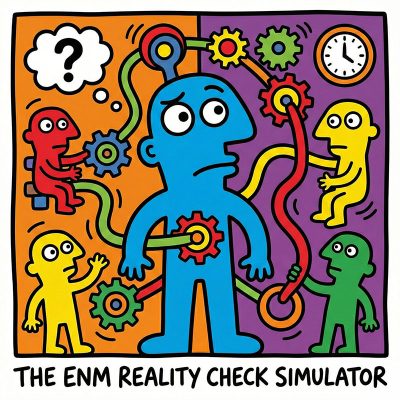
Theory is sexy. Reality is messy. You agreed you could date others, but how does your stomach drop when he takes her to your anniversary spot? Or when she comes home smelling like someone else?
This simulator drags your abstract rules into the harsh light of day. We force you to confront the visceral, gut-wrenching scenarios that actually destroy relationships, before they happen. Test your nervous system in the simulator so you don't crash the car in real life.
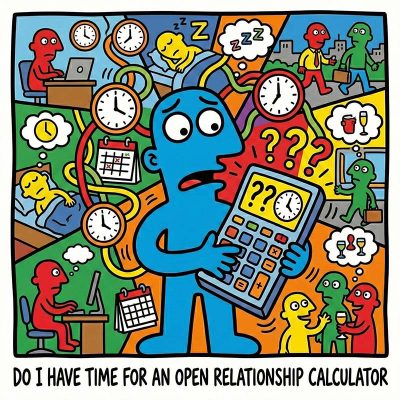
The fantasy is endless romance. The reality? It’s a logistical nightmare. Dating isn't just sex; it’s a second job of swiping, spending, and emotional processing that drains your sanity. Underestimating the "admin" of non-monogamy is the fastest way to turn your relationship into a burnout factory where resentment thrives.
This calculator forces you to confront the brutal math of your time, energy, and wallet. Can you actually afford this lifestyle, or are you just signing up for exhaustion?
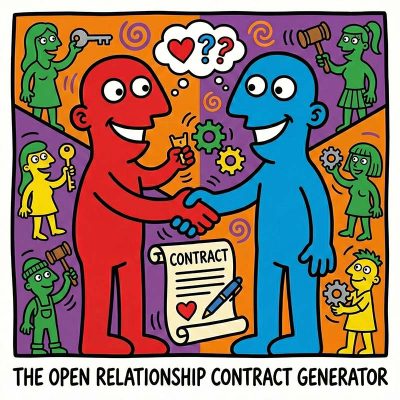
"I thought we agreed" is the sentence that destroys relationships & marriages. Relying on verbal promises when emotions run high is a gamble you cannot afford to lose. Your memory isn't just faulty; it's a liability. Ambiguity is the oxygen that jealousy breathes, turning "freedom" into a minefield of "did I mess up?"
This generator transforms vague permissions into a concrete, signed reality. Stop arguing about what you thought was said and lean on what is written. Secure your boundaries in ink, not hope.
Common ENM relationship structures
Below you will find a curated list of the structures you are most likely to encounter. Each entry starts with a plain language description followed by typical dynamics what tends to work well and common pitfalls to watch out for. We describe these in everyday terms so you can imagine real life situations without getting lost in buzzwords.
Open relationships
An open relationship is a setup where two or more people agree to have sexual or romantic relationships outside of their primary partnership. The emphasis is usually on freedom coupled with agreed boundaries rather than on organized hierarchies. You may have one core couple and a rotating set of other partners or you may operate as two people who share and expand their circle over time.
Key dynamics include open boundaries such as how often the people involved should check in with their primary partner what kinds of activities are permitted with others and how to handle dating conflicts. Open relationships can be highly fluid. The upside is variety and vitality. The challenge is keeping communication consistent and sustaining emotional safety for all involved.
Practical tips for open relationships include setting a weekly check in where people share what has felt good and what has felt challenging. It is also helpful to document the agreements so there is a reference point if confusion arises. Real life often demands flexibility so it is normal to renegotiate as needs evolve.
Polyamory
Polyamory is the practice of having multiple romantic relationships with the knowledge and consent of everyone involved. Polyamory often but not always involves more than two people in meaningful emotional connections. Some people lean into a network of many relationships while others keep a smaller circle that feels manageable and safe.
Two common polyamory orientations are non hierarchical polyamory where no single relationship is prioritized and hierarchical polyamory where there are one or more primary partnerships that may influence how time energy and resources are allocated. Each approach has its own benefits and challenges and both can work beautifully when there is mutual care and effective communication.
For many people polyamory means a daily or weekly rhythm that includes time with multiple partners. It can involve complex logistics and clear renegotiation of priorities during major life events. The payoff is often a rich emotional life with ongoing growth opportunities and a sense of shared community.
Relationship Anarchy
Relationship anarchy is a philosophy more than a fixed set of rules. It emphasizes freedom from traditional labels and a focus on consent honesty and personal autonomy. In relationship anarchy connections are valued for who they are not for where they fit on a chart of relationship types. There may be no primary partners and no fixed expectations about how relationships should look or what they should achieve.
In practice this structure invites creativity and a high level of communication. The downside is that without shared conventions some people may feel uncertain about where they stand. Relationship anarchists often rely on ongoing dialogue to craft relationships that feel natural to everyone involved rather than adhering to a pre defined blueprint.
Swinging
Swinging typically involves couples seeking sexual experiences with other couples or singles. The emphasis is often on sexual exploration rather than forming deep emotional bonds outside the primary couple. Swinging communities may offer social events curated to foster safe consensual interactions and often include clear boundary setting around intimacy with others.
What makes swinging work is clear consent and strong communication about what is and is not acceptable. The main risk areas include feelings of envy or fear of missing out and the need for aftercare and check ins after experiences. For many people swinging remains a joyful and exciting way to explore sexuality while maintaining a strong primary bond.
Solo polyamory
Solo polyamory centers the individual rather than a core couple. People in this mode prioritize personal autonomy and often maintain distinct boundaries between their independent life and their romantic connections. There may be no living arrangement or shared finances implying relationships often emphasize personal freedom and ethical disclosure about one s dating life.
Solo polyamory can feel liberating but it requires strong communication and careful relationship management. It also often includes intentional non commitment to any single primary relationship which can be a challenge for partners who want more predictability. The reward is a life lived with authenticity and the option to explore connections without feeling pressured to fit into a traditional relationship mold.
Hierarchical polyamory
Hierarchical polyamory places one or more primary relationships at the top of the structure with other connections seen as secondary. The primary partners usually have priority when it comes to time and decision making such as living arrangements or major life choices. Secondary partners have a lesser degree of priority but still have rights to honest communication and respectful treatment.
For some people this structure provides stability and predictable routines while for others it can feel limiting. The important piece is ongoing transparent negotiation to ensure all partners feel valued and safe even when not all needs can be met at the exact same time.
Kitchen table polyamory
Kitchen table polyamory is a term that describes a social circle where all partners know each other and feel comfortable in shared spaces such as a kitchen table or a family dinner. The goal is harmony between partners and a sense of community rather than a strict partitioning of relationships into primary and secondary roles.
This approach supports healthier long term dynamics because people learn about each other through everyday interactions. The challenge is that it can demand time and emotional energy to maintain many relationships and to keep conflict from becoming public drama at home.
Parallel versus serial or dicey poly
In parallel polyamory partners largely keep their dating lives separate often avoiding overlapping social settings or introductions. In serial or dicey poly there may be some overlap sometimes with a larger group becoming connected indirectly through mutual connections. People choose parallel or serial models to protect emotional safety or to manage complex life circumstances.
Parallel arrangements can minimize jealousy but may limit intimacy between partners who might want closer connection. Serial models can allow for growth and shared experiences but require careful boundary setting and clear communication to prevent misinterpretation or hurt.
Triads and quads and small constellations
Triads and quads are formed when three or four people create a connected relationship network with some level of mutual romantic or sexual involvement. Small polycules offer intense closeness but also demand high levels of coordination emotional maturity and robust conflict resolution skills.
In triads one person may be dating two others or all three may be dating each other in various combinations. The ring shape and the rules are unique to each group so you will not find one universal template. The core mechanics are respect consent and shared emotional safety as you navigate the complexities of multiple hearts in one space.
Terminology and acronyms you may hear
ENM conversations are full of terms that can feel like a foreign language at first. Here is a practical glossary to help you get oriented quickly. We will explain the term and provide a simple example of how it plays out in real life.
- ENM Ethical Non Monogamy. An approach to relationships that emphasizes consent honesty and negotiation with more than one romantic or sexual connection.
- Polyamory A philosophy and practice of having multiple loving relationships openly and ethically.
- Open relationship A relationship where partners agree to have sexual or romantic experiences outside their primary bond while maintaining the core relationship.
- Relationship Anarchy A flexible philosophy that rejects fixed rules favors autonomy and values consent and communication above all else.
- Swinging Engaging in sexual experiences with others often in a couples oriented setting with the main focus on sexual exploration rather than emotional bonding.
- Solo polyamory An approach where the person prioritizes autonomy and independence while maintaining multiple connections.
- Hierarchical polyamory A system that places primary partners at the top with other relationships treated as secondary or tertiary.
- Kitchen table polyamory A social dynamic in which all partners meet and interact in everyday life comfortable settings.
- Triad A three person relationship in which each person may have varying degrees of connection with the others.
- Polycule The network of all people who are connected through romantic or sexual relationships within a polyamorous arrangement.
- Compersion The feeling of happiness when a partner experiences joy with someone else rather than jealousy or resentment.
- Jealousy An emotional response to perceived competition or threat often requiring skillful communication to navigate it calmly.
- Primary partner A person who holds a central place in someone s life which can include living arrangements shared finances or emotional priority.
- Secondary partner A partner who is important but not at the same level as a primary partner in terms of time or decision making.
- Boundaries Personal rules about what is OK and what is not in a given relationship or arrangement.
- Agreements The concrete rules that a group commits to such as how time is allocated or how disclosure of relationships is managed.
- Check in A regular conversation to review feelings needs and the health of the relationships involved.
- Consent An informed voluntary agreement to participate in a specific activity a relationship or a situation.
Practical guidance for choosing a structure that fits you
Deciding which ENM structure to pursue begins well before you date with others. It starts with a clear internal inventory and then honest conversations with potential partners. Use these steps to guide your process and avoid rushing into a configuration that does not serve you long term.
- Clarify your core needs Do you crave emotional closeness with multiple people or are you more interested in sexual variety without heavy emotional commitments? Are you seeking ongoing long term relationships or lighter casual connections? Getting clear on your own needs makes a big difference when you start to talk to others.
- Assess your boundaries What are your hard limits and soft preferences? How do you want to handle disclosure with family friends or existing partners? Boundaries are personal and they can change over time.
- Invest in communication skills Learn to express needs without blame and to listen without becoming defensive. A simple technique is to restate what you heard and ask if you understood correctly before you respond.
- Start with one or two experiments Rather than leaping into many connections at once try a couple of smaller experiments. See how you feel in practice before expanding.
- Track emotional energy Keep a little diary about how you feel after dates and conversations. If you notice a pattern of fatigue or stress you may need to slow down or renegotiate.
- Time management matters You are balancing more than one life here. Schedule time with different partners and protect sacred time with your main relationship so nobody feels neglected.
- Develop a renegotiation plan Life changes and so do your needs. Decide in advance how you will renegotiate agreements when new information comes to light.
Realistic scenarios and how to handle them
Reading about structures is a great start but real life often brings curveballs. Here are some practical scenarios with suggested approaches to help you navigate them with care and humor.
Scenario one a new partner after a long term relationship
Imagine you have a long term relationship and you meet someone you connect with beautifully. The process starts with a transparent conversation about expectations. You discuss time spent with your existing partner your comfort with transparency and your long term goals. It is helpful to agree on a trial period after which you reevaluate and adjust commitments. You also decide how to introduce the new partner to your current partner in a space that feels safe. A patient approach has the best odds of keeping your relationships healthy and thriving.
Scenario two jealousy erupts during a new dating phase
Jealousy can show up as a tight chest a racing mind and a desire to retreat. The first step is to name what you feel and then to explore the underlying need. Do you want more time more reassurance or more security about how your partner is coordinating different connections? A practical approach is to schedule a check in with your partner to discuss boundaries and to set a time to reflect on what would help you feel more secure. Some couples create a plan for moment to moment self soothing strategies and a signal that allows a pause in the conversation without blame.
Scenario three logistical conflicts because life is busy
Work travel family events and distance create practical friction. The answer is to design a flexible calendar together write down the commitments that matter most and use a shared calendar to coordinate. It helps to schedule dedicated time with each partner as well as time that is reserved for the core relationship. If conflicts become frequent you may need to renegotiate the expected frequency or even pause certain connections for a period of time. The goal is to maintain fairness and emotional safety for everyone involved.
Scenario four introducing a new partner to a close circle
Introducing someone new to a social circle can feel risky. The best approach is to prepare in advance talk through any concerns with your primary partner and ensure consent. Organize a neutral low pressure setting and make it clear that the purpose of the introduction is friendship and potential connection not a test of loyalty. If the circle grows too quickly you may choose to slow the pace and give people time to form bonds before expanding further.
Handling challenges and common pitfalls
Any relationship style has its inevitable challenges. The difference in ENM is how you anticipate respond and repair. Here is a practical list of common issues and constructive ways to handle them.
- Miscommunication Misunderstandings are common when people talk about feelings under stress. The antidote is to slow down use clarifying questions and restate what you heard to confirm accuracy.
- Boundary creep When boundaries begin to drift without open discussion take a step back and renegotiate. Boundaries are a living agreement and deserve regular check ins.
- Time inequality Feeling left out because some partners feel more accessible than others can lead to resentment. The cure is explicit scheduling honest conversation and shared rituals that reinforce inclusion.
- Inadequate aftercare After experiences with others you may need extra emotional support. Plan for aftercare after more intimate experiences with a partner or a group. It helps maintain trust and emotional safety.
- Family and social friction Navigating the outside world requires clarity about what you are comfortable sharing and with whom. Decide on a level of openness and communicate it to people who matter to you.
Want a quick glossary of core terms
We know it can be a lot to absorb. Here is a concise glossary you can bookmark for quick reference. Each term links to a fuller explanation within this page. This list is not exhaustive but covers the core ideas you will encounter often in ENM communities.
- Ethical Non Monogamy ENM the umbrella term for relationship styles that involve multiple emotional or sexual connections with consent.
- Polyamory having multiple loving relationships with the knowledge and consent of everyone involved.
- Open relationship a relationship where partners may have sexual or romantic experiences with others outside the primary bond.
- Relationship Anarchy a flexible approach that emphasizes autonomy consent and ongoing communication without fixed rules.
- Swinging sexual sharing typically between couples often focusing on sexual experiences with others.
- Solo polyamory a form of polyamory where the individual maintains independence and supports connections without a fixed primary partnership.
- Hierarchical polyamory a polyamory model with a clear priority order among partners usually primary and secondary.
- Kitchen table polyamory a model where all partners know each other are comfortable in shared social spaces and relationships have a sense of community.
- Triad three people connected romantically with varying degrees of emotional ties among them.
- Polycule the network of people connected through romantic or sexual ties in a polyamorous web.
- Compersion the joy you feel from your partner s happiness with someone else.
- Jealousy a natural emotion that can be understood and managed with communication and strategies.
- Primary partner the person who holds a central place in someone s life often sharing housing finances or deep commitments.
- Secondary partner a partner with less time or fewer decision making rights in a hierarchical setup but who is still a meaningful connection.
- Boundaries personal rules about what is okay and what is not within a relationship.
- Agreements the specific rules a group or couple commits to follow such as who dates whom or how disclosure happens.
- Check in regular conversations to understand how people feel and what they need to adjust in the arrangement.
- Consent ongoing explicit permission to participate in a given activity relationship or scenario.
Common myths about ENM debunked
There are many stereotypes about ENM that simply do not hold up under thoughtful examination. Here is a quick reality check to help you avoid buying into misinformation.
- ENM is a free for all without boundaries is a myth. The healthiest ENM arrangements rely on clear boundaries and explicit agreements.
- ENM means you will eventually cheat through a different door not true. ENM is about honesty consent and ongoing negotiation even when life gets complicated.
- ENM is just about sex. For many people ENM is primarily about emotional connection personal growth and shared life experiences with consent as the binding factor.
- ENM cannot be stable. Stability is not about the number of partners it is about trust open communication and consistent care for everyone involved.
Practical steps to start your ENM journey today
If you are curious about ENM you can begin with a few practical steps that do not require you to change your entire life overnight. Start with a clear internal inventory then move toward conversations with your partner or trusted friends who understand your values.
- Write down your values What matters most to you in a relationship respect honesty kindness and safety are usually at the top of the list.
- Identify your non negotiables These are rules you cannot compromise on such as consent boundaries or safety practices. Be specific enough to be useful.
- Practice a simple script Rehearse how you might start a conversation about ENM with your partner so you feel prepared when the moment arrives.
- Explore a low stakes trial Consider a small experiment such as one emotional disclosure conversation with a trusted potential partner to learn what works for you.
- Build a support network Find friends or communities where you can share experiences learn from others and get honest feedback.
There is no one right path in ENM. The key is to stay connected to your core values maintain consent and keep your eye on the wellbeing of all people involved. The Monogamy Experiment believes in relationships that honor everyone involved and that push you to grow as a person not just as a lover or a partner.
FAQs about types and relationship structures
How do I know which ENM structure is right for me
The best way to find out is to start with your own needs and values and have honest conversations with potential partners. Try one or two manageable experiments give yourself time to reflect and adjust. Remember you can always renegotiate and restructure as life changes.
What is the difference between polyamory and swinging
Polyamory focuses on forming multiple emotional connections often with ongoing relationships. Swinging emphasizes sexual experiences with others usually without aiming to build new romantic bonds. Some people do both but the motivations and expected outcomes are different.
What does hierarchical polyamory mean
Hierarchical polyamory means there is a defined order of priority among partners typically a primary partner who has a certain level of decision making in major areas while other connections exist with different degrees of priority.
What is kitchen table polyamory
Kitchen table polyamory describes a scenario in which all the partners know each other well and can sit together in everyday spaces without tension. The aim is a sense of community and mutual respect rather than a set of rigid rules about who can do what with whom.
How do I navigate jealousy in ENM
Jealousy is a natural signal that something needs attention. The best approach is to slow down check in with your partner and name the underlying needs those feelings reflect. You can negotiate more time more reassurance or a different script for how you disclose new relationships. Compersion the joy in your partner s happiness is a helpful goal but it takes practice and patience.
Is ENM safe and ethical
Ethics in ENM revolve around consent transparency honesty and respect. Safety includes practice around sexual health boundaries and clear communication around emotional risk. By focusing on consent and ongoing negotiation you can engage in ENM in a healthy and ethical way.
How do I explain ENM to family or friends
Lead with your values and be prepared for questions. Some people choose to be open about only what they feel comfortable sharing and you can set boundaries about what you will discuss publicly. The important point is to stay authentic to your own experience while treating others with kindness and respect.
What if I want to end a non monogamous arrangement
Ending an ENM arrangement is a normal part of relationship life. Communicate clearly and with care explain your reasons and plan for transition. Give people space to process and renegotiate any shared logistics if necessary. Maintaining respect is the foundation of a smooth transition.
Closing note from The Monogamy Experiment
Ethical non monogamy is a broad and nuanced field. The goal is not to chase novelty for its own sake but to build a more honest life that reflects who you are today and who you want to be tomorrow. If you decide to explore ENM may your journey be guided by consent compassion and curiosity. We believe in relationships that feel right for you and the people you care about. If you want to discuss your own dynamic or map out a plan with a supportive community we are here to help you design a path that works for you without pretending there is a one size fits all solution.
The freedom of an open relationship sounds incredible, but the logistics can feel like holding a grenade. That spinning "what if" anxiety isn't paranoia, it’s your survival instinct warning you that your bond is exposed. "Just seeing what happens" is the fastest way to turn a fantasy into a breakup.
The Essential Guide replaces chaos with discipline. We give you the blueprints, jealousy protocols, and repair scripts needed to explore the edge without falling off. Don't guess. Secure your foundation first.
The world of non-monogamy is a maze of confusing labels. Trying to be "Polyamorous" when your heart actually needs "Swinging" isn't just a vocabulary error; it’s a recipe for misery.
You can't build a stable home on a foundation that doesn't fit your psychology. This tool analyzes your emotional bandwidth and jealousy triggers to design the exact structure you need. Stop trying to squeeze into a box that doesn't fit. Build a relationship that actually feels like home.
Opening up feels exciting, but if you aren't reading from the same script, you're writing a tragedy. The disconnect between "I want freedom" and "I want safety" is where hearts break. This isn't just a quiz; it’s a synchronization engine.
We identify the silent gaps in your desires—from sleepover rules to emotional bandwidth, before they become unbridgeable chasms. Don't wait until the damage is done to find out you were never on the same page. Align your compasses now.
Theory is sexy. Reality is messy. You agreed you could date others, but how does your stomach drop when he takes her to your anniversary spot? Or when she comes home smelling like someone else?
This simulator drags your abstract rules into the harsh light of day. We force you to confront the visceral, gut-wrenching scenarios that actually destroy relationships, before they happen. Test your nervous system in the simulator so you don't crash the car in real life.
The fantasy is endless romance. The reality? It’s a logistical nightmare. Dating isn't just sex; it’s a second job of swiping, spending, and emotional processing that drains your sanity. Underestimating the "admin" of non-monogamy is the fastest way to turn your relationship into a burnout factory where resentment thrives.
This calculator forces you to confront the brutal math of your time, energy, and wallet. Can you actually afford this lifestyle, or are you just signing up for exhaustion?
"I thought we agreed" is the sentence that destroys relationships & marriages. Relying on verbal promises when emotions run high is a gamble you cannot afford to lose. Your memory isn't just faulty; it's a liability. Ambiguity is the oxygen that jealousy breathes, turning "freedom" into a minefield of "did I mess up?"
This generator transforms vague permissions into a concrete, signed reality. Stop arguing about what you thought was said and lean on what is written. Secure your boundaries in ink, not hope.
