
What Ethical Non Monogamy Is and What It Is Not


Welcome to a straight talking guide about ethical non monogamy, or ENM. If you are curious about this relationship style or you want to check if it could fit your life, this is your practical, no fluff, inside look. ENM is not chaos masquerading as freedom. It is a framework built on consent, open communication and respect for everyone involved. In this guide we will break down what ENM means, what it does not mean and how to think about it in a way that is grounded in real life, not fantasy. We will explain terms and acronyms so you can read with confidence and make informed choices that suit you and your partners. Think of this as a friendly conversation with a curious, slightly ridiculous but always honest friend who has done the homework for you.
Quick Links to Useful Sections
- What ENM is
- Key pillars of ENM
- What ENM can look like in practice
- What ENM is not
- Common ENM dynamics you might encounter
- hierarchical versus non hierarchical ENM
- polyamory versus swinging
- relationship anarchy versus boundaries driven ENM
- Is ENM right for you and your partner
- Getting started with ENM in a practical way
- 1. Talk early and often
- 2. Define what you are trying to achieve
- 3. Set non negotiable safety rules
- 4. Create a simple framework for boundaries
- 5. Decide how you will communicate during the process
- 6. Start small
- 7. Learn together
- Boundaries and negotiation in ENM
- Jealousy, insecurity and making space for difficult emotions
- Health and safety in ENM
- Realistic ENM scenarios you might relate to
- Scenario 1: A couple explores dating outside the relationship while keeping a strong primary bond
- Scenario 2: Handling jealousy in a non hierarchical ENM setup
- Scenario 3: Setting boundaries with family and friends
- Scenario 4: Time management when multiple partners are involved
- Scenario 5: Communicating about safety and health with several partners
- Overcoming common challenges in ENM
- Glossary of useful terms and acronyms
- Key terms recap
- Practical tips for living with ENM every day
- Are you curious about ENM yet
- Frequently asked questions
Note on terms you may see ENM stands for ethical non monogamy. You will also see CNM, which stands for consensual non monogamy. Some people use the phrase polyamory to describe a subset of ENM where people have multiple loving relationships. Others use swinging to describe a form of ENM focused on sexual experiences with other couples or individuals. There is a lot of overlap and a lot of room for nuance, so we will explain each term as we go.
What ENM is
Ethical non monogamy is a way of relating that explicitly allows more than one romantic or sexual relationship at the same time, with the consent and ongoing agreement of everyone involved. It is not about a free for all or ignoring boundaries. The core idea is that people choose to be with more than one person because it enhances their lives or brings them closer to their own needs and desires. But that choice is not a free pass to do whatever you want. ENM is built on several non negotiable pillars that help it work in real life.
Key pillars of ENM
- Consent is ongoing Consent is given freely and can be withdrawn at any time. It is not a one time checkbox. People check in as relationships evolve and as situations change.
- Communication is transparent People tell each other what they want, what they fear and what they cannot handle. The goal is mutual understanding rather than secrecy or manipulation.
- Boundaries are negotiated Boundaries are the rules or guidelines that partners agree on. They can be about how much time is spent with other partners, what kind of activities are allowed, or how information is shared.
- Respect for every person ENM is not an invitation to treat others poorly. Each person involved deserves safety, dignity and care. That includes the primary partner as well as any secondary partners.
- Consent includes all parties The people who have a stake in the dynamic should be involved in the conversations that shape it. No one should be blindsided by a decision that impacts them.
- Emotional honesty Emotions are part of real life and ENM acknowledges that. Jealousy, fear, excitement and love are all on the table and can be addressed with empathy and practical tools.
What ENM can look like in practice
- Two partners agree to explore relationships with others while maintaining a primary bond that is central to their lives. They negotiate how much time they spend on dates with other people and how they share information with the main partner.
- A group of friends decide to form a network of romantic connections that is not strictly hierarchical. Each relationship is valued for its own reasons and boundaries are reviewed as a group.
- A couple engages in sexual experiences with others but keeps romantic connections separate and clearly discussed. They check in regularly to ensure both partners feel respected and safe.
- A person identifies as polyamorous and maintains multiple loving relationships with the consent of all involved. Communication about needs, schedules and feelings is ongoing and deliberate.
What ENM is not
It helps to be clear about what ENM is not because that can clear up common misunderstandings. ENM is not a license to cheat, not an excuse to be inconsiderate, and not a way to avoid commitment. Here are some concrete contrasts to hold in your mind as you explore this topic.
- Not cheating disguised as ENM Cheating involves deception, hidden plans and violation of agreed boundaries. ENM rejects secrets because secrecy corrodes trust.
- Not a universal fix for relationship problems ENM is not a bandaid for chronic issues. If there are serious problems like abuse, lack of communication or incompatible core values, those issues need care first.
- Not a free pass for sexual renegade behavior ENM is not an invitation to behave selfishly or to avoid talking about consent. All parties must understand and agree to the terms of engagement.
- Not a single path that fits everyone ENM is diverse. It includes many different styles, from hierarchical arrangements to more fluid relationship structures. It is not a one size fits all approach.
- Not a rejection of monogamy as a concept Some people are perfectly happy in monogamous relationships. ENM simply offers another legal framework for building intimate connections for those who want it.
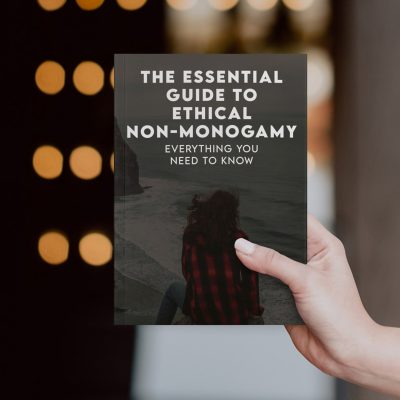
The freedom of an open relationship sounds incredible, but the logistics can feel like holding a grenade. That spinning "what if" anxiety isn't paranoia, it’s your survival instinct warning you that your bond is exposed. "Just seeing what happens" is the fastest way to turn a fantasy into a breakup.
The Essential Guide replaces chaos with discipline. We give you the blueprints, jealousy protocols, and repair scripts needed to explore the edge without falling off. Don't guess. Secure your foundation first.
The world of non-monogamy is a maze of confusing labels. Trying to be "Polyamorous" when your heart actually needs "Swinging" isn't just a vocabulary error; it’s a recipe for misery.
You can't build a stable home on a foundation that doesn't fit your psychology. This tool analyzes your emotional bandwidth and jealousy triggers to design the exact structure you need. Stop trying to squeeze into a box that doesn't fit. Build a relationship that actually feels like home.
Opening up feels exciting, but if you aren't reading from the same script, you're writing a tragedy. The disconnect between "I want freedom" and "I want safety" is where hearts break. This isn't just a quiz; it’s a synchronization engine.
We identify the silent gaps in your desires—from sleepover rules to emotional bandwidth, before they become unbridgeable chasms. Don't wait until the damage is done to find out you were never on the same page. Align your compasses now.
Theory is sexy. Reality is messy. You agreed you could date others, but how does your stomach drop when he takes her to your anniversary spot? Or when she comes home smelling like someone else?
This simulator drags your abstract rules into the harsh light of day. We force you to confront the visceral, gut-wrenching scenarios that actually destroy relationships, before they happen. Test your nervous system in the simulator so you don't crash the car in real life.
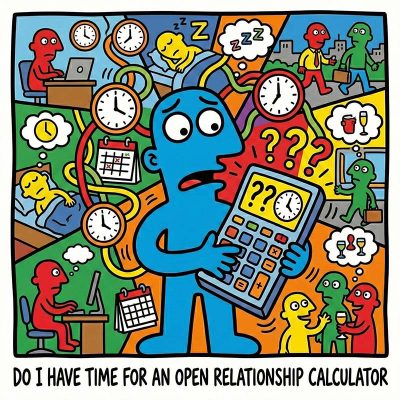
The fantasy is endless romance. The reality? It’s a logistical nightmare. Dating isn't just sex; it’s a second job of swiping, spending, and emotional processing that drains your sanity. Underestimating the "admin" of non-monogamy is the fastest way to turn your relationship into a burnout factory where resentment thrives.
This calculator forces you to confront the brutal math of your time, energy, and wallet. Can you actually afford this lifestyle, or are you just signing up for exhaustion?
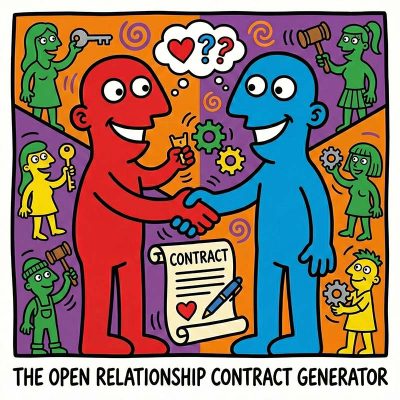
"I thought we agreed" is the sentence that destroys relationships & marriages. Relying on verbal promises when emotions run high is a gamble you cannot afford to lose. Your memory isn't just faulty; it's a liability. Ambiguity is the oxygen that jealousy breathes, turning "freedom" into a minefield of "did I mess up?"
This generator transforms vague permissions into a concrete, signed reality. Stop arguing about what you thought was said and lean on what is written. Secure your boundaries in ink, not hope.
Common ENM dynamics you might encounter
ENM is not a fixed blueprint. It is a set of possibilities that people adapt to fit their lives. Here are some of the most common dynamics you will hear about and how they typically function in practice.
hierarchical versus non hierarchical ENM
In hierarchical ENM there is one primary relationship that holds central priority, while other relationships exist within a defined set of boundaries. In non hierarchical ENM all relationships are treated more like equals with no primary focus. Both approaches can work well when everyone involved agrees on what matters most and communicates openly about the shifting landscape of needs and desires.
polyamory versus swinging
Polyamory often means multiple loving relationships that can be emotionally intimate and long term. Swinging is more focused on sexual experiences and opportunities that occur outside of the core relationship, often with other couples or partners. These categories are not strict rules. People mix elements of both styles or create something unique that suits their values and life circumstances.
relationship anarchy versus boundaries driven ENM
Relationship anarchy is a philosophy that rejects rigid hierarchies and predefined rules. It emphasizes freedom, consent, and individual autonomy. Boundary driven ENM uses explicit agreements to protect emotional safety and ensure clarity. Both approaches exist on a spectrum and many people move along that spectrum as life changes.
Is ENM right for you and your partner
Deciding whether ENM is right for you starts with a clear self and couple check in. You will want to reflect on your values, your tolerance for ambiguity, and your priorities in love and life. Here are questions to guide your thinking.
- What are my core values when it comes to relationships and love?
- How comfortable am I with uncertainty and evolving boundaries?
- Do I feel safe and respected in our current relationship or do we want something different?
- Are we both open to exploring relationships with other people or do we prefer exclusivity?
- Do we want to explore together or separately what is possible in this dynamic?
If you answer these questions honestly, you will start to see whether ENM could be a good match for your needs. It is perfectly fine if the answer is no. The aim is to find a path that helps everyone involved live with integrity and feel cared for.
Getting started with ENM in a practical way
If you decide ENM is worth exploring, here is a practical toolkit to begin. It is not about a magical week long transformation. It is about small, steady steps with open communication and mutual respect. You can take these steps with a partner, by yourself or in a group conversation with your network of friends who are exploring similar questions.
1. Talk early and often
Start with a calm, honest conversation with your partner. Set a shared intention for the talk. You want to understand each other deeply and not win an argument. You can use prompts like what would it take for you to feel safe exploring this and what would make you say yes with confidence. Avoid blaming language and focus on needs and feelings.
2. Define what you are trying to achieve
Explain what draws you to ENM. Is it more companionship, more sexual variety, or an opportunity to grow emotionally? Being clear about your why helps you and your partner make informed decisions and reduces confusion later on.
3. Set non negotiable safety rules
Agree on basics like safer sex practices, STI testing, disclosure of infections, and how you will handle emergencies or uncomfortable situations. Safety rules are not about policing each other but about creating a shared sense of responsibility.
4. Create a simple framework for boundaries
Boundaries do not have to be complex. Start with a few practical lines that protect emotional space, time, and personal safety. Examples include how much time you want to allocate to other relationships, what kinds of dating activities are allowed, and how information is shared with your primary partner.
5. Decide how you will communicate during the process
Agree on how often you will check in, how you will handle conflicts, and what happens if someone needs a pause. You can set fixed check ins or use ongoing conversations as needs arise. The key is that communication remains respectful and practical.
6. Start small
Rather than leaping into a complex triad or a big group situation, start with a low risk step. For example a casual dating scenario with clear boundaries about emotional involvement and time management. You can expand as you both grow more comfortable.
7. Learn together
Read books, listen to podcasts, attend workshops or join a community where people share their real life experiences. Learning together strengthens your bond and helps you avoid common missteps.
Boundaries and negotiation in ENM
Boundaries are a tool not a jail. They serve to protect emotional safety while giving room for exploration. Boundaries should be revisited regularly because needs and life situations change. Here are practical ideas for boundary setting that actually works.
- Time boundaries Decide how much time you can devote to other relationships while maintaining your primary connection. Some couples choose specific days or hours that are reserved for partners outside the relationship.
- Emotional boundaries Define what level of emotional closeness is appropriate with others. This can include whether you will share dating experiences, how much personal detail you will disclose, and how you will handle intimate conversations with others.
- Sexual boundaries Clarify what kinds of sexual activities are allowed outside the relationship. Determine if there will be rules about condom use, protection, and sexual health testing.
- Transparency boundaries Decide how much information will be shared with a primary partner about other relationships. Some couples opt for full disclosure while others prefer a more measured approach.
- Relationship status boundaries Agree on how you define your primary bond and how much it may evolve over time. Boundaries can be flexible but should be revisited openly as feelings shift.
The goal of boundaries is not to limit love but to create a framework where love can grow safely. If a boundary feels too restrictive, use it as a signal to revisit the underlying need and adjust together.
Jealousy, insecurity and making space for difficult emotions
Jealousy is a normal human emotion in any relationship style. The difference in ENM is that there is a plan to address jealousy with empathy, not accusation. Here are practical steps to handle jealousy in a healthy way.
- name="step1">Name the feeling Instead of labeling it as a character flaw or a failure, simply name the emotion. This moves you toward solutions rather than blame.
- Put language to needs Explain what you need to feel safe and supported. For example I need more time with you this week or I want reassurance that our bond remains as important as ever.
- Practice compersion Compersion is the opposite of jealousy. It is the feeling of joy when your partner experiences something wonderful with another person. It takes time to cultivate but it is a powerful tool.
- Schedule check ins Create regular moments to talk about how things feel. Do not wait for a crisis to address concerns. Small conversations prevent big problems.
- Seek external support If jealousy becomes overwhelming, talk with a therapist who understands ethical non monogamy. A neutral third party can offer tools and perspective.
Emotions are not a signal to quit. They are information. With ENM your job is to listen to that information and respond in a way that protects the relationship you value while honoring your own needs.
Health and safety in ENM
Health and safety are essential in any intimate dynamic. In ethical non monogamy they become even more important because you may be interacting with multiple partners. Here are practical steps to stay safe without killing the vibe.
- Testing and transparency Regular STI testing is a healthy habit for everyone involved. Share results with partners as you consent to do so and set a frequency that fits your activities.
- Safer sex practices Use protection as appropriate and have conversations about sexual health history before engaging with new partners. Clear communication reduces risk and builds trust.
- Boundaries around sexual health information Decide what level of detail you want to share about sexual experiences. Some people want to know everything, others prefer a concise summary.
- Consent around sexual activity Reconfirm consent with each new partner and with your existing partners as the situation changes. Consent is an ongoing process, not a one time event.
- Emotional safety measures Keep a line of communication open about emotional health and stress. If you feel overwhelmed, pause and reassess the situation together.
Health and safety are a shared responsibility. When everyone is honest about health, the relationships have a better chance to thrive and to be sustainable over a long period of time.
Realistic ENM scenarios you might relate to
Seeing how ENM plays out in real life helps you imagine yourself in the situation and spot potential challenges early. Below are some believable situations with practical guidance for handling them well.
Scenario 1: A couple explores dating outside the relationship while keeping a strong primary bond
Alex and Jamie are a couple who have decided to explore connections with other partners while maintaining a strong commitment to their own relationship. They set a weekly check in and agree that both partners must be comfortable with any new dating they pursue. They decide to keep major decision making together, including new boundaries, and they use a shared calendar to manage time. When one of them starts seeing someone more regularly, they talk about the schedule and adjust accordingly so neither feels neglected. The key is ongoing communication and mutual respect for each other’s needs.
Scenario 2: Handling jealousy in a non hierarchical ENM setup
Priya and Mateo practice non hierarchical ENM, where all relationships are treated as equally important. When Priya begins to develop stronger feelings for a new partner, she talks to Mateo first, explaining that her emotional energy is shifting. They discuss how to balance time and ensure their existing relationship remains satisfying for both of them. They decide to slow down their new connection temporarily and schedule more date nights together. The pair also agrees to keep a shared journal of emotions to surface concerns before they fester.
Scenario 3: Setting boundaries with family and friends
Sam and Riley have a polyamorous lifestyle that includes close friendships as well as romantic relationships. They are mindful of family expectations and decide to be discreet in family settings while staying true to their values. They have a preemptive talk about how much detail they will share with aging relatives and plan to respond to questions with calm honesty rather than defensiveness. This reduces stress in family gatherings while preserving honesty in their own relationship network.
Scenario 4: Time management when multiple partners are involved
Jin and Noor live in a busy city and have several dating partners. They use a shared planning system to track events, meals, and important dates. They also have a policy that if one partner has a crisis or needs emotional support, the others step back to give space. They know that juggling more than one relationship requires more organization and clear agreements around scheduling, not chaos and opportunism.
Scenario 5: Communicating about safety and health with several partners
Leo and Kai discuss health openly with current and potential partners. They agree on a transparent approach to STI testing and create a simple consent framework for sharing information. They share resources about safer sex options and ensure everyone understands the expectations before engaging in sexual activity. They revisit the agreement every few months to reflect new experiences or concerns.
Overcoming common challenges in ENM
Every relationship style has challenges. ENM adds layers of complexity because more people and more commitments can increase the emotional and logistical load. Here are common pitfalls and practical strategies to navigate them.
- Poor boundaries Start with small, clear boundaries and revisit them regularly. If a boundary feels constraining, discuss the underlying concern rather than insisting the boundary remains unchangeable.
- Assuming honesty is automatic Agree on a standard for ongoing truth telling. Set expectations about how much information to share and how often to check in on feelings.
- Time management issues Use calendars, alarms, and routine check ins. Proactively schedule dates with all partners so no one feels neglected.
- Jealousy or insecurity Address the feeling as data. Talk about needs and adjust boundaries or expectations as needed. Seek support if needed from a trusted friend or therapist who understands ENM.
- Social and family pressure Build a small but clear narrative you can share with others if questions arise. You do not have to disclose every detail but you should be ready to explain your choices respectfully.
Glossary of useful terms and acronyms
- Ethical non monogamy ENM A relationship framework where multiple loving and/or sexual relationships exist with the consent of all involved.
- Consensual non monogamy CNM Same idea as ENM with emphasis on consent as a guiding principle in all dynamics.
- Polyamory A form of ENM where people have multiple loving relationships simultaneously with the knowledge and consent of everyone involved.
- Polyamorous Describing a person who is involved in multiple loving relationships.
- Open relationship A relationship structure where partners allow sexual or romantic connections outside their primary partnership, usually with boundaries.
- Swinging A form of ENM focused primarily on sexual experiences with other couples or partners with an emphasis on shared social experiences.
- Hierarchical ENM A structure with a primary relationship that holds a central status and other relationships are secondary to some extent.
- Non hierarchical ENM A structure where all relationships are treated with equal importance and there is no single primary bond.
- Relationship boundaries The agreed rules that guide how relationships outside the main bond operate.
- Compersion The feeling of joy when a partner experiences happiness or fulfillment with someone else.
- Jealousy management Techniques and conversations used to process jealousy in a constructive way.
- Disclosure The practice of sharing information about other relationships with partners in a careful, respectful way.
- Safer sex Practices intended to prevent sexually transmitted infections, including condoms and regular testing.
Key terms recap
ENM is about consent and communication. CNM is another term that often shows up in discussions about ENM. Polyamory means loving multiple people with consent. An open relationship is a structure that allows dating and sexual activity outside the primary couple with agreed rules. Swinging is typically about sexual experiences with other people or couples. Hierarchical ENM places a primary relationship at the center while non hierarchical ENM values all relationships equally. Compersion is a useful mindset that helps with emotional balance. Boundaries are practical guidelines that help everyone stay safe and respected. Disclosure is the practice of sharing information in a manner that protects trust. Safer sex is an essential health practice for all involved.
Practical tips for living with ENM every day
- Start with a single, clear conversation Choose a calm moment and frame the talk around your needs and desires rather than accusations. Keep it brief and focused.
- Put agreements in writing A simple document or shared notes can help keep everyone on the same page as new partners join the dynamic. Revisit and adjust as needed.
- Keep a shared calendar Time management is everything in ENM. A shared calendar helps you avoid double booking and reduces conflict.
- Use neutral language When you talk about others use language that respects all parties. Avoid pitting partners against each other by referencing past events or alleged indiscretions.
- Practice reflective listening When someone speaks, reflect back what you heard before responding. This validates the other person and reduces arguments.
- Celebrate the positives Notice and articulate what you value in each relationship. Gratitude helps strengthen trust and reduces defensiveness.
Are you curious about ENM yet
If you have read this far you are probably asking more questions than you had before you started. It is normal. ENM is not for everyone but it is a legit option for people who want more than one meaningful connection with consent at the center. The key to doing ENM well is honesty, empathy, consistent communication and a willingness to adjust when the situation changes. If that sounds like a path you want to explore with the people you care about, you can start small and build from there. Remember there is no rush to declare a life choice. Take your time to learn, reflect and talk things through with care.
Frequently asked questions
Below you will find a short set of commonly asked questions about ENM along with concise answers. If you want more depth on any particular question, you can keep reading or reach out for a deeper conversation with our team.
How long does it take to decide if ENM is right for us
There is no fixed timeline. Some couples decide in weeks, others in months. The important thing is that both people feel listened to and respected. There is no pressure to rush a decision.
Is ENM the same as polyamory
Polyamory is a form of ENM that emphasizes multiple loving relationships. ENM includes polyamory but also includes open relationships and swinging. The umbrella term ENM covers a wide range of relationship experiments with consent and honesty at the core.
Can ENM work for families and parenting
Yes it can work for some families. Parenting adds layers of complexity. You will likely need extra boundaries around child care, safety, and emotional energy. The core principles remain the same consent, communication and care for everyone involved.
How do I handle jealousy in ENM
Jealousy is normal. Name the feeling, articulate your needs, and together with your partner, adjust boundaries or expectations. Compersion can be cultivated as you celebrate your partner s happiness with others. Don t bottle up emotions because that creates bigger problems later.
What if my partner does not want ENM
That is a valid outcome. You cannot force someone to share a relationship structure they do not want. The respectful path is a candid conversation about compatibility, followed by choosing a relationship path that honors both people s boundaries.
How do we keep health and safety front and center
Regular STI testing, honest disclosures, and effective safer sex practices are essential. Decide together how often testing happens and how results are shared. This protects everyone involved and demonstrates commitment to each other s well being.
What if one person wants ENM and the other wants mono
That difference matters. You can choose to renegotiate the relationship or respectfully part ways. There is no shame in deciding your paths are not compatible. The important thing is to handle the transition with care and honesty.
The freedom of an open relationship sounds incredible, but the logistics can feel like holding a grenade. That spinning "what if" anxiety isn't paranoia, it’s your survival instinct warning you that your bond is exposed. "Just seeing what happens" is the fastest way to turn a fantasy into a breakup.
The Essential Guide replaces chaos with discipline. We give you the blueprints, jealousy protocols, and repair scripts needed to explore the edge without falling off. Don't guess. Secure your foundation first.
The world of non-monogamy is a maze of confusing labels. Trying to be "Polyamorous" when your heart actually needs "Swinging" isn't just a vocabulary error; it’s a recipe for misery.
You can't build a stable home on a foundation that doesn't fit your psychology. This tool analyzes your emotional bandwidth and jealousy triggers to design the exact structure you need. Stop trying to squeeze into a box that doesn't fit. Build a relationship that actually feels like home.
Opening up feels exciting, but if you aren't reading from the same script, you're writing a tragedy. The disconnect between "I want freedom" and "I want safety" is where hearts break. This isn't just a quiz; it’s a synchronization engine.
We identify the silent gaps in your desires—from sleepover rules to emotional bandwidth, before they become unbridgeable chasms. Don't wait until the damage is done to find out you were never on the same page. Align your compasses now.
Theory is sexy. Reality is messy. You agreed you could date others, but how does your stomach drop when he takes her to your anniversary spot? Or when she comes home smelling like someone else?
This simulator drags your abstract rules into the harsh light of day. We force you to confront the visceral, gut-wrenching scenarios that actually destroy relationships, before they happen. Test your nervous system in the simulator so you don't crash the car in real life.
The fantasy is endless romance. The reality? It’s a logistical nightmare. Dating isn't just sex; it’s a second job of swiping, spending, and emotional processing that drains your sanity. Underestimating the "admin" of non-monogamy is the fastest way to turn your relationship into a burnout factory where resentment thrives.
This calculator forces you to confront the brutal math of your time, energy, and wallet. Can you actually afford this lifestyle, or are you just signing up for exhaustion?
"I thought we agreed" is the sentence that destroys relationships & marriages. Relying on verbal promises when emotions run high is a gamble you cannot afford to lose. Your memory isn't just faulty; it's a liability. Ambiguity is the oxygen that jealousy breathes, turning "freedom" into a minefield of "did I mess up?"
This generator transforms vague permissions into a concrete, signed reality. Stop arguing about what you thought was said and lean on what is written. Secure your boundaries in ink, not hope.
