
Accountability When Harm Occurs

Let us get real for a moment. In any relationship dynamic there is the risk of harm. In hierarchical polyamory ENM dynamic that risk can feel bigger because the structure is not just about two people. It is about a network of people with different levels of priority and different expectations. This guide breaks down what accountability looks like when harm happens, how to handle it with honesty and care, and how to repair trust without erasing the reality of what went wrong. We will keep terms simple and explain acronyms so you can follow every step with confidence.
Quick Links to Useful Sections
- What hierarchical polyamory and ENM mean
- Where harm shows up in a hierarchical ENM setup
- Why accountability matters in this dynamic
- Roles and responsibilities in a hierarchical ENM
- Primary partner responsibilities
- Secondary partner responsibilities
- Metamour responsibilities
- Allies and facilitators
- How harm is examined and owned in a repair oriented way
- Boundaries boundaries boundaries
- Repair steps you can actually use
- Real world scenarios and how to respond
- Scenario one complicated by time and energy demands
- Scenario two a boundary breach around disclosure
- Scenario three sexual health and safety concerns
- Scenario four power dynamics that pressure agreement
- Tools that help maintain accountability
- Aftercare and healing after harm
- How to discuss accountability with your circle
- Practical tips to keep accountability real and workable
- Glossary of useful terms and acronyms
- Frequently asked questions
What hierarchical polyamory and ENM mean
Hierarchical polyamory is a form of ethical non monogamy that uses a ranking of relationships. In this setup one or more partners may hold a higher priority position, often called a primary partner. Other relationships are considered secondary or lower priority. The aim is to balance affection time, emotional energy, and life logistics with consent and transparency. ENM stands for ethical non monogamy. That means honesty and consent are not optional extras they are core commitments. We are not talking about secret arrangements or coercion. We are talking about a deliberate structure that recognizes the reality of multiple intimate connections and strives to keep all people safe and respected.
Key terms you may see include:
- Primary partner The person or people who hold the highest level of priority in the relationship structure. They often share key decisions and life plans.
- Secondary partner A partner who has a meaningful relationship but a different set of commitments and access to time energy or resources than the primary partner.
- Metamour A partner of your partner. It is possible to have a positive relationship with a metamour or a more distant one depending on consent and boundaries.
- Honest disclosure Sharing information that matters to the well being of everyone involved even if the news is hard to share.
- Consent based practice Choosing boundaries and activities based on the clear agreement of all involved parties.
- Accountability Owning one s actions and taking steps to repair harm when it happens.
Where harm shows up in a hierarchical ENM setup
Harm can show up in a lot of subtle ways and in a few very direct ones. The power hierarchy can blur lines if we are not careful. Here are common patterns that warrant serious attention.
- Time and energy imbalances that leave some partners feeling neglected or betrayed
- Breaches of agreed boundaries around dating or sexual activity
- Privacy violations such as sharing intimate details without consent
- Coercion or pressure to agree to activities or arrangements against a person s will
- Emotional manipulation used to control how much a person can feel or express
- Financial or logistical neglect that worsens the emotional load for a higher priority partner
- Health and safety risks especially around sexual health or safety practices
Harm is not a moral failing it is a signal that something in the system did not protect the people involved. The aim of accountability is not to punish it is to understand what happened what role each person played and how to repair and reset so the group can move forward in a healthier way.
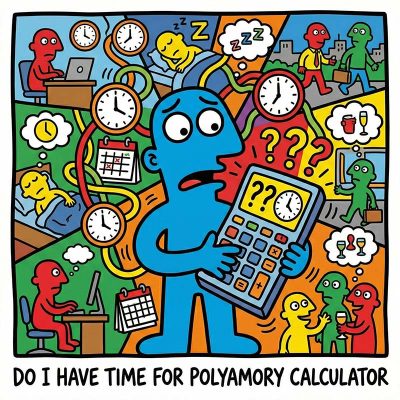
Love is infinite, but your calendar is brutally finite. The fantasy is deep connection; the reality is often just exhausted "calendar tetris." Promising time you don't actually have isn't romantic, it’s a recipe for burnout and broken trust. That sinking feeling when you have to cancel again? That’s the sound of overextension destroying your relationships.
This calculator forces you to confront the math of your life. Do you actually have space for another heart, or are you just setting everyone up for disappointment?

The fantasy is total autonomy and connection. The reality? It can feel like drowning in scheduling chaos and misunderstood expectations. That anxiety you feel isn’t just stress; it’s the wobble of living without a default "anchor." Without a solid architecture, Solo Polyamory stops being a life design and starts being a recipe for burnout and confusion.
The Essential Guide replaces the drift with a concrete anchor. We provide the "Solo Ethic," boundary scripts, and burnout protocols needed to protect your peace. Don't just date around—build a life that actually works for you.

Hierarchy sounds like a corporate org chart until someone gets their feelings hurt. That stomach-turning fear that you are just a "secondary" who can be fired at any time is real. If your relationship feels like a secret ranking system, you are doing it wrong.
Ambiguity is where resentment grows. The Essential Guide replaces the "who matters more" panic with a concrete charter. We provide the scripts and equity guardrails needed to protect every heart in the polycule. Stop guessing and start building.

The ideal is pure equality. The reality? It often slides into hidden rankings where someone gets hurt. That sinking feeling that you are secretly a "secondary" despite the label? That is your intuition detecting couple privilege. Ambiguity is where resentment thrives.
The Essential Guide replaces vague promises with concrete governance. We provide the charters, equity tools, and jealousy protocols needed to ensure "non-hierarchical" isn't just a fantasy. Stop guessing who matters most. Build a network that is actually fair.
The fantasy is total autonomy and connection. The reality? It can feel like drowning in scheduling chaos and misunderstood expectations. That anxiety you feel isn’t just stress; it’s the wobble of living without a default "anchor." Without a solid architecture, Solo Polyamory stops being a life design and starts being a recipe for burnout and confusion.
The Essential Guide replaces the drift with a concrete anchor. We provide the "Solo Ethic," boundary scripts, and burnout protocols needed to protect your peace. Don't just date around—build a life that actually works for you.
Hierarchy sounds like a corporate org chart until someone gets their feelings hurt. That stomach-turning fear that you are just a "secondary" who can be fired at any time is real. If your relationship feels like a secret ranking system, you are doing it wrong.
Ambiguity is where resentment grows. The Essential Guide replaces the "who matters more" panic with a concrete charter. We provide the scripts and equity guardrails needed to protect every heart in the polycule. Stop guessing and start building.
Why accountability matters in this dynamic
Accountability in a hierarchical ENM setting is a practical tool for safety and trust. It helps prevent resentment from building into bigger conflicts and keeps conversations focused on real world outcomes rather than feelings running wild alone. When harm happens clear timelines and concrete repair steps reduce the chance that the issue will resurface in the same way. It also respects the autonomy and dignity of everyone involved by ensuring every voice can shape the resolution.
Accountability does not mean blaming a single person or punishing someone harshly. It means recognizing impact people felt and taking responsible actions to repair the damage and prevent a recurrence. This approach aligns with the values that many people in ethical non monogamy hold dear including honesty transparency and mutual respect.
Roles and responsibilities in a hierarchical ENM
The structure creates a network of responsibilities. Each role has unique duties but all roles contribute to a safe and respectful environment. Here is a practical map you can adapt to your own setup.
Primary partner responsibilities
Primaries tend to carry responsibilities around the core partnership they may influence scheduling life plans and major decisions. Their duties include open ongoing communication protecting their partner s emotional safety and working to prevent harm from occurring in the first place. When harm happens primaries should not assume they alone own the problem or the solution. They should invite dialogue and participate in repair in a way that respects the other person s capacity to engage.
Secondary partner responsibilities
Secondaries contribute meaningfully to the network while recognizing their relationship status may be different from the primary. Their responsibilities include respecting boundaries agreed with the primary and being honest about needs feelings and limits. They deserve respect and safety just as much as any other partner. When harm occurs they should participate in the repair process and communicate what is needed for healing and restoration.
Metamour responsibilities
Metamours should be able to expect respectful interactions and clear communication with all involved. They deserve a voice in the process if they are affected by a decision or an event that could influence their own relationship. Accountability efforts should be transparent and inclusive where appropriate while also respecting privacy boundaries when required.
Allies and facilitators
In many networks there are people who help coordinate check ins peer support and negotiation. They can be trusted to hold space for honest conversation and to help design repair plans. The goal is to support healing not to drain one person s energy or create a new hierarchy that overrides consent.
How harm is examined and owned in a repair oriented way
When harm occurs the first move is to stop further damage. This means pausing activities that escalate the issue and focusing on safety for everyone involved. The next step is to determine impact. Impact is about how people felt and what changed in their sense of safety autonomy or trust. It is not just about who did what but how the actions were experienced by others.
Ownership means individuals acknowledge their role in the harm even if the intent was not to cause harm. Ownership often involves a sincere apology a clear explanation of what happened and concrete steps to prevent a re occurrence. It also includes offering repair that may involve changes in boundaries or schedules and it may require time for people to rebuild trust.
Boundaries boundaries boundaries
Boundaries are the guard rails that keep everyone safe and respected. In a hierarchical ENM structure boundaries can be explicit or implicit but they must be known and respected by all involved. Boundaries should be revisited regularly because life changes and needs shift over time. When harm occurs boundary revision is often necessary to prevent future harm.
- Time boundaries specify how much energy is available for each relationship and when.
- Privacy boundaries define what information can be shared and with whom.
- Sexual boundaries cover what acts are permitted with which partners and under what conditions.
- Emotional boundaries address how much emotional labor is expected in a given period.
- Financial boundaries cover how money is spent on dates activities and logistics.
Respecting boundaries means asking for consent before changes are made and accepting a no as a complete answer. It also means offering alternatives or compromises that satisfy core needs without violating someone s limits.
Repair steps you can actually use
Here is a practical framework you can adapt to your group. It is designed to be straightforward and humane while still being rigorous enough to protect everyone involved.
- Pause the activity that could worsen the harm. Create a safe space to talk without interruptions or escalation.
- Collect facts from all sides. Seek objective inputs such as dates times what was said what actions occurred and what impact was felt by each person.
- Own your part. Each person who contributed to the harm speaks from their perspective without excuses while taking responsibility for their actions.
- Offer a sincere apology that acknowledges the impact rather than trying to minimize or justify the behavior.
- Develop a repair plan. Outline concrete steps such as boundary updates schedule changes or added support to address the harm.
- Confirm consent for the repair plan. Ensure all involved agree to the proposed steps and timelines.
- Implement the plan and monitor progress. Set check ins to review how the plan is working and adjust as needed.
- Document lessons learned. Create a short summary of what happened what was corrected and what will be done to avoid repetition.
In some cases the harm is serious enough to require additional supports such as individual therapy couples counseling or a neutral third party to facilitate ongoing conversations. The aim is not to punish but to restore safety trust and respect for all involved.
Real world scenarios and how to respond
Scenario one complicated by time and energy demands
A primary partner feels overwhelmed by the time spent with a secondary partner. The feeling is not about the other person but about the total load and the sense that the primary partner is losing themselves in the process. Harm happens when the needs of the primary partner are dismissed or devalued in favor of keeping the secondary relationship active. A repair plan would include reassessing schedules adding buffer times and increasing check ins. The goal is to restore balance while honoring both relationships.
Scenario two a boundary breach around disclosure
A partner shares intimate details about a date with a metamour without consent from the person involved. The breach leaves the metamour feeling exposed and disrespected. Accountability requires an immediate apology to the person harmed and a clear boundary about what kind of disclosures are permissible. The group may agree on a policy that any personal information is shared only with explicit consent from all parties involved or within agreed boundaries.
Scenario three sexual health and safety concerns
One partner notices a health risk or tests positive for an infection and delays disclosure to others. The harm here is heightened by health risks. The repair plan should include prompt disclosure to all involved partners with clear medical information and steps for testing and treatment. It may also require temporary boundaries around sexual activity until everyone is medically cleared. The focus remains on safety and transparency rather than blame.
Scenario four power dynamics that pressure agreement
One partner feels pressured to agree to a new arrangement because of a perceived need to protect the hierarchy. Accountability means addressing the manipulation openly and ensuring that consent is ongoing and voluntary. The group may implement a cooling off period and require explicit consent procedures for any new agreements. It may also involve external mediation to restore trust.
Tools that help maintain accountability
Accountability is easier when you have practical tools in place. Here are some straightforward options you can adopt quickly.
- Regular check in rituals where each person shares how they feel about the current balance of time energy and emotional labor
- Transparent scheduling tools so everyone knows who is with whom and when
- Clear boundary documents that describe what is allowed where and with who
- A harm log where incidents are recorded along with the resolution and any follow up actions
- A trusted mediator or facilitator who can guide repairs without bias
Remember that these tools are there to serve people not to trap them. Use what works for your community and be willing to adapt as needs shift.
Aftercare and healing after harm
Healing is not a fast process and that is okay. After a harm event the group should plan aftercare that matches the emotional needs of those involved. This can include time together with open hearted conversations safe space for feelings to be expressed and practical steps to restore trust. Aftercare also means giving space when someone needs it and staying connected when a person is ready to re engage. Healing requires patience honesty and consistent practice of the agreed boundaries and commitments.
How to discuss accountability with your circle
Accountability conversations should be calm direct and focused on specific behaviors and outcomes. Avoid personal attacks or bringing up old grievances that do not apply to the current situation. Use language that centers the impacted person s experience and clearly states what changes are needed. A simple structure can help you stay on track:
- Describe the behavior that caused harm without judging character
- State the impact and why it matters to the group
- Declare what you are taking responsibility for
- Propose concrete steps for repair
- Invite input from others on the plan
- Agree on a timeline and a follow up point
Practical tips to keep accountability real and workable
- Write down agreements so they are visible to everyone involved
- Set up a simple cadence for check ins and hold space for emotion during those conversations
- Use neutral language when discussing harm to avoid triggering defensiveness
- Guard privacy while being transparent about needs and expectations
- Trust is rebuilt through consistent actions over time
Glossary of useful terms and acronyms
- ENM Ethical non monogamy a approach to dating and relationships that embraces multiple intimate connections with consent and openness
- Hierarchical polyamory A polyamory structure with a ranked order of relationships usually including a primary partner or partners and secondary partners
- Primary partner The partner in a hierarchy who has the highest level of priority and influence on major decisions
- Secondary partner A partner who has an important role but a different level of priority than the primary
- Metamour A partner of your partner with whom you may or may not have a relationship
- Consent An ongoing agreement given freely by all involved that governs what will happen
- Boundary A limit that protects safety and emotional health within the relationship
- Accountability Owning your actions and making changes when harm occurs
- Repair Actions taken to address harm and restore trust
Frequently asked questions
Love is infinite, but your calendar is brutally finite. The fantasy is deep connection; the reality is often just exhausted "calendar tetris." Promising time you don't actually have isn't romantic, it’s a recipe for burnout and broken trust. That sinking feeling when you have to cancel again? That’s the sound of overextension destroying your relationships.
This calculator forces you to confront the math of your life. Do you actually have space for another heart, or are you just setting everyone up for disappointment?
The fantasy is total autonomy and connection. The reality? It can feel like drowning in scheduling chaos and misunderstood expectations. That anxiety you feel isn’t just stress; it’s the wobble of living without a default "anchor." Without a solid architecture, Solo Polyamory stops being a life design and starts being a recipe for burnout and confusion.
The Essential Guide replaces the drift with a concrete anchor. We provide the "Solo Ethic," boundary scripts, and burnout protocols needed to protect your peace. Don't just date around—build a life that actually works for you.
Hierarchy sounds like a corporate org chart until someone gets their feelings hurt. That stomach-turning fear that you are just a "secondary" who can be fired at any time is real. If your relationship feels like a secret ranking system, you are doing it wrong.
Ambiguity is where resentment grows. The Essential Guide replaces the "who matters more" panic with a concrete charter. We provide the scripts and equity guardrails needed to protect every heart in the polycule. Stop guessing and start building.
The ideal is pure equality. The reality? It often slides into hidden rankings where someone gets hurt. That sinking feeling that you are secretly a "secondary" despite the label? That is your intuition detecting couple privilege. Ambiguity is where resentment thrives.
The Essential Guide replaces vague promises with concrete governance. We provide the charters, equity tools, and jealousy protocols needed to ensure "non-hierarchical" isn't just a fantasy. Stop guessing who matters most. Build a network that is actually fair.
The fantasy is total autonomy and connection. The reality? It can feel like drowning in scheduling chaos and misunderstood expectations. That anxiety you feel isn’t just stress; it’s the wobble of living without a default "anchor." Without a solid architecture, Solo Polyamory stops being a life design and starts being a recipe for burnout and confusion.
The Essential Guide replaces the drift with a concrete anchor. We provide the "Solo Ethic," boundary scripts, and burnout protocols needed to protect your peace. Don't just date around—build a life that actually works for you.
Hierarchy sounds like a corporate org chart until someone gets their feelings hurt. That stomach-turning fear that you are just a "secondary" who can be fired at any time is real. If your relationship feels like a secret ranking system, you are doing it wrong.
Ambiguity is where resentment grows. The Essential Guide replaces the "who matters more" panic with a concrete charter. We provide the scripts and equity guardrails needed to protect every heart in the polycule. Stop guessing and start building.
