
Aging and Long Term Planning

Welcome to a practical look at aging and long term planning when your relationships live in a hierarchical polyamory world. If you are here you likely want honest guidance that fits real life not idealized fiction. We are going to break down what hierarchical polyamory means in the context of aging and how to plan in a way that respects everyone involved. Expect clear definitions simple steps and concrete examples you can steal and adapt. We will keep the tone down to earth and friendly while still being thorough about the serious stuff. And yes we will explain every term and acronym so you never feel left behind.
Quick Links to Useful Sections
- What hierarchical polyamory and ethical non monogamy really mean
- Key terms and acronyms you should know
- Aging in a Hierarchical Polyamory ENM dynamic
- Why planning early helps the whole network
- What aging means for housing and living arrangements
- Healthcare needs and medical decision making
- Legal and financial planning basics for polyamorous families
- Custody and guardianship issues in multi caregiver families
- Practical steps you can take today
- Step 1 design your care map
- Step 2 appoint proxies and write down preferences
- Step 3 get a will and consider estate planning
- Step 4 make housing plans that work for everyone
- Step 5 talk about hospital visitation and social rules
- Step 6 create a regular review rhythm
- Realistic scenarios you might face and how to handle them
- Scenario one A partner becomes seriously ill and needs ongoing care
- Scenario two one partner is considering moving toward a long term residential care option
- Scenario three tensions emerge around scheduling and resource use
- Scenario four children are in the picture and guardianship becomes a concern
- Scenario five end of life preferences and multiple partners
- Must no s you should avoid in aging and planning in hierarchical polyamory
- Communication strategies that help aging work for everyone
- Glossary of useful terms and acronyms
- Practical templates and resources you can adapt
- Final thoughts you can act on now
- FAQ
What hierarchical polyamory and ethical non monogamy really mean
Hierarchical polyamory is a relationship structure where people clearly identify a priority ladder. At the top you may have a primary partner or a core group of partners who share property and long term commitments. Below that you may have one or more secondary partners who have important roles but perhaps not the same level of access to resources and decision making. The hierarchy is about how time energy and sometimes resources are allocated while still honoring consent communication and transparency. ENM stands for ethical non monogamy a practice that centers consent and ongoing negotiation rather than secrecy or betrayal. In this structure aging and long term planning require conversations that include the entire care network rather than a single couple. We will talk about how to approach planning in ways that honor the needs of all involved while staying aligned with your own values.
Key terms and acronyms you should know
- ENM Ethical non monogamy a framework that embraces honest open relationships with the consent of all involved.
- Hierarchical polyamory A system where there is a defined order of priority among partners for housing finances and time while still allowing love and care to flow in multiple directions.
- Primary partner The person or people who hold the most shared resources and daily life commitments in a given household or life plan.
- Secondary partner A partner who has important emotional ties but may not share the same level of resources or day to day life obligations as a primary.
- Solo poly A style where an individual maintains independence while dating multiple partners and coordinating care on their own terms.
- Co parenting When two or more adults share parenting responsibilities for children whether they are a couple or not.
- Advance directive A document that states your health care preferences in case you cannot speak for yourself.
- Power of attorney A legal instrument that lets you appoint someone to handle financial or legal decisions on your behalf.
- Guardianship A legal status that allows a person to care for a minor or a dependent adult when the usual guardians are unable to.
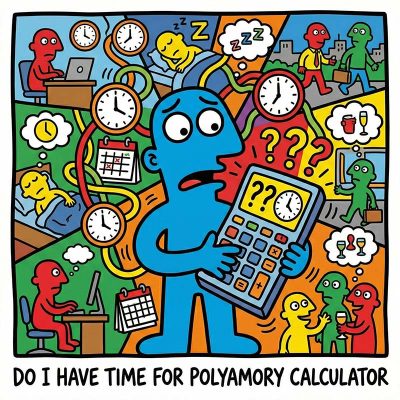
Love is infinite, but your calendar is brutally finite. The fantasy is deep connection; the reality is often just exhausted "calendar tetris." Promising time you don't actually have isn't romantic, it’s a recipe for burnout and broken trust. That sinking feeling when you have to cancel again? That’s the sound of overextension destroying your relationships.
This calculator forces you to confront the math of your life. Do you actually have space for another heart, or are you just setting everyone up for disappointment?

The fantasy is total autonomy and connection. The reality? It can feel like drowning in scheduling chaos and misunderstood expectations. That anxiety you feel isn’t just stress; it’s the wobble of living without a default "anchor." Without a solid architecture, Solo Polyamory stops being a life design and starts being a recipe for burnout and confusion.
The Essential Guide replaces the drift with a concrete anchor. We provide the "Solo Ethic," boundary scripts, and burnout protocols needed to protect your peace. Don't just date around—build a life that actually works for you.

Hierarchy sounds like a corporate org chart until someone gets their feelings hurt. That stomach-turning fear that you are just a "secondary" who can be fired at any time is real. If your relationship feels like a secret ranking system, you are doing it wrong.
Ambiguity is where resentment grows. The Essential Guide replaces the "who matters more" panic with a concrete charter. We provide the scripts and equity guardrails needed to protect every heart in the polycule. Stop guessing and start building.

The ideal is pure equality. The reality? It often slides into hidden rankings where someone gets hurt. That sinking feeling that you are secretly a "secondary" despite the label? That is your intuition detecting couple privilege. Ambiguity is where resentment thrives.
The Essential Guide replaces vague promises with concrete governance. We provide the charters, equity tools, and jealousy protocols needed to ensure "non-hierarchical" isn't just a fantasy. Stop guessing who matters most. Build a network that is actually fair.
The fantasy is total autonomy and connection. The reality? It can feel like drowning in scheduling chaos and misunderstood expectations. That anxiety you feel isn’t just stress; it’s the wobble of living without a default "anchor." Without a solid architecture, Solo Polyamory stops being a life design and starts being a recipe for burnout and confusion.
The Essential Guide replaces the drift with a concrete anchor. We provide the "Solo Ethic," boundary scripts, and burnout protocols needed to protect your peace. Don't just date around—build a life that actually works for you.
Hierarchy sounds like a corporate org chart until someone gets their feelings hurt. That stomach-turning fear that you are just a "secondary" who can be fired at any time is real. If your relationship feels like a secret ranking system, you are doing it wrong.
Ambiguity is where resentment grows. The Essential Guide replaces the "who matters more" panic with a concrete charter. We provide the scripts and equity guardrails needed to protect every heart in the polycule. Stop guessing and start building.
Aging in a Hierarchical Polyamory ENM dynamic
Aging changes how you experience energy health and independence. In a polyamorous structure those changes can ripple through the entire care network. A shift in someone health can invite new agreements about how much help is needed and who provides it. The goal is to adapt without forcing people into roles that feel wrong or unfair. The process works best when it begins early and continues as life evolves. We are going to cover practical steps you can take now to prepare for the future and to manage life with grace and humor even when the road turns bumpy.
Why planning early helps the whole network
- It prevents last minute scrambling when energy is low or health is not what it used to be.
- It protects everyone from power imbalances that can show up in family dynamics during stress.
- It keeps the focus on consent and respect instead of assuming who should do what.
- It creates clear expectations about housing medical care and finances which reduces friction when time is tight.
What aging means for housing and living arrangements
Some polyamorous households own property together some rent a space and some live in a network of houses that function like a village. Aging may shift who can contribute physically who can drive who can manage maintenance and who can coordinate daily life. Consider options that preserve autonomy for everyone while offering practical support. Possibilities include staying in community owned homes with accessible features shared caregiving duties across partners and a rotating care roster so no one person bears all the burden.
Healthcare needs and medical decision making
Healthcare becomes the central arena for planning. You need a strategy for who can speak for you care about your preferences and who will coordinate with doctors and hospitals. In ENM and hierarchical polyamory the approach frequently involves a primary partner or a group of designated proxies while still recognizing the diversity of relationships. Everyone should know your preferred medical treatments your pain management plan and your goals for quality of life. It is also important to discuss how you want to handle situations where not all partners can be present in a hospital or clinic at the same time.
Legal and financial planning basics for polyamorous families
Legal and financial documents become the backbone of long term care. Without them misunderstandings can rise and resources can be misallocated. A practical plan includes a will that names guardians for children if any exist and allocation of assets in a way that reflects actual life arrangements. Healthcare directives should specify who can make medical decisions if you cannot and powers of attorney should designate trusted people who can handle finances bill paying and legal matters. The goal is to provide continuity for all partners and for any children while preserving equity and respect among everyone involved.
Custody and guardianship issues in multi caregiver families
Guardianship is rarely automatic in polyamorous families especially when there are children from more than one partner. If you are a caregiver you should discuss guardianship plans in advance with all the adults who are part of your network. If there is a possibility you could be separated through illness or death you may want to name backup guardians and to file the necessary paperwork in advance. The key here is to have open transparent conversations with all involved and to document your decisions clearly with your lawyer present if needed.
Practical steps you can take today
Let us turn planning into action. The following steps are practical and doable even if you are busy or tired. Take one big idea and implement it this month then add the next idea in the next 60 days. Small steady progress beats empty intentions every time.
Step 1 design your care map
Draw a simple map that shows who lives in your household who your current primary partners are and who your secondary partners are. Put the names next to sections labeled housing care finances and decision making. This map is a living document that will shift as life changes. It helps you see gaps where a plan is missing or where you may have assumed someone would handle a task without asking them first.
Step 2 appoint proxies and write down preferences
Identify who would speak for you in a health care setting who would manage your finances and who would help make daily life decisions. Write down preferences in plain language about treatment choices about pain relief about life support and about any spiritual or personal values that matter to you. Share this information with your proxies and store it in a place that your medical team can access.
Step 3 get a will and consider estate planning
A will helps avoid confusion after someone dies or becomes unable to act. Outline who gets what and who handles what responsibilities. If your family includes children this becomes even more crucial. You may also consider trusts or other tools depending on your assets and your jurisdiction. A good attorney can help tailor documents to reflect the realities of a polyamorous household and to address multiple partners and children if needed.
Step 4 make housing plans that work for everyone
Discuss housing priorities with all partners. You may decide to stay in a shared home you may choose to move to a more accessible space or you may create a scenario where partners have options to live near each other while maintaining independence. Think about transportation chores and the daily routine. Having a plan reduces stress and preserves dignity for everyone involved.
Step 5 talk about hospital visitation and social rules
Hospitals sometimes have rules about who can visit whom and when. It is essential to discuss these policies in advance and to coordinate with hospital staff and social networks. Prepare a short letter that lists all primary and secondary partners and explains the living arrangement so staff know who should be allowed to visit and who should speak for you if you cannot speak for yourself.
Step 6 create a regular review rhythm
Life changes and plans should reflect those changes. Schedule a quarterly or bi annual check in with your core partners and with your legal and financial professionals if you work with them. Use those meetings to refresh documents update contact information and adjust plans as needed. The goal is constant learning and thoughtful updates not big upheavals every time life changes.
Realistic scenarios you might face and how to handle them
Real life rarely matches a perfect script. Here are some common situations expressed in a practical way along with suggested responses that stay respectful and flexible.
Scenario one A partner becomes seriously ill and needs ongoing care
In a hierarchical polyamory setup your plan should already identify who will help manage daily care and who can coordinate with medical professionals. You may decide to rotate caregivers to prevent burnout or to allocate certain tasks to specific partners. In a hospital setting it helps if a designated proxy can speak for the patient and verify preferences. Transparent communication with all involved reduces jealousy or confusion and keeps the patient at the center of decisions.
Scenario two one partner is considering moving toward a long term residential care option
Moving into a care facility requires planning. Some facilities are more comfortable with polyamorous families than others. Before you select a place gather information about visitation rights about private space and about admission rules. You may want to arrange a trial visit for the full care network. In many cases it is possible to arrange family meetings with administrators to explain the relationship structure and to ensure everyone who should be involved can participate in planning.
Scenario three tensions emerge around scheduling and resource use
When multiple partners share a life there can be friction about time energy and money. The best cure is a clear schedule with boundaries that are agreed and revisited regularly. Create a shared calendar with blocks for caregiving visits financial planning sessions household tasks and family time. If disputes arise bring in an impartial mediator who understands ENM and who can help everyone speak and be heard without blame.
Scenario four children are in the picture and guardianship becomes a concern
Guardianship planning is essential if children are involved. You want to name guardians for different life stages and to ensure the plan aligns with your values and with local law. Document conversations with all family members and consider how inheritance and guardianship decisions will be managed across several adults. The more clarity you create now the easier it becomes to navigate the future when emotions run high.
Scenario five end of life preferences and multiple partners
End of life preferences include medical decisions but also social and emotional support choices. Decide who should be notified who should accompany you on decisions and how you want farewell rituals to unfold. Consider naming a single point of contact outside the care network to coordinate communication with family and friends. Clarity at this stage matters more than grand theatrics and helps prevent conflict when you cannot speak for yourself.
Must no s you should avoid in aging and planning in hierarchical polyamory
- Do not assume the primary partner automatically gets all decisions or resources. Talk openly about how decisions are made and revisit the framework as life changes.
- Do not rely on a single person to manage all tasks. Build a support network and designate roles for each partner that play to their strengths and capacity.
- Do not bury critical information in private conversations. Store care plans legal documents and preferences in accessible secure places and share access with your proxies.
- Do not neglect the emotional needs of all partners. Aging is a shared journey and addressing grief fear and hope together helps everyone stay connected.
- Do not assume hospitals or care facilities automatically understand polyamory. Do proactive outreach to explain your arrangement and share the names and roles of your care team.
Communication strategies that help aging work for everyone
- Set up regular check ins where all core partners attend and there is space for concerns and needs to be voiced without judgment.
- Use a neutral facilitator for difficult conversations when emotions run high. A trusted friend or counselor who understands ENM can help.
- Document decisions and make sure everyone can access the same information. A shared secure document system helps track who has power of attorney who is on the health care directive and who will be the guardian if needed.
- Keep a light touch with humor where appropriate. Aging and planning are serious topics but light moments can ease tension and remind everyone of the love and life you share.
Glossary of useful terms and acronyms
- ENM Ethical non monogamy a framework that centers consent openness and ongoing negotiation in relationships.
- Hierarchical polyamory A system with a defined order of priority among partners for resources and daily life while allowing multiple loving connections.
- Primary partner The person or people who share the most daily life resources and decision making in a given plan.
- Secondary partner A partner who is important but not at the top of the resource ladder.
- Solo poly An arrangement where a person maintains independence while dating multiple partners.
- Co parenting A structure where two or more adults share parenting responsibilities for children.
- Advance directive A document stating health care preferences if a person cannot speak for themselves.
- Power of attorney A legal instrument that allows a trusted person to handle finances and legal decisions.
- Guardianship A legal status that grants someone the authority to care for a minor or dependent adult when needed.
Practical templates and resources you can adapt
What follows are ideas you can adapt with the help of a qualified attorney and a trusted planner in your life. The aim is to create documents that reflect your life as it is today and your life as you want it to be in the future. Do not treat any of these as legal advice. Laws vary by country and region and a local professional can tailor documents to your situation.
- Will that clearly identifies guardians for any children and how assets are distributed among partners and children if needed.
- Healthcare directive that names your preferred medical treatments and a trusted person who can speak for you in medical settings.
- Power of attorney for finances that names a couple of trusted partners to manage bills and legal affairs if you are unable to do so.
- Living arrangements plan that describes housing preferences accessibility needs and how households can stay connected even if life changes.
- Communication plan that lists who speaks for you in different situations and where the official documents are stored for staff to find.
Final thoughts you can act on now
Aging within hierarchical polyamory ENM is about planning with care and currency. The currency you bring to this work is time trust and honesty. Start small with a single document or a single conversation. Build momentum and invite all who matter into the planning as you go. Remember that your relationships are dynamic and your plans should be too. The goal is to reduce stress maintain dignity and keep the focus where it belongs on living a life you love with the people who matter most.
FAQ
Questions people often ask about aging and long term planning in hierarchical polyamory ENM dynamics. These questions are here to help you think through your own plan and to give you a starting point for conversations with partners and professionals.
- What is the most important document to have in place for aging in a polyamorous home?
- Who should be named as health care proxies in a multi partner household?
- How can I ensure hospital staff respect a polyamorous network?
- What should I do if I am primary caregiver for someone who becomes ill and I have other partners to consider?
- Is it possible to create a shared living arrangement that supports aging without losing independence?
- How do we handle guardianship if there are children involved from more than one relationship?
- What if our state or country does not recognize polyamorous families in law?
- How often should we review our planning documents?
- Can we involve professional mediators to help with tough conversations?
- What is the best way to introduce aging planning to new partners who join our network?
Love is infinite, but your calendar is brutally finite. The fantasy is deep connection; the reality is often just exhausted "calendar tetris." Promising time you don't actually have isn't romantic, it’s a recipe for burnout and broken trust. That sinking feeling when you have to cancel again? That’s the sound of overextension destroying your relationships.
This calculator forces you to confront the math of your life. Do you actually have space for another heart, or are you just setting everyone up for disappointment?
The fantasy is total autonomy and connection. The reality? It can feel like drowning in scheduling chaos and misunderstood expectations. That anxiety you feel isn’t just stress; it’s the wobble of living without a default "anchor." Without a solid architecture, Solo Polyamory stops being a life design and starts being a recipe for burnout and confusion.
The Essential Guide replaces the drift with a concrete anchor. We provide the "Solo Ethic," boundary scripts, and burnout protocols needed to protect your peace. Don't just date around—build a life that actually works for you.
Hierarchy sounds like a corporate org chart until someone gets their feelings hurt. That stomach-turning fear that you are just a "secondary" who can be fired at any time is real. If your relationship feels like a secret ranking system, you are doing it wrong.
Ambiguity is where resentment grows. The Essential Guide replaces the "who matters more" panic with a concrete charter. We provide the scripts and equity guardrails needed to protect every heart in the polycule. Stop guessing and start building.
The ideal is pure equality. The reality? It often slides into hidden rankings where someone gets hurt. That sinking feeling that you are secretly a "secondary" despite the label? That is your intuition detecting couple privilege. Ambiguity is where resentment thrives.
The Essential Guide replaces vague promises with concrete governance. We provide the charters, equity tools, and jealousy protocols needed to ensure "non-hierarchical" isn't just a fantasy. Stop guessing who matters most. Build a network that is actually fair.
The fantasy is total autonomy and connection. The reality? It can feel like drowning in scheduling chaos and misunderstood expectations. That anxiety you feel isn’t just stress; it’s the wobble of living without a default "anchor." Without a solid architecture, Solo Polyamory stops being a life design and starts being a recipe for burnout and confusion.
The Essential Guide replaces the drift with a concrete anchor. We provide the "Solo Ethic," boundary scripts, and burnout protocols needed to protect your peace. Don't just date around—build a life that actually works for you.
Hierarchy sounds like a corporate org chart until someone gets their feelings hurt. That stomach-turning fear that you are just a "secondary" who can be fired at any time is real. If your relationship feels like a secret ranking system, you are doing it wrong.
Ambiguity is where resentment grows. The Essential Guide replaces the "who matters more" panic with a concrete charter. We provide the scripts and equity guardrails needed to protect every heart in the polycule. Stop guessing and start building.
