
Attachment Styles and Hierarchy


Welcome to a practical guide that breaks down how the way we attach to people interacts with a hierarchy based polyamory setup. If you are exploring a core partner structure with secondary partners and you want to keep things fair, fun and sustainable this guide is for you. We will explain core terms lay out common patterns and give you real life scenarios you can steal and adapt. We keep things straightforward and down to earth because relationships are not a maze they are a map and you deserve a clear route to peace and satisfaction.
Quick Links to Useful Sections
- What this article covers
- Attachment styles explained
- Secure attachment
- Anxious or anxious preoccupied attachment
- Avoidant or dismissive attachment
- Fearful avoidant attachment
- What is hierarchical polyamory and what does hierarchy mean here
- Core partner or primary partner
- Secondary partners
- Outer circle or orbiters
- How attachment styles interact with hierarchy
- Secure attachment and hierarchy
- Medium risk patterns with anxious attachment
- Avoidant dynamics and hierarchy
- Fearful avoidant complexity in a hierarchy
- Common patterns you may see in a hierarchy based ENM
- Practical strategies for making hierarchy and attachment work together
- 1. Establish clear agreements and time blocks
- 2. Create a shared calendar and a communication plan
- 3. Design emotional safety nets that fit all styles
- 4. Practice jealousy management with consent and care
- 5. Use compersion to grow the network
- 6. Keep solo time sacred and respected
- 7. Check in about boundaries and revise as needed
- 8. Practice compassionate directness
- Realistic scenarios and practical examples
- Scenario A the secure primary and an anxious secondary
- Scenario B the anxious primary and a dismissive secondary
- Scenario C the fearful avoidant colleague network
- Must nots and common pitfalls to avoid
- Templates and practical tools you can use
- Conversation starter templates
- Boundary and agreement starter kit
- Sample weekly check in agenda
- Glossary of useful terms and acronyms
- Frequently asked questions
What this article covers
- Clear explanations of attachment styles and how they show up in ENM contexts
- A practical look at hierarchy in polyamory means core partners secondary partners and orbiters
- How attachment styles influence communication boundaries and decision making in a hierarchy
- Strategies to reduce jealousy improve trust and maintain intimacy across levels of a hierarchy
- Realistic scenarios with tips you can apply today
- Glossary of common terms and a ready to use FAQ section
Attachment styles explained
Attachment style is a fancy term for how you relate to other people emotionally based on past experiences with caregivers and important adults. The idea is simple your early relationships shape how you connect with partners today. We will cover four main styles and what they tend to look like in a long term non traditional relationship setup.
Secure attachment
People with a secure attachment feel comfortable with closeness and autonomy at the same time. They share feelings honestly they trust their partners and they handle conflict with a calm steady approach. In a hierarchy based system this often means these folks are good at coordinating with a primary partner and managing time with several partners without losing their sense of self.
Anxious or anxious preoccupied attachment
These individuals seek a lot of reassurance they may fear abandonment and they can struggle with boundaries if not clearly defined. In a hierarchical poly setup they might worry about losing access to time and energy from a primary partner. The key is explicit communication and consistent check ins to help them feel steady rather than spiraling in insecurity.
Avoidant or dismissive attachment
Avoidant types prize independence and may shy away from deep emotional conversations. In a hierarchy this can look like scarcity of emotional availability or a tendency to withdraw when things get emotionally intense. The fix is predictable communication predictable boundaries and space for their independence without cutting them off from the relationship network.
Fearful avoidant attachment
This style blends the anxious and avoidant patterns. It can create push pull dynamics in a hierarchy where a person wants closeness but also fears it. In ENM this often shows up as mixed signals and mood fluctuations. The approach that helps is stable routines clear promises and gentle predictable responses from partners.
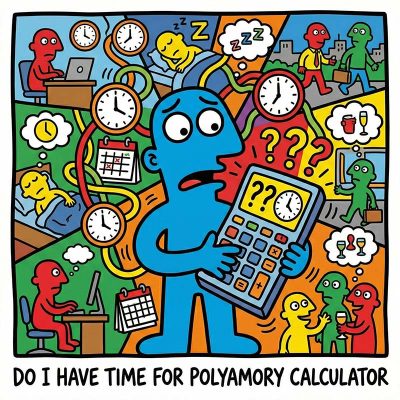
Love is infinite, but your calendar is brutally finite. The fantasy is deep connection; the reality is often just exhausted "calendar tetris." Promising time you don't actually have isn't romantic, it’s a recipe for burnout and broken trust. That sinking feeling when you have to cancel again? That’s the sound of overextension destroying your relationships.
This calculator forces you to confront the math of your life. Do you actually have space for another heart, or are you just setting everyone up for disappointment?

The fantasy is total autonomy and connection. The reality? It can feel like drowning in scheduling chaos and misunderstood expectations. That anxiety you feel isn’t just stress; it’s the wobble of living without a default "anchor." Without a solid architecture, Solo Polyamory stops being a life design and starts being a recipe for burnout and confusion.
The Essential Guide replaces the drift with a concrete anchor. We provide the "Solo Ethic," boundary scripts, and burnout protocols needed to protect your peace. Don't just date around—build a life that actually works for you.

Hierarchy sounds like a corporate org chart until someone gets their feelings hurt. That stomach-turning fear that you are just a "secondary" who can be fired at any time is real. If your relationship feels like a secret ranking system, you are doing it wrong.
Ambiguity is where resentment grows. The Essential Guide replaces the "who matters more" panic with a concrete charter. We provide the scripts and equity guardrails needed to protect every heart in the polycule. Stop guessing and start building.

The ideal is pure equality. The reality? It often slides into hidden rankings where someone gets hurt. That sinking feeling that you are secretly a "secondary" despite the label? That is your intuition detecting couple privilege. Ambiguity is where resentment thrives.
The Essential Guide replaces vague promises with concrete governance. We provide the charters, equity tools, and jealousy protocols needed to ensure "non-hierarchical" isn't just a fantasy. Stop guessing who matters most. Build a network that is actually fair.
The fantasy is total autonomy and connection. The reality? It can feel like drowning in scheduling chaos and misunderstood expectations. That anxiety you feel isn’t just stress; it’s the wobble of living without a default "anchor." Without a solid architecture, Solo Polyamory stops being a life design and starts being a recipe for burnout and confusion.
The Essential Guide replaces the drift with a concrete anchor. We provide the "Solo Ethic," boundary scripts, and burnout protocols needed to protect your peace. Don't just date around—build a life that actually works for you.
Hierarchy sounds like a corporate org chart until someone gets their feelings hurt. That stomach-turning fear that you are just a "secondary" who can be fired at any time is real. If your relationship feels like a secret ranking system, you are doing it wrong.
Ambiguity is where resentment grows. The Essential Guide replaces the "who matters more" panic with a concrete charter. We provide the scripts and equity guardrails needed to protect every heart in the polycule. Stop guessing and start building.
What is hierarchical polyamory and what does hierarchy mean here
Hierarchical polyamory is a form of non monogamy where relationships are organized in levels or tiers. A core partner or partners sit at the top of the hierarchy and have priority access to time energy and emotional support. Partners at lower levels still have meaningful relationships but the level of priority and resource allocation is different. Think of it as a family tree with a main branch and several smaller branches each branch deserving care and attention but not all branches getting an equal share at all times.
Core partner or primary partner
This is the person or people who are at the heart of your life in this dynamic. They are usually the person you build most of your daily life with you align major life goals with and you spend the most time with. In many cases the primary relationship shapes the ground rules for the rest of the network and serves as the anchor for emotional safety.
Secondary partners
Secondary partners have an important place in your life but their access to time energy and planning is typically secondary to the primary relationship. Agreements with secondary partners focus on communication reliability time management and mutual respect. In practice you might schedule date nights with a secondary partner around a consistent pattern that does not conflict with primary commitments.
Outer circle or orbiters
These are partners who are not directly integrated into daily life but still hold value in your broader romantic or intimate landscape. Orbits can include long distance connections casual dating or friends with benefits that have a different level of priority. Clear boundaries help everyone feel respected while keeping space for variety and exploration.
How attachment styles interact with hierarchy
Attachment styles shape how people experience priority time emotional safety and conflict within a hierarchy. Let us walk through how different styles tend to behave and what helps in a hierarchy based ENM setup.
Secure attachment and hierarchy
Secure folks tend to adapt well because they are comfortable with closeness and independence at the same time. They communicate openly they manage boundaries clearly and they can handle scheduling with multiple partners without feeling overwhelmed. The main strength here is consistency and reliability a strong foundation for a family like network of relationships.
Medium risk patterns with anxious attachment
Anxious attachment can create a need for extra reassurance that may feel exhausting to partners but can be balanced with predictable routines and explicit agreements. In a hierarchical setup the anxious partner benefits from regular check ins pre planned updates and transparent calendars. For the anxious person the goal is to translate emotion into concrete requests rather than letting worry drive decisions.
Avoidant dynamics and hierarchy
Avoidant attachment can cause tensions when emotional temperature rises. The fix is to design boundaries that respect independence while maintaining connection. This often means chunking communication into regular shorter updates rather than long intense conversations only when there is a problem. It also helps to create non negotiable time blocks for primary partner and a predictable method for addressing relationship concerns with the entire network.
Fearful avoidant complexity in a hierarchy
In this blend the person may swing between wanting closeness and fearing it. The approach is to provide a safe space that feels predictable and non judgmental. Frame conversations around feelings and needs not blame. Reassurance from multiple partners can help but should not become overwhelming. The aim is steady growth not dramatic shifts in the dynamic.
Common patterns you may see in a hierarchy based ENM
- Time management becomes a central skill especially when primary partners have competing needs
- Rules about scheduling privacy and information sharing are common as a way to reduce jealousy
- Emotional labor may be uneven so you need a plan to distribute it fairly without burning out
- Communication structures like weekly check ins and aligned calendars help keep everyone in the loop
- Jealousy triggers can be predictable so a plan for handling them reduces stress
Practical strategies for making hierarchy and attachment work together
Below are practical steps you can take to create a healthier hierarchy that respects attachment needs and preserves emotional safety for everyone involved.
1. Establish clear agreements and time blocks
Start with a core set of agreements that cover time together with the primary partner other partners and solo time. Use concrete language and measurable boundaries. For example set consistent date nights with the primary partner and set weekly or monthly check in with others. Keep things simple and sustainable rather than trying to implement a complex web of rules all at once.
2. Create a shared calendar and a communication plan
A central calendar is a lifeline in a hierarchy based system. It reduces miscommunication and prevents double booking. Include important events such as birthdays anniversaries and personal milestones. Pair the calendar with a communication plan that says how and when updates are shared and who is responsible for different kinds of information.
3. Design emotional safety nets that fit all styles
Secure attachment thrives on reassurance while anxious attachment needs reliable communication and avoidant types need space that is respected. Create check ins that are predictable and use tone neutral language during conversations. A practice like naming your feelings and stating needs helps people respond rather than react.
4. Practice jealousy management with consent and care
Jealousy is a natural signal not a failure. When we experience jealousy we can ask what the underlying need is and how to address it. An explicit plan for jealousy might include a temporary pause on a date with a certain partner or a scheduled venting session with a trusted person in your network. The key is to act on the underlying need rather than the emotion alone.
5. Use compersion to grow the network
Compersion is a sense of joy from a partner s happiness with someone else. It can feel unfamiliar at first. Practice by recognizing small wins for others and expressing it in gentle affirmative ways. Compersion grows with practice and becomes a skill that improves relationship harmony across levels of the hierarchy.
6. Keep solo time sacred and respected
Even in a tight network solo time matters for personal growth and for recharging emotional energy. Respecting solo time helps avoid guilt and creates a healthier spread of attention across all relationships. Choose routines that allow quiet reflection and personal care without making others feel neglected.
7. Check in about boundaries and revise as needed
Boundaries are not promises carved in stone they are living agreements that should change as people grow. Schedule regular renegotiation points and be open to adjusting the rules based on how the relationships evolve. A flexible approach often yields stronger lasting connection.
8. Practice compassionate directness
When issues arise talk about your own experience using I statements and avoid accusations. For example say I felt overwhelmed when my calendar shifted last minute and I need a heads up next time. It keeps the conversation constructive and reduces defensiveness.
Realistic scenarios and practical examples
Scenario A the secure primary and an anxious secondary
A person with secure attachment holds steady with the primary partner and offers clear dependable communication to both partners. The anxious secondary benefits from predictable scheduling increased contact and concrete reassurance. The primary partner helps by coordinating time and sharing updates with both sides. The outcome is a well managed balance that respects both attachment needs and the hierarchy.
Scenario B the anxious primary and a dismissive secondary
The primary partner seeks frequent reassurance and open dialogue while the secondary partner respects distance and independence. The strategy here includes establishing a mutual rhythm that makes both sides comfortable for example weekly scheduled check in a fixed date night with the primary and private time with the secondary. The goal is to prevent power struggles while keeping needs communicated clearly.
Scenario C the fearful avoidant colleague network
A person who swings between closeness and distance participates in a cluster of relationships with a cautious approach. The network uses consistent boundaries small steps and gentle feedback to reduce fear. The core partners lead with transparency while others contribute their own roots to the relationship garden. Growth happens when everyone feels safe to express needs without fear of being judged.
Must nots and common pitfalls to avoid
- Do not promise perfect balance all the time that is not realistic
- Avoid letting a single partner control the pace of others or the entire network
- Avoid hiding information that could impact all partners such as major life events or changes in availability
- Do not assume another person understands your needs without you saying them out loud
- Avoid overloading the schedule with activities for every partner that leads to exhaustion
Templates and practical tools you can use
Conversation starter templates
- Can we set a time to talk about how we feel about our current schedule and what changes might help
- I am noticing a pattern where I feel overwhelmed when plans change last minute. How can we improve our notice period
- My need right now is more emotional reassurance from you about our primary relationship would you be open to a quick daily check in
Boundary and agreement starter kit
- Primary partner time block every week with no other commitments
- Secondary partner schedule with advance notice for changes
- Clear rule about information sharing with orbiters and within the network
- Anonymous or private feedback channels to raise concerns safely
Sample weekly check in agenda
- Open with each person sharing one positive moment from the week
- Review upcoming events and any conflicts on the calendar
- Discuss any emotional hiccups and identify needs
- Agree on actions for the next seven days
Glossary of useful terms and acronyms
- ENM Ethical non monogamy a broad term for relationship styles that involve honesty consent and transparency about dating and romantic interests outside a primary relationship
- Primary partner The partner who holds the top level in the hierarchy typically sharing major life plans and daily life
- Secondary partner A partner who shares a meaningful connection but with a lower level of priority than the primary
- Orbiters Partners who are part of the network but not directly integrated into daily life
- Attachment style A pattern of relating to others formed by early relationships that influence adult connections
- Jealousy management Practices to reduce fear and insecurity when a partner expands their connections
- Compersion A feeling of joy from a partner s happiness with someone else
Frequently asked questions
Love is infinite, but your calendar is brutally finite. The fantasy is deep connection; the reality is often just exhausted "calendar tetris." Promising time you don't actually have isn't romantic, it’s a recipe for burnout and broken trust. That sinking feeling when you have to cancel again? That’s the sound of overextension destroying your relationships.
This calculator forces you to confront the math of your life. Do you actually have space for another heart, or are you just setting everyone up for disappointment?
The fantasy is total autonomy and connection. The reality? It can feel like drowning in scheduling chaos and misunderstood expectations. That anxiety you feel isn’t just stress; it’s the wobble of living without a default "anchor." Without a solid architecture, Solo Polyamory stops being a life design and starts being a recipe for burnout and confusion.
The Essential Guide replaces the drift with a concrete anchor. We provide the "Solo Ethic," boundary scripts, and burnout protocols needed to protect your peace. Don't just date around—build a life that actually works for you.
Hierarchy sounds like a corporate org chart until someone gets their feelings hurt. That stomach-turning fear that you are just a "secondary" who can be fired at any time is real. If your relationship feels like a secret ranking system, you are doing it wrong.
Ambiguity is where resentment grows. The Essential Guide replaces the "who matters more" panic with a concrete charter. We provide the scripts and equity guardrails needed to protect every heart in the polycule. Stop guessing and start building.
The ideal is pure equality. The reality? It often slides into hidden rankings where someone gets hurt. That sinking feeling that you are secretly a "secondary" despite the label? That is your intuition detecting couple privilege. Ambiguity is where resentment thrives.
The Essential Guide replaces vague promises with concrete governance. We provide the charters, equity tools, and jealousy protocols needed to ensure "non-hierarchical" isn't just a fantasy. Stop guessing who matters most. Build a network that is actually fair.
The fantasy is total autonomy and connection. The reality? It can feel like drowning in scheduling chaos and misunderstood expectations. That anxiety you feel isn’t just stress; it’s the wobble of living without a default "anchor." Without a solid architecture, Solo Polyamory stops being a life design and starts being a recipe for burnout and confusion.
The Essential Guide replaces the drift with a concrete anchor. We provide the "Solo Ethic," boundary scripts, and burnout protocols needed to protect your peace. Don't just date around—build a life that actually works for you.
Hierarchy sounds like a corporate org chart until someone gets their feelings hurt. That stomach-turning fear that you are just a "secondary" who can be fired at any time is real. If your relationship feels like a secret ranking system, you are doing it wrong.
Ambiguity is where resentment grows. The Essential Guide replaces the "who matters more" panic with a concrete charter. We provide the scripts and equity guardrails needed to protect every heart in the polycule. Stop guessing and start building.
