
Consent Under Unequal Power Dynamics

Welcome to a candid, straight talking guide about consent when the relationship map includes power differences. Hierarchical polyamory is a real thing where people organize relationships with primary partners and other partners who may have different levels of access to time, resources, and emotional energy. When power is unbalanced consent does not become a one time checkbox it becomes an ongoing practice. This guide sticks to the facts explains terms and gives you practical steps you can use in your life or your friend circle. If you are new to the scene you will get a clear picture of what to watch for and how to keep consent real and continuous. If you are part of a relationship that already has power imbalances you will find a toolbox for safer negotiations and fewer regrets.
Quick Links to Useful Sections
- What hierarchical polyamory is and how power can show up
- Key terms you might hear in hierarchical polyamory ENM
- Why power imbalances complicate consent
- Principles for ethical consent under power disparities
- Practical strategies for maintaining consent in hierarchical structures
- Clear consent questions and documented conversations
- Independent consent channels
- Regular check ins and renegotiation intervals
- Red flag awareness and early warning signs
- Gender and power carefulness
- Resource fairness and time equity
- Boundaries around privacy and disclosure
- Safeguards for emotional safety
- Realistic scenarios and how to handle them
- Scenario 1 a new partner entering a high demand schedule
- Scenario 2 funding stress and relationship choices
- Scenario 3 shifting dynamics because of life stages
- Scenario 4 the withdrawal of consent
- Scenario 5 dealing with jealousy and insecurity
- What to avoid when consent is at stake
- Glossary of useful terms and acronyms
- Checklist for consent in hierarchical polyamory
- Real world tips that actually work
- Frequently asked questions
- Final notes for living ethically with unequal power
What hierarchical polyamory is and how power can show up
Hierarchical polyamory is a way of organizing multiple relationships with a hierarchy such as primary or main partners along with secondary or other partners. The person with primary status often has a bigger say in select life areas such as schedule decisions housing finances and major life choices. This does not mean those in secondary positions cannot have desires or boundaries it means the social and practical weighting of decisions can be uneven. In ENM ethical non monogamy the focus is on consent transparency communication and fairness even when power is not equal. Power can show up in many ways including money time access to romance attention emotional labor and social validation. When power differences are not acknowledged consent can become thin or hollow and that is how harm sneaks in.
Understanding how power leaks into everyday moments is the first step. If you pretend the imbalance does not exist you will likely reach a point where someone feels pressured or coerced. The goal is not to erase power differences the goal is to make consent active robust and flexible enough to handle those differences with integrity.
Key terms you might hear in hierarchical polyamory ENM
- ENM Ethical non monogamy a family of relationship styles that involve more than two people with consent and honesty at the center.
- Hierarchical polyamory A polyamory arrangement where partners are ranked by levels of commitment often labeled primary and secondary.
- Primary partner The partner who has a central status in the hierarchy which can include prioritized time decisions and sometimes financial or logistical influence.
- Secondary partner A partner who is outside the main pairing in the hierarchy but still has an established relationship with the other person or people involved.
- Boundaries Boundaries are lines drawn to protect well being safety and comfort for each person involved.
- Consent The voluntary and ongoing agreement to participate in specific activities with another person.
- Coercion Forcing or pressuring someone to do something they do not want to do often through threats manipulation or shame.
- Ally negotiation A process that involves all parties to align on expectations boundaries and safety nets.
- Ongoing consent A consent check in that happens over time not just at the start of a new dynamic or activity.
- Power sources The things that create influence such as time access money status social leverage or intimate history.
- Safeguards Practices that reduce risk such as transparency independent check ins and access to mental health resources.
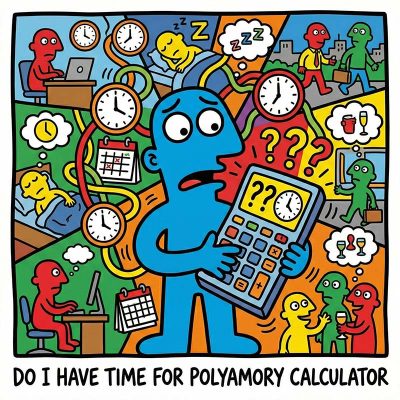
Love is infinite, but your calendar is brutally finite. The fantasy is deep connection; the reality is often just exhausted "calendar tetris." Promising time you don't actually have isn't romantic, it’s a recipe for burnout and broken trust. That sinking feeling when you have to cancel again? That’s the sound of overextension destroying your relationships.
This calculator forces you to confront the math of your life. Do you actually have space for another heart, or are you just setting everyone up for disappointment?

The fantasy is total autonomy and connection. The reality? It can feel like drowning in scheduling chaos and misunderstood expectations. That anxiety you feel isn’t just stress; it’s the wobble of living without a default "anchor." Without a solid architecture, Solo Polyamory stops being a life design and starts being a recipe for burnout and confusion.
The Essential Guide replaces the drift with a concrete anchor. We provide the "Solo Ethic," boundary scripts, and burnout protocols needed to protect your peace. Don't just date around—build a life that actually works for you.

Hierarchy sounds like a corporate org chart until someone gets their feelings hurt. That stomach-turning fear that you are just a "secondary" who can be fired at any time is real. If your relationship feels like a secret ranking system, you are doing it wrong.
Ambiguity is where resentment grows. The Essential Guide replaces the "who matters more" panic with a concrete charter. We provide the scripts and equity guardrails needed to protect every heart in the polycule. Stop guessing and start building.

The ideal is pure equality. The reality? It often slides into hidden rankings where someone gets hurt. That sinking feeling that you are secretly a "secondary" despite the label? That is your intuition detecting couple privilege. Ambiguity is where resentment thrives.
The Essential Guide replaces vague promises with concrete governance. We provide the charters, equity tools, and jealousy protocols needed to ensure "non-hierarchical" isn't just a fantasy. Stop guessing who matters most. Build a network that is actually fair.
The fantasy is total autonomy and connection. The reality? It can feel like drowning in scheduling chaos and misunderstood expectations. That anxiety you feel isn’t just stress; it’s the wobble of living without a default "anchor." Without a solid architecture, Solo Polyamory stops being a life design and starts being a recipe for burnout and confusion.
The Essential Guide replaces the drift with a concrete anchor. We provide the "Solo Ethic," boundary scripts, and burnout protocols needed to protect your peace. Don't just date around—build a life that actually works for you.
Hierarchy sounds like a corporate org chart until someone gets their feelings hurt. That stomach-turning fear that you are just a "secondary" who can be fired at any time is real. If your relationship feels like a secret ranking system, you are doing it wrong.
Ambiguity is where resentment grows. The Essential Guide replaces the "who matters more" panic with a concrete charter. We provide the scripts and equity guardrails needed to protect every heart in the polycule. Stop guessing and start building.
Why power imbalances complicate consent
Power imbalances change the quality of consent. Consent is not simply a one time yes it is a living agreement that can be withdrawn or renegotiated. In a hierarchy the person in the primary position may have more leverage to obtain a yes even when the other person is unsure or reluctant. Pressure can come from the fear of losing access to affection time or financial stability. Even without overt coercion subtle dynamics such as fear of breaking up fear of losing the relationship or fear of being seen as a troublemaker can dampen true consent. On the other hand a well designed hierarchy can create a climate where honest dialogue is possible and where all partners feel heard if consent is veterinary. This is a constant practice not a one off event.
Common scenarios in hierarchical polyamory include schedules that favor the primary partner less time with others more shared resources or decisions about new partners being made by one person without adequate input from others. These situations are not inherently abusive but they can become harmful if power differences are unacknowledged and unaddressed.
Principles for ethical consent under power disparities
- Make power visible Talk about where power comes from and how decisions are made. Map it out if you need to and be explicit about areas where power is exercised.
- Seek enthusiastic consent Consent should be lively and with a clear affirmative yes not a passive okay. It should be possible to withdraw at any time without fear of punishment or reprisal.
- Use ongoing consent checks Check in regularly even after agreements are made. People grow and feelings change and the relationship dynamics shift over time.
- Prefer transparent decision making Major decisions that affect multiple people should be discussed in an inclusive manner with all affected parties present where possible.
- Protect independent boundaries Ensure that each person can set boundaries that are not overridden by the hierarchy. A boundary is a personal limit that should be respected regardless of the status of others.
- Guard against coercive pressure Be vigilant about attempts to dress up pressure as a request or a preference. If a request feels like a demand slow down and revisit with more voices in the room if needed.
- Offer safe exit ramps Provide clear ways for someone to decline or pause without consequences to their standing within the group.
- Build in accountability Have mechanisms for accountability such as third party mediation or therapy to address conflicts that arise from unequal power dynamics.
- Practice trauma informed communication Approach conversations with empathy and an awareness of past hurts or triggers. This reduces the risk of repeating harm.
Practical strategies for maintaining consent in hierarchical structures
Clear consent questions and documented conversations
Start with explicit questions that cover time boundaries financial boundaries sex and emotional commitments. Document the answers in a shared space such as a private document or a consent notebook. Documentation is not a cage it is a reference that helps everyone stay aligned when emotions are running high.
Independent consent channels
In a hierarchy consent should be possible even if the primary partner is not present. This can mean that secondary partners have direct channels to discuss activities and boundaries with the person they are dating without having to go through the primary partner as a gatekeeper. When possible set up safe private spaces for these conversations and use inclusive language that respects all voices.
Regular check ins and renegotiation intervals
Set a schedule for check ins such as every month or after a major life change. Use these moments to verify that everyone still agrees with the current structure and to adjust as needed. Do not assume that past consent remains valid forever.
Red flag awareness and early warning signs
Watch for secrecy hush tones when discussing new partners or changes to the plan. Avoiding eye contact rapid changes in mood or a visible sense of discomfort are signs that something may be off. Start a conversation early when you notice these signs instead of letting them fester.
Gender and power carefulness
Gender norms can influence how power plays out in a relationship map. Be mindful of stereotypes that assign control to one gender or role. Ensure that everyone has equal access to voice and to decision making in the areas that affect them.
Resource fairness and time equity
Power often shows up in money and time. If a primary partner controls most of the shared resources or the scheduling of time you may want to implement rules that the other partners have equal voice in major financial or time related decisions. This creates a healthier balance that helps consent feel more authentic.
Boundaries around privacy and disclosure
Agree on what is shared publicly and what stays private. When a hierarchy is in play secrets can become a tool for control. Clarity around what is discussed with others is essential.
Safeguards for emotional safety
Emotional labor in hierarchical polyamory can fall heavily on the primary partner or on one or two individuals. Create a plan that shares responsibility for emotional support across the network instead of concentrating it in one person. This reduces burnout and protects consent by reducing pressure points.
Realistic scenarios and how to handle them
Scenario 1 a new partner entering a high demand schedule
In a common setup a new partner may require a lot of time and attention which could squeeze existing partners. The ethical move is to pause the introduction of new levels or new partners until a clear plan is in place that allows fair time distribution. The check in should confirm that all existing partners consent to changes and that the planned schedule does not overwhelm anyone. If a partner feels pressured to say yes this is a red flag and needs immediate attention.
Scenario 2 funding stress and relationship choices
Money can shift power quickly. If one partner controls finances it is important to adopt inclusive budgeting practices. All adults involved should have meaningful input into shared expenses and plans for future financial commitments. Consider neutral third party advice or a family or couple therapist to create an fair financial framework that respects autonomy.
Scenario 3 shifting dynamics because of life stages
People change as they go through life events such as parenting responsibilities career shifts or health changes. A consent friendly approach here is to rebalance expectations through dialogue not through unilateral decisions. Use a renegotiation window to explore new boundaries and ensure every voice is heard including those who may be most affected by the change.
Scenario 4 the withdrawal of consent
Withdrawal can come at any time and it should be respected promptly. If someone withdraws consent for a previously agreed activity you pause immediately and revisit the plan. Do not question or shame the person for changing their mind. The goal is to protect well being and maintain trust within the network.
Scenario 5 dealing with jealousy and insecurity
Jealousy is a normal human emotion not a failure of character. When jealousy arises in a hierarchy it can become amplified by power dynamics. A practical approach is to validate feelings acknowledge the truth behind them and adjust boundaries if needed. Use a neutral mediator or a therapist if the emotional load becomes heavy.
What to avoid when consent is at stake
- Coercion using threats or manipulation to obtain a yes
- Withholding information or lying about the dynamics to get agreement
- Shaming or blaming someone for changing their mind
- Ignoring a partner voice or discrediting their experience
- Rushing the renegotiation process when feelings are strong
Glossary of useful terms and acronyms
- ENM Ethical non monogamy a family of relationship styles that involve more than two people with consent and honesty at the center.
- Hierarchical polyamory A polyamory structure in which relationships are arranged in levels with primary partners often having more influence over certain decisions.
- Primary partner The partner who has the central status in the relationship map.
- Secondary partner A partner who is part of the network but not at the top of the hierarchy.
- Boundaries Personal limits that help protect wellbeing and safety for each person involved.
- Consent The voluntary and ongoing agreement to participate in specific activities with another person.
- Coercion Pressuring someone to agree through threats manipulation or control.
- Ongoing consent A continuous process of checking in and confirming permission over time.
- Power sources The factors that create influence such as time money status and access to resources.
- Safeguards Practices such as transparency and third party support that protect everyone involved.
Checklist for consent in hierarchical polyamory
- Map power sources and discuss openly where influence comes from
- Agree on a process for ongoing consent checks and renegotiations
- Set clear boundaries that protect each person equally
- Establish independent channels for conversations with different partners
- Implement regular check ins and a plan for red flags
- Involve a neutral mediator or therapist when needed
- Protect privacy and be transparent about what is shared with whom
- Prepare an exit strategy if the dynamic becomes unsafe or uncomfortable
Real world tips that actually work
- Use plain language in all agreements and avoid jargon that only a few people understand
- Practice conversations in a low stakes setting to build confidence for tougher talks
- Document decisions in a simple shared note so everyone can revisit them
- Schedule annual or semi annual renegotiations to keep up with changes
- Be mindful of the emotional toll and do not skip mental health supports
Frequently asked questions
What makes consent different in a hierarchical polyamory dynamic
Consent remains the same core idea it is about freely given informed and revocable permission. What changes is the context the presence of power differences and the need for explicit ongoing checks to avoid coercion or manipulation.
How can I ensure consent is truly voluntary when there is an imbalance
Be explicit about the right to say no and to pause. Create routines that allow voice independent of the hierarchy such as private check ins with each partner or third party mediated discussions.
What is enthusiastic consent and how does it apply here
Enthusiastic consent is a clear affirmative yes not silence or ambiguity. In hierarchical setups it means more than a whispered yes it means a confident and joyful consent that can be revisited at any time.
What are red flags of coercion in a hierarchical arrangement
Red flags include pressure to agree to new partners or activities quickly secrecy about agreements lack of access to information about changes or consequences and fear showing up when asking questions. If any red flags appear take a break pause and re evaluate with all voices heard.
How often should we renegotiate or check in
Start with a monthly check in and adjust based on life changes. If a major life event happens such as moving in together a new partner entering the network or a job change set a renegotiation plan within two to four weeks of the event.
Is it okay to bring a therapist into the process
Yes. A therapist especially one who has experience with non traditional relationship structures can help with communication patterns boundaries and emotional safety. They can offer tools and perspective that people in the circle may overlook.
What if someone does not want to talk about power at all
Respect their decision but do not ignore the impact. You can establish the fact that discussing power is optional for each person but still address consent practices that apply to the group as a whole. The goal is safety and fairness for everyone.
Should documentation be shared with all partners
Documentation should be accessible to those it concerns while protecting privacy. Use a shared space where all involved can review and add input. Do not force access to information that could cause harm or distress.
Final notes for living ethically with unequal power
Consent under unequal power dynamics is not about leveling every imbalance it is about creating a culture where everyone can speak up and be heard and where changes to the relationship map are discussed with care. It is about turning a potentially risky setup into a learning curve that produces respect trust and genuine care for all involved. If you take away one idea from this piece let it be this consent is a practice not a goal. With ongoing attention you can nurture a network that celebrates autonomy while honoring interdependence.
Love is infinite, but your calendar is brutally finite. The fantasy is deep connection; the reality is often just exhausted "calendar tetris." Promising time you don't actually have isn't romantic, it’s a recipe for burnout and broken trust. That sinking feeling when you have to cancel again? That’s the sound of overextension destroying your relationships.
This calculator forces you to confront the math of your life. Do you actually have space for another heart, or are you just setting everyone up for disappointment?
The fantasy is total autonomy and connection. The reality? It can feel like drowning in scheduling chaos and misunderstood expectations. That anxiety you feel isn’t just stress; it’s the wobble of living without a default "anchor." Without a solid architecture, Solo Polyamory stops being a life design and starts being a recipe for burnout and confusion.
The Essential Guide replaces the drift with a concrete anchor. We provide the "Solo Ethic," boundary scripts, and burnout protocols needed to protect your peace. Don't just date around—build a life that actually works for you.
Hierarchy sounds like a corporate org chart until someone gets their feelings hurt. That stomach-turning fear that you are just a "secondary" who can be fired at any time is real. If your relationship feels like a secret ranking system, you are doing it wrong.
Ambiguity is where resentment grows. The Essential Guide replaces the "who matters more" panic with a concrete charter. We provide the scripts and equity guardrails needed to protect every heart in the polycule. Stop guessing and start building.
The ideal is pure equality. The reality? It often slides into hidden rankings where someone gets hurt. That sinking feeling that you are secretly a "secondary" despite the label? That is your intuition detecting couple privilege. Ambiguity is where resentment thrives.
The Essential Guide replaces vague promises with concrete governance. We provide the charters, equity tools, and jealousy protocols needed to ensure "non-hierarchical" isn't just a fantasy. Stop guessing who matters most. Build a network that is actually fair.
The fantasy is total autonomy and connection. The reality? It can feel like drowning in scheduling chaos and misunderstood expectations. That anxiety you feel isn’t just stress; it’s the wobble of living without a default "anchor." Without a solid architecture, Solo Polyamory stops being a life design and starts being a recipe for burnout and confusion.
The Essential Guide replaces the drift with a concrete anchor. We provide the "Solo Ethic," boundary scripts, and burnout protocols needed to protect your peace. Don't just date around—build a life that actually works for you.
Hierarchy sounds like a corporate org chart until someone gets their feelings hurt. That stomach-turning fear that you are just a "secondary" who can be fired at any time is real. If your relationship feels like a secret ranking system, you are doing it wrong.
Ambiguity is where resentment grows. The Essential Guide replaces the "who matters more" panic with a concrete charter. We provide the scripts and equity guardrails needed to protect every heart in the polycule. Stop guessing and start building.
