
Decision Making Power in Primary Relationships


When you hear the phrase hierarchical polyamory in the world of ethical non monogamy ENM you might imagine a strict pecking order with clear rulers and subjects. The reality is a lot more nuanced. Think of a primary relationship as the anchor and the rest as companions who share time energy and affection. In this setup decision making power can feel like a big topic because it touches trust safety and daily life. This guide breaks down how to handle decision making power in a way that respects everyone involved and keeps things fair. We will cover practical frameworks common patterns how to negotiate agreements and how to spot red flags before they become full on storms.
Quick Links to Useful Sections
- What hierarchical polyamory ENM means
- Why power dynamics matter in primary relationships
- Key terms you will hear and what they mean
- Core principles for fair decision making in HP ENM
- How to design decision making frameworks that work
- 1. Define the decision areas
- 2. Create decision making rules
- 3. Build a renegotiation cadence
- 4. Establish a transparent communication routine
- 5. Document agreements clearly
- 6. Separate personal autonomy from relationship power
- 7. Build safety nets for emotional responses
- Negotiation strategies that reduce friction
- Practical scenarios and how to handle them
- Scenario A: A new partner enters the orbit and you worry about time distribution
- Scenario B: A major life decision such as moving in together affects everyone
- Scenario C: Finances and shared resources become a point of tension
- Scenario D: A partner requests a boundary that you feel uncomfortable with
- Scenario E: One partner feels excluded from important conversations
- Red flags and warning signs
- Tools to support healthy decision making
- Frequently used terms and acronyms explained
- Checklist for establishing strong primary decision making in HP ENM
- Real world takeaways
- Glossary of useful terms
- Frequently asked questions
What hierarchical polyamory ENM means
First let us explain the terms so we are all on the same page. Hierarchical polyamory is a relationship structure within ethical non monogamy where one partnership is regarded as primary or higher in importance than others. This does not mean the other relationships do not matter but it does mean that the primary relationship often takes precedence in decisions that affect shared life space such as housing schedules finances public commitments and family matters. ENM stands for ethical non monogamy which is the practice of having intimate or romantic relationships with more than one person with the knowledge and consent of everyone involved. When we combine those two ideas we get a dynamic in which power and decision making are not random or chaotic they are guided by agreements and ongoing communication.
In many HP ENM setups the term primary is the anchor while secondary and other partners are the satellites. The exact meaning of primary can vary from couple to couple. Some use primary to refer to a long term committed relationship with shared living arrangements or finances. Others use primary to describe the relationship that takes priority in scheduling time or making major life decisions. The key point is that primary is defined by those involved and revisited regularly. It is not a fixed badge that never changes. This is a living negotiation not a one time contract.
Why power dynamics matter in primary relationships
Power dynamics in a primary relationship are not about control. They are about structuring decision making in a way that respects everyone while ensuring the core needs of the primary relationship are fulfilled. When power is mismanaged the risk is resentment secrecy and a drift toward inequality. When power is handled well you get clear expectations healthy boundaries and space for growth for all partners. The aim is consent transparency and fairness rather than domination or quiet coercion. In practice that means the agreements should be revisited as lives change and new relationships start or end.
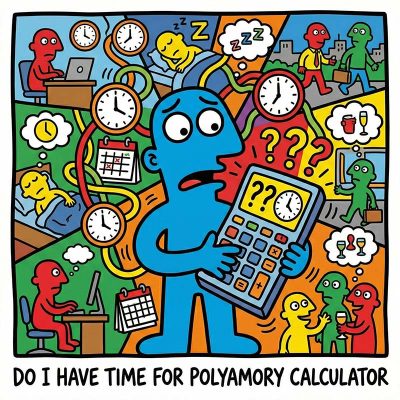
Love is infinite, but your calendar is brutally finite. The fantasy is deep connection; the reality is often just exhausted "calendar tetris." Promising time you don't actually have isn't romantic, it’s a recipe for burnout and broken trust. That sinking feeling when you have to cancel again? That’s the sound of overextension destroying your relationships.
This calculator forces you to confront the math of your life. Do you actually have space for another heart, or are you just setting everyone up for disappointment?

The fantasy is total autonomy and connection. The reality? It can feel like drowning in scheduling chaos and misunderstood expectations. That anxiety you feel isn’t just stress; it’s the wobble of living without a default "anchor." Without a solid architecture, Solo Polyamory stops being a life design and starts being a recipe for burnout and confusion.
The Essential Guide replaces the drift with a concrete anchor. We provide the "Solo Ethic," boundary scripts, and burnout protocols needed to protect your peace. Don't just date around—build a life that actually works for you.

Hierarchy sounds like a corporate org chart until someone gets their feelings hurt. That stomach-turning fear that you are just a "secondary" who can be fired at any time is real. If your relationship feels like a secret ranking system, you are doing it wrong.
Ambiguity is where resentment grows. The Essential Guide replaces the "who matters more" panic with a concrete charter. We provide the scripts and equity guardrails needed to protect every heart in the polycule. Stop guessing and start building.

The ideal is pure equality. The reality? It often slides into hidden rankings where someone gets hurt. That sinking feeling that you are secretly a "secondary" despite the label? That is your intuition detecting couple privilege. Ambiguity is where resentment thrives.
The Essential Guide replaces vague promises with concrete governance. We provide the charters, equity tools, and jealousy protocols needed to ensure "non-hierarchical" isn't just a fantasy. Stop guessing who matters most. Build a network that is actually fair.
The fantasy is total autonomy and connection. The reality? It can feel like drowning in scheduling chaos and misunderstood expectations. That anxiety you feel isn’t just stress; it’s the wobble of living without a default "anchor." Without a solid architecture, Solo Polyamory stops being a life design and starts being a recipe for burnout and confusion.
The Essential Guide replaces the drift with a concrete anchor. We provide the "Solo Ethic," boundary scripts, and burnout protocols needed to protect your peace. Don't just date around—build a life that actually works for you.
Hierarchy sounds like a corporate org chart until someone gets their feelings hurt. That stomach-turning fear that you are just a "secondary" who can be fired at any time is real. If your relationship feels like a secret ranking system, you are doing it wrong.
Ambiguity is where resentment grows. The Essential Guide replaces the "who matters more" panic with a concrete charter. We provide the scripts and equity guardrails needed to protect every heart in the polycule. Stop guessing and start building.
Key terms you will hear and what they mean
- Primary partner The person or people who hold the most significant role in someone life life space and decisions. This view points to shared living arrangements finances and long term commitments.
- Secondary partner A relationship that is important but not the main anchor. Time and energy invested may be less and decisions may be made with primary input but not ultimate sway.
- Ethical Non Monogamy ENM A style of relationship in which all people involved know about each other and agree to more than one romantic or sexual connection.
- Veto power The ability of one partner to block a relationship decision that could affect the primary relationship. Remember veto power is controversial and must be used with care and consent.
- Consent An explicit yes from all involved that a proposed action or arrangement is acceptable. Consent is ongoing and can be withdrawn at any time.
- Boundaries Clear limits set to protect emotional safety physical safety and personal values. Boundaries are about what is allowed what is not and how information is shared.
- Negotiation The process of discussing needs fears and expectations to reach an agreement that works for all parties.
- Transparency Open sharing of plans feelings updates and changes that can affect others in the network.
Core principles for fair decision making in HP ENM
- Respect for autonomy Each person should have a voice in decisions that involve them directly. The line between personal autonomy and relationship needs is central here.
- Clear definition of the primary role Everyone should know what the primary partner has as a say and what falls into the new agreements. Clarity beats confusion every time.
- Ongoing consent Consent is not a one time checkbox. It is a living process that must be revisited whenever life changes or new dynamics emerge.
- Fairness The rules should apply to everyone in the circle and should not create covert power imbalances or hidden agendas.
- Communication hygiene Regular check ins honest language and timely updates reduce the chance of drift and drama.
- Safety first Emotional physical and sexual safety must be prioritized. When in doubt pause and reassess.
How to design decision making frameworks that work
The right framework makes complicated stuff manageable. Below are practical steps you can adapt to your situation and you can mix and match as needed.
1. Define the decision areas
Start with a list of decision domains. Common areas include living arrangements housing finances schedule of time with partners family planning child care if relevant travel plans and major life commitments. Each domain should have a clear owner or a clear decision making path. In a typical HP ENM setup the primary partner or couple may have more say in shared life areas while personal options remain deeply respected by all involved.
2. Create decision making rules
Rules are not about micromanagement. They are about predictability. Examples include how often you will renegotiate contracts how you handle new partner introductions what happens when someone changes their mind and how you document agreements. You might decide that major life decisions require joint consent or you might set a three tier scheme where certain decisions require a veto a discussion or an informational update only.
3. Build a renegotiation cadence
Agreements must be alive. Set a regular cadence for revisiting decisions such as every six to eight weeks or after a new partner starts dating. Use this time to surface concerns celebrate wins and adjust plans. Don not wait for a crisis to renegotiate. Proactive renewal tends to prevent drama later on.
4. Establish a transparent communication routine
Agree on how you will share updates who needs to know what and how you will talk about sensitive issues. Some groups prefer written summaries and others opt for structured face to face check ins. The key is consistency and honesty. When people feel left out or informed too late trust erodes fast.
5. Document agreements clearly
Put it in writing or a well organized shared document. The format matters less than the clarity. Avoid vague language and include concrete examples. It can be a living document that evolves as your relationships grow. The goal is not to trap anyone but to reduce ambiguity and conflict.
6. Separate personal autonomy from relationship power
People are not reducible to roles. Each person should be able to consent to or decline participation in an activity independently of others. When autonomy is respected relationships function better. Power in a HP ENM circle should never become a tool for coercion or coercive silence.
7. Build safety nets for emotional responses
Jealousy discomfort and fear are normal. Build in check ins for emotional safety. Create a process for stepping back when someone feels overwhelmed. Acknowledge emotions without letting them hijack decisions that affect everyone.
Negotiation strategies that reduce friction
Negotiation is the engine that keeps HP ENM moving in the right direction. Here are tactics that tend to work in real life while honoring all voices.
- Lead with impact statements Start with how a change would affect you emotionally or practically. This grounds the conversation in concrete realities rather than abstract wishes.
- Ask for a specific proposal Instead of saying I do not want this ask for a proposed alternative that would meet the core need while addressing concerns.
- Use a two stage approach First discuss the what and why then decide on a plan that seems fair. Second schedule a follow up to review the plan once more.
- Respect time boundaries If someone signals they need time to think give them space. A decision made in a rushed moment often later causes pain.
- Test assumptions Say what you think is true and invite others to correct you. Clarifying assumptions prevents needless conflicts.
Practical scenarios and how to handle them
Scenario A: A new partner enters the orbit and you worry about time distribution
In a HP ENM setup the primary may face the challenge of preserving time with the main partner while being open to new connections. Start with a clear check in on time budgets for the week or month. Decide how much time each partner expects and what the minimum viable presence looks like. Use a trial period with a review point. Document the outcomes and adjust the schedule. Always communicate changes early. Avoid letting the new relationship overshadow the established one without explicit consent.
Scenario B: A major life decision such as moving in together affects everyone
Moving in together touches shared space finances and daily routines. The primary partner usually shoulders extra responsibility here but the decision should remain transparent. Lay out what moving in means for each person what the expected contribution is and what happens if the other relationships shift during the move. If a different partner has strong input consider a formal vote or a time bound decision and then revisit the choice after a set period.
Scenario C: Finances and shared resources become a point of tension
Money is a common pressure point. Define what costs are shared who pays what and how to handle changes in income. You might set up a simple shared fund for joint expenses and a personal fund for individual needs. Agree on a rule for how expenses are approved and how future investments are evaluated. Set a regular finance review to keep the system healthy.
Scenario D: A partner requests a boundary that you feel uncomfortable with
Boundaries are negotiable not sacred. Listen to the request ask questions to understand the motive and respond with your own boundaries. If the boundary is non negotiable for you explain why and propose alternatives that may achieve similar outcomes. The aim is to preserve safety and comfort for everyone involved.
Scenario E: One partner feels excluded from important conversations
Inclusion is a responsibility shared by the entire network. Create a protocol for inviting all relevant partners to discussions that impact them. If someone cannot attend a meeting ensure they receive a summary and have a chance to contribute asynchronously. Make space for everyone to speak and respect the ideas that come from every voice.
Red flags and warning signs
- Secrecy Hidden discussions or gossiped decisions that affect the group are a danger sign.
- One sided veto use If veto power is used to punish or to control rather than protect the primary relationship the dynamic is off balance.
- Power drift When one person gains influence over most decisions and others stop speaking up.
- Irregular renegotiation When agreements never get updated even after major life changes.
- Feeling trapped If someone feels they cannot consent to current arrangements without fear of repercussion.
Tools to support healthy decision making
- Decision journals Short notes about decisions and why they were made. This creates trackable history that helps in renegotiation.
- Shared calendars Timely visibility into schedules prevents conflicts and reduces miscommunication.
- Consent check ins Quick questions such as is everyone still comfortable with the current plan help catch drift before it becomes a problem.
- Neutral facilitator Having a trusted third party to run a check in can help when emotions run high and a straight talk is tricky.
- Safe word or pause mechanism A pre agreed cue to pause a discussion when someone is reaching their limit ensures safety and dignity.
Frequently used terms and acronyms explained
- ENM Ethical Non Monogamy means seeking and maintaining multiple romantic or sexual relationships with consent and honesty among all involved.
- HP ENM Hierarchical Polyamory within Ethical Non Monogamy a form of ENM where a primary relationship carries different decision making weight than other relationships.
- Primary relationship The relationship considered the anchor for decisions and life logistics in a HP ENM setup.
- Secondary relationship A relationship that is important but does not carry the same decision making weight as the primary relationship.
- Veto A decision blocking power that may be exercised by a partner usually related to safety or major boundaries but it must be used responsibly and fairly.
- Consent An ongoing agreement to engage in a given activity or relationship. It can be withdrawn at any time by any party.
- Boundaries Boundaries set by individuals or the group that define what is permitted and what is not.
- Renegotiation The process of updating agreements to reflect new life circumstances or changes in feelings.
- Transparency Open sharing of plans feelings and changes that could affect other people in the network.
Checklist for establishing strong primary decision making in HP ENM
- Define who has authority in which domains clearly and agree on when to renegotiate
- Document agreements in a shared readable format and keep it updated
- Set regular check ins dedicated to discussing relationship health and distribution of time energy and money
- Ensure every voice is heard even if the decision favors the primary relationship
- Prioritize safety and honesty and pause negotiations if anyone feels unsafe or overwhelmed
- Use a neutral facilitator if needed to maintain fairness during tough conversations
Real world takeaways
Power in a HP ENM setup is not about control it is about clarity consent and care. It is about creating a system where the primary relationship remains resilient while allowing other connections to flourish. It is about making room for changes without breaking trust. And it is about choosing to renegotiate not to cling to old patterns when life has shifted. If this dynamic feels heavy or scary the right move is to slow down and re talk the basics. You can always pick a fresh starting line and move forward with intention.
Glossary of useful terms
- Ethical Non Monogamy ENM A philosophy of relationships where multiple romantic or sexual connections exist with consent and honesty.
- Hierarchical Polyamory HP A form of polyamory that assigns different levels of importance to different relationships.
- Primary partner The partner considered the main anchor for life decisions and shared life space.
- Secondary partner A partner with a meaningful but non primary role in life decisions.
- Veto A power to stop a proposed action or relationship that affects the primary relationship.
- Renegotiation Reassessing and updating agreements in light of new circumstances.
- Boundaries Specific boundaries set by partners to protect safety and values.
- Transparency Open sharing of relevant information to maintain trust.
Frequently asked questions
What is hierarchical polyamory in simple terms
Hierarchical polyamory is a form of ethical non monogamy where one partnership is treated as the main anchor for decisions while other relationships exist on a secondary level. The primary relationship has extra decision making weight while secondary connections are supported with clear boundaries and consent.
How does decision making power typically work in primary relationships
In most HP ENM setups the primary relationship handles major life decisions that affect shared space time and money. Secondary relationships have input and the primary partner or couple holds lead responsibility. The exact division depends on the agreements in place and these agreements are renegotiated over time.
What should I do if I feel my voice is not being heard in a HP ENM circle
Address the feeling directly in a calm setting. Restate your concerns propose a concrete change and request a check in to revisit the matter. If needed involve a neutral facilitator or a trusted friend to help mediate the conversation. Do not allow resentment to fester for months.
Is veto power always a problem
Veto power can be healthy when used to protect safety or core values and when applied fairly and transparently. It becomes a problem when it is used to punish or to control without consent. The key is to have clear rules about when a veto can be used and how it is reviewed.
How often should agreements be renegotiated
Regular renegotiation is part of a living system. A practical cadence is every six to eight weeks or after major life events such as moving in changes in relationship status or significant life transitions. The goal is to stay aligned not to police each other.
How can we handle finances in a HP ENM dynamic
Split basic shared costs shared living space and future planning in a transparent way. Some groups create a joint fund for shared expenses and keep separate funds for personal or independent needs. Ensure everyone understands the plan and agrees to it and revisit when income or household circumstances shift.
What is the difference between rules and boundaries
Boundaries define what is allowed and what is not in terms of behavior values and safety. Rules are agreements on process for making decisions or handling situations. Boundaries are personal and rules are collective tools. Both should be negotiated and revisited as needed.
How can we practice fairness in decision making
Ensure every voice is heard in discussions use neutral facilitation when needed and document decisions so there is a clear record. Make space for feedback and adjust rules in light of new experiences and emotions.
What should I do if I suspect power is drifting toward one person
Bring it up promptly in a check in. Use specific examples and ask for a plan to rebalance. If the drift continues consider adding a governance mechanism such as rotating chairs for discussions or redefining decision domains to restore balance.
Love is infinite, but your calendar is brutally finite. The fantasy is deep connection; the reality is often just exhausted "calendar tetris." Promising time you don't actually have isn't romantic, it’s a recipe for burnout and broken trust. That sinking feeling when you have to cancel again? That’s the sound of overextension destroying your relationships.
This calculator forces you to confront the math of your life. Do you actually have space for another heart, or are you just setting everyone up for disappointment?
The fantasy is total autonomy and connection. The reality? It can feel like drowning in scheduling chaos and misunderstood expectations. That anxiety you feel isn’t just stress; it’s the wobble of living without a default "anchor." Without a solid architecture, Solo Polyamory stops being a life design and starts being a recipe for burnout and confusion.
The Essential Guide replaces the drift with a concrete anchor. We provide the "Solo Ethic," boundary scripts, and burnout protocols needed to protect your peace. Don't just date around—build a life that actually works for you.
Hierarchy sounds like a corporate org chart until someone gets their feelings hurt. That stomach-turning fear that you are just a "secondary" who can be fired at any time is real. If your relationship feels like a secret ranking system, you are doing it wrong.
Ambiguity is where resentment grows. The Essential Guide replaces the "who matters more" panic with a concrete charter. We provide the scripts and equity guardrails needed to protect every heart in the polycule. Stop guessing and start building.
The ideal is pure equality. The reality? It often slides into hidden rankings where someone gets hurt. That sinking feeling that you are secretly a "secondary" despite the label? That is your intuition detecting couple privilege. Ambiguity is where resentment thrives.
The Essential Guide replaces vague promises with concrete governance. We provide the charters, equity tools, and jealousy protocols needed to ensure "non-hierarchical" isn't just a fantasy. Stop guessing who matters most. Build a network that is actually fair.
The fantasy is total autonomy and connection. The reality? It can feel like drowning in scheduling chaos and misunderstood expectations. That anxiety you feel isn’t just stress; it’s the wobble of living without a default "anchor." Without a solid architecture, Solo Polyamory stops being a life design and starts being a recipe for burnout and confusion.
The Essential Guide replaces the drift with a concrete anchor. We provide the "Solo Ethic," boundary scripts, and burnout protocols needed to protect your peace. Don't just date around—build a life that actually works for you.
Hierarchy sounds like a corporate org chart until someone gets their feelings hurt. That stomach-turning fear that you are just a "secondary" who can be fired at any time is real. If your relationship feels like a secret ranking system, you are doing it wrong.
Ambiguity is where resentment grows. The Essential Guide replaces the "who matters more" panic with a concrete charter. We provide the scripts and equity guardrails needed to protect every heart in the polycule. Stop guessing and start building.
