
Emotional Regulation Skills for Hierarchical Dynamics

Welcome to a guide that treats your feelings like the friendly allies they are. If you are navigating hierarchical dynamics in ethical non monogamy ENM you know the emotional roller coaster can be intense. You want to care for your own needs while honoring the agreements that keep your relationships healthy. This guide breaks down practical emotional regulation skills that work in real life. We will explain terms as we go and keep things clear, down to earth, and a little bit funny when the moment calls for it. Think of this as your friendly experiment in feeling things clearly and acting with intention inside a hierarchy that respects everyone involved.
Quick Links to Useful Sections
- What is hierarchical polyamory and ENM
- Why emotional regulation matters in hierarchical dynamics
- Common emotional challenges in hierarchical ENM
- Core emotional regulation skills for hierarchical dynamics
- 1. Emotional labeling and awareness
- 2. Cognitive re framing and re authoring
- 3. Mindfulness and grounding techniques
- 4. Boundaries and clear agreements
- 5. Time management and scheduling strategies
- 6. Jealousy management and compersion building
- 7. Self care and support networks
- 8. Communication scripts for difficult conversations
- Practical exercises you can start today
- Real world scenarios and how to handle them
- Scenario A primary focus with a new partner
- Scenario B renegotiating after a life change
- Scenario C metamour boundaries and respectful space
- Clear terms and acronyms you may encounter
- Checklist for healthy hierarchical dynamics
- Putting it into practice
- A simple weekly practice you can start now
- Glossary of useful terms
- Frequently asked questions
What is hierarchical polyamory and ENM
Hierarchical polyamory is a pattern of form in ethical non monogamy where there is a defined ranking of relationships. A common setup includes a primary partner who holds a certain level of priority for time, energy, and decisions. Secondary partners exist with defined boundaries and expectations that fit alongside the primary relationship. Some people also have tertiary relationships or more. The key idea is not to chase equality of time in every moment but to balance commitments in a way that keeps all parties feeling respected and safe.
Ethical non monogamy ENM is a broad umbrella term. It means all participants openly agree to dating or seeing more than one person. ENM emphasizes consent, honesty and ongoing communication. Within ENM there are many styles. Hierarchical polyamory is one such style where power and priority are distributed according to a pre agreed plan. It is not about manipulation or control. It is about clarifying who gets what when and making space for multiple meaningful connections.
Terms you might hear in this world include primary partner secondary partner metamour and renegotiation. A quick glossary will help you feel confident when you are navigating conversations special terms you may encounter include CNM consensual non monogamy ENM ethical non monogamy and polyamory the broad term for many forms of having multiple loving relationships. A metamour is a partner of your partner or someone who is connected to your partner by their own relationships. Renegotiation is revisiting agreements when life changes or feelings shift. It is part of healthy polyamory not a sign of failure.
Why emotional regulation matters in hierarchical dynamics
Inside any dynamic the emotions do not disappear they simply change shape. In hierarchical polyamory emotions can pile up because there are multiple relationships competing for attention time and energy. Regulating emotions helps you show up as your best self in conversations that shape the future of the relationships you care about. It also prevents a single moment of upset from spiraling into a week of miscommunication. When you regulate your emotions you lower the risk of hurting someone you love and you increase your chances of reaching fair agreements that feel sustainable over time.
In practice emotional regulation means you become a better observer of your own feelings you learn to name what you feel and you choose how you respond rather than reacting on impulse. You also become more reliable to your partners because you can explain your needs clearly and stay steady when things get tense. The result is healthier boundaries clearer expectations and more compassionate interactions all around.
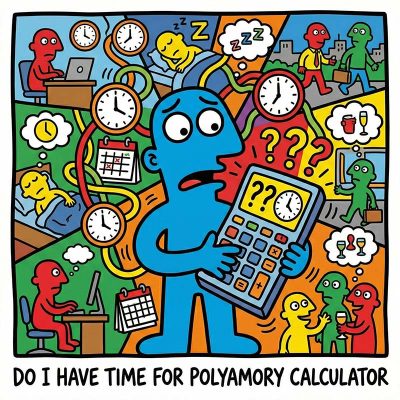
Love is infinite, but your calendar is brutally finite. The fantasy is deep connection; the reality is often just exhausted "calendar tetris." Promising time you don't actually have isn't romantic, it’s a recipe for burnout and broken trust. That sinking feeling when you have to cancel again? That’s the sound of overextension destroying your relationships.
This calculator forces you to confront the math of your life. Do you actually have space for another heart, or are you just setting everyone up for disappointment?

The fantasy is total autonomy and connection. The reality? It can feel like drowning in scheduling chaos and misunderstood expectations. That anxiety you feel isn’t just stress; it’s the wobble of living without a default "anchor." Without a solid architecture, Solo Polyamory stops being a life design and starts being a recipe for burnout and confusion.
The Essential Guide replaces the drift with a concrete anchor. We provide the "Solo Ethic," boundary scripts, and burnout protocols needed to protect your peace. Don't just date around—build a life that actually works for you.

Hierarchy sounds like a corporate org chart until someone gets their feelings hurt. That stomach-turning fear that you are just a "secondary" who can be fired at any time is real. If your relationship feels like a secret ranking system, you are doing it wrong.
Ambiguity is where resentment grows. The Essential Guide replaces the "who matters more" panic with a concrete charter. We provide the scripts and equity guardrails needed to protect every heart in the polycule. Stop guessing and start building.

The ideal is pure equality. The reality? It often slides into hidden rankings where someone gets hurt. That sinking feeling that you are secretly a "secondary" despite the label? That is your intuition detecting couple privilege. Ambiguity is where resentment thrives.
The Essential Guide replaces vague promises with concrete governance. We provide the charters, equity tools, and jealousy protocols needed to ensure "non-hierarchical" isn't just a fantasy. Stop guessing who matters most. Build a network that is actually fair.
The fantasy is total autonomy and connection. The reality? It can feel like drowning in scheduling chaos and misunderstood expectations. That anxiety you feel isn’t just stress; it’s the wobble of living without a default "anchor." Without a solid architecture, Solo Polyamory stops being a life design and starts being a recipe for burnout and confusion.
The Essential Guide replaces the drift with a concrete anchor. We provide the "Solo Ethic," boundary scripts, and burnout protocols needed to protect your peace. Don't just date around—build a life that actually works for you.
Hierarchy sounds like a corporate org chart until someone gets their feelings hurt. That stomach-turning fear that you are just a "secondary" who can be fired at any time is real. If your relationship feels like a secret ranking system, you are doing it wrong.
Ambiguity is where resentment grows. The Essential Guide replaces the "who matters more" panic with a concrete charter. We provide the scripts and equity guardrails needed to protect every heart in the polycule. Stop guessing and start building.
Common emotional challenges in hierarchical ENM
Before we dive into fixes it helps to name the usual suspects. In hierarchical dynamics people often encounter:
- Jealousy that is tied to time and energy not being shared equally across relationships
- Fear of losing the primary position or of being pushed out of a partner’s life
- Uncertainty about where to draw boundaries or how to renegotiate them when life changes
- Comparisons between partners that fuel insecurity
- Ambiguity about what is allowed what is expected and what counts as fair
- Guilt for needing more or less attention than a partner is prepared to give
- Overwhelm from juggling multiple calendars messages and planning sessions
All of these are understandable feelings inside a setup that asks you to show up in more than one meaningful way. The good news is that you can regulate these emotions with practical steps. You can also tell your partner or partners what you need so that your life feels manageable and safe while the relationships continue to grow.
Core emotional regulation skills for hierarchical dynamics
Below you will find a toolkit of skills. Each skill includes why it matters in a hierarchical ENM setup and concrete steps you can take today. Use the skills individually or combine them as your situation requires. The goal is not perfection it is sustainable healthy behavior that reduces stress and increases trust.
1. Emotional labeling and awareness
Name the feeling before you react. This is the first line of regulation. It slows you down enough to choose a response that aligns with your values rather than your impulse. Practice labeling at the moment you feel a strong emotion and later, in writing, to strengthen the habit.
- Notice the physical cues your body uses when you feel something strong. Do you feel a knot in your stomach a flutter in the chest or heat rising in your face?
- Give the feeling a name such as jealousy fear excitement or impatience. The name reframes the sensation from being you to a signal you can respond to.
- Write down or say aloud what the trigger is and what outcome you want from the situation.
Practice scenario
- You hear your partner has a date with a new person who is not you. Instead of spiraling you pause and label the emotion. You say to yourself I feel jealousy and worry about time. Then you decide to gather information through a calm check in rather than making assumptions.
2. Cognitive re framing and re authoring
How you think about a situation changes how you feel about it. Cognitive re framing helps you choose a more useful story about what is happening rather than a story driven by fear or scarcity.
- Identify the automatic thought that arises when you feel triggered. For example I will be tossed aside or I am not important if my partner spends time with someone else.
- Question the thought. Is it true in all cases? What evidence supports or contradicts it?
- Create a more balanced thought. For example My partner values me and also wants other connections; their time with others does not erase what we have.
Practice scenario
- When your partner says they want to spend Friday night with their secondary partner, you reframe the thought from I will be abandoned to We have a shared rhythm that includes time with others and time with me. I can plan something I enjoy that night too.
3. Mindfulness and grounding techniques
Mindfulness keeps you present and reduces the power of runaway thoughts. Grounding helps you feel anchored when emotions surge. Simple practices you can use anywhere include:
- Three breath technique: inhale for four counts exhale for six counts repeat five times
- Five senses check in: name five things you can see hear feel smell and taste in the moment
- Body scan: notice areas of tension and gently release them as you exhale
Practice scenario
- Before a scheduled talk about renegotiating time with a partner you take two minutes to do the five senses check in to calm your nerves and clarify your intention.
4. Boundaries and clear agreements
Boundaries are the scaffolding of any healthy hierarchy. They tell everyone what is allowed what is not and where lines are drawn in different situations. The trick is making them clear but flexible enough to adapt when life changes. Boundaries are best talked about before problems appear and revisited when needed.
- Define time boundaries: how much time you are comfortable spending with other partners and how this varies week to week
- Energy boundaries: what level of emotional labor you are prepared to offer in different relationships
- Communication boundaries: preferred modes of contact and response times
- Privacy boundaries: what details you want to keep private and what can be shared
Practice scenario
- Agree that primary time takes priority on Friday nights but there is a weekly two hour window for a date with a secondary partner. If a conflict arises with a current plan the couple discusses options within 24 hours instead of letting a backlog build up.
5. Time management and scheduling strategies
In hierarchical dynamics time feels like currency. Efficient scheduling reduces friction and frees mental space for everyone. Try these tactics:
- Shared calendars with color coding for primary secondary and metamour time
- Weekly planning sessions to review needs for the coming week
- Buffer days between dates to allow processing and rest
- Limited vacations or breaks from dating during critical life periods such as exams or major work projects
Practice scenario
- Every Sunday you plan the week with your primary partner including any time with others. This creates predictability and reduces last minute scheduling stress.
6. Jealousy management and compersion building
Jealousy is a signal not a sentence. It points to a need you have whether it is safety attention or time. Compersion is the feeling of joy from your partner's happiness with others. Cultivating compersion does not require denying your own feelings. It is about expanding your emotional repertoire so multiple relationships feel possible and not threatening.
- Practice noticing jealousy as a signal and asking what need is unmet
- Share your feelings with a trusted friend or partner using non accusatory language
- Celebrate your partner's joy and look for specific moments you can support
- Develop a personal success list that includes times you thrived with others in your life
Practice scenario
- When your partner shares a story about a great date with a metamour you listen for specifics and offer a genuine compliment rather than drifting into comparison or fear.
7. Self care and support networks
Care for your own well being remains essential inside any relationship pattern. Build a support system that includes friends coaches or therapists who understand ENM and can offer nonjudgmental support. Self care in a hierarchy means protecting your mental health you deserve it.
- Regular physical activity sleep routines and healthy meals
- Journaling prompts to process emotions
- Boundaries around social media or public discussions that trigger you
- Access to a therapist or counselor familiar with ENM and relationship dynamics
Practice scenario
- During a difficult renegotiation you schedule a post talk debrief with a friend who understands your situation and can help you process.
8. Communication scripts for difficult conversations
Clear scripts reduce anxiety and keep conversations productive. Use a structure that includes what you feel why it matters what you need and a concrete next step. You might adapt these templates for your situation.
- Opening: I want to talk about how we handle time with other partners because it affects how we feel about our primary relationship.
- Feelings: I feel anxious when I think we are running out of time together and I worry about feeling left out.
- Needs: I need some dedicated weekly time with you and a plan for when you see others that protects our space.
- Next step: Can we schedule a 20 minute check in this week to adjust our plan?
Practice scenario
- When it is time to renegotiate after a big life change you begin with a calm check in then share your needs and propose a concrete plan.
Practical exercises you can start today
These exercises are quick to do but powerful. They help you practice emotional regulation in real time so you can show up better for the people you care about.
- Daily emotional check in: Each day note one feeling you experienced and one action you took to regulate it
- One conversation a week: Have a targeted talk about boundaries or time with another partner and practice using non accusatory language
- Gratitude notes: Write one paragraph thanking someone in your network for their support in your ENM journey
- Reflection journal: At the end of the week write about what went well how you handled difficult moments and what you would do differently next time
Real world scenarios and how to handle them
Scenario A primary focus with a new partner
You are in a primary relationship and your partner begins dating someone new. You feel a surge of insecurity mixed with curiosity. You want time with them but the time is finite. You follow these steps:
- Label the emotion first: I feel a mix of jealousy and curiosity
- Ask what you need: I need clarity about how our time will be shared this month
- Engage a safe check in: Propose a short meeting to discuss the new arrangement
- Propose a plan: Suggest a weekly date night with your partner plus a set amount of time with the new partner that does not reduce your couple time
- Follow through: Keep your commitments and adjust if needed
Scenario B renegotiating after a life change
A job shift or a move makes it harder to maintain the same level of attention to the relationship. The key is to renegotiate early not after resentment builds. Use a calm practical tone and a time frame. For example
- Ask for a renegotiation window within the next two weeks
- Explain what has changed and what you can commit to in the new period
- Invite input from your partner about their needs
- Document the revised agreement in writing and keep a copy for both parties
Scenario C metamour boundaries and respectful space
Your partner has a metamour who is integrated into your social circle. You want a respectful space and boundaries that protect your mental health. Try this approach:
- Describe your boundary clearly: I need at least one quiet coffee hour each week with the metamour to build a positive dynamic
- Acknowledge their perspective: I know you care about our partner and I respect that
- Offer collaboration: How can we create a mutual boundary that works for both of us?
- Agree on a test period with a check in: In 30 days we revisit the boundary to see if it needs adjustment
Clear terms and acronyms you may encounter
Even if you are used to ENM language many people new to hierarchical polyamory appreciate quick definitions. Here are common terms and what they mean in plain language:
- ENM Ethical Non Monogamy. A framework in which multiple loving relationships occur with consent and transparency.
- CNM Consensual Non Monogamy. An older term often used interchangeably with ENM
- Primary partner The relationship that takes priority in time energy and decisions while you are in this dynamic
- Secondary partner A romantic or intimate relationship that sits below the primary in terms of time and energy priorities
- Metamour A partner of your partner or someone connected to your partner by their own relationships
- Renegotiation Revisiting and adjusting agreements and boundaries when life changes or feelings shift
Checklist for healthy hierarchical dynamics
- Regular check ins with your primary partner about needs and boundaries
- Clear written agreements that specify time energy and communication expectations
- Dedicated self care to keep your mental health strong
- Realistic expectations about how much time is available for other relationships
- A plan for dealing with jealousy including how to talk about it without blame
- Accessible support network from friends or professionals who understand ENM
Putting it into practice
So you have heard the theory now it is time to put it into practice in a way that feels doable for you. Start with one or two skills this week and build from there. The goal is progress not perfection. Even small improvements in communication consistency emotional awareness and scheduling can make a big difference in how secure you feel and how well your relationships function.
A simple weekly practice you can start now
- Friday night reflection: review what went well this week and what was stressful
- Saturday morning planning: align with your primary partner on weekly needs and any renegotiations
- Sunday evening debrief: check in with a trusted friend or therapist about how you felt and what you learned
By building these small routines you create a reliable rhythm that helps you manage the emotional waves that come with hierarchical ENM. Remember the aim is to foster trust respect and sustainable connection for all partners involved.
Glossary of useful terms
- ENM Ethical Non Monogamy a relationship style that includes more than one ongoing romantic or sexual relationship with consent and transparency
- CNM Consensual Non Monogamy often used interchangeably with ENM
- Primary partner The partner you designate as your main emotional and logistical focus for planning and decision making
- Secondary partner A partner who has a different priority level in your time energy and decisions
- Metamour The partner of your partner or someone connected to your partner by their own relationships
- Renegotiation The process of revisiting and adjusting agreements as life changes
Frequently asked questions
Below are some quick questions and straight forward answers to help you navigate the basics of hierarchical dynamics.
What is hierarchical polyamory
Hierarchical polyamory is a structure in which a primary relationship is prioritized for time energy and decisions while other relationships exist with defined boundaries and expectations.
How do I know if a boundary is healthy
A healthy boundary is specific clear and works for all involved parties. It should be revisited when life changes and you should be able to communicate it without blame.
What if I feel jealous
Jealousy is a signal that a need is not being met. Name the feeling label the trigger and then discuss with your partner in a non accusatory way to find a solution that works for both of you.
How often should we renegotiate
There is no one size fits all answer. If a major life change occurs or you notice consistent stress or dissatisfaction it is time to renegotiate. Regular short check ins help prevent big renegotiations from becoming crises.
Can I still feel compersion in this setup
Yes compersion can exist alongside jealousy. It grows as you practice recognizing your partner s happiness and supporting their connections while also taking care of your own needs.
What if my feelings become overwhelming
If emotions feel too heavy reach out to a trusted friend or a professional who understands ENM. A therapist with experience in non monogamy can be especially helpful.
Do we need a formal written agreement
A written agreement helps reduce ambiguity but it is not a rule. The important thing is that all parties consent to the arrangement and that there is a clear process for renegotiation and communication.
Love is infinite, but your calendar is brutally finite. The fantasy is deep connection; the reality is often just exhausted "calendar tetris." Promising time you don't actually have isn't romantic, it’s a recipe for burnout and broken trust. That sinking feeling when you have to cancel again? That’s the sound of overextension destroying your relationships.
This calculator forces you to confront the math of your life. Do you actually have space for another heart, or are you just setting everyone up for disappointment?
The fantasy is total autonomy and connection. The reality? It can feel like drowning in scheduling chaos and misunderstood expectations. That anxiety you feel isn’t just stress; it’s the wobble of living without a default "anchor." Without a solid architecture, Solo Polyamory stops being a life design and starts being a recipe for burnout and confusion.
The Essential Guide replaces the drift with a concrete anchor. We provide the "Solo Ethic," boundary scripts, and burnout protocols needed to protect your peace. Don't just date around—build a life that actually works for you.
Hierarchy sounds like a corporate org chart until someone gets their feelings hurt. That stomach-turning fear that you are just a "secondary" who can be fired at any time is real. If your relationship feels like a secret ranking system, you are doing it wrong.
Ambiguity is where resentment grows. The Essential Guide replaces the "who matters more" panic with a concrete charter. We provide the scripts and equity guardrails needed to protect every heart in the polycule. Stop guessing and start building.
The ideal is pure equality. The reality? It often slides into hidden rankings where someone gets hurt. That sinking feeling that you are secretly a "secondary" despite the label? That is your intuition detecting couple privilege. Ambiguity is where resentment thrives.
The Essential Guide replaces vague promises with concrete governance. We provide the charters, equity tools, and jealousy protocols needed to ensure "non-hierarchical" isn't just a fantasy. Stop guessing who matters most. Build a network that is actually fair.
The fantasy is total autonomy and connection. The reality? It can feel like drowning in scheduling chaos and misunderstood expectations. That anxiety you feel isn’t just stress; it’s the wobble of living without a default "anchor." Without a solid architecture, Solo Polyamory stops being a life design and starts being a recipe for burnout and confusion.
The Essential Guide replaces the drift with a concrete anchor. We provide the "Solo Ethic," boundary scripts, and burnout protocols needed to protect your peace. Don't just date around—build a life that actually works for you.
Hierarchy sounds like a corporate org chart until someone gets their feelings hurt. That stomach-turning fear that you are just a "secondary" who can be fired at any time is real. If your relationship feels like a secret ranking system, you are doing it wrong.
Ambiguity is where resentment grows. The Essential Guide replaces the "who matters more" panic with a concrete charter. We provide the scripts and equity guardrails needed to protect every heart in the polycule. Stop guessing and start building.
