
Ethical Storytelling About Hierarchical Relationships

Welcome to a practical, down to earth deep dive into how to tell stories about hierarchical polyamory in a way that is ethical, honest and helpful. This is not about drama for drama s sake. It is about clarity respect and care. We will unpack terms share useful tips and give realistic scenarios you can adapt to your own life. Think of this as a friendly guide from a curious friend who loves good stories and respects the people in them.
Quick Links to Useful Sections
- What is hierarchical polyamory and what is ENM
- Key terms and acronyms you will hear
- Primary partner
- Secondary partner
- Tertiary partner
- Relationship agreement
- Soft boundaries
- Hard boundaries
- Jealousy and compersion
- Consent
- Ethical storytelling basics for hierarchical ENM
- Common pitfalls and must no s
- Practical storytelling frameworks you can use
- Framework one: the three act approach
- Framework two: the negotiation diary
- Sample scripts you can adapt for ethical storytelling
- Opening a narrative about a hierarchy
- Explaining a decision to adjust the hierarchy
- Addressing jealousy in a public story
- Talking about safety and consent in narrative form
- Realistic scenarios and how to handle them ethically
- How to protect consent and autonomy while telling your story
- A practical storytelling toolkit
- Ethical storytelling templates and language you can steal
- Practical tips for delivering ethical storytelling about hierarchical ENM
- Checklist before you publish or share your story
- Glossary of useful terms and acronyms
- Frequently asked questions
What is hierarchical polyamory and what is ENM
Hierarchical polyamory is a form of ethical non monogamy where people acknowledge and actively manage a priority order among romantic and intimate partnerships. The idea is not to create a rigid ladder but to recognize that different relationships can serve different needs at different times. A person may have a primary partner who holds a central place in life plans such as living arrangements or shared finances. They may also have secondary or tertiary partners who bring other kinds of connection companionship and growth. The goal is transparency consent and agreement about how the hierarchy works in practice.
ENM stands for ethical non monogamy. That phrase is about consent communication and respect rather than secrecy or manipulation. It is not a free pass to hurt people or break commitments it is a framework for expanding the love you can offer and receive while keeping promises you make to partners. In hierarchical ENM there can be a dynamic where time energy and emotional focus are allocated according to agreed terms. The key is that every party agrees and that no one is pressured into a role they do not want. Ethical storytelling about this dynamic starts with consent ongoing communication and care.
Key terms and acronyms you will hear
Primary partner
A primary partner is someone who holds a central role in the relationship structure. This might involve living together sharing finances making major life decisions or having a strong emotional anchor in daily life. The exact meaning can vary from couple to couple so it is important to define this term with your partners rather than assume it means the same thing for everyone.
Secondary partner
A secondary partner is someone who has a significant relationship but without the same level of commitment or the same daily life integration as the primary partner. Boundaries and expectations are usually different here and should be clarified to prevent misunderstandings.
Tertiary partner
A tertiary partner is connected in a more casual or flexible way. There may be less time together a lighter emotional load or fewer shared life tasks. Tertiary relationships can still be meaningful and important to the people involved.
Relationship agreement
A relationship agreement is a written or clearly stated set of guidelines that describes how everyone will interact what kinds of activities are allowed who has decision making power and how changes to the structure will be handled. It is a living document that gets updated as the people involved grow and circumstances shift.
Soft boundaries
Soft boundaries are flexible limits that can be negotiated with care. They may be adjusted over time based on trust needs and experiences. Soft boundaries are not hard rules they require ongoing dialogue to remain effective.
Hard boundaries
Hard boundaries are firm non negotiable limits. They protect core values and safety. When a boundary is crossed the response is predictable and agreed upon by all parties involved.
Jealousy and compersion
Jealousy is a normal human emotion that can show up in any relationship structure. Compersion is the opposite experience enjoyment or happiness when a partner thrives with someone else. Healthy hierarchical ENM storytelling explores both feelings with honesty and care.
Consent
Consent is ongoing explicit agreement to participate in any activity or dynamic. Consent must be freely given not coerced and can be withdrawn at any time. In hierarchical ENM it is especially important to re check consent when plans change or new people enter the picture.
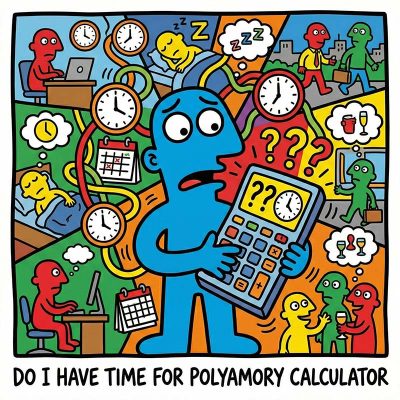
Love is infinite, but your calendar is brutally finite. The fantasy is deep connection; the reality is often just exhausted "calendar tetris." Promising time you don't actually have isn't romantic, it’s a recipe for burnout and broken trust. That sinking feeling when you have to cancel again? That’s the sound of overextension destroying your relationships.
This calculator forces you to confront the math of your life. Do you actually have space for another heart, or are you just setting everyone up for disappointment?

The fantasy is total autonomy and connection. The reality? It can feel like drowning in scheduling chaos and misunderstood expectations. That anxiety you feel isn’t just stress; it’s the wobble of living without a default "anchor." Without a solid architecture, Solo Polyamory stops being a life design and starts being a recipe for burnout and confusion.
The Essential Guide replaces the drift with a concrete anchor. We provide the "Solo Ethic," boundary scripts, and burnout protocols needed to protect your peace. Don't just date around—build a life that actually works for you.
Hierarchy sounds like a corporate org chart until someone gets their feelings hurt. That stomach-turning fear that you are just a "secondary" who can be fired at any time is real. If your relationship feels like a secret ranking system, you are doing it wrong.
Ambiguity is where resentment grows. The Essential Guide replaces the "who matters more" panic with a concrete charter. We provide the scripts and equity guardrails needed to protect every heart in the polycule. Stop guessing and start building.
The ideal is pure equality. The reality? It often slides into hidden rankings where someone gets hurt. That sinking feeling that you are secretly a "secondary" despite the label? That is your intuition detecting couple privilege. Ambiguity is where resentment thrives.
The Essential Guide replaces vague promises with concrete governance. We provide the charters, equity tools, and jealousy protocols needed to ensure "non-hierarchical" isn't just a fantasy. Stop guessing who matters most. Build a network that is actually fair.
The fantasy is total autonomy and connection. The reality? It can feel like drowning in scheduling chaos and misunderstood expectations. That anxiety you feel isn’t just stress; it’s the wobble of living without a default "anchor." Without a solid architecture, Solo Polyamory stops being a life design and starts being a recipe for burnout and confusion.
The Essential Guide replaces the drift with a concrete anchor. We provide the "Solo Ethic," boundary scripts, and burnout protocols needed to protect your peace. Don't just date around—build a life that actually works for you.
Hierarchy sounds like a corporate org chart until someone gets their feelings hurt. That stomach-turning fear that you are just a "secondary" who can be fired at any time is real. If your relationship feels like a secret ranking system, you are doing it wrong.
Ambiguity is where resentment grows. The Essential Guide replaces the "who matters more" panic with a concrete charter. We provide the scripts and equity guardrails needed to protect every heart in the polycule. Stop guessing and start building.
Ethical storytelling basics for hierarchical ENM
Ethical storytelling means sharing stories in a way that respects everyone involved and helps readers learn without exposing private details. When you tell a story about a hierarchical dynamic you get to lift practical wisdom while protecting the privacy and dignity of real people. Here are core principles to guide your storytelling process.
- Respect privacy You should not reveal intimate details that could embarrass or harm people who agreed to be private. Consider using composite characters or anonymized scenarios when sharing sensitive material.
- Ask for consent to narrate If your story is based on real experiences share it with the people who are depicted. Ask for their blessing before publishing or public sharing and be prepared to revise if someone objects.
- Be accurate about the hierarchy Do not invent a structure that does not reflect the people involved. If you are sharing a fictional scenario that clearly uses composites or disclaimers that is acceptable but do not imply real people consent to the depiction.
- Explain terms and acronyms The reader should not be left guessing what ENM or hierarchical terms mean. Provide practical definitions and real world examples.
- Avoid sensationalism The goal is practical insight not drama. Keep tone respectful and focused on ethics and growth rather than shock value.
- Offer actionable takeaways After each section give concrete steps readers can adapt to their own lives such as how to negotiate a relationship agreement or how to check in for consent.
Common pitfalls and must no s
Even well intentioned storytellers can stumble when describing hierarchical polyamory. Here are the common missteps and how to avoid them.
- Coercion disguised as consent Coercion is never acceptable. If someone feels pressure to accept a role or a boundary it is not consent. Check in with all parties and look for signs of discomfort even if they do not name it directly.
- Equating hierarchy with value A hierarchy does not make any partner more worthy. Value comes from how each person is treated with care and respect.
- Ignoring power imbalances Hierarchies can create real power differentials. Name these openly and implement safeguards such as independent check ins or third party mediation when needed.
- Assuming jealousy is failure Jealousy is a signal not a failure. Use it as data to adjust boundaries and increases in communication rather than trying to eliminate it for the sake of appearance.
- Public shaming or gossip Stories told with the aim of shaming partners or others erode trust. Keep narratives compassionate and focused on growth and learning.
Practical storytelling frameworks you can use
When you write or tell stories about hierarchical relationships you want a framework that makes sense to readers and is easy to adopt. Here are two reliable approaches you can adapt to your voice and audience.
Framework one: the three act approach
This approach mirrors classic storytelling while keeping the focus on ethics and process. The three acts are setup tension and resolution. In the setup introduce the people involved and explain the hierarchy. In the tension explore a challenge such as a conflict over time or a boundary issue. In the resolution show how honest conversation consent and care resolved the issue or led to a better path forward.
Framework two: the negotiation diary
Frame the story as a series of diary style entries about negotiations with partners. Each entry covers a specific topic such as a new partner consent check in or a boundary update. This format emphasizes ongoing consent clear communication and the evolving nature of hierarchical relationships.
Sample scripts you can adapt for ethical storytelling
Below are ready to adapt lines you can use when you are telling a story or writing a piece about hierarchical ENM. They are written to be easy to understand and to stay respectful of all involved.
Opening a narrative about a hierarchy
I am Alex and I want to share how we navigate our relationship structure. Our arrangement includes a primary partner and two secondary partners. We agreed up front about what kind of time and energy each relationship would get. The point of this story is not to prove anything but to learn how to treat each other with honesty and care.
Explaining a decision to adjust the hierarchy
We revisited our relationship agreement after a major life change. We listened to each other with curiosity and asked simple clear questions. We agreed to shift a little more time towards one relationship and to slow down with a second. The choice was not about which person matters more. It was about how we can all show up sustainably and kindly.
Addressing jealousy in a public story
Yes jealousy happened. It showed up as a fear of losing time with a partner. We talked through it with a structure to keep everyone included. We set aside a weekly check in where we could share honest feelings and adjust plans if needed. The goal was not to suppress the feeling but to respond to it with care and clarity.
Talking about safety and consent in narrative form
Safety is always the top priority. In our story we describe how we review safe sex practices and consent before any new activity. We check in about boundaries and we are explicit about what is not on the table. This is how trust grows even when the structure is complex.
Realistic scenarios and how to handle them ethically
Real life is rarely tidy. Here are a few common situations in hierarchical ENM and practical ways to handle them with integrity.
- Scenario 1: A new partner joins the hierarchy Begin with a thorough consent discussion with everyone involved. Schedule a get together to share boundaries and expectations. Create a simple plan for time and energy distribution that is revisited after a trial period.
- Scenario 2: A primary partner needs more space Revisit the relationship agreement and adjust the terms with everyone present. Ensure that no one feels sidelined and that all voices are heard before any changes are made.
- Scenario 3: Jealousy surfaces between a secondary and tertiary partner Normalize the feeling name it and invite honest conversation. Arrange a joint check in with all three parties and discuss what changes would help everyone feel secure.
- Scenario 4: A boundary is crossed accidentally Acknowledge it immediately apologize if needed and adjust the boundary. Use the incident as a learning moment and revise the agreement to prevent repeats.
How to protect consent and autonomy while telling your story
Telling a story about a hierarchical ENM dynamic means honoring the autonomy of each person involved. Here are practical ways to protect consent and agency while you share your narrative.
- Use consent language explicitly When describing decisions include phrases like We consented to or We agreed that this would happen and We re evaluated together after a set period.
- Describe process not just outcomes Focus on how choices were made who was involved and how everyone felt during the process. This helps readers understand the ethics behind the decisions.
- Highlight ongoing communication Show how conversations continued over time. This helps debunk myths that consent is a one time event.
A practical storytelling toolkit
To make your writing more useful for readers who want to apply ethical hierarchical storytelling in their own lives here is a compact toolkit you can use.
- Glossary Create a mini glossary of terms such as primary partner secondary partner hierarchy consent and boundaries. Define each term in plain language.
- Checklists Include a pre story checklist that asks readers to consider whether the people involved gave informed consent for sharing and whether privacy safeguards are in place. Include a post story checklist to reflect on what could be improved next time.
- Dialogue prompts Provide example questions that readers can adapt for conversations with partners such as What would make this easier for you What does an ideal week look like for you and What boundaries feel essential to you right now.
Ethical storytelling templates and language you can steal
The following templates use simple direct language and avoid sensationalism. You can adapt them to your voice and audience while keeping the core values of consent clarity and care.
Template A open and honest description
We are a collectively oriented household with a primary partner and two secondary partners. We share a commitment to honesty respect and consent. Our arrangement is reviewed every six months and updated when needed. We tell stories so others can learn from our mistakes and our care.
Template B translating a difficult moment into learning
We hit a rough patch when our schedules changed. We talked with calm and curiosity and we updated our plan to protect everyone s time and feelings. We learned that clear check ins and written agreements help reduce confusion and hurt.
Template C ethical warning and privacy protection
This story is about dynamics that involve real people. To protect privacy we use composite examples and avoid naming individuals. Our goal is to share practical insights not to reveal private details.
Practical tips for delivering ethical storytelling about hierarchical ENM
When you present a story or write a piece about hierarchical polyamory keep the audience in mind. Here are practical tips to improve clarity and impact.
- Be specific about what is shared Avoid vague statements. If you describe a contract say what it includes and what it does not include.
- Explain the why People learn best when they understand the motivation behind decisions. Share why a choice was made and what needs it was meant to meet.
- Respect privacy If a detail could identify someone who does not wish to be named remove or anonymize it.
- Invite conversation End with a few questions readers can reflect on or discuss with their own networks. This keeps the piece interactive and responsible.
Checklist before you publish or share your story
- Have you obtained consent to share from all named or clearly identifiable individuals?
- Are you protecting privacy by anonymizing or using composites where appropriate?
- Does your piece explain terms and acronyms in plain language?
- Are the boundaries of the people involved respected and clearly stated?
- Is there a focus on learning and growth rather than sensationalism or blame?
Glossary of useful terms and acronyms
- ENM Ethical non monogamy a framework for consensual non exclusive relationships.
- Primary partner The partner who holds the central place in the hierarchy.
- Secondary partner A partner with significant involvement but not as central as the primary.
- Tertiary partner A partner who is part of the network with a lighter or more flexible role.
- Relationship agreement A description of how relationships will interact what is allowed and how changes will be made.
- Hard boundaries Firm non negotiable limits that must be respected.
- Soft boundaries Flexible limits that can evolve through dialogue and experience.
- Consent Explicit ongoing agreement to participate in any activity or dynamic.
- Jealousy A natural feeling that can indicate needs that are not being met or areas to adjust in the relationship structure.
- Compersion Feeling happiness when a partner experiences joy or success with someone else.
Frequently asked questions
How do you explain hierarchy to a new partner in an ethical way
Start with the basics and be transparent about what the hierarchy means for shared time and resources. Invite questions and listen without defensiveness. Offer to revisit the arrangement after a set period to ensure everyone is comfortable.
Is it possible to adjust a hierarchy over time
Yes. A healthy hierarchy is adaptable. Schedule regular check ins with all involved to discuss how needs are evolving and what changes may be needed. Use clear written updates to avoid miscommunication.
How do you handle jealousy in a hierarchical ENM story
Address jealousy as data not failure. Name the feeling and invite each person to share what would make the situation feel safer or more equitable. Build adjustments into the agreement and re check in after implementing changes.
What is the best way to write ethically about real people
Protect privacy use composites or anonymize names. Focus on universal lessons rather than private anecdotes. Seek consent from those who could be identified by the story before publishing.
What should you avoid when storytelling about hierarchy
Avoid shaming or blaming partners. Do not misrepresent the level of consent or autonomy. Do not reveal sensitive medical or personal histories unless all parties agree it is appropriate to include.
How can I use storytelling to help others learn practical skills
Teach through concrete examples real conversations and checklists. Show how negotiation boundaries and consent were handled and what the outcomes were. Provide templates and prompts readers can adapt to their own lives.
Love is infinite, but your calendar is brutally finite. The fantasy is deep connection; the reality is often just exhausted "calendar tetris." Promising time you don't actually have isn't romantic, it’s a recipe for burnout and broken trust. That sinking feeling when you have to cancel again? That’s the sound of overextension destroying your relationships.
This calculator forces you to confront the math of your life. Do you actually have space for another heart, or are you just setting everyone up for disappointment?
The fantasy is total autonomy and connection. The reality? It can feel like drowning in scheduling chaos and misunderstood expectations. That anxiety you feel isn’t just stress; it’s the wobble of living without a default "anchor." Without a solid architecture, Solo Polyamory stops being a life design and starts being a recipe for burnout and confusion.
The Essential Guide replaces the drift with a concrete anchor. We provide the "Solo Ethic," boundary scripts, and burnout protocols needed to protect your peace. Don't just date around—build a life that actually works for you.
Hierarchy sounds like a corporate org chart until someone gets their feelings hurt. That stomach-turning fear that you are just a "secondary" who can be fired at any time is real. If your relationship feels like a secret ranking system, you are doing it wrong.
Ambiguity is where resentment grows. The Essential Guide replaces the "who matters more" panic with a concrete charter. We provide the scripts and equity guardrails needed to protect every heart in the polycule. Stop guessing and start building.
The ideal is pure equality. The reality? It often slides into hidden rankings where someone gets hurt. That sinking feeling that you are secretly a "secondary" despite the label? That is your intuition detecting couple privilege. Ambiguity is where resentment thrives.
The Essential Guide replaces vague promises with concrete governance. We provide the charters, equity tools, and jealousy protocols needed to ensure "non-hierarchical" isn't just a fantasy. Stop guessing who matters most. Build a network that is actually fair.
The fantasy is total autonomy and connection. The reality? It can feel like drowning in scheduling chaos and misunderstood expectations. That anxiety you feel isn’t just stress; it’s the wobble of living without a default "anchor." Without a solid architecture, Solo Polyamory stops being a life design and starts being a recipe for burnout and confusion.
The Essential Guide replaces the drift with a concrete anchor. We provide the "Solo Ethic," boundary scripts, and burnout protocols needed to protect your peace. Don't just date around—build a life that actually works for you.
Hierarchy sounds like a corporate org chart until someone gets their feelings hurt. That stomach-turning fear that you are just a "secondary" who can be fired at any time is real. If your relationship feels like a secret ranking system, you are doing it wrong.
Ambiguity is where resentment grows. The Essential Guide replaces the "who matters more" panic with a concrete charter. We provide the scripts and equity guardrails needed to protect every heart in the polycule. Stop guessing and start building.
