
Hierarchy Versus Relationship Anarchy

Welcome to a deep dive that treats dating dynamics like an adult sport rather than a school assignment. If you are navigating ethnical non monogamy also known as ENM you may have heard about two major approaches to managing multiple relationships. One approach uses a hierarchy with primary partners and other levels stacked behind. The other approach drops predefined ranks and aims for flexible agreements between all involved. This article breaks down the ideas behind hierarchy polyamory and relationship anarchy and explains how each dynamic tends to work in real life. We will explain terms definitions and common phrases so you can understand what people mean when they talk about these setups. We will share practical tips and real life scenarios to help you decide what fits your needs and values. And yes we will keep it down to earth with a touch of humor because relationships are complicated enough without overthinking every word you say.
Quick Links to Useful Sections
- What hierarchy means in polyamory
- Primary partners
- Secondary partners
- Tertiary and beyond
- Operational realities of a hierarchical dynamic
- Potential benefits of hierarchy
- Potential downsides of hierarchy
- What relationship anarchy means
- The core ideas of relationship anarchy
- Key terms you may hear in RA talks
- Practical examples of RA in action
- Why RA can feel liberating
- Potential drawbacks of RA
- Comparing hierarchy and relationship anarchy side by side
- Decision making and prioritization
- Time management and scheduling
- Emotional work and boundary negotiation
- Social life and community impact
- Growth and change over time
- Hybrid models and flexible dynamics
- How to decide what works for you
- Step 1 identify your core values
- Step 2 assess current relationships
- Step 3 check your environment
- Step 4 have conversations with all involved
- Step 5 test and renegotiate
- Communication tools that help in both dynamics
- Regular check ins
- Written agreements and living documents
- Boundaries and consent language
- Metamour communication
- Jealousy insecurity and how to handle them
- Common myths and misunderstandings
- Practical tips for dating and building a poly network
- Start with a personal and partner survey
- Build a shared calendar and agreed routines
- Design a process for renegotiations
- Create a safe space for negative feedback
- Prioritize privacy and discretion where needed
- Glossary of useful terms and acronyms
- Frequently asked questions
What hierarchy means in polyamory
Hierarchy in polyamory is a structure that orders relationships by importance or priority. In most common forms you will see a primary partner or partners who hold the most influence over decisions time and resources. Below the primary level you might find secondary partners who have a more limited role and sometimes tertiary partners who have even less emphasis. The exact labels can vary but the underlying idea is that some connections take precedence over others in the practical life you share as a polyamorous group.
Primary partners
A primary partner is often defined by criteria like shared living arrangements long term plans cohabitation or legal or financial entanglements. In practice that means this relationship usually gets a larger share of scheduling freedom emotional energy and logistical planning. It also means if a conflict arises between a primary and a secondary the decision will almost always tilt toward what benefits the primary relationship or what keeps the household functioning smoothly.
Secondary partners
Secondaries are usually people who are important and significant but who do not have the same level of overlap with daily life as a primary partner. Time together may be scheduled around the needs of the primary relationship. There is room for romance and closeness but not at the scale the primary relationship enjoys. In a well managed hierarchy agreements cover how to handle holidays family events and long term plans with a secondary partner in mind.
Tertiary and beyond
Some polyamorous groups use a third level or even more. These relationships are often more casual or focused on companionship rather than long term life plans. Tertiaries can include friends with benefits or lovers who share moments of intimacy without demanding a place in the core life structure. The exact meaning of tertiary varies widely from group to group and every arrangement should be clearly described in writing or spoken agreements so everyone understands what to expect.
Operational realities of a hierarchical dynamic
In hierarchical polyamory energy time and resources are allocated with a rough order of importance in mind. People sometimes plan weekends holidays and daily routines to keep primary relationships stable. The logic is simple if you have limited time you prioritize the person who carries the most responsibilities or who wants to build the most shared future. The system can feel comforting for some because it provides predictability. For others it can feel restrictive or create pressure to perform or maintain status even when feelings shift.
Potential benefits of hierarchy
- Clear decision making when conflicts arise
- Reliable support for major life events
- Efficient use of shared calendars and resources
- Less confusion about where you stand with each partner
Potential downsides of hierarchy
- Jealousy or pressure when a secondary needs more time
- Risk of neglecting non primary relationships
- Rigid expectations that do not reflect changing feelings
- Difficulty supporting a partner who wants more freedom
What relationship anarchy means
Relationship anarchy RA is the opposite end of the spectrum from a fixed hierarchy. In RA there are no predefined ranks or obligatory labels. The core idea is to treat each relationship as its own project with its own rules founded on consent communication and mutual value rather than a place in a ladder. People who practice RA aim to minimize the influence of external labels in favor of direct agreements that reflect how they feel about each individual partner.
The core ideas of relationship anarchy
First the emphasis is on autonomy. Each relationship gets to choose its terms not because someone else has declared it but because the people involved consent to that arrangement. There is a strong focus on swapping and renegotiating expectations as needed rather than adhering to a fixed plan. RA often involves flexible time management more emphasis on consent processes and more attention to emotional work that arises from changing dynamics.
Key terms you may hear in RA talks
Polyamory is the broader umbrella term that includes many different ways of relating. RA can be part of ENM also known as ethical non monogamy. In RA the word metamor is sometimes used to describe a partner's partner or someone who is connected to your partner. Metamor awareness helps avoid accidental harm when relationships shift. In RA the term autonomy is used a lot to remind everyone that each bond is its own unit with its own boundaries and its own commitments. Another common term is consent based negotiation which means agreements are made with the explicit agreement of all involved and can be renegotiated if feelings or life situations change.
Practical examples of RA in action
A couple might decide to date casually without any expectation of long term commitment with others. A second partner might be welcomed into family events if all parties agree that this step feels comfortable. A group could decide to arrange flexible open weekends where partners can choose to spend time together or apart depending on schedules and needs. The key is that each arrangement is negotiated each time with the people involved rather than enforced by a rule set in advance.
Why RA can feel liberating
RA offers room to adapt as life shifts. People may move through different seasons such as college girlfriends or long work projects at different times. There is often a sense of fairness rooted in explicit consent and open communication. When honesty is prioritized many people find RA a hopeful framework that reduces obligation creep and avoids the pressures that come with an invisible hierarchy.
Potential drawbacks of RA
- Constant renegotiation can feel exhausting for some
- Less predictability can be challenging for people who want a tight schedule
- Social narratives can create expectations about how a group should be seen
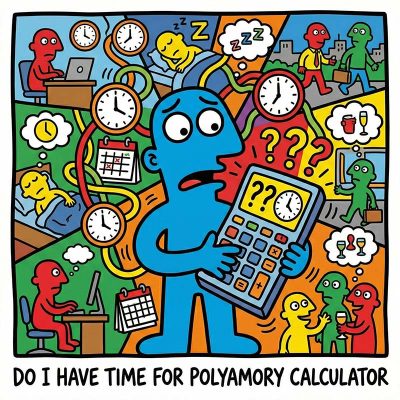
Love is infinite, but your calendar is brutally finite. The fantasy is deep connection; the reality is often just exhausted "calendar tetris." Promising time you don't actually have isn't romantic, it’s a recipe for burnout and broken trust. That sinking feeling when you have to cancel again? That’s the sound of overextension destroying your relationships.
This calculator forces you to confront the math of your life. Do you actually have space for another heart, or are you just setting everyone up for disappointment?

The fantasy is total autonomy and connection. The reality? It can feel like drowning in scheduling chaos and misunderstood expectations. That anxiety you feel isn’t just stress; it’s the wobble of living without a default "anchor." Without a solid architecture, Solo Polyamory stops being a life design and starts being a recipe for burnout and confusion.
The Essential Guide replaces the drift with a concrete anchor. We provide the "Solo Ethic," boundary scripts, and burnout protocols needed to protect your peace. Don't just date around—build a life that actually works for you.

Hierarchy sounds like a corporate org chart until someone gets their feelings hurt. That stomach-turning fear that you are just a "secondary" who can be fired at any time is real. If your relationship feels like a secret ranking system, you are doing it wrong.
Ambiguity is where resentment grows. The Essential Guide replaces the "who matters more" panic with a concrete charter. We provide the scripts and equity guardrails needed to protect every heart in the polycule. Stop guessing and start building.

The ideal is pure equality. The reality? It often slides into hidden rankings where someone gets hurt. That sinking feeling that you are secretly a "secondary" despite the label? That is your intuition detecting couple privilege. Ambiguity is where resentment thrives.
The Essential Guide replaces vague promises with concrete governance. We provide the charters, equity tools, and jealousy protocols needed to ensure "non-hierarchical" isn't just a fantasy. Stop guessing who matters most. Build a network that is actually fair.
The fantasy is total autonomy and connection. The reality? It can feel like drowning in scheduling chaos and misunderstood expectations. That anxiety you feel isn’t just stress; it’s the wobble of living without a default "anchor." Without a solid architecture, Solo Polyamory stops being a life design and starts being a recipe for burnout and confusion.
The Essential Guide replaces the drift with a concrete anchor. We provide the "Solo Ethic," boundary scripts, and burnout protocols needed to protect your peace. Don't just date around—build a life that actually works for you.
Hierarchy sounds like a corporate org chart until someone gets their feelings hurt. That stomach-turning fear that you are just a "secondary" who can be fired at any time is real. If your relationship feels like a secret ranking system, you are doing it wrong.
Ambiguity is where resentment grows. The Essential Guide replaces the "who matters more" panic with a concrete charter. We provide the scripts and equity guardrails needed to protect every heart in the polycule. Stop guessing and start building.
Comparing hierarchy and relationship anarchy side by side
Let us line up the big differences in a practical way. This helps you see what actually matters for the day to day life you lead with your partners. Remember no one approach is perfect for every person or every relationship. The best fit depends on your values needs and what you want your life to look like over time.
Decision making and prioritization
Hierarchy favors predefined priorities often centered around a primary partner. RA relies on current consent and ongoing discussion with each partner. If a life event affects one relationship the other arrangements can stay stable or shift depending on negotiated terms.
Time management and scheduling
In hierarchy there is a natural emphasis on protecting the primary relationship which often means more structured scheduling with the primary partner. RA tends to be more fluid with time allocation based on what everyone agrees is fair and enjoyable.
Emotional work and boundary negotiation
Hierarchical systems can concentrate emotional labor on maintaining the primary relationship while also managing a network of agreements. RA distributes emotional labor more evenly by requiring ongoing conversation about needs and boundaries. Both approaches require honest communication and both can fail if communication breaks down.
Social life and community impact
Hierarchy can create visible labels that friends family or kids notice. RA tends to blend more into everyday life with fewer rigid expectations. In both setups it helps to be clear about what is shared with others and what remains private if privacy matters to you.
Growth and change over time
Hierarchy can provide stability during periods of life change such as moving in with a partner or starting a family. RA can offer resilience during periods of personal growth or shifting desires by staying focused on consent and mutual respect rather than a fixed ladder.
Hybrid models and flexible dynamics
Many couples blend elements from both approaches or shift over time. A common hybrid is a hierarchy with soft boundaries. In this model you may have a preferred primary relationship but you also allow space for relationship experiences outside that priority with explicit agreements that everyone understands. Some people maintain a primary bond for shared life tasks while treating other partnerships in a more RA like manner with flexible boundaries that can evolve as needs change. The important thing is that everyone involved has a voice and a clear sense of how decisions are made and what to expect on a practical level.
How to decide what works for you
Choosing a path is a personal journey. There is no universal rule that guarantees happiness. Here is a practical five step approach to help you make a decision that fits your life and your values.
Step 1 identify your core values
Take time to write down what matters most to you. Do you value predictability reliability and a sense of shared future with a core person? Or do you value autonomy open exploration and a system that adapts to life as it unfolds? Your answers will guide your choice.
Step 2 assess current relationships
Take an inventory of who you are dating who lives with you or shares a life with you who you want to invest in more deeply. Think about time constraints personal energy and what each relationship needs to feel healthy for everyone involved. Use this as a basis for discussing potential changes.
Step 3 check your environment
Consider your work schedule your family dynamics and your social circles. If you have children or plan to have children you may want to think about how to present your relationships to family and how to manage boundaries that involve kids or extended family. The bigger the life context the more important it becomes to have clear transparent agreements.
Step 4 have conversations with all involved
Open conversations about your desires fears and boundaries are essential. A good conversation starts with questions eye contact and an invitation for others to share their truth. Listen more than you talk in those early stages and repeat what you heard to confirm understanding.
Step 5 test and renegotiate
Try a trial period with a set of written agreements then review them after a few weeks. Notice what works what doesn t work and what feels out of alignment. Use this information to adjust terminology rules and expectations. Flexibility is a big asset in both approaches when you are honest about what you want and what you can give.
Communication tools that help in both dynamics
Strong communication is the backbone of any ENM setup. Here are practical tools that can help in both hierarchical and RA style arrangements.
Regular check ins
Schedule predictable times to talk about how things are going. Keep these conversations focused on feelings needs and boundaries rather than on blame. A good check in helps everyone stay aligned and prevents unspoken resentment from growing.
Written agreements and living documents
Use a shared document where you can note what is agreed upon who is involved what the expectations are and how you will handle conflicts. Revisit this document when life changes or when someone asks for a revision. Treat it as a living guide rather than a final decree.
Boundaries and consent language
Agree on what counts as consent in different situations. Make sure people understand how to say no and how to respond when someone changes their mind. Clarity about consent reduces the risk of harm and builds trust across the group.
Metamour communication
A metamour is a partner of your partner. It is often a key relationship in a poly network. Clear communication with metamours reduces awkward moments at events and can ease hybrid arrangements. If you are practicing RA the metamour relationship may receive special attention but it should always be based on mutual respect and consent.
Jealousy insecurity and how to handle them
Jealousy is a natural human emotion even in the best of systems. The goal is not to avoid jealousy completely but to respond to it in healthy constructive ways. In hierarchical setups jealousy can surface when a primary partner needs more time from someone or when a secondary partner feels left out. In RA jealousy might arise when the lack of a clear hierarchy creates ambiguity about expectations. The key is to talk about what triggers the feeling acknowledge the need behind it and renegotiate if necessary. Some practical tactics include taking space for reflection scheduling a dedicated time to address concerns and ensuring that all voices are heard with equal care.
Common myths and misunderstandings
Polyamory is often misunderstood. Here are a few myths that commonly show up around hierarchy and RA and the truths that help keep expectations sane.
- Myth a hierarchy means you must declare a non negotiable list of partners. Truth many hierarchies have negotiable labels and flexible boundaries. People often adjust labels to reflect current realities rather than sticking to a rigid plan.
- Myth RA means nobody ever commits or cares. Truth relationship anarchy emphasizes consent and mutual respect. It does not mean disregard for commitments it means relationships are not hard coded by labels or assumed power dynamics.
- Myth hierarchy is inherently controlling. Truth hierarchy can be empowering for systems that crave clarity. It only becomes controlling when boundaries are not negotiated or revisited and when power is misused.
- Myth RA is always chaotic. Truth RA can work beautifully when there is strong communication and thoughtful agreements. Chaos comes from poor communication not from the model itself.
Practical tips for dating and building a poly network
Whether you lean toward hierarchy or RA you will benefit from practical practices that support healthy relationships. Here are curated tips you can implement today.
Start with a personal and partner survey
Create a simple survey for yourself and each partner. Include questions about desired pace in dating long term goals daily rhythms and comfort with future plans. Use these insights to shape how you approach conversations about structure and boundaries.
Build a shared calendar and agreed routines
For many people time management issues become the most visible friction point. A shared calendar helps everyone see commitments plan dates and respect each other s boundaries. Don t over complicate it start with core activities and add layers as trust grows.
Design a process for renegotiations
Make renegotiations a routine rather than a crisis response. Decide how often you will review key agreements and who initiates the review. A calm approach to renegotiation makes it easier for all partners to participate honestly without fear of penalty for change.
Create a safe space for negative feedback
Encourage feedback that can be hard to hear. Ground the conversations in care and the intent to improve rather than to blame. A culture of constructive feedback strengthens any ENM dynamic.
Prioritize privacy and discretion where needed
Some people prefer to keep details about their ENM life private. Others are comfortable sharing more widely. Talk about what you want to share with friends family or professional contacts and respect those boundaries.
Glossary of useful terms and acronyms
- ENM Ethical Non Monogamy a framework that emphasizes consent with all involved when exploring multiple relationships.
- Hierarchy A structure that assigns different levels of importance to relationships such as primary secondary and tertiary.
- Primary partner The partner who holds the most weight in life decisions time and resources.
- Secondary partner A partner who has a meaningful connection but is not the main focus for life planning.
- Tertiary partner A partner with a more casual or limited role in daily life and long term planning.
- Relationship anarchy A philosophy that emphasizes consent based flexible agreements with no fixed hierarchy or labels.
- Metamour A partner of your partner who is not your direct partner but connected through a shared relationship network.
- Renegotiation The process of revisiting and adjusting agreements as feelings or life situations change.
- Consent An informed and voluntary agreement to engage in a particular interaction or relationship.
- Boundaries Boundaries are limits and rules that people set to protect their comfort and safety in relationships.
- Compersion The joy you feel when your partner experiences happiness with someone else.
Frequently asked questions
Love is infinite, but your calendar is brutally finite. The fantasy is deep connection; the reality is often just exhausted "calendar tetris." Promising time you don't actually have isn't romantic, it’s a recipe for burnout and broken trust. That sinking feeling when you have to cancel again? That’s the sound of overextension destroying your relationships.
This calculator forces you to confront the math of your life. Do you actually have space for another heart, or are you just setting everyone up for disappointment?
The fantasy is total autonomy and connection. The reality? It can feel like drowning in scheduling chaos and misunderstood expectations. That anxiety you feel isn’t just stress; it’s the wobble of living without a default "anchor." Without a solid architecture, Solo Polyamory stops being a life design and starts being a recipe for burnout and confusion.
The Essential Guide replaces the drift with a concrete anchor. We provide the "Solo Ethic," boundary scripts, and burnout protocols needed to protect your peace. Don't just date around—build a life that actually works for you.
Hierarchy sounds like a corporate org chart until someone gets their feelings hurt. That stomach-turning fear that you are just a "secondary" who can be fired at any time is real. If your relationship feels like a secret ranking system, you are doing it wrong.
Ambiguity is where resentment grows. The Essential Guide replaces the "who matters more" panic with a concrete charter. We provide the scripts and equity guardrails needed to protect every heart in the polycule. Stop guessing and start building.
The ideal is pure equality. The reality? It often slides into hidden rankings where someone gets hurt. That sinking feeling that you are secretly a "secondary" despite the label? That is your intuition detecting couple privilege. Ambiguity is where resentment thrives.
The Essential Guide replaces vague promises with concrete governance. We provide the charters, equity tools, and jealousy protocols needed to ensure "non-hierarchical" isn't just a fantasy. Stop guessing who matters most. Build a network that is actually fair.
The fantasy is total autonomy and connection. The reality? It can feel like drowning in scheduling chaos and misunderstood expectations. That anxiety you feel isn’t just stress; it’s the wobble of living without a default "anchor." Without a solid architecture, Solo Polyamory stops being a life design and starts being a recipe for burnout and confusion.
The Essential Guide replaces the drift with a concrete anchor. We provide the "Solo Ethic," boundary scripts, and burnout protocols needed to protect your peace. Don't just date around—build a life that actually works for you.
Hierarchy sounds like a corporate org chart until someone gets their feelings hurt. That stomach-turning fear that you are just a "secondary" who can be fired at any time is real. If your relationship feels like a secret ranking system, you are doing it wrong.
Ambiguity is where resentment grows. The Essential Guide replaces the "who matters more" panic with a concrete charter. We provide the scripts and equity guardrails needed to protect every heart in the polycule. Stop guessing and start building.
