
How to Disclose Hierarchy Early in Dating


Dating in the world of ethical non monogamy can feel like navigating a spicy maze with a friendly guide. The path is about honesty, consent, and respect. If you are exploring hierarchical polyamory, you probably have a primary relationship or a nest of agreements that shape how you date others. The big question is this: how do you tell a potential partner about the hierarchy up front without scaring them off or making it seem like you are selling a deal? This guide is here to help you disclose hierarchy early in dating in a way that is clear, kind and practical. We will break down terms, share clear language you can use, and provide real world scenarios you can adapt to your own life. Think of this as a playbook for transparency that protects everyone involved and keeps the dating energy positive.
Quick Links to Useful Sections
- What hierarchical polyamory means in ENM terms
- Why disclosure early matters
- Key terms and acronyms you should know
- When to disclose hierarchy in the dating process
- How to disclose hierarchy in a respectful and clear way
- Layer one: the basic structure
- Layer two: how time and energy are allocated
- Layer three: invite questions and confirm consent
- Concrete scripts you can use in different dating contexts
- Online dating profile or first message
- First date disclosure on the table
- On a date where things are becoming serious
- If a potential partner asks directly about hierarchy
- A practical disclosure checklist you can use on a date
- Realistic scenarios you might encounter
- Scenario 1. You meet someone online who asks for exclusivity
- Scenario 2. You are on a first date and the topic comes up naturally
- Scenario 3. You are already in a long distance setup
- Red flags and must nots when disclosing hierarchy
- Handling jealousy and pushback with grace
- Negotiated agreements and ongoing consent
- Common questions about disclosure and hierarchy
- Glossary of useful terms and acronyms
- Frequently asked questions
What hierarchical polyamory means in ENM terms
Hierarchical polyamory is a form of ethical non monogamy where partners organize relationships by levels of priority or importance. In most setups there are one or more primary partners who have the deepest commitments and frequently the most logistical overlap in everyday life. Secondary partners have meaningful connections that sit outside the primary framework. Some people stack additional levels such as tertiary or quaternary partners but the core idea stays the same. Agreements about time, boundaries and emotional access are negotiated and agreed upon by all involved. ENM stands for ethical non monogamy. ENM is a broad umbrella that includes polyamory and other non monogamous arrangements. The goal is consent and clear communication rather than secrecy or coercion. When we talk about hierarchy we mean a clearly understood structure that guides how dating and relationships are managed rather than rules that trap anyone. Hierarchy can be flexible and evolve over time as people grow and as life changes. The key is clarity and ongoing consent.
Why disclosure early matters
Disclosing hierarchy early has several strong benefits. First it respects the other person. They deserve to know what they are getting into and how your life is shaped. Second it helps avoid painful misunderstandings later. If someone wants a level of commitment that does not align with your setup you can part ways before intimacy deepens. Third disclosure reduces cheating risk. When boundaries are shared and agreed upon from the start there is less room for misinterpretation. Last disclosure builds trust. People appreciate honesty even when the truth is a bit complicated. If the hierarchy is a defining feature of your dating life being upfront about it is the kindest move you can make.
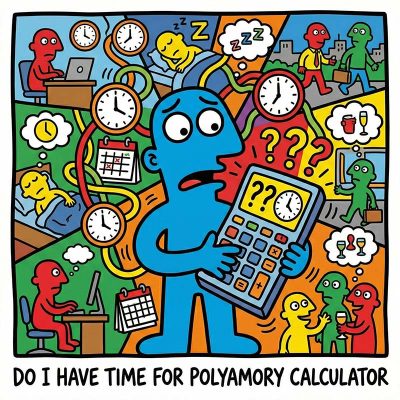
Love is infinite, but your calendar is brutally finite. The fantasy is deep connection; the reality is often just exhausted "calendar tetris." Promising time you don't actually have isn't romantic, it’s a recipe for burnout and broken trust. That sinking feeling when you have to cancel again? That’s the sound of overextension destroying your relationships.
This calculator forces you to confront the math of your life. Do you actually have space for another heart, or are you just setting everyone up for disappointment?

The fantasy is total autonomy and connection. The reality? It can feel like drowning in scheduling chaos and misunderstood expectations. That anxiety you feel isn’t just stress; it’s the wobble of living without a default "anchor." Without a solid architecture, Solo Polyamory stops being a life design and starts being a recipe for burnout and confusion.
The Essential Guide replaces the drift with a concrete anchor. We provide the "Solo Ethic," boundary scripts, and burnout protocols needed to protect your peace. Don't just date around—build a life that actually works for you.

Hierarchy sounds like a corporate org chart until someone gets their feelings hurt. That stomach-turning fear that you are just a "secondary" who can be fired at any time is real. If your relationship feels like a secret ranking system, you are doing it wrong.
Ambiguity is where resentment grows. The Essential Guide replaces the "who matters more" panic with a concrete charter. We provide the scripts and equity guardrails needed to protect every heart in the polycule. Stop guessing and start building.

The ideal is pure equality. The reality? It often slides into hidden rankings where someone gets hurt. That sinking feeling that you are secretly a "secondary" despite the label? That is your intuition detecting couple privilege. Ambiguity is where resentment thrives.
The Essential Guide replaces vague promises with concrete governance. We provide the charters, equity tools, and jealousy protocols needed to ensure "non-hierarchical" isn't just a fantasy. Stop guessing who matters most. Build a network that is actually fair.
The fantasy is total autonomy and connection. The reality? It can feel like drowning in scheduling chaos and misunderstood expectations. That anxiety you feel isn’t just stress; it’s the wobble of living without a default "anchor." Without a solid architecture, Solo Polyamory stops being a life design and starts being a recipe for burnout and confusion.
The Essential Guide replaces the drift with a concrete anchor. We provide the "Solo Ethic," boundary scripts, and burnout protocols needed to protect your peace. Don't just date around—build a life that actually works for you.
Hierarchy sounds like a corporate org chart until someone gets their feelings hurt. That stomach-turning fear that you are just a "secondary" who can be fired at any time is real. If your relationship feels like a secret ranking system, you are doing it wrong.
Ambiguity is where resentment grows. The Essential Guide replaces the "who matters more" panic with a concrete charter. We provide the scripts and equity guardrails needed to protect every heart in the polycule. Stop guessing and start building.
Key terms and acronyms you should know
- ENM Ethical non monogamy. A broad approach to dating that centers on consent, communication and honesty rather than possession or secrecy.
- Hierarchical polyamory A polyamory structure in which some partners have higher priority in terms of time and emotional involvement than others.
- Primary partner The person or people who hold the deepest commitments and shared life logistics such as housing or long term plans.
- Secondary partner A partner who is important and meaningful but not tied to the same level of life integration as a primary partner.
- Tertiary partner A term used by some to describe a third level of relationship that sits outside the core hierarchy.
- Negotiated agreements The explicit rules and boundaries that all parties agree to around dating, time, and intimacy.
- Consent Clear, ongoing permission given by all involved to engage in specific activities or arrangements.
When to disclose hierarchy in the dating process
The ideal is early but thoughtful disclosure. You want to share enough to be transparent without turning the date into a business negotiation. A good rule of thumb is to introduce the topic after you sense there is mutual interest but before you escalate intimacy or make long term plans. In practical terms this means after you have exchanged a few messages or on the first or second date when the conversation starts to lean into values, future plans and relationship preferences. If the other person has a strong stance on monogamy this is a red flag you want to identify early. If they are open minded you want to give them a real sense of how you manage time and emotional energy while respecting others involved.
How to disclose hierarchy in a respectful and clear way
Think in three layers when you talk about hierarchy. Layer one is a simple factual overview. Layer two covers how time is shared. Layer three invites questions and confirms consent. You want to avoid turning the disclosure into a full life story on the first conversation. A concise and kind approach works best.
Layer one: the basic structure
Lead with a straightforward statement that explains the basic structure. For example you might say The person I am dating currently has a primary partner in their life and there are secondary connections I have. I am asking for honesty with you about how this works in my life. I want to be clear about the hierarchy and the kind of commitments that exist.
Layer two: how time and energy are allocated
Describe how you allocate time among partners. You might say I try to schedule as much time with my primary partner as possible while still making room for secondary connections. I am mindful of not letting any one relationship dominate the others. If you are dating someone who is very time sensitive you can add I always inform everyone involved if plans shift or if I need to adjust the schedule. The important piece is to be specific enough to feel real but not so detailed that it becomes a negotiation lecture on the spot.
Layer three: invite questions and confirm consent
End the disclosure with an open invitation for questions and an explicit check for consent. An example would be I want to be transparent about how this works for me. If you have questions or concerns I would like to address them before we go further. Are you comfortable continuing this conversation with me with the idea that we will revisit boundaries as we learn more about each other?
Concrete scripts you can use in different dating contexts
Having ready to adapt language helps reduce anxiety and makes your message feel natural. Use these as starting points and tailor them to your own voice and the specifics of your arrangement.
Online dating profile or first message
Here is a calm and direct opening you can adapt The short version is I am exploring hierarchical polyamory. I have a primary partner and secondary connections and I am here to meet someone who values honesty and open conversation. If that sounds like your kind of thing we can chat and see if there is a fit.
First date disclosure on the table
On a first date you can say I want to be transparent about how I am dating. I have a primary partner and secondary connections. I place a high value on honesty and clear communication. I am not here to push rules I am here to understand intent and compatibility. How do you feel about non monogamy and what would make you feel comfortable continuing this conversation?
On a date where things are becoming serious
When the conversation deepens you could say I really like where this is going. I also want to be honest about my relationship structure. I have a primary partner and I date others in a way that respects boundaries we all agree on. If a deeper connection grows I would expect to revisit our agreements together. How does that sit with you and what would you need from me as we move forward?
If a potential partner asks directly about hierarchy
Try this I am exploring hierarchical polyamory with a clear primary. I also maintain respect and fairness for secondary connections. The exact terms are flexible and open to renegotiation as life changes. What are your thoughts on that structure and what details would you want to know first?
A practical disclosure checklist you can use on a date
- State your intent. Be clear about why you are bringing up hierarchy on this date.
- Keep it simple. Share the core structure without turning this into a long lecture.
- Explain time management. Describe how you divide attention and calendars among partners.
- Describe boundaries. Mention safety boundaries around sex, dating, communication and emotional support.
- Invite questions. Encourage honest questions and express a genuine willingness to discuss.
- Offer next steps. Suggest another conversation or a check in after a few dates to refine terms.
Realistic scenarios you might encounter
Scenario 1. You meet someone online who asks for exclusivity
Response idea Try a warm firm approach I am dating with a hierarchy that includes a primary partner. I am open to exploring a connection with you as long as we can have an honest conversation about structure, boundaries and expectations. If exclusivity is a must for you we can talk about what that would mean and whether our timelines align.
Scenario 2. You are on a first date and the topic comes up naturally
Response idea I am enjoying this conversation. I want to be transparent about how I date. I have a primary partner and secondary connections. I do not want to pretend this does not exist because that would be unfair to everyone involved. If you want to continue seeing me we can talk about what you need from me and how we can approach this together.
Scenario 3. You are already in a long distance setup
Response idea Distance changes how we navigate hierarchy. I likely have a primary partner I see locally and a few secondary connections that I manage through careful planning. Long distance can be workable if we agree on communication patterns and time commitments. What would a healthy setup look like for you given distance?
Red flags and must nots when disclosing hierarchy
- Do not pressure someone into accepting your structure without discussion. Consent matters every step of the way.
- Do not pretend you are monogamous to lure someone in. Deception damages trust and creates conflicts later.
- Avoid giving the impression that you own a person or that time with a partner is unlimited. All agreements require ongoing consent and renegotiation.
- Do not share overly private or sensitive information too early. Protect boundaries and respect privacy as you would in any dating situation.
Handling jealousy and pushback with grace
Jealousy is a natural emotion in dating even for people who have existing relationship structures. Acknowledge it without judgment. You can say I hear that you feel unsettled and that is okay. Let us talk about what would make this easier for you and how I can support you. When you approach jealousy with curiosity and care you can often find a path forward that strengthens both partners and the broader network.
Negotiated agreements and ongoing consent
Hierarchical polyamory thrives on negotiated agreements. These are living documents that you revisit on a regular basis. A simple cadence is to discuss terms every few months or after major life changes such as moving in together or starting a new job. The goal is to keep all parties informed and comfortable as the relationships evolve. Continued consent is the north star here. If anyone feels uncomfortable the conversation should be given priority and terms should be adjusted accordingly.
Common questions about disclosure and hierarchy
- What if my date wants monogamy after we talk about hierarchy? That is a legitimate preference. Be respectful and flexible. If it cannot work you can part ways with kindness.
- How much detail should I share about each relationship? Share enough to be honest while protecting privacy. You can describe the structure and boundaries without revealing private personal content.
- Should I tell my primary partner about every new date right away? It depends on your agreements. In many setups you inform your primary partner before or very soon after you begin dating a new person to maintain trust and transparency.
- How do I know if I am ready to disclose? If you are feeling clear about your own boundaries and confident about communicating them you are likely ready. If you feel unsure you can practice with a trusted friend or coach before bringing it to a date.
Glossary of useful terms and acronyms
- Primary partner The partner who holds the deepest commitment and often shares the most integrated life or plans.
- Secondary partner A partner who is significant but not integrated into daily life at the same level as a primary.
- Negotiated agreements The explicit rules and boundaries that govern dating within a hierarchical setup.
- Consent Ongoing agreement to participate in activities or arrangements with all involved parties aware and in agreement.
- Hierarchical polyamory A polyamory model that uses a hierarchy to structure which partners have higher priority in time or emotional energy.
- Ethical non monogamy ENM for short. A framework that emphasizes consent and transparency over secrecy or coercion.
- Open communication A commitment to express thoughts, feelings and boundaries clearly and respectfully.
Frequently asked questions
How can I start a conversation about hierarchy without making the other person feel pressured
Lead with curiosity and care. State your structure briefly and invite their thoughts. You can say I want to be honest about how I date and would love to hear what you hope for in a relationship. I am open to questions and we can take it from there.
What should I do if someone reacts with fear or rejection
Respect their boundaries. Offer space and time to process. If they still want to explore a connection with you you can continue the conversation later. If not you can part ways with kindness and appreciation for their honesty.
Is it okay to use the term primary or hierarchy on dating apps
Yes. Clear language helps set expectations. You can include a short line like I date with a hierarchy including a primary partner and several secondary connections. This helps like minded people understand your framework from the start.
Can I adapt these approaches for different cultural contexts or relationship styles
Absolutely. The core principles are respect consent and clear communication. Adapt the language to fit cultural norms while keeping the honesty and transparency intact.
What if I feel uncertain about my own hierarchy
Take time to reflect before bringing it to a date. Journaling or speaking with a trusted friend or therapist can help. A well thought out and flexible plan makes conversations easier and more genuine.
Love is infinite, but your calendar is brutally finite. The fantasy is deep connection; the reality is often just exhausted "calendar tetris." Promising time you don't actually have isn't romantic, it’s a recipe for burnout and broken trust. That sinking feeling when you have to cancel again? That’s the sound of overextension destroying your relationships.
This calculator forces you to confront the math of your life. Do you actually have space for another heart, or are you just setting everyone up for disappointment?
The fantasy is total autonomy and connection. The reality? It can feel like drowning in scheduling chaos and misunderstood expectations. That anxiety you feel isn’t just stress; it’s the wobble of living without a default "anchor." Without a solid architecture, Solo Polyamory stops being a life design and starts being a recipe for burnout and confusion.
The Essential Guide replaces the drift with a concrete anchor. We provide the "Solo Ethic," boundary scripts, and burnout protocols needed to protect your peace. Don't just date around—build a life that actually works for you.
Hierarchy sounds like a corporate org chart until someone gets their feelings hurt. That stomach-turning fear that you are just a "secondary" who can be fired at any time is real. If your relationship feels like a secret ranking system, you are doing it wrong.
Ambiguity is where resentment grows. The Essential Guide replaces the "who matters more" panic with a concrete charter. We provide the scripts and equity guardrails needed to protect every heart in the polycule. Stop guessing and start building.
The ideal is pure equality. The reality? It often slides into hidden rankings where someone gets hurt. That sinking feeling that you are secretly a "secondary" despite the label? That is your intuition detecting couple privilege. Ambiguity is where resentment thrives.
The Essential Guide replaces vague promises with concrete governance. We provide the charters, equity tools, and jealousy protocols needed to ensure "non-hierarchical" isn't just a fantasy. Stop guessing who matters most. Build a network that is actually fair.
The fantasy is total autonomy and connection. The reality? It can feel like drowning in scheduling chaos and misunderstood expectations. That anxiety you feel isn’t just stress; it’s the wobble of living without a default "anchor." Without a solid architecture, Solo Polyamory stops being a life design and starts being a recipe for burnout and confusion.
The Essential Guide replaces the drift with a concrete anchor. We provide the "Solo Ethic," boundary scripts, and burnout protocols needed to protect your peace. Don't just date around—build a life that actually works for you.
Hierarchy sounds like a corporate org chart until someone gets their feelings hurt. That stomach-turning fear that you are just a "secondary" who can be fired at any time is real. If your relationship feels like a secret ranking system, you are doing it wrong.
Ambiguity is where resentment grows. The Essential Guide replaces the "who matters more" panic with a concrete charter. We provide the scripts and equity guardrails needed to protect every heart in the polycule. Stop guessing and start building.
