
Intersectionality and Power in Hierarchy

Welcome to a thorough look at how identity intersections shape power using the Hierarchical Polyamory dynamic within Ethical Non Monogamy. We will unpack what intersectionality means in practice, why hierarchy can intensify power differences, and how to navigate these waters in thoughtful, consent driven ways. This guide aims to be practical, unflinching, and relatable while staying grounded in consent and respect for all involved.
Quick Links to Useful Sections
- What is Hierarchical Polyamory in Ethical Non Monogamy
- What is Intersectionality
- Power and Hierarchy A Practical Lens
- Where Intersectionality Meets Hierarchy in ENM
- Ethical Pathways and Red Flags in Hierarchical ENM
- Practical Strategies to Manage Power and Intersectionality
- 1. Map identities and power flows
- 2. Create explicit negotiation rituals
- 3. Practice consent focused communication
- 4. Build accountability mechanisms
- 5. Invest in emotional labor support
- 6. Rotate leadership and decision making
- 7. Prioritize accessibility and inclusion
- 8. Support partners with marginalized identities
- 9. Maintain transparency around finances
- 10. Develop safety and trauma informed practices
- Communication Tools and Scripts
- Opening a negotiation about hierarchy
- Expressing a boundary with respect
- Addressing a concern about inclusivity
- Dealing with conflicts in a power balanced system
- Case Studies and Real World Scenarios
- Glossary of Useful Terms and Acronyms
- Frequently asked questions
What is Hierarchical Polyamory in Ethical Non Monogamy
First let us define the terrain. Ethical Non Monogamy or ENM is a broad umbrella term for relationship styles that involve honesty, consent and communication about multiple romantic or sexual connections. Hierarchical polyamory is a specific structure within ENM where partners are assigned different levels of priority. A common setup is a primary partnership that takes on responsibilities such as living arrangements finances and long term planning. Secondary and sometimes tertiary partners have different expected levels of time emotional energy and decision making input. The key feature is that hierarchy is explicit and negotiated. It is not about coercion or control but about having a clear map for how relationships fit together.
Terms you might see in this space include primary partner which means the person who is at the top of the hierarchy life logistics and decision making within the relationship system. Secondary partners are those who have a meaningful connection but with less day to day influence over life logistics. Tertiary partners can be more casual or occasional connections with lighter responsibilities. In hierarchical structures the primary partner often has more say in matters like living arrangements and major life choices while others are involved in a more flexible or limited capacity. It is essential to note that authority in this sense must be mutually agreed upon and revisited as life changes. Healthy hierarchy is about clarity not deprivation of consent for any party.
Enriching this picture are common dynamics such as nesting arrangements where two people share a home and may have a primary household agreement while others visit or stay for certain periods. Another element is time management where schedules and boundaries define how much time is spent with each partner. In well designed hierarchical polyamory all participants have a real voice in decisions that affect their lives even when one person holds a central role. We emphasize that consent and ongoing dialogue are the foundation for everyone involved to feel safe and respected.
What is Intersectionality
Intersectionality is a framework for understanding how different parts of a person identity overlap to shape experience. It was developed to explain how race gender class sexuality ability and other aspects of who we are interact to create unique experiences of privilege or disadvantage. In everyday terms intersectionality asks us to look beyond one dimension of identity at a time and to see how multiple dimensions work together. For example a person who is both a person of color and non binary may experience relationship dynamics differently from someone who is white and cisgender. In the context of Hierarchical Polyamory those overlapping identities can influence who holds power how access to resources occurs and who feels heard in negotiations. The concept is not about labeling people as more or less oppressed but about understanding how systems shape experiences and how we can adjust to be fairer and more inclusive.
In our everyday lives we might see intersectionality at work in subtle ways such as who is invited to important conversations who has the emotional safety to speak up and who has access to time energy or money necessary to participate fully. When hierarchy is part of a relationship system these factors can become more pronounced and require specific attention and careful negotiation to prevent harm. The goal is to ensure that every voice has space and that power is exercised with consent and accountability rather than entitlement or coercion.
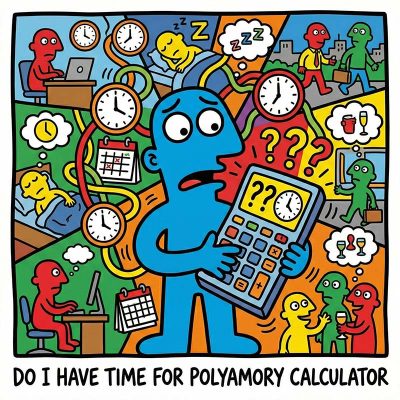
Love is infinite, but your calendar is brutally finite. The fantasy is deep connection; the reality is often just exhausted "calendar tetris." Promising time you don't actually have isn't romantic, it’s a recipe for burnout and broken trust. That sinking feeling when you have to cancel again? That’s the sound of overextension destroying your relationships.
This calculator forces you to confront the math of your life. Do you actually have space for another heart, or are you just setting everyone up for disappointment?

The fantasy is total autonomy and connection. The reality? It can feel like drowning in scheduling chaos and misunderstood expectations. That anxiety you feel isn’t just stress; it’s the wobble of living without a default "anchor." Without a solid architecture, Solo Polyamory stops being a life design and starts being a recipe for burnout and confusion.
The Essential Guide replaces the drift with a concrete anchor. We provide the "Solo Ethic," boundary scripts, and burnout protocols needed to protect your peace. Don't just date around—build a life that actually works for you.

Hierarchy sounds like a corporate org chart until someone gets their feelings hurt. That stomach-turning fear that you are just a "secondary" who can be fired at any time is real. If your relationship feels like a secret ranking system, you are doing it wrong.
Ambiguity is where resentment grows. The Essential Guide replaces the "who matters more" panic with a concrete charter. We provide the scripts and equity guardrails needed to protect every heart in the polycule. Stop guessing and start building.

The ideal is pure equality. The reality? It often slides into hidden rankings where someone gets hurt. That sinking feeling that you are secretly a "secondary" despite the label? That is your intuition detecting couple privilege. Ambiguity is where resentment thrives.
The Essential Guide replaces vague promises with concrete governance. We provide the charters, equity tools, and jealousy protocols needed to ensure "non-hierarchical" isn't just a fantasy. Stop guessing who matters most. Build a network that is actually fair.
The fantasy is total autonomy and connection. The reality? It can feel like drowning in scheduling chaos and misunderstood expectations. That anxiety you feel isn’t just stress; it’s the wobble of living without a default "anchor." Without a solid architecture, Solo Polyamory stops being a life design and starts being a recipe for burnout and confusion.
The Essential Guide replaces the drift with a concrete anchor. We provide the "Solo Ethic," boundary scripts, and burnout protocols needed to protect your peace. Don't just date around—build a life that actually works for you.
Hierarchy sounds like a corporate org chart until someone gets their feelings hurt. That stomach-turning fear that you are just a "secondary" who can be fired at any time is real. If your relationship feels like a secret ranking system, you are doing it wrong.
Ambiguity is where resentment grows. The Essential Guide replaces the "who matters more" panic with a concrete charter. We provide the scripts and equity guardrails needed to protect every heart in the polycule. Stop guessing and start building.
Power and Hierarchy A Practical Lens
Power in its simplest form is the ability to influence outcomes. In hierarchical polyamory power can show up in several areas. Living arrangements time management and financial decisions are common arenas. Emotional labor scheduling and who gets priority during major life events are another set of power related concerns. Because Hierarchical Polyamory formalizes levels of priority power can feel tangible and real even in the presence of strong communication. It is crucial to name power and to monitor how it flows so that all partners feel respected and included.
Identity and power intersect here in meaningful ways. A partner who holds a dominant cultural or social position in the wider world may not automatically control the inner dynamics of a relationship system. Conversely a person who has less access to resources may become vulnerable to power imbalances within the home based on race gender or ability. The intersectional lens asks us to map both external forces and internal relationship rules to spot imbalance early and fix it before it becomes harm. The goal is not to level every difference but to ensure that differences do not become barriers to consent safety and authentic connection.
Where Intersectionality Meets Hierarchy in ENM
Let us look at concrete intersections of identity and power in a Hierarchical Polyamory setup. We will consider several dimensions such as race gender class ability religion and immigration status. The aim is not to point blame but to understand where unfair dynamics may live and how to intervene constructively.
Case in point two partners may share a home with a primary partner who handles most living logistics. If the primary partner is white and the secondary partner is a person of color it is possible for subtle micro dynamics to emerge. The primary partner might influence who is invited to social events or how much emotional energy is poured into the secondary relationship. In such a situation the partner of color might feel unseen or undervalued even when all conversations are in theory open. Acknowledging this possibility opens the door to targeted practices such as facilitated conversations and explicit attention to inclusion during planning tasks.
Another scenario involves gender. In a hierarchy a male aligned partner may be socially privileged in decision making which can produce a sense of safety for him but cause a risk to others if consent is not actively negotiated. A non binary partner or a partner who is gender diverse may experience pressure to conform to expectations or to minimize their own needs to avoid conflict. The intersection of gender identity with the hierarchy can lead to unequal risk profiles in terms of emotional labor and scheduling. Recognizing these patterns invites creative negotiation where everyone voices needs and the system evolves to meet them while still maintaining its overall structure.
Class and economic status can also shape Hierarchical Polyamory in important ways. A partner who controls the shared home or finances may wield power that is amplified by economic leverage. If a partner with lower income feels unable to request changes or to set boundaries it is a sign of an imbalance that requires attention. Strategies to address this include transparent budgeting collaborative decision making about shared resources and rotating leadership in non essential areas so no single person becomes indispensable for every outcome.
Disability and accessibility are part of the intersectional picture as well. If a hierarchy advantages partners who live close by or who can manage heavy schedules easily while other partners face barriers to access participation can falter. Building in accessibility and flexible planning can help ensure that every partner can contribute and benefit from the relationship system. It also creates space for partners who may need extra energy recovery time or accommodations to be seen and valued instead of sidelined.
Orientation and kinship networks add another layer. Some partners may come with families or cultural obligations that carry weight in how time is allocated. Understanding these obligations and negotiating respect for these commitments helps prevent resentment from building under the surface. The aim is not to erase these parts of life but to align them with the relationship priorities in a way that honors all identities involved.
Ethical Pathways and Red Flags in Hierarchical ENM
Ethical practice in Hierarchical Polyamory means that consent is ongoing informed and automatic. It means that power is recognized as something that can become unhealthy if not watched carefully and corrected promptly. It means that each person has the space to speak up and that no one feels pressured to stay in a dynamic that harms them.
Red flags to watch for include coercive language pressure to accept terms that limit independence lack of transparent communication around finances or living arrangements and a pattern of ignoring concerns expressed by marginalized partners. If you notice that a partner who holds higher status in the hierarchy consistently keeps others out of major decisions this is a warning sign. If a partner with lower social capital or less access to resources feels unable to advocate for themselves this is a problem that needs immediate attention. In all cases the response should be to pause reflect and re negotiate with the goal of greater equity.
Another red flag is performative inclusion. A system may publicly claim to welcome all identities while privately maintaining the status quo. The real test is not what is said in group chats but what happens in the day to day. Real change requires listening to concerns across identities and making concrete changes in policy and practice. A healthy dynamic will see adjustments in time allocation rules or decision processes to ensure that marginalized partners do not bear the brunt of hierarchy while still honoring the agreed structure.
Consent in power terms means explicit consent. It means that a partner who may be juggling work and family obligations does not have to say yes to every invitation or request that lands in their inbox. It means that when a partner says no that boundary is respected and not overridden by pressure or persuasion. In addition the possibility of a time out or a cooling off period should be part of the negotiation so that relationships remain responsive to changing circumstances and not locked into a rigid hierarchy that no one can escape.
Practical Strategies to Manage Power and Intersectionality
Managing power while honoring intersectionality is a proactive practice. Here are concrete steps that can help any Hierarchical Polyamory system stay healthy and fair.
1. Map identities and power flows
Start with a clear map of who holds what kind of power in the system. Identify who controls housing finances schedules or access to shared resources. Then map identities such as race gender age ability income and family responsibilities that may influence how power is experienced. This map is not a verdict but a living tool that gets updated as life changes.
2. Create explicit negotiation rituals
Set regular times to review the structure of the hierarchy and the way power works in daily life. Use a calm and respectful tone. Prioritize consent and check each partner for comfort with current arrangements. Keep an agenda this is about clarity and care not about winning a debate.
3. Practice consent focused communication
Communicate with language that centers your own experience. Use I statements and describe impacts rather than making universal judgments about others. For example say I feel overwhelmed when decisions about living arrangements are made without my input instead of You never consider my needs. This kind of phrasing invites collaboration rather than defensiveness.
4. Build accountability mechanisms
Accountability can be formal or informal. It might include a rotating facilitator who leads quarterly check ins or a written agreement that requires a majority of partners to approve major changes in living arrangements or finances. The point is to create a structure where concerns can be raised safely and addressed respectfully rather than stored up and later escalated in hurtful ways.
5. Invest in emotional labor support
Hybrid relationship systems often demand a lot of emotional labor from the partners who are more central to the hierarchy. Provide spaces for these partners to rest recharge and receive support. Encourage all partners to contribute to emotional labor in ways that align with their strengths while respecting their energy levels.
6. Rotate leadership and decision making
Even in hierarchical arrangements it helps to rotate leadership on different topics such as social events parenting tasks or home maintenance. This creates opportunities for skills to grow and reduces the risk that one person feels permanently responsible for everything. Rotation also broadens the sense of shared responsibility among all partners.
7. Prioritize accessibility and inclusion
Make adjustments to ensure everyone can participate in important decisions. This might mean meeting at times that accommodate different work schedules or providing translation or interpretation if needed. Accessibility is not a one time fix but an ongoing commitment to equal participation.
8. Support partners with marginalized identities
Make space for partners who carry multiple identities and create space for their voices to be heard. This may involve inviting external mentors peers or counselors who can provide guidance. Affirm that diverse experiences enrich the relationship system and are not a burden or an afterthought.
9. Maintain transparency around finances
Money matters can be particularly sensitive in hierarchy. Create a clear budget a shared ledger and agreed rules for how financial decisions are made. When possible use objective criteria and avoid letting one person with more money dominate the conversation. Transparency reduces suspicion and builds trust.
10. Develop safety and trauma informed practices
Approach all negotiations with the awareness that previous experiences with relationship trauma can color how people respond to requests. Use safety protocols such as check ins after conflicts and access to resources like counseling when needed. A trauma informed approach helps protect all partners and supports healthier healing after disagreements.
Communication Tools and Scripts
Having practical language can make a real difference in how responsibilities and power are negotiated. Here are ready to adapt scripts you can try in your own situation. Use them as starting point and tailor them to fit your voices and boundaries.
Opening a negotiation about hierarchy
Hi everyone I want to check in about how our hierarchy is feeling for each of us. I feel that the primary role is currently working well for some and a little heavy for others. I would like us to review who has influence on a few key decisions and to adjust if needed. I am open to hearing your perspectives and I want us to come away with a plan that makes space for all of us.
Expressing a boundary with respect
I want to share a boundary that is important to me. I am happy to participate in social events and to contribute to planning but I cannot commit to long weekends away from home at this time. I would appreciate your understanding and I am willing to discuss how we can still maintain closeness while respecting this limit.
Addressing a concern about inclusivity
I have noticed that we do not always include everyone in the planning conversations. I would like us to make space for all voices especially for partners who have different identities and life responsibilities. Can we agree to rotate meeting times and to actively invite input from everyone in future planning sessions?
Dealing with conflicts in a power balanced system
When a disagreement arises I want to acknowledge it without blame. I feel unsettled when decisions are made without my input. I would like us to pause reflect and then decide together how to move forward with a clear plan that respects all concerns.
Case Studies and Real World Scenarios
Scenario one involves a couple where a primary partner is white and cisgender while a secondary partner is a person of color who is also non binary. The primary partner has a stable job and handles most of the shared housing responsibilities. This setup has the potential for unequal emotional labor and energy investment. The group decides to implement a formal check in every month with all partners present and a rotating chair for each meeting. They also agree to publish a shared resource list of activities and ensure that each person can request changes in scheduling without fear of reprisal. Over a few months the group notices improved trust more equal participation and less hidden resentment. The key here is not removing hierarchy but making power use explicit and subject to consent and accountability.
Scenario two involves a household where wealth and access to living space create a strong power imbalance. The partner who earns the most and controls the home becomes the decision maker in most areas. To balance this the group creates a transparent budget monthly reviews and a rule that no major decision about living arrangements can be made without a majority agreement including the voice of the partner who usually sits outside the center. They also establish an external mentor to help facilitate conversations. The changes lead to stronger communication and an improved sense of fairness among everyone involved.
Scenario three looks at a situation where a disabled partner relies on flexibility and accessibility that the other partners do not always provide. The group creates accessible meeting formats one on one discussions and allows extra time for decisions. They also assign a point person to handle accommodation requests and ensure the whole system respects accessibility needs. This combination yields meaningful inclusion and better participation from all partners while maintaining the integrity of the hierarchy.
Glossary of Useful Terms and Acronyms
- ENM Ethical Non Monogamy a broad umbrella for relationship styles based on consent and transparency about multiple connections.
- Hierarchy A structure in which partners have different levels of priority or influence within a relationship system.
- Primary partner The partner ranked highest in the hierarchy often sharing key life decisions and living space.
- Secondary partner A partner with meaningful connection but less influence on daily logistics than the primary partner.
- Tertiary partner A partner with a more casual or limited role within the hierarchy.
- Intersectionality A framework for understanding how overlapping identities shape experiences of privilege and oppression.
- Power dynamics How control and influence are exercised within a relationship or group.
- Consent A clear and ongoing agreement to engage in a specific activity or arrangement.
- Trauma informed An approach that recognizes the impact of trauma and prioritizes safety and healing.
- Emotional labor The non physical work of managing feelings, needs, and relationship maintenance for others.
- Micro aggression Subtle everyday slights that accumulate over time and harm a person or group.
Frequently asked questions
What is Hierarchical Polyamory in ENM
Hierarchical polyamory is a structure within Ethical Non Monogamy where partners have different levels of priority and influence. A common arrangement includes a primary partner who handles core life decisions and daily logistics while secondary and sometimes tertiary partners have defined roles with varying levels of access to time and energy. The system is based on explicit negotiation and ongoing consent and it must adapt to changes in life circumstances for everyone involved.
How does intersectionality affect Hierarchical Polyamory
Intersectionality affects how power is distributed and experienced within the hierarchy. Identities such as race gender sexuality class disability and immigration status can influence who has access to resources who feels safe to speak up and who receives fair emotional labor. Recognizing these layers helps a group adjust rules and practices so that no one is marginalized or pushed to hide their needs.
What are common warning signs of power imbalances
Warning signs include a lack of transparency about finances or living arrangements inconsistent or withheld communication about important changes and a pattern where one partner consistently makes major decisions without input from others. Another sign is when marginalized partners feel unheard or when they must choose between essential needs and relationship demands. Early recognition allows for timely renegotiation and redress.
What steps can help address fairness in a Hierarchical ENM
Start with an explicit written agreement that outlines roles expectations and boundaries. Schedule regular check ins with all partners present and give space for concerns to be voiced without fear of retaliation. Consider rotating responsibilities and ensuring accessibility for everyone. Use a consent focused language and be prepared to make adjustments as identities and life circumstances evolve.
How can we ensure consent remains ongoing
Ongoing consent requires clear communication and the option to pause or modify agreements at any time. Regularly invite feedback and set a cadence for revisiting the negotiation. Normalize the idea that saying no is acceptable and that changes can be made as needed without stigma.
What about dynamics with marginalized partners
Protecting and valuing marginalized partners means including them in every major decision and compensating for any additional emotional labor they shoulder. This can involve targeted support such as access to counseling opportunities, equitable distribution of time, and explicit recognition of their identities in all relationship policies.
Is it possible to move away from hierarchy over time
Yes. Some groups begin with a hierarchy and transition toward more flexible models. Any move away from hierarchy should be guided by consent and mutual agreement. The goal is to maximize safety respect and autonomy for all partners while maintaining honest and open communication about what is working and what is not.
How do we handle conflict in a power heavy system
Approach conflicts with a calm tone and a focus on needs rather than personal flaws. Use a structured process such as a cooling off period a joint review of the events and a plan to implement changes. If conflicts escalate consider external mediation or a kink and poly friendly therapist who can offer perspective and practical tools.
What role does trauma informed practice play here
A trauma informed approach acknowledges that past experiences shape current reactions. It guides language choice practice routines and safety measures. It shows up as patience with emotional responses prioritizing safety and creating spaces where partners can opt out of conversations when needed without fear of retaliation.
Where can I learn more about these dynamics
Look for resources that cover ENM ethics education healthy communication and inclusive practices. Seek out communities or professionals who specialize in non monogamy and who emphasize consent autonomy and intersectional equality. Continuous learning and reflection are core parts of sustainable and respectful relationship work.
Love is infinite, but your calendar is brutally finite. The fantasy is deep connection; the reality is often just exhausted "calendar tetris." Promising time you don't actually have isn't romantic, it’s a recipe for burnout and broken trust. That sinking feeling when you have to cancel again? That’s the sound of overextension destroying your relationships.
This calculator forces you to confront the math of your life. Do you actually have space for another heart, or are you just setting everyone up for disappointment?
The fantasy is total autonomy and connection. The reality? It can feel like drowning in scheduling chaos and misunderstood expectations. That anxiety you feel isn’t just stress; it’s the wobble of living without a default "anchor." Without a solid architecture, Solo Polyamory stops being a life design and starts being a recipe for burnout and confusion.
The Essential Guide replaces the drift with a concrete anchor. We provide the "Solo Ethic," boundary scripts, and burnout protocols needed to protect your peace. Don't just date around—build a life that actually works for you.
Hierarchy sounds like a corporate org chart until someone gets their feelings hurt. That stomach-turning fear that you are just a "secondary" who can be fired at any time is real. If your relationship feels like a secret ranking system, you are doing it wrong.
Ambiguity is where resentment grows. The Essential Guide replaces the "who matters more" panic with a concrete charter. We provide the scripts and equity guardrails needed to protect every heart in the polycule. Stop guessing and start building.
The ideal is pure equality. The reality? It often slides into hidden rankings where someone gets hurt. That sinking feeling that you are secretly a "secondary" despite the label? That is your intuition detecting couple privilege. Ambiguity is where resentment thrives.
The Essential Guide replaces vague promises with concrete governance. We provide the charters, equity tools, and jealousy protocols needed to ensure "non-hierarchical" isn't just a fantasy. Stop guessing who matters most. Build a network that is actually fair.
The fantasy is total autonomy and connection. The reality? It can feel like drowning in scheduling chaos and misunderstood expectations. That anxiety you feel isn’t just stress; it’s the wobble of living without a default "anchor." Without a solid architecture, Solo Polyamory stops being a life design and starts being a recipe for burnout and confusion.
The Essential Guide replaces the drift with a concrete anchor. We provide the "Solo Ethic," boundary scripts, and burnout protocols needed to protect your peace. Don't just date around—build a life that actually works for you.
Hierarchy sounds like a corporate org chart until someone gets their feelings hurt. That stomach-turning fear that you are just a "secondary" who can be fired at any time is real. If your relationship feels like a secret ranking system, you are doing it wrong.
Ambiguity is where resentment grows. The Essential Guide replaces the "who matters more" panic with a concrete charter. We provide the scripts and equity guardrails needed to protect every heart in the polycule. Stop guessing and start building.
