
Managing Comparison Between Partners


Welcome to a practical, up front guide built for people navigating ethical non monogamy in a hierarchical polyamory setup. If you have a primary relationship alongside one or more secondary connections you may notice a pull toward comparing how time, energy, and affection show up across partners. This guide is about turning that pressure into a clearer path forward. We explain terms and acronyms so you can read this like a playbook not a lecture and we share realistic scenarios you can use in your own conversations.
Quick Links to Useful Sections
- What is hierarchical polyamory
- Why comparison happens in hierarchical polyamory
- Key terms and acronyms you will see
- Common patterns of comparison you may notice
- Practical strategies to reduce comparison
- Clarify and codify agreements
- Build a value map for each relationship
- Schedule regular check ins
- Practice transparent communication about time
- Normalize compersion and address insecurity
- Reduce social media driven comparisons
- Time management and energy budgeting
- Use neutral observational language during conflicts
- Communication scripts and scenarios
- Scenario one you feel you are getting less time with your partner who is primary
- Scenario two a partner is asking for more time with a secondary partner and you feel left out
- Scenario three social media updates trigger comparison
- Scenario four a partner wants to end a secondary connection
- Tools and practices you can use every day
- Realistic scenarios and case studies
- Case study A: A steady primary relationship with a flaky secondary partner
- Case study B: When comparison shows up as a pattern of envy around milestones
- Gaining compersion and resilience
- Risks and red flags to watch for
- Checklist for getting started
- Glossary of useful terms and acronyms
- Frequently asked questions
What is hierarchical polyamory
Hierarchical polyamory is a relationship structure in which people maintain different levels of priority among partners. The core idea is that one or more relationships are considered primary while others are secondary. Primary relationships often influence major decisions like living arrangements schedules finances or long term plans. Secondary relationships typically have fewer obligations or a different pace. The exact balance can vary from couple to couple or from group to group, but the common thread is a hierarchy that guides how time energy and attention are distributed.
In this dynamic the term primary is not a badge of superiority but a reflection of agreed upon priorities. Clarity about who is primary who is secondary and how those roles work helps everyone avoid constant competition. Hierarchical arrangements can be flexible or strict depending on the people involved and the stage of life they are in. The key is open negotiation and ongoing consent among all partners.
Why comparison happens in hierarchical polyamory
Humans naturally compare and rank. In hierarchical polyamory that tendency can show up in ways like counting dates evaluating emotional closeness or assessing what each partner receives in support and time. Several factors fuel this pattern:
- Time allocation People may feel they are not getting enough shared moments because the primary partner has more scheduled contact with someone else or because life and work reduce availability.
- Emotional bandwidth Different partners require different amounts of emotional energy and attention. When this balance shifts you may notice a sense of imbalance or envy.
- Social cues and norms Cultural stories about monogamy or romance can seep in and make someone feel they should be getting a certain amount of love or time from a partner.
- Fear of losing access The worry that a partner will shift their focus away can trigger anxious thoughts and comparisons in the moment.
- Jealousy and insecurity Jealousy is a signal not a verdict. It points to a need or a boundary that needs attention and repair.
Understanding why comparison happens is the first step toward reducing its impact. Recognition alone can reduce the power of these thoughts and open space for better communication and healthier boundaries.
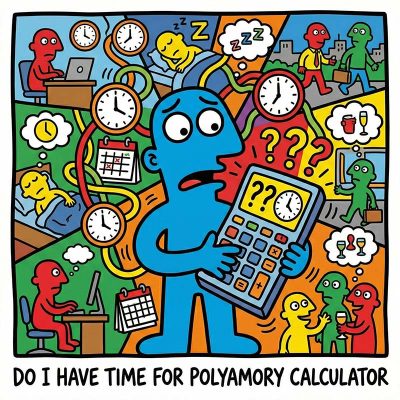
Love is infinite, but your calendar is brutally finite. The fantasy is deep connection; the reality is often just exhausted "calendar tetris." Promising time you don't actually have isn't romantic, it’s a recipe for burnout and broken trust. That sinking feeling when you have to cancel again? That’s the sound of overextension destroying your relationships.
This calculator forces you to confront the math of your life. Do you actually have space for another heart, or are you just setting everyone up for disappointment?

The fantasy is total autonomy and connection. The reality? It can feel like drowning in scheduling chaos and misunderstood expectations. That anxiety you feel isn’t just stress; it’s the wobble of living without a default "anchor." Without a solid architecture, Solo Polyamory stops being a life design and starts being a recipe for burnout and confusion.
The Essential Guide replaces the drift with a concrete anchor. We provide the "Solo Ethic," boundary scripts, and burnout protocols needed to protect your peace. Don't just date around—build a life that actually works for you.

Hierarchy sounds like a corporate org chart until someone gets their feelings hurt. That stomach-turning fear that you are just a "secondary" who can be fired at any time is real. If your relationship feels like a secret ranking system, you are doing it wrong.
Ambiguity is where resentment grows. The Essential Guide replaces the "who matters more" panic with a concrete charter. We provide the scripts and equity guardrails needed to protect every heart in the polycule. Stop guessing and start building.

The ideal is pure equality. The reality? It often slides into hidden rankings where someone gets hurt. That sinking feeling that you are secretly a "secondary" despite the label? That is your intuition detecting couple privilege. Ambiguity is where resentment thrives.
The Essential Guide replaces vague promises with concrete governance. We provide the charters, equity tools, and jealousy protocols needed to ensure "non-hierarchical" isn't just a fantasy. Stop guessing who matters most. Build a network that is actually fair.
The fantasy is total autonomy and connection. The reality? It can feel like drowning in scheduling chaos and misunderstood expectations. That anxiety you feel isn’t just stress; it’s the wobble of living without a default "anchor." Without a solid architecture, Solo Polyamory stops being a life design and starts being a recipe for burnout and confusion.
The Essential Guide replaces the drift with a concrete anchor. We provide the "Solo Ethic," boundary scripts, and burnout protocols needed to protect your peace. Don't just date around—build a life that actually works for you.
Hierarchy sounds like a corporate org chart until someone gets their feelings hurt. That stomach-turning fear that you are just a "secondary" who can be fired at any time is real. If your relationship feels like a secret ranking system, you are doing it wrong.
Ambiguity is where resentment grows. The Essential Guide replaces the "who matters more" panic with a concrete charter. We provide the scripts and equity guardrails needed to protect every heart in the polycule. Stop guessing and start building.
Key terms and acronyms you will see
We believe in explanations that keep things accessible. Here are the core terms and acronyms you will encounter when exploring hierarchical polyamory and ethical non monogamy. If you already know a term feel free to skim and jump to the sections you need.
- Ethical Non Monogamy ENM A broad term for relationship styles where all involved parties consent to more than one romantic or sexual relationship. ENM emphasizes consent communication and honesty.
- Consensual Non Monogamy CNM A synonym for ENM used by many communities. It highlights consent as a non negotiable foundation for all activities.
- Hierarchical polyamory A polyamory structure where a hierarchy exists with primary partners and secondary partners and different levels of commitment or access to resources.
- Primary partner The person or people who hold the central role in a relationship network and often shape major life decisions or provide a framework of plans.
- Secondary partner Partners who are not in the highest tier of priority. They may have different boundaries focus areas or time commitments.
- Compersion A positive feeling when a partner experiences joy from someone else's happiness or relationship. It is the opposite of jealousy and a sign of healthy trust.
- Jealousy An emotional response that often involves insecurity fear or perceived threat to a relationship. It is a natural signal to check in on needs.
- Energy budget A practical way to talk about how much emotional or time energy is available for different relationships within a network.
- Boundaries Agreements about what is allowed and what is not within a relationship. Boundaries help protect well being and trust.
- Check in A scheduled conversation about how everyone is feeling what is working what is not and what might need to change.
- Negotiation The process of discussing needs and agreeing on terms that work for all people involved.
Common patterns of comparison you may notice
In hierarchical polyamory comparison can show up in several familiar forms. These patterns are not universal but they occur often enough that recognizing them helps you stop them before they derail conversations or trust.
- Time scarcity comparisons Observing that one partner spends more time with a person than another and feeling left out as a result.
- Emotional closeness cues Feeling that one relationship is emotionally deeper than another even when all parties have agreed to different roles.
- Resource gaps Comparing financial or practical help offered in different relationships which can include planning help for tasks like moving or child care.
- Status signaling Interpreting posts messages or social media as proof of who is valued more which creates a sense of ranking rather than mutual growth.
- Future focus errors Assuming that one relationship will dominate the future based on current patterns rather than evolving needs and agreements.
These patterns often reflect human psychology rather than intent. The good news is they can be managed with clear communication and practical structures.
Practical strategies to reduce comparison
Reducing comparison does not mean erasing feelings or pretending everything is perfect. It means reframing the situation so you can respond with curiosity clarity and care. Here are strategies you can apply in your weekly routines and conversations.
Clarify and codify agreements
Start with explicit agreements about time and energy. This might include a shared calendar a limit on how many date nights are scheduled with secondary partners and a maximum number of overnight visits per month. The goal is not to micromanage but to prevent ambiguity that fuels comparison. When agreements are written they become a reference point for tough conversations rather than a weapon for blame.
Build a value map for each relationship
Instead of ranking relationships focus on the unique value each connection brings. Create a simple map that lists needs each partner covers such as emotional support excitement learning new things stability or adventure. This helps you see that different relationships fulfill different needs rather than competing for the same slot on your life chart.
Schedule regular check ins
Set a recurring time to discuss how everyone is feeling about the arrangement. Use a structured format that goes like this. First share what is going well. Then name a concern and finally propose a solution. Keep notes so you can track progress.
Practice transparent communication about time
When you know you are feeling pulled toward comparison name the feeling and the trigger. Use I statements to own your feelings and avoid blaming language. For example I notice I am comparing our time together with your time with someone else and I feel anxious. I would like to understand how we can adjust our schedule or boundaries to balance things better.
Normalize compersion and address insecurity
Compersion is a practiced skill not a magical moment. You can train it by focusing on the joy your partner experiences with others while also naming and tending your own needs. If jealousy shows up describe it as a signal you want more of something such as closeness communication or security rather than as a verdict on the relationship.
Reduce social media driven comparisons
Online updates can feel like tiny scoreboards. Create a shared rule about what is appropriate to post and when. Some groups choose to minimize details about dating or relationships outside the home or to share only after conversations and mutual consent. This helps stop external signals from becoming internal benchmarks.
Time management and energy budgeting
Think of your relationship network as a budget. You decide how to allocate days hours and energy. If you find one relationship draining you may reallocate energy to protect your overall wellbeing. Rethinking allocation keeps all relationships sustainable rather than exhausted.
Use neutral observational language during conflicts
During tense moments avoid statements that imply fault. Instead describe the impact and your needs. For example Instead of You never spend time with me say I feel unseen when our shared calendar shows gaps between visits and I would like to plan a weekly couple date night if possible.
Communication scripts and scenarios
Here are practical dialogue templates you can adapt. Use them as starting points for conversations with partners. Personalize the language to fit your style and the specifics of your arrangement.
Scenario one you feel you are getting less time with your partner who is primary
You: I am noticing that I am getting less time with you lately compared to when we first set up our arrangement. I am feeling a bit anxious about where I fit in. I want to understand what is possible and how we can adjust our schedule so I do not feel overlooked.
Partner: We can look at the calendar and try to balance things. What would help you feel more secure?
You: Could we add a recurring date night just for us and also schedule one longer catch up every two weeks with no interruptions? I also want to be clear about when you are available for other partners so I know what to expect.
Partner: That makes sense. Let us draft a plan and put it in writing so we both know what to expect.
Scenario two a partner is asking for more time with a secondary partner and you feel left out
You: I hear you and I want you to be happy with your relationships. Lately I have felt a bit sidelined while you are spending more time with your secondary partner. Can we talk about a balance that honors both of us?
Partner: Of course. What would feel fair to you?
You: I would like to see a schedule that leaves space for a weekly check in with you two and a set number of solo dates with each of you. Can we try a two week trial and review?
Partner: Yes that works. We can adjust as needed.
Scenario three social media updates trigger comparison
You: I notice I feel a sting when I see posts about your dates with others. It makes me worry about where I stand. I want to support all of your relationships but also feel safe online.
Partner: I did not realize it affected you that way. What would help?
You: Could we agree to limit public updates or share only after we have discussed it? And could we set a time to talk about boundaries around what is shared outside our group?
Partner: That sounds reasonable. Let us set some guidelines and keep each other in the loop.
Scenario four a partner wants to end a secondary connection
You: I hear you want to pause or end the secondary relationship. I want to respect your autonomy while also considering how this affects the other person. How can we handle this with care?
Partner: I can share the reasons and we can help with a respectful transition. This is not about you but about my needs changing.
You: Let us communicate clearly with the other person and offer support or referrals if appropriate. We can also adjust our agreements to prevent repetitive cycles.
Tools and practices you can use every day
Applying the right tools makes the discussion about comparison less explosive and more constructive. Here are practical resources you can bring into your relationship practice.
- Shared calendar A central space where every partner can see planned dates and boundaries. This reduces miscommunication about availability.
- Energy budgeting worksheet A simple form that tracks emotional energy and time spent with each partner. It helps you see where you are overextended and where you have room to grow.
- Check in prompts A small set of questions you use at each check in. Examples include What is going well What is challenging What support do you need from me this week
- Boundaries document A living document listing acceptable behaviors topics and boundaries around privacy consent and disclosure. Update it as needs shift.
- Reflection journal A private place to process feelings of comparison talk through triggers and celebrate wins. Journaling supports emotional regulation and self awareness.
Realistic scenarios and case studies
Let us look at two real world style vignettes to illustrate patterns and how to respond in constructive ways. These are composite stories built from common experiences in hierarchical polyamory structures. The aim is not to shame anyone but to offer practical insight.
Case study A: A steady primary relationship with a flaky secondary partner
Two partners have a primary bond and one secondary relationship that is inconsistent due to schedule and life pressures. The secondary partner asks for more time which triggers insecurity in the primary partner who feels the main bond is at risk. The group sits down to review the energy budget and re confirm expectations. They adjust by implementing a more predictable weekly window for the secondary partner while the primary partner commits to a monthly long date with the primary partner. They also set a rule about last minute schedule changes that requires a skip for important events unless there is a mutual agreement. The result is reduced but predictable fluctuation and a stronger sense of safety for all involved.
Case study B: When comparison shows up as a pattern of envy around milestones
A couple with a primary connection and a long term secondary relationship finds that milestones like anniversaries or birthdays are unevenly distributed across partners. They create a milestone calendar that marks important dates for everyone and add a rule that a shared celebration is held when several milestones align. They begin to notice that by planning together they reduce the urge to compare and raise overall satisfaction. They also learn to celebrate small wins in each relationship instead of chasing an imagined perfect balance.
Gaining compersion and resilience
Compersion is the practice of feeling joy for your partner when they experience happiness with another person. It is a muscle that grows with time and intentional practice. Here are ways to cultivate it in a hierarchical polyamory setting.
- Practice perspective taking Visualize what your partner loves about the other relationship and acknowledge that those feelings do not diminish what you share.
- Develop rituals of reassurance Regularly express appreciation for the unique qualities your partner brings to you and to the other relationship.
- Celebrate shared growth When a partner learns something new or grows in a positive way, acknowledge that growth as a shared success rather than a personal win for the other relationship.
- Seek ongoing consent and clarity Regularly check in about comfort levels with the arrangement and adjust before discomfort deepens.
Risks and red flags to watch for
Hierarchical polyamory can function well when built on transparency but there are risks to watch for. Being aware helps you intervene before harm escalates.
- Power imbalances If one partner controls resources time or emotional energy, the others may feel coerced or undervalued.
- Gaslighting or denial of feelings Dismissing concerns about fairness or wellbeing can erode trust and invite resentment.
- Chronic ambiguity If agreements are repeatedly vague or ignored, confusion grows and comparisons intensify.
- Boundary violations Pushing beyond agreed limits around privacy or disclosure creates unsafe dynamics.
If you notice any red flags, address them quickly with the same structure you use for everyday check ins. Lead with specific observations what happened how it felt and what you need to feel supported. Seek outside help from a relationship coach if the pattern persists and your wellbeing is at risk.
Checklist for getting started
- Define who is primary and who is secondary in a clear and documented way
- Agree on a realistic energy budget and calendar layout
- Create a standardized check in routine with prompts and a schedule
- Develop a rules based boundaries document that everyone can reference
- Practice I statements and non accusing language for difficult conversations
- Establish a plan for handling social media and public sharing
- Keep a journal to track emotional responses and progress
Glossary of useful terms and acronyms
- ENM Ethical Non Monogamy, a broad umbrella term for relationship styles that involve more than two people with consent and honesty.
- CNM Consensual Non Monogamy, another common label for non monogamy built on consent.
- Hierarchical polyamory A structure with a primary relationship and one or more secondary relationships each with different levels of priority.
- Primary partner The partner who holds the central role in decision making and life planning.
- Secondary partner A partner who is important but does not have the same level of priority as the primary partner.
- Compersion Feeling joy when your partner experiences happiness with another person.
- Jealousy A natural emotional response to perceived threats involving a relationship.
- Energy budget A practical cap on how much emotional or time energy you can allocate to partners.
- Boundaries Agreements about what is permissible and what is off limits in a relationship.
- Check in A scheduled conversation about how everyone feels and what needs adjusting.
- Negotiation The process of discussing needs and reaching a mutually acceptable arrangement.
Frequently asked questions
Love is infinite, but your calendar is brutally finite. The fantasy is deep connection; the reality is often just exhausted "calendar tetris." Promising time you don't actually have isn't romantic, it’s a recipe for burnout and broken trust. That sinking feeling when you have to cancel again? That’s the sound of overextension destroying your relationships.
This calculator forces you to confront the math of your life. Do you actually have space for another heart, or are you just setting everyone up for disappointment?
The fantasy is total autonomy and connection. The reality? It can feel like drowning in scheduling chaos and misunderstood expectations. That anxiety you feel isn’t just stress; it’s the wobble of living without a default "anchor." Without a solid architecture, Solo Polyamory stops being a life design and starts being a recipe for burnout and confusion.
The Essential Guide replaces the drift with a concrete anchor. We provide the "Solo Ethic," boundary scripts, and burnout protocols needed to protect your peace. Don't just date around—build a life that actually works for you.
Hierarchy sounds like a corporate org chart until someone gets their feelings hurt. That stomach-turning fear that you are just a "secondary" who can be fired at any time is real. If your relationship feels like a secret ranking system, you are doing it wrong.
Ambiguity is where resentment grows. The Essential Guide replaces the "who matters more" panic with a concrete charter. We provide the scripts and equity guardrails needed to protect every heart in the polycule. Stop guessing and start building.
The ideal is pure equality. The reality? It often slides into hidden rankings where someone gets hurt. That sinking feeling that you are secretly a "secondary" despite the label? That is your intuition detecting couple privilege. Ambiguity is where resentment thrives.
The Essential Guide replaces vague promises with concrete governance. We provide the charters, equity tools, and jealousy protocols needed to ensure "non-hierarchical" isn't just a fantasy. Stop guessing who matters most. Build a network that is actually fair.
The fantasy is total autonomy and connection. The reality? It can feel like drowning in scheduling chaos and misunderstood expectations. That anxiety you feel isn’t just stress; it’s the wobble of living without a default "anchor." Without a solid architecture, Solo Polyamory stops being a life design and starts being a recipe for burnout and confusion.
The Essential Guide replaces the drift with a concrete anchor. We provide the "Solo Ethic," boundary scripts, and burnout protocols needed to protect your peace. Don't just date around—build a life that actually works for you.
Hierarchy sounds like a corporate org chart until someone gets their feelings hurt. That stomach-turning fear that you are just a "secondary" who can be fired at any time is real. If your relationship feels like a secret ranking system, you are doing it wrong.
Ambiguity is where resentment grows. The Essential Guide replaces the "who matters more" panic with a concrete charter. We provide the scripts and equity guardrails needed to protect every heart in the polycule. Stop guessing and start building.
