
Power Imbalances Inherent in Hierarchy

Hierarchical polyamory is a real thing not just a buzzword. It is a relationship structure within ethical non monogamy where partners are ranked in a hierarchy. The highest tier is usually labeled primary or main, and there are lower tiers such as secondary and sometimes even tertiary. This setup is common in many communities where people want to balance commitment, time, and emotional labor while still exploring multiple connections. The dynamic can be wonderful and productive when everyone agrees on the rules and the values guiding the arrangement. It can also create power imbalances that feel heavy or invisible if not watched closely. This guide dives into how those imbalances arise, what they look like in everyday life, and practical steps to keep the arrangement fair and healthy.
Quick Links to Useful Sections
- What hierarchical polyamory is and why power imbalances show up
- How hierarchy creates structural power differences
- Time and scheduling advantage
- Resource and boundary governance
- Emotional labor and decision making
- Intimacy pacing and sexual access
- Authority and control in daily life
- Realistic scenarios you might recognize
- Scenario one: The calendar squeeze
- Scenario two: The decision bottleneck
- Scenario three: The emotional labor load
- Warning signs and red flags
- Negotiation frameworks that help balance power
- Open and explicit agreements
- Time as a resource that can be shared
- Fairness in emotional labor
- Consent and ongoing negotiation
- Accountability mechanisms
- Rotation and flexibility in hierarchy
- Practical tips for real life management
- Ethical considerations and boundaries
- When hierarchy becomes unhealthy and what to do about it
- Communication practices that sustain healthy hierarchical ENM
- Glossary of useful terms and acronyms
- Frequently asked questions
- Putting it all together
- Checklist for ongoing health in hierarchical ENM
- Further reading and resources
What hierarchical polyamory is and why power imbalances show up
To start with the basics let us paint the picture. In a hierarchical polyamory setup there is a clear ordering of relationships. The primary partner is the person who carries the highest level of commitment. They often have more shared life decisions, more access to time, energy, and resources, and sometimes influence the way other partners are integrated into the life world. Secondary partners are present but the structure places them lower in the hierarchy. Tertiary partners or other relationships may exist at a further level. The exact labeling can vary from couple to couple and from group to group but the core idea remains a tiered system that prioritizes some connections above others.
Enm stands for ethical non monogamy. This is a philosophy rather than a rule book. ENM means that people are honest and deliberate about pursuing more than one romantic or sexual relationship at the same time while still seeking consent and mutual respect. When ENM maps onto hierarchy power dynamics appear because one relationship strand is given more social status practical support and emotional bandwidth. Hierarchy can be explicitly agreed upon or it can emerge as a pattern in daily life. Either way power imbalances can surface and they can be well intentioned or they can slip into coercive territory without anyone realizing it.
In brief power imbalances arise because hierarchy creates asymmetries. Those asymmetries can be about time availability decisions about who gets priority in a crowded calendar who gets to set the pace of a shared life and who has the final say on big choices. They can also show up in emotional labor the amount of energy someone is asked to invest in supporting others and the kind of care expected to be available when it matters most. Understanding these forces is the first step to managing them in a healthy way.
How hierarchy creates structural power differences
Time and scheduling advantage
Primary partners often receive scheduling priority. That means they get more influence over how weekends vacations holidays and important life events are arranged. If you are a secondary partner you may face a more limited window for shared time and that can create a sense of being on the outside looking in. Over time this can lead to resentment or a feeling that you are less valued even when the care and affection are real.
Resource and boundary governance
Resources range from attention to money to shared space. A primary partner frequently has greater access to joint resources and decisions about where those resources go. This can include housing arrangements time off work shared expenses and even big life steps such as moving in together. When resources are allocated asymmetrically the person at the top of the hierarchy tends to influence how those resources are used which can unintentionally deprive others of the support they need.
Emotional labor and decision making
Emotional labor refers to the emotional effort of managing relationships the needs of multiple people and the unspoken undercurrents that shape how conversations happen. In a hierarchy the primary partner may be in a position to shape conversations make decisions and calm emotional waves more often. This can lead to a situation where others feel the emotional load is heavier on their shoulders or that their own needs are deprioritized in favor of keeping the main relationship stable.
Intimacy pacing and sexual access
Access to intimacy is often coordinated around the primary relationship with other connections arranged around the schedule of the top tier. That means secondary partners may face tighter windows for emotional closeness sexual encounters or even casual connection. If those windows feel rigid or inconsistent it can breed frustration or a sense that their own needs are being minimized.
Authority and control in daily life
In some hierarchical setups the primary partner holds more say in what the couple or group does day to day. This is not necessarily coercive or malicious. It can be a practical choice designed to reduce friction and keep things moving forward. The risk emerges when the same level of authority is not mirrored with consent when it is not shared with all involved or when one person uses that authority to pressure others into accepting decisions they do not truly consent to.
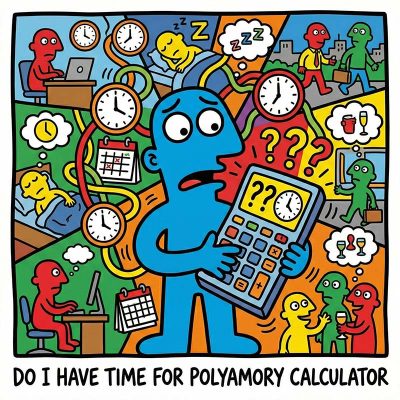
Love is infinite, but your calendar is brutally finite. The fantasy is deep connection; the reality is often just exhausted "calendar tetris." Promising time you don't actually have isn't romantic, it’s a recipe for burnout and broken trust. That sinking feeling when you have to cancel again? That’s the sound of overextension destroying your relationships.
This calculator forces you to confront the math of your life. Do you actually have space for another heart, or are you just setting everyone up for disappointment?

The fantasy is total autonomy and connection. The reality? It can feel like drowning in scheduling chaos and misunderstood expectations. That anxiety you feel isn’t just stress; it’s the wobble of living without a default "anchor." Without a solid architecture, Solo Polyamory stops being a life design and starts being a recipe for burnout and confusion.
The Essential Guide replaces the drift with a concrete anchor. We provide the "Solo Ethic," boundary scripts, and burnout protocols needed to protect your peace. Don't just date around—build a life that actually works for you.

Hierarchy sounds like a corporate org chart until someone gets their feelings hurt. That stomach-turning fear that you are just a "secondary" who can be fired at any time is real. If your relationship feels like a secret ranking system, you are doing it wrong.
Ambiguity is where resentment grows. The Essential Guide replaces the "who matters more" panic with a concrete charter. We provide the scripts and equity guardrails needed to protect every heart in the polycule. Stop guessing and start building.

The ideal is pure equality. The reality? It often slides into hidden rankings where someone gets hurt. That sinking feeling that you are secretly a "secondary" despite the label? That is your intuition detecting couple privilege. Ambiguity is where resentment thrives.
The Essential Guide replaces vague promises with concrete governance. We provide the charters, equity tools, and jealousy protocols needed to ensure "non-hierarchical" isn't just a fantasy. Stop guessing who matters most. Build a network that is actually fair.
The fantasy is total autonomy and connection. The reality? It can feel like drowning in scheduling chaos and misunderstood expectations. That anxiety you feel isn’t just stress; it’s the wobble of living without a default "anchor." Without a solid architecture, Solo Polyamory stops being a life design and starts being a recipe for burnout and confusion.
The Essential Guide replaces the drift with a concrete anchor. We provide the "Solo Ethic," boundary scripts, and burnout protocols needed to protect your peace. Don't just date around—build a life that actually works for you.
Hierarchy sounds like a corporate org chart until someone gets their feelings hurt. That stomach-turning fear that you are just a "secondary" who can be fired at any time is real. If your relationship feels like a secret ranking system, you are doing it wrong.
Ambiguity is where resentment grows. The Essential Guide replaces the "who matters more" panic with a concrete charter. We provide the scripts and equity guardrails needed to protect every heart in the polycule. Stop guessing and start building.
Realistic scenarios you might recognize
Scenario one: The calendar squeeze
Imagine a group where the primary partner has two weekend slots with the family every month and the secondary partner only gets one. The primary partner schedules those time blocks first leaving the secondary partner with tightly packed windows that can feel like a limbo dance. Over time the secondary partner might start arranging their life around that limited love slot which can lead to a sense of scarcity rather than spacious connection.
Scenario two: The decision bottleneck
In this setup a major decision such as moving to a new city or changing a living arrangement requires the primary partner to sign off because it touches the core life structure. The secondary partner is asked to accept the outcome even if it deeply affects them. That creates a dynamic where the secondary partner has limited input into big changes and their autonomy feels constrained.
Scenario three: The emotional labor load
A primary partner handles most of the emotional labor managing schedules soothing insecurities and maintaining communication lines. The secondary partner who is not in the top tier may feel they are carrying a lighter emotional weight but face a persistent sense of inconsistency or uncertainty about where they stand. This can undermine trust and make the relationship feel transactional instead of being truly relational.
Warning signs and red flags
- One person controls who can be included in plans and who is left out
- A constant pattern of cancellations or re scheduling that disproportionately affects one relationship
- Formals and informal rules that are never clearly discussed or agreed upon by all parties
- A lack of transparent communication about needs boundaries and expectations
- The feeling that the lower tier partners are expected to perform emotional labor without reciprocity
- Time tests or resource demands that feel coercive rather than collaborative
- Gas lighting or pressure tactics used to win agreement on sensitive issues
If you notice these patterns there is a good chance the dynamic is drifting toward unhealthy territory. The good news is that there are practical fixes that can shift the dynamic toward fairness and mutual respect.
Negotiation frameworks that help balance power
Open and explicit agreements
One of the most powerful tools is a written agreement that lays out the structure of the hierarchy what each tier means what kinds of commitments are expected and how conflicts will be resolved. A good agreement is not a jail sentence it is a living document that can be revised as needs change. Make sure every person who is part of the arrangement has input and sign off. Clarity reduces miscommunication and reduces the chance of hidden resentment building up over time.
Time as a resource that can be shared
Agree on how time will be allocated across tiers and how both parties can request more or less time. Consider creating a rotating schedule a back up plan for emergencies and a process for renegotiation if someone’s life circumstances change. Time fairness does not mean equal time for everyone every week. It means transparent rules that everyone understands and accepts.
Fairness in emotional labor
Emotional labor should be distributed more evenly than it often is in hierarchy. Build a plan where each person shares responsibility for checking in for supporting others and for maintaining healthy boundaries. This can involve rotating check in duties creating shared spaces to talk about needs and setting up outlets for those who carry heavier emotional loads to get support from trusted friends or professionals.
Consent and ongoing negotiation
Consent in hierarchical setups is not a one time checkbox. It is a continuous conversation. Create designated times for check ins where people can raise concerns share new needs or request changes. Do not wait for a problem to explode before talking. Regular maintenance conversations help keep the relationship stable and respectful for everyone involved.
Accountability mechanisms
Establish clear consequences for breaches of the agreement. This might include mediated conversations with a neutral third party a cooling off period a temporary pause on certain interactions or a formal renegotiation of terms. Accountability is not a punishment it is a way to preserve trust and safety for all participants.
Rotation and flexibility in hierarchy
Some groups choose to use a fluid hierarchy that can shift over time. The primary may become a secondary and new people may elevate into higher tiers as the relationship evolves. Practically this requires explicit negotiation and a willingness to adjust agreements. A flexible approach can prevent the system from becoming stale or coercive.
Practical tips for real life management
- Set up regular check in meetings with a structured agenda to discuss needs boundaries and concerns
- Keep a written record of agreements and review them at agreed intervals
- Create a neutral space to voice concerns without fear of retaliation or judgment
- Use outside resources such as relationship coaching therapy or a trusted mentor when needed
- Practice transparent communication about time money and emotional labor
- Respect each person as an autonomous individual with their own needs and limits
- Honor consent with ongoing conversations even when things are going well
Ethical considerations and boundaries
Hierarchy in polyamory is not a license to control others or to demand unlimited access. There is a line between guiding structure and coercive dominance. If a person is pressured into accepting a term or a boundary that conflicts with their core values this is not healthy even if the other parties argue that it is for the sake of harmony. Boundaries should protect emotional safety autonomy and consent for everyone involved. If a rule feels oppressive it deserves revisiting with the whole group in a calm transparent setting.
When hierarchy becomes unhealthy and what to do about it
- When one person feels consistently sidelined or devalued
- When boundaries are repeatedly ignored or overridden
- When emotions are used as leverage in an argument
- When there is a pattern of secrecy or minimal disclosure about important issues
If you find yourself in a setup that feels unsafe or coercive it is important to act. Steps to take include seeking a trusted friend or therapist to talk with, requesting a structured renegotiation, pausing certain aspects of the arrangement to regain space, or stepping out of the relationship dynamic if necessary. Self care matters and you deserve to be in a space where your consent is ongoing and respected.
Communication practices that sustain healthy hierarchical ENM
- Practice transparent honest conversations about needs and boundaries
- Use calm language and avoid accusatory tones when discussing concerns
- Document agreements and revisit them on a regular basis
- Encourage all partners to voice concerns and propose adjustments
- Schedule time for non relationship related intimacy to keep the bond strong
Glossary of useful terms and acronyms
- ENM Ethical Non Monogamy a philosophy and practice of having honest multiple intimate or sexual connections with consent from all involved
- Hierarchical polyamory A polyamorous setup that uses a ranking system such as primary secondary and sometimes tertiary
- Primary partner The person who holds the top tier in the relationship hierarchy often sharing the deepest level of commitment and decision making
- Secondary partner A person who is part of the network but sits below the primary tier with typically less time access or influence
- Tertiary A partner who is further down the hierarchy with minimal intertwined life overlapping but still part of the broader network
- Emotional labor The mental and emotional effort required to manage relationships and care for others
- Consent The voluntary and informed agreement to engage in a given activity or arrangement
- Check in A deliberate conversation to assess wellbeing needs boundaries and satisfaction with the arrangement
- Boundaries Clear limits set by people about what is healthy and acceptable in a relationship
Frequently asked questions
What is hierarchical polyamory
Hierarchical polyamory is a form of ethical non monogamy in which relationships are ranked. The top tier called primary carries more entailments such as time safety and decision making power while lower tiers have varying levels of access and influence. The key feature is a clear structure that all participants acknowledge and agree to.
How do power imbalances show up in a hierarchy
Power imbalances show up through scheduling priority differences access to shared resources and the distribution of emotional labor. They can also show up in who gets to make big life decisions who is consulted how much time is allocated to each relationship and who feels heard in tough moments.
What are red flags that a hierarchy is becoming unhealthy
Red flags include consistent sidelining of one partner inconsistent communication hidden decisions unexplained changes to plans that only affect one person and a lack of ongoing consent discussions. If someone feels coerced or pressured to accept terms they are not fully comfortable with that is a major warning sign.
How can we reduce power imbalances in a hierarchical setup
Reduce imbalances by creating explicit written agreements that are revisited regularly make time for all partners treat emotional labor as a shared resource and practice ongoing consent conversations. Encouraging transparency and introducing neutral mediation when needed also helps keep the space fair.
Should hierarchy be permanent
No. Many groups treat hierarchy as a dynamic tool that can adapt as life changes. A permanent rigid hierarchy can stagnate relationships. It is healthier to allow for periodic renegotiation or for the hierarchy to shift when people choose to adjust their commitments and needs.
How can we negotiate disagreements effectively
Use a structured approach such as a dedicated negotiation meeting with a calm setting agenda and a mediator if helpful. Ground the talk in values respect consent and the wellbeing of everyone involved. Focus on practical outcomes such as time allocation boundary adjustments and emotional support mechanisms.
What role does therapy or coaching play
Therapy or relationship coaching can help in two ways. First it provides a space to work through personal feelings and trauma that may be heightened by hierarchy. Second it offers tools for communication negotiation and conflict resolution that are specific to complex multiple relationship dynamics.
Putting it all together
Hierarchical polyamory can offer powerful ways to connect with multiple people while maintaining a coherent life structure. The central challenge is the power imbalance that can come with hierarchy. The good news is that with explicit agreements ongoing consent checks fair distributions of time and resources and a commitment to accountability it is possible to keep the arrangement healthy. The best outcomes come from continuing open dialogue around needs and from treating every partner with respect and dignity. If you are navigating this dynamic take small steps start with a real conversation and build a plan you can all commit to with honesty and care.
Checklist for ongoing health in hierarchical ENM
- Have an up to date written agreement that all partners have contributed to
- Set up regular check in sessions and stick to them
- Document changes to plans and ensure everyone agrees
- Balance emotional labor across partners and invite outside support when needed
- Respect each partner’s boundaries and revisit them when life changes
- Keep communication clear and avoid assuming others know your needs unless you state them
Further reading and resources
- Books on ethical non monogamy and relationship dynamics
- Relationship coaching and counseling options with a focus on non traditional relationships
- Online communities that discuss hierarchical polyamory with real world case studies
Love is infinite, but your calendar is brutally finite. The fantasy is deep connection; the reality is often just exhausted "calendar tetris." Promising time you don't actually have isn't romantic, it’s a recipe for burnout and broken trust. That sinking feeling when you have to cancel again? That’s the sound of overextension destroying your relationships.
This calculator forces you to confront the math of your life. Do you actually have space for another heart, or are you just setting everyone up for disappointment?
The fantasy is total autonomy and connection. The reality? It can feel like drowning in scheduling chaos and misunderstood expectations. That anxiety you feel isn’t just stress; it’s the wobble of living without a default "anchor." Without a solid architecture, Solo Polyamory stops being a life design and starts being a recipe for burnout and confusion.
The Essential Guide replaces the drift with a concrete anchor. We provide the "Solo Ethic," boundary scripts, and burnout protocols needed to protect your peace. Don't just date around—build a life that actually works for you.
Hierarchy sounds like a corporate org chart until someone gets their feelings hurt. That stomach-turning fear that you are just a "secondary" who can be fired at any time is real. If your relationship feels like a secret ranking system, you are doing it wrong.
Ambiguity is where resentment grows. The Essential Guide replaces the "who matters more" panic with a concrete charter. We provide the scripts and equity guardrails needed to protect every heart in the polycule. Stop guessing and start building.
The ideal is pure equality. The reality? It often slides into hidden rankings where someone gets hurt. That sinking feeling that you are secretly a "secondary" despite the label? That is your intuition detecting couple privilege. Ambiguity is where resentment thrives.
The Essential Guide replaces vague promises with concrete governance. We provide the charters, equity tools, and jealousy protocols needed to ensure "non-hierarchical" isn't just a fantasy. Stop guessing who matters most. Build a network that is actually fair.
The fantasy is total autonomy and connection. The reality? It can feel like drowning in scheduling chaos and misunderstood expectations. That anxiety you feel isn’t just stress; it’s the wobble of living without a default "anchor." Without a solid architecture, Solo Polyamory stops being a life design and starts being a recipe for burnout and confusion.
The Essential Guide replaces the drift with a concrete anchor. We provide the "Solo Ethic," boundary scripts, and burnout protocols needed to protect your peace. Don't just date around—build a life that actually works for you.
Hierarchy sounds like a corporate org chart until someone gets their feelings hurt. That stomach-turning fear that you are just a "secondary" who can be fired at any time is real. If your relationship feels like a secret ranking system, you are doing it wrong.
Ambiguity is where resentment grows. The Essential Guide replaces the "who matters more" panic with a concrete charter. We provide the scripts and equity guardrails needed to protect every heart in the polycule. Stop guessing and start building.
