
Repairing Harm Caused by Hierarchical Decisions

Hierarchical polyamory is a dynamic where one partner holds a higher level of decision making or emotional priority than others. This setup can be loving and efficient when every person feels seen. It can also create harm when power tilts and voices get crowded out. This guide is here to help you spot harm practices and repair the relationships in a practical, compassionate way. Think of it as a playbook for turning an imbalanced dynamic into a healthier, more inclusive one without losing what makes the arrangement work for some people. We will explain terms along the way so you can speak the same language with your partners and move toward lasting repair.
Quick Links to Useful Sections
- What hiera rchical polyamory is and why harm can happen
- How harm shows up in hierarchical dynamics
- A practical framework for repairing harm
- Step one acknowledge what happened
- Step two take accountability
- Step three listen deeply
- Step four ask what would help
- Step five craft a revised agreement
- Step six test and adjust
- Step seven build back trust through consistent actions
- Tools you can use now
- Proactive check in scripts
- Apology templates
- Re negotiation templates
- Safety planning checklists
- Realistic scenarios and how to repair them
- Scenario one the annual calendar crunch
- Scenario two boundary backsliding after a new partner enters the orbit
- Scenario three the primary partner makes all decisions about social events
- Must nots when repairing harm in hierarchical ENM
- What to keep in mind about consent and communication
- Practical tips for a durable repair process
- Glossary of terms and acronyms
- Frequently asked questions
What hiera rchical polyamory is and why harm can happen
Hierarchical polyamory means there is a tiered sense of priority across partners. The primary partner often has more influence over time management, relationship rules or dating plans. Secondary and other partners may have less say in the direction of the shared relationship life. When done with consent and care this structure can work well. When it becomes overpowering or exclusionary harm follows. Harm can look like constant cancellation of plans with a lower tier partner without explanation or a lack of check ins about needs. It can also show up as a persistent sense of being undervalued or as a fear of bringing concerns to the table due to possible punishment or dismissal. The goal is not to erase hierarchy but to ensure dignity and safety for everyone involved. Harm repair means acknowledging what happened and rebuilding trust step by step.
Key terms you will see in this guide include ENM which stands for ethical non monogamy and refers to dating or being intimate with more than one person in an ethical and transparent way. Hierarchical polyamory is a specific type of ENM where priorities are uneven across partners. A primary partner is often the person or people who carry the most influence in decisions about time resources or living arrangements. A secondary partner is someone who is in a significant relationship but with less decision making power. An orbiting partner or a casual partner may have ongoing contact but without formal expectations in every area. Understanding these terms helps you talk about harm without vague language.
How harm shows up in hierarchical dynamics
Harm can appear in subtle ways or in clear infraction of boundaries. In some cases the primary partner makes most decisions about schedules, introductions or social boundaries without inviting input from others. In other cases a secondary partner may feel pushed into silence or made to feel like their needs do not count as much. Here are some common patterns to look for:
- One partner routinely makes decisions about time together without consulting others.
- Second and third partners receive late or no information about changes that affect them.
- Emotional needs such as attention or reassurance are dismissed or minimized.
- Resources like space on the calendar or access to shared spaces are allocated with little to no negotiation.
- Requests for space or changes are met with defensiveness or blame rather than listening.
In all of these cases harm is not inevitable. The core issue is power distribution that lacks consent a lack of open dialogue and a culture that does not hold people in positions of authority accountable. The path to repair starts with taking responsibility for harm and moving toward transparent negotiation and inclusive care.
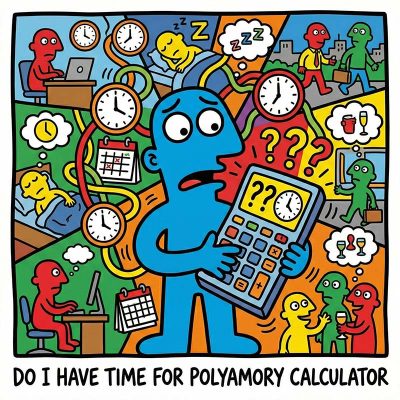
Love is infinite, but your calendar is brutally finite. The fantasy is deep connection; the reality is often just exhausted "calendar tetris." Promising time you don't actually have isn't romantic, it’s a recipe for burnout and broken trust. That sinking feeling when you have to cancel again? That’s the sound of overextension destroying your relationships.
This calculator forces you to confront the math of your life. Do you actually have space for another heart, or are you just setting everyone up for disappointment?

The fantasy is total autonomy and connection. The reality? It can feel like drowning in scheduling chaos and misunderstood expectations. That anxiety you feel isn’t just stress; it’s the wobble of living without a default "anchor." Without a solid architecture, Solo Polyamory stops being a life design and starts being a recipe for burnout and confusion.
The Essential Guide replaces the drift with a concrete anchor. We provide the "Solo Ethic," boundary scripts, and burnout protocols needed to protect your peace. Don't just date around—build a life that actually works for you.

Hierarchy sounds like a corporate org chart until someone gets their feelings hurt. That stomach-turning fear that you are just a "secondary" who can be fired at any time is real. If your relationship feels like a secret ranking system, you are doing it wrong.
Ambiguity is where resentment grows. The Essential Guide replaces the "who matters more" panic with a concrete charter. We provide the scripts and equity guardrails needed to protect every heart in the polycule. Stop guessing and start building.

The ideal is pure equality. The reality? It often slides into hidden rankings where someone gets hurt. That sinking feeling that you are secretly a "secondary" despite the label? That is your intuition detecting couple privilege. Ambiguity is where resentment thrives.
The Essential Guide replaces vague promises with concrete governance. We provide the charters, equity tools, and jealousy protocols needed to ensure "non-hierarchical" isn't just a fantasy. Stop guessing who matters most. Build a network that is actually fair.
The fantasy is total autonomy and connection. The reality? It can feel like drowning in scheduling chaos and misunderstood expectations. That anxiety you feel isn’t just stress; it’s the wobble of living without a default "anchor." Without a solid architecture, Solo Polyamory stops being a life design and starts being a recipe for burnout and confusion.
The Essential Guide replaces the drift with a concrete anchor. We provide the "Solo Ethic," boundary scripts, and burnout protocols needed to protect your peace. Don't just date around—build a life that actually works for you.
Hierarchy sounds like a corporate org chart until someone gets their feelings hurt. That stomach-turning fear that you are just a "secondary" who can be fired at any time is real. If your relationship feels like a secret ranking system, you are doing it wrong.
Ambiguity is where resentment grows. The Essential Guide replaces the "who matters more" panic with a concrete charter. We provide the scripts and equity guardrails needed to protect every heart in the polycule. Stop guessing and start building.
A practical framework for repairing harm
Repair is a process not a single act. The steps below are designed to be practical and verifiable. They center on safety accountability and ongoing negotiation. You can use these steps whether you are the person who caused the harm or the partner who was harmed. The process works best when it is co created with all involved parties and facilitated by a calm and trusted ally if needed.
Step one acknowledge what happened
Acknowledge the harm plainly. Do not minimize or shift blame. A clear statement about what occurred sets the stage for accountability. Example lines can include I hear that my decision making without input caused you to feel unseen. I am sorry for the hurt this caused and I want to start repairing this with you.
Step two take accountability
Accountability means accepting responsibility without excuses. It does not require perfect actions right away but it does require honest intent to change. This step often includes an explanation of why the behavior happened and a promise to change. If you made a mistake you admit it and outline the change you will make today to prevent repeating it.
Step three listen deeply
Provide space for the harmed partner to share their experience. Listen without interrupting. Reflect back what you heard to confirm understanding. Validate the feelings even if you do not fully agree with every detail. A simple feedback loop can be I hear you saying that when a plan changes without input it makes you feel unimportant. Is that accurate?
Step four ask what would help
Invite the harmed partner to describe concrete steps that would increase safety. This could involve schedule check ins more explicit expectations around decisions and a process for raising concerns. If you are the partner who caused harm you offer to implement these steps and keep them under review.
Step five craft a revised agreement
Boundaries and agreements should be written in plain language and be revisit able. A living document should include who is involved what counts as a change in plans and how decisions are made in practice. You can include a weekly or biweekly check in to review how the dynamic feels and what might need to shift.
Step six test and adjust
Repair is an ongoing practice. Schedule a set period to test new processes and collect feedback. If something still feels off you adjust. The aim is to create a dynamic where all voices are heard and decisions are made with consent and care.
Step seven build back trust through consistent actions
Trust is rebuilt through reliable behavior over time. The harmed partner should feel seen reliable and safe in the relationship. This means showing up with predictability and willingness to adjust when issues arise.
Tools you can use now
The following tools help you put the repair framework into practice. Use them alone or together depending on what your circle needs.
Proactive check in scripts
Use simple language that invites honest feedback. For example We had a misstep last week and I want to repair it. Can we talk about how decisions will work in the future and what support would help you feel heard?
Apology templates
Apologies should be specific and free of excuses. A sample apology could be I am sorry for deciding without you and for the pain that caused. I want to fix this by setting up a weekly planning session and inviting your input before any big plans are made.
Re negotiation templates
Use clear questions to shape a new agreement. For example What decisions should stay with the primary partner and what decisions should involve all partners? How often should we revisit the terms and who should facilitate those conversations?
Safety planning checklists
Develop a simple list that both partners can use. It could include Are we meeting needs in a timely way Are concerns acknowledged Do we feel heard and respected in this space Do we have a plan if someone starts to feel overwhelmed?
Realistic scenarios and how to repair them
Scenario one the annual calendar crunch
In this scenario the primary partner controls the calendar and schedules most dates without consulting secondary partners. The result is a year full of plans that feel one sided and a sense of invisibility for the others. Repair begins with a direct acknowledgement and a plan for shared scheduling. The group creates a monthly planning session where every partner shares hopes for the next month. The plan also includes a explicit rule that no event is locked in without a check in with all involved parties. This creates space for input and removes surprise changes. Over time the process increases trust and reduces resentment.
Scenario two boundary backsliding after a new partner enters the orbit
When a new partner enters the orbit there can be a burst of activity around new experiences and new rules. Some partners may feel they are being pushed out or that boundaries shift without consent. Repair begins with a sincere apology and a clear boundary reestablishment. The group revisits the core agreements and writes down how new partners are introduced and how changes are communicated. Each partner writes one new boundary they want to protect and shares it with the rest of the group. The group commits to regular monitoring of the boundaries and a fast process for renegotiation when needed.
Scenario three the primary partner makes all decisions about social events
In this case the sense of exclusion is strong for secondary partners. Repair starts with an explicit conversation about power and influence. The person who wants more input is given a formal channel to express needs. The group codifies a rule that the primary partner cannot approve social plans without consulting the others and that every plan must pass a quick check in with all partners. The resulting change improves inclusion and reduces hidden resentments. The group keeps a short post plan review at the end of every month to confirm that the new rules are working.
Must nots when repairing harm in hierarchical ENM
- Do not shame the harmed partner or dismiss their experience.
- Avoid blaming language such as you always or you never when discussing past events.
- Do not rush the repair process you need time and patience to rebuild trust.
- Avoid making new rules that would restrict freedom without consent from all involved parties.
- Do not skip check ins or pretend changes were made when they were not.
What to keep in mind about consent and communication
Consent is ongoing yes no and maybe across many situations. In hierarchical ENM it is essential to regularly check that everyone is comfortable with the current arrangement. Open communication means naming needs and fears early. It also means creating a culture where difficult topics can be spoken about without fear of retribution. The goal is a dynamic in which care and consent are baked into every decision not a one time checkbox.
Practical tips for a durable repair process
- Put repair first and keep it active. Do not treat repair as a one off event.
- Document agreements in plain language and keep a copy accessible to all partners.
- Offer space for emotional processing for those who need it. Healing takes time.
- Use a neutral facilitator if conflict becomes high and it is hard to hear one another.
- Schedule regular check ins to revisit the agreements and confirm they still feel right.
- Preserve privacy and respect. Some conversations may involve sensitive information that should be kept within the group unless everyone agrees otherwise.
- Celebrate progress to keep motivation high and reinforce positive changes.
Glossary of terms and acronyms
- ENM Ethical non monogamy a framework that emphasizes consent honesty and transparency when engaging with multiple romantic or sexual partners.
- Hierarchical polyamory A polyamorous setup where one partner is considered primary affecting decisions plans and priority more than others.
- Primary partner The person within a relationship who holds the most influence over decisions or resource allocation.
- Secondary partner A partner who is important and involved but with less decision making power than the primary partner.
- Orbiting Ongoing contact with a partner without a formal commitment or regular check ins as in a casual connection.
- Consent Clear informed agreement to participate in a particular activity or arrangement at a given time.
- Boundaries The explicit rules that define what is permitted and what is off limits in a relationship.
- Negotiation The process of discussing and adjusting agreements to reflect changing needs.
- Repair The actions taken to acknowledge harm regain trust and adjust the dynamic to be healthier.
- Trauma informed An approach that recognizes the impact of trauma and centers safety choice and empowerment in all interactions.
- Relational safety The degree to which all partners feel physically and emotionally secure in the relationship.
Frequently asked questions
How do I start repairing harm in a hierarchical ENM dynamic
Begin with a direct acknowledgment of what happened and a clear statement that you want to repair. Invite the harmed partner to share their experience and propose specific steps for change. The goal is to restore trust through consistent actions over time.
What if the harmed partner is not ready to engage in repair right away
Respect their pace. Offer space but stay open to future conversations. Provide a written plan for how you will approach repair while giving them control over when and how they engage.
How can we prevent harm in the future
Institute transparent decision making set regular check ins and write down how we will handle changes. Build a culture of consent where all voices are invited and valued. Revisit the agreement frequently to ensure it still serves everyone fairly.
What if one partner feels punished or silenced
That is a red flag. Address it openly with the group and create a safe channel for concerns. You may need a neutral facilitator to help restore a sense of safety and equity.
Is forgiveness required for repair
Forgiveness is not mandatory but healing often becomes possible when harm is acknowledged and a practical plan for better behavior exists. Forgiveness can grow over time as trust is rebuilt through consistent action.
How long should repair take
Repair timelines vary with the scale of harm and the level of trust in the group. Expect it to take weeks to months rather than days. Small consistent actions over time create the strongest long term changes.
Should we still keep hierarchy in place
Hierarchy can stay when all partners feel safe and heard within the structure. If any partner feels consistently sidelined the group should renegotiate the power dynamics or consider alternatives that better balance care and autonomy for everyone.
How do we document these repairs
Use a shared document that outlines the new agreements the plan for check ins and the steps for renegotiation. Revisit the document monthly and adjust as needed. Everyone should have access to the latest version.
Can we involve a mediator
Yes a mediator can help when conversations become heated or complex. A neutral third party helps both sides be heard and kept accountable to the agreements.
Love is infinite, but your calendar is brutally finite. The fantasy is deep connection; the reality is often just exhausted "calendar tetris." Promising time you don't actually have isn't romantic, it’s a recipe for burnout and broken trust. That sinking feeling when you have to cancel again? That’s the sound of overextension destroying your relationships.
This calculator forces you to confront the math of your life. Do you actually have space for another heart, or are you just setting everyone up for disappointment?
The fantasy is total autonomy and connection. The reality? It can feel like drowning in scheduling chaos and misunderstood expectations. That anxiety you feel isn’t just stress; it’s the wobble of living without a default "anchor." Without a solid architecture, Solo Polyamory stops being a life design and starts being a recipe for burnout and confusion.
The Essential Guide replaces the drift with a concrete anchor. We provide the "Solo Ethic," boundary scripts, and burnout protocols needed to protect your peace. Don't just date around—build a life that actually works for you.
Hierarchy sounds like a corporate org chart until someone gets their feelings hurt. That stomach-turning fear that you are just a "secondary" who can be fired at any time is real. If your relationship feels like a secret ranking system, you are doing it wrong.
Ambiguity is where resentment grows. The Essential Guide replaces the "who matters more" panic with a concrete charter. We provide the scripts and equity guardrails needed to protect every heart in the polycule. Stop guessing and start building.
The ideal is pure equality. The reality? It often slides into hidden rankings where someone gets hurt. That sinking feeling that you are secretly a "secondary" despite the label? That is your intuition detecting couple privilege. Ambiguity is where resentment thrives.
The Essential Guide replaces vague promises with concrete governance. We provide the charters, equity tools, and jealousy protocols needed to ensure "non-hierarchical" isn't just a fantasy. Stop guessing who matters most. Build a network that is actually fair.
The fantasy is total autonomy and connection. The reality? It can feel like drowning in scheduling chaos and misunderstood expectations. That anxiety you feel isn’t just stress; it’s the wobble of living without a default "anchor." Without a solid architecture, Solo Polyamory stops being a life design and starts being a recipe for burnout and confusion.
The Essential Guide replaces the drift with a concrete anchor. We provide the "Solo Ethic," boundary scripts, and burnout protocols needed to protect your peace. Don't just date around—build a life that actually works for you.
Hierarchy sounds like a corporate org chart until someone gets their feelings hurt. That stomach-turning fear that you are just a "secondary" who can be fired at any time is real. If your relationship feels like a secret ranking system, you are doing it wrong.
Ambiguity is where resentment grows. The Essential Guide replaces the "who matters more" panic with a concrete charter. We provide the scripts and equity guardrails needed to protect every heart in the polycule. Stop guessing and start building.
