
Signs Hierarchy Is Functioning Well


If you are exploring an arrangement that uses a hierarchy in ethical non monogamy or ENM you know the stakes. A hierarchy in this context means that partners hold different levels of priority or involvement. The idea is not to put one relationship above human dignity or to erase consent. The aim is to design agreements that respect everyone and keep lines of communication open. In a well functioning hierarchy you should feel comfortable, supported and honest. You should also feel that you have a voice in how the dynamic evolves. This guide breaks down the signs that a hierarchy is working well. It explains the nuances of practical living with a primary partner and one or more secondary partners. It also offers real world scenarios and actionable tips you can use today. We will cover terms so you know exactly what people mean when they say primary partner nesting partner or calibrations to your agreement. Think of this as a friendly field guide for keeping a hierarchical polyamory dynamic healthy and sustainable.
Quick Links to Useful Sections
- What hierarchical polyamory means in ENM
- Key terms you will hear in hierarchical polyamory
- Signs a hierarchy is functioning well
- 1. Clear communication that evolves with life changes
- 2. Emotional safety across the network
- 3. Time management that respects the hierarchy
- 4. Boundaries that are respected and renegotiated when needed
- 5. Healthy handling of jealousy and difficult emotions
- 6. Equality of respect and dignity across all partners
- 7. Clear agreements that are revisited and refreshed
- 8. Safe social navigation and group harmony
- 9. Realistic expectations and practical support
- 10. Conflict resolution that preserves relationships
- Common scenarios and how healthy hierarchy handles them
- Scenario 1: A primary partner plans a long trip and requests space
- Scenario 2: A new partner is introduced into the hierarchy
- Scenario 3: Jealousy arises over time spent with a nest partner
- Scenario 4: An unexpected life change affects time available for all relationships
- Scenario 5: A conflict over information sharing
- Practical tools to support a functioning hierarchy
- What to monitor to stay healthy over time
- Common mistakes and how to avoid them
- Glossary of useful terms and acronyms
- Frequently asked questions
What hierarchical polyamory means in ENM
Hierarchical polyamory is a type of ethical non monogamy. In this arrangement people create an order of priority among their intimate relationships. The top level is usually called the primary relationship. The primary relationship often includes commitments around living situations finances or long term plans. Secondary relationships exist alongside the primary one and have different levels of involvement time and emotional depth. Some people also call mid level relationships nesting relationships or tertiary connections. The exact structure varies from couple to couple. The core idea is clear communication negotiated agreements and ongoing consent from all adults involved. Hierarchies can help people balance needs and desires while maintaining emotional safety. They are not a one size fits all solution. They require regular check ins and a willingness to renegotiate as life changes.
Key terms you will hear in hierarchical polyamory
Below is a quick glossary of terms you may encounter. We explain each term so you can follow the conversation without guessing. If you bring up a term in a conversation you can point to this list and everyone can align on meaning.
- Primary partner The person who holds the top rank in the hierarchy. This relationship usually has the most shared responsibilities and time commitments.
- Secondary partner A partner who is lower in the hierarchy. They may have fewer shared responsibilities and less time together than the primary partner.
- Nest partner Often used to describe a partner who shares a home or close living arrangements with the primary relationship. This term emphasizes proximity and daily life overlap.
- Tertiary relationship A term sometimes used for a relationship that sits below secondary and nest relationships in the hierarchy. It can involve less time or fewer commitments.
- Boundaries Agreements about what is allowed or not allowed in the relationship. Boundaries help protect emotional safety and practical life needs.
- Consent A clear yes given by all involved. Consent must be ongoing and revisited as circumstances change.
- Negotiation The process of discussing needs desires and limits to reach an agreement that works for everyone involved.
- Compersion The feeling of joy when a partner experiences happiness with someone else. It is the opposite of jealousy and a useful concept in ENM.
- Jealousy A natural emotion that can signal a boundary has been crossed or a need is unmet. It can be managed with communication and care.
- Transparency Openness about feelings needs and changes in life that affect the dynamic. Transparency builds trust.
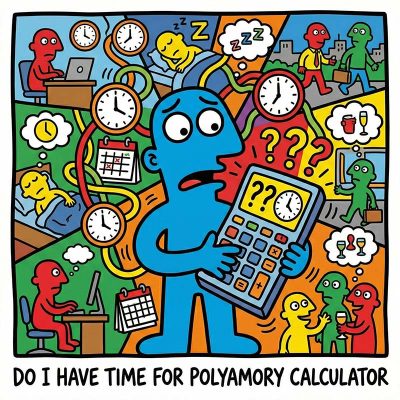
Love is infinite, but your calendar is brutally finite. The fantasy is deep connection; the reality is often just exhausted "calendar tetris." Promising time you don't actually have isn't romantic, it’s a recipe for burnout and broken trust. That sinking feeling when you have to cancel again? That’s the sound of overextension destroying your relationships.
This calculator forces you to confront the math of your life. Do you actually have space for another heart, or are you just setting everyone up for disappointment?

The fantasy is total autonomy and connection. The reality? It can feel like drowning in scheduling chaos and misunderstood expectations. That anxiety you feel isn’t just stress; it’s the wobble of living without a default "anchor." Without a solid architecture, Solo Polyamory stops being a life design and starts being a recipe for burnout and confusion.
The Essential Guide replaces the drift with a concrete anchor. We provide the "Solo Ethic," boundary scripts, and burnout protocols needed to protect your peace. Don't just date around—build a life that actually works for you.

Hierarchy sounds like a corporate org chart until someone gets their feelings hurt. That stomach-turning fear that you are just a "secondary" who can be fired at any time is real. If your relationship feels like a secret ranking system, you are doing it wrong.
Ambiguity is where resentment grows. The Essential Guide replaces the "who matters more" panic with a concrete charter. We provide the scripts and equity guardrails needed to protect every heart in the polycule. Stop guessing and start building.

The ideal is pure equality. The reality? It often slides into hidden rankings where someone gets hurt. That sinking feeling that you are secretly a "secondary" despite the label? That is your intuition detecting couple privilege. Ambiguity is where resentment thrives.
The Essential Guide replaces vague promises with concrete governance. We provide the charters, equity tools, and jealousy protocols needed to ensure "non-hierarchical" isn't just a fantasy. Stop guessing who matters most. Build a network that is actually fair.
The fantasy is total autonomy and connection. The reality? It can feel like drowning in scheduling chaos and misunderstood expectations. That anxiety you feel isn’t just stress; it’s the wobble of living without a default "anchor." Without a solid architecture, Solo Polyamory stops being a life design and starts being a recipe for burnout and confusion.
The Essential Guide replaces the drift with a concrete anchor. We provide the "Solo Ethic," boundary scripts, and burnout protocols needed to protect your peace. Don't just date around—build a life that actually works for you.
Hierarchy sounds like a corporate org chart until someone gets their feelings hurt. That stomach-turning fear that you are just a "secondary" who can be fired at any time is real. If your relationship feels like a secret ranking system, you are doing it wrong.
Ambiguity is where resentment grows. The Essential Guide replaces the "who matters more" panic with a concrete charter. We provide the scripts and equity guardrails needed to protect every heart in the polycule. Stop guessing and start building.
Signs a hierarchy is functioning well
The following signs show that a hierarchy is working as a healthy flexible system rather than a rigid power structure. They cover emotional safety practical living and ongoing consent. Look for these indicators in daily life and in long term planning. If you notice gaps use them as a guide to start a constructive conversation with all involved.
1. Clear communication that evolves with life changes
In a well functioning hierarchy communication is consistent and honest. People share what they need what they want and what they fear. There is no assumption that others know what is going on. Boundaries get revisited when life changes such as new job schedules family events or health matters. The result is fewer miscommunications fewer second guesses and more confidence in how the relationship will unfold over time.
Practical indicators
- Regular check in conversations that include all parties involved in the hierarchy
- Requests for time or attention are discussed and scheduled rather than implied
- Changes to plans are communicated early and with reasoning rather than announced at the last minute
2. Emotional safety across the network
People in a functioning hierarchy feel emotionally safe. This means they can express needs without fear of retaliation or shaming. It also means that the primary partner does not wield unchecked power over everyone else and that secondary partners feel heard and respected. Emotions are acknowledged rather than dismissed. The dynamic allows space for jealousy compersion and boundary negotiation without dissolving trust.
What you might observe
- Partners can bring up concerns without fear of punitive consequences
- Disagreements are resolved through calm discussion with mutual respect
- Emotional reactions are treated as information not as weapons
3. Time management that respects the hierarchy
One practical sign of a healthy hierarchy is how time is allocated. The primary partner often has first claim on schedule and energy while secondary partners have clearly defined windows. The goal is to maximize emotional safety and life balance. When time is balanced people report feeling seen and valued.
What this looks like in real life
- Shared calendars or agreed weekly planning sessions help align schedules
- Special occasions or important events are discussed in advance so everyone can participate when possible
- Unexpected conflicts are handled with empathy and quick communication rather than resentment
4. Boundaries that are respected and renegotiated when needed
Healthy boundaries are alive and dynamic in a functioning hierarchy. They are not ironclad rules that never change. People know what is negotiable and what is non negotiable. When life changes boundaries are revisited and adjusted with the consent of everyone involved.
Examples of boundary practice
- Agreeing on what information about your other relationships is shared with the primary partner
- Setting limits on dating activities in busy weeks or during times when one partner needs extra support
- Defining how much time is safe for emotional energy to be spent with each partner
5. Healthy handling of jealousy and difficult emotions
Jealousy is a signal not a verdict. A well functioning hierarchy has a plan to handle jealousy without blame. People practice self soothing and communicate needs clearly. Compersion is encouraged and celebrated as a shared positive emotion. When jealousy arises the group looks at underlying needs such as time attention safety or acknowledgment and addresses them directly.
Methods you may see
- Exploring the root cause behind a jealous feeling
- Splitting time to ensure everyone gets what they need
- Using scripts or prompts to practice compassionate conversations
6. Equality of respect and dignity across all partners
Even though the hierarchy sets levels of involvement the dignity of every partner is protected. No partner is made to feel less important or less capable of contributing to the group. Each person can express themselves with confidence and is treated with courtesy.
What to watch for
- No partner is talked over or dismissed in conversations
- All partners have access to baseline information about major plans affecting the group
- Discussions about future plans include input from everyone affected
7. Clear agreements that are revisited and refreshed
A strong hierarchy rests on living agreements. The contract or understanding between partners is not written in stone. It is a living document that changes with life. People take responsibility for keeping the agreement visible and accessible. They also document changes so there is a shared memory of what was decided and why.
Signs you are in a good place
- There is a clear process for renegotiation and consent
- All parties know where to find the current version of the agreements
- When changes happen they are discussed promptly and with transparency
8. Safe social navigation and group harmony
In a well functioning hierarchy social life with all partners can flow smoothly. There are boundaries around group events privacy and what is shared in social circles. The dynamic supports friendly interactions in person and online and there is a sense of belonging for each person.
Positive indicators
- Group activities feel inclusive rather than exclusive
- Dating play plans with one partner do not undermine another
- Open conversations about social boundaries happen without embarrassment
9. Realistic expectations and practical support
People in a healthy hierarchy have clarity about what they can offer and what they cannot. They also know when to ask for help. In a strong dynamic there is practical support for daily life such as childcare carpooling or shared chores when needed.
Practical signs include
- Partners offer help when schedules conflict
- Shared resources such as housing or finances are discussed with consent and fairness
- Requests for support are treated as legitimate needs not as obligations
10. Conflict resolution that preserves relationships
Conflict will happen in any human relationship. In a well functioning hierarchy the goal is not to win a debate but to repair the relationship. People use calm language active listening and a process for making amends. They remove personal attacks and focus on the issue at hand.
Common approaches
- Time boxed conversations where the goal is a mutual understanding
- Third party mediators such as a trusted friend or therapist when necessary
- Written notes after a conversation to confirm what was agreed
Common scenarios and how healthy hierarchy handles them
Real life examples help make these ideas concrete. Here are some typical situations and the best practices for a hierarchy that functions well.
Scenario 1: A primary partner plans a long trip and requests space
When the primary partner travels for an extended period the hierarchy should adapt without creating insecurity. The group may rearrange dates with secondary partners or temporarily adjust expectations. What matters is that all parties know what to expect during the trip and feel included in the plan. The primary partner should feel supported while other partners receive clear communication about how much contact to expect.
Scenario 2: A new partner is introduced into the hierarchy
When a new partner enters the dynamic there is a careful onboarding process. The primary partner introduces the new relationship in a respectful way and invites others to participate in a measured way. The goal is to maintain safety for all existing relationships while allowing room for genuine connection with the new partner. Clear boundaries and time frames help prevent overwhelm for anyone involved.
Scenario 3: Jealousy arises over time spent with a nest partner
Jealousy can arise in any human relationship. The best response in a healthy hierarchy is to acknowledge the feeling and explore its cause. A practical step is to review the schedule to ensure everyone is receiving fair attention. Partners may agree on dedicated time blocks or adjust the frequency of meetings to reduce friction. The focus remains on maintaining trust and easing anxiety through transparency.
Scenario 4: An unexpected life change affects time available for all relationships
Job loss a move or a health issue can disrupt a carefully balanced schedule. A resilient hierarchy has a plan for renegotiation. It creates space for new routines and checks in with everyone about what each person needs. The group emphasizes honesty and collaborative problem solving rather than blame.
Scenario 5: A conflict over information sharing
Information sharing should be governed by consent and boundaries. If one partner feels overwhelmed by what is known about other relationships the group revisits a boundary and finds a comfortable level for disclosure. The aim is to protect privacy while maintaining trust and openness.
Practical tools to support a functioning hierarchy
Here are concrete tools you can use to strengthen a hierarchical polyamory dynamic. These are practical and adaptable to many situations.
- Shared relationship map A living document that lists each relationship the level of involvement and the current boundaries. Update it after major life events.
- Regular alignment check ins Short discussions focused on how the hierarchy feels the level of satisfaction and any concerns. Schedule these monthly or quarterly depending on life pace.
- Energy budget planning A thoughtful way to describe how much emotional energy you have available for each relationship. This helps prevent overload and burnout.
- Template renegotiation prompts Pre prepared questions that guide a renegotiation conversation. These prompts help you cover time boundaries safety boundaries and future plans.
- Privacy and disclosure guidelines Clear rules about what you share with group chats what stays private and what requires consent to be discussed with others.
What to monitor to stay healthy over time
A hierarchy can drift if you do not monitor it. Regular attention helps keep the dynamic fair and safe. Here are signs to watch and actions to take.
- Imbalance in time or energy that repeats week after week
- Repeated boundary breaches or conversations that end without a resolution
- A sense that one person feels consistently undervalued or invisible
- Growing secrecy or lack of transparency about new relationships
- Frequent emotional fatigue or burnout among partners
If you notice any of these patterns it is time to pause and renegotiate. Bring all involved to the table with a calm agenda. The goal is to restore balance support and safety for everyone.
Common mistakes and how to avoid them
Even the best intentions can lead to problems. Here are common missteps in hierarchical polyamory and how to address them.
- Letting the primary partner assume all decisions This can lead to resentment. Encourage shared decision making and ensure all voices are heard.
- Rushing into new commitments without consent Take time to discuss whether a new arrangement fits the existing hierarchy. Consent must be explicit and ongoing.
- Assuming fairness means equal time Fairness means appropriate attention given the level of each relationship not identical time for everyone.
- Withholding information to protect someone Privacy is important but stealth can erode trust. Be transparent about what is shared and with whom.
- Ignoring grief or loss Major changes require support and space. Do not push through decisions during a period of emotional upheaval.
Glossary of useful terms and acronyms
- ENM Abbreviation for ethical non monogamy a relationship style that involves openness honesty and consent among all involved
- Primary partner The partner who has the highest level of commitment in the hierarchy
- Secondary partner A partner who has a lower level of commitment than the primary
- Nest partner A partner who shares a home or daily life with the primary relationship
- Tertiary relationship A relationship with a lower level of involvement or fewer commitments
- Boundaries Agreements about what is allowed what is not and how information is shared
- Negotiation The process of discussing needs and limits to reach an agreement
- Consent An explicit yes given by all involved that can be revisited at any time
- Compersion Feeling joy when a partner experiences happiness with someone else
- Jealousy An emotion that signals a boundary may be crossed or a need is unmet
- Transparency Open sharing of feelings plans and changes that affect the dynamic
Frequently asked questions
What is hierarchical polyamory
Hierarchical polyamory is a form of ENM where relationships are arranged in levels of importance or involvement. The primary relationship sits at the top of the hierarchy with higher influence over life decisions. Secondary relationships exist with different levels of contact time and commitment. The exact structure is negotiated by all involved and can change over time.
How do you know if the hierarchy is healthy
There is consistent open communication clear boundaries that are respected equitable energy management and genuine care across all partners. People feel heard and the relationships support one another. There is a readiness to renegotiate when life changes and a focus on reducing harm.
What are red flags in a hierarchical dynamic
Red flags include persistent boundary breaches a sense of coercion a pattern of secrecy or manipulation entrenched power imbalances a lack of consent and emotional burnout among partners. If these appear it is time to pause and reevaluate the arrangement.
Can jealousy be managed in a hierarchy
Yes. Jealousy is a signal that needs attention. Practice naming the feeling and describing the need behind it. Use renegotiation time to adjust boundaries or schedules and practice compersion as a skill to celebrate your partner s happiness with others.
How often should a hierarchy be renegotiated
There is no fixed rule. Many groups renegotiate every few months or after major life events. The key is to keep the process regular and inclusive so no one feels left out.
Is it okay to have different levels inside the nest
Yes. A nest relationship often carries additional duties and responsibilities. Clear communication and practical boundaries help prevent overload and maintain harmony.
What is the role of a renegotiation plan
A renegotiation plan provides a structured approach to revisit time boundaries rules and expectations. It reduces drama and helps everyone feel they are part of the process rather than subject to sudden changes.
How do I start a renegotiation conversation
Set a calm time choose a neutral location and begin with one clear statement about what needs to change. Invite others to share their perspectives and work toward a new set of agreements that all find acceptable.
Love is infinite, but your calendar is brutally finite. The fantasy is deep connection; the reality is often just exhausted "calendar tetris." Promising time you don't actually have isn't romantic, it’s a recipe for burnout and broken trust. That sinking feeling when you have to cancel again? That’s the sound of overextension destroying your relationships.
This calculator forces you to confront the math of your life. Do you actually have space for another heart, or are you just setting everyone up for disappointment?
The fantasy is total autonomy and connection. The reality? It can feel like drowning in scheduling chaos and misunderstood expectations. That anxiety you feel isn’t just stress; it’s the wobble of living without a default "anchor." Without a solid architecture, Solo Polyamory stops being a life design and starts being a recipe for burnout and confusion.
The Essential Guide replaces the drift with a concrete anchor. We provide the "Solo Ethic," boundary scripts, and burnout protocols needed to protect your peace. Don't just date around—build a life that actually works for you.
Hierarchy sounds like a corporate org chart until someone gets their feelings hurt. That stomach-turning fear that you are just a "secondary" who can be fired at any time is real. If your relationship feels like a secret ranking system, you are doing it wrong.
Ambiguity is where resentment grows. The Essential Guide replaces the "who matters more" panic with a concrete charter. We provide the scripts and equity guardrails needed to protect every heart in the polycule. Stop guessing and start building.
The ideal is pure equality. The reality? It often slides into hidden rankings where someone gets hurt. That sinking feeling that you are secretly a "secondary" despite the label? That is your intuition detecting couple privilege. Ambiguity is where resentment thrives.
The Essential Guide replaces vague promises with concrete governance. We provide the charters, equity tools, and jealousy protocols needed to ensure "non-hierarchical" isn't just a fantasy. Stop guessing who matters most. Build a network that is actually fair.
The fantasy is total autonomy and connection. The reality? It can feel like drowning in scheduling chaos and misunderstood expectations. That anxiety you feel isn’t just stress; it’s the wobble of living without a default "anchor." Without a solid architecture, Solo Polyamory stops being a life design and starts being a recipe for burnout and confusion.
The Essential Guide replaces the drift with a concrete anchor. We provide the "Solo Ethic," boundary scripts, and burnout protocols needed to protect your peace. Don't just date around—build a life that actually works for you.
Hierarchy sounds like a corporate org chart until someone gets their feelings hurt. That stomach-turning fear that you are just a "secondary" who can be fired at any time is real. If your relationship feels like a secret ranking system, you are doing it wrong.
Ambiguity is where resentment grows. The Essential Guide replaces the "who matters more" panic with a concrete charter. We provide the scripts and equity guardrails needed to protect every heart in the polycule. Stop guessing and start building.
