
The Origins and History of Hierarchical Polyamory

Hierarchical polyamory is a relationship design where love and time are organized in a clear order of priority. In practice that usually means a primary partner who takes center stage in big life decisions and daily routines, a secondary partner who shares meaningful connection but with a different level of commitment, and sometimes even a tertiary partner who fits into the mix in smaller ways. This structure is a staple in many polyamory communities and has a long and complex history that intersects with the broader story of ethical non monogamy. Let us dive into how this dynamic came to be, how it has evolved, and what it has meant for the people who live it.
Quick Links to Useful Sections
- What is hierarchical polyamory
- Key concepts and terminology explained
- A short history of relationships beyond monogamy
- How the dynamic shows up in practice
- Historical voices and influential thinkers
- When hierarchy helps and when it hurts
- Critiques and ongoing debates
- Variations within hierarchical polyamory
- Negotiating hierarchy in real life
- Practical tips for building healthy hierarchical polyamory
- Navigating challenges with grace
- The ethics of ranking love
- Glossary of useful terms and acronyms
- Frequently asked questions
- Final notes and encouragement
- Checklist for thoughtful implementation
- Further reading and reflection
- FAQ
We will explain terms as we go so you can follow along without needing a glossary in footnotes. If you already know the terms you will still find useful context and real world examples. This is not a claim that hierarchical polyamory is the only way to do ethical non monogamy. It is one path among many and it has shaped conversations about consent, power, and love in profound ways.
What is hierarchical polyamory
Hierarchical polyamory is a dynamic within ethical non monogamy ENM that structures multiple relationships in a ranking system. The most common layout is a top tier or primary relationship that is legally or practically central in a person s life. A secondary relationship sits below that and a tertiary relationship sits below the secondary in some setups. The hierarchy can influence decisions about living arrangements finances parenting time and social visibility. It can also shape how people allocate time energy and emotional labor. The key idea is that not all relationships hold the same weight in a given person s life though all of them can be emotionally meaningful and honest.
Important terms to know here include primary partner secondary partner and tertiary partner. A primary partner usually shares a home long term financial responsibilities or parenting duties. A secondary partner has a strong connection but does not occupy the top position in day to day life management. A tertiary partner is involved in a more limited or situational way often with a distinct purpose or time frame. In hierarchical polyamory those roles are explicit and negotiated rather than assumed by default. It is also common to see terms like kitchen table polyamory which means all partners are welcome at the table for family style interactions. Parallel polyamory is the opposite pattern where partners are kept separate from each other in daily life. Both approaches exist within the broader umbrella of hierarchical arrangements depending on what people want and what works for them.
Key concepts and terminology explained
We will define a few terms that commonly show up in discussions of hierarchical polyamory so you can follow along without guessing what people mean.
- Ethical non monogamy ENM a family of relationship styles that involves honesty consent and respect for all people involved rather than secrecy or coercion.
- Polyamory the practice of having intimate relationships with more than one person at the same time with the knowledge and consent of everyone involved.
- Hierarchy an arrangement where relationships are ranked in order of priority or importance for logistical or emotional reasons.
- Primary partner the partner who holds the top position in the relationship hierarchy often sharing a home and making long term plans together.
- Secondary partner a partner who is important but does not occupy the same level of priority as the primary partner.
- Tertiary partner a partner who is involved in a more limited or occasional capacity.
- Kitchen table polyamory a term used to describe a situation where all partners meet share time and socialize together on a regular basis.
- Parallel polyamory a pattern in which partners are kept separate in social and logistical life often with clear boundaries about how much is shared between partners.
- Compersion the feeling of joy when a partner experiences happiness with someone else, often described as the opposite of jealousy.
- Jealousy a natural emotion that can signal boundaries needs or insecurities and is usually addressed through communication and negotiation.
- Consent an ongoing agreement to participate in activities with all parties fully informed and freely given.
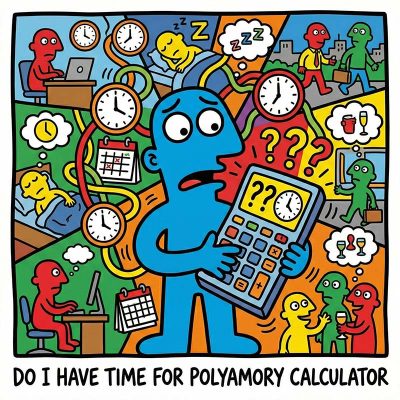
Love is infinite, but your calendar is brutally finite. The fantasy is deep connection; the reality is often just exhausted "calendar tetris." Promising time you don't actually have isn't romantic, it’s a recipe for burnout and broken trust. That sinking feeling when you have to cancel again? That’s the sound of overextension destroying your relationships.
This calculator forces you to confront the math of your life. Do you actually have space for another heart, or are you just setting everyone up for disappointment?

The fantasy is total autonomy and connection. The reality? It can feel like drowning in scheduling chaos and misunderstood expectations. That anxiety you feel isn’t just stress; it’s the wobble of living without a default "anchor." Without a solid architecture, Solo Polyamory stops being a life design and starts being a recipe for burnout and confusion.
The Essential Guide replaces the drift with a concrete anchor. We provide the "Solo Ethic," boundary scripts, and burnout protocols needed to protect your peace. Don't just date around—build a life that actually works for you.

Hierarchy sounds like a corporate org chart until someone gets their feelings hurt. That stomach-turning fear that you are just a "secondary" who can be fired at any time is real. If your relationship feels like a secret ranking system, you are doing it wrong.
Ambiguity is where resentment grows. The Essential Guide replaces the "who matters more" panic with a concrete charter. We provide the scripts and equity guardrails needed to protect every heart in the polycule. Stop guessing and start building.

The ideal is pure equality. The reality? It often slides into hidden rankings where someone gets hurt. That sinking feeling that you are secretly a "secondary" despite the label? That is your intuition detecting couple privilege. Ambiguity is where resentment thrives.
The Essential Guide replaces vague promises with concrete governance. We provide the charters, equity tools, and jealousy protocols needed to ensure "non-hierarchical" isn't just a fantasy. Stop guessing who matters most. Build a network that is actually fair.
The fantasy is total autonomy and connection. The reality? It can feel like drowning in scheduling chaos and misunderstood expectations. That anxiety you feel isn’t just stress; it’s the wobble of living without a default "anchor." Without a solid architecture, Solo Polyamory stops being a life design and starts being a recipe for burnout and confusion.
The Essential Guide replaces the drift with a concrete anchor. We provide the "Solo Ethic," boundary scripts, and burnout protocols needed to protect your peace. Don't just date around—build a life that actually works for you.
Hierarchy sounds like a corporate org chart until someone gets their feelings hurt. That stomach-turning fear that you are just a "secondary" who can be fired at any time is real. If your relationship feels like a secret ranking system, you are doing it wrong.
Ambiguity is where resentment grows. The Essential Guide replaces the "who matters more" panic with a concrete charter. We provide the scripts and equity guardrails needed to protect every heart in the polycule. Stop guessing and start building.
A short history of relationships beyond monogamy
To understand hierarchical polyamory we first need to see how humans have navigated non monogamy over the decades. Monogamy is the default in many cultures with long histories that center on exclusive pair bonds especially for capital and child rearing. However non monogamous practices have appeared in many forms throughout history. In the 20th century the pace of social change created space for options outside traditional marriages. The swinging era of the 1960s and 1970s brought public attention to open and fluid styles of relationship. The concept of open marriages was popularized by authors and journalists who explored marriages without exclusive fidelity. Those conversations created space for people to imagine relationships that could adapt to personal needs and life circumstances rather than forcing everyone into one size fits all models.
Against this backdrop the modern polyamory movement began to coalesce in the 1980s and 1990s. Activists writers and community organizers started sharing more detailed practices for managing multiple intimate connections. The word polyamory itself began to appear in public discourse during this period. A key shift was toward transparent communication consent and ethical boundaries rather than secrecy. As polyamory gained visibility the community experimented with different organizational patterns. Among these patterns hierarchy became a practical tool for some people who needed to coordinate family life finances and caregiving across multiple partners. The hierarchy offered a way to answer questions about time and emotional labor while respecting everyone involved and keeping expectations clear.
During the 1990s and into the 2000s the idea of primary versus secondary partners was discussed more openly in forums blogs and books. This helped many people articulate a structure that felt real to their lives whether they were navigating shared housing parenting or complex emotional landscapes. Some early theorists and practitioners described hierarchical models as a bridge between monogamy and more fully non hierarchical polyamory. They argued that hierarchy could reduce conflict by clarifying responsibilities while still allowing authentic connections with multiple people. Critics argued that hierarchy can encode power imbalances and reproduce patriarchal norms or other forms of dominance. The debate pushed partners to think deeply about consent autonomy and the ethics of ease versus fairness. The conversation continues to evolve in online communities conferences and in lived experience across the globe.
How the dynamic shows up in practice
Hierarchical polyamory can take many shapes but several patterns recur. A common setup features a primary relationship that is central in life decisions such as where to live whether to have children scheduling finances and long term commitments. A secondary relationship adds companionship romance and emotional support but with a lighter day to day footprint. In some configurations a tertiary relationship offers additional connection with terms that may involve occasional dates shared events or mentorship relationships. The exact boundaries are negotiated and renegotiated over time and they depend on the people involved. A key point a hierarchy is made up not only of intensity of feeling but of practical arrangements such as housing schedules family logistics and communication norms.
In kitchen table polyamory all partners are welcomed to sit at the table together for major life decisions and everyday interactions. In parallel polyamory partners live separate lives with limited cross over in daily routines. Hierarchical patterns often borrow from both approaches depending on the needs of the players. Some couples prefer a strong central home base while others favor a more fluid arrangement where the primary relationship plays a central role but all connections carry equal emotional weight. The important thing is consent clarity and ongoing dialogue. Without those elements hierarchy can quickly become a source of tension rather than a tool for harmony.
Historical voices and influential thinkers
Several voices in the polyamory community helped shape the understanding of hierarchy. The early open marriage debates prepared ground for more structured forms of multiple partnerships. Authors and educators who wrote about polyamory introduced terms and frameworks that many people still rely on. In the 1990s and 2000s many community members documented their experiences publicly through blogs forums and conferences. Their stories highlighted both the possibilities and the pitfalls of ranking partners. One recurring theme was that hierarchy should never be used to justify coercion or to silence the voices of less powerful participants. When hierarchy works well it rests on clear communication explicit consent and a shared commitment to fairness among all involved.
When hierarchy helps and when it hurts
Hierarchy can be a practical tool in certain life circumstances. It can create predictability make caregiving more manageable and help people balance professional obligations with intimate life. For example a parent with a demanding job might maintain a primary relationship that shares responsibilities with a co parent while still keeping a meaningful connection with a partner outside the household. But hierarchy can also create pressure or shame for those in secondary or tertiary roles or for people who feel they have less say in what happens. A healthy hierarchical setup requires negotiated boundaries open communication and periodic check ins to ensure that all voices are heard and that no one feels cornered or ignored.
Critiques and ongoing debates
Critics of hierarchical polyamory argue that ranking relationships can reinforce social hierarchies that limit personal freedom and create power imbalances. They point out that primary relationships are often supported by shared resources and social legitimacy which can skew decision making away from the needs of less powerful partners. Advocates for hierarchy reply that clear structures can reduce uncertainty and jealousy and that consent remains the cornerstone of any arrangement. They emphasize that a well designed hierarchy is not about coercion it is about clear expectations and ongoing consent renegotiation. A growing part of the dialogue is about how to make hierarchy more flexible more inclusive and more responsive to the evolving needs of all partners involved.
Love is infinite, but your calendar is brutally finite. The fantasy is deep connection; the reality is often just exhausted "calendar tetris." Promising time you don't actually have isn't romantic, it’s a recipe for burnout and broken trust. That sinking feeling when you have to cancel again? That’s the sound of overextension destroying your relationships.
This calculator forces you to confront the math of your life. Do you actually have space for another heart, or are you just setting everyone up for disappointment?
The fantasy is total autonomy and connection. The reality? It can feel like drowning in scheduling chaos and misunderstood expectations. That anxiety you feel isn’t just stress; it’s the wobble of living without a default "anchor." Without a solid architecture, Solo Polyamory stops being a life design and starts being a recipe for burnout and confusion.
The Essential Guide replaces the drift with a concrete anchor. We provide the "Solo Ethic," boundary scripts, and burnout protocols needed to protect your peace. Don't just date around—build a life that actually works for you.
Hierarchy sounds like a corporate org chart until someone gets their feelings hurt. That stomach-turning fear that you are just a "secondary" who can be fired at any time is real. If your relationship feels like a secret ranking system, you are doing it wrong.
Ambiguity is where resentment grows. The Essential Guide replaces the "who matters more" panic with a concrete charter. We provide the scripts and equity guardrails needed to protect every heart in the polycule. Stop guessing and start building.
The ideal is pure equality. The reality? It often slides into hidden rankings where someone gets hurt. That sinking feeling that you are secretly a "secondary" despite the label? That is your intuition detecting couple privilege. Ambiguity is where resentment thrives.
The Essential Guide replaces vague promises with concrete governance. We provide the charters, equity tools, and jealousy protocols needed to ensure "non-hierarchical" isn't just a fantasy. Stop guessing who matters most. Build a network that is actually fair.
The fantasy is total autonomy and connection. The reality? It can feel like drowning in scheduling chaos and misunderstood expectations. That anxiety you feel isn’t just stress; it’s the wobble of living without a default "anchor." Without a solid architecture, Solo Polyamory stops being a life design and starts being a recipe for burnout and confusion.
The Essential Guide replaces the drift with a concrete anchor. We provide the "Solo Ethic," boundary scripts, and burnout protocols needed to protect your peace. Don't just date around—build a life that actually works for you.
Hierarchy sounds like a corporate org chart until someone gets their feelings hurt. That stomach-turning fear that you are just a "secondary" who can be fired at any time is real. If your relationship feels like a secret ranking system, you are doing it wrong.
Ambiguity is where resentment grows. The Essential Guide replaces the "who matters more" panic with a concrete charter. We provide the scripts and equity guardrails needed to protect every heart in the polycule. Stop guessing and start building.
Variations within hierarchical polyamory
People don t always fit a single template. Some hierarchical polyamorous families mix hierarchy with elements of parallel or kitchen table patterns. In some cases the primary relationship holds a formal or legal significance such as shared lease parenting plans or a joint financial account. In other cases the hierarchy is more about emotional priority rather than official status. The degrees of openness also vary. Some primaries insist on comprehensive transparency with all partners while others keep some boundaries around who knows what and when. The variety shows that hierarchical polyamory is not a one size fits all system. It is a flexible set of practices chosen by the people involved based on their needs and values.
Negotiating hierarchy in real life
Negotiation is the backbone of any ethical non monogamy arrangement and hierarchical setups are no exception. The basic questions usually include what counts as a primary relationship what responsibilities come with that status how time is allocated how emotional labor is shared and what happens if boundaries shift. It helps to have a written agreement but words on a page are not enough. The real work is ongoing conversations especially when life changes such as moving in new partners shifts in job hours or new kids in the family occur. The most successful negotiators routinely check in with all partners share calendars discuss major decisions in advance and practice transparent communication even when it feels uncomfortable.
Practical tips for building healthy hierarchical polyamory
- Start with explicit consent clarify what each partner wants and what is non negotiable for them. Put it in writing if that helps you all stay on track.
- Define what primary means discuss what the primary relationship covers in life planning finances living arrangements and social expectations. Make sure everyone understands the scope.
- Communicate openly about time create a shared calendar or scheduling system so people know when they will spend time with the primary partner a secondary partner and any other involved person.
- Plan for emotional labor acknowledge that caring for multiple relationships requires energy and intention. Decide how to share this load fairly among partners.
- Establish boundaries and renegotiate boundaries are not set in stone. Revisit them periodically and adjust as life changes occur.
- Practice compersion and empathy celebrate your partner s happiness with others while keeping an eye on your own emotional needs.
- Keep communication rituals regular conversations about feelings expectations concerns and adjustments keep the system robust.
Navigating challenges with grace
No relationship design guarantees smooth sailing. People in hierarchical polyamory face jealousy miscommunication and fatigue just like any other relationship. The difference is that there is a framework to address those challenges head on. In the best cases jealousy becomes information that helps you understand a boundary or a need that might not be being met. When handled with care jealousy can be a catalyst for deeper trust and more honest connection. When mismanaged it can erode trust and destabilize the hierarchy. The key is to keep consent active and to practice accountability for decisions that affect multiple people.
The ethics of ranking love
Ethics in hierarchical polyamory centers on consent transparency and fairness. People who embrace hierarchy argue that it mirrors real world life where priorities adjust based on circumstances. Critics remind us that power dynamics can quietly tilt or become hard to see. The ongoing ethical project is to ensure that no one feels coerced controlled or invisible. A strong practice in ethical non monogamy is to invite feedback set up safe spaces for concerns and to allow for renegotiation at regular intervals. The goal is not to erase emotion but to manage it in a way that respects everyone involved.
Glossary of useful terms and acronyms
- ENM Ethical non monogamy a family of relationship styles built on consent openness and honesty rather than secrecy or coercion.
- Primary partner The partner who holds the top position in a hierarchy often involved in long term life plans.
- Secondary partner A partner who shares a meaningful connection but with a lower level of day to day priority.
- Tertiary partner A partner who is involved in a more limited or time bound way.
- Kitchen table polyamory All partners are welcome to sit at the table for daily life decisions and social events.
- Parallel polyamory Partners maintain separate social and living spheres with limited overlap.
- Compersion A positive feeling when a partner experiences happiness with someone else.
- Jealousy An emotion to be acknowledged and negotiated rather than ignored.
- Consent Ongoing agreement to participate in relationships with all parties fully informed and freely given.
- Monogamy A relationship style where two people commit exclusively to each other.
- Polyamory Having intimate relationships with more than one person with the consent of everyone involved.
- Hierarchical polyamory A polyamorous arrangement in which relationships are ranked in order of priority.
Frequently asked questions
Because hierarchy in polyamory raises unique questions we ll answer some of the most common ones here. If you need more depth you can explore the sections above or jump into the FAQ schema that follows.
What is hierarchical polyamory
Hierarchical polyamory is a structure where relationships are ranked by priority with a primary partner at the top. A secondary partner sits below and a tertiary partner may appear if relevant. The specifics are negotiated by all involved and can vary from one group to another. The hierarchy is a framework not a jail cell. It exists to support clear communication and manageable life logistics while still allowing real emotional connections with multiple people.
Where did hierarchical polyamory come from
The modern concept grew from the broader ethical non monogamy movement which matured in the late 20th century. The open marriage debates of the 1960s and 70s planted seeds about living creatively with love outside traditional boundaries. In the 1990s and 2000s the polyamory movement expanded with more organized communities books and online forums. People began describing patterns such as primary versus secondary relationships and kitchen table versus parallel arrangements. Over time hierarchy became a common language to discuss how people shared time resources and responsibilities across several intimate connections.
Is hierarchical polyamory ethical
Ethics in any relationship design come down to consent transparency and fairness. When all partners can openly discuss needs set boundaries and renegotiate as life changes hierarchy can be ethical and empowering. If hierarchy rests on coercion domination or invisibility it becomes harmful. The ethical path is continuous check ins ongoing consent and a willingness to adjust the arrangement as circumstances evolve.
How do you know if hierarchy works for you
People find hierarchy works when they value clear divisions of time and responsibilities and when all partners feel respected and heard. It helps to audit the arrangement regularly ask for honest feedback and be ready to adjust what is prioritized. Some people discover they prefer moving toward parallel polyamory or kitchen table configurations as relationships deepen or life priorities shift. The flexibility to adapt is where the ethical strength lies.
How does jealousy fit into hierarchical polyamory
Jealousy is a normal human emotion in any relationship. In hierarchical setups it can signal a boundary boundary conflict or unmet needs. The healthy response is to pause talk through what is happening and decide on concrete steps to address it. That might mean adjusting how time is allocated rebalancing emotional labor or revisiting the definitions of primary or secondary status. The goal is to transform jealousy into information that helps the group grow closer and communicate better.
What about children and family life
Families with hierarchical polyamory often navigate guardianship housing and schooling with care. The main principle remains consent and safety for everyone involved including children. Clear rules about privacy public visibility and the role of each partner in caregiving responsibilities help create a stable environment. Each family will find its own balance between openness and privacy in ways that respect the needs of the children and the adults involved.
How to transition into or out of hierarchy
Transitions require careful planning conversations and a lot of listening. If you are introducing hierarchy into an existing polyamorous dynamic that previously felt more fluid you should involve all partners early in the discussion. If you are moving away from hierarchy the approach is similar with additional emphasis on preserving trust and ensuring that everyone still feels valued. In both cases patience and empathy are essential and you should expect renegotiation to be ongoing rather than a one time event.
Is hierarchy compatible with monogamish or open relationships
Yes hierarchy can exist within a monogamish or open framework depending on how a couple defines boundaries. The core question is how choices are made who has input on important decisions and how time and resources are shared. The exact structure will vary and that variability is part of what makes ethical non monogamy flexible enough to fit many different lives.
Final notes and encouragement
The journey into hierarchical polyamory is as personal as it is relational. It requires courage honesty and a willingness to listen. You are not obliged to adopt any specific model. You have the right to explore different patterns until you find what genuinely works for you and your people. If hierarchy feels constraining you can always move toward more egalitarian or parallel models. If it feels life affirming you can deepen the practice with careful negotiation regular check ins and a commitment to genuine consent for everyone involved.
Checklist for thoughtful implementation
- Discuss core motivations for choosing a hierarchy and ensure all voices are heard from the start.
- Document agreed definitions of primary secondary and tertiary roles.
- Establish a mechanism for regular check ins and renegotiation opportunities.
- Share calendars and plan time with all partners where possible to reduce miscommunication.
- Set boundaries about public visibility privacy and family life in a way that respects everyone involved.
- Practice transparent communication about finances housing and parenting decisions that affect multiple people.
- Remain open to change and avoid letting hierarchy become a source of coercion or resentment.
Further reading and reflection
Exploring hierarchical polyamory can involve reading memoirs blogs and scholarly discussions that dig into ethics jealousy and relationship design. Look for voices from a range of backgrounds and experiences to gain a well rounded understanding. The conversation around hierarchy is ongoing and evolving as communities share more stories and more practical strategies for healthy relationship living.
FAQ
Love is infinite, but your calendar is brutally finite. The fantasy is deep connection; the reality is often just exhausted "calendar tetris." Promising time you don't actually have isn't romantic, it’s a recipe for burnout and broken trust. That sinking feeling when you have to cancel again? That’s the sound of overextension destroying your relationships.
This calculator forces you to confront the math of your life. Do you actually have space for another heart, or are you just setting everyone up for disappointment?
The fantasy is total autonomy and connection. The reality? It can feel like drowning in scheduling chaos and misunderstood expectations. That anxiety you feel isn’t just stress; it’s the wobble of living without a default "anchor." Without a solid architecture, Solo Polyamory stops being a life design and starts being a recipe for burnout and confusion.
The Essential Guide replaces the drift with a concrete anchor. We provide the "Solo Ethic," boundary scripts, and burnout protocols needed to protect your peace. Don't just date around—build a life that actually works for you.
Hierarchy sounds like a corporate org chart until someone gets their feelings hurt. That stomach-turning fear that you are just a "secondary" who can be fired at any time is real. If your relationship feels like a secret ranking system, you are doing it wrong.
Ambiguity is where resentment grows. The Essential Guide replaces the "who matters more" panic with a concrete charter. We provide the scripts and equity guardrails needed to protect every heart in the polycule. Stop guessing and start building.
The ideal is pure equality. The reality? It often slides into hidden rankings where someone gets hurt. That sinking feeling that you are secretly a "secondary" despite the label? That is your intuition detecting couple privilege. Ambiguity is where resentment thrives.
The Essential Guide replaces vague promises with concrete governance. We provide the charters, equity tools, and jealousy protocols needed to ensure "non-hierarchical" isn't just a fantasy. Stop guessing who matters most. Build a network that is actually fair.
The fantasy is total autonomy and connection. The reality? It can feel like drowning in scheduling chaos and misunderstood expectations. That anxiety you feel isn’t just stress; it’s the wobble of living without a default "anchor." Without a solid architecture, Solo Polyamory stops being a life design and starts being a recipe for burnout and confusion.
The Essential Guide replaces the drift with a concrete anchor. We provide the "Solo Ethic," boundary scripts, and burnout protocols needed to protect your peace. Don't just date around—build a life that actually works for you.
Hierarchy sounds like a corporate org chart until someone gets their feelings hurt. That stomach-turning fear that you are just a "secondary" who can be fired at any time is real. If your relationship feels like a secret ranking system, you are doing it wrong.
Ambiguity is where resentment grows. The Essential Guide replaces the "who matters more" panic with a concrete charter. We provide the scripts and equity guardrails needed to protect every heart in the polycule. Stop guessing and start building.
