
Warning Signs of Unhealthy Hierarchy

Welcome to a straight talk guide about a dynamic that can be thrilling for some and tricky for others. When we talk about hierarchical polyamory in the world of ethical non monogamy or ENM that stands for Ethical Non Monogamy you will hear about the primary partner structure and the layers that come with it. This article is here to help you spot red flags and understand what healthy balance could look like. We are going to break down a complicated topic into plain language and practical steps you can use in real life. No fluff just usable information that you can put into practice tonight if needed.
Quick Links to Useful Sections
- What is hierarchical polyamory and why the hierarchy matters
- Common warning signs of an unhealthy hierarchy
- Why these dynamics happen
- Real life scenarios that illustrate the issues
- Practical steps to address red flags and restore balance
- Pause and assess
- Name the pattern
- Set or renegotiate boundaries
- Create a renegotiation plan
- Bring in a trusted third party
- Focus on safety and autonomy
- Document the agreement
- Plan for difficult emotions
- Know when to seek help
- Strategies to cultivate healthy hierarchy or move toward a healthier alternative
- Tools to support a healthier dynamic
- Signs that it might be time to rethink the arrangement
- Glossary of useful terms and acronyms
- Frequently asked questions
What is hierarchical polyamory and why the hierarchy matters
First let us set the baseline so every reader is on the same page. Hierarchical polyamory is a form of ENM in which there is a defined ranking among partners. The person or couple at the top are often called the primary and they usually have priority in life decisions time allocations and emotional focus. Partners beneath the primary may have secondary or tertiary status which can come with different rules about how much time is spent together how often they can see each other and what kinds of boundaries apply. The idea is not to erase care but to organize time attention resources and commitments in a way that reflects the needs of the people involved. In practice this can work beautifully when all people feel respected and heard. It can cause serious harm when power is weaponized or when silence hides manipulation.
Important terms explained so we are all speaking the same language
- ENM Ethical Non Monogamy a relationship style where honesty consent and fairness are central to multiple connections rather than one.
- Hierarchical polyamory A structure where there is a ranked order among partners with the primary partner or couple typically receiving priority in time and decision making.
- Primary partner The person or couple at the top of the hierarchy who usually have first access to shared resources and influence major decisions.
- Secondary partner A partner who has a lower priority in scheduling and decision making and who may have fewer responsibilities within the relationship.
- Tertiary partner A partner further down the scale with even less access to time or resources and often more defined boundaries.
- Veto A power to stop a relationship activity or new partner which can be used for safety or control depending on how it is implemented.
- Meta partner A partner who is connected to other partners in the same network sometimes collaborating on boundaries or logistics.
Understanding these terms helps you see where power is flowing and how decisions are made. The aim is healthy dynamics where everyone involved wants to participate and everyone feels safe respected and valued.
Common warning signs of an unhealthy hierarchy
Red flags can show up in many places. Here are the most reliable signs that a hierarchy might have tipped into unhealthy territory. If you notice several of these in your dynamic it is time to pause and have a serious conversation with your partners. We are talking about patterns not one off moments. Consistency matters here.
- Unequal decision making The primary partner makes most or all of the big decisions without input from others and without offering reasons that respect everyone involved.
- Secrecy about relationships One or more partners conceal who they are seeing what is happening with those relationships or pretend there is nothing to discuss while emotionally investing elsewhere.
- Veto power used as punishment A veto is here when it is used to punish or control rather than to ensure safety or clear boundaries. If veto decisions feel punitive rather than protective that is a red flag.
- Time and attention hoarding The primary partner has exclusive access to shared spaces activities or time while others are routinely sidelined or left waiting without clear legitimate reasons.
- Financial pressure or control Money becomes a weapon or a bargaining chip. If someone uses money to demand loyalty or limit the access of others that is coercive and unhealthy.
- Gaslighting and manipulation One or more partners are made to doubt their own memories feelings or perceptions about what is happening. Gaslighting wears people down slowly and quietly.
- Boundary shifting mid stream Boundaries are moved around without discussion or consent after they have been set. This creates confusion and a sense of instability.
- Lack of consent for changes Changes to the structure happen without explicit consent or a formal renegotiation process. People feel they are expected to accept what is decided for them.
- Emotional neglect or devaluation One or more partners are consistently minimized dismissed or told their feelings do not matter.
- Transparency issues Important information is withheld from partners or hidden under the guise of privacy or discretion while behavior suggests otherwise.
- Disproportionate emotional labor One person or a small group carries most of the emotional work such as conflict resolution planning and reassurance while others contribute far less.
- Public shaming or shaming in private One or more partners are judged or belittled for their needs choices or boundaries in front of others or behind closed doors.
These signs often do not appear all at once. They creep in as patterns and then become the new normal. The danger is not just discomfort it is a hollowing out of trust and autonomy which makes honest connection harder over time.
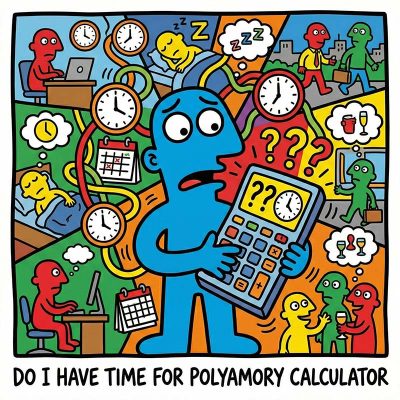
Love is infinite, but your calendar is brutally finite. The fantasy is deep connection; the reality is often just exhausted "calendar tetris." Promising time you don't actually have isn't romantic, it’s a recipe for burnout and broken trust. That sinking feeling when you have to cancel again? That’s the sound of overextension destroying your relationships.
This calculator forces you to confront the math of your life. Do you actually have space for another heart, or are you just setting everyone up for disappointment?

The fantasy is total autonomy and connection. The reality? It can feel like drowning in scheduling chaos and misunderstood expectations. That anxiety you feel isn’t just stress; it’s the wobble of living without a default "anchor." Without a solid architecture, Solo Polyamory stops being a life design and starts being a recipe for burnout and confusion.
The Essential Guide replaces the drift with a concrete anchor. We provide the "Solo Ethic," boundary scripts, and burnout protocols needed to protect your peace. Don't just date around—build a life that actually works for you.

Hierarchy sounds like a corporate org chart until someone gets their feelings hurt. That stomach-turning fear that you are just a "secondary" who can be fired at any time is real. If your relationship feels like a secret ranking system, you are doing it wrong.
Ambiguity is where resentment grows. The Essential Guide replaces the "who matters more" panic with a concrete charter. We provide the scripts and equity guardrails needed to protect every heart in the polycule. Stop guessing and start building.

The ideal is pure equality. The reality? It often slides into hidden rankings where someone gets hurt. That sinking feeling that you are secretly a "secondary" despite the label? That is your intuition detecting couple privilege. Ambiguity is where resentment thrives.
The Essential Guide replaces vague promises with concrete governance. We provide the charters, equity tools, and jealousy protocols needed to ensure "non-hierarchical" isn't just a fantasy. Stop guessing who matters most. Build a network that is actually fair.
The fantasy is total autonomy and connection. The reality? It can feel like drowning in scheduling chaos and misunderstood expectations. That anxiety you feel isn’t just stress; it’s the wobble of living without a default "anchor." Without a solid architecture, Solo Polyamory stops being a life design and starts being a recipe for burnout and confusion.
The Essential Guide replaces the drift with a concrete anchor. We provide the "Solo Ethic," boundary scripts, and burnout protocols needed to protect your peace. Don't just date around—build a life that actually works for you.
Hierarchy sounds like a corporate org chart until someone gets their feelings hurt. That stomach-turning fear that you are just a "secondary" who can be fired at any time is real. If your relationship feels like a secret ranking system, you are doing it wrong.
Ambiguity is where resentment grows. The Essential Guide replaces the "who matters more" panic with a concrete charter. We provide the scripts and equity guardrails needed to protect every heart in the polycule. Stop guessing and start building.
Why these dynamics happen
Understanding why unhealthy patterns appear helps you spot them early. In many cases the people at the top want to protect the core relationship and the shared life they have built. They fear losing safety or feel overwhelmed by time pressures. At the same time someone else might accept a smaller role because they fear conflict or lack a sense of agency. When both sides do not have equal footing in the negotiation space the door opens for power to tilt. Without clear agreements and ongoing check ins the balance can slip and the sense of fairness can fade.
Another factor to consider is the social script we grow up with. Some people have been taught that a primary partner is the only legitimate relationship or the most important one. This cultural bias can seep into a polyamorous setting with little conscious awareness which makes healthy negotiation harder to achieve. A practical approach is to treat every voice as equally important while recognizing that time and energy are finite resources. The goal is to create a system where needs can be met without erasing anyone else in the process.
Real life scenarios that illustrate the issues
Scenario one involves a primary couple who decide to add a new partner. The plan is to renegotiate schedules and make space for the new relationship without burning out the current partners. In this case the primary partner assumes the new person will fit into the pre existing routine without any extra work from the primary besides logistical planning. The result is that secondary partners feel forgotten and the new partner feels like an after thought. This is a sign that the balance has shifted and the effort has not been shared.
Scenario two shows a secondary partner who is not allowed to meet or spend time with the other partners. When questions arise the response is a subtle version of you are lucky to be here this is how we do things. Over time this creates a climate where the secondary partner is not really participating in a relationship that affects their life. It can lead to resentment and quiet disengagement which is not healthy for anyone involved.
Scenario three centers on a veto that is used to shut down emotional conversations. For example a partner wants to discuss jealousy or discomfort and the veto is invoked to end the discussion rather than address the underlying concerns. This is a red flag because it blocks honest communication while pretending to maintain safety. The relationship dynamic ends up fed by fear rather than trust.
Scenario four shows a cash flow issue where one partner is paying most of the shared expenses with the expectation that others will be grateful and obedient. The power imbalance is subtle but real because money becomes a tool to enforce compliance rather than a resource shared with consent and openness.
Practical steps to address red flags and restore balance
If you recognize these patterns in your life or you think a friend is navigating them this is how you can respond in a constructive way. The goal is to reestablish safety clarity and mutual respect without shaming anyone involved. Here is a practical approach you can adapt to your situation.
Pause and assess
Take a moment to separate facts from feelings. List what happened what was said and how it affected you emotionally. Try to pin down specific behaviors rather than general impressions. This helps keep the conversation focused and not about personalities alone.
Name the pattern
Share what you observed in a calm direct way. For example you might say I notice that we decide major plans only with the primary and the others are not invited to the discussion. or I feel unheard when my time with you is dismissed in front of others. Clear statements help reduce defensiveness.
Set or renegotiate boundaries
Boundaries are not walls they are the guardrails that keep relationships running smoothly. Propose concrete boundaries such as a defined check in every two weeks or a rule that major changes require a group discussion with all involved partners. Boundaries should be practical and fair not punitive.
Create a renegotiation plan
Agree on a timeline a process and a judge of success. A trial period can be helpful where everyone commits to trying the new terms for a set amount of time and then revisits the arrangement. This avoids forced stability when real needs have shifted.
Bring in a trusted third party
Sometimes a mediator a poly friendly therapist or a trusted friend can help keep the discussion productive. The role is not to take sides but to reflect back what they hear and to offer strategies that keep the conversation moving forward.
Focus on safety and autonomy
Make sure that all partners feel safe both physically and emotionally. Each person should retain agency over their own choices including who they date where they spend time and how they allocate resources. If autonomy is eroded the dynamic will become brittle fast.
Document the agreement
Put the negotiated terms in writing or a shared document even if it is informal. Having a written reference helps everyone stay aligned and reduces the chance of misunderstandings creeping back in.
Plan for difficult emotions
Jealousy anger fear and disappointment are natural in these conversations. Plan for emotional blow ups by agreeing on what to do when tension spikes. This might include a pause rule a cooling off period or a check in with a neutral mediator.
Know when to seek help
If patterns escalate into coercion manipulation or threats it is time to seek professional help or consider exiting the dynamic. Comfort and safety come first and there is no shame in asking for help when you need it.
Strategies to cultivate healthy hierarchy or move toward a healthier alternative
Healthy hierarchy is possible in theory but it requires ongoing effort. Here are some practical strategies that can help you keep the balance fair and transparent.
- Regular check ins Schedule consistent conversations about how each partner feels the structure is working and what could be improved. Keep these sessions calm and constructive.
- Transparent communication Share plans and decisions that affect all partners. Do not rely on second hand information or assumptions about what others think or want.
- Mutual consent at every stage Treat major changes as a new negotiation in which all parties must consent even if you are not the primary. This prevents power from becoming automatic or expected.
- Clear time sharing practices Use shared calendars or agreements to ensure everyone knows when they will see their partners. This reduces misinterpretation and resentment.
- Defined safety boundaries Ensure there are explicit lines around safety health and well being including sexual health and consent in all encounters with others outside the core group.
- Respectful language Create norms about how partners talk about others in the group and how they discuss needs and boundaries. Avoid belittling or shaming language.
- Professional guidance when needed A therapist experienced in ENM dynamics can offer guidance on communication styles attachment issues and boundary setting beyond personal experience.
Tools to support a healthier dynamic
The right tools can help keep the relationship healthy even when you face stress and pressure. Consider these practical options:
- Written agreement A living document that outlines boundaries expectations time sharing and safety protocols.
- Check in rituals Short structured conversations that focus on feelings needs and any adjustments to the agreement.
- Conflict resolution plan A predefined method to address disagreements that includes time outs and mediated discussions if needed.
- Boundaries consent log A simple log where partners acknowledge and confirm boundaries for the week or month ahead.
- Self care plan Personal routines that support your well being such as exercise journaling or talking to a friend or therapist when stress runs high.
Signs that it might be time to rethink the arrangement
Sometimes the healthiest choice is to step back or exit a dynamic that consistently harms well being. If you notice any of the following patterns over a sustained period you may want to pause and reassess with your partners or seek outside support.
- Chronic fear or dread You dread a check in meeting or you feel physically anxious about upcoming conversations.
- Persistent emotional harm You feel used dismissed or unvalued over and over again even after addressing concerns.
- Escalating controlling behavior The attempts to manage your life grow more invasive time by time with little chance to push back or renegotiate.
- Unresponsive partners People stop engaging in the negotiation process and you feel a heavy unwillingness to cooperate on terms that matter to you.
- Threats or coercion Any form of pressure or threats to stay in the dynamic or to suppress the concerns of others is not acceptable and should be taken seriously.
If you are experiencing any form of coercion or fear for your safety reach out to local resources and seek professional guidance. Your safety and well being come first and there is no shame in asking for help when you need it.
Glossary of useful terms and acronyms
- ENM Ethical Non Monogamy a relationship style that embraces multiple connections with informed consent and honesty.
- Hierarchical polyamory A polyamorous structure with a ranked order among partners often featuring a primary relationship at the top of the hierarchy.
- Primary partner The person or couple who hold the highest priority in time and decisions within the structure.
- Secondary partner A partner who has less priority and usually fewer expectations placed on them than a primary partner.
- Tertiary partner A partner with even lower priority and often more defined boundaries or limits.
- Veto A power to stop a particular activity or the formation of a new relationship. It should be used with clear safety reasons and within agreed boundaries.
- Meta partner A partner who has a close connection to others in the same system and can help with coordination and boundaries.
- Boundaries The agreed lines that protect emotional and physical safety within the dynamic.
- Consent Explicit agreement given by all involved before any activity or change takes place.
- Coercion Any force or pressure used to shape someone else s choices. This is a red flag and should be addressed immediately.
Frequently asked questions
What exactly counts as unhealthy hierarchy
Unhealthy hierarchy shows a pattern of control secrecy and lack of consent. It can look like one person making most decisions pushing others into silence or using resources as leverage. The key sign is a persistent lack of fairness and respect for everyone s autonomy.
How can I tell if the primary is abusing power
Look for repeated patterns where the primary dismisses concerns refuses to renegotiate when needs change or uses threats or withdrawal of resources to punish partners. Abuse can be subtle but it tends to erode trust over time and often masquerades as normal without check ins or accountability.
What should I do if I feel unsafe or coerced
Prioritize safety and seek help immediately. Reach out to trusted friends a therapist or a local support line. If you are in immediate danger contact local emergency services. Do not stay in a dynamic that puts you at risk.
How do I talk to my partner about these concerns
Use a calm direct approach focused on behavior and impact not on personal flaws. Share specific examples state how you feel and propose concrete changes or a renegotiation plan. Offer to pause and revisit the topic after a set time if emotions run high.
Is veto ever acceptable in a healthy dynamic
Veto can be appropriate when used for safety concerns such as sexual health or abusive behavior but it should be part of a transparent discussion with all parties and not used to control or punish partners. Boundaries around veto use should be clear and agreed by everyone involved.
What if renegotiation does not work
If renegotiation fails to restore safety fairness and respect you may need to consider stepping away from the arrangement. This is not a failure it is an act of self care and choosing what is best for your well being. Seek support for the transition and allow yourself time to heal.
Love is infinite, but your calendar is brutally finite. The fantasy is deep connection; the reality is often just exhausted "calendar tetris." Promising time you don't actually have isn't romantic, it’s a recipe for burnout and broken trust. That sinking feeling when you have to cancel again? That’s the sound of overextension destroying your relationships.
This calculator forces you to confront the math of your life. Do you actually have space for another heart, or are you just setting everyone up for disappointment?
The fantasy is total autonomy and connection. The reality? It can feel like drowning in scheduling chaos and misunderstood expectations. That anxiety you feel isn’t just stress; it’s the wobble of living without a default "anchor." Without a solid architecture, Solo Polyamory stops being a life design and starts being a recipe for burnout and confusion.
The Essential Guide replaces the drift with a concrete anchor. We provide the "Solo Ethic," boundary scripts, and burnout protocols needed to protect your peace. Don't just date around—build a life that actually works for you.
Hierarchy sounds like a corporate org chart until someone gets their feelings hurt. That stomach-turning fear that you are just a "secondary" who can be fired at any time is real. If your relationship feels like a secret ranking system, you are doing it wrong.
Ambiguity is where resentment grows. The Essential Guide replaces the "who matters more" panic with a concrete charter. We provide the scripts and equity guardrails needed to protect every heart in the polycule. Stop guessing and start building.
The ideal is pure equality. The reality? It often slides into hidden rankings where someone gets hurt. That sinking feeling that you are secretly a "secondary" despite the label? That is your intuition detecting couple privilege. Ambiguity is where resentment thrives.
The Essential Guide replaces vague promises with concrete governance. We provide the charters, equity tools, and jealousy protocols needed to ensure "non-hierarchical" isn't just a fantasy. Stop guessing who matters most. Build a network that is actually fair.
The fantasy is total autonomy and connection. The reality? It can feel like drowning in scheduling chaos and misunderstood expectations. That anxiety you feel isn’t just stress; it’s the wobble of living without a default "anchor." Without a solid architecture, Solo Polyamory stops being a life design and starts being a recipe for burnout and confusion.
The Essential Guide replaces the drift with a concrete anchor. We provide the "Solo Ethic," boundary scripts, and burnout protocols needed to protect your peace. Don't just date around—build a life that actually works for you.
Hierarchy sounds like a corporate org chart until someone gets their feelings hurt. That stomach-turning fear that you are just a "secondary" who can be fired at any time is real. If your relationship feels like a secret ranking system, you are doing it wrong.
Ambiguity is where resentment grows. The Essential Guide replaces the "who matters more" panic with a concrete charter. We provide the scripts and equity guardrails needed to protect every heart in the polycule. Stop guessing and start building.
