
When Hierarchy Becomes Coercive


Hierarchical polyamory is a specific way of organizing relationships within the ethical non monogamy space. ENM stands for ethical non monogamy which means relationships are built on consent, honesty and communication rather than old fashioned rules. When done with care hierarchy can provide clear structure and reduce confusion. When done badly it can tip into coercion and control which hurts people and wrecks trust. This guide is a straightforward look at how hierarchy can cross from organized romance into coercive territory and what to do if you find yourself in that space. We will explain terms in plain language so you can spot red flags and take practical steps toward safety and choice.
Quick Links to Useful Sections
- What is hierarchical polyamory and how is it different from other ENM styles
- When hierarchy crosses the line into coercion
- Real world scenarios that illustrate coercive hierarchy
- Scenario one balance of power weaponized
- Scenario two financial leverage and living arrangements
- Scenario three social and emotional isolation
- How to assess your own situation honestly
- Steps you can take to address coercive hierarchy
- Step 1. Name the pattern
- Step 2. Document what matters
- Step 3. Establish concrete renegotiation goals
- Step 4. Communicate with everyone affected
- Step 5. Create a safety plan
- Step 6. Put new agreements in writing and revisit regularly
- Step 7. Decide whether continuing the arrangement is right for you
- Moving toward healthy hierarchy or choosing a different model
- Communication scripts you can use in conversations about hierarchy
- Tools and resources to support you
- Glossary of useful terms and acronyms
- Frequently asked questions
- Takeaways and next steps
What is hierarchical polyamory and how is it different from other ENM styles
Hierarchical polyamory is a relationship arrangement where partners are assigned levels or tiers that influence how much time energy and emotional investment they receive. The highest tier is usually called a primary relationship. The primary partner or partners get priority in many situations such as time spent together decisions about moving in or major life choices. Lower tiers such as secondary or tertiary relationships have lesser priority typically but are still consensual and often valued parts of a person s life. The key difference from non hierarchical polyamory is the explicit ranking of relationships and the formalized priority system. Some people choose hierarchy to simplify logistics like shared living arrangements or financial planning. Others use it to reflect differing emotional needs and life stages. The important thing is that hierarchy is a tool not a weapon and it should never be used to justify manipulation or coercion.
Important terms you may hear in this space include ethical non monogamy or ENM which simply means all partners are aware of each other and consent to the arrangement. A primary partner is a person who holds the most significance in practical terms such as long term commitments living arrangements or day to day decisions. A secondary partner has a meaningful relationship but usually shares fewer day to day commitments. A tertiary partner is often a more casual connection or a relationship that does not have the same level of time or resource demands. You might also hear the word compersion which is the feeling of joy when your partner experiences happiness with someone else. NRE stands for new relationship energy which is the rush you feel when a new relationship begins. These terms are useful but the goal is to communicate clearly rather than rely on jargon. If you are in a relationship where these terms are used without clarity that is a red flag and we will cover how to approach that later in this guide.
When hierarchy crosses the line into coercion
A healthy hierarchical setup is transparent and built on consent and ongoing negotiation. A coercive hierarchy is a different animal. In a coercive dynamic power is weaponized or used to pressure someone into accepting conditions they would not freely choose. Here are some common patterns that signal trouble:
- Forced compliance: One partner uses the hierarchy to demand compliance from others with threats of withdrawal of affection time attention or resources.
- Isolation: A primary partner limits contact with other partners or discourages or bans communication outside the primary relationship.
- Financial control: Access to money housing or shared finances becomes contingent on obedience to hierarchy rules.
- Resource hoarding: Time energy emotional support or sexual access is rationed as punishment or as a tool to control behavior.
- Gaslighting manipulation: The reality of who holds power is distorted or denied so that affected partners doubt their own perceptions.
- Ultimatums and sanctions: Pressure tactics such as you must choose between me and them or you will be out of the loop and lose access to me.
- Invisible norms: Rules are spoken as if they are universal truths rather than negotiated agreements and exceptions are not allowed.
These patterns create a dynamic that looks polished on the surface but feels coercive in daily life. If you are in a situation where you feel you cannot pause speak up or opt out without serious consequences this is not a healthy hierarchy. Your safety and autonomy come first. No relationship arrangement is worth compromising your core boundaries or sense of self.
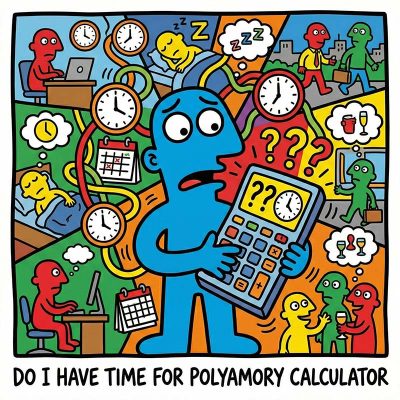
Love is infinite, but your calendar is brutally finite. The fantasy is deep connection; the reality is often just exhausted "calendar tetris." Promising time you don't actually have isn't romantic, it’s a recipe for burnout and broken trust. That sinking feeling when you have to cancel again? That’s the sound of overextension destroying your relationships.
This calculator forces you to confront the math of your life. Do you actually have space for another heart, or are you just setting everyone up for disappointment?

The fantasy is total autonomy and connection. The reality? It can feel like drowning in scheduling chaos and misunderstood expectations. That anxiety you feel isn’t just stress; it’s the wobble of living without a default "anchor." Without a solid architecture, Solo Polyamory stops being a life design and starts being a recipe for burnout and confusion.
The Essential Guide replaces the drift with a concrete anchor. We provide the "Solo Ethic," boundary scripts, and burnout protocols needed to protect your peace. Don't just date around—build a life that actually works for you.

Hierarchy sounds like a corporate org chart until someone gets their feelings hurt. That stomach-turning fear that you are just a "secondary" who can be fired at any time is real. If your relationship feels like a secret ranking system, you are doing it wrong.
Ambiguity is where resentment grows. The Essential Guide replaces the "who matters more" panic with a concrete charter. We provide the scripts and equity guardrails needed to protect every heart in the polycule. Stop guessing and start building.

The ideal is pure equality. The reality? It often slides into hidden rankings where someone gets hurt. That sinking feeling that you are secretly a "secondary" despite the label? That is your intuition detecting couple privilege. Ambiguity is where resentment thrives.
The Essential Guide replaces vague promises with concrete governance. We provide the charters, equity tools, and jealousy protocols needed to ensure "non-hierarchical" isn't just a fantasy. Stop guessing who matters most. Build a network that is actually fair.
The fantasy is total autonomy and connection. The reality? It can feel like drowning in scheduling chaos and misunderstood expectations. That anxiety you feel isn’t just stress; it’s the wobble of living without a default "anchor." Without a solid architecture, Solo Polyamory stops being a life design and starts being a recipe for burnout and confusion.
The Essential Guide replaces the drift with a concrete anchor. We provide the "Solo Ethic," boundary scripts, and burnout protocols needed to protect your peace. Don't just date around—build a life that actually works for you.
Hierarchy sounds like a corporate org chart until someone gets their feelings hurt. That stomach-turning fear that you are just a "secondary" who can be fired at any time is real. If your relationship feels like a secret ranking system, you are doing it wrong.
Ambiguity is where resentment grows. The Essential Guide replaces the "who matters more" panic with a concrete charter. We provide the scripts and equity guardrails needed to protect every heart in the polycule. Stop guessing and start building.
Real world scenarios that illustrate coercive hierarchy
Stories help us see how theory plays out in everyday life. Here are three realistic scenarios that show how coercion can sneak into a hierarchical polyamory setup. None of these scenarios are about a single person failing. They are about structures that enable coercion when people in power refuse to renegotiate and refuse to listen to concerns.
Scenario one balance of power weaponized
Alex and Jordan live in a household with a primary couple structure. Alex is in a long standing primary relationship with Taylor while Jordan is dating another partner named Sam who is new to the scene. Taylor uses the title of primary to justify controlling schedules. Taylor insists that all important decisions about their shared life must go through them first. They demand regular check ins and weekly updates about Sam s whereabouts and emotional state. If Jordan questions the process Taylor implies that they will be less available to Alex and Sam or that their own needs will be deprioritized. The pattern becomes coercive because Taylor frames it as responsibility but uses it to micromanage and punish deviation. Jordan feels trapped and begins to hide how they really feel to avoid losing access to Taylor and Alex. The first step for Jordan is to name the pattern to themselves and to Taylor. They need to set a boundary about what kind of information is appropriate and what time is okay for these conversations. They also need an out if the arrangement changes and a plan to protect Sam s safety and autonomy if the primary relationship continues to demand excessive control.
Scenario two financial leverage and living arrangements
Mina is dating two partners in a hierarchy where Mina s primary relationship is with Cole who handles most logistical decisions. Mina pays rent and manages the household and Cole s primary partner Mara agrees to participate in the shared financial setup as a secondary relationship. When finances become tight Mara notices that Cole uses the hierarchy to demand more time and more emotional labor from Mara without additional financial concessions. Mara begins to feel exploited as their own career stalls and their living options feel at risk. A coercive pattern appears when Cole uses accusations of disloyalty or neglect to pressure Mara to accept reduced hours at work or to skip time with other partners in order to make room for Cole and Mina. In these cases Mara needs to insist on clear financial boundaries and demand that shared resources be allocated based on transparent needs rather than loyalty or fear. A poly friendly mediator or a poly aware therapist can help renegotiate terms in a way that honors everyone s autonomy.
Scenario three social and emotional isolation
Riley is in a hierarchical set up where their primary partner Jade has more influence over social circles friends and the calendar than Riley does. Jade uses this influence to exclude Riley from social events to punish them for requesting more time with a secondary partner. Over time Riley feels increasingly isolated and begins to doubt their own memories about what happened in conversations. The coercive pattern here is not a single big rule but a steady erosion of Riley s social life and emotional safety. The remedy starts with restoring agency. Riley should ask for a written set of expectations about social events and for a standby friend or therapist to help document what is agreed. Jade should be engaged in a structured negotiation that protects Riley s social needs while preserving legitimate boundaries for the relationship. If the arrangement cannot be renegotiated in good faith Riley may need to walk away from the relationship to preserve their well being.
How to assess your own situation honestly
If you are unsure whether your arrangement is healthy or coercive use a simple self check. Answer these questions with yes no or sometimes. Be honest with yourself and remember that you are allowed to change your mind at any time.
- Do I feel free to say no to a request without fear of punishment or withdrawal of access to a partner?
- Are decisions about major life issues made with consent from all involved parties or primarily by one person?
- Do I have equal access to time and emotional energy from multiple partners or is access controlled by a single person?
- Is information about what is happening in the other relationships shared openly in the household or kept within a close circle?
- Can I pause the arrangement without losing touch with people I care about or causing a major crisis?
- Are there consequences for speaking up about concerns or proposing changes that feel fair and reasonable?
- Am I comfortable with where I am and do I feel respected in the power dynamics of the relationship?
If you answered no to several of these questions this is a signal that you may be in a coercive dynamic. It is not your fault. You deserve to be in a relationship where consent is ongoing and boundaries are respected. The next step is to gather evidence and prepare a plan for change. This is not about blaming one person it is about healing the structure so it works for everyone involved.
Steps you can take to address coercive hierarchy
addressing coercive dynamics is never easy but it is doable with a plan. Here is a practical framework you can use whether you are the person feeling controlled or the person who recognizes the pattern in your own life. The goal is to restore autonomy reduce harm and rebuild trust.
Step 1. Name the pattern
Use a calm and clear statement to name what you are experiencing. For example you could say I feel controlled by the current hierarchy and I want to renegotiate how we handle time with each partner. Naming the pattern without blame helps shift the conversation from accusations to problem solving and keeps the door open for collaboration.
Step 2. Document what matters
Keep a simple record of what happens who makes decisions what is negotiated what is enforceable and what the consequences are if someone does not honor agreements. This isn t about spying it is about clarity and safety. A shared document or a private journal can help you see patterns over time and know when to push for change.
Step 3. Establish concrete renegotiation goals
Set specific achievable goals such as a clear schedule a cap on punitive rules a requirement to discuss major changes with all partners a timeline for renegotiation. Focus on tangible outcomes rather than abstract ideals. For example aim to have a monthly check in where all partners discuss needs and adjustments. Or set a rule that emotional labor and time must be distributed equitably across relationships.
Step 4. Communicate with everyone affected
Invite all parties into the process. Use neutral language stay focused on behaviors and outcomes not personalities. If you feel unsafe consider bringing in a mediator who understands ENM and is trained in handling coercive dynamics. It can be very helpful to have a neutral facilitator to keep the conversation on track.
Step 5. Create a safety plan
If the situation feels risky or volatile your safety plan matters. Decide in advance where you will go if you need to leave a scene or a home address. Consider talking to a trusted friend or a poly knowledgeable therapist who can offer guidance. In extreme cases contact local resources for relationship support or shelter. Your safety is the priority.
Step 6. Put new agreements in writing and revisit regularly
Write down the renegotiated terms with clear language and dates. Schedule regular reviews to ensure the agreements stay fair and relevant. This protects everyone and helps prevent backward drift into coercive patterns.
Step 7. Decide whether continuing the arrangement is right for you
Sometimes the healthiest choice is to step away from a coercive dynamic. This can be difficult especially if there are shared housing or finances involved. You can seek support from friends family or a therapist who understands ENM. You deserve to build relationships that respect your boundaries and enrich your life.
Moving toward healthy hierarchy or choosing a different model
Not everyone wants to ditch hierarchy entirely. Some people prefer a framework that provides structure but without coercion. Here are some approaches that keep structure while protecting autonomy:
- Rebalanced hierarchy: Maintain a primary secondary structure but base it on explicit mutual consent with regular renegotiation. Include a mechanism for everyone to adjust levels as life changes occur.
- Egalitarian polyamory: Move away from rank based decisions and foster a culture of shared decision making where all partners have an equal voice in major choices.
- Structured transparency: Use open calendars budgets and communication norms that prevent secrecy and misinterpretation while still honoring individual privacy boundaries.
- Time sharing rotation: Create a rotation system that ensures all partners receive fair time and attention and avoids the sense that one relationship always takes priority.
Whichever path you choose the core ingredients stay the same. Clear consent honest communication and a willingness to renegotiate as life shifts. If your heart is telling you that you want more autonomy or more balance it is worth exploring a different model even if that means a tough conversation or a temporary separation.
Communication scripts you can use in conversations about hierarchy
Direct honest language is powerful. Here are some simple scripts you can adapt to your own voices and relationships. Start with I statements and describe specific behavior then state what you need.
- I statements about autonomy: I feel overwhelmed when schedules are decided without my input. I would like a weekly planning conversation where we discuss time with each partner and make sure everyone is comfortable.
- I statements about fairness: I worry that the resources available to me are not equal to what are given to others. Can we outline a fair distribution of energy time and money that works for all of us?
- I statements about boundaries: I need a boundary that we check in before making major life decisions that affect all of us. If that is not possible I would prefer to pause until we can discuss it together.
- I statements about safety: If I feel unsafe or unheard I need a pause while we find a safer path forward. Safety comes first for me and I hope we can honor that.
These scripts focus on behavior not intent. They invite collaboration rather than defense. If your partner responds with defensiveness you can acknowledge their feelings and restate that you want a fair process that keeps everyone safe and valued.
Tools and resources to support you
Working through coercive dynamics is easier with support. Here are some practical resources and practices that can help you navigate these waters:
- Poly friendly therapists: A therapist who understands ENM can help you map power dynamics and negotiate healthier boundaries.
- Supportive communities: Look for local polyamory groups or online communities that encourage ethical non monogamy with respect for autonomy.
- Relationship agreements templates: Use written agreements that specify boundaries rules expectations and consequences in a neutral neutral tone that invites revision.
- Safety planning: Develop a plan for exiting a situation safely if coercion escalates or if you feel your or someone else s safety is at risk.
Glossary of useful terms and acronyms
- ENM Ethical non monogamy which means open communication consent and honesty in multiple relationships.
- Hierarchy A ranking system that places relationships or partners on levels such as primary secondary or tertiary with varying levels of priority.
- Primary partner The partner who holds the most significant status in practical terms such as living arrangements or long term commitments.
- Secondary partner A partner with a meaningful relationship but typically less day to day influence than the primary partner.
- Tertiary partner A partner with a more casual or less central relationship to the living situation or decision making.
- Consent An ongoing yes to participate in each aspect of the relationship. Consent can be renegotiated at any time.
- Boundaries Personal limits about what you are willing to accept in a relationship. Boundaries are healthy when they are discussed and respected.
- Compersion The joy you feel for your partner when they experience happiness with someone else.
- NRE New relationship energy the excitement and intensity that often accompany a new relationship.
- Gaslighting A manipulation tactic that makes someone doubt their own memory feelings or perception of reality.
Frequently asked questions
What is coercive hierarchy in polyamory
Coercive hierarchy is a power dynamic in which the hierarchy is used to control partners through threats isolation or manipulation rather than negotiated fair terms. It undermines consent and autonomy and it harms trust and safety in the relationship.
How can I tell if my hierarchy is healthy
A healthy hierarchy is transparent and negotiated with all parties having a voice. Boundaries are respected and consent is ongoing. No one is isolated or pressured into decisions. There are regular check ins and a willingness to renegotiate when life changes.
What should I do if I feel trapped in a coercive arrangement
First protect your safety. Reach out to a trusted friend or a poly aware therapist. Document what you can and seek a plan to renegotiate terms or exit if necessary. If there is immediate danger contact local emergency services. You deserve to be in relationships that honor your autonomy.
Is it ever okay to have a hierarchy
Yes it can be okay when all parties consent openly and power is not used to coerce or punish. A healthy hierarchy is adaptable and allows all partners to voice concerns and revise terms without stigma or fear.
How do I renegotiate a coercive dynamic
Start with clear observable behaviors you want to change. Propose specific terms such as shared decision making time allocations and written agreements. Bring in a mediator if needed and set a realistic timeline for progress and review.
What if my partner refuses to renegotiate
If a partner refuses to engage in fair renegotiation you must assess your safety and options. It may be necessary to step back from the relationship or seek external support. You deserve a dynamic that respects your autonomy and value as a person.
Can outside resources help
Absolutely. A poly friendly therapist is a strong option. Relationship coaches who understand ENM can help with communication and boundary setting. Community groups can provide emotional support and practical advice from people who have walked similar paths.
What are practical signs I should watch for in a potential new arrangement
Look for explicit consent processes with all parties involved. Ask how decisions are made and how time and resources are allocated. Insist on written agreements and scheduled renegotiations. Listen to your gut about whether you feel heard respected and valued.
Takeaways and next steps
Hierarchical polyamory can be a thoughtful way to organize relationships when all voices are heard and consent remains active. It becomes coercive when power is used to control or punish rather than to support an agreed upon structure. If you notice coercive patterns focus on safety clear communication and renegotiation. If the dynamic cannot be transformed you have every right to seek a healthier arrangement or exit with care for your own well being.
Remember you are not alone. The Monogamy Experiment is here to help you think clearly and act with integrity. If you want more help we can tailor a plan for your situation whether you want to preserve a form of hierarchy with healthier guardrails or switch to a more egalitarian model. You deserve relationships that feel safe honest and alive every day.
Love is infinite, but your calendar is brutally finite. The fantasy is deep connection; the reality is often just exhausted "calendar tetris." Promising time you don't actually have isn't romantic, it’s a recipe for burnout and broken trust. That sinking feeling when you have to cancel again? That’s the sound of overextension destroying your relationships.
This calculator forces you to confront the math of your life. Do you actually have space for another heart, or are you just setting everyone up for disappointment?
The fantasy is total autonomy and connection. The reality? It can feel like drowning in scheduling chaos and misunderstood expectations. That anxiety you feel isn’t just stress; it’s the wobble of living without a default "anchor." Without a solid architecture, Solo Polyamory stops being a life design and starts being a recipe for burnout and confusion.
The Essential Guide replaces the drift with a concrete anchor. We provide the "Solo Ethic," boundary scripts, and burnout protocols needed to protect your peace. Don't just date around—build a life that actually works for you.
Hierarchy sounds like a corporate org chart until someone gets their feelings hurt. That stomach-turning fear that you are just a "secondary" who can be fired at any time is real. If your relationship feels like a secret ranking system, you are doing it wrong.
Ambiguity is where resentment grows. The Essential Guide replaces the "who matters more" panic with a concrete charter. We provide the scripts and equity guardrails needed to protect every heart in the polycule. Stop guessing and start building.
The ideal is pure equality. The reality? It often slides into hidden rankings where someone gets hurt. That sinking feeling that you are secretly a "secondary" despite the label? That is your intuition detecting couple privilege. Ambiguity is where resentment thrives.
The Essential Guide replaces vague promises with concrete governance. We provide the charters, equity tools, and jealousy protocols needed to ensure "non-hierarchical" isn't just a fantasy. Stop guessing who matters most. Build a network that is actually fair.
The fantasy is total autonomy and connection. The reality? It can feel like drowning in scheduling chaos and misunderstood expectations. That anxiety you feel isn’t just stress; it’s the wobble of living without a default "anchor." Without a solid architecture, Solo Polyamory stops being a life design and starts being a recipe for burnout and confusion.
The Essential Guide replaces the drift with a concrete anchor. We provide the "Solo Ethic," boundary scripts, and burnout protocols needed to protect your peace. Don't just date around—build a life that actually works for you.
Hierarchy sounds like a corporate org chart until someone gets their feelings hurt. That stomach-turning fear that you are just a "secondary" who can be fired at any time is real. If your relationship feels like a secret ranking system, you are doing it wrong.
Ambiguity is where resentment grows. The Essential Guide replaces the "who matters more" panic with a concrete charter. We provide the scripts and equity guardrails needed to protect every heart in the polycule. Stop guessing and start building.
