
Agreements Versus Rules in Non Hierarchical Polyamory


Non hierarchical polyamory is a way of loving that centers equal standing among partners rather than a single primary connection. In this setup the question of how we relate to each other is not solved by a single ladder with top rungs. It is solved by ongoing conversations about what works for everyone involved. In this guide we break down the difference between agreements and rules and show you practical ways to design flexible arrangements that protect autonomy while keeping trust intact. We will explain terms and acronyms as we go so you can follow along even if you are new to ethical non monogamy or ENM terms. If you are a curious explorer or a partner who wants to understand how to navigate this dynamic with care you are in the right place.
Quick Links to Useful Sections
- What non hierarchical polyamory means
- Agreements versus rules explained
- What agreements are
- What rules are
- Why non hierarchical polyamory uses agreements rather than rigid rules
- Common myths and misuses to watch for
- How to craft effective agreements
- Start with core values
- Map needs and concerns
- Differentiate between agreements boundaries and lines
- Define check ins and renegotiation processes
- Include practical guidelines for common situations
- Design formats that work for your group
- Draft examples to illustrate how agreements live in practice
- Realistic scenarios and how agreements help
- Scenario one: A triad of equals with overlapping circles
- Scenario two: Partners with different comfort levels around sexual activity
- Scenario three: Scheduling and energy management
- Scenario four: Privacy and disclosure decisions
- Scenario five: Health and safety concerns
- Boundaries versus agreements and rules
- Communication strategies that keep agreements working
- Renegotiation and conflict resolution
- Privacy considerations and disclosure norms
- Ethical considerations and consent with multiple partners
- Practical tools you can use
- Glossary of useful terms and acronyms
- Frequently asked questions
What non hierarchical polyamory means
Non hierarchical polyamory means that all partners are treated with equal regard and no partner holds a “higher place” in a fixed hierarchy over others. People in this dynamic decide together how many connections they want and how those connections fit into their lives. The emphasis is on consensual networks where each relationship is valued without automatically ranking one over another. Communication is ongoing and decisions are shared. It is about balancing desire with respect for everyone involved and it requires deliberate practices to manage time energy and emotional labor.
In many polyamorous setups people talk about lines and veils. A line is a hard boundary that cannot be crossed under any circumstance. A veil is something that may be negotiable under certain conditions. In a non hierarchical approach lines and veils are not about control as much as about mutual safety and comfort. The goal is to move past fear based assumptions toward transparent agreements that can adapt as life changes. We use terms you might see often and we explain them so they are not scary or confusing. If you have heard about rules in monogamy you may be wondering how rules differ in this context. We will cover that in detail coming up.
Agreements versus rules explained
Let us unpack two ideas that people often mix up when they first start exploring non hierarchical polyamory. Understanding the distinction is essential because it shapes how you communicate with partners and how you respond to changes in feelings or circumstances.
What agreements are
Agreements are living statements that you and your partners negotiate together. They reflect shared values and specify how you will handle common situations. Agreements are flexible and designed to evolve as needs shift. Think of them as a playbook that helps everyone know what to expect while leaving room for growth. Agreements can cover a wide range of topics from how you introduce partners to others to expectations around communication frequency or how you manage time with multiple partners. The purpose of agreements is not to enforce obedience but to reduce ambiguity and create safety for all involved. A good agreement makes room for consent to change and for renegotiation when life events occur.
Key characteristics of agreements:
- Collaborative creation with all relevant partners
- Clear language that describes decisions and processes
- Flexibility to renegotiate as feelings and circumstances shift
- Focus on autonomy and mutual respect rather than control
- Transparency about what is shared and what is kept private
What rules are
Rules in the polyamory landscape are guidelines that resemble commands often backed by consequences if not followed. In non hierarchical environments rules can feel like a form of policing rather than collaboration. Rules are sometimes born from fear jealousy or past hurt. They can be useful in the short term for stabilizing a new situation but if they are rigid they can stifle autonomy and breed resentment. The challenge with rules is that they sometimes presume one size fits all and can overlook the unique needs of different relationships within a network. When rules become the default method for governing every choice the culture can shift from empowerment to compliance.
Common examples of rules that show up in various ENM contexts include mandates about who you can date when you can see them how you share information with others or what privacy looks like. In a non hierarchical setup the goal is to minimize rules that feel punitive and to replace them with agreements that focus on consent communication and safety. A well crafted agreement may achieve a similar outcome to a rule but it does so through collaboration not coercion. It invites ongoing discussion rather than immediate obedience. You can still have boundaries in non hierarchical polyamory. Boundaries are personal lines that you draw for yourself and they should be respected by others. They can coexist with agreements and even with adaptable rules when those feel necessary for a particular situation.
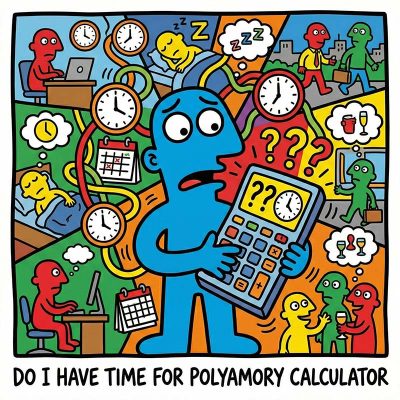
Love is infinite, but your calendar is brutally finite. The fantasy is deep connection; the reality is often just exhausted "calendar tetris." Promising time you don't actually have isn't romantic, it’s a recipe for burnout and broken trust. That sinking feeling when you have to cancel again? That’s the sound of overextension destroying your relationships.
This calculator forces you to confront the math of your life. Do you actually have space for another heart, or are you just setting everyone up for disappointment?

The fantasy is total autonomy and connection. The reality? It can feel like drowning in scheduling chaos and misunderstood expectations. That anxiety you feel isn’t just stress; it’s the wobble of living without a default "anchor." Without a solid architecture, Solo Polyamory stops being a life design and starts being a recipe for burnout and confusion.
The Essential Guide replaces the drift with a concrete anchor. We provide the "Solo Ethic," boundary scripts, and burnout protocols needed to protect your peace. Don't just date around—build a life that actually works for you.

Hierarchy sounds like a corporate org chart until someone gets their feelings hurt. That stomach-turning fear that you are just a "secondary" who can be fired at any time is real. If your relationship feels like a secret ranking system, you are doing it wrong.
Ambiguity is where resentment grows. The Essential Guide replaces the "who matters more" panic with a concrete charter. We provide the scripts and equity guardrails needed to protect every heart in the polycule. Stop guessing and start building.

The ideal is pure equality. The reality? It often slides into hidden rankings where someone gets hurt. That sinking feeling that you are secretly a "secondary" despite the label? That is your intuition detecting couple privilege. Ambiguity is where resentment thrives.
The Essential Guide replaces vague promises with concrete governance. We provide the charters, equity tools, and jealousy protocols needed to ensure "non-hierarchical" isn't just a fantasy. Stop guessing who matters most. Build a network that is actually fair.
The fantasy is total autonomy and connection. The reality? It can feel like drowning in scheduling chaos and misunderstood expectations. That anxiety you feel isn’t just stress; it’s the wobble of living without a default "anchor." Without a solid architecture, Solo Polyamory stops being a life design and starts being a recipe for burnout and confusion.
The Essential Guide replaces the drift with a concrete anchor. We provide the "Solo Ethic," boundary scripts, and burnout protocols needed to protect your peace. Don't just date around—build a life that actually works for you.
Hierarchy sounds like a corporate org chart until someone gets their feelings hurt. That stomach-turning fear that you are just a "secondary" who can be fired at any time is real. If your relationship feels like a secret ranking system, you are doing it wrong.
Ambiguity is where resentment grows. The Essential Guide replaces the "who matters more" panic with a concrete charter. We provide the scripts and equity guardrails needed to protect every heart in the polycule. Stop guessing and start building.
Why non hierarchical polyamory uses agreements rather than rigid rules
In a network where every relationship has equal standing the way you govern interactions matters more than who gets to dictate the terms. Agreements create a framework that respects agency and consent while addressing the emotional dynamics that arise in multi partner settings. Here are some practical reasons agreements work well in this dynamic:
- Agency and autonomy are preserved because each person has a voice in the terms that affect them.
- Communication tends to be more honest because agreements invite discussion rather than punishment for breaking rules.
- Renegotiation is a built in feature. Life changes such as new partners schedules long distance relationships or changes in priorities can be accommodated without shame or conflict.
- Trust deepens when people see that terms were set through collaboration and are revisited together.
- Flexibility reduces the power imbalance that can occur when one person is managing all the rules for a whole network.
It is also important to recognize that agreements do not guarantee harmony. They require ongoing effort from all involved. The aim is to create a shared language that reduces miscommunication and helps people navigate complex emotions with clarity and care. In practice this means regular check ins honest sharing about needs and a willingness to adjust terms as relationships grow or shrink.
Common myths and misuses to watch for
Entering non hierarchical polyamory can feel liberating but it also invites myths that can derail progress. Here are some frequent misunderstandings and how to avoid them:
- Myth: Agreements fix everything. Reality: Agreements reduce risk but they cannot delete hurt or miscommunication. They are tools to help you talk about tough stuff and to adjust when needed.
- Myth: If someone loves me they will accept all terms. Reality: Love does not equal willingness to sacrifice core needs. Agreements work best when they respect each person s core values while remaining open to renegotiation.
- Myth: Non hierarchical means no rules at all. Reality: There can be guidelines or boundaries but they are expressed as collaborative agreements rather than top down commands.
- Myth: Agreements require everyone to be perfectly transparent. Reality: Privacy is real and healthy too. The balance is about what needs to be shared for safety and consent and what can stay private as a personal boundary.
How to craft effective agreements
Creating strong agreements starts with honesty courage and a willingness to listen. It helps to approach agreements as living documents that can shift as people grow. Here is a practical framework to guide you through the process.
Start with core values
Identify the values that guide your group. These could include autonomy honesty consent respect safety transparency and emotional care. Grounding your agreements in shared values gives you a stable foundation to hang specifics on. When value driven decisions come into play you can navigate tricky situations without breaking trust.
Map needs and concerns
Each person should articulate what they need from the network and what concerns they carry. Do not minimize fear or jealousy. Name it and talk through how the group can respond in a way that honors those feelings. This stage is where many conflicts are defused before they escalate. It also helps you understand what you cannot compromise on and where you are willing to bend.
Differentiate between agreements boundaries and lines
Agree on what is negotiable and what is not. Distinguish between agreements about how you communicate with each other and boundaries about sexual health. Clarify which items are flexible and which are non negotiable. Put those into the document and review them regularly. If a boundary needs to shift you renegotiate rather than simply flip a rule.
Define check ins and renegotiation processes
Set a cadence for check ins. It could be monthly or seasonally depending on how dynamic your network is. Use these check ins to reflect on what is working what isn t what feels unfair and what could be adjusted. Decide who initiates renegotiation what signals a need to revisit terms and how to incorporate new information about health safety or emotional well being.
Include practical guidelines for common situations
Think about typical scenarios such as introducing new partners disclosure to existing partners scheduling time across multiple relationships or when a partner travels. Build guidelines that cover communication about new relationships what information is shared with whom how to handle late cancellations and how to support each other through emotional responses. The more you spell out practical steps the less room there is for misinterpretation when emotions run high.
Design formats that work for your group
Some groups prefer a formal written document with signatures others use living chat threads or a shared worksheet. The format matters less than how usable it is. The key is that people can refer back to it easily and feel confident that it reflects the current reality of the network. You may choose a short version for quick reference and a longer version with more context for deeper study.
Draft examples to illustrate how agreements live in practice
Here are a few light weight examples you can adapt. They show how to phrase ideas in a way that invites discussion not defense.
- Introduction policy: We agree to introduce new partners to all concerned parties in a reasonable time frame and with consent from each involved person unless safety concerns require expedited communication.
- Communication cadence: We agree to share important updates within 48 hours unless there is an urgent safety issue.
- Jealousy management: When jealousy arises we commit to naming the feeling and requesting a specific form of support from the person we trust most in the network while staying open to the other partners involved.
- Health safety: All partners commit to regular STI testing per medically recommended intervals and to disclose results according to a pre agreed plan before engaging in new sexual activities.
Realistic scenarios and how agreements help
Concrete scenarios help illustrate how agreements function in a lived environment. Here are some examples drawn from typical NH polyamory patterns. You can use these as starting points to craft your own tailored terms.
Scenario one: A triad of equals with overlapping circles
Three partners share a strong bond with no one in a dominant role. They focus on fairness time distribution and open communication. An agreement here might include a rotating schedule for time with each partner a policy for dating outside the trio and a plan for collective decision making on shared finances or housing. If one person develops a new interest outside the trio the group discusses how to integrate that person without sidelining current partners.
Scenario two: Partners with different comfort levels around sexual activity
Some partners may be comfortable with casual dating while others prefer deeper emotional connections only. The agreements can establish what levels of sexual activity are acceptable outside each relationship and how information is shared. The goal is to avoid situations that lead to leave or miscommunication. Periodic renegotiation helps everyone align as boundaries shift or new partners enter the network.
Scenario three: Scheduling and energy management
In a network with multiple relationships time and energy become limited resources. Agreements can specify minimum time each partner expects for emotional check ins and what a fair distribution looks like. They can also outline how to handle emergencies when plans shift and the impact on other relationships. This reduces the potential for resentment caused by uneven investment in the network while preserving autonomy for each person.
Scenario four: Privacy and disclosure decisions
Not all information about a partner needs to be shared with every other partner. An agreement might state who should be told about a new relationship and what details are appropriate to disclose. It can also define what is kept private for personal safety or personal boundaries while maintaining overall transparency in the network.
Scenario five: Health and safety concerns
Health safety is a universal concern in polyamory. Agreements can require STI testing at set intervals and a clear process for disclosure and discussion if results change. They can also set expectations about safe sex practices and the use of barriers when engaging with new partners. This kind of practical policy keeps everyone safer and reduces anxiety about potential health risks.
Boundaries versus agreements and rules
Knowing the differences helps you build a healthier governance system for your network. Here is a simple framework you can apply to everyday life.
- Boundaries are personal lines you set to protect your own well being. They are about what you are not willing to accept even if others would agree. Boundaries are your own to enforce and should be respected by others regardless of the dynamics around you.
- Agreements are collaborative statements about how the network functions. They are designed to foster trust and safety through joint decision making. Agreements are adaptable and reviewed regularly.
- Rules are prescriptive mandates that specify what others must do. In non hierarchical settings rules can feel coercive if used to punish. The aim is to minimize rigid rules and maximize negotiated terms that empower everyone involved.
Communication strategies that keep agreements working
Effective communication is the backbone of any healthy non hierarchical polyamory network. These strategies help keep conversations productive and reduce misunderstandings.
- Use regular check ins to discuss how terms feel in practice rather than waiting for a crisis to surface
- Practice active listening. Reflect back what you heard to confirm understanding
- Name emotions clearly and separate the feeling from the action you want to take
- Ask clarifying questions before making assumptions about someone else s motives
- Record decisions in a shared document or thread so everyone can reference it later
Renegotiation and conflict resolution
Relationships shift over time. The ability to renegotiate is essential in non hierarchical polyamory. When conflict arises take a calm approach. Focus on the specific behavior or situation rather than making general judgments about a partner. Return to the agreed framework and assess what needs to change. It can be helpful to involve a neutral facilitator if tensions run high or if the group has grown large. The objective is to preserve trust and to keep everyone feeling valued and heard.
Privacy considerations and disclosure norms
Shared networks require trust but also respect for privacy. Partners should agree on what information is safe to disclose with others and what remains private. Some topics such as health status or certain personal experiences may be sensitive and worth keeping to the individuals involved unless there is explicit consent to share. Transparent processes for disclosure help prevent hidden information from eroding trust while honoring personal boundaries.
Ethical considerations and consent with multiple partners
Ethical nonmonogamy is built on explicit consent from all involved. Consent in this setting is not a one time event but an ongoing practice. Make sure all partners have the space to voice a change of mind without pressure or judgment. Revisit consent regularly especially after major life changes such as new partners changes in health or shifts in emotional capacity. Respect for consent builds a network where people feel safe to communicate openly and to adjust terms when needed.
Practical tools you can use
Here are some practical tools to help you implement and maintain agreements in a non hierarchical polyamory setup.
- Shared living document with sections for agreements lines and allowed variations
- Weekly or monthly check in templates to guide discussions
- A simple renegotiation prompt that triggers a conversation when a key variable changes
- A health safety checklist that is reviewed at each check in
- A privacy matrix that outlines what is disclosed and to whom in the network
Glossary of useful terms and acronyms
- ENM Ethical Non Monogamy. A relationship approach that prioritizes consent transparency and respect when more than two people are involved.
- NH Non Hierarchical. A structure where no partner holds a top position in the relationship network and all connections are treated as equal in value.
- Agreements Negotiated statements describing how partners will interact including expectations around communication time and safety practices.
- Boundaries Personal limits that guide what you are willing to accept in terms of behavior and emotional energy.
- Lines Specific hard boundaries that you will not cross under any circumstances.
- Veils Boundaries that may be negotiable under certain conditions and with consent.
- Renegotiation The process of revisiting and adjusting terms in light of new information or changing feelings.
- Consent Ongoing voluntary agreement to participate in a specific activity or arrangement.
- Jealousy management Strategies to acknowledge and address jealousy in a constructive way rather than letting it derail relationships.
- Disclosure Sharing information about relationships or health status with other partners as agreed upon within the network.
- Safety policies Rules and practices focused on physical and emotional safety within the network.
Frequently asked questions
Love is infinite, but your calendar is brutally finite. The fantasy is deep connection; the reality is often just exhausted "calendar tetris." Promising time you don't actually have isn't romantic, it’s a recipe for burnout and broken trust. That sinking feeling when you have to cancel again? That’s the sound of overextension destroying your relationships.
This calculator forces you to confront the math of your life. Do you actually have space for another heart, or are you just setting everyone up for disappointment?
The fantasy is total autonomy and connection. The reality? It can feel like drowning in scheduling chaos and misunderstood expectations. That anxiety you feel isn’t just stress; it’s the wobble of living without a default "anchor." Without a solid architecture, Solo Polyamory stops being a life design and starts being a recipe for burnout and confusion.
The Essential Guide replaces the drift with a concrete anchor. We provide the "Solo Ethic," boundary scripts, and burnout protocols needed to protect your peace. Don't just date around—build a life that actually works for you.
Hierarchy sounds like a corporate org chart until someone gets their feelings hurt. That stomach-turning fear that you are just a "secondary" who can be fired at any time is real. If your relationship feels like a secret ranking system, you are doing it wrong.
Ambiguity is where resentment grows. The Essential Guide replaces the "who matters more" panic with a concrete charter. We provide the scripts and equity guardrails needed to protect every heart in the polycule. Stop guessing and start building.
The ideal is pure equality. The reality? It often slides into hidden rankings where someone gets hurt. That sinking feeling that you are secretly a "secondary" despite the label? That is your intuition detecting couple privilege. Ambiguity is where resentment thrives.
The Essential Guide replaces vague promises with concrete governance. We provide the charters, equity tools, and jealousy protocols needed to ensure "non-hierarchical" isn't just a fantasy. Stop guessing who matters most. Build a network that is actually fair.
The fantasy is total autonomy and connection. The reality? It can feel like drowning in scheduling chaos and misunderstood expectations. That anxiety you feel isn’t just stress; it’s the wobble of living without a default "anchor." Without a solid architecture, Solo Polyamory stops being a life design and starts being a recipe for burnout and confusion.
The Essential Guide replaces the drift with a concrete anchor. We provide the "Solo Ethic," boundary scripts, and burnout protocols needed to protect your peace. Don't just date around—build a life that actually works for you.
Hierarchy sounds like a corporate org chart until someone gets their feelings hurt. That stomach-turning fear that you are just a "secondary" who can be fired at any time is real. If your relationship feels like a secret ranking system, you are doing it wrong.
Ambiguity is where resentment grows. The Essential Guide replaces the "who matters more" panic with a concrete charter. We provide the scripts and equity guardrails needed to protect every heart in the polycule. Stop guessing and start building.
