
Avoiding Promises You Cannot Keep


If you are exploring non hierarchical polyamory in an ethics based non monogamy setup you have probably seen promises pop up that feel big and risky. This guide is here to help you spot those promises before they trap you. It is written in a practical down to earth voice so you can take the ideas and apply them in everyday life without turning your relationships into a lab experiment. We will explain terms clearly so you can use them with confidence.
Quick Links to Useful Sections
- Understanding promises in non hierarchical polyamory ENM
- What counts as a promise in this context
- How a non hierarchical dynamic shapes promises
- Common traps that create broken promises
- Principles to avoid promises you cannot keep
- Communicate early and often
- Define what you can promise clearly
- Make time and energy commitments realistic
- Use living documents and renegotiation windows
- Separate relationship agreements from daily routines
- Practical tools you can use today
- Living agreements that survive the test of time
- Clear boundaries and what they really mean
- Transparent calendars and scheduling rituals
- Check ins that actually help not become a chore
- Time management and emotional energy in a non hierarchical network
- Balancing multiple partnerships
- Financial considerations within a dynamic network
- Health and safety boundaries
- Scenarios and practical examples
- Scenario one a promise to not date outside a small circle
- Scenario two a silent agreement that becomes a burden
- Scenario three managing jealousy with clear language
- When a promise might break down what to do
- Early warning signs
- Renegotiation steps that work
- Repairing trust after a breach
- The ethics of consent in a non hierarchical ENM network
- Explicit consent over implied consent
- Respecting autonomy while protecting the network
- Glossary of useful terms and acronyms
- Key acronyms and terms explained
- Minimal practical tips for quick wins
- Frequently asked questions
- Final thoughts to keep promises honest not perfect
- Checklist before you step into a new conversation
Understanding promises in non hierarchical polyamory ENM
What counts as a promise in this context
A promise is a commitment that affects how you show up for a partner or partners. In the non hierarchical polyamory world there is no single primary or crown holder. Agreements are made with the aim of reducing harm and increasing clarity rather than creating an iron clad contract. Promises can cover time and energy for dates, limits on sexual activity, rules about dating within certain spaces, or commitments to transparent communication. The danger arises when a promise is made that you cannot realistically keep or that relies on future conditions that may never exist. The key to avoiding trouble is turning vague hope into concrete, testable actions with built in review points.
How a non hierarchical dynamic shapes promises
In a non hierarchical setup all partners deserve respect and consideration. No one partner gets an automatic veto over another. This means promises should be explicit about what is being offered and what is off limits. It also means that promises should be revisited as life changes. The lack of a fixed hierarchy pushes you toward flexible agreements that can bend when needed. It also makes renegotiation a routine rather than a scandal.
Common traps that create broken promises
One trap is clear in many ENM conversations. A person may promise to limit involvement with new people to protect the existing circle. Another trap is promising to share emotional energy in a way that sounds generous while secretly feeling overwhelmed. A third trap is assuming a time bound promise will automatically stay the same as schedules shift. The reality is that life changes and so do your capacity and obligations. When promises are tied to fixed conditions that do not adapt they become pressure points that can fracture trust. The antidote is to replace rigid promises with adaptable, well described agreements that include review moments and criteria for adjustment.
Principles to avoid promises you cannot keep
Communicate early and often
The early part of any ENM conversation is the place to slow down. Talk about goals and fears before you reach for a concrete promise. A lot of miscommunication happens when conversations happen in a hurry and with assumptions in the air. Schedule regular check ins with all partners. A weekly or bi weekly discussion window keeps things current and reduces the chances of misread signals turning into a crisis. When you speak honestly and with care you create space for others to respond with nuance instead of sprinting toward a verdict.
Define what you can promise clearly
Promises should be explicit and narrow. Instead of saying I will not date anyone else you can say I will not pursue sex outside our current group without a long mutual discussion and written confirmation. When you define the promise in observable terms you create a test you can prove or disprove. Use concrete languages like I will dedicate X hours per week to this partner or I will check in after every date. Crisp definitions help you avoid fantasies about the future and force you to confront practical limits in the present.
Make time and energy commitments realistic
Over promising is a common error. It is tempting to want to be present everywhere all at once. In reality you can only allocate a reasonable amount of time and energy to people and activities. If you know you have a demanding job or a heavy caregiving schedule you must acknowledge that in your agreements. The moment you attempt to stretch beyond what you can sustain you invite resentment and a soft breach of trust. The right move is to promise what you know you can deliver and to leave room to grow rather than forcing a fix that will eventually crack open.
Use living documents and renegotiation windows
Treat agreements as living documents that you review and revise. Build in renegotiation windows after key events such as moving in with someone new starting a new job or after a major vacation or life change. If a partner asks for a change you should respond with a clear process that includes time to think and a plan for how to implement the change. The goal is to create a trusted method for updating promises rather than letting emotions push harsh compromises at the last minute.
Separate relationship agreements from daily routines
It helps to separate big picture promises from everyday patterns. For example you might have a weekly date night with one partner and you may choose to keep that routine even as other relationships expand. Distinguish what is essential for your capacity in the moment from what is needed for long term harmony. Daily chores and household responsibilities are not the same as intimate commitments. Keeping them separate reduces confusion and makes it easier to renegotiate when necessary.
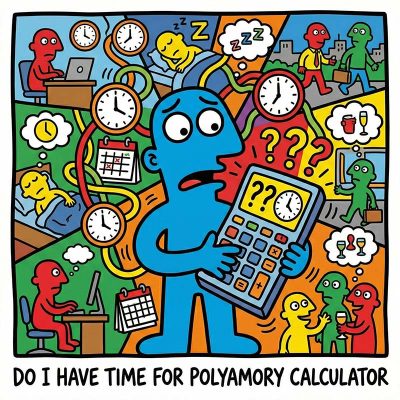
Love is infinite, but your calendar is brutally finite. The fantasy is deep connection; the reality is often just exhausted "calendar tetris." Promising time you don't actually have isn't romantic, it’s a recipe for burnout and broken trust. That sinking feeling when you have to cancel again? That’s the sound of overextension destroying your relationships.
This calculator forces you to confront the math of your life. Do you actually have space for another heart, or are you just setting everyone up for disappointment?

The fantasy is total autonomy and connection. The reality? It can feel like drowning in scheduling chaos and misunderstood expectations. That anxiety you feel isn’t just stress; it’s the wobble of living without a default "anchor." Without a solid architecture, Solo Polyamory stops being a life design and starts being a recipe for burnout and confusion.
The Essential Guide replaces the drift with a concrete anchor. We provide the "Solo Ethic," boundary scripts, and burnout protocols needed to protect your peace. Don't just date around—build a life that actually works for you.

Hierarchy sounds like a corporate org chart until someone gets their feelings hurt. That stomach-turning fear that you are just a "secondary" who can be fired at any time is real. If your relationship feels like a secret ranking system, you are doing it wrong.
Ambiguity is where resentment grows. The Essential Guide replaces the "who matters more" panic with a concrete charter. We provide the scripts and equity guardrails needed to protect every heart in the polycule. Stop guessing and start building.

The ideal is pure equality. The reality? It often slides into hidden rankings where someone gets hurt. That sinking feeling that you are secretly a "secondary" despite the label? That is your intuition detecting couple privilege. Ambiguity is where resentment thrives.
The Essential Guide replaces vague promises with concrete governance. We provide the charters, equity tools, and jealousy protocols needed to ensure "non-hierarchical" isn't just a fantasy. Stop guessing who matters most. Build a network that is actually fair.
The fantasy is total autonomy and connection. The reality? It can feel like drowning in scheduling chaos and misunderstood expectations. That anxiety you feel isn’t just stress; it’s the wobble of living without a default "anchor." Without a solid architecture, Solo Polyamory stops being a life design and starts being a recipe for burnout and confusion.
The Essential Guide replaces the drift with a concrete anchor. We provide the "Solo Ethic," boundary scripts, and burnout protocols needed to protect your peace. Don't just date around—build a life that actually works for you.
Hierarchy sounds like a corporate org chart until someone gets their feelings hurt. That stomach-turning fear that you are just a "secondary" who can be fired at any time is real. If your relationship feels like a secret ranking system, you are doing it wrong.
Ambiguity is where resentment grows. The Essential Guide replaces the "who matters more" panic with a concrete charter. We provide the scripts and equity guardrails needed to protect every heart in the polycule. Stop guessing and start building.
Practical tools you can use today
Living agreements that survive the test of time
Write agreements in plain language with clear outcomes. Include what is allowed what is not and the conditions under which changes can occur. Build in explicit review dates and a simple method for requesting changes. For example you might say We agree to share each partner s boundaries ahead of decisions and to review every six weeks with a reminder that we can adjust as needed. Having this written down in a neutral tone avoids drama during tense moments.
Clear boundaries and what they really mean
A boundary is a personal limit rather than a rule for others. Communicate your boundaries in a way that focuses on your own needs. For instance I need space after a date before I hear reports or details about what happened can be phrased as a boundary that protects your emotional well being. Boundaries should be respected by all and should be revisited if they feel restrictive or outdated. Boundaries are not power plays they are protective measures for everyone involved.
Transparent calendars and scheduling rituals
Shared calendars online can help you see when someone is free or busy. Do not rely exclusively on memory for important commitments. A simple practice is to confirm plans with a partner after you schedule dates. Scheduling rituals reduce anxiety and prevent the accidental triple booking that can lead to hurt feelings. The focus is not surveillance but clarity and respect for everyone s time and energy.
Check ins that actually help not become a chore
Make check ins short and helpful rather than long and draining. Focus on what is working what is not yet working and what changes you will try before the next check in. Celebrate small wins and give space for honest feedback. When people feel heard they are more open to adjusting agreements rather than resisting them.
Time management and emotional energy in a non hierarchical network
Balancing multiple partnerships
In a non hierarchical polyamory space you may have more than one deep connection. It is essential to pace your emotional energy and to avoid the trap of trying to do everything for everyone all at once. Decide how much energy you can invest in each relationship without discounting your own needs. A practical rule is to allocate dedicated time for each relationship and to schedule buffer time for rest and for handling unexpected events. When you respect your own limits you model healthy behavior for your partners and reduce the risk of over promising.
Financial considerations within a dynamic network
Money matters show up in ENM dynamic relationships too. You should be clear about shared expenses who pays for events or travel and how to handle gifts or special occasions. Financial boundaries help prevent resentment when plans shift. If you travel to see a partner work included activities or shared experiences require a separate plan so money does not become a hidden pressure point. Open discussion about money protects trust and keeps agreements honest.
Health and safety boundaries
Sexual health requires ongoing consent and practical checks. Discuss vaccination testing frequency and boundaries around sexual activity with new partners. Decide how you will share information about health status in a respectful way that protects everyone involved. Health boundaries are a form of care for yourself and for others. They are not judgment or control mechanisms.
Scenarios and practical examples
Scenario one a promise to not date outside a small circle
Jules promised their partner that they would not date outside their small local circle while the relationship was new. Over time Jules met someone new at a conference and the attraction was real. The promise created tension because the existing circle did not feel the same about limiting new connections. The solution was to pause the promise re evaluate what is feasible and decide together how to handle new connections with a clear process for discussing boundaries. In this case the couple agreed to a time bound exploration period with a set check in date and a plan to re evaluate. The outcome was not a failure but a learning moment about what kind of commitment makes sense given both people s comfort levels and the realities of their lives.
Scenario two a silent agreement that becomes a burden
Alex believed a silent agreement existed that would protect a close friend group from emotional entanglements outside the circle. It turned out that one member began dating someone outside the circle and everyone felt blindsided. The fix was to bring the agreement into light and discuss what it really meant who it applied to and what the consequences would be if someone stepped outside the circle. The important part was to move from silent assumption to explicit language with a plan for renegotiation. That shift reduced blame and spread responsibility for maintaining harmony across the group.
Scenario three managing jealousy with clear language
Jealousy can drive people to try to lock things down with unrealistic promises. The healthy approach is to name the jealousy and discuss what it means in practical terms. For example a person might feel left out when a partner spends more time with a new date. A practical response is to schedule a shared weekly check in then adjust the calendar to include individual time with each partner as needed. The goal is to acknowledge the feeling and to translate it into actions that support all involved rather than letting jealousy fester into mistrust.
When a promise might break down what to do
Early warning signs
Look for signals such as consistent delays in communication missed check ins a pattern of changing plans at the last minute or repeated requests to push boundaries without a clear plan for safe renegotiation. These signs do not automatically spell disaster but they do warrant a proactive conversation. Address them early with a calm tone and an emphasis on mutual care. When you catch a warning sign early you increase the chance of a good outcome for everyone involved.
Renegotiation steps that work
Step one name the issue and state your intention to renegotiate. Step two invite all involved to share their experiences and concerns. Step three propose a concrete adjustment with measurable outcomes and a timeline for review. Step four document the agreed changes and confirm everyone understands the new terms. Step five schedule the next check in to evaluate how the new terms are working. This process keeps the shift fair and transparent.
Repairing trust after a breach
Breaches can be painful but they are not necessarily the end of a connection. The path to repair includes acknowledging harm taking responsibility for your part in the breach offering a sincere apology and actively making amends. It also helps to establish a concrete plan to prevent a recurrence such as a more frequent check in a written agreement or a cooling off period before acting on a new connection. Time and consistent behavior often heal the wounds created by a broken promise.
The ethics of consent in a non hierarchical ENM network
Explicit consent over implied consent
Consent is not a one time check box. In a dynamic polyamory network it needs refreshing as relationships evolve. Always seek explicit consent for new activities or changes in dynamics and provide space for a clear and unpressured yes or no. Without explicit consent the path to harm becomes easier and trust erodes quickly.
Respecting autonomy while protecting the network
The goal is to honor every person s autonomy while also protecting everyone involved. This means being honest about what you want what you fear and how much time you can realistically offer. It means being willing to renegotiate when plans change and it means listening to concerns from partners as a sign of care rather than a personal attack.
Glossary of useful terms and acronyms
- ENM Ethical non monogamy a family of relationship styles that emphasizes consent communication and respect for all partners.
- Polyamory The practice of having intimate relationships with more than one partner with all partners involved informed and consenting.
- Non Hierarchical Polyamory A form of polyamory where no partner holds inherent priority over another and decisions are made together.
- Promising A declaration of commitment about future behavior or boundaries.
- Boundaries Personal limits that help you protect your well being and your relationships.
- Agreements Written statements about how you will behave in your relationships including rules and expectations.
- Renegotiation The process of revisiting and revising agreements as life changes.
- New Relationship Energy The rush of early excitement when a new relationship begins which can color decisions.
- Compersion The feeling of joy when a partner experiences happiness with someone else.
- Health boundaries Agreements that protect physical emotional and sexual well being for everyone involved.
- Transparency Open and honest sharing of feelings needs and information that affect others in the network.
Key acronyms and terms explained
ENM and polyamory can be new to some readers so here are quick explanations of terms you might see in conversations or in this page.
- Poly short for polyamory a style where people have multiple loving relationships with the knowledge and consent of everyone involved.
- Non Hierarchical means there is no chain of command or ranked partners in the network rather all partnerships are treated with equal respect and consideration.
- renegotiation the process of revising agreements to fit new circumstances.
Minimal practical tips for quick wins
- Write down your top three commitments and share them with your partners before new plans are made.
- Set a dedicated weekly check in time where you discuss any concerns and celebrate positive steps.
- Avoid making promises you cannot test in the real world within a reasonable timeframe.
- When in doubt pause and discuss instead of deciding in the heat of the moment.
Frequently asked questions
How can I avoid promising what I cannot keep in a non hierarchical polyamory setup
Start with small explicit commitments that you can test and verify. Always attach a review date and a clear method for making changes if needed. Use a calm conversation to air concerns before a promise becomes necessary. Remember that the goal is safety clarity and care not control.
What is non hierarchical polyamory and how does it differ from other ENM styles
Non hierarchical polyamory is a form of ethical non monogamy where no partner is designated as higher status than another. Agreements are created by all people involved with equal voice. This differs from hierarchical forms where a primary partner or tiered structure guides decisions and expectations more strongly. In a non hierarchical network the emphasis is on consent transparency and shared decision making.
How do I renegotiate a promise without causing hurt
Use a respectful approach that names the emotion behind the request. Invite all involved to share their perspectives and propose specific adjustable terms. Document any changes in a simple written note and set a new review date. Acknowledge the impact on everyone and offer a concrete plan to support those affected by the change.
Should I promise exclusivity with one partner in this type of dynamic
Exclusivity promises are often incompatible with non hierarchical structures. If exclusivity is essential for your well being you should make that a clear personal boundary and discuss how it fits with the network. In most non hierarchical settings exclusivity becomes a negotiated exception rather than a default rule and must be supported by transparent conversations with all involved parties.
What if a promise is broken by someone else in the network
Address the breach directly and without blame. Focus on impact and what needs to change to restore trust. Decide whether the remedy is a renegotiation a pause in certain interactions or additional boundaries. In many cases a structured apology along with a concrete plan to prevent recurrence helps repair trust more effectively than silence or punishment.
How should agreements be documented
Keep agreements in a simple shared document or a private notes system that all relevant partners can access. Use clear language and specific conditions examples of what is allowed what is not allowed and how changes will be made. Schedule a regular revision date so people know when to revisit the terms and how to adjust them when life changes.
Is it ever okay to break a promise in this dynamic
Yes but only after a thoughtful renegotiation that includes everyone affected. If a promise would cause harm even after noticing the problem it is better to pause and discuss a new approach rather than press ahead under pressure. The likelihood of long term trust increases when people learn to adjust with honesty and care rather than to push through at all costs.
Final thoughts to keep promises honest not perfect
Promises are useful tools when they align with reality and with a shared sense of responsibility. In a non hierarchical polyamory ENM world the most important skill is not creating flawless promises but building robust processes for communication renegotiation and care. Your goal is not perfection but a path where you can be honest about limits learn from mistakes and continue to grow with your partners. The right agreements are the ones that feel workable and fair for the people you choose to share your life with.
Checklist before you step into a new conversation
- Clarify your own boundaries and energy limits before talking to others
- Prepare a short explanation of why a change is needed and what you propose
- Invite all involved to share their perspectives and listen actively
- Document the agreed changes in a simple shared note
- Set a clear date for the next review to ensure the promises evolve with life
Love is infinite, but your calendar is brutally finite. The fantasy is deep connection; the reality is often just exhausted "calendar tetris." Promising time you don't actually have isn't romantic, it’s a recipe for burnout and broken trust. That sinking feeling when you have to cancel again? That’s the sound of overextension destroying your relationships.
This calculator forces you to confront the math of your life. Do you actually have space for another heart, or are you just setting everyone up for disappointment?
The fantasy is total autonomy and connection. The reality? It can feel like drowning in scheduling chaos and misunderstood expectations. That anxiety you feel isn’t just stress; it’s the wobble of living without a default "anchor." Without a solid architecture, Solo Polyamory stops being a life design and starts being a recipe for burnout and confusion.
The Essential Guide replaces the drift with a concrete anchor. We provide the "Solo Ethic," boundary scripts, and burnout protocols needed to protect your peace. Don't just date around—build a life that actually works for you.
Hierarchy sounds like a corporate org chart until someone gets their feelings hurt. That stomach-turning fear that you are just a "secondary" who can be fired at any time is real. If your relationship feels like a secret ranking system, you are doing it wrong.
Ambiguity is where resentment grows. The Essential Guide replaces the "who matters more" panic with a concrete charter. We provide the scripts and equity guardrails needed to protect every heart in the polycule. Stop guessing and start building.
The ideal is pure equality. The reality? It often slides into hidden rankings where someone gets hurt. That sinking feeling that you are secretly a "secondary" despite the label? That is your intuition detecting couple privilege. Ambiguity is where resentment thrives.
The Essential Guide replaces vague promises with concrete governance. We provide the charters, equity tools, and jealousy protocols needed to ensure "non-hierarchical" isn't just a fantasy. Stop guessing who matters most. Build a network that is actually fair.
The fantasy is total autonomy and connection. The reality? It can feel like drowning in scheduling chaos and misunderstood expectations. That anxiety you feel isn’t just stress; it’s the wobble of living without a default "anchor." Without a solid architecture, Solo Polyamory stops being a life design and starts being a recipe for burnout and confusion.
The Essential Guide replaces the drift with a concrete anchor. We provide the "Solo Ethic," boundary scripts, and burnout protocols needed to protect your peace. Don't just date around—build a life that actually works for you.
Hierarchy sounds like a corporate org chart until someone gets their feelings hurt. That stomach-turning fear that you are just a "secondary" who can be fired at any time is real. If your relationship feels like a secret ranking system, you are doing it wrong.
Ambiguity is where resentment grows. The Essential Guide replaces the "who matters more" panic with a concrete charter. We provide the scripts and equity guardrails needed to protect every heart in the polycule. Stop guessing and start building.
