
Avoiding Unspoken Power Through Logistics


Non hierarchical polyamory also known as non hierarchical polyamorous relationships or ENM ways of loving is a dynamic where no partner claims a formal top spot or primary role over others. In this setup everyone has equal standing and everyone should have a voice in how things work. Sounds liberating right until you realize that power can creep in through logistics without anyone meaning to. Logistics are the rules processes and routines that govern how people spend time share space and allocate energy. If those logistics are unclear or unfair power can silently accrue to one person or a small cluster of people. The result can feel like a hidden ladder that only a few people can see. This guide walks you through practical ways to prevent that hidden power from taking root by focusing on clear transparent logistics that honor consent autonomy and equality.
Quick Links to Useful Sections
- What non hierarchical polyamory ENM means in practice
- Why logistics matter in non hierarchical ENM
- Core principles for fair logistics
- Mapping your ENM network and agreements
- Step 1. List everyone in the circle
- Step 2. Define connection lines
- Step 3. Clarify the roles in logistics
- Step 4. Compile a living agreements document
- Communication channels that support equality
- Group forums without pressure
- One on one check ins
- Regular logistics circles
- Clear documentation and a log of decisions
- Scheduling and calendars that respect equal footing
- Shared but not owned calendars
- Cadence and pacing
- Equitable access to space and resources
- Decision making governance without a single gatekeeper
- Collective consent and veto rights
- Rotating facilitation
- Conflict resolution rituals
- Boundaries consent and privacy in a group setting
- Private information versus shared information
- Time based boundaries
- Space boundaries
- Handling jealousy and insecurity in a non hierarchical ENM
- Naming and validating feelings
- Practical steps when jealousy flares
- Strengthening trust through reliable logistics
- Real life scenarios and practical adjustments
- Scenario one the calendar has become a gatekeeper
- Scenario two information siloing
- Scenario three power creep in decision making
- Practical tools and rituals for fair logistics
- What to avoid in a non hierarchical ENM logistics plan
- Glossary of useful terms and acronyms
- Checklist before you step into a logistics meeting
- Frequently asked questions
What non hierarchical polyamory ENM means in practice
Non hierarchical polyamory is a mouthful but it describes a simple idea. There is no single person who holds authority over all relationships or dictates who can date who. There is no assistant or gatekeeper who controls the calendar or the emotional labor load for a circle of partners. Instead relationships exist as a network with equal footing. People may have different levels of involvement with different partners but none of those levels are treated as a permanent status that locks someone out of others. ENM also stands for ethical non monogamy which means that all participants consent to the structure and the boundaries are negotiated openly. In practice this means talking through how time is shared how information is shared and how decisions get made. It means checking in regularly and keeping a living map of who is involved who has which connections and what agreements are in place.
Why logistics matter in non hierarchical ENM
Logistics are the around the clock engine of any relationship network. They determine who spends time with whom and when who shares information and who is included in decisions. When logistics are messy or opaque power can slip in by stealth. A single person may become the go to about which dates get set who gets priority access to space or who handles who learns about a new relationship first. That is a set up for resentment friction and drift away from the equal footing that a non hierarchical dynamic promises. By designing clear processes you create transparency predictability and consent. The result is a healthier ecosystem in which jealousy can be named and addressed without a secret power grab undermining trust.
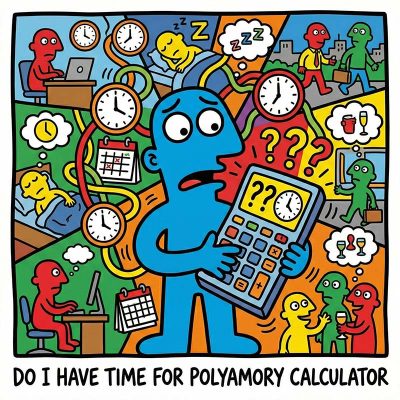
Love is infinite, but your calendar is brutally finite. The fantasy is deep connection; the reality is often just exhausted "calendar tetris." Promising time you don't actually have isn't romantic, it’s a recipe for burnout and broken trust. That sinking feeling when you have to cancel again? That’s the sound of overextension destroying your relationships.
This calculator forces you to confront the math of your life. Do you actually have space for another heart, or are you just setting everyone up for disappointment?

The fantasy is total autonomy and connection. The reality? It can feel like drowning in scheduling chaos and misunderstood expectations. That anxiety you feel isn’t just stress; it’s the wobble of living without a default "anchor." Without a solid architecture, Solo Polyamory stops being a life design and starts being a recipe for burnout and confusion.
The Essential Guide replaces the drift with a concrete anchor. We provide the "Solo Ethic," boundary scripts, and burnout protocols needed to protect your peace. Don't just date around—build a life that actually works for you.

Hierarchy sounds like a corporate org chart until someone gets their feelings hurt. That stomach-turning fear that you are just a "secondary" who can be fired at any time is real. If your relationship feels like a secret ranking system, you are doing it wrong.
Ambiguity is where resentment grows. The Essential Guide replaces the "who matters more" panic with a concrete charter. We provide the scripts and equity guardrails needed to protect every heart in the polycule. Stop guessing and start building.

The ideal is pure equality. The reality? It often slides into hidden rankings where someone gets hurt. That sinking feeling that you are secretly a "secondary" despite the label? That is your intuition detecting couple privilege. Ambiguity is where resentment thrives.
The Essential Guide replaces vague promises with concrete governance. We provide the charters, equity tools, and jealousy protocols needed to ensure "non-hierarchical" isn't just a fantasy. Stop guessing who matters most. Build a network that is actually fair.
The fantasy is total autonomy and connection. The reality? It can feel like drowning in scheduling chaos and misunderstood expectations. That anxiety you feel isn’t just stress; it’s the wobble of living without a default "anchor." Without a solid architecture, Solo Polyamory stops being a life design and starts being a recipe for burnout and confusion.
The Essential Guide replaces the drift with a concrete anchor. We provide the "Solo Ethic," boundary scripts, and burnout protocols needed to protect your peace. Don't just date around—build a life that actually works for you.
Hierarchy sounds like a corporate org chart until someone gets their feelings hurt. That stomach-turning fear that you are just a "secondary" who can be fired at any time is real. If your relationship feels like a secret ranking system, you are doing it wrong.
Ambiguity is where resentment grows. The Essential Guide replaces the "who matters more" panic with a concrete charter. We provide the scripts and equity guardrails needed to protect every heart in the polycule. Stop guessing and start building.
Core principles for fair logistics
- Transparency as a default. Information about dates plans boundaries and decisions should be accessible to everyone who is part of the network unless there is a specific privacy need.
- Consent in every lane. People must opt in to new arrangements not be surprised by them. Consent is ongoing not a one time checkbox.
- Autonomy and respect. Each person retains control over their own time and their own boundaries while also respecting others right to do the same.
- Equality in governance. No single person should carry a permanent gatekeeping role for the whole network. Coordination rotates or uses a collective approach.
- Adaptability. Relationships and life circumstances shift. Logistics should be easy to adjust with input from all involved.
Mapping your ENM network and agreements
Start with a clear map of who is involved and how they relate to one another. This is not a medical chart or a status leaderboard. It is a living diagram that helps you see where power could creep in and where you need more clarity.
Step 1. List everyone in the circle
Create a list of all individuals who have any romantic or intimate connection with anyone else in the group. Include partners friends and anyone who has a defined role in your logistics plan such as a calendar coordinator or a privacy buddy. The goal is to avoid hidden layers where someone is in the know while others are kept out.
Step 2. Define connection lines
Draw lines or notes for every pair that indicates the type of connection the level of involvement and the expected sharing of information. Not every pair needs to date each other but everyone should know the structure of how connections relate to the whole network.
Step 3. Clarify the roles in logistics
Identify who is responsible for what in terms of scheduling information privacy and decision making. Rotate roles regularly so no one becomes a perpetual gatekeeper. Common roles include a calendar lead a communication liaison and a boundary facilitator. Each role should have a clear remit and a time limited commitment.
Step 4. Compile a living agreements document
Turn your map and role definitions into a living document that is easy to update. Include sections on time allocation how you handle new partners how you manage privacy and what the process is for revising agreements. Make the document accessible to everyone involved and schedule regular reviews.
Communication channels that support equality
Effective communication keeps the power dynamics honest and open. In a non hierarchical ENM setup you want channels that invite input from all sides and reduce the chance of one voice dominating a conversation.
Group forums without pressure
Use group chats or group email threads where everyone can contribute. If a topic becomes sensitive consider moving to a dedicated discussion circle or a written note in the agreements document so that comments are captured and revisited.
One on one check ins
Pair up with different people at set intervals to hear concerns and gather feedback. One on one conversations help surface issues that never get raised in a larger group. Make these check ins voluntary and fund them with enough time so people feel heard not rushed.
Regular logistics circles
Set a recurring meeting focused on logistics only. The purpose is to review how time is allocated how information is shared and whether any gatekeeping has crept in. Keep these circles small and diverse so multiple perspectives are represented.
Clear documentation and a log of decisions
Record key decisions in a shared location. Include what was decided who approved it and when it takes effect. If a decision needs to be revisited schedule a specific future review date. Documentation reduces memory drift and clarifies accountability.
Scheduling and calendars that respect equal footing
Time is the most visible resource in any relationship network and in a non hierarchical ENM setup it deserves careful thoughtful management. The goal is to prevent a single person from becoming the appointment hub or the keeper of everyone else s emotional calendar.
Shared but not owned calendars
Use a shared calendar that everyone in the circle can see and add to. Others can comment on proposed dates and suggest adjustments. Avoid relying on one person to manage all moves even when they volunteer. A group calendar helps people see the whole picture and reduces last minute surprises.
Cadence and pacing
Agree on rhythm for dating and group events. Some people prefer to schedule a few weeks out while others like proximity. The key is to balance flexibility with predictability. If the cadence shifts due to life events update the group and confirm the new flow.
Equitable access to space and resources
When space or time is scarce make priority rules transparent and fair. A rotating system can determine who uses a shared space first or who gets more time with a cuddling nook or a common activity area. The emphasis is on fairness not necessity or status.
Decision making governance without a single gatekeeper
In a non hierarchical ENM the aim is to diffuse decision making rather than hoard it. You want a mechanism that invites input from everyone and produces decisions that reflect the group s values.
Collective consent and veto rights
Define what needs collective consent for changes such as bringing a new partner into the network changing a boundary or revising a core agreement. Include a clear process for veto rights that protects individuals while encouraging respectful discussion rather than power plays.
Rotating facilitation
Have a facilitator rotate on a fixed schedule to guide discussions on logistics. The facilitator ensures everyone has voice and keeps the conversation respectful. They do not decide the outcome alone they merely guide the process.
Conflict resolution rituals
Establish a ritual for handling disagreements. This can include a cooling off period a structured dialogue approach and a follow up session with more voices. The objective is to resolve disputes without sidelining anyone or letting resentment fester.
Love is infinite, but your calendar is brutally finite. The fantasy is deep connection; the reality is often just exhausted "calendar tetris." Promising time you don't actually have isn't romantic, it’s a recipe for burnout and broken trust. That sinking feeling when you have to cancel again? That’s the sound of overextension destroying your relationships.
This calculator forces you to confront the math of your life. Do you actually have space for another heart, or are you just setting everyone up for disappointment?
The fantasy is total autonomy and connection. The reality? It can feel like drowning in scheduling chaos and misunderstood expectations. That anxiety you feel isn’t just stress; it’s the wobble of living without a default "anchor." Without a solid architecture, Solo Polyamory stops being a life design and starts being a recipe for burnout and confusion.
The Essential Guide replaces the drift with a concrete anchor. We provide the "Solo Ethic," boundary scripts, and burnout protocols needed to protect your peace. Don't just date around—build a life that actually works for you.
Hierarchy sounds like a corporate org chart until someone gets their feelings hurt. That stomach-turning fear that you are just a "secondary" who can be fired at any time is real. If your relationship feels like a secret ranking system, you are doing it wrong.
Ambiguity is where resentment grows. The Essential Guide replaces the "who matters more" panic with a concrete charter. We provide the scripts and equity guardrails needed to protect every heart in the polycule. Stop guessing and start building.
The ideal is pure equality. The reality? It often slides into hidden rankings where someone gets hurt. That sinking feeling that you are secretly a "secondary" despite the label? That is your intuition detecting couple privilege. Ambiguity is where resentment thrives.
The Essential Guide replaces vague promises with concrete governance. We provide the charters, equity tools, and jealousy protocols needed to ensure "non-hierarchical" isn't just a fantasy. Stop guessing who matters most. Build a network that is actually fair.
The fantasy is total autonomy and connection. The reality? It can feel like drowning in scheduling chaos and misunderstood expectations. That anxiety you feel isn’t just stress; it’s the wobble of living without a default "anchor." Without a solid architecture, Solo Polyamory stops being a life design and starts being a recipe for burnout and confusion.
The Essential Guide replaces the drift with a concrete anchor. We provide the "Solo Ethic," boundary scripts, and burnout protocols needed to protect your peace. Don't just date around—build a life that actually works for you.
Hierarchy sounds like a corporate org chart until someone gets their feelings hurt. That stomach-turning fear that you are just a "secondary" who can be fired at any time is real. If your relationship feels like a secret ranking system, you are doing it wrong.
Ambiguity is where resentment grows. The Essential Guide replaces the "who matters more" panic with a concrete charter. We provide the scripts and equity guardrails needed to protect every heart in the polycule. Stop guessing and start building.
Boundaries consent and privacy in a group setting
Boundaries are the ground rules that keep the group safe and comfortable. Since the circle has many people with different needs it is essential to document boundaries clearly and revisit them as relationships evolve.
Private information versus shared information
Agree what details are private what can be shared with the whole group and what may be discussed with individual partners. Always consider consent before sharing something that involves another person. Privacy is a responsibility not a trigger to be ignored.
Time based boundaries
People may choose to keep certain aspects of their dating life private for a period of time. Respect those choices and ensure the group understands why. Shared boundaries help avoid misinterpretations and protect trust.
Space boundaries
Respect physical and emotional space when needed. If someone needs alone time or a low drama day you do not pressure them. Boundaries are not optional they are how you show regard for one another in a busy network.
Handling jealousy and insecurity in a non hierarchical ENM
Jealousy is a normal human signal not a fault. The difference in a non hierarchical setup is how you respond to it. Build a culture where insecurities can be named without shaming the person who feels them and without escalating into power struggles.
Naming and validating feelings
Offer space for people to name what they feel whether it is envy fear or sadness. Validate the emotion even if you do not agree with the interpretation. Validation reduces defensiveness and opens the door to constructive dialogue.
Practical steps when jealousy flares
Pause the discussion give everyone time to reflect then return with a plan to address the concern. That plan might involve adjusting a boundary adjusting a time allocation or changing how information is shared. The aim is a practical adjustment that restores balance rather than a heated argument that deepens risk.
Strengthening trust through reliable logistics
Consistency is a trust builder. When people can rely on predictable processes trust grows. Show up on time keep commitments and document decisions so you can point to concrete actions when doubt arises.
Real life scenarios and practical adjustments
Scenario one the calendar has become a gatekeeper
A busy partner always schedules time first and others find themselves squeezed out. The group revisits the calendar process and adds a rule that no single person can monopolize blocked times. A rotating calendar lead is introduced along with a quarterly review to ensure balance and fairness. Everyone agrees to consider accessibility before declaring a date non negotiable.
Scenario two information siloing
One part of the network learns about a new relationship and a private update leaks into a general chat causing discomfort. The agreements document is updated to specify what is public to the whole circle and what remains private. A privacy buddy is appointed to help each partner assess what can be shared and how to communicate respectfully.
Scenario three power creep in decision making
A dominant voice starts shaping major relationship logistics without broad input. The group reinstates rotating facilitation and expands the decision making process to require a majority of voices to approve significant changes. A clear record of discussions and votes is added to the living agreements document.
Practical tools and rituals for fair logistics
- Living agreements document that is easy to access and update
- Regular logistics circles to keep the group aligned
- Rotating roles so no one becomes a permanent gatekeeper
- Group calendars with individual preferences respected
- Privacy buddies to safeguard sensitive information
- Conflict resolution rituals that keep the peace while honoring needs
What to avoid in a non hierarchical ENM logistics plan
- Do not allow one person to control the information flow or the calendar indefinitely
- Avoid hiding agreements or changes behind phrases like we will decide later
- Do not let jealousy or insecurity lead to punitive actions against a partner
- Avoid making changes without the consent of those affected
- Do not treat the living agreements document as a ritual you never revisit
Glossary of useful terms and acronyms
- ENM Ethical non monogamy a relationship philosophy in which all parties consent to non exclusive dating and intimacy
- Non hierarchical A structure where no one has formal authority over all others in the network
- Logistics The practical planning and procedures that govern time sharing information and decisions in a relationship network
- Living agreements A document that records current rules boundaries and processes and is regularly updated
- Calendar lead A rotating role responsible for coordinating scheduling and events
- Privacy buddy A designated person who helps manage sensitive information and privacy needs
- Gatekeeper A person who controls access to information or opportunities within the network
- Collective consent A process where changes require input and agreement from multiple participants
- Conflict resolution ritual A structured approach to addressing disputes without shaming or power moves
Checklist before you step into a logistics meeting
- Review the living agreements document and note any items that need updating
- Prepare notes on any concerns you want to raise and anticipate questions others may have
- Choose a rotating facilitator and set a clear agenda for the meeting
- Bring a copy of the calendar and the decision log to ground the discussion
- Invite feedback from partners who did not attend to keep voices inclusive
Frequently asked questions
What does non hierarchical mean in practice
It means there is no single person who governs all relationships. Decisions and logistics are managed through rotating roles and collective consent with input from everyone involved.
How can I prevent a gatekeeper from forming
Use rotating roles set regular reviews keep a living document and ensure that no one holds power over information or scheduling for long without accountability and input from others.
What if someone leaves the network
Have a defined process for exit that includes releasing shared resources updating the living agreements and confirming who needs to know what. Communicate with care and respect to minimize disruption for everyone.
How do we handle a new partner joining the circle
Present a clear onboarding process that includes consent from all affected parties a trial period and documentation of any new boundaries. Ensure everyone has a voice in how the new person is integrated.
Is privacy possible in a group chat setting
Yes with explicit boundaries and respect for what can be shared. Use privacy buddy checks and keep sensitive information within agreed channels. Don t assume that everyone knows what should stay private.
How often should we review our agreements
Schedule a formal review every three to six months and do additional reviews when major life changes happen such as new partners or significant schedule shifts. Regular reviews keep the system fair and aligned.
What if a conflict cannot be resolved in a logistics circle
Bring in a neutral facilitator a short term pause and a structured decision making process with clear escalation steps. The goal is to reach a resolution that respects everyone s boundaries and maintains trust.
How do we keep jealousy from wrecking logistics
Address jealousy openly and quickly use journaling or facilitated conversations to name the feeling and map a plan to adjust boundaries or time sharing. Jealousy is a signal not a verdict about a relationship.
Can we use technology to help with logistics
Yes tools such as shared calendars documents and private channels can help but they must be used with consent and clear rules. Technology should support equality not replace human communication.
What is the simplest starting point for a new ENM circle
Start with a small group of committed individuals who agree on core values transparency consent equality and regular check ins. Build a living agreements document together and set a cadence for evaluating and updating it.
Love is infinite, but your calendar is brutally finite. The fantasy is deep connection; the reality is often just exhausted "calendar tetris." Promising time you don't actually have isn't romantic, it’s a recipe for burnout and broken trust. That sinking feeling when you have to cancel again? That’s the sound of overextension destroying your relationships.
This calculator forces you to confront the math of your life. Do you actually have space for another heart, or are you just setting everyone up for disappointment?
The fantasy is total autonomy and connection. The reality? It can feel like drowning in scheduling chaos and misunderstood expectations. That anxiety you feel isn’t just stress; it’s the wobble of living without a default "anchor." Without a solid architecture, Solo Polyamory stops being a life design and starts being a recipe for burnout and confusion.
The Essential Guide replaces the drift with a concrete anchor. We provide the "Solo Ethic," boundary scripts, and burnout protocols needed to protect your peace. Don't just date around—build a life that actually works for you.
Hierarchy sounds like a corporate org chart until someone gets their feelings hurt. That stomach-turning fear that you are just a "secondary" who can be fired at any time is real. If your relationship feels like a secret ranking system, you are doing it wrong.
Ambiguity is where resentment grows. The Essential Guide replaces the "who matters more" panic with a concrete charter. We provide the scripts and equity guardrails needed to protect every heart in the polycule. Stop guessing and start building.
The ideal is pure equality. The reality? It often slides into hidden rankings where someone gets hurt. That sinking feeling that you are secretly a "secondary" despite the label? That is your intuition detecting couple privilege. Ambiguity is where resentment thrives.
The Essential Guide replaces vague promises with concrete governance. We provide the charters, equity tools, and jealousy protocols needed to ensure "non-hierarchical" isn't just a fantasy. Stop guessing who matters most. Build a network that is actually fair.
The fantasy is total autonomy and connection. The reality? It can feel like drowning in scheduling chaos and misunderstood expectations. That anxiety you feel isn’t just stress; it’s the wobble of living without a default "anchor." Without a solid architecture, Solo Polyamory stops being a life design and starts being a recipe for burnout and confusion.
The Essential Guide replaces the drift with a concrete anchor. We provide the "Solo Ethic," boundary scripts, and burnout protocols needed to protect your peace. Don't just date around—build a life that actually works for you.
Hierarchy sounds like a corporate org chart until someone gets their feelings hurt. That stomach-turning fear that you are just a "secondary" who can be fired at any time is real. If your relationship feels like a secret ranking system, you are doing it wrong.
Ambiguity is where resentment grows. The Essential Guide replaces the "who matters more" panic with a concrete charter. We provide the scripts and equity guardrails needed to protect every heart in the polycule. Stop guessing and start building.
