
Common Myths About Non Hierarchical Polyamory

Non hierarchical polyamory can sound like a mystery to people who have only seen monogamous setups or a traditional two person relationship dynamic. In the world of ethical non monogamy ENM the term polyamory means loving more than one person with consent. When we add non hierarchical to the mix we are talking about a style of polyamory where no single relationship is official ranked as the most important relationship. Everyone involved can be treated as equal in terms of time energy and emotional priority. Like any relationship system there are practical challenges and also many misconceptions. This guide is designed to lay out the major myths about non hierarchical polyamory and then give you realistic insights that help you decide what fits your life. We will explain key terms as we go so nothing stays confusing.
Quick Links to Useful Sections
- What non hierarchical polyamory is really about
- Myth 1 is there no commitment in non hierarchical polyamory
- Myth 2 non hierarchical means no boundaries or structure
- Myth 3 it is only for people who are single or not serious about relationships
- Myth 4 non hierarchical polyamory equals only sexual exploration
- Myth 5 non hierarchical means everyone has the same amount of time and energy
- Myth 6 jealousy disappears in non hierarchical polyamory
- Myth 7 ethical non monogamy equals deception or manipulation
- Myth 8 non hierarchical polyamory cannot accommodate families or long term parenting
- Myth 9 labeling is forbidden in non hierarchical polyamory
- Myth 10 non hierarchical polyamory is only about sex and romance is optional
- Glossary of useful terms and acronyms
- Practical tips for thriving in non hierarchical polyamory
- Real world scenarios you might relate to
- How to start exploring non hierarchical polyamory in your life
- Checklist before you step into a non hierarchical polyamory scenario
- Frequently asked questions
If you are new to ENM you may hear terms like polyamory ethical non monogamy and non hierarchical used interchangeably by people who mean different things. Here is a quick glossary to anchor you as you read.
- Ethical non monogamy ENM a broad umbrella term for relationship styles that involve more than two people with the informed consent of everyone involved.
- Polyamory loving more than one person at the same time with openness and honesty about each relationship.
- Non hierarchical a structure in which there is no ranking of relationships and no single partner or relationship is treated as the default priority over others.
- Compersion a feeling of joy one person experiences when a partner has a positive experience with someone else. It is the opposite of jealousy in many ways.
- Meta short for metafriend or the partner of a partner. A person who shares a relationship with your partner through their other relationship.
- Primary relationship a label used in some relationship systems to designate the main or most important relationship. In non hierarchical setups this label is not used or is avoided altogether.
- Negotiation the process of discussing needs boundaries and agreements with partners to keep everyone safe and respected.
What non hierarchical polyamory is really about
Non hierarchical polyamory is about consent communication and fairness rather than a fixed ladder of importance. People who choose this dynamic believe that several people can hold space in their life with genuine care without one relationship being the center of the universe. This does not mean chaos or neglect. It means purposefully discussing how time energy and emotional labor are distributed and revising those agreements as life changes. The aim is to avoid a default ranking where one relationship is treated as more significant than others. It is not a free pass to date more people without responsibility. It is a commitment to meaningful connections with boundaries that work for everyone involved.
In practice non hierarchical polyamory often looks like a web rather than a hierarchy. People in the network might share resources such as childcare or travel plans if that makes life easier. They may also meet each other and develop friendly connections. The important factor is ongoing consent and honest communication about what each person needs and wants. When done well this dynamic can reduce the pressure that a single relationship places on the rest of life. It can create space for personal growth and shared adventures while keeping respect at the center of every interaction.
Myth 1 is there no commitment in non hierarchical polyamory
One common myth is that if there is no primary relationship then there is no commitment. In fact commitment remains a central feature of non hierarchical polyamory. People commit to agreements with multiple partners that specify how they will communicate how they will handle time and what constitutes emotional support. A commitment in this context is not about locking one person into a higher status it is about honoring promises to show up when needed listen with care and respect boundaries that have been agreed to. You can be deeply committed to several people at once and still keep your personal freedom intact. The absence of ranking does not mean a lack of reliability. It means a broader view of responsibility that fits a larger network of connections.
Practical signs of commitment in a non hierarchical setup include regular check ins with all partners a transparent calendar that shows who is spending time with whom and what kinds of shared activities exist. It also includes honesty when plans change and a willingness to renegotiate boundaries as life shifts such as new jobs changes in family structure or health concerns. If you notice that someone is feeling neglected or overwhelmed those are signals to pause and realign not to pretend everything is fine because there is no obvious hierarchy to police the situation. Commitment in this model is a shared practice rather than a fixed label.
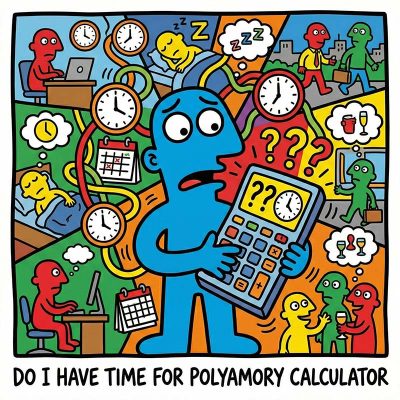
Love is infinite, but your calendar is brutally finite. The fantasy is deep connection; the reality is often just exhausted "calendar tetris." Promising time you don't actually have isn't romantic, it’s a recipe for burnout and broken trust. That sinking feeling when you have to cancel again? That’s the sound of overextension destroying your relationships.
This calculator forces you to confront the math of your life. Do you actually have space for another heart, or are you just setting everyone up for disappointment?

The fantasy is total autonomy and connection. The reality? It can feel like drowning in scheduling chaos and misunderstood expectations. That anxiety you feel isn’t just stress; it’s the wobble of living without a default "anchor." Without a solid architecture, Solo Polyamory stops being a life design and starts being a recipe for burnout and confusion.
The Essential Guide replaces the drift with a concrete anchor. We provide the "Solo Ethic," boundary scripts, and burnout protocols needed to protect your peace. Don't just date around—build a life that actually works for you.
Hierarchy sounds like a corporate org chart until someone gets their feelings hurt. That stomach-turning fear that you are just a "secondary" who can be fired at any time is real. If your relationship feels like a secret ranking system, you are doing it wrong.
Ambiguity is where resentment grows. The Essential Guide replaces the "who matters more" panic with a concrete charter. We provide the scripts and equity guardrails needed to protect every heart in the polycule. Stop guessing and start building.
The ideal is pure equality. The reality? It often slides into hidden rankings where someone gets hurt. That sinking feeling that you are secretly a "secondary" despite the label? That is your intuition detecting couple privilege. Ambiguity is where resentment thrives.
The Essential Guide replaces vague promises with concrete governance. We provide the charters, equity tools, and jealousy protocols needed to ensure "non-hierarchical" isn't just a fantasy. Stop guessing who matters most. Build a network that is actually fair.
The fantasy is total autonomy and connection. The reality? It can feel like drowning in scheduling chaos and misunderstood expectations. That anxiety you feel isn’t just stress; it’s the wobble of living without a default "anchor." Without a solid architecture, Solo Polyamory stops being a life design and starts being a recipe for burnout and confusion.
The Essential Guide replaces the drift with a concrete anchor. We provide the "Solo Ethic," boundary scripts, and burnout protocols needed to protect your peace. Don't just date around—build a life that actually works for you.
Hierarchy sounds like a corporate org chart until someone gets their feelings hurt. That stomach-turning fear that you are just a "secondary" who can be fired at any time is real. If your relationship feels like a secret ranking system, you are doing it wrong.
Ambiguity is where resentment grows. The Essential Guide replaces the "who matters more" panic with a concrete charter. We provide the scripts and equity guardrails needed to protect every heart in the polycule. Stop guessing and start building.
Myth 2 non hierarchical means no boundaries or structure
Another frequent misconception is that non hierarchical polyamory equals freedom with no rules. Real life shows a different picture. People practicing non hierarchical polyamory typically create a set of explicit agreements that cover important areas. These agreements are not about ranking relationships but about safety respect and emotional health. Common domains for agreements include how time is allocated how sexual health is managed what kinds of disclosure are expected and how to handle privacy for each relationship. Boundaries are used to keep people safe and comfortable while still preserving the freedom to form bonds with multiple people. The goal is to prevent miscommunication and to create a shared sense of fairness rather than to impose control.
Examples of practical boundaries might include explicit consent before introducing a new partner to younger children or a plan for how to handle overlapping schedules when several partners want time on the same weekend. Another boundary could be about what is shared publicly regarding relationships within the network. Some groups decide to share details with their extended social circle while others keep private. The key is clarity and consent from all involved and a willingness to adjust the boundaries as needed.
Myth 3 it is only for people who are single or not serious about relationships
There is a belief that non hierarchical polyamory is a lifestyle for casual dating only. The reality is that people in long standing relationships and even fully committed families practice non hierarchical polyamory. Two adults who have been together for years may open their partnership to others or invite a third person into a meaningful connection. A blended family can navigate shared child care or education with a network of partners. The important factor is that everyone involved understands the structure and agrees to participate with free and informed consent. Hierarchy is not a requirement for seriousness or longevity. A non hierarchical approach can support deep connections across several meaningful relationships while remaining stable and predictable for children and family life.
In some communities you will see groups that operate as a small polycule. A polycule is a network of relationships that connect through shared partners. In non hierarchical setups this network is flexible and fluid. People may enter or exit the network at different times. The openness of the structure allows relationships to evolve rather than be forced into a rigid schedule or status hierarchy. If you want to maintain a sense of steadiness while expanding connections this model can offer both space and structure.
Myth 4 non hierarchical polyamory equals only sexual exploration
Another popular myth is that non hierarchical polyamory is all about sex and not about emotional intimacy. The truth is that love romance and emotional connection are central in many ENM relationships including non hierarchical polyamory. People form deep friendships or romantic partnerships across multiple people that provide mutual support care and companionship. Some relationships lean toward sexual encounters while others focus on companionship shared hobbies or long term partnership goals. In a non hierarchical network the emotional work may be distributed across several people and that requires communication but it does not reduce the depth of connection. It can even increase the number of people who can contribute to your life as you grow and change.
When the focus is on emotional intimacy it is common to see practices like dedicated time for honest conversations with each partner met with listening and empathy. Many groups use shared rituals such as regular check in rituals to talk about feelings or concerns. The goal is to nurture lasting bonds rather than to prioritize sex above all else. You can still have sexual relationships within non hierarchical polyamory but the emotional investment is not diminished by the absence of a hierarchy.
Myth 5 non hierarchical means everyone has the same amount of time and energy
Time and energy are finite resources and in any relationship system you will feel the squeeze. Non hierarchical polyamory does not promise equal time for every person at all times. What it does promise is fairness and fairness means negotiating how time is spent based on what is possible for all parties. People use calendars shared with consent and planning sessions to map out what each person needs and can offer. This does not produce a rigid 50 50 split every week; instead it acknowledges that life changes. One partner might need more emotional support during a tough time while another partner might want more social time during a period of growth. The arrangement should be revisited regularly to maintain balance across the network and ensure no one feels consistently neglected or overused.
Practical approaches include weekly or bi weekly planning meetings with all involved partners a rotating system for choosing date times to avoid conflicts and a clear policy for last minute schedule changes. Some groups also designate a point person for coordinating communication so that messages do not vanish in a sea of conversations. The aim is to create predictable patterns that reduce stress while still allowing spontaneity and discovery.
Myth 6 jealousy disappears in non hierarchical polyamory
Jealousy is a human emotion and it can appear in any relationship style including non hierarchical polyamory. The belief that non hierarchical automatically eliminates jealousy is not accurate. What changes is how people handle jealousy when it arises. In a non hierarchical network the focus is on transparent communication and self reflection. People learn to name the feeling acknowledge its source and discuss what would help them feel more secure. This often involves renegotiating boundaries timeline adjustments and sometimes taking a pause on a particular relationship while the others continue to function. Jealousy becomes a signal to check in not a reason to abandon a connection.
Techniques used include actively listening to the partner with empathy mirroring the concern back to the person who felt hurt and agreeing on small steps to address the issue. Some people also practice the concept of compersion which is choosing to feel happiness for a partner's joy with another person rather than feeling threatened. While compersion does not replace the hard work of processing jealousy it can be a helpful goal for those who want to grow their capacity for multiple loving relationships.
Love is infinite, but your calendar is brutally finite. The fantasy is deep connection; the reality is often just exhausted "calendar tetris." Promising time you don't actually have isn't romantic, it’s a recipe for burnout and broken trust. That sinking feeling when you have to cancel again? That’s the sound of overextension destroying your relationships.
This calculator forces you to confront the math of your life. Do you actually have space for another heart, or are you just setting everyone up for disappointment?
The fantasy is total autonomy and connection. The reality? It can feel like drowning in scheduling chaos and misunderstood expectations. That anxiety you feel isn’t just stress; it’s the wobble of living without a default "anchor." Without a solid architecture, Solo Polyamory stops being a life design and starts being a recipe for burnout and confusion.
The Essential Guide replaces the drift with a concrete anchor. We provide the "Solo Ethic," boundary scripts, and burnout protocols needed to protect your peace. Don't just date around—build a life that actually works for you.
Hierarchy sounds like a corporate org chart until someone gets their feelings hurt. That stomach-turning fear that you are just a "secondary" who can be fired at any time is real. If your relationship feels like a secret ranking system, you are doing it wrong.
Ambiguity is where resentment grows. The Essential Guide replaces the "who matters more" panic with a concrete charter. We provide the scripts and equity guardrails needed to protect every heart in the polycule. Stop guessing and start building.
The ideal is pure equality. The reality? It often slides into hidden rankings where someone gets hurt. That sinking feeling that you are secretly a "secondary" despite the label? That is your intuition detecting couple privilege. Ambiguity is where resentment thrives.
The Essential Guide replaces vague promises with concrete governance. We provide the charters, equity tools, and jealousy protocols needed to ensure "non-hierarchical" isn't just a fantasy. Stop guessing who matters most. Build a network that is actually fair.
The fantasy is total autonomy and connection. The reality? It can feel like drowning in scheduling chaos and misunderstood expectations. That anxiety you feel isn’t just stress; it’s the wobble of living without a default "anchor." Without a solid architecture, Solo Polyamory stops being a life design and starts being a recipe for burnout and confusion.
The Essential Guide replaces the drift with a concrete anchor. We provide the "Solo Ethic," boundary scripts, and burnout protocols needed to protect your peace. Don't just date around—build a life that actually works for you.
Hierarchy sounds like a corporate org chart until someone gets their feelings hurt. That stomach-turning fear that you are just a "secondary" who can be fired at any time is real. If your relationship feels like a secret ranking system, you are doing it wrong.
Ambiguity is where resentment grows. The Essential Guide replaces the "who matters more" panic with a concrete charter. We provide the scripts and equity guardrails needed to protect every heart in the polycule. Stop guessing and start building.
Myth 7 ethical non monogamy equals deception or manipulation
Ethical non monogamy rests on consent openness and honesty. The central mistake many people make is confusing desire for more with the absence of ethics. Non hierarchical polyamory relies on clear communication honest sharing of information and ongoing consent. When people hide information try to control others or manipulate who knows what about whom that ends up breaking trust. The ethical stance is to disclose relevant information share intentions and ensure that everyone involved is on board with the arrangement. If something is not okay with someone it should be discussed openly and not pushed through by force or manipulation.
Think of it like building a shared playbook. You create rules together you keep the lines of communication open and you review those rules when life shifts. When honesty is the norm you can have a resilient network that can weather misunderstandings without a break in trust. That is the opposite of deception and it fits the core values of ethical non monogamy.
Myth 8 non hierarchical polyamory cannot accommodate families or long term parenting
Many families include multiple parental figures or caring partners who are not tied to a single relationship status. Non hierarchical polyamory can work beautifully in families with kids or in households that include step families and co parenting teams. The key is to protect the welfare of children and maintain a stable home environment. This might mean keeping certain routines predictable a shared calendar for family activities and clear communication about who will be involved in important decisions. It is also common to have boundaries around exposing children to sexual details or intimate conversations that are not appropriate for their age. The network can create a wide circle of care while respecting the needs of the children and the boundaries of all adults involved.
Families often benefit from a dedicated communication channel such as group chats that include guardians or a shared planning board for events and responsibilities. This approach helps prevent miscommunications and ensures that schedule changes do not fall through the cracks. Real life stories show that thoughtful non hierarchical communities can provide extra support for children and can reduce stress for parents who have to juggle childcare and work life. The key ingredient is a stable core that keeps the children’s wellbeing in focus while adults manage their relationships with care and consent.
Myth 9 labeling is forbidden in non hierarchical polyamory
There is a belief that non hierarchical polyamory rejects all labels and that everyone is just a blur of partners with no defined titles. In reality many people in non hierarchical setups do use labels for personal clarity. Some might describe a partner as a friend with benefits a lover or a significant partner. Others avoid labels altogether to reduce pressure or to reject traditional norms. The choice to label or not label is personal and should be respected within the network. The most important factor is that everyone understands what those labels mean to the people using them and agrees to the terms of the relationship. Labels can be tools for communication not rules that trap people into a fixed path.
To reduce confusion you can agree on simple descriptors for the purpose of the connection. For example a partner might be a romantic partner a co parent a friend with emotional support. The exact terms matters less than whether the people involved share the same understanding and consent to the arrangement.
Myth 10 non hierarchical polyamory is only about sex and romance is optional
Non hierarchical polyamory encompasses a range of human connections including romance friendship companionship and yes sex in many cases. It is not a one size fits all formula where sex is mandatory. Some people form deep romantic connections with several partners while others may have one romantic bond and other meaningful friendships that are not romantic. The common thread is consent honesty and respect. The variety within a non hierarchical network means people can decide what kinds of closeness they want with each partner and they can adjust as life changes. The idea that sex is mandatory in this arrangement is simply not accurate. Relationships are as diverse as the people who participate in them.
Remember that every individual and every group can shape its own norms. The flexibility of non hierarchical polyamory is one of its defining strengths. It allows for creativity you can design relationships that feel authentic and sustainable rather than trying to fit everyone into a single template.
Glossary of useful terms and acronyms
- ENM An abbreviation for ethical non monogamy. It describes relationship styles that involve more than two people with the consent of everyone involved.
- Polyamory The practice of forming multiple loving relationships at the same time with honesty and consent.
- Non hierarchical A approach that avoids ranking relationships as more or less important. All connections are treated with equal respect.
- Compersion The feeling of joy when a partner experiences happiness with another person rather than jealousy.
- Negotiation The process of discussing needs boundaries and agreements with partners.
- Primary relationship A term used by some to describe the central relationship but in non hierarchical models this label is often avoided or not used at all.
- Meta A partner who comes from a partner of your partner. They are part of the broader relationship network.
Practical tips for thriving in non hierarchical polyamory
- Start with a shared consent map Create a document with everyone in the network that outlines core boundaries purposes and safe words for emotional safety. Update it as needed.
- Use a transparent calendar A central calendar helps everyone see who is spending time with whom and when. It reduces scheduling conflicts and keeps expectations clear.
- Schedule regular check ins Set aside time for all partners to share feelings concerns and successes. Consistency matters far more than intensity.
- Practice empathetic listening When someone expresses insecurity or worry listen without offering immediate fixes. Reflect back what you heard to confirm understanding.
- Do not skip the soft skills Communication writing messages and emotional literacy matter as much as the daily logistics of dating. Invest in it and it will save a lot of friction later.
- Know when to pause and renegotiate Life changes and that can require quick renegotiations. Approach re negotiation with curiosity rather than defensiveness.
- Protect privacy and boundaries around children Be mindful of who has access to information about relationships. Check with all guardians before sharing anything about kids or the family structure.
- Seek support when needed A counselor or therapist who is familiar with ENM dynamics can be a valuable resource when you face tough decisions or conflict.
Real world scenarios you might relate to
Scenario A is about time management without hierarchy. Imagine you are a partner who wants a weekly date with two different partners. A simple approach is to block a standing date with each partner on different days so you do not run into conflicts. Another approach is to alternate weekends to share family time with a child or children and ensure there is enough downtime for you and your partners. A calendar that everyone can access makes it easier to avoid overlaps and miscommunications.
Scenario B covers emotional labor and support. In a non hierarchical network someone might be the helper for one partner during a tough time while another partner provides practical support for daily tasks. The agreements spell out who offers what kind of support and when. It builds a system of care that does not depend on a single person carrying all the weight. This can create a sense of security for everyone and a route to handle stress together as a team.
Scenario C involves introduction to a new partner. In a non hierarchical group it is important to discuss how new people integrate with existing relationships. The conversations focus on consent boundaries what kind of information is shared and how to approach introductions. Some groups arrange a casual meet up at a public place while others prefer a longer get together in a neutral space. The path you choose depends on the comfort levels of all involved and the pace at which people want to expand the network.
How to start exploring non hierarchical polyamory in your life
If you are curious about this dynamic the best first step is education. Read books join communities online attend workshops and talk with current practitioners about their experiences. Start by clarifying your own values what you want from relationships and what you want to avoid. Then move to conversations with current partners or potential partners. The conversations should cover core values consent safety communication styles and what you want your relationship landscape to look like in the next year. Be patient with yourself and with others. Building a network that respects equality takes time and there will be growing pains. With patience and practice you can discover a rhythm that feels fair and empowering for everyone involved.
Checklist before you step into a non hierarchical polyamory scenario
- Learn the terms and the ethics behind ENM before you start dating widely.
- Have a candid conversation with your current partners about your interest in a non hierarchical approach.
- Create a shared agreements document that outlines consent boundaries and expectations.
- Set up a shared calendar or planning system so everyone can see commitments and time slots.
- Agree on how you will discuss jealousy and emotional pain with empathy and patience.
- Decide on a process for renegotiation when life changes such as a new job child care needs or relocation appear.
- Be mindful of privacy especially when kids are in the picture and discuss what can be publicly shared.
- Seek professional guidance if you feel stuck or overwhelmed by the complexity of the network.
Frequently asked questions
These are common questions people have when they start exploring non hierarchical polyamory. If your question is not listed here you can ask a trusted partner or a professional who knows ENM dynamics for more guidance.
Love is infinite, but your calendar is brutally finite. The fantasy is deep connection; the reality is often just exhausted "calendar tetris." Promising time you don't actually have isn't romantic, it’s a recipe for burnout and broken trust. That sinking feeling when you have to cancel again? That’s the sound of overextension destroying your relationships.
This calculator forces you to confront the math of your life. Do you actually have space for another heart, or are you just setting everyone up for disappointment?
The fantasy is total autonomy and connection. The reality? It can feel like drowning in scheduling chaos and misunderstood expectations. That anxiety you feel isn’t just stress; it’s the wobble of living without a default "anchor." Without a solid architecture, Solo Polyamory stops being a life design and starts being a recipe for burnout and confusion.
The Essential Guide replaces the drift with a concrete anchor. We provide the "Solo Ethic," boundary scripts, and burnout protocols needed to protect your peace. Don't just date around—build a life that actually works for you.
Hierarchy sounds like a corporate org chart until someone gets their feelings hurt. That stomach-turning fear that you are just a "secondary" who can be fired at any time is real. If your relationship feels like a secret ranking system, you are doing it wrong.
Ambiguity is where resentment grows. The Essential Guide replaces the "who matters more" panic with a concrete charter. We provide the scripts and equity guardrails needed to protect every heart in the polycule. Stop guessing and start building.
The ideal is pure equality. The reality? It often slides into hidden rankings where someone gets hurt. That sinking feeling that you are secretly a "secondary" despite the label? That is your intuition detecting couple privilege. Ambiguity is where resentment thrives.
The Essential Guide replaces vague promises with concrete governance. We provide the charters, equity tools, and jealousy protocols needed to ensure "non-hierarchical" isn't just a fantasy. Stop guessing who matters most. Build a network that is actually fair.
The fantasy is total autonomy and connection. The reality? It can feel like drowning in scheduling chaos and misunderstood expectations. That anxiety you feel isn’t just stress; it’s the wobble of living without a default "anchor." Without a solid architecture, Solo Polyamory stops being a life design and starts being a recipe for burnout and confusion.
The Essential Guide replaces the drift with a concrete anchor. We provide the "Solo Ethic," boundary scripts, and burnout protocols needed to protect your peace. Don't just date around—build a life that actually works for you.
Hierarchy sounds like a corporate org chart until someone gets their feelings hurt. That stomach-turning fear that you are just a "secondary" who can be fired at any time is real. If your relationship feels like a secret ranking system, you are doing it wrong.
Ambiguity is where resentment grows. The Essential Guide replaces the "who matters more" panic with a concrete charter. We provide the scripts and equity guardrails needed to protect every heart in the polycule. Stop guessing and start building.
