
Community Norms Around Non Hierarchy

Welcome to a practical deep dive into how communities vibe when relationships are not ranked or labeled by hierarchy. Think of this as a friendly field guide to non hierarchical polyamory in the world of ethical non monogamy or ENM for short. ENM means ethical non monogamy which is a way of dating and loving that prioritizes consent honesty and communication. Non hierarchical polyamory is a specific dynamic within ENM where there is no built in primary or secondary status for partners. Instead relationships are seen as equal and valued in their own right. If you are curious about how to make this work in real life you are in the right place and we are going to cover terms boundaries tips practical scenarios and community norms that actually help you thrive.
Quick Links to Useful Sections
- What non hierarchy means in ENM
- Key terms explained
- How non hierarchy shapes community norms
- Consent is continuous
- Communication is explicit and frequent
- Time management without ownership
- Emotional labor and support
- Handling jealousy with grace
- Practical guidelines for living non hierarchical polyamory
- Negotiating boundaries without competition
- Soft limits and hard limits
- Introducing new partners
- Handling transitions and changes
- Managing privacy and disclosure
- Real world scenarios and dialogues
- Scenario one A new partner enters the circle
- Scenario two A shift in life brings a change in energy
- Scenario three Jealousy becomes a learning moment
- Scenario four turning a friendship into a flexible non hierarchical connection
- Community norms in dating spaces and social settings
- Inclusive language and respectful discourse
- Clear consent practices in community events
- Handling conflict respectfully
- Common myths about non hierarchy debunked
- Glossary of useful terms and acronyms
- Frequently asked questions
What non hierarchy means in ENM
To start with a plain definition non hierarchy in polyamory means there is no automatic ranking of relationships as primary or secondary or tertiary. There is no built in rule that one partner gets more time more access or more say than another. Instead each relationship is negotiated on its own terms and mutual respect guides how time energy and emotions are allocated. This is not a free for all it is a carefully negotiated structure that centers consent open communication and ongoing adjustments. In a non hierarchical setup all partners are equals with their own needs and they join the relationship by choice not by decree.
Key terms explained
- Ethical Non Monogamy ENM A relationship approach that permits dating and loving more than one person with consent honesty and transparency.
- Non hierarchical polyamory A form of polyamory where no partner has a higher status by default and no fixed primary relationship governs others.
- Polyamory A practice of forming intimate relationships with more than one partner at the same time with everyone's knowledge and consent.
- Hierarchy A system where relationships are ranked against each other with a clear top level such as a primary partner and a secondary partner.
- Equality in relationships Treating all partners as having similar rights and access functions within the agreements that exist between you.
- Compersion A feeling of joy for a partner when they experience happiness with someone else and it does not involve jealousy.
- NRE New Relationship Energy the excitement and buzz that come with a new partner or relationship phase.
- Boundaries Agreements about what is and is not allowed in a relationship including how time is shared and what topics are off limits.
- Soft limits and hard limits Soft limits are negotiable lines you may revisit with time while hard limits are firm boundaries you do not want crossed.
- Consent An ongoing enthusiastic agreement to engage in a particular activity with another person.
How non hierarchy shapes community norms
In communities that embrace non hierarchy there are shared norms that help everyone feel safe seen and respected. These norms grow from mutual consent transparent communication and consistent check ins. Here are the core ideas that tend to guide these communities.
Consent is continuous
Consent is not a one time checkbox. It is an ongoing conversation that shifts as people change. In a non hierarchical setting you check in with each partner before expanding a relationship or changing the terms you previously agreed on. You do not assume a partner will be on board just because they have said yes to past arrangements. You practice ongoing consent and you adjust when life changes such as shifts in work schedule health or emotional needs occur.
Communication is explicit and frequent
Clear honest talking is the backbone here. People in non hierarchical groups tend to have regular check ins where they review what is working what is not and what might need adjustment. These conversations happen in good times and in tough times. The goal is to align expectations so everyone feels safe and respected not to win an argument or prove a point.
Time management without ownership
Allocating time across multiple partners requires careful planning. In non hierarchical communities you will see shared calendars negotiated rosters or agreed on windows of time rather than a fixed priority list. The key is fairness and transparency. You discuss how much energy you have to give how often you want to see people and how that affects everyone involved.
Emotional labor and support
Non hierarchical dynamics require emotional work from all involved. This means being willing to explore difficult feelings jealousy insecurity and fear without blaming others. It also means offering support listening actively and showing up for your partners when they need you. The effort is shared and intentionally distributed rather than dumped on one person as a primary obligation.
Handling jealousy with grace
Jealousy is a natural human emotion not a failure of character. In non hierarchical communities jealousy is addressed openly with practical strategies. These can include naming the feeling taboo emotions that trigger it setting boundaries revisiting time commitments and practicing self care. The goal is to move through jealousy with empathy not to pretend it does not exist.
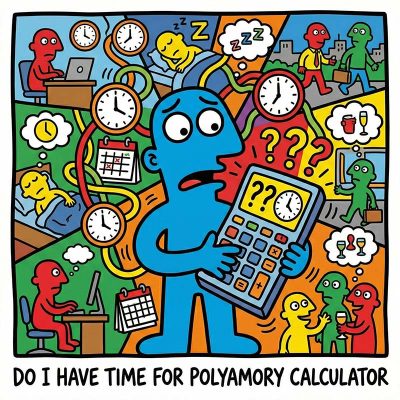
Love is infinite, but your calendar is brutally finite. The fantasy is deep connection; the reality is often just exhausted "calendar tetris." Promising time you don't actually have isn't romantic, it’s a recipe for burnout and broken trust. That sinking feeling when you have to cancel again? That’s the sound of overextension destroying your relationships.
This calculator forces you to confront the math of your life. Do you actually have space for another heart, or are you just setting everyone up for disappointment?

The fantasy is total autonomy and connection. The reality? It can feel like drowning in scheduling chaos and misunderstood expectations. That anxiety you feel isn’t just stress; it’s the wobble of living without a default "anchor." Without a solid architecture, Solo Polyamory stops being a life design and starts being a recipe for burnout and confusion.
The Essential Guide replaces the drift with a concrete anchor. We provide the "Solo Ethic," boundary scripts, and burnout protocols needed to protect your peace. Don't just date around—build a life that actually works for you.
Hierarchy sounds like a corporate org chart until someone gets their feelings hurt. That stomach-turning fear that you are just a "secondary" who can be fired at any time is real. If your relationship feels like a secret ranking system, you are doing it wrong.
Ambiguity is where resentment grows. The Essential Guide replaces the "who matters more" panic with a concrete charter. We provide the scripts and equity guardrails needed to protect every heart in the polycule. Stop guessing and start building.
The ideal is pure equality. The reality? It often slides into hidden rankings where someone gets hurt. That sinking feeling that you are secretly a "secondary" despite the label? That is your intuition detecting couple privilege. Ambiguity is where resentment thrives.
The Essential Guide replaces vague promises with concrete governance. We provide the charters, equity tools, and jealousy protocols needed to ensure "non-hierarchical" isn't just a fantasy. Stop guessing who matters most. Build a network that is actually fair.
The fantasy is total autonomy and connection. The reality? It can feel like drowning in scheduling chaos and misunderstood expectations. That anxiety you feel isn’t just stress; it’s the wobble of living without a default "anchor." Without a solid architecture, Solo Polyamory stops being a life design and starts being a recipe for burnout and confusion.
The Essential Guide replaces the drift with a concrete anchor. We provide the "Solo Ethic," boundary scripts, and burnout protocols needed to protect your peace. Don't just date around—build a life that actually works for you.
Hierarchy sounds like a corporate org chart until someone gets their feelings hurt. That stomach-turning fear that you are just a "secondary" who can be fired at any time is real. If your relationship feels like a secret ranking system, you are doing it wrong.
Ambiguity is where resentment grows. The Essential Guide replaces the "who matters more" panic with a concrete charter. We provide the scripts and equity guardrails needed to protect every heart in the polycule. Stop guessing and start building.
Practical guidelines for living non hierarchical polyamory
Now let us get practical. These are actionable steps people use to keep non hierarchical relationships healthy. They cover everyday situations from first dates to long term transitions.
Negotiating boundaries without competition
Boundaries in a non hierarchical setup are negotiated as equal participants. You discuss what is okay what is not and how you will handle changes over time. Boundaries are not a power play they are safety rails that everyone agrees to. You revisit and revise them as circumstances evolve.
Soft limits and hard limits
Soft limits are allowed to be revisited with new information or experiences. Hard limits are off limits no exceptions. Discuss these in a calm setting and document them so all partners understand what to expect. Revisit soft limits after a few months or after key life events to see if they still fit.
Introducing new partners
Bringing someone new into a non hierarchical group benefits from a mutual introduction process. You share your intent what you hope for and what might be off limits. The group discusses how the new relationship will be integrated into the existing framework and what adjustments might be needed.
Handling transitions and changes
People change and relationships evolve. It is essential to approach transitions with humility and openness. Whether a partner wants more time with someone new or decides to slow down a connection you handle it with a clear plan and compassionate communication. The aim is to preserve safety and trust for everyone involved.
Managing privacy and disclosure
Privacy is personal. In non hierarchical communities you decide together how much information you share publicly and with who. Some people want to speak openly with friends and family about their relationships while others prefer privacy. You respect each other choices and you protect confidences as needed.
Real world scenarios and dialogues
Stories help translate theory into practice. The following scenarios illustrate common situations in non hierarchical ENM spaces. These are realistic conversations you might hear when people are negotiating boundaries or adjusting to changes.
Scenario one A new partner enters the circle
Alex and Casey have been together for two years with two other partners in a non hierarchical arrangement. They meet Dana who is fascinating and wants to explore a connection with each of them. They sit down for a calm discussion. They begin by stating what they want from Dana and the group. Dana shares what she is comfortable with and where she wants to start. They talk about how much time each person needs and how the new energy will be distributed. They agree to a trial period with a weekly check in and a plan to revisit the arrangement after one month. The conversation stays respectful and honest and nobody feels pressured to say yes to anything outside their comfort zone.
Scenario two A shift in life brings a change in energy
Mina takes a new job with longer hours and less energy for frequent meet ups. Her partners notice the shift and propose a revised schedule with more concentrated time together and more solo time for Mina. They discuss what this means for their other connections and adjust their boundaries. The result is a more balanced rhythm that honors everyone s needs while staying true to the non hierarchical ethos. They promise to re check in in a few weeks to see if anyone feels stretched or neglected and they plan a casual group hang to maintain connection.
Scenario three Jealousy becomes a learning moment
Juno feels a twinge of jealousy when a new date spends more time with one partner than others. Instead of bottling it up Juno brings the feeling to a group check in and explains why it matters. The group validates the feeling and suggests practical steps such as rotating date nights adjusting how much time is allocated to each relationship and reinforcing that all voices are equal. They also remind themselves of compersion and practice celebrating each other s happiness even when it triggers complex emotions. The end result is a strengthened trust and a clearer path forward for everyone involved.
Scenario four turning a friendship into a flexible non hierarchical connection
Two friends in a long standing friendship realize they want something more but fear complicating the dynamic. They choose to pursue a non hierarchical approach with explicit consent and separate boundaries from their existing networks. They agree on a trial period with clear check ins and an understanding that existing friendships stay intact regardless of how their romantic connection develops. Their story becomes a case study in how openness can preserve friendships while allowing new love to bloom.
Community norms in dating spaces and social settings
Communities that embrace non hierarchy often create spaces that feel welcoming and fair. This includes how people speak to one another how they handle consent and how they address power dynamics in group settings. Here are some common practices you may encounter or want to adopt.
Inclusive language and respectful discourse
People use language that respects everyone s boundaries and experiences. You avoid language that implies ownership or control over a partner. People emphasize consent and cooperate rather than coercion. In public or online spaces the tone tends to be collaborative rather than competitive.
Clear consent practices in community events
Events and meet ups emphasize consent check ins at the start and end. Facilitators sometimes guide participants through a brief discussion about comfort levels and boundaries. A culture of consent means people feel free to say no at any point and to revise their agreements without fear of judgment.
Handling conflict respectfully
Disputes happen in every community and ENM spaces are no exception. In non hierarchical groups the approach is to address the issue privately and respectfully with all concerned parties. If needed a neutral mediator can help. The goal is to repair trust and restore harmony without shaming or splitting the group.
Common myths about non hierarchy debunked
- Myth: Non hierarchical means chaos and no rules.
Reality: It means rules and agreements are flexible and negotiated by everyone involved rather than dictated by one person or label. - Myth: Non hierarchical means no commitment.
Reality: Commitment exists but it is defined by the agreements that all partners consent to and revisit over time. - Myth: People with many partners cannot have deep connections in non hierarchical setups.
Reality: Deep connections happen across multiple relationships when communication and respect are strong. - Myth: Jealousy destroys non hierarchical relationships.
Reality: Jealousy is a signal to pause reflect and renegotiate rather than a sign to end a relationship.
Glossary of useful terms and acronyms
- ENM Short for Ethical Non Monogamy the practice of dating others with consent and openness rather than secrecy.
- Polyamory The ability to love more than one person at the same time with everyone s knowledge and consent.
- Non hierarchical A system where there is no automatic ranking of relationships by importance or priority.
- Hierarchy A structure that assigns levels such as primary secondary and tertiary with differing expectations.
- Compersion Positive feelings when a partner experiences happiness with someone else.
- NRE New Relationship Energy the enthusiastic and intense energy that comes with new connections.
- Boundaries Agreed upon lines that shape how relationships function and grow.
- Soft limits Boundaries you are open to revisiting as you gain more experience and trust.
- Hard limits Boundaries you are not willing to cross under any circumstance.
- Consent A clear enthusiastic agreement to participate in a given activity with another person.
Frequently asked questions
Love is infinite, but your calendar is brutally finite. The fantasy is deep connection; the reality is often just exhausted "calendar tetris." Promising time you don't actually have isn't romantic, it’s a recipe for burnout and broken trust. That sinking feeling when you have to cancel again? That’s the sound of overextension destroying your relationships.
This calculator forces you to confront the math of your life. Do you actually have space for another heart, or are you just setting everyone up for disappointment?
The fantasy is total autonomy and connection. The reality? It can feel like drowning in scheduling chaos and misunderstood expectations. That anxiety you feel isn’t just stress; it’s the wobble of living without a default "anchor." Without a solid architecture, Solo Polyamory stops being a life design and starts being a recipe for burnout and confusion.
The Essential Guide replaces the drift with a concrete anchor. We provide the "Solo Ethic," boundary scripts, and burnout protocols needed to protect your peace. Don't just date around—build a life that actually works for you.
Hierarchy sounds like a corporate org chart until someone gets their feelings hurt. That stomach-turning fear that you are just a "secondary" who can be fired at any time is real. If your relationship feels like a secret ranking system, you are doing it wrong.
Ambiguity is where resentment grows. The Essential Guide replaces the "who matters more" panic with a concrete charter. We provide the scripts and equity guardrails needed to protect every heart in the polycule. Stop guessing and start building.
The ideal is pure equality. The reality? It often slides into hidden rankings where someone gets hurt. That sinking feeling that you are secretly a "secondary" despite the label? That is your intuition detecting couple privilege. Ambiguity is where resentment thrives.
The Essential Guide replaces vague promises with concrete governance. We provide the charters, equity tools, and jealousy protocols needed to ensure "non-hierarchical" isn't just a fantasy. Stop guessing who matters most. Build a network that is actually fair.
The fantasy is total autonomy and connection. The reality? It can feel like drowning in scheduling chaos and misunderstood expectations. That anxiety you feel isn’t just stress; it’s the wobble of living without a default "anchor." Without a solid architecture, Solo Polyamory stops being a life design and starts being a recipe for burnout and confusion.
The Essential Guide replaces the drift with a concrete anchor. We provide the "Solo Ethic," boundary scripts, and burnout protocols needed to protect your peace. Don't just date around—build a life that actually works for you.
Hierarchy sounds like a corporate org chart until someone gets their feelings hurt. That stomach-turning fear that you are just a "secondary" who can be fired at any time is real. If your relationship feels like a secret ranking system, you are doing it wrong.
Ambiguity is where resentment grows. The Essential Guide replaces the "who matters more" panic with a concrete charter. We provide the scripts and equity guardrails needed to protect every heart in the polycule. Stop guessing and start building.
