
Consent Practices Across Multiple Relationships

Welcome to a practical, no fluff guide on consent in non hierarchical polyamory under the umbrella of ethical non monogamy or ENM. Think of this as the kind of chat you wish you had before diving into multiple relationships at once. We are not here to lecture you about how things should be done. We are here to give you clear terms, real world tips, and straightforward strategies so that consent is not a flavor of the month idea but a living practice that guides every date, every conversation, and every boundary renegotiation. We will explain all acronyms and terms so you never have to guess what anyone means. And yes we will keep it practical and a little bit funny because relationships are complicated enough without dense jargon.
Quick Links to Useful Sections
- What non hierarchical polyamory means in ENM
- Consent foundations in ENM
- Principles of consent in a non hierarchical system
- Clarity and communication
- Mutual growth and respect
- Equity and fairness
- Accountability and responsibility
- Practical consent practices across multiple relationships
- Regular check ins
- Consent matrices and boundary maps
- Safer sex and medical disclosures
- Digital spaces and dating apps
- Disclosure rituals and transparency
- Scheduling and time management
- Handling metamour dynamics
- Honoring jealousy without blaming the person who feels it
- Realistic scenarios
- Scenario 1 new partner in a non hierarchical setup
- Scenario 2 metamour tension
- Scenario 3 negotiating sex acts or new activities
- Must nots when practicing consent across multiple relationships
- Tools and frameworks for consent
- The consent cycle
- Boundaries as living documents
- Agreements that fit the group
- Privacy and disclosure guidelines
- Documentation and accessibility
- Communication tips practical scripts
- Opening a consent conversation
- Asking for consent for a new activity
- Addressing jealousy politely
- Disclosing new partners or changes to the circle
- Handling conflicts respectfully
- Glossary of useful terms and acronyms
- Quick reference tips
- Frequently asked questions
What non hierarchical polyamory means in ENM
Non hierarchical polyamory describes a relationship style in which there is no formal ranking of partners as primary or secondary. Everyone is seen as an equal in terms of emotional significance and priority. The dynamic is part of a broader framework called ethical non monogamy or ENM. ENM is an umbrella term that covers relationships where all involved parties consent to more than one intimate connection. The key idea here is consent and mutual respect across the board rather than using a single person to meet all needs. In a non hierarchical setup there is space for different relationships to exist side by side with their own unique boundaries and dynamics. No one relationship is inherently more important than another unless the people involved decide differently together.
Terms you may encounter
- ENM Short for ethical non monogamy. It means all parties agree to more than one intimate connection where consent and communication are central.
- Non hierarchical A structure where no relationship has formal priority over others. Each connection is negotiated on its own terms.
- Polyamory The practice of entering into intimate relationships with more than one person at a time with consent and honesty.
- Metamour A partner of your partner who you may or may not have a relationship with. They are not your partner but they are connected to your life through a shared partner.
- Compersion Feeling happiness for your partner s happiness or for their other relationships rather than jealousy in response to them dating others.
- Negotiation A process where all parties discuss boundaries, needs and expectations to reach a shared understanding.
- Boundaries Boundaries are personal rules about what you will or will not accept in terms of time, closeness, sexual activity and disclosure.
- Agreements Formal or informal understandings about how the relationships will operate. Agreements are not laws they are living documents that can be revised.
Consent foundations in ENM
Consent in ENM is not a one time action it is an ongoing conversation that happens across all relationships. When the dynamic is non hierarchical there is extra emphasis on making sure each connection can breathe and evolve without one relationship overshadowing another. Consent must be enthusiastic clear informed and revocable at any time. It is about freedom the freedom to say yes and the freedom to say no without fear of reprisal or guilt. It is about respecting each other s autonomy while building a shared life that works for everyone involved.
Core ideas to carry into every relationship include
- Ongoing consent Consent is given day by day sometimes moment by moment. Check ins are a normal part of life not a sign of doubt.
- Clarity Everyone should know what the boundaries are what is being asked for and what is off the table.
- Revocability Consent can be withdrawn at any time even if things were previously agreed upon. Respect that choice without argument.
- Mutual respect The needs and safety of all people involved matter equally. No one is sacrificed for the benefit of another.
- Transparency Honest communication reduces the space for misinterpretation and minimizes harm.
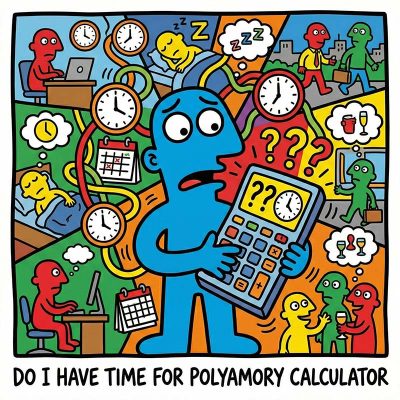
Love is infinite, but your calendar is brutally finite. The fantasy is deep connection; the reality is often just exhausted "calendar tetris." Promising time you don't actually have isn't romantic, it’s a recipe for burnout and broken trust. That sinking feeling when you have to cancel again? That’s the sound of overextension destroying your relationships.
This calculator forces you to confront the math of your life. Do you actually have space for another heart, or are you just setting everyone up for disappointment?

The fantasy is total autonomy and connection. The reality? It can feel like drowning in scheduling chaos and misunderstood expectations. That anxiety you feel isn’t just stress; it’s the wobble of living without a default "anchor." Without a solid architecture, Solo Polyamory stops being a life design and starts being a recipe for burnout and confusion.
The Essential Guide replaces the drift with a concrete anchor. We provide the "Solo Ethic," boundary scripts, and burnout protocols needed to protect your peace. Don't just date around—build a life that actually works for you.
Hierarchy sounds like a corporate org chart until someone gets their feelings hurt. That stomach-turning fear that you are just a "secondary" who can be fired at any time is real. If your relationship feels like a secret ranking system, you are doing it wrong.
Ambiguity is where resentment grows. The Essential Guide replaces the "who matters more" panic with a concrete charter. We provide the scripts and equity guardrails needed to protect every heart in the polycule. Stop guessing and start building.
The ideal is pure equality. The reality? It often slides into hidden rankings where someone gets hurt. That sinking feeling that you are secretly a "secondary" despite the label? That is your intuition detecting couple privilege. Ambiguity is where resentment thrives.
The Essential Guide replaces vague promises with concrete governance. We provide the charters, equity tools, and jealousy protocols needed to ensure "non-hierarchical" isn't just a fantasy. Stop guessing who matters most. Build a network that is actually fair.
The fantasy is total autonomy and connection. The reality? It can feel like drowning in scheduling chaos and misunderstood expectations. That anxiety you feel isn’t just stress; it’s the wobble of living without a default "anchor." Without a solid architecture, Solo Polyamory stops being a life design and starts being a recipe for burnout and confusion.
The Essential Guide replaces the drift with a concrete anchor. We provide the "Solo Ethic," boundary scripts, and burnout protocols needed to protect your peace. Don't just date around—build a life that actually works for you.
Hierarchy sounds like a corporate org chart until someone gets their feelings hurt. That stomach-turning fear that you are just a "secondary" who can be fired at any time is real. If your relationship feels like a secret ranking system, you are doing it wrong.
Ambiguity is where resentment grows. The Essential Guide replaces the "who matters more" panic with a concrete charter. We provide the scripts and equity guardrails needed to protect every heart in the polycule. Stop guessing and start building.
Principles of consent in a non hierarchical system
When no partner holds ultimate priority it becomes essential to develop and maintain shared principles that guide every interaction. These principles act as a compass rather than a rule book. They help you navigate complex situations without defaulting to old habits that hurt others.
Clarity and communication
Being explicit about what you want and what you are not comfortable with is non negotiable. Statements like I would like to go on a date with someone else this week are clearer than vague hints. Clarity prevents misunderstandings which means fewer painful conversations later on.
Mutual growth and respect
Everyone deserves space to grow. Agreements should allow personal development while protecting emotional safety. Respect means listening more than talking and taking space to consider someone else s perspective before responding.
Equity and fairness
In a non hierarchical setup fairness means giving the same level of attention to all partners. It does not mean everyone gets the same thing. It means each relationship is treated as significant with its own needs acknowledged and met where possible.
Accountability and responsibility
People are responsible for their words and actions. When you commit you follow through. If you break a boundary the respectful response is to acknowledge the impact and repair what has been harmed. This might include apologies renegotiation or changing your behavior going forward.
Practical consent practices across multiple relationships
Here are practical tools and habits that people use in non hierarchical polyamory to keep consent alive every day. You do not need to adopt all of them at once. Start with a couple and increase as everyone feels safe and supported.
Regular check ins
Set regular times to check in about each relationship. These check ins can be formal or casual but the point is to share what is working what isn t and what could be better. Some people schedule a weekly check in with each partner while others use a shared calendar for important milestones and boundaries. The goal is to catch shifts before they become problems.
Consent matrices and boundary maps
A consent matrix is a simple grid that helps you visualize what activities are on the table with whom. A boundary map is a visual representation of personal limits in different contexts whether it is dating sex time or emotional closeness. These tools reduce guesswork and give everyone a sense of safety. They are not rigid rules they are living documents that change as relationships evolve.
Safer sex and medical disclosures
Agree on safer sex practices and how to handle status changes in health matters. Decide together who needs to be informed if health changes occur. Respect that some partners may want to know everything others may want more control over what is shared. The important part is that expectations are clear and agreed upon.
Digital spaces and dating apps
Consent extends to online interactions. Be upfront about how much you share from dating apps who sees what updates and how you handle messages and photos. When new partners are introduced to the group it is helpful to discuss how information is shared and what is publicly disclosed and what stays private within the circle.
Disclosure rituals and transparency
Rituals can be small but powerful. Examples include sharing one new thing you learned about a partner each week or announcing when someone sees a new partner. Keep these disclosures balanced respectful and timely. The goal is to increase trust not to create drama.
Scheduling and time management
In non hierarchical polyamory time management becomes part of consent. If someone wants more dating time than others that is a valid preference as long as it is discussed and agreed upon. Use calendars shared with consent and clarity about what is possible within everyone s current life context. This reduces feelings of neglect or being overwhelmed.
Handling metamour dynamics
Metamours are partners of your partner. You may not be close to them or you may form strong bonds with them. The key is to treat metamours with respect even if you do not have a deep personal connection. When conflicts arise between metamours approach them with the same respect you would offer your own partners. Honest communication and clear boundaries help prevent minor disagreements from becoming major tensions.
Honoring jealousy without blaming the person who feels it
Jealousy is a signal not a verdict. When jealousy shows up ask what it is telling you rather than attacking the person who sparked it. Practice self reflection alongside open dialogue with your partner who experiences jealousy. Many people in non hierarchical setups learn to experience compersion which is feeling happiness for a partner s joy even when it does not involve them directly. Building compersion takes time and practice but it can strengthen relationships overall.
Realistic scenarios
Scenario 1 new partner in a non hierarchical setup
Alex has been dating Jamie for six months in a non hierarchical polyamory circle. Another partner, Priya, has been seeing Jamie for a few weeks. The group holds a consent meeting to discuss expectations for a new partner entering the circle. They agree that Priya will be introduced to the rest of the group gradually and that boundaries around time with Jamie will be renegotiated to ensure fairness. They decide to use a weekly check in for the first two months to see how everyone feels. Priya asks for a casual dynamic with Jamie before any long term commitments. This is respected and the conversation continues with honesty and warmth. If at any point Priya or Jamie feels uncomfortable they can pause or alter the arrangement without stigma. This approach keeps consent active and inclusive rather than exclusive and punitive.
Scenario 2 metamour tension
Sam has two partners and is dating a third person now. Sam s partner, Lee, expresses that they feel a bit left out when Sam spends long evenings with their new partner. Sam conducts a dedicated metamour check in with Lee to understand what would make them feel more included. They decide that one shared activity per week will be set aside for all three to enjoy together. They also agree that Lee does not need to be present for every moment of every date. The group creates space for Lee to cool off when needed and for Sam to honor both relationships equally. The result is a more cohesive network where everyone feels seen and respected.
Scenario 3 negotiating sex acts or new activities
In a non hierarchical configuration it is common to discuss sexual boundaries openly. A person may want to try something new with a partner that others would rather not participate in. The approach is to ask explicitly for consent from each involved partner and listen to any concerns. If there is a partner who would rather not participate that is respected. People can take turns and ensure that no one feels pressured to say yes because of a dynamic with another partner. This kind of negotiation protects emotional safety while allowing for shared intimacy in a way that works for everyone involved.
Must nots when practicing consent across multiple relationships
- Do not pressure Do not coerce or guilt someone into saying yes. Pressure destroys trust and can cause lasting harm.
- Do not assume Do not assume that your needs are more important than someone else s. Always ask and listen even if you think you already know the answer.
- Do not veto In a non hierarchical arrangement no one person should have veto power over another person s relationships. If a boundary is not acceptable then re negotiate or consider ending a partnership with respect.
- Do not share intimate details without consent Respect privacy. Even in a close circle information is sensitive and should be handled with care.
- Do not neglect ongoing consent Do not treat consent as a one time checkbox. It must be revisited with every new development in any relationship.
- Do not weaponize jealousy Do not weaponize fear or jealousy to control someone else. Use honest dialogue instead and seek growth together.
Tools and frameworks for consent
Here are practical tools you can adopt. They are designed to be adaptable to different personalities and life circumstances. Start small then grow your practice as everyone feels safe and heard.
The consent cycle
Ask explain listen respond and revisit. This simple cycle keeps consent at the center of every interaction. When something changes you return to the cycle to renegotiate. It keeps power from concentrating in any one relationship and ensures everyone has a voice.
Boundaries as living documents
Boundaries are personal. They can shift with life events. Treat boundaries as living documents that are reviewed during regular check ins and revised when needed. This mindset prevents boundary stalemates and preserves trust.
Agreements that fit the group
Agreements are tools to summarize what works for everyone. They should be flexible and revisited as the group grows or changes. They are not rigid laws but shared commitments that help navigate gray areas with care.
Privacy and disclosure guidelines
Agree on what information stays private and what can be shared with others in the circle. Use transparent but respectful guidelines for disclosures especially when new partners join the network.
Documentation and accessibility
Some groups keep a written record of agreements for clarity. Others rely on regular conversations. Either approach works as long as everyone can access and understand the terms. Choose a method that fits your group and your lives.
Communication tips practical scripts
Communication is the engine of consent. The following scripts are designed to be direct and kind. Adapt them to your voice and situation. The goal is to invite openness without putting anyone on the spot.
Opening a consent conversation
Hey I want to check in about how we are all feeling about our relationships right now. I care about what works for you and I want to hear any concerns you have. How would you feel about us revisiting our boundaries this week.
Asking for consent for a new activity
I would love to try [activity] with you but I want to make sure you are comfortable. Is this something you want to try now or would you prefer we hold off until we have more time to talk through it.
Addressing jealousy politely
Jealousy is a signal not a threat. If you feel jealous I want to understand what is making you feel that way and how we can address it together. Would you be open to a short check in about it after we are done here.
Disclosing new partners or changes to the circle
There is someone new I would like you to meet. Before we do that I want to share the basics of the situation and hear your thoughts. How do you feel about a slow introduction and a chance to ask questions before any dating happens.
Handling conflicts respectfully
When a conflict arises we will name the issue describe how it affects us and discuss possible solutions. If we cannot reach a resolution tonight we will schedule a dedicated time to revisit with a fresh perspective.
Glossary of useful terms and acronyms
- ENM Ethical non monogamy a framework where people pursue multiple intimate relationships with consent and honesty.
- Non hierarchical A setup where no relationship has automatic priority over others.
- Polyamory Loving more than one person at the same time with everyone's consent and respect.
- Metamour A partner of your partner who is not your own partner.
- Compersion Feeling happiness for your partner s joy in relationships with others rather than jealousy.
- Boundaries Personal rules about what you will or will not accept in a relationship.
- Agreements Shared understandings about how relationships will operate within the group.
- Ongoing consent Consent that is continuously revisited rather than assumed to be permanent.
Quick reference tips
In any ENM non hierarchical setup always start with consent every time you enter a new context. Treat all partners equally and avoid assumptions about what another person might want. Use clear language and slow down when needed. You are building a living ecosystem of relationships not a rigid ladder. When you approach consent as a shared practice you create safety and space for growth for everyone involved.
Frequently asked questions
What does non hierarchical mean in practice
Non hierarchical means there is no built in ranking of partners. Each relationship is treated with equal importance and negotiated on its own terms. The group works together to ensure fairness and emotional safety for all involved.
How do I start a consent conversation with someone new
Begin with openness. Say you want to talk about boundaries and expectations. Ask what their current comfort levels are and share your own. Be direct and patient and ready to renegotiate if needed.
What if my partner wants something I am not comfortable with
Honesty is essential. You can say I am not comfortable with that right now but I appreciate you asking. You can offer alternatives and you can revisit the topic later if things change. Do not pretend to be okay when you are not.
How do I handle jealousy in a non hierarchical setup
Jealousy is a signal not a verdict. Take time to reflect on what is triggering the feeling and talk about it with your partner. Look for ways to adjust boundaries or add rituals that help all of you feel safer and more connected.
Is there a right time to renegotiate boundaries
No single time is universal. Many groups renegotiate after major life changes such as a new partner a move career shift or changes in health. Regular check ins can catch small shifts before they become big problems.
Should we document our agreements
Documentation helps some groups keep track of what was decided. If you choose to document keep it simple clear and accessible to all involved. Revisit the document regularly to ensure it still reflects everyone s needs.
Love is infinite, but your calendar is brutally finite. The fantasy is deep connection; the reality is often just exhausted "calendar tetris." Promising time you don't actually have isn't romantic, it’s a recipe for burnout and broken trust. That sinking feeling when you have to cancel again? That’s the sound of overextension destroying your relationships.
This calculator forces you to confront the math of your life. Do you actually have space for another heart, or are you just setting everyone up for disappointment?
The fantasy is total autonomy and connection. The reality? It can feel like drowning in scheduling chaos and misunderstood expectations. That anxiety you feel isn’t just stress; it’s the wobble of living without a default "anchor." Without a solid architecture, Solo Polyamory stops being a life design and starts being a recipe for burnout and confusion.
The Essential Guide replaces the drift with a concrete anchor. We provide the "Solo Ethic," boundary scripts, and burnout protocols needed to protect your peace. Don't just date around—build a life that actually works for you.
Hierarchy sounds like a corporate org chart until someone gets their feelings hurt. That stomach-turning fear that you are just a "secondary" who can be fired at any time is real. If your relationship feels like a secret ranking system, you are doing it wrong.
Ambiguity is where resentment grows. The Essential Guide replaces the "who matters more" panic with a concrete charter. We provide the scripts and equity guardrails needed to protect every heart in the polycule. Stop guessing and start building.
The ideal is pure equality. The reality? It often slides into hidden rankings where someone gets hurt. That sinking feeling that you are secretly a "secondary" despite the label? That is your intuition detecting couple privilege. Ambiguity is where resentment thrives.
The Essential Guide replaces vague promises with concrete governance. We provide the charters, equity tools, and jealousy protocols needed to ensure "non-hierarchical" isn't just a fantasy. Stop guessing who matters most. Build a network that is actually fair.
The fantasy is total autonomy and connection. The reality? It can feel like drowning in scheduling chaos and misunderstood expectations. That anxiety you feel isn’t just stress; it’s the wobble of living without a default "anchor." Without a solid architecture, Solo Polyamory stops being a life design and starts being a recipe for burnout and confusion.
The Essential Guide replaces the drift with a concrete anchor. We provide the "Solo Ethic," boundary scripts, and burnout protocols needed to protect your peace. Don't just date around—build a life that actually works for you.
Hierarchy sounds like a corporate org chart until someone gets their feelings hurt. That stomach-turning fear that you are just a "secondary" who can be fired at any time is real. If your relationship feels like a secret ranking system, you are doing it wrong.
Ambiguity is where resentment grows. The Essential Guide replaces the "who matters more" panic with a concrete charter. We provide the scripts and equity guardrails needed to protect every heart in the polycule. Stop guessing and start building.
