
Creating Shared Rituals With Multiple Partners


You are building something more than a relationship you are growing a shared life with people you care about. In a non hierarchical polyamory world the aim is to honor every connection without ranking them. Shared rituals are the glue that holds a polycule together. They create meaning they create safety and they create consistency in the midst of changing emotions and schedules. This guide is a practical down to earth conversation about how to craft rituals that fit multiple partners and keep everyone moving in the same direction with joy and respect. We will explain terms we will give you templates and we will share real world examples. We will keep the tone casual funny and honest because relationships deserve both heart and clarity.
Quick Links to Useful Sections
- Who this guide is for
- What shared rituals are in the ENM world
- Key terms you will encounter
- Principles for designing shared rituals in a non hierarchical setup
- Designing rituals step by step
- Step 1. Name the purpose
- Step 2. Decide the cadence
- Step 3. Include everyone in design
- Step 4. Set boundaries and consent tools
- Step 5. Create a practical format
- Step 6. Test during a low stress period
- Step 7. Document and refine
- Step 8. Establish a ritual review cadence
- Ritual ideas you can start using now
- Daily micro rituals
- Weekly connection rituals
- Monthly planning and alignment rituals
- Seasonal and yearly rituals
- Tech and distance friendly rituals
- Practical considerations for scheduling and emotional energy
- Jealousy and communication inside shared rituals
- Handling conflict within rituals
- Inclusion and evolving the group dynamic
- Practical tips for successful ritual design
- What to document for future groups
- Glossary of useful terms and acronyms
- Frequently asked questions
If you are new to ethical non monogamy ENM you may hear the term non hierarchical polyamory. That simply means you do not place one relationship above another. Every partner is a person with needs and boundaries and the goal is to design rituals that honor the whole polycule rather than creating a hierarchy of who gets what treatment first. You may also hear metamours which is the term for partners of your partner. We will explain these terms clearly as we go. By the end you will have practical ideas you can try next week or next month with confidence.
Who this guide is for
This guide is for adults who are practicing ethical non monogamy and who want to create rituals that include multiple partners without creating an implied chain of command or favoritism. If you are in a polyamorous network where all people are equal and all connections matter you will find this guide useful. If you are curious about adding new partners to your life and you want rituals that help everyone feel welcome this guide is for you. If you have faced jealousy concerns or scheduling chaos ritual design can help. If you are a couple exploring multiple partners this guide will still offer ideas you can adapt to your situation. The focus is practical with the aim of making daily life smoother while keeping love simple and expressive.
What shared rituals are in the ENM world
Rituals are repeated actions that carry meaning beyond the task itself. In ENM and especially in non hierarchical polyamory these rituals help all partners feel seen heard and included. They can be grand or tiny they can be formal ceremonies or simple gestures. The key is consistency and consent. A ritual is not a forced schedule it is a thoughtful practice that supports connection and safety for everyone involved. Rituals can be daily weekly monthly seasonal or event driven. They can focus on communication touch care logistics and celebration. The most successful rituals are chosen by the group not dictated by one person. Everyone has input and everyone agrees that the ritual supports the relationships involved.
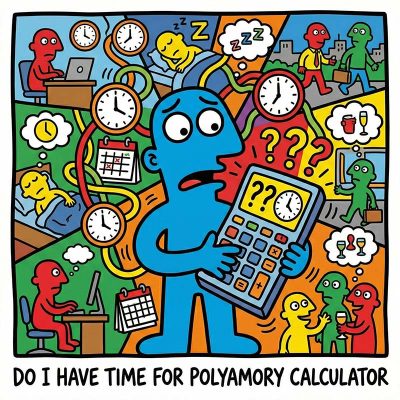
Love is infinite, but your calendar is brutally finite. The fantasy is deep connection; the reality is often just exhausted "calendar tetris." Promising time you don't actually have isn't romantic, it’s a recipe for burnout and broken trust. That sinking feeling when you have to cancel again? That’s the sound of overextension destroying your relationships.
This calculator forces you to confront the math of your life. Do you actually have space for another heart, or are you just setting everyone up for disappointment?

The fantasy is total autonomy and connection. The reality? It can feel like drowning in scheduling chaos and misunderstood expectations. That anxiety you feel isn’t just stress; it’s the wobble of living without a default "anchor." Without a solid architecture, Solo Polyamory stops being a life design and starts being a recipe for burnout and confusion.
The Essential Guide replaces the drift with a concrete anchor. We provide the "Solo Ethic," boundary scripts, and burnout protocols needed to protect your peace. Don't just date around—build a life that actually works for you.

Hierarchy sounds like a corporate org chart until someone gets their feelings hurt. That stomach-turning fear that you are just a "secondary" who can be fired at any time is real. If your relationship feels like a secret ranking system, you are doing it wrong.
Ambiguity is where resentment grows. The Essential Guide replaces the "who matters more" panic with a concrete charter. We provide the scripts and equity guardrails needed to protect every heart in the polycule. Stop guessing and start building.

The ideal is pure equality. The reality? It often slides into hidden rankings where someone gets hurt. That sinking feeling that you are secretly a "secondary" despite the label? That is your intuition detecting couple privilege. Ambiguity is where resentment thrives.
The Essential Guide replaces vague promises with concrete governance. We provide the charters, equity tools, and jealousy protocols needed to ensure "non-hierarchical" isn't just a fantasy. Stop guessing who matters most. Build a network that is actually fair.
The fantasy is total autonomy and connection. The reality? It can feel like drowning in scheduling chaos and misunderstood expectations. That anxiety you feel isn’t just stress; it’s the wobble of living without a default "anchor." Without a solid architecture, Solo Polyamory stops being a life design and starts being a recipe for burnout and confusion.
The Essential Guide replaces the drift with a concrete anchor. We provide the "Solo Ethic," boundary scripts, and burnout protocols needed to protect your peace. Don't just date around—build a life that actually works for you.
Hierarchy sounds like a corporate org chart until someone gets their feelings hurt. That stomach-turning fear that you are just a "secondary" who can be fired at any time is real. If your relationship feels like a secret ranking system, you are doing it wrong.
Ambiguity is where resentment grows. The Essential Guide replaces the "who matters more" panic with a concrete charter. We provide the scripts and equity guardrails needed to protect every heart in the polycule. Stop guessing and start building.
Key terms you will encounter
Ethical non monogamy ENM is the umbrella term for relationships that involve more than two people with consent and intention. Non hierarchical polyamory is a form of ENM where no relationship is ranked as more important than another. A polycule is the network of people connected through romantic or sexual relationships. A metamour is a partner of a partner. Compersion is the feeling of joy from seeing a partner happy with someone else. Boundaries are the agreed limits that help people feel safe and respected. Communication is foundational in this setup and rituals are a practical extension of good communication.
Principles for designing shared rituals in a non hierarchical setup
To create rituals that work for a group with multiple partners you want to lean on these principles. First is consent. Every ritual should be discussed and agreed upon by all involved. Second is transparency. Share expectations about time resources emotional energy and finances. Third is flexibility. Group dynamics change and rituals should adapt without breaking trust. Fourth is respect. Even when someone is not the center of a particular ritual they deserve recognition and inclusion. Fifth is clarity. Trees of communication are best kept simple. You want rituals to be easy to understand so they can be repeated with confidence.
Designing rituals step by step
Use this blueprint to design rituals that fit your group. Each step is a tool and you can tailor it to your needs. Take your time and test ideas. The goal is to help everyone feel valued and connected.
Step 1. Name the purpose
Start with one clear purpose for the ritual. It could be a weekly connection check in a monthly planning session or a celebration of the life you are building together. Defining purpose keeps the ritual focused and gives it meaning for all participants.
Step 2. Decide the cadence
Cadence means how often the ritual happens. Some rituals work best weekly others monthly or seasonally. In a non hierarchical group you may choose to rotate leadership or rotate who initiates. The key is that everyone knows when the ritual happens and why it is happening.
Step 3. Include everyone in design
Ask each partner what they need from the ritual and what they want to avoid. Some people prefer quiet reflection while others want lively discussion. Capturing these preferences early prevents resentment and ensures the ritual supports all voices.
Step 4. Set boundaries and consent tools
Boundaries are the guard rails of any ritual. You may agree on topics that are off limits or on limits for certain kinds of emotional energy. Consider a simple consent check in during the ritual. A quick question such as is it okay to proceed with this topic or activity helps keep the vibe comfortable for everyone.
Step 5. Create a practical format
Write down a simple format that includes a welcome check in a main activity and a closing reflection. The format acts as a guide so even if emotions run high the group has a path to follow. You can include time allocations and a sign for a break if needed. The format should be easy to repeat and share with new partners who join the group.
Step 6. Test during a low stress period
Choose a low stakes moment to run a trial ritual. Observe what works and what does not. Solicit feedback in a respectful way and be ready to make changes. It may take a few attempts to get the rhythm right. That is normal and healthy.
Step 7. Document and refine
Keep notes about what happened what felt good and what did not. A simple shared document or notebook can become a living guide for your polycule. Update the ritual with the group s consensus so it stays relevant as dynamics evolve.
Step 8. Establish a ritual review cadence
Schedule a check in to evaluate how the ritual is working every few months. Ask what is working what could be improved and who would like to lead the next iteration. Rituals should grow with you not stay stuck in a single form.
Ritual ideas you can start using now
Daily micro rituals
- Morning check in message from each partner sent at a preferred time. The message can be a hello a feeling from last night or a small goal for the day.
- Evening gratitude text before bed sharing one thing each partner appreciated about someone else in the group that day.
Weekly connection rituals
- Group dinner rotation where one partner hosts and prepares a meal with everyone present. The menu can be inspired by everyone s tastes and dietary needs.
- Rotation date night where two partners go out and the others do a separate activity together or connect emotionally via a dedicated chat thread.
Monthly planning and alignment rituals
- Group planning session focused on calendar coordination finances and boundaries for the coming month. Start with a values check in to keep the conversation grounded.
- Check in on metamours and boundaries. Use a structured format so everyone can speak and be heard.
Seasonal and yearly rituals
- Seasonal retreat or online gathering to explore growth as a group. The event can include a shared ritual ceremony such as lighting a candle together or writing a group intention note.
- End of year reflection ritual with a gratitude circle and a written wish book where partners leave messages for each other to read later.
Tech and distance friendly rituals
- Virtual check ins with a shared video call and a rotating host. Use a structured format to keep it engaging even from afar.
- Shared playlist creation where each partner adds a few songs that represent how they are feeling about the relationships and the future.
Practical considerations for scheduling and emotional energy
Scheduling with several partners demands organization and empathy. Use a central calendar that indicates availability and boundaries. Some people may need more quiet times or less social energy during certain weeks. A simple practice is to ask for a quick energy gauge at the start of each ritual. A one line check in such as I am feeling high energy or I am feeling drained helps others adjust expectations. If someone is overwhelmed you can offer a lighter version of the ritual or a break. The aim is inclusion not pressure.
Jealousy and communication inside shared rituals
Jealousy is a natural signal not a failure. When you create rituals that involve multiple partners you may see jealousy appear in new forms. The ritual itself can become a tool to address jealousy in constructive ways. Use rituals to create safety boundaries and to invite metamours into the conversation in a respectful way. A ritual can be designed to include a specific check in that invites people to share concerns. The key is to validate emotions without letting them derail the conversation. If someone is feeling left out you can adjust the format to increase inclusive moments or rotate who leads the next gathering so everyone has a chance to play a lead role.
Handling conflict within rituals
Conflict is not a crisis it is information. When conflicts arise during a ritual it is important to pause if needed and to reflect on what is driving the feelings. Use reflective language such as I am feeling overwhelmed and I would like to slow down. Invite others to share their perspective in a structured order. After the moment of tension you can reestablish the ritual with a brief reset whether that means taking a short break or changing the topic for a moment before returning to the main focus. The goal is to move through tension without causing lasting harm to any relationship.
Inclusion and evolving the group dynamic
As new partners join or some partners step back rituals should adapt gracefully. Introduce the new partner with a gentle onboarding ritual that helps everyone feel safe and included. You can create a welcome ritual that allows the new person to express what they need and what boundaries are important to them. As the group grows or changes the rituals should be revisited and revised with consensus from all involved. This is how a non hierarchical polyamory dynamic remains vibrant and healthy over time.
Practical tips for successful ritual design
- Make it explicit who leads any given ritual and what the expectations are for participants.
- Keep the language inclusive and avoid assumptions about who is involved romantically with whom.
- Use a shared document to outline the ritual structure the agenda and any agreed boundaries.
- Test early you will learn a lot from the first few attempts and you can adjust quickly.
- Be mindful of emotional energy and offer catch up time away from the ritual if necessary.
- Respect privacy. Not everything needs to be shared outside the group and you should honor confidentiality when requested.
What to document for future groups
Keep a simple log of rituals including the date participants present the purpose what happened and any feedback. Note what worked well and what did not. When a new partner joins the group you can use this record as a blueprint to jump start their onboarding. Documentation helps maintain continuity especially as dynamics shift over time.
Glossary of useful terms and acronyms
- ENM Ethical non monogamy a relationship framework that embraces multiple partners with consent and honesty.
- Non hierarchical polyamory A form of ENM where no relationship is ranked as more important than another.
- Polycule The network of people connected through dating or romantic relationships.
- Metamour A partner of a partner in a polyamorous network.
- Compersion Feeling joy from your partner s happiness with someone else.
- Boundaries Limits set by individuals or groups to protect emotional safety.
- Ritual A repeated action that holds meaning beyond the task itself.
- Consent An ongoing agreement to participate in activities and rituals with clear communication and mutual respect.
- Kitchen table polyamory A term used to describe a relationship style where all adults in the group are welcome at the same table for conversations and decisions.
Frequently asked questions
Love is infinite, but your calendar is brutally finite. The fantasy is deep connection; the reality is often just exhausted "calendar tetris." Promising time you don't actually have isn't romantic, it’s a recipe for burnout and broken trust. That sinking feeling when you have to cancel again? That’s the sound of overextension destroying your relationships.
This calculator forces you to confront the math of your life. Do you actually have space for another heart, or are you just setting everyone up for disappointment?
The fantasy is total autonomy and connection. The reality? It can feel like drowning in scheduling chaos and misunderstood expectations. That anxiety you feel isn’t just stress; it’s the wobble of living without a default "anchor." Without a solid architecture, Solo Polyamory stops being a life design and starts being a recipe for burnout and confusion.
The Essential Guide replaces the drift with a concrete anchor. We provide the "Solo Ethic," boundary scripts, and burnout protocols needed to protect your peace. Don't just date around—build a life that actually works for you.
Hierarchy sounds like a corporate org chart until someone gets their feelings hurt. That stomach-turning fear that you are just a "secondary" who can be fired at any time is real. If your relationship feels like a secret ranking system, you are doing it wrong.
Ambiguity is where resentment grows. The Essential Guide replaces the "who matters more" panic with a concrete charter. We provide the scripts and equity guardrails needed to protect every heart in the polycule. Stop guessing and start building.
The ideal is pure equality. The reality? It often slides into hidden rankings where someone gets hurt. That sinking feeling that you are secretly a "secondary" despite the label? That is your intuition detecting couple privilege. Ambiguity is where resentment thrives.
The Essential Guide replaces vague promises with concrete governance. We provide the charters, equity tools, and jealousy protocols needed to ensure "non-hierarchical" isn't just a fantasy. Stop guessing who matters most. Build a network that is actually fair.
The fantasy is total autonomy and connection. The reality? It can feel like drowning in scheduling chaos and misunderstood expectations. That anxiety you feel isn’t just stress; it’s the wobble of living without a default "anchor." Without a solid architecture, Solo Polyamory stops being a life design and starts being a recipe for burnout and confusion.
The Essential Guide replaces the drift with a concrete anchor. We provide the "Solo Ethic," boundary scripts, and burnout protocols needed to protect your peace. Don't just date around—build a life that actually works for you.
Hierarchy sounds like a corporate org chart until someone gets their feelings hurt. That stomach-turning fear that you are just a "secondary" who can be fired at any time is real. If your relationship feels like a secret ranking system, you are doing it wrong.
Ambiguity is where resentment grows. The Essential Guide replaces the "who matters more" panic with a concrete charter. We provide the scripts and equity guardrails needed to protect every heart in the polycule. Stop guessing and start building.
