
De Escalation as a Valid Choice


Let us be real for a moment. In the world of ethically non monogamous relationships we talk a lot about adding connections and balancing time and energy. It is exciting to explore multiple bonds and learn what really works for you. But sometimes the healthiest move is to step back. Deescalation is not a failure or a surrender. It is a deliberate choice to shift focus and space in a way that protects wellbeing and keeps consent alive. In this deep dive we will explore deescalation as a valid option within a non hierarchical polyamory ENM dynamic. We will break down terms and acronyms so you can read this without needing a glossary on the side. And we will give you practical steps you can use in real life with humor and honesty in equal measure.
Quick Links to Useful Sections
- What deescalation means in a non hierarchical ENM context
- Key terms and acronyms you will see in this topic
- Why deescalation can be the right move in a non hierarchical ENM
- How non hierarchical ENM supports thoughtful deescalation
- When deescalation makes sense
- Practical steps to implement deescalation in a non hierarchical ENM
- 1. Name the shift you want
- 2. Check in with all involved parties
- 3. Negotiate boundaries and timeline
- 4. Put it in writing and share access
- 5. Schedule check in times
- 6. Practice compassionate communication
- 7. Create mutual exit ramps
- Real world scenarios with scripts you can use
- Handling common concerns about de escalation
- The long view how de escalation fits into a healthy ENM lifestyle
- Practical tips you can use today
- Common mistakes to avoid
- Glossary of useful terms and acronyms
- Frequently asked questions
- Putting it all together a quick recap
Think of this as a friendly playbook from your experimental friend who tells it like it is. No fluff, no drama, just clear thinking and doable actions. If you are newer to ENM these ideas will help you see how deescalation fits in a healthy relationship map. If you are seasoned in non hierarchical play it will give you practical ways to approach transitions with care and consent. Either way you get a grounded guide to making deescalation work for you and your partners.
What deescalation means in a non hierarchical ENM context
Deescalation in this context is a conscious choice to reduce the level of involvement with a particular romantic or intimate partner or to reallocate emotional energy and time across the network. It is not about pushing someone away or ending a relationship without notice. It is about clarity and consent. It is about making room for new connections or better balance by adjusting how much time you spend with someone and how deeply you engage.
In a non hierarchical polyamory setup there is no single primary partner whose needs always come first. Everyone is meant to have equal value and the right to shape their own connections. Deescalation flows from that principle. It is a negotiated and agreed upon adjustment rather than a unilateral move. When done well deescalation preserves respect, prevents harm, and keeps lines of communication open. It is a strategy that protects emotional safety and helps everyone involved avoid renegotiation fatigue or boundaries that keep shifting under pressure.
Key terms and acronyms you will see in this topic
- ENM ethically non monogamous. A broad term for relationships that involve more than two people with consent and honesty at the center.
- Non hierarchical a structure where no one partner is designated as higher status or more important than others. All connections are treated as peers.
- Deescalation a planned withdrawal or reduction of involvement with a partner or the pace of a relationship in order to protect wellbeing and balance.
- Renegotiation the process of adjusting boundaries agreements and expectations in response to changes in life or feelings.
- Consent an ongoing voluntary agreement that all people involved are comfortable with the terms of a relationship or a shift in those terms.
- Boundaries clear limits that define what is acceptable and what is not in a given connection.
- Time management how you allocate attention and availability across relationships so that nobody feels shorted.
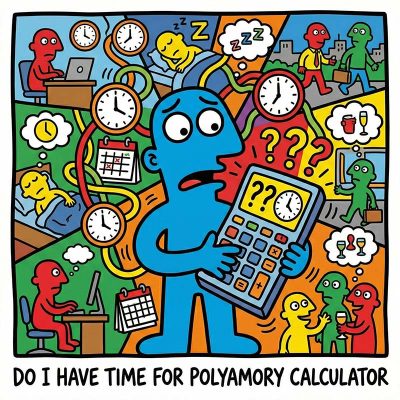
Love is infinite, but your calendar is brutally finite. The fantasy is deep connection; the reality is often just exhausted "calendar tetris." Promising time you don't actually have isn't romantic, it’s a recipe for burnout and broken trust. That sinking feeling when you have to cancel again? That’s the sound of overextension destroying your relationships.
This calculator forces you to confront the math of your life. Do you actually have space for another heart, or are you just setting everyone up for disappointment?

The fantasy is total autonomy and connection. The reality? It can feel like drowning in scheduling chaos and misunderstood expectations. That anxiety you feel isn’t just stress; it’s the wobble of living without a default "anchor." Without a solid architecture, Solo Polyamory stops being a life design and starts being a recipe for burnout and confusion.
The Essential Guide replaces the drift with a concrete anchor. We provide the "Solo Ethic," boundary scripts, and burnout protocols needed to protect your peace. Don't just date around—build a life that actually works for you.

Hierarchy sounds like a corporate org chart until someone gets their feelings hurt. That stomach-turning fear that you are just a "secondary" who can be fired at any time is real. If your relationship feels like a secret ranking system, you are doing it wrong.
Ambiguity is where resentment grows. The Essential Guide replaces the "who matters more" panic with a concrete charter. We provide the scripts and equity guardrails needed to protect every heart in the polycule. Stop guessing and start building.

The ideal is pure equality. The reality? It often slides into hidden rankings where someone gets hurt. That sinking feeling that you are secretly a "secondary" despite the label? That is your intuition detecting couple privilege. Ambiguity is where resentment thrives.
The Essential Guide replaces vague promises with concrete governance. We provide the charters, equity tools, and jealousy protocols needed to ensure "non-hierarchical" isn't just a fantasy. Stop guessing who matters most. Build a network that is actually fair.
The fantasy is total autonomy and connection. The reality? It can feel like drowning in scheduling chaos and misunderstood expectations. That anxiety you feel isn’t just stress; it’s the wobble of living without a default "anchor." Without a solid architecture, Solo Polyamory stops being a life design and starts being a recipe for burnout and confusion.
The Essential Guide replaces the drift with a concrete anchor. We provide the "Solo Ethic," boundary scripts, and burnout protocols needed to protect your peace. Don't just date around—build a life that actually works for you.
Hierarchy sounds like a corporate org chart until someone gets their feelings hurt. That stomach-turning fear that you are just a "secondary" who can be fired at any time is real. If your relationship feels like a secret ranking system, you are doing it wrong.
Ambiguity is where resentment grows. The Essential Guide replaces the "who matters more" panic with a concrete charter. We provide the scripts and equity guardrails needed to protect every heart in the polycule. Stop guessing and start building.
Why deescalation can be the right move in a non hierarchical ENM
First up it is normal to feel pulled in multiple directions when you are cultivating several intimate bonds. The work of balancing time emotions and schedules can become overwhelming. Deescalation offers a responsible path to relief that respects everyone involved. It can help you avoid burnout reduce jealousy and keep relationships healthy over the long term. It also gives you room to explore new connections without feeling like you are betraying someone or neglecting a core relationship. In short deescalation is a tool for sustainable connection not a signal of failure.
Another crucial advantage is that deescalation keeps communication clear. When you decide to slow down with a partner you create an opening to check in with that person about needs and desires. You also create space to update your own needs and priorities. This is especially important in ENM where life events such as a new job a move or a health change can tilt the balance. Deescalation gives you a rational way to adjust rather than a reactive response to stress.
How non hierarchical ENM supports thoughtful deescalation
Non hierarchical structure means there is no automatic vertical ladder where some relationships must always be prioritized. That does not mean there are never any pressures or constraints. It means you get to decide how to distribute your time and energy with a sense of fairness and honesty. When deescalation is discussed openly within a non hierarchical framework you can renegotiate in ways that feel equitable rather than punitive. The aim is to preserve dignity and trust while acknowledging that needs change. This is a mature approach that many people find more liberating than the old school idea of one partner as the main anchor.
When deescalation makes sense
Deescalation can be a calm and positive choice in a range of situations. Here are some realistic triggers and how a thoughtful approach can help.
- Life season changes when work school kids health or caregiving responsibilities surge it can be practical to dial back a romantic or sexual pace with a partner so you can show up for the essentials.
- New connections when a new relationship enters your life you may want to pause or slow down with existing partners to give the new bond air to breathe without overloading your schedule.
- Emotional misalignment if feelings shift or fade a controlled deescalation can prevent hurt and give space for a respectful ending or a shift in the relationship’s shape.
- Jealousy management consistent too much closeness or secrecy around a new bond can trigger jealousy in others. A measured pause can ease the tension and rebuild trust.
- Health and energy concerns when fatigue stress or medical issues appear deescalation helps you conserve energy and protect your wellbeing and the wellbeing of others.
These are not red flags they are signals that a careful adjustment is needed. Treat deescalation as an act of care for yourself and for everyone involved rather than a retreat from responsibility.
Practical steps to implement deescalation in a non hierarchical ENM
Here is a straight forward plan you can adapt to your situation. It is written in plain language so you can take action quickly without getting tangled in drama.
1. Name the shift you want
Start with a clear statement of what you want to change. For example you might say I want to slow down how often we see each other while I focus on a major project. Or I want to pause pursuing a new relationship for a few weeks while I sort out my schedule. Clarity reduces guessing and sets a fair stage for the conversation.
2. Check in with all involved parties
Reach out to the partner or partners who are affected. This is not the time for text only quick notes. Face to face or at least a video call is best for nuance and empathy. Explain your reasons and invite questions. See if they have insights or concerns and show that you value their time and feelings.
3. Negotiate boundaries and timeline
Agree on how long the de escalation will last and what changes will look like in practice. Boundaries may include reduced frequency of dates a pause on certain activities or a temporary halt on new partner introductions. Put a rough timeline on it and set a plan to revisit the arrangement at a specific date.
4. Put it in writing and share access
A simple written note reinforces what was discussed and helps prevent misunderstandings. Share the document with everyone involved and agree on how updates will be shared. Transparency is the invisible glue that keeps trust intact in ENM networks.
5. Schedule check in times
Agree on regular check ins to review how the de escalation is working. Short periodic conversations are often more effective than long scattered dialogues. If feelings have shifted or needs have changed you can adjust the plan without a big scene.
6. Practice compassionate communication
Use language that reflects your care and respect. Focus on how you feel what you want next and how you can support others. Avoid language that assigns blame or creates a feeling of rejection. The goal is a sustainable arrangement that maintains dignity for everyone.
7. Create mutual exit ramps
Having clear ways to end the de escalation or to return to a previous pace is essential. People change and so can the arrangement. Agree on how to resume normal levels of involvement and who initiates the next step when the time comes.
Real world scenarios with scripts you can use
Scenario A a person friend polycule is expanding and you realize you need more space without ending a relationship. Script you can adapt You could say I have really enjoyed our time together and I want to keep things healthy for everyone. I am at a point where I need to slow down a bit to focus on work and personal energy Would you be open to a temporary decrease in how often we connect and plan a check in in two weeks
Scenario B you are entering a new relationship and want to de escalate existing ties. Script You tell your partner I am excited about this new connection and I want to make sure we all feel comfortable I would like to pause new romantic or sexual activities with other people during this early phase so we can build a solid base Then we can revisit the pace together in a month or two.
Scenario C you notice rising jealousy in the group and propose a structured pause Your message could be I sense some tension around the new bond and I want to slow the pace a little until we all feel more settled Let us try a two week pause on new dates outside the group and we will regroup to adjust when we all feel ready
These scripts are starting points. Personalize them to your tone and the specifics of your relationships. The most important part is to preserve respect and consent while you pursue balance.
Handling common concerns about de escalation
- Is de escalation giving up on a relationship Not necessarily. It is a strategic pause that can protect a bond and keep the door open for future growth or rebalancing. It is about care not surrender.
- Will my partners feel betrayed If you approach with honesty and invite them to participate in the plan feelings of betrayal can be avoided. Trust grows when people feel included and informed.
- What if someone does not agree Consent is the cornerstone. If someone does not agree with a plan you should renegotiate or pause until you reach a mutual understanding. You should not pressure anyone into a choice.
- How long should de escalation last Timelines vary by situation. Some pauses last a few weeks while others last longer. Set a concrete revisit date and be prepared to adjust based on how everyone feels.
- Is de escalation a permanent change It can be temporary or it can become a longer term shift If life changes require ongoing adjustments embracing flexibility helps keep relationships healthy.
The long view how de escalation fits into a healthy ENM lifestyle
Deescalation is part of a broader habit of ongoing renegotiation. In non hierarchical ENM networks negotiations are continual not occasional. Regular check ins and clear agreements keep trust strong and reduce hidden tensions. You may discover that de escalation opens space for vibrant new bonds or deeper connections with existing partners because you are not forcing yourself to push beyond healthy limits. The goal is not a static map but a living plan that grows with you and the people you care about.
Practical tips you can use today
- Keep a personal journal of what feels manageable and what does not. This helps you track changes without relying only on feelings in the moment.
- Use a simple shared document with your partners where you log decisions and revisit dates. This keeps everyone aligned even when emotions run high.
- Be mindful of energy levels when you propose changes. Timing matters. Do not bring up big shifts in the middle of a stressful day.
- Always invite questions and invite feedback. A de escalation plan works best when it is a dialogue not a one sided directive.
- Check in on boundaries after changes. Boundaries can shift as life changes but you should be explicit about these shifts rather than assuming they are understood.
Common mistakes to avoid
- Moving too fast and assuming others will adapt without discussion
- Under communicating the reasons behind the change
- Leaving the plan vague or open ended without a revisit date
- Forcing a change on someone who is not ready or who cannot consent
- Neglecting the emotional impact on all people involved
Glossary of useful terms and acronyms
- ENM ethically non monogamous a framework for relationships with the consent of everyone involved
- Non hierarchical a setup in which no single partner holds priority over others
- Deescalation a planned adjustment in levels of involvement to protect wellbeing
- Renegotiation updating boundaries and expectations in response to change
- Consent ongoing voluntary agreement to terms of a relationship
- Boundaries defined limits that help keep relationships clear and safe
Frequently asked questions
Is de escal a sign that my relationship is failing
Not at all. De escalation is a deliberate choice to protect energy and relationships. It can prevent burnout and keep everyone safer and happier in the long run.
How do I start the conversation about de escalation
Begin with your own feelings and needs. Use I statements and avoid blaming language. For example say I feel stretched and I want to slow down our pace for a while. Invite questions and collaboration on a plan.
What if my partner does not want to de escalate
Consent is essential. If someone cannot agree to a plan you should renegotiate or pause until you both reach a mutual understanding. You cannot force a change on someone in ENM.
Can de escalation become permanent
Yes it can become a long term adjustment if life changes require it. Periodically revisit the plan to decide if it should remain in place or evolve again.
How does de escalation affect new relationships
De escalation can create space for new bonds by preventing overload. It can also help you arrange a fair balance so new connections do not overwhelm existing ones.
What if jealousy is high during a de escalation
Jealousy is a signal. It does not require you to react with fear. Name the feeling and explore what would help. Often a clarified pace or additional reassurance can ease jealousy and maintain trust.
What should I document when negotiating de escalation
Document the scope of involvement the timeline the expected check in points and the criteria used to adjust or end the de escalation. Written notes reduce miscommunication and protect everyone.
Is de escalation respectful in all cultures
Yes as long as all people involved have consent and a voice in the process. Cultural expectations vary but clear consent and mutual respect are universal foundations for healthy ENM.
Putting it all together a quick recap
Deescalation is a respectful practical option in non hierarchical ENM dynamics. It helps protect wellbeing supports ongoing consent and preserves trust across the network. By naming needs inviting input and renegotiating openly you can navigate life changes with grace and humor. It is not a crash plan it is a flexible tool that keeps your connections real and your boundaries visible. Remember you are the author of your relationships and you get to decide the pace and the shape while staying kind to yourself and others.
Love is infinite, but your calendar is brutally finite. The fantasy is deep connection; the reality is often just exhausted "calendar tetris." Promising time you don't actually have isn't romantic, it’s a recipe for burnout and broken trust. That sinking feeling when you have to cancel again? That’s the sound of overextension destroying your relationships.
This calculator forces you to confront the math of your life. Do you actually have space for another heart, or are you just setting everyone up for disappointment?
The fantasy is total autonomy and connection. The reality? It can feel like drowning in scheduling chaos and misunderstood expectations. That anxiety you feel isn’t just stress; it’s the wobble of living without a default "anchor." Without a solid architecture, Solo Polyamory stops being a life design and starts being a recipe for burnout and confusion.
The Essential Guide replaces the drift with a concrete anchor. We provide the "Solo Ethic," boundary scripts, and burnout protocols needed to protect your peace. Don't just date around—build a life that actually works for you.
Hierarchy sounds like a corporate org chart until someone gets their feelings hurt. That stomach-turning fear that you are just a "secondary" who can be fired at any time is real. If your relationship feels like a secret ranking system, you are doing it wrong.
Ambiguity is where resentment grows. The Essential Guide replaces the "who matters more" panic with a concrete charter. We provide the scripts and equity guardrails needed to protect every heart in the polycule. Stop guessing and start building.
The ideal is pure equality. The reality? It often slides into hidden rankings where someone gets hurt. That sinking feeling that you are secretly a "secondary" despite the label? That is your intuition detecting couple privilege. Ambiguity is where resentment thrives.
The Essential Guide replaces vague promises with concrete governance. We provide the charters, equity tools, and jealousy protocols needed to ensure "non-hierarchical" isn't just a fantasy. Stop guessing who matters most. Build a network that is actually fair.
The fantasy is total autonomy and connection. The reality? It can feel like drowning in scheduling chaos and misunderstood expectations. That anxiety you feel isn’t just stress; it’s the wobble of living without a default "anchor." Without a solid architecture, Solo Polyamory stops being a life design and starts being a recipe for burnout and confusion.
The Essential Guide replaces the drift with a concrete anchor. We provide the "Solo Ethic," boundary scripts, and burnout protocols needed to protect your peace. Don't just date around—build a life that actually works for you.
Hierarchy sounds like a corporate org chart until someone gets their feelings hurt. That stomach-turning fear that you are just a "secondary" who can be fired at any time is real. If your relationship feels like a secret ranking system, you are doing it wrong.
Ambiguity is where resentment grows. The Essential Guide replaces the "who matters more" panic with a concrete charter. We provide the scripts and equity guardrails needed to protect every heart in the polycule. Stop guessing and start building.
