
Decentering the Couple Mindset

Welcome to a practical, no fluff guide that treats relationships like living ecosystems not museum displays. If you have ever felt that your dating life gets wrapped around one couple and all the energy goes into preserving a single pair, you are not alone. Decentering the couple mindset is all about flipping the script so every person and every connection gets the space to breathe. This article is about non hierarchical polyamory, a form of ethical non monogamy where there is no supposed top dog in the relationship ladder. It is about consent, honesty, autonomy, and proactive communication. It is also about practical steps you can start using today so you can enjoy connected relationships that feel fair and fun for everyone involved. We will break down terms, share real world scenarios and give you tools that actually work in messy life situations.
Quick Links to Useful Sections
- What this guide is for
- What non hierarchical polyamory ENM actually means
- Key terms and acronyms you will see
- Why the couple mindset can hold you back
- Core principles of decentering the couple mindset
- Principle 1: Equality in all relationships
- Principle 2: Transparent communication as the default
- Principle 3: Autonomy within interdependence
- Principle 4: Flexible boundaries that adapt with life
- Principle 5: Jealousy as information not as a barrier
- Principle 6: Compersion as a practice not a miracle
- Practical steps to implement decentering in daily life
- Step 1: Name the dynamic you want
- Step 2: Map the relationships and flows of energy
- Step 3: Establish a consent framework
- Step 4: Set a regular check in cadence
- Step 5: Create practical boundaries that serve the dynamic
- Step 6: Build rituals for healthy communication
- Step 7: Normalize metamor relationships and group experiences
- Step 8: Prepare for life events and changes
- Step 9: Practice gratitude and celebrate wins
- Step 10: Seek support when needed
- Realistic scenarios and how to handle them
- Scenario A: A new partner enters the circle
- Scenario B: Holidays and family time
- Scenario C: A partner dates someone outside the circle
- Scenario D: Jealousy arises in a specific context
- Scenario E: Scheduling conflicts across multiple partners
- Common challenges and how to navigate them
- Practical tools and rituals to support a decentered dynamic
- Glossary of useful terms and acronyms
- Frequently asked questions
What this guide is for
This deep dive is for anyone exploring or already practicing non hierarchical polyamory or ENM in short Ethical Non Monogamy. Whether you are curious about moving away from a traditional couple focus or you are navigating a new non hierarchical circle, this guide will help you reframe what relationships can look like. We explain terms so you can talk about the dynamic with clarity, and we share practical steps to implement the decentered approach while staying respectful and emotionally intelligent. Expect concrete examples, checklists and a healthy dose of real talk.
What non hierarchical polyamory ENM actually means
Non hierarchical polyamory is a form of ethical non monogamy where there is no implicit or explicit priority given to one relationship over others. In a non hierarchical set up all partners are equals in terms of value, time, respect and decision making. There are no primary partners whose needs automatically trump others. Everyone has a voice and everyone has agency. ENM stands for ethical non monogamy, a broad umbrella that includes many relationship styles that emphasize consent and honesty over exclusivity. When we combine these ideas we get a flexible, inclusive and often complex web of connections that can be deeply satisfying when navigated with care.
In a non hierarchical dynamic there is room for a range of connections that may include romantic, sexual, emotional or practical support. The key is that all parties consent to the structure, understand how energy and time will be allocated and agree on how communication will happen. This approach can feel liberating because it removes the pressure to operate a single orbit around a central couple. It can also feel challenging because it requires explicit negotiation and ongoing readjustment as lives change. The payoff is relationships that are responsive to real needs rather than a fixed template that no longer fits everyone involved.
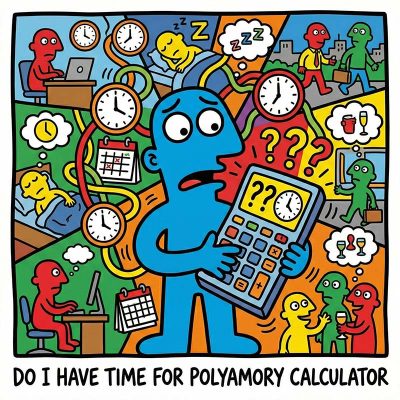
Love is infinite, but your calendar is brutally finite. The fantasy is deep connection; the reality is often just exhausted "calendar tetris." Promising time you don't actually have isn't romantic, it’s a recipe for burnout and broken trust. That sinking feeling when you have to cancel again? That’s the sound of overextension destroying your relationships.
This calculator forces you to confront the math of your life. Do you actually have space for another heart, or are you just setting everyone up for disappointment?

The fantasy is total autonomy and connection. The reality? It can feel like drowning in scheduling chaos and misunderstood expectations. That anxiety you feel isn’t just stress; it’s the wobble of living without a default "anchor." Without a solid architecture, Solo Polyamory stops being a life design and starts being a recipe for burnout and confusion.
The Essential Guide replaces the drift with a concrete anchor. We provide the "Solo Ethic," boundary scripts, and burnout protocols needed to protect your peace. Don't just date around—build a life that actually works for you.

Hierarchy sounds like a corporate org chart until someone gets their feelings hurt. That stomach-turning fear that you are just a "secondary" who can be fired at any time is real. If your relationship feels like a secret ranking system, you are doing it wrong.
Ambiguity is where resentment grows. The Essential Guide replaces the "who matters more" panic with a concrete charter. We provide the scripts and equity guardrails needed to protect every heart in the polycule. Stop guessing and start building.

The ideal is pure equality. The reality? It often slides into hidden rankings where someone gets hurt. That sinking feeling that you are secretly a "secondary" despite the label? That is your intuition detecting couple privilege. Ambiguity is where resentment thrives.
The Essential Guide replaces vague promises with concrete governance. We provide the charters, equity tools, and jealousy protocols needed to ensure "non-hierarchical" isn't just a fantasy. Stop guessing who matters most. Build a network that is actually fair.
The fantasy is total autonomy and connection. The reality? It can feel like drowning in scheduling chaos and misunderstood expectations. That anxiety you feel isn’t just stress; it’s the wobble of living without a default "anchor." Without a solid architecture, Solo Polyamory stops being a life design and starts being a recipe for burnout and confusion.
The Essential Guide replaces the drift with a concrete anchor. We provide the "Solo Ethic," boundary scripts, and burnout protocols needed to protect your peace. Don't just date around—build a life that actually works for you.
Hierarchy sounds like a corporate org chart until someone gets their feelings hurt. That stomach-turning fear that you are just a "secondary" who can be fired at any time is real. If your relationship feels like a secret ranking system, you are doing it wrong.
Ambiguity is where resentment grows. The Essential Guide replaces the "who matters more" panic with a concrete charter. We provide the scripts and equity guardrails needed to protect every heart in the polycule. Stop guessing and start building.
Key terms and acronyms you will see
- ENM Ethical non monogamy. A framework that prioritizes consent, transparency and negotiated boundaries rather than default monogamy.
- Polyamory A relationship style that involves more than two people with the knowledge and consent of everyone involved. It is a broad term that includes many sub models including non hierarchical setups.
- Non hierarchical An approach where no single relationship is declared more important than another. All connections are treated with equal respect and energy is distributed according to agreed needs.
- Metamour A partner of a partner. In non hierarchical polyamory metamours may or may not have a direct relationship with each other.
- Kitchen table polyamory A term used to describe a style where all partners sit at the same table so to speak and interact in daily life with openness and warmth.
- Jealousy A natural emotion that can signal a need or boundary. The decentered approach views jealousy as information to be explored rather than an obstacle to romance.
- Compersion A positive emotion where you feel happiness from seeing another person you care for experience joy with someone else. It is the opposite of envy in many moments.
- Boundaries Rules or guidelines created by partners to keep interactions healthy and respectful. In non hierarchical settings these boundaries are negotiated and revisited regularly.
- Consent A clear and enthusiastic agreement from all involved parties about what will happen and what will not. Consent is ongoing and can be withdrawn at any time.
Why the couple mindset can hold you back
Most of us were socialized to think romance revolves around two people joined at the hip. It is not unusual for energy and attention to gravitate toward the central couple even when others are part of the same life. This can create unspoken pressure on new partners who feel they must fit into a pre built mold. It can also lead to silence around needs and concerns because speaking up about a boundary could threaten the status of the central relationship. The decentering approach challenges this by saying we can design relationships that honor multiple connections as legitimate and valuable in their own right.
You might notice a few patterns in a couple centric setup that decentering aims to shift. For example, decision making often defaults to the two people in the couple even when a third or fourth person should have a say. Scheduling can skew toward the couple’s calendar. Emotional energy can get absorbed by maintaining a shared life at the expense of personal growth or the needs of others. Decentering does not remove commitment or care. It adds space for autonomy and fairness so people can show up as their best selves in all their connections.
Core principles of decentering the couple mindset
There are a handful of guiding ideas that help a non hierarchical polyamory ENM dynamic actually work. These are not rules carved in stone but a set of shared norms you can adopt and adapt as you grow. Think of them as the operating system for your relationship ecosystem rather than a rigid software update you must accept without question. Each principle links to practical actions you can use today.
Principle 1: Equality in all relationships
Equality means each connection gets fair attention in terms of time, emotional energy and respect. It does not require identical schedules for every person but it does require clear agreements about who is involved, when and how information is shared. This principle helps reduce the feeling that one relationship is the main event while others are side acts. Equality invites all partners to participate in planning and decision making according to their needs and capacities.
Principle 2: Transparent communication as the default
Transparency is not about sharing every thought in real time. It is about establishing a culture where important information is shared in a timely and considerate way. People should know how relationship boundaries work, who is involved in what, and what changes are being considered. When communication is open you can address issues before they become crises. You also create a sense of safety where people can speak up without fear of retribution or embarrassment.
Principle 3: Autonomy within interdependence
Autonomy means each person maintains agency over their own life and choices. Interdependence means we still rely on each other for support, companionship and shared joy. In practice this looks like everyone having personal plans that are respected by others while still showing up for shared activities or group moments when energy allows. Autonomy does not equal isolation it equals freedom to decide how much to share and how much to receive from each relationship.
Principle 4: Flexible boundaries that adapt with life
Boundaries are not one size fits all. They should be negotiated, revisited and revised as life changes. A boundary that made sense at one stage may need adjustment later on. The decentered approach treats boundaries as living agreements that can be renegotiated when schedules hormones or life goals shift. This flexibility helps maintain trust and respect even in the face of new dynamics like a fresh partner or a big life event.
Principle 5: Jealousy as information not as a barrier
Jealousy is a natural signal that something matters to you. The decentered mindset treats jealousy as information to be explored rather than a reason to withdraw or punish. By naming the feeling and asking what need is behind it you can address concerns and often strengthen trust. This approach requires practice and patience because feelings do not disappear overnight but they can become clearer with deliberate conversation and time.
Principle 6: Compersion as a practice not a miracle
Compersion is the experience of joy when someone you care about is thriving with someone else. It is not automatic. It grows when you actively celebrate your partners' happiness and use it as evidence that multiple meaningful connections can coexist. Like a muscle it gets stronger the more you exercise it through shared positive experiences and supportive language.
Practical steps to implement decentering in daily life
Now the tired but essential part. Here are concrete steps you can take to move from a couple centered rhythm to a more distributed and equitable pattern. Each step includes simple actions you can start today without turning your life upside down.
Step 1: Name the dynamic you want
Have a candid conversation with all involved about the structure you are aiming for. Use clear language like We want a non hierarchical polyamory ENM arrangement with equal voice for everyone. Avoid implying that one relationship is the default or that others must fit a pre existing mold. The goal is shared clarity that can be revisited later as needed.
Step 2: Map the relationships and flows of energy
Create a simple map that shows who is connected to whom and how energy is allocated for different kinds of interaction. You can use a circle diagram or a plain list. The key is to visualize where attention and time are being spent and how changes might shift that balance. This step helps everyone see the whole picture rather than only the two primary connections.
Step 3: Establish a consent framework
Consent is an ongoing practice not a one time checkbox. Agree on how new activities will be introduced what information will be shared and how decisions will be made if someone changes their mind. Documenting a few core consent rules makes it easier to navigate a growing web of relationships without pushback or confusion.
Step 4: Set a regular check in cadence
Pick a schedule for check ins that feels safe for everyone involved. It could be a monthly group talk a bi weekly couple check in or a flexible as needed approach. The important part is consistency and a clear process to voice concerns or propose changes. Treat these check ins as a chance to renegotiate boundaries and energy distribution without blame or drama.
Step 5: Create practical boundaries that serve the dynamic
Boundaries should be concrete and revisited regularly. They cover topics like who dates whom what kinds of activities are on the table and how information is shared with metamours. Boundaries are not walls they are guardrails that keep everyone comfortable. If you find a boundary is too rigid or too loose adjust it gradually rather than drastic overhauls that destabilize trust.
Step 6: Build rituals for healthy communication
Rituals might include weekly debriefs monthly deep dives three question check ins and a shared notes document. The idea is to normalize talking about feelings and needs in a constructive and kind way. Rituals reduce the risk of miscommunication because they create predictable opportunities to share honestly.
Step 7: Normalize metamor relationships and group experiences
Metamours are partners of partners and they can contribute to a sense of community. Not every metamour arrangement will work, but making space for direct conversations with metamours can reduce friction. Consider group activities like casual dinners or collaborative plans that help people see each other as part of one bigger network rather than as isolated individuals.
Step 8: Prepare for life events and changes
Life happens. Moves relationships shifts parenting responsibilities and work demands can all affect energy distribution. Have a plan for handling changes without dissolving trust. That plan might include temporary adjustments to check in frequency or a re balancing of the schedule during busy seasons. The point is to have a path forward not a sign you failed.
Step 9: Practice gratitude and celebrate wins
In a decentered dynamic there is a lot to celebrate. Make room for gratitude one on one and in group settings. Recognizing the positives keeps motivation high and reinforces the sense that multiple relationships can enrich life rather than complicate it beyond repair.
Step 10: Seek support when needed
Ethical non monogamy can be challenging. It is not a sign of failure if you seek outside input. A therapist or counselor who understands ENM dynamics can offer valuable tools for managing jealousy conflict and communication. Community groups or experienced mentors in polyamory can share practical tips that work in real life scenarios.
Realistic scenarios and how to handle them
Scenario A: A new partner enters the circle
The arrival of a new partner often tests the balance of a decentered dynamic. Start with a broad conversation about expectations. What kinds of activities do we want to prioritize? How do we share information about new interactions without overloading anyone? A practical approach is to designate a primary discussion window for the new relationship while continuing to value existing connections. Keep metamours in the loop at a pace that feels comfortable for everyone involved and avoid dumping every detail at once which can feel overwhelming.
Scenario B: Holidays and family time
Holiday planning in a non hierarchical setup requires special care. You may need to coordinate travel plans with several households and respect each connection's own family commitments. A practical tactic is to create a shared holiday calendar that marks important dates for each partner and to discuss how to allocate time to be fair and present. It helps to set expectations early and to offer flexible options like alternate years or shared gatherings that include all partners when possible.
Scenario C: A partner dates someone outside the circle
Dating outside the group can be exciting and nerve wracking. The key is to have honest conversations about boundaries and time commitments. Discuss how new dating information will be shared and decide how much detail is appropriate to share with others. Some groups prefer open transparency while others choose a level of privacy. The important thing is that all involved agree on a process that minimizes surprises and preserves trust.
Scenario D: Jealousy arises in a specific context
Jealousy often signals a need that has not been met. For example, you might feel left out during a date you know is happening. Use the situation as a chance to check in about needs and boundaries. Practice naming the emotion and the need in a non accusatory way. For instance You know I felt a bit left out when you were on a date last night. I would love to have a quiet dinner with you this weekend to reconnect. That kind of language invites collaboration rather than defensiveness.
Scenario E: Scheduling conflicts across multiple partners
Time is a finite resource and in a decentered setup that can become complex. The solution is a proactive calendar system with agreed priorities. You can designate core date nights with different partners when possible and create flexible windows for spontaneous plans. The goal is to reduce stress by making energy distribution predictable rather than chaotic.
Common challenges and how to navigate them
- Imbalanced energy If one person feels stretched thin, revisit check in cadence boundaries and scheduling. It is better to slow down and rebalance than to burn out.
- Information overload A large group can generate a flood of updates. Agree on what needs to be shared publicly and what can stay private between specific partners. Use centralized notes and periodic summaries to keep everyone on the same page without drowning in detail.
- Stigma from outsiders Friends and family may not understand non hierarchical lives. Build a small curated explanation that emphasizes consent and respect. Practice delivering it in a way that is accessible and non defensive.
- Boundary drift Boundaries can drift as people grow. Schedule regular reviews and be prepared to pause and renegotiate. Boundaries should feel empowering not punitive.
- Metamour friction When metamours do not gel in real life it can create tension. Focus on direct communication with kindness and build shared experiences where possible. Avoid triangulating or pitting people against each other.
Practical tools and rituals to support a decentered dynamic
- Shared relationship map A living diagram showing all connections and their current state. Update it when new information or relationships are added.
- Energy allocation ledger A simple tracker that logs how much time and emotional energy is devoted to each relationship each week. Use it as a discussing point during check ins rather than a punitive tool.
- Group check in sessions Periodic group conversations that invite all partners to share thoughts and feelings. These sessions normalize vulnerability and collective problem solving.
- Individual reflection journals Personal diaries aimed at processing jealousy boundaries and personal growth. They are for you not for broadcasting.
- Decision protocols A clear process for how the group makes decisions about new partners boundaries or changes to the structure of the dynamic. This could involve majority vote or consensus depending on what you all agree works best.
Glossary of useful terms and acronyms
- Metamour A partner of a partner in a polyamorous arrangement. Metamours may or may not have a direct relationship with each other.
- Compersion A feeling of joy when someone you care about experiences happiness with another person. It is the opposite of jealousy in many moments.
- Jealousy A natural emotion that can indicate needs or boundaries not fully met. It is information to explore not a deal breaker.
- Boundaries Negotiated rules about how relationships operate. Boundaries are designed to protect people and relationships and they can be updated as needed.
- Consent An explicit agreement to engage in a specific activity. Consent is ongoing and can be withdrawn at any time.
- ENM Ethical non monogamy a broad framework that prioritizes consent openness and honesty over exclusivity.
- Primary partner A term sometimes used for a long standing central partner in a traditional relationship pattern. In a non hierarchical setup this label is avoided or minimized to prevent hierarchy.
- Non hierarchical A relationship approach where no single relationship is positioned as more important than the others.
- Kitchen table polyamory A style where all partners are welcome to interact and be part of everyday life rather than keeping people apart in separate circles.
Frequently asked questions
Below are quick answers to common questions people have when exploring decentering the couple mindset in a non hierarchical polyamory ENM context. If you have a question not covered here you can reach out and we will tailor guidance to your exact situation.
Love is infinite, but your calendar is brutally finite. The fantasy is deep connection; the reality is often just exhausted "calendar tetris." Promising time you don't actually have isn't romantic, it’s a recipe for burnout and broken trust. That sinking feeling when you have to cancel again? That’s the sound of overextension destroying your relationships.
This calculator forces you to confront the math of your life. Do you actually have space for another heart, or are you just setting everyone up for disappointment?
The fantasy is total autonomy and connection. The reality? It can feel like drowning in scheduling chaos and misunderstood expectations. That anxiety you feel isn’t just stress; it’s the wobble of living without a default "anchor." Without a solid architecture, Solo Polyamory stops being a life design and starts being a recipe for burnout and confusion.
The Essential Guide replaces the drift with a concrete anchor. We provide the "Solo Ethic," boundary scripts, and burnout protocols needed to protect your peace. Don't just date around—build a life that actually works for you.
Hierarchy sounds like a corporate org chart until someone gets their feelings hurt. That stomach-turning fear that you are just a "secondary" who can be fired at any time is real. If your relationship feels like a secret ranking system, you are doing it wrong.
Ambiguity is where resentment grows. The Essential Guide replaces the "who matters more" panic with a concrete charter. We provide the scripts and equity guardrails needed to protect every heart in the polycule. Stop guessing and start building.
The ideal is pure equality. The reality? It often slides into hidden rankings where someone gets hurt. That sinking feeling that you are secretly a "secondary" despite the label? That is your intuition detecting couple privilege. Ambiguity is where resentment thrives.
The Essential Guide replaces vague promises with concrete governance. We provide the charters, equity tools, and jealousy protocols needed to ensure "non-hierarchical" isn't just a fantasy. Stop guessing who matters most. Build a network that is actually fair.
The fantasy is total autonomy and connection. The reality? It can feel like drowning in scheduling chaos and misunderstood expectations. That anxiety you feel isn’t just stress; it’s the wobble of living without a default "anchor." Without a solid architecture, Solo Polyamory stops being a life design and starts being a recipe for burnout and confusion.
The Essential Guide replaces the drift with a concrete anchor. We provide the "Solo Ethic," boundary scripts, and burnout protocols needed to protect your peace. Don't just date around—build a life that actually works for you.
Hierarchy sounds like a corporate org chart until someone gets their feelings hurt. That stomach-turning fear that you are just a "secondary" who can be fired at any time is real. If your relationship feels like a secret ranking system, you are doing it wrong.
Ambiguity is where resentment grows. The Essential Guide replaces the "who matters more" panic with a concrete charter. We provide the scripts and equity guardrails needed to protect every heart in the polycule. Stop guessing and start building.
